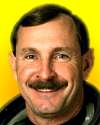
Born 11 Mar 1956. quotes
Curtis Lee (“Curt”) Brown Jr. is an American astronaut and pilot who made six Space Shuttle flights, including one with 77-year-old John Glenn aboard. Brown’s over 1,383 hours in space began as pilot of the Endeavour for an eight-day mission (12-20 Sep 1992), a cooperative project with Japan. It focused on life science and materials processing experiments in space. He was also pilot for missions in 1994 and 1996. Brown was For three more spaceflights in 1997-99, he was spacecraft commander, after which he retired from NASA. The mission (29 Oct-7 Nov 1998) had Senator John Glenn on board, 36 years after his first orbits in space. During his final mission (19-27 Dec 1999), his crew installed new instruments and upgraded systems on the HST.«
Curtis Lee (“Curt”) Brown Jr. is an American astronaut and pilot who made six Space Shuttle flights, including one with 77-year-old John Glenn aboard. Brown’s over 1,383 hours in space began as pilot of the Endeavour for an eight-day mission (12-20 Sep 1992), a cooperative project with Japan. It focused on life science and materials processing experiments in space. He was also pilot for missions in 1994 and 1996. Brown was For three more spaceflights in 1997-99, he was spacecraft commander, after which he retired from NASA. The mission (29 Oct-7 Nov 1998) had Senator John Glenn on board, 36 years after his first orbits in space. During his final mission (19-27 Dec 1999), his crew installed new instruments and upgraded systems on the HST.«
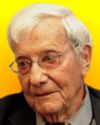
Born 11 Mar 1920. quotes
Dutch-American physicist who shared (with Arthur L. Schawlow of the United States and Kai M. Siegbahn of Sweden) the 1981 Nobel Prize for Physics for their revolutionary spectroscopic studies of the interaction of electromagnetic radiation with matter. Bloembergen made a pioneering use of lasers in these investigations and developed three-level pumps used in both masers and lasers.
Dutch-American physicist who shared (with Arthur L. Schawlow of the United States and Kai M. Siegbahn of Sweden) the 1981 Nobel Prize for Physics for their revolutionary spectroscopic studies of the interaction of electromagnetic radiation with matter. Bloembergen made a pioneering use of lasers in these investigations and developed three-level pumps used in both masers and lasers.
Encounters in Nonlinear Optics: Selected Papers of Nicolaas Bloembergen, by Nicolaas Bloembergen. - book suggestion.
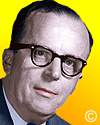
Born 11 Mar 1915; died 26 Jun 1990 at age 75. quotes
Joseph Carl Robnett “Lick” Licklider was an American computer scientist who created the idea of a universal computer network to easily transfer and retrieve information which his successors developed into the internet. In 1959, in his first book, Libraries of the Future, Licklider expanded Vannevar Bush's idea of an automated library system to describe how computers could distribute library resources from a single database to multiple remote users. In 1962, while director of the Information Processing Techniques Office of the U.S. Dept. of Defense Advanced Research Projects Agency (DARPA), he sent a memo to colleagues envisioning a time-sharing network of computers. Subsequently ARPANET was built, which became the model for the Internet. He also was a visionary for human-computer interaction, remembered for his 1960 paper, 'Man-Computer Symbiosis.'«
Joseph Carl Robnett “Lick” Licklider was an American computer scientist who created the idea of a universal computer network to easily transfer and retrieve information which his successors developed into the internet. In 1959, in his first book, Libraries of the Future, Licklider expanded Vannevar Bush's idea of an automated library system to describe how computers could distribute library resources from a single database to multiple remote users. In 1962, while director of the Information Processing Techniques Office of the U.S. Dept. of Defense Advanced Research Projects Agency (DARPA), he sent a memo to colleagues envisioning a time-sharing network of computers. Subsequently ARPANET was built, which became the model for the Internet. He also was a visionary for human-computer interaction, remembered for his 1960 paper, 'Man-Computer Symbiosis.'«
The Dream Machine: J. C. R. Licklider and the Revolution That Made Computing Personal, by Waldrop M. Mitchell. - book suggestion.
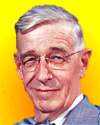
Born 11 Mar 1890; died 28 Jun 1974 at age 84. quotes
American electrical engineer who headed the U.S. Office of Scientific Research and Development during WW II to stimulate scientific research. His office contracted with, and coordinated research by, universities and industry. The office funded a wide field of activities, such as antibiotic research, improving explosives, and devising blood substitutes. Before the war, in 1925, at age 35, he developed the differential analyzer, the world’s first analog computer. It was capable of solving differential equations. (This put into productive form, the mechanical concept left incomplete by Charles Babbage, 50 years earlier; and theoretical work by Lord Kelvin). The machine filled a 20×30 ft (6×9 m) room. He seeded ideas later adopted as internet hypertext links.«
American electrical engineer who headed the U.S. Office of Scientific Research and Development during WW II to stimulate scientific research. His office contracted with, and coordinated research by, universities and industry. The office funded a wide field of activities, such as antibiotic research, improving explosives, and devising blood substitutes. Before the war, in 1925, at age 35, he developed the differential analyzer, the world’s first analog computer. It was capable of solving differential equations. (This put into productive form, the mechanical concept left incomplete by Charles Babbage, 50 years earlier; and theoretical work by Lord Kelvin). The machine filled a 20×30 ft (6×9 m) room. He seeded ideas later adopted as internet hypertext links.«
Endless Frontier: Vannevar Bush, Engineer of the American Century, by G. Pascal Zachary. - book suggestion.
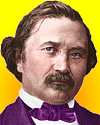
Born 11 Mar 1822; died 5 Apr 1900 at age 78. quotes
Joseph-Louis-François Bertrand was a French mathematician and educator and educator remembered for his elegant applications of differential equations to analytical mechanics, particularly in thermodynamics, and for his work on statistical probability and the theory of curves and surfaces. In 1845 Bertrand conjectured that there is at least one prime between n and (2n-2) for every n>3, as proved five years later by Chebyshev. In 1855 he translated Gauss's work on the theory of errors and the method of least squares into French. He wrote a number of notes on the reduction of data from observations.
Joseph-Louis-François Bertrand was a French mathematician and educator and educator remembered for his elegant applications of differential equations to analytical mechanics, particularly in thermodynamics, and for his work on statistical probability and the theory of curves and surfaces. In 1845 Bertrand conjectured that there is at least one prime between n and (2n-2) for every n>3, as proved five years later by Chebyshev. In 1855 he translated Gauss's work on the theory of errors and the method of least squares into French. He wrote a number of notes on the reduction of data from observations.
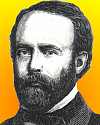
Born 11 Mar 1818; died 1 Jul 1881 at age 63. quotes
French chemist and geologist who began the first industrial production of aluminium. His career started with research of turpentine. By 1849, turning to inorganic chemistry, he synthesized nitrogen pentoxide. Friedrich Woehler had isolated aluminum using costly potassium, as a laboratory curiosity. In 1854, Deville made aluminium, from aluminium chloride and less costly sodium. By 1860, he was producing aluminium at a factory in Javel, Paris, and later in Nanterre. The metal was more expensive than gold until Charles Hall invented the cheap electrolytic process. Deville also studied platinum and other minerals. As a geologist, he visited the coastal sites of Vesuvius and Stromboli. He proposed that volcanic eruptions resulted when sea water entered the fissures of the earth's crust where contact with hot rocks produced the explosive eruptions.« more
French chemist and geologist who began the first industrial production of aluminium. His career started with research of turpentine. By 1849, turning to inorganic chemistry, he synthesized nitrogen pentoxide. Friedrich Woehler had isolated aluminum using costly potassium, as a laboratory curiosity. In 1854, Deville made aluminium, from aluminium chloride and less costly sodium. By 1860, he was producing aluminium at a factory in Javel, Paris, and later in Nanterre. The metal was more expensive than gold until Charles Hall invented the cheap electrolytic process. Deville also studied platinum and other minerals. As a geologist, he visited the coastal sites of Vesuvius and Stromboli. He proposed that volcanic eruptions resulted when sea water entered the fissures of the earth's crust where contact with hot rocks produced the explosive eruptions.« more
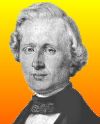
Born 11 Mar 1811; died 23 Sep 1877 at age 66. quotes
French astronomer who predicted by mathematical means the existence of the planet Neptune. He switched from his first subject of chemistry to to teach astronomy at the Ecole Polytechnique in 1837 and worked at the Paris Observatory for most of his life. His main activity was in celestial mechanics. Independently of Adams, Le Verrier calculated the position of Neptune from irregularities in Uranus's orbit. As Camille Flammarion said, he discovered a planet with the tip of his pen, without any instrument other than the strength of his calculations alone. In 1856, the German astronomer Johan G. Galle discovered Neptune after only an hour of searching, within one degree of the position that had been computed by Le Verrier, who had asked him to look for it there. In this way Le Verrier gave the most striking confirmation of the theory of gravitation propounded by Newton. Le Verrier also initiated the meteorological service for France, especially the weather warnings for seaports. Incorrectly, he predicted a planet, Vulcan, or asteroid belt, within the orbit of Mercury to account for an observed discrepancy (1855) in the motion in the perihelion of Mercury.
French astronomer who predicted by mathematical means the existence of the planet Neptune. He switched from his first subject of chemistry to to teach astronomy at the Ecole Polytechnique in 1837 and worked at the Paris Observatory for most of his life. His main activity was in celestial mechanics. Independently of Adams, Le Verrier calculated the position of Neptune from irregularities in Uranus's orbit. As Camille Flammarion said, he discovered a planet with the tip of his pen, without any instrument other than the strength of his calculations alone. In 1856, the German astronomer Johan G. Galle discovered Neptune after only an hour of searching, within one degree of the position that had been computed by Le Verrier, who had asked him to look for it there. In this way Le Verrier gave the most striking confirmation of the theory of gravitation propounded by Newton. Le Verrier also initiated the meteorological service for France, especially the weather warnings for seaports. Incorrectly, he predicted a planet, Vulcan, or asteroid belt, within the orbit of Mercury to account for an observed discrepancy (1855) in the motion in the perihelion of Mercury.
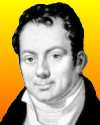
Born 11 Mar 1780; died 6 Oct 1855 at age 75. quotes
German mathematician and engineer. As a civil engineer in the service of the Prussian Government and worked on the construction and planning of roads and the first railway in Germany (completed in 1838). Crelle advanced the work and careers of many young mathematicians of his day. He founded (1826) the world's oldest mathematical periodical still in existence, Journal für die reine und angewandte Mathematik ("Journal for Pure and Applied Mathematics"), now known as Crelle's Journal,and edited it for the rest of his life.
German mathematician and engineer. As a civil engineer in the service of the Prussian Government and worked on the construction and planning of roads and the first railway in Germany (completed in 1838). Crelle advanced the work and careers of many young mathematicians of his day. He founded (1826) the world's oldest mathematical periodical still in existence, Journal für die reine und angewandte Mathematik ("Journal for Pure and Applied Mathematics"), now known as Crelle's Journal,and edited it for the rest of his life.

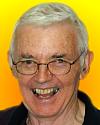
Died 11 Mar 2011 at age 81 (born 21 May 1929). quotes
American evolutionary biologist who was a professor of molecular evolution at the University of California. He pioneered in the reconstruction of evolutionary trees (phylogenetic trees) from protein and DNA sequences. He co-authored “Construction of phylogenetic trees” which was published in Science (1967). He was the first president of the Society for Molecular Biology and Evolution and the founding editor-in-chief of its journal Molecular Biology and Evolution. As a long-time member of the National Center for Science Education, he staunchly promoted the teaching of evolution, and vigorously debated the fallacies of Creationism. At the time of his death, he was finishing a book on the creationism/evolution controversy.«
American evolutionary biologist who was a professor of molecular evolution at the University of California. He pioneered in the reconstruction of evolutionary trees (phylogenetic trees) from protein and DNA sequences. He co-authored “Construction of phylogenetic trees” which was published in Science (1967). He was the first president of the Society for Molecular Biology and Evolution and the founding editor-in-chief of its journal Molecular Biology and Evolution. As a long-time member of the National Center for Science Education, he staunchly promoted the teaching of evolution, and vigorously debated the fallacies of Creationism. At the time of his death, he was finishing a book on the creationism/evolution controversy.«
The Three Failures of Creationism: Logic, Rhetoric, and Science, by Walter M. Fitch. - book suggestion.
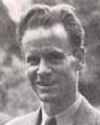
Died 11 Mar 1971 at age 64 (born 19 Aug 1906).
American pioneer in the development of electronic television, taking all of the moving parts out of television inventions. Farnsworth was a 15-year-old high school student when he designed his first television system. Six years later he obtained his first patent. In 1935 he demonstrated his complete television system. Farnsworth's basic television patents covered scanning, focusing, synchronizing, contrast, controls, and power. He also invented the first cold cathode ray tubes and the first simple electronic microscope. The Philco TV manufacturing was named after him.(Image: Collier's Weekly, 1936)
American pioneer in the development of electronic television, taking all of the moving parts out of television inventions. Farnsworth was a 15-year-old high school student when he designed his first television system. Six years later he obtained his first patent. In 1935 he demonstrated his complete television system. Farnsworth's basic television patents covered scanning, focusing, synchronizing, contrast, controls, and power. He also invented the first cold cathode ray tubes and the first simple electronic microscope. The Philco TV manufacturing was named after him.(Image: Collier's Weekly, 1936)
The Last Lone Inventor: A Tale of Genius, Dec… (Paperback) The Last Lone Inventor: A Tale of Genius, Deceit, and the Birth of Television, by Evan I. Schwartz. - book suggestion.
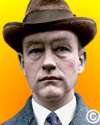
Died 11 Mar 1960 at age 76 (born 26 Jan 1884). quotes
American zoologist, museum administrator and explorer who spent his entire career at the American Museum of Natural History. He led many important scientific expeditions with financial support through his public lectures and books, particularly in central Asia and eastern Asia. On his 1925 central Asian expedition, the first known dinosaur eggs were discovered, also: a skull and parts of Baluchitherium, the largest known land mammal; extensive deposits of fossil mammals and reptiles previously unknown; evidence of prehistoric human life; and geological strata previously unexplored. During his career he was not known as an influential scientist, yet Andrews was the museum promoter, creating immense excitement and successfully advancing research there.
American zoologist, museum administrator and explorer who spent his entire career at the American Museum of Natural History. He led many important scientific expeditions with financial support through his public lectures and books, particularly in central Asia and eastern Asia. On his 1925 central Asian expedition, the first known dinosaur eggs were discovered, also: a skull and parts of Baluchitherium, the largest known land mammal; extensive deposits of fossil mammals and reptiles previously unknown; evidence of prehistoric human life; and geological strata previously unexplored. During his career he was not known as an influential scientist, yet Andrews was the museum promoter, creating immense excitement and successfully advancing research there.
Under a Lucky Star, by Roy Chapman Andrews. - book suggestion.
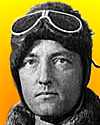
Died 11 Mar 1957 at age 68 (born 25 Oct 1888). quotes
Richard Evelyn Byrd, Jr. was an American explorer, aviator and scientist who was the first man to fly over both of the Earth's poles. From age 13, he showed an adventurous spirit, by travelling alone around the world. He joined the Navy, and by WW I, in the naval avaiation division, he was commander of U.S. Navy aviation forces in Canada. To improve aerial navigation for occasions when no land or horizon would be visible, he developed a bubble sextant and a drift indicator. After the war, he made one of the early nonstop transatlantic flights. On 9 May 1926, to demonstrate the practicability of aerial polar exploration, he and a copilot circled the North Pole. During an Antarctic expedition, he organized scientific studies, surveying, and collection of meteorological and radiowave propagation data. On 28-29 Nov 1929, with three crew, he made a flight to the South Pole.«
Richard Evelyn Byrd, Jr. was an American explorer, aviator and scientist who was the first man to fly over both of the Earth's poles. From age 13, he showed an adventurous spirit, by travelling alone around the world. He joined the Navy, and by WW I, in the naval avaiation division, he was commander of U.S. Navy aviation forces in Canada. To improve aerial navigation for occasions when no land or horizon would be visible, he developed a bubble sextant and a drift indicator. After the war, he made one of the early nonstop transatlantic flights. On 9 May 1926, to demonstrate the practicability of aerial polar exploration, he and a copilot circled the North Pole. During an Antarctic expedition, he organized scientific studies, surveying, and collection of meteorological and radiowave propagation data. On 28-29 Nov 1929, with three crew, he made a flight to the South Pole.«
The Last Explorer: The Adventures of Admiral Byrd, by Edwin P. Hoyt. - book suggestion.
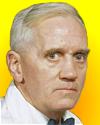
Died 11 Mar 1955 at age 73 (born 6 Aug 1881). quotes
Scottish bacteriologist who discovered penicillin. In 1928, while working on influenza virus, he observed that mould had developed accidently on a staphylococcus culture plate and that the mould had created a bacteria-free circle around itself. He experimented further and he found that a mould culture prevented growth of staphylococci, even when diluted 800 times. The active substance, which he named penicillin, initiated the highly effective practice of antibiotic therapy for infectious diseases. Fleming shared the Nobel Prize for Physiology or Medicine in 1945 with Ernst Boris Chain and Howard Walter Florey, who both (from 1939) continued Fleming's work.
Scottish bacteriologist who discovered penicillin. In 1928, while working on influenza virus, he observed that mould had developed accidently on a staphylococcus culture plate and that the mould had created a bacteria-free circle around itself. He experimented further and he found that a mould culture prevented growth of staphylococci, even when diluted 800 times. The active substance, which he named penicillin, initiated the highly effective practice of antibiotic therapy for infectious diseases. Fleming shared the Nobel Prize for Physiology or Medicine in 1945 with Ernst Boris Chain and Howard Walter Florey, who both (from 1939) continued Fleming's work.
Alexander Fleming: The Man and the Myth, by Gwyn MacFarlane. - book suggestion.
Died 11 Mar 1950 at age 63 (born 14 Aug 1886).
Canadian-American physicist who in 1918 built the first mass spectrometer (based on the invention of Francis W. Aston) and discovered isotope uranium-235 (1935). The mass spectrometer is an instrument that uses electric and magnetic fields to separate and measure a sample's atoms according to their mass and relative quantity. In 1935, he discovered that naturally occurring uranium, though mostly uranium-238, contained 0.7% U-235 (later used as the primary fuel in atomic bombs and reactors after Niels Bohr predicted it could be used to produce a chain reaction releasing huge amounts of nuclear fission energy). During WW II, Dempster worked with the secret Manhattan Project that developed the world's first nuclear weapons.«
Canadian-American physicist who in 1918 built the first mass spectrometer (based on the invention of Francis W. Aston) and discovered isotope uranium-235 (1935). The mass spectrometer is an instrument that uses electric and magnetic fields to separate and measure a sample's atoms according to their mass and relative quantity. In 1935, he discovered that naturally occurring uranium, though mostly uranium-238, contained 0.7% U-235 (later used as the primary fuel in atomic bombs and reactors after Niels Bohr predicted it could be used to produce a chain reaction releasing huge amounts of nuclear fission energy). During WW II, Dempster worked with the secret Manhattan Project that developed the world's first nuclear weapons.«

Died 11 Mar 1950 at age 69 (born 27 Nov 1880).
English civil engineer whose Sydney Harbour Bridge (1932), Australia, which with a main arch span of 1,650 feet (500 m), and a deck 160 feet wide is the world's largest (and among the longest) steel arch bridge, now carrying eight lanes of highway traffic, two train lines, a footway and a cycleway. Freeman also designed the Tyne Bridge, Newcastle, England, Victoria Falls Bridge over Zambezi River, Royal Naval Propellant factory, Furness shipbuilding yard in Lancashire, and five major bridges in the Rhodesias.
English civil engineer whose Sydney Harbour Bridge (1932), Australia, which with a main arch span of 1,650 feet (500 m), and a deck 160 feet wide is the world's largest (and among the longest) steel arch bridge, now carrying eight lanes of highway traffic, two train lines, a footway and a cycleway. Freeman also designed the Tyne Bridge, Newcastle, England, Victoria Falls Bridge over Zambezi River, Royal Naval Propellant factory, Furness shipbuilding yard in Lancashire, and five major bridges in the Rhodesias.
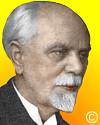
Died 11 Mar 1938 at age 77 (born 29 Mar 1860).
Christen Christensen Raunkaer was a Danish botanist and ecologist remembered for the Raunkiaer's classification he used to categorize vegetation with regard to “life-forms” and study the abundance of plant species in different climates. He recognized that the position of the perennating buds of plants offered greater protection in conditions of cold or drought when they were closer to the ground. His frequency method (cirklingsmetoden) was to register all plants within within 0.1 m², in the form of a square or a circle laid out in several places in the area, with data collected then treated statistically. This was first published in 1905, and expanded in form in 1907. It continues to be used worldwide for vegetation analysis. He was a scientific assistant of the Botanical Garden, Copenhagen (1893-11) and thereafter was a professor of botany at the University of Copenhagen until 1923.«
Christen Christensen Raunkaer was a Danish botanist and ecologist remembered for the Raunkiaer's classification he used to categorize vegetation with regard to “life-forms” and study the abundance of plant species in different climates. He recognized that the position of the perennating buds of plants offered greater protection in conditions of cold or drought when they were closer to the ground. His frequency method (cirklingsmetoden) was to register all plants within within 0.1 m², in the form of a square or a circle laid out in several places in the area, with data collected then treated statistically. This was first published in 1905, and expanded in form in 1907. It continues to be used worldwide for vegetation analysis. He was a scientific assistant of the Botanical Garden, Copenhagen (1893-11) and thereafter was a professor of botany at the University of Copenhagen until 1923.«
Died 11 Mar 1922 at age 49 (born 18 Jan 1873).
Gordon Morton McGregor was a Canadian industrialist who established the Ford Motor Company of Canada. He signed an agreement with Henry Ford on 10 Aug 1904 which gave 51% of the stock of Ford of Canada to the Shareholders of Ford U.S.A. Earlier, McGregor began in business in partnership with his father manufacturing wagons. McGregor was aware of Henry Ford's operation in America, which he visited, and they were far-sighted in sharing the opportunity to build cars in Canada. McGregor, at the age of 31, had the drive and perseverance to be successful. Production in Windsor began on 10 Oct 1904, and by the end of the calendar year 25 cars had been produced. Assembly initially used parts shipped from Detroit, with bodies and wheel made in Canada. In time, parts were built in Canada. An engine plant opened in May 1913.«
Gordon Morton McGregor was a Canadian industrialist who established the Ford Motor Company of Canada. He signed an agreement with Henry Ford on 10 Aug 1904 which gave 51% of the stock of Ford of Canada to the Shareholders of Ford U.S.A. Earlier, McGregor began in business in partnership with his father manufacturing wagons. McGregor was aware of Henry Ford's operation in America, which he visited, and they were far-sighted in sharing the opportunity to build cars in Canada. McGregor, at the age of 31, had the drive and perseverance to be successful. Production in Windsor began on 10 Oct 1904, and by the end of the calendar year 25 cars had been produced. Assembly initially used parts shipped from Detroit, with bodies and wheel made in Canada. In time, parts were built in Canada. An engine plant opened in May 1913.«
In the Shadow of Detroit: Gordon M. McGregor, Ford of Canada, and Motoropolis, by David Roberts. - book suggestion.
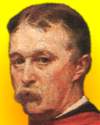
Died 11 Mar 1913 at age 74 (born 12 Apr 1838). quotes
American surgeon and librarian whose organization of U.S. medical institutions played a central role in the modernization of hospital care and the maintenance of public health. During the Civil War, in the battles of Chancellorsville and Gettysburg, he performed many operations and was the first surgeon in the war to attempt, with success, excision of the ankle joint. He was profoundly interested in advancing knowledge by creating libraries, including the New York Public Library, to improve access to books. Billings also had ideas about hospital architectural design. He planned the new Johns Hopkins Hospital in Baltimore with ventilation systems that reflected the best contemporary understanding of industrial hygiene.
American surgeon and librarian whose organization of U.S. medical institutions played a central role in the modernization of hospital care and the maintenance of public health. During the Civil War, in the battles of Chancellorsville and Gettysburg, he performed many operations and was the first surgeon in the war to attempt, with success, excision of the ankle joint. He was profoundly interested in advancing knowledge by creating libraries, including the New York Public Library, to improve access to books. Billings also had ideas about hospital architectural design. He planned the new Johns Hopkins Hospital in Baltimore with ventilation systems that reflected the best contemporary understanding of industrial hygiene.
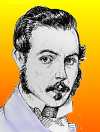
Died 11 Mar 1892 at age 60 (born 31 Mar 1831). quotes
Scottish chemist who, independently of August Kekulé, proposed the tetravalency of carbon and the ability of carbon atoms to bond with one another to form long chains, which concepts are fundamental to understanding the molecules found in living organisms. He also created the use of a line between element symbols to indicate a chemical bond. He wrote these landmark ideas in a paper to be submitted to the French Academy of Sciences through his superior, Adolphe Wurtz. Sadly for Couper, that paper was not forwarded from the lab in a timely fashion, and meanwhile another chemist, August Kekulé had published the same, though independent, idea of tetravalence, depriving Couper of his due fame.
Scottish chemist who, independently of August Kekulé, proposed the tetravalency of carbon and the ability of carbon atoms to bond with one another to form long chains, which concepts are fundamental to understanding the molecules found in living organisms. He also created the use of a line between element symbols to indicate a chemical bond. He wrote these landmark ideas in a paper to be submitted to the French Academy of Sciences through his superior, Adolphe Wurtz. Sadly for Couper, that paper was not forwarded from the lab in a timely fashion, and meanwhile another chemist, August Kekulé had published the same, though independent, idea of tetravalence, depriving Couper of his due fame.

In 2007, in the U.S., Daylight Saving Time begins three weeks earlier than in previous years. It was reset by Congress in the Energy Policy Act of 2005, signed into law by the president on 8 Aug 2005. Among hundreds of other provisions giving incentives and subsidies concerning energy production and conservation, the Act set the change to DST to begin three weeks earlier, on the second Sunday of March, and end a week later on the first Sunday of November. When it was first introduced in the U.S., On 31 Mar 1918, the U.S. first began daylight saving time (DST) on Easter Sunday, when clocks were set ahead by one hour. The concept was introduced earlier in Great Britain during WWI as a coal-conserving measure.«
Seize the Daylight: The Curious and Contentious Story of Daylight Savings Time, by David Prerau. - book suggestion.
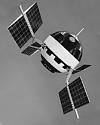
In 1960, Pioneer V was launched from Cape Canaveral, Florida, in one of the first in-depth attempts to study the solar system. The spacecraft was carried into space on a Thor-Able three stage rocket. It was a beach ball sized spacecraft equipped with four paddle like solar cells that recharged the on-board batteries that provided electrical power. Pioneer V entered an orbit around the Sun between Earth and Venus. It provided a wealth of new data on interplanetary space including measurements of magnetic fields, cosmic radiation, electrical fields and micrometeorites. It was stabilized by slowly spinning about its axis. The spacecraft transmitted information until 26 Jun 1960 when it was 22.5 million miles (36 million km) from Earth.
In 1919, a wireless telephone call was made by Secretary Josephus Daniels at his Navy Department desk, Washington D.C., to Ensign Faganwater, piloting a seaplane 150 miles away. A newspaper report said this was a record distance for such communication. Development began aided by Bell system experts since Feb 1917, with a successful test in Oct 1917. On 21 Nov 1919, President Wilson used a wireless telephone at the White House to direct maneuvers of a formation of planes nearby. Three years earlier, on 6 May 1916, the Secretary of the Navy had given orders, connected by AT&T Co. ship-to-shore radio telephone, to the captain of the battleship New Hampshire. Alexander Graham Bell had transmitted the first wireless telephone message using light in an experiment with his Photophone on 3 Jun 1880.«[Entry previously shown on this site for 16 Mar 1919, but that was date of a Washington newspaper article.] more
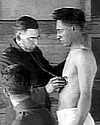
In 1918, the first cases of "Spanish Influenza" in the U.S. were reported. Early in the morning, a young private reported to the Army hospital at Fort Riley, Kansas, complaining of fever, sore throat, and headache. By noon, the hospital had more than 100 cases; in a week, there were 500. During the Spring, 48 soldiers died at Fort Riley. No one knew why until the cause of death was identified as influenza - but unlike any strain ever seen. As the killer virus spread across the country, hospitals overfilled, death carts roamed the streets and helpless city officials dug mass graves. It was the worst epidemic in American history, killing over 600,000 - until it disappeared as mysteriously as it had begun. Worldwide, up to 40 million people died in its wake.
The Great Influenza: The Story of the Deadliest Pandemic In History, by John M. Barry. - book suggestion.
In 1851, James W. Fowle was issued he first U.S. Patent for a direct-action percussion rock-drill (No. 7,972). He had filed a caveat in 1849, about two months after Joseph J. Couch received a patent for the first steam-powered percussion rock-drill. In Couch's design, the drill bar was not fastened to the piston head, but at each stroke was alternately caught, drawn back and thrown against the rock, like a lance. Both employed steam power. At first, Couch and Fowle had collaborated, but Fowle separated to pursue his own design, which is the real precursor of the drills developed in the following decades. To employ the direct action on the drill-bar Fowle had to solve the problem of how to avoid damage to the piston cylinder. He used compressed air to drive his “S” shaped drill.«
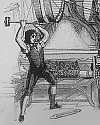
1812
In 1811, the Luddite riots began in Nottingham, England. There was poverty and misery, made worse by the new inventions - machinery which could do jobs better and faster than people. In those days of low wages and the ever-present threat of actual starvation should those wages stop for any reason, these innovations must have made the prospect even more gloomy. There were food shortages resulting from the Napoleonic Wars, and high unemployment. A group of laborers attacked a factory, breaking up 63 stocking and lace manufacturing frames, the machines which they feared would replace them. During the next three weeks gangs of upwards of fifty men, armed with pistols, guns and heavy hammers broke two hundred more frames.«[Image: Luddite breaking frame machine, 1812] more
In 1791, Samuel Mulliken of Philadelphia, Penn. became the first person to receive more than one U.S. patent. The Secretary of State issued him the first patent on a threshing machine for corn and grain, being the seventh in the records of the office. On the same day he was granted three more letters patent: for breaking and swingling hemp; for cutting and polishing marble; and to raise the nap on cloths. Although his threshing machine was too complicated to work efficiently, no other inventors made significant improvements until 1820. The Patent Office records concerning these patents were destroyed in the 1836 fire. Most were not reconstructed, and the full patents are not now available in the Patent Office records.«

In 105, Ts'ai Lun invented paper, made from bamboo, mulberry, and other fibers, along with fish nets and rags. He lived and served as an official at the Chinese Imperial Court at the Han Dynasty in China. He presented samples of paper to Emperor Han Ho Ti. He was promoted by the Emperor for his invention and became wealthy. Later he got involved in palace intrigue, which led to his downfall. Finally he ended his life drinking poison. In China, before Tsai, Lun, books were made of bamboo, which were heavy and clumsy. Some books were made of silks, which were very expensive. In the West at that time, books were made of sheepskin or calfskin.




