
Born 8 Mar 1902; died 5 May 1994 at age 92.
American inventor of the hollow-core surfboard. Following his first experimental hollow surfboard in 1926, his innovative, hollow-core surf/paddle boards dominated the surfing world until the late 1940s. It became standard rescue equipment in California's early lifeguard corps. Early surfboard designs consisted of solid wooden boards dating back to the ancient Hawaiians, these new-concept, lighter boards were an immediate success and became extremely important in the evolution of the modern surfboard. In the 1930s he made the first major design advancement with the invention of fins. Before this, a surfer had to use his back foot to make the board turn. Many early Blake boards are displayed at the Bishop Museum, Honolulu.
American inventor of the hollow-core surfboard. Following his first experimental hollow surfboard in 1926, his innovative, hollow-core surf/paddle boards dominated the surfing world until the late 1940s. It became standard rescue equipment in California's early lifeguard corps. Early surfboard designs consisted of solid wooden boards dating back to the ancient Hawaiians, these new-concept, lighter boards were an immediate success and became extremely important in the evolution of the modern surfboard. In the 1930s he made the first major design advancement with the invention of fins. Before this, a surfer had to use his back foot to make the board turn. Many early Blake boards are displayed at the Bishop Museum, Honolulu.
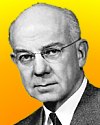
Born 8 Mar 1886; died 4 May 1972 at age 86.
American biochemist who shared (with Philip S. Hench and Tadeus Reichstein) the Nobel Prize for Physiology or Medicine in 1950 for research on the structure and biological effects of adrenal cortex hormones.
American biochemist who shared (with Philip S. Hench and Tadeus Reichstein) the Nobel Prize for Physiology or Medicine in 1950 for research on the structure and biological effects of adrenal cortex hormones.
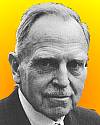
Born 8 Mar 1879; died 28 Jul 1968 at age 89. quotes
German physical chemist who, with the radiochemist Fritz Strassmann, is credited with the discovery of nuclear fission. He was awarded the Nobel Prize for Chemistry in 1944 and shared the Enrico Fermi Award in 1966 with Strassmann and Lise Meitner. Element 105 carries the name hahnium in recognition of his work.
German physical chemist who, with the radiochemist Fritz Strassmann, is credited with the discovery of nuclear fission. He was awarded the Nobel Prize for Chemistry in 1944 and shared the Enrico Fermi Award in 1966 with Strassmann and Lise Meitner. Element 105 carries the name hahnium in recognition of his work.
Otto Hahn: Achievement and Responsibility, by Klaus Hoffmann. - book suggestion.
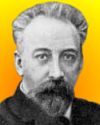
Born 8 Mar 1866; died 1 Apr 1912 at age 46.
Russian physicist who, in experiments with William Crookes' radiometer, proved (1910) that light exerts a minute pressure on bodies (as predicted by James Clerk Maxwell's theory of electromagnetism), and furthermore that this effect is twice as great for reflecting surfaces than for absorbent surfaces. He had proposed that light pressure on small particles of cosmic dust could be greater than gravitational attraction, thus explaining why a comet's tail points away from the Sun (though it is now understood the solar wind has a greater influence). He built an extremely small vibrator source capable of generating 4-6 mm waves, which he used to demonstrate the first observation of douible refraction of electromagnetic waves in crystals of rhombic sulphur.«[DSB gives dates 8 Mar 1866 - 1 Apr 1912. EB gives Old Style 24 Feb 1866 - 1 Mar 1912 (New Style 8 Mar 1866 - 14 Mar 1912).]
Russian physicist who, in experiments with William Crookes' radiometer, proved (1910) that light exerts a minute pressure on bodies (as predicted by James Clerk Maxwell's theory of electromagnetism), and furthermore that this effect is twice as great for reflecting surfaces than for absorbent surfaces. He had proposed that light pressure on small particles of cosmic dust could be greater than gravitational attraction, thus explaining why a comet's tail points away from the Sun (though it is now understood the solar wind has a greater influence). He built an extremely small vibrator source capable of generating 4-6 mm waves, which he used to demonstrate the first observation of douible refraction of electromagnetic waves in crystals of rhombic sulphur.«[DSB gives dates 8 Mar 1866 - 1 Apr 1912. EB gives Old Style 24 Feb 1866 - 1 Mar 1912 (New Style 8 Mar 1866 - 14 Mar 1912).]
Pyotr Nikolayevich Lebedev, by Victor Dukor. - book suggestion.
Born 8 Mar 1855; died 9 Oct 1932 at age 77.
Karl (Immanuel Eberhard) von Goebel was a German botanist whose Organographie der Pflanzen (1898-1901; Organography of Plants, 1900-05) clarified the principles of the science of plant morphology in relation to form and structure.
Karl (Immanuel Eberhard) von Goebel was a German botanist whose Organographie der Pflanzen (1898-1901; Organography of Plants, 1900-05) clarified the principles of the science of plant morphology in relation to form and structure.
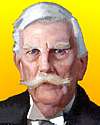
Born 8 Mar 1841; died 6 Mar 1935 at age 93. quotes
American physician.
American physician.
Oliver Wendell Holmes Jr., by G. Edward White. - book suggestion.
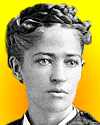
Born 8 Mar 1839; died 3 Aug 1913 at age 74.
Josephine Garis Cochran was an inventor invented a commercially viable design for a dishwasher using water jets aimed at the china held firmly in a rack. She was inspired to have an efficient way to clean dishes, also safer from chipping and breaking, than by servants. U.S. patent, No. 355,139 was issued to her on 28 Dec 1886. Once developed, she started advertising her product as the Garis-Cochran Dish-Washing Machine Co. It was a big boost for her business when her machines were used in the large kitchens at the 1893 Columbian Exposition. Her father, John Garis was a civil engineer. A great-grandfather was John Fitch, the steam boat inventor. By 1940, her company evolved into Kitchen Aid, of Whirlpool Corp.«
Josephine Garis Cochran was an inventor invented a commercially viable design for a dishwasher using water jets aimed at the china held firmly in a rack. She was inspired to have an efficient way to clean dishes, also safer from chipping and breaking, than by servants. U.S. patent, No. 355,139 was issued to her on 28 Dec 1886. Once developed, she started advertising her product as the Garis-Cochran Dish-Washing Machine Co. It was a big boost for her business when her machines were used in the large kitchens at the 1893 Columbian Exposition. Her father, John Garis was a civil engineer. A great-grandfather was John Fitch, the steam boat inventor. By 1940, her company evolved into Kitchen Aid, of Whirlpool Corp.«
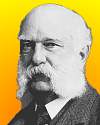
Born 8 Mar 1839; died 20 Jun 1917 at age 78.
American chemist who with French chemist Charles Friedel, discovered an important organic carbon-chain addition to carbon-ring chemical synthesis techique, the Friedel-Crafts reaction (1877). This was a method of synthesizing hydrocarbons or ketones from aromatic hydrocarbons using aluminum chloride as a catalyst. Friedel and Crafts also did much work on the synthesis of organosilicon compounds.
American chemist who with French chemist Charles Friedel, discovered an important organic carbon-chain addition to carbon-ring chemical synthesis techique, the Friedel-Crafts reaction (1877). This was a method of synthesizing hydrocarbons or ketones from aromatic hydrocarbons using aluminum chloride as a catalyst. Friedel and Crafts also did much work on the synthesis of organosilicon compounds.
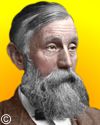
Born 8 Mar 1836; died 28 Jan 1907 at age 70. quotes
English physiologist and educator who introduced modern methods of teaching biology and physiology that emphasized laboratory training and became standard in the teaching of the biological sciences in English universities. As Foster's Royal Society obituary said, “He insisted that practical work, carried on by the student himself, illustrative of the facts on which the lecture was based, must immediately follow the lecture. (In this he was following principles used by Huxley). The physiology of each organ must be dealt with as a whole in the lecture, and the practical work must be so arranged as to bring home to the student all of the points of each lecture at the time. His ideal laboratory would be of sufficient size to provide each student with his own working place, both in the histological and in the chemical department at the same time.” He also studied if the heartbeat is either dependant on nerve impulses, or any degree of independance if the heart muscles have their own capability for rhythmic contraction.
English physiologist and educator who introduced modern methods of teaching biology and physiology that emphasized laboratory training and became standard in the teaching of the biological sciences in English universities. As Foster's Royal Society obituary said, “He insisted that practical work, carried on by the student himself, illustrative of the facts on which the lecture was based, must immediately follow the lecture. (In this he was following principles used by Huxley). The physiology of each organ must be dealt with as a whole in the lecture, and the practical work must be so arranged as to bring home to the student all of the points of each lecture at the time. His ideal laboratory would be of sufficient size to provide each student with his own working place, both in the histological and in the chemical department at the same time.” He also studied if the heartbeat is either dependant on nerve impulses, or any degree of independance if the heart muscles have their own capability for rhythmic contraction.
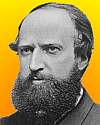
Born 8 Mar 1824; died 17 Sep 1869 at age 45.
Scottish marine engineer who, assisted by W.J.M. Rankine, developed the compound steam marine engine (1854) by dividing the steam expansion into two cylinders, so that each cycled through a smaller range of temperatures and pressures which greatly improved fuel efficiency. The S.S. Brandon sailed in Jul 1854 with their first engine of this type, which used a third less coal than was possible before. Elder continued improve his designs to give even more economy. As a result, his engineering business on the Clyde in Glasgow, Scotland, continued to grow, with over 4,000 workers. Between 1853 and 1867, his firm took out fourteen important patents, including a quadruple-expansion engine (1862). He died at the young age of 45 from liver disease. However, his ship yard remains today as Kvaerner Govan Ltd.«
Scottish marine engineer who, assisted by W.J.M. Rankine, developed the compound steam marine engine (1854) by dividing the steam expansion into two cylinders, so that each cycled through a smaller range of temperatures and pressures which greatly improved fuel efficiency. The S.S. Brandon sailed in Jul 1854 with their first engine of this type, which used a third less coal than was possible before. Elder continued improve his designs to give even more economy. As a result, his engineering business on the Clyde in Glasgow, Scotland, continued to grow, with over 4,000 workers. Between 1853 and 1867, his firm took out fourteen important patents, including a quadruple-expansion engine (1862). He died at the young age of 45 from liver disease. However, his ship yard remains today as Kvaerner Govan Ltd.«
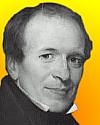
c.1840-45
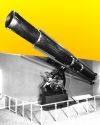
American astronomer whose family became the first significant manufacturers of astronomical instruments in the U.S. His company manufactured apparatus for most American observatories of the era, including Lick and Pulkovo, and others in Europe. In 1862, while testing a telescope, Clark discovered the companion star to Sirius, which had previously been predicted but until then never sighted. The 18½-in objective telescope he used was subsequently delivered to the Dearborn Observatory, Chicago. His sons, Alvan Graham Clark and George Bassett Clark, continued the business. The unexcelled 40-in refractor telescopes for the 40-in Yerkes observatory was made by Alvan Graham Clark.«[Image: Dearborn telescope, c.1864.]
Alvan Clark & Sons, Artists in Optics, by Warner and Ariail. - book suggestion.
Born 8 Mar 1787; died 4 Jul 1840 at age 53.
German surgeon who helped to create modern plastic surgery. A superintendent of German military hospitals during the Napoleonic Wars (1800-15), he also served as professor of surgery and director of the surgical clinic at the University of Berlin (1810-40). He improved the English surgeon Joseph Carpue's adaptation of the "Indian method" which used a skin graft from the forehead for plastic surgery on the nose. He also revived the "Italian method" which similary used a graft from the upper arm. Gräfe contributed techniques for a cleft palate operation, and blood transfusion. Albrecht von Gräfe, his son, followed in the medical profession also, as an eminent eye surgeon.
German surgeon who helped to create modern plastic surgery. A superintendent of German military hospitals during the Napoleonic Wars (1800-15), he also served as professor of surgery and director of the surgical clinic at the University of Berlin (1810-40). He improved the English surgeon Joseph Carpue's adaptation of the "Indian method" which used a skin graft from the forehead for plastic surgery on the nose. He also revived the "Italian method" which similary used a graft from the upper arm. Gräfe contributed techniques for a cleft palate operation, and blood transfusion. Albrecht von Gräfe, his son, followed in the medical profession also, as an eminent eye surgeon.
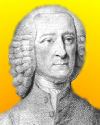
Born 8 Mar 1712; died 26 Dec 1780 at age 68.
English physician who was first to describe coronary arteriosclerosis (hardening and thickening of the arterial wall, with a loss of elasticity and reduced blood flow) associated with angina pectoris. He began his medical practise in 1740. He was first to give a substantial description of diphtheria in England in his Account of the Sore Throat Attended With Ulcers (1748), and credited with the first accurate description of migraine. He promoted coffee as a beverage in England, and as a crop in the West Indies. As a Quaker and philanthropist, he maintained a botanical garden in Upton, supported John Howard in his penal reforms and aided Benjamin Franklin (1774) draft a scheme of reconciliation between England and the American colonies.«
English physician who was first to describe coronary arteriosclerosis (hardening and thickening of the arterial wall, with a loss of elasticity and reduced blood flow) associated with angina pectoris. He began his medical practise in 1740. He was first to give a substantial description of diphtheria in England in his Account of the Sore Throat Attended With Ulcers (1748), and credited with the first accurate description of migraine. He promoted coffee as a beverage in England, and as a crop in the West Indies. As a Quaker and philanthropist, he maintained a botanical garden in Upton, supported John Howard in his penal reforms and aided Benjamin Franklin (1774) draft a scheme of reconciliation between England and the American colonies.«

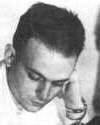
Died 8 Mar 2005 at age 80 (born 11 Jul 1924).
César (Mansueto Giulio) Lattes was the Brazilian physicist who, with American physicist Eugene Gardner at the University of California, Berkeley, in 1948 confirmed the existence of heavy and light mesons formed during the bombardment of carbon nuclei with alpha particles. The experimental discovery of the pi meson was fundamental to explaining the nuclear binding force. Japanese theoretical physicist, Hideki Yukawa, had proposed (1935) a new, unknown particle with 200 times more mass than the electron, that was emitted and absorbed by protons and neutrons. The exchange of those particles between the nucleons would produce a short-range attraction between them.
César (Mansueto Giulio) Lattes was the Brazilian physicist who, with American physicist Eugene Gardner at the University of California, Berkeley, in 1948 confirmed the existence of heavy and light mesons formed during the bombardment of carbon nuclei with alpha particles. The experimental discovery of the pi meson was fundamental to explaining the nuclear binding force. Japanese theoretical physicist, Hideki Yukawa, had proposed (1935) a new, unknown particle with 200 times more mass than the electron, that was emitted and absorbed by protons and neutrons. The exchange of those particles between the nucleons would produce a short-range attraction between them.
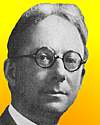
Died 8 Mar 1975 at age 89 (born 15 Apr 1885).
Emory Leon Chaffee was an American physicist whose invention of the “Chaffee Gap” spark-type method to produce continuous high-frequency electrical oscillations for radio transmission was an outcome of research work for his Ph.D. thesis (1911). The spark gap was between the end faces of metal rods (a copper anode and an alumium cathode), in an atmosphere of moist hydrogen in a sealed chamber. The d.c. source circuit included choke coils. The rods were cooled by external radiating fins. He also specialized in the field of thermionic vacuum tubes and test measurements, such as an accurate direct determination of the value of e/m, the ratio of electron charge and its mass. Later he became interested in the eye, doing experimental work with William T. Bovie on the electrical response of the retina, which Chaffee amplified with a vacuum tube circuit.«
Emory Leon Chaffee was an American physicist whose invention of the “Chaffee Gap” spark-type method to produce continuous high-frequency electrical oscillations for radio transmission was an outcome of research work for his Ph.D. thesis (1911). The spark gap was between the end faces of metal rods (a copper anode and an alumium cathode), in an atmosphere of moist hydrogen in a sealed chamber. The d.c. source circuit included choke coils. The rods were cooled by external radiating fins. He also specialized in the field of thermionic vacuum tubes and test measurements, such as an accurate direct determination of the value of e/m, the ratio of electron charge and its mass. Later he became interested in the eye, doing experimental work with William T. Bovie on the electrical response of the retina, which Chaffee amplified with a vacuum tube circuit.«
Died 8 Mar 1964 at age 72 (born 22 Jun 1891).
Franz Gabriel Alexander was a Hungarian-American physician and psychoanalyst sometimes called the “father of psychosomatic medicine” because he was a leader in identifying emotional tension as a significant cause of physical illness.
Franz Gabriel Alexander was a Hungarian-American physician and psychoanalyst sometimes called the “father of psychosomatic medicine” because he was a leader in identifying emotional tension as a significant cause of physical illness.
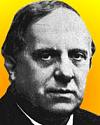
Died 8 Mar 1946 at age 77 (born 23 Oct 1868).
English automobile and aeronautics pioneer who built the first British petrol automobile (1896) and founded the Lanchester Engine Co in 1899. In 1901, Lanchester patented disc brakes. His production cars were scientifically designed and owed little to their competitors. His 1903 car had a balanced "vibrationless" two-cylinder horizontal engine with two counter-rotating crankshafts, electric ignition, 3 speed epicyclic gearbox with pre-selector control, tiller steering and a worm drive back axle. In 1907-8, he published an important two-volume work on aerodynamics. Lanchester is recognized as the first to grasp the role of the trailing vortices behind lifting wings and as the initiator of the circulation theory of lift. He also founded mathematical modelling for military gaming.
English automobile and aeronautics pioneer who built the first British petrol automobile (1896) and founded the Lanchester Engine Co in 1899. In 1901, Lanchester patented disc brakes. His production cars were scientifically designed and owed little to their competitors. His 1903 car had a balanced "vibrationless" two-cylinder horizontal engine with two counter-rotating crankshafts, electric ignition, 3 speed epicyclic gearbox with pre-selector control, tiller steering and a worm drive back axle. In 1907-8, he published an important two-volume work on aerodynamics. Lanchester is recognized as the first to grasp the role of the trailing vortices behind lifting wings and as the initiator of the circulation theory of lift. He also founded mathematical modelling for military gaming.
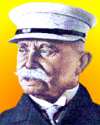
Died 8 Mar 1917 at age 78 (born 8 Jul 1838). quotes
Ferdinand Adolf August Heinrich Count von Zeppelin was a German inventor, engineer and manufacturer who was the aviation pioneer that built the first rigid dirigible airships, named Zeppelins. After retiring from a military career (1890), he devoted ten years to the designing and building of his first successful light-than-air craft, the LZ-1. He patented his idea on 31 Aug 1895 and formed a company to build airships in 1898. Many thought his invention incredible, and called him “Foolish Count.” His first airship took off on 2 Jul 1900 at Lake Constance, where it had been assembled in a floating assembly shed. Its success stimulated funding from the community. Eventually, he produced more than 100 zeppelins for military uses in WW I. During the war, Zeppelins were used to bomb Britain beginning 19 Jan 1915 with attacks on Great Yarmouth and King's Lynn. After the war, he continued to improve the design and built a fleet of airships for commercial passenger service, which included transatlantic flights. Zeppelin use ended after the 6 May 1937 Hindenburg fire disaster at Lakehurst, N.J., U.S.A.« more
Ferdinand Adolf August Heinrich Count von Zeppelin was a German inventor, engineer and manufacturer who was the aviation pioneer that built the first rigid dirigible airships, named Zeppelins. After retiring from a military career (1890), he devoted ten years to the designing and building of his first successful light-than-air craft, the LZ-1. He patented his idea on 31 Aug 1895 and formed a company to build airships in 1898. Many thought his invention incredible, and called him “Foolish Count.” His first airship took off on 2 Jul 1900 at Lake Constance, where it had been assembled in a floating assembly shed. Its success stimulated funding from the community. Eventually, he produced more than 100 zeppelins for military uses in WW I. During the war, Zeppelins were used to bomb Britain beginning 19 Jan 1915 with attacks on Great Yarmouth and King's Lynn. After the war, he continued to improve the design and built a fleet of airships for commercial passenger service, which included transatlantic flights. Zeppelin use ended after the 6 May 1937 Hindenburg fire disaster at Lakehurst, N.J., U.S.A.« more
Zeppelin: The Story of a Great Achievement, by Harry Vissering. - book suggestion.
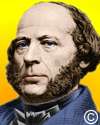
Died 8 Mar 1889 at age 85 (born 31 Jul 1803).
Swedish-American inventor and naval engineer, who became an American citizen in 1847. He was the inventor of the screw propeller, built the first armoured turret warship, the USS Monitor. At the age of 14, he participated in the building of the Göta Canal (1817). A locomotive of his design, The Novelty, participated in a competition with Stephenson's Rocket in 1829. Ericsson invented and patented (No.588, on 1 Feb 1836) a double rotation propeller. In Aug 1861, the American Congress authorized ironclad warships and one ship of the Monitor type designed by Ericsson was ordered. By Mar 1862 the Monitor was ready for sea. He also developed a torpedo boat, The Destroyer, and worked to design his sun-motor engine. more
Swedish-American inventor and naval engineer, who became an American citizen in 1847. He was the inventor of the screw propeller, built the first armoured turret warship, the USS Monitor. At the age of 14, he participated in the building of the Göta Canal (1817). A locomotive of his design, The Novelty, participated in a competition with Stephenson's Rocket in 1829. Ericsson invented and patented (No.588, on 1 Feb 1836) a double rotation propeller. In Aug 1861, the American Congress authorized ironclad warships and one ship of the Monitor type designed by Ericsson was ordered. By Mar 1862 the Monitor was ready for sea. He also developed a torpedo boat, The Destroyer, and worked to design his sun-motor engine. more
Man of the Monitor, The Story of John Ericsson, by Jean Lee Latham. - book suggestion.
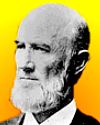
Died 8 Mar 1887 at age 66 (born 23 May 1820).
James Buchanan Eads was an American engineer who built the two-tier triple-arch steel bridge over the Mississippi River at St. Louis, Missouri. At the age of 22, he invented a boat and diving bell which enabled walking on the river bottom. In 12 years' time he made a fortune with his salvage boat operation. During the Civil War, he built ironclad warships. After the war, he built the Mississippi River bridge, the first major bridge to use steel and cantilevered construction, which was opened 4 Jul 1874. Each roughly 500-ft span rested on piers built on bedrock about 100 feet beneath the river bottom. He created a year-round navigation channel for New Orleans scoured out with a system of jetties harnessing the river's water flow (1879).«
James Buchanan Eads was an American engineer who built the two-tier triple-arch steel bridge over the Mississippi River at St. Louis, Missouri. At the age of 22, he invented a boat and diving bell which enabled walking on the river bottom. In 12 years' time he made a fortune with his salvage boat operation. During the Civil War, he built ironclad warships. After the war, he built the Mississippi River bridge, the first major bridge to use steel and cantilevered construction, which was opened 4 Jul 1874. Each roughly 500-ft span rested on piers built on bedrock about 100 feet beneath the river bottom. He created a year-round navigation channel for New Orleans scoured out with a system of jetties harnessing the river's water flow (1879).«
James B. Eads, by Louis How. - book suggestion.
(EB)
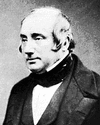
Died 8 Mar 1877 at age 79 (born 14 Jul 1797).
A British naturalist and paleontologist, Bowerbank at 15 began his initial career was at his father's whisky distillery "Bowerbank & Sons". Educated by the famous Dr. Kelly, he took an early interest in science (mainly microscopy, entomology, palaeontology and the study of sponges). He has been most remembered for A Monograph of the British Spongidae (1864-82). Bowerbank also pursued mathematics, botany, astronomy and paleontology. He was the honorary secretary and president of the Paleontological Society, and was one of the founding members of the Royal Microscopical Society and of the Zoological Society.
A British naturalist and paleontologist, Bowerbank at 15 began his initial career was at his father's whisky distillery "Bowerbank & Sons". Educated by the famous Dr. Kelly, he took an early interest in science (mainly microscopy, entomology, palaeontology and the study of sponges). He has been most remembered for A Monograph of the British Spongidae (1864-82). Bowerbank also pursued mathematics, botany, astronomy and paleontology. He was the honorary secretary and president of the Paleontological Society, and was one of the founding members of the Royal Microscopical Society and of the Zoological Society.
Died 8 Mar 1873 (born 1822).
Scottish engineer.
Scottish engineer.
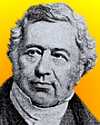
Died 8 Mar 1853 at age 62 (born 19 Aug 1790).
English clockmaker and inventor whose chronometers were noted for high accuracy. His patents in this field included compasses for navigation and surveying. He experimented with springs made of steel, gold and glass, and devices for counteracting the effects of temperature change upon timepiece mechanisms. As clockmaker to Queen Victoria, he was commissioned to build the Great Clock for the clock tower of the Houses of Parliament (known as Big Ben, although that is actually the nickname of its hour bell) which he began in the year he died. His son, Frederick Dent, completed the work the following year and it was installed in the tower in 1859. It continues to be recognised for its great accuracy of 4 seconds in a year.«
English clockmaker and inventor whose chronometers were noted for high accuracy. His patents in this field included compasses for navigation and surveying. He experimented with springs made of steel, gold and glass, and devices for counteracting the effects of temperature change upon timepiece mechanisms. As clockmaker to Queen Victoria, he was commissioned to build the Great Clock for the clock tower of the Houses of Parliament (known as Big Ben, although that is actually the nickname of its hour bell) which he began in the year he died. His son, Frederick Dent, completed the work the following year and it was installed in the tower in 1859. It continues to be recognised for its great accuracy of 4 seconds in a year.«
Edward John Dent, Chronometer Maker, and his Successors, by Vaudrey Mercer. - book suggestion.
Died 8 Mar 1803 at age 66 (born 21 May 1736).
(Earl) Founder of British inland navigation, whose canal, built from his estates at Worsley to the city of Manchester, is called the Bridgewater canal.
(Earl) Founder of British inland navigation, whose canal, built from his estates at Worsley to the city of Manchester, is called the Bridgewater canal.
Died 8 Mar 1778 at age 58 (born 10 Feb 1720).
Swedish entomologist. Using Leeuwenhoek's and Swammerdam's techniques of microscopy, and Réamur's method of biological observation, he studied the life and metamorphosis of insects, making morphological observations and drawings of their structures.
Swedish entomologist. Using Leeuwenhoek's and Swammerdam's techniques of microscopy, and Réamur's method of biological observation, he studied the life and metamorphosis of insects, making morphological observations and drawings of their structures.
Died 8 Mar 1717 (born c. 1678). quotes
British ironmaster who first successfully smelted iron ore with coke. He had first used coke in smelting copper. By 1709, at Coalbrookdale, he had extended this method to produce satisfactory iron using a coke-fired furnace, with cost savings over charcoal. Improved efficiency was also possible with coke as fuel, which could support heavier charges than the weaker charcoal was able to support. The iron quality permitted thin castings able to compete with brass in making pots. His son and grandson followed after him, in their turn providing iron for the Newcomen steam engines, the world's first cast iron bridge (Ironbridge) and Richard Trevithick's first railway locomotive with its high-pressure boiler (1802).
British ironmaster who first successfully smelted iron ore with coke. He had first used coke in smelting copper. By 1709, at Coalbrookdale, he had extended this method to produce satisfactory iron using a coke-fired furnace, with cost savings over charcoal. Improved efficiency was also possible with coke as fuel, which could support heavier charges than the weaker charcoal was able to support. The iron quality permitted thin castings able to compete with brass in making pots. His son and grandson followed after him, in their turn providing iron for the Newcomen steam engines, the world's first cast iron bridge (Ironbridge) and Richard Trevithick's first railway locomotive with its high-pressure boiler (1802).
Dynasty of Iron Founders: the Darbys and Coalbrookdale, by Arthur Raistrick. - book suggestion.
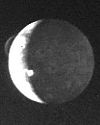
In 1979, volcanoes on Io were discovered by Voyager 1.
In 1976, the largest recovered single stony meteorite (1,774 kg) fell in Jilin, China, during a meteor shower that dropped more than 4,000 kg of extra-terrestrial rock.
In 1972, according to a number of web sites, “the Goodyear blimp was first flown.” This is incorrect, however, because the Goodyear Zeppelin Corporation of Akron Ohio delivered the first dirigible for private commercial operation decades earlier, on 22 May 1930, to the New England Airship Company of Bedford, Mass. That airship was chartered by Bird & Son, Inc. of East Walpole, Mass., and within a five months span of time made 1,380 flights as a goodwill messenger, carrying more than 6,000 passengers. Goodyear had been in business before that - since 1925 - when Goodyear built its first helium-filled public relations airship, the Pilgrim, which toured the U.S. with the tyre company name painted on the side.«*

In 1950, the VW Bus began production, at the time known as the Volkswagen Type 2. It was marketed in the U.S. and Europe until 1967. Like the original VW it used an air-cooled flat-four-cylinder engine, and the first Type 2 vans were manufactured with the same 1100 engine as the “Beetle.” That proved to be underpowered, and was upgraded to the larger 1200 engine in 1953. The original design concept is credited to Dutch businessman Ben Pon, who was planning on marketing the original Type 1, but realized the potential of a van design. He sketched out his idea on 23 April 1947, which VW accepted and turned into a reality.«
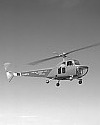
In 1946, the New York Journal-American newspaper was issued License No. 1 for its helicopter by the Civil Aeronautics Administration. The helicopter was used for news gathering and delivering photographs. It was a Bell 47B, which had a cruising speed up to 100 m.p.h.«
In 1910, Elise Deroche (Baroness de Laroche) was issued a pilot's license by the Aero Club de France, though she had made her first solo flight in 1909.
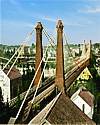
1868
In 1855, the world’s first operational railroad suspension bridge carried its first train, a trial with a 23 ton engine. It spanned the gorge at Niagara Falls, New York, suggested by transportation entrepreneur William Hamilton Merritt. It was completed by John Augustus Roebling in 1854. Roebling was the first to manufacture wire rope in North America. The bridge’s four main cables were 10 inches in diameter. Its 825-ft span had a lower 15-ft wide highway deck, and an upper 24-ft wide deck for the railroad that stood 245-ft above the high water level below it. It was replaced in 1897 by a steel arch bridge designed with greater strength to carry the much greater loads that had increased since the mid-century trains.«
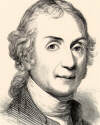
In 1775, Joseph Priestley, having discovered oxygen on 1 Aug 1774, experimented with mice in his home laboratory on whether it is necessary to support life.
Joseph Priestley: Adventurer in Science and Champion of Truth, by F W. Gibbs. - book suggestion.
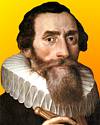
In 1618, Johannes Kepler formulated his Third Law of Planetary Motion.
Johannes Kepler And the New Astronomy, by James R. Voelkel. - book suggestion.




