Born 19 Feb 1941. quotes
American physicist who shared the 2004 Nobel Prize in Physics (with H. David Politzer and Frank Wilczek) for “the discovery of asymptotic freedom in the theory of the strong interaction”.
American physicist who shared the 2004 Nobel Prize in Physics (with H. David Politzer and Frank Wilczek) for “the discovery of asymptotic freedom in the theory of the strong interaction”.
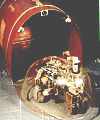
American-British neurologist who linked learning with a particular brain wave as revealed by measurements by electroencephalograph. He had special interests in the study of the neurophysiological correlates of such paranormal states as hypnosis, sleep, trance, and hallucination. He built the most advanced robot of his day. Called a testudo from Latin for "turtle", the automatic device mimicked reactions like a living creature. Using a photoelectric eye, a touch-sensor, and motor-driven steerable wheels, it could negotiate around obstacles. It could approach a light bulb, but back away when it became too bright - unless it was "hungry" for a recharge of its batteries when it approached until it could make contact with a charger placed near the lamp.[Image right: Walter's robot with transparent plastic cover.]
Born 19 Feb 1906; died 16 Oct 1981 at age 75.
American ornithologist considered an expert on neotropical birds, centered in Panama and extending north into Middle America and south into western South America. At age 51, he retired from the legal profession to pursue his lifelong interest in Middle and South American birds on full-time basis. He was born in Panama, and returned there annually to study the rich birdlife and keep in touch his family. In 1957, he was appointed a Research Associate of the American Museum of Natural History in New York, a position he held until his death. He published only about 30 many papers, but his extensive notes on systematics, behavior, and distribution of Middle American birds remain as an invaluable resource for anyone studying the subject.
American ornithologist considered an expert on neotropical birds, centered in Panama and extending north into Middle America and south into western South America. At age 51, he retired from the legal profession to pursue his lifelong interest in Middle and South American birds on full-time basis. He was born in Panama, and returned there annually to study the rich birdlife and keep in touch his family. In 1957, he was appointed a Research Associate of the American Museum of Natural History in New York, a position he held until his death. He published only about 30 many papers, but his extensive notes on systematics, behavior, and distribution of Middle American birds remain as an invaluable resource for anyone studying the subject.
Born 19 Feb 1902; died 9 May 1936 at age 34.
Humfry (Gilbert Garth) Payne was an English archaeologist who studied Mediterranean archaeology and is known for his book Necrocorinthia (1931), a significant work on Corinthian pottery. He did work at Knossos, and between 1930 and 1933, he led excavations of the Hera sanctuary and the ancient harbour at Perahóra (meaning "the land beyond") in the Gulf of Korinth, Greece. Later excavations there were headed by Peter Megaw in the 1960s and Richard Tomlinson in the early 1980s clarified earlier finds and opened up new areas of the temples, markets, ritual dining areas and complex water systems. Payne died at the early age of 35, and was buried at Mycenae.«
Humfry (Gilbert Garth) Payne was an English archaeologist who studied Mediterranean archaeology and is known for his book Necrocorinthia (1931), a significant work on Corinthian pottery. He did work at Knossos, and between 1930 and 1933, he led excavations of the Hera sanctuary and the ancient harbour at Perahóra (meaning "the land beyond") in the Gulf of Korinth, Greece. Later excavations there were headed by Peter Megaw in the 1960s and Richard Tomlinson in the early 1980s clarified earlier finds and opened up new areas of the temples, markets, ritual dining areas and complex water systems. Payne died at the early age of 35, and was buried at Mycenae.«
Necrocorinthia: A study of Corinthian art, by Humfry Payne. - book suggestion.
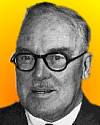
Born 19 Feb 1889; died 15 Dec 1970 at age 81.
British-born New Zealand nuclear physicist who worked under Ernest Rutherford investigating atomic structure with Hans Geiger. Marsden visually counted scintillations from alpha particles after passing through gold foil and striking a phosphorescent screen. That some of these were observed scattered at surprisingly large angles led to Rutherford's theory of the nucleus as the massive, tiny centre of the atom. Later, Marsden's own experiments, working in New Zealand, hinted suggested transmutation of elements was possible when alpha particles bombarding nitrogen nuclei produced scattered particles of greater speed than the original radiation (subsequently shown to be 14N transmuting to 17O).«
British-born New Zealand nuclear physicist who worked under Ernest Rutherford investigating atomic structure with Hans Geiger. Marsden visually counted scintillations from alpha particles after passing through gold foil and striking a phosphorescent screen. That some of these were observed scattered at surprisingly large angles led to Rutherford's theory of the nucleus as the massive, tiny centre of the atom. Later, Marsden's own experiments, working in New Zealand, hinted suggested transmutation of elements was possible when alpha particles bombarding nitrogen nuclei produced scattered particles of greater speed than the original radiation (subsequently shown to be 14N transmuting to 17O).«
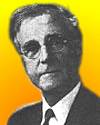
Born 19 Feb 1873; died 2 May 1958 at age 85.
American anthropologist who is recognized as the greatest authority upon ethnology, including the development of languages and civilization among men. He was a prolific writer, publishing many books pertaining to the languages, myths, religious beliefs and social conditions of numerous tribes of North American Indians. He pioneered ethnohistorical research techniques while working for the Bureau of American Ethnology 1900-44. In addition to his firsthand knowledge from fieldwork, he consulted the documents of French, Spanish, and British explorers to assemble information on the native cultures of the American Southeast so that he was able to describe extinct societies never seen by an anthropologist.«
American anthropologist who is recognized as the greatest authority upon ethnology, including the development of languages and civilization among men. He was a prolific writer, publishing many books pertaining to the languages, myths, religious beliefs and social conditions of numerous tribes of North American Indians. He pioneered ethnohistorical research techniques while working for the Bureau of American Ethnology 1900-44. In addition to his firsthand knowledge from fieldwork, he consulted the documents of French, Spanish, and British explorers to assemble information on the native cultures of the American Southeast so that he was able to describe extinct societies never seen by an anthropologist.«
The Indian Tribes of North America, by John Reed Swanton. - book suggestion.
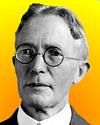
Born 19 Feb 1871; died 24 Sep 1930 at age 59.
Canadian-American vertebrate paleontologist who made major contributions to the mammalian palaeontology of Asia and North America including his theory (195) that a majority of mammalian orders and families originated in Northern Hemisphere and subsequently spread southward. He also recognized that the early isolation of Australia's land mass explained the development of very different faunas there. He worked at the American Museum of Natural History from 1895 to 1927.«
Canadian-American vertebrate paleontologist who made major contributions to the mammalian palaeontology of Asia and North America including his theory (195) that a majority of mammalian orders and families originated in Northern Hemisphere and subsequently spread southward. He also recognized that the early isolation of Australia's land mass explained the development of very different faunas there. He worked at the American Museum of Natural History from 1895 to 1927.«
William Diller Matthew, Paleontologist, by Edwin H. Colbert. - book suggestion.
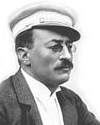
Born 19 Feb 1865; died 26 Nov 1952 at age 87.
Swedish explorer and geographer who led through Central Asia a series of expeditions that resulted in important archaeological and geographical findings. During his first major Asian expedition, he crossed the Pamirs, charted Lop Nor (Lake) in China, and finally arrived at Beijing. He then journeyed to Tibet by way of Mongolia, Siberia, and the Gobi Desert. Hedin explored Tibet and Xinjiang (Sinkiang), identified the sources of the Brahmaputra, Indus, and Sutlej rivers, and, in 1906, explored and named the Trans-Himalayas. In 1927 Hedin led an expedition of Chinese and Swedish scientists into Central Asia. He wrote Through Asia (1898), The Conquest of Tibet (1935), My Life as an Explorer (1926), and other accounts of his travels.
Swedish explorer and geographer who led through Central Asia a series of expeditions that resulted in important archaeological and geographical findings. During his first major Asian expedition, he crossed the Pamirs, charted Lop Nor (Lake) in China, and finally arrived at Beijing. He then journeyed to Tibet by way of Mongolia, Siberia, and the Gobi Desert. Hedin explored Tibet and Xinjiang (Sinkiang), identified the sources of the Brahmaputra, Indus, and Sutlej rivers, and, in 1906, explored and named the Trans-Himalayas. In 1927 Hedin led an expedition of Chinese and Swedish scientists into Central Asia. He wrote Through Asia (1898), The Conquest of Tibet (1935), My Life as an Explorer (1926), and other accounts of his travels.
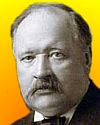
Born 19 Feb 1859; died 2 Oct 1927 at age 68. quotes
Svante (August) Arrhenius was a Swedish physical chemist who was awarded the 1903 Nobel Prize in Chemistry "in recognition of the extraordinary services he has rendered to the advancement of chemistry by his electrolytic theory of dissociation." Electrolytes are chemical compounds which will conduct an electric current when fused or dissolved in certain solvents, usually water. He discovered that even when there is no current flowing through the solution, such compounds separate into particles carrying an electrical charge, called ions. He also investigated the viscosity of solutions and how reaction speed changes with temperature. After 1900, his interests diversified into cosmic physics, meterology and the theory of immunity.«
Svante (August) Arrhenius was a Swedish physical chemist who was awarded the 1903 Nobel Prize in Chemistry "in recognition of the extraordinary services he has rendered to the advancement of chemistry by his electrolytic theory of dissociation." Electrolytes are chemical compounds which will conduct an electric current when fused or dissolved in certain solvents, usually water. He discovered that even when there is no current flowing through the solution, such compounds separate into particles carrying an electrical charge, called ions. He also investigated the viscosity of solutions and how reaction speed changes with temperature. After 1900, his interests diversified into cosmic physics, meterology and the theory of immunity.«
Arrhenius: From Ionic Theory to the Greenhouse Effect, by Elisabeth Crawford. - book suggestion.
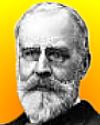
Born 19 Feb 1846; died 15 Feb 1923 at age 76.
French archaeologist who exposed several archaeological frauds, including the forgeries of Hebrew texts offered (1883) to British Museum by the prolific swindler, Moses W.Shapira; the Moabite potteries in the Imperial Museum, Berlin, and the tiara of Saitarpharnes that had already been purchased by the Louvre, Paris, for 500,000 francs. He described these detective activities in Les Fraudes archeologiques ("Archaeological Frauds", 1885). He directed expeditions in Palestine (1874), Syria, Crete, Egypt, and discovered the site of Gezer (1873-74). In 1870 he discovered the stele of Mesha, a stone bearing the oldest inscription known at that time attributed to Semitic peoples, who left the region because of climatic change.«
French archaeologist who exposed several archaeological frauds, including the forgeries of Hebrew texts offered (1883) to British Museum by the prolific swindler, Moses W.Shapira; the Moabite potteries in the Imperial Museum, Berlin, and the tiara of Saitarpharnes that had already been purchased by the Louvre, Paris, for 500,000 francs. He described these detective activities in Les Fraudes archeologiques ("Archaeological Frauds", 1885). He directed expeditions in Palestine (1874), Syria, Crete, Egypt, and discovered the site of Gezer (1873-74). In 1870 he discovered the stele of Mesha, a stone bearing the oldest inscription known at that time attributed to Semitic peoples, who left the region because of climatic change.«
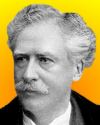
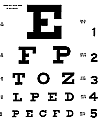
Dutch ophthalmologist whose Snellen Chart imprinted with lines of black letters is used for testing visual acuity. Test types were invented in 1843 by Heinrich Kuechler (1811-1873) and were improved by the Vienna oculist Eduard Jaeger Ritter von Jaxtthal (1818-1884) in 1854. Shortly after this Snellen invented his chart of square shaped letters. This chart soon gained acceptance around the world. The Snellen fraction is a ratio, for instance 20/20 or 20/100 (metric equivalent 6/6, 6/30), measuring the acuity of a person's eyesight compared to a standard observer with good normal acuity. 20/20 means he can resolve 2 target features at 20 feet.[Image right: Snellen-type acuity chart (source)]
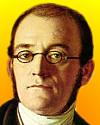
Born 19 Feb 1804; died 23 Jul 1878 at age 74.
Austrian pathologist whose contributions helped to establish pathology as a recognised science. He is one of the greatest descriptive pathologists, and he himself performed more than 30,000 autopsies, averaging two a day, seven days a week, for 45 years. Rokitansky developed a method of removing the body organs all at once. Thus, the heart, liver, kidneys, urinary bladder, and other organs remained in one block and then dissected on the autopsy table, apart. This permited instruction of medical students by showing all the different organs in the same relationships they had inside the body. He supported Semmelweis, his student, in the controversy over using aseptical methods to prevent contact infection carried on a physician's hands.«
Austrian pathologist whose contributions helped to establish pathology as a recognised science. He is one of the greatest descriptive pathologists, and he himself performed more than 30,000 autopsies, averaging two a day, seven days a week, for 45 years. Rokitansky developed a method of removing the body organs all at once. Thus, the heart, liver, kidneys, urinary bladder, and other organs remained in one block and then dissected on the autopsy table, apart. This permited instruction of medical students by showing all the different organs in the same relationships they had inside the body. He supported Semmelweis, his student, in the controversy over using aseptical methods to prevent contact infection carried on a physician's hands.«
Born 19 Feb 1799; died 27 Apr 1882 at age 83.
German mineralogist.
German mineralogist.
/LockeJohn(1792-1856)Thm.jpg "John Locke")
/LockeJohn(1792-1856)ChronographThm.jpg)
American geologist, surveyor and scientist who invented tools for surveyors, including a surveyor’s compass (patented 16 Jul 1850), a collimating level (Locke’s Hand Level, patented 2 Jul 1850) and a gravity escapement for regulator clocks. The electro-chronograph he constructed (1844-48) for the United States Coast Survey was installed in the Naval Observatory, Washington, in 1848. It improved determination of longitudes, as it was able to make a printed record on a time scale of an event to within one one-hundredth of a second. When connected via the nation's telegraph system, astronomers could record the time of events they observed from elsewhere in the country, by the pressing a telegraph key. Congress awarded him $10,000 for his inventions on 3 Mar 1849.*«[Image: Time display portion of Locke's electro-chronograph while installed at the Naval Observatory.] more
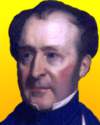
Born 19 Feb 1792; died 22 Oct 1871 at age 79. quotes
Scottish geologist who first differentiated the Silurian strata in the geologic sequence of Early Paleozoic strata (408-540 million years old). He believed in fossils as primary criteria. In 1831, Murchison began researching the previously geologically unknown graywacke rocks of the Lower Paleozoic, found underlying the Old Red Sandstone in parts of Wales, which culminated in his major work The Silurian System (1839). He named the Silurian after an ancient British tribe that inhabited South Wales. He established the Devonian working with Adam Sedgwick (1839). Another worldwide geological system, the Permian (1841), the uppermost of the Paleozoic, he named after the Perm province in Russia where he made a geological survey in 1840-45.«
Scottish geologist who first differentiated the Silurian strata in the geologic sequence of Early Paleozoic strata (408-540 million years old). He believed in fossils as primary criteria. In 1831, Murchison began researching the previously geologically unknown graywacke rocks of the Lower Paleozoic, found underlying the Old Red Sandstone in parts of Wales, which culminated in his major work The Silurian System (1839). He named the Silurian after an ancient British tribe that inhabited South Wales. He established the Devonian working with Adam Sedgwick (1839). Another worldwide geological system, the Permian (1841), the uppermost of the Paleozoic, he named after the Perm province in Russia where he made a geological survey in 1840-45.«
Scientist of the Empire: Sir Roderick Murchison, by Robert A. Stafford. - book suggestion.
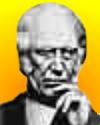
Born 19 Feb 1789; died 18 Aug 1874 at age 85.
(1st Baronet) Scottish civil engineer who was first to use wrought iron for ships, bridges, mill shafts, and structural beams. After moving to London in 1811, he invented a steam excavator and a sausage-making machine, but without commercial success. By 1817, he had established an engineering works in Manchester making mill machinery, which later made over 400 locomotives. The shipbuilding works he opened at Millwall, London (1835-49) built hundreds of iron boats. He furnished the rectangular wrought-iron tubes used by Stephenson for the Britannia railway bridge (1850) over the Menai Strait, which included two almost 460-ft (140-m) spans. He assisted James Joule and Lord Kelvin in geological investigations from 1851.«
(1st Baronet) Scottish civil engineer who was first to use wrought iron for ships, bridges, mill shafts, and structural beams. After moving to London in 1811, he invented a steam excavator and a sausage-making machine, but without commercial success. By 1817, he had established an engineering works in Manchester making mill machinery, which later made over 400 locomotives. The shipbuilding works he opened at Millwall, London (1835-49) built hundreds of iron boats. He furnished the rectangular wrought-iron tubes used by Stephenson for the Britannia railway bridge (1850) over the Menai Strait, which included two almost 460-ft (140-m) spans. He assisted James Joule and Lord Kelvin in geological investigations from 1851.«
The life of Sir William Fairbairn, by William Fairbairn. - book suggestion.
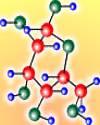
Glucose
Born 19 Feb 1764; died 14 Feb 1833 at age 68.
Gottlieb Sigismund Constantin Kirchhof was a German-Russian chemist who applied the first controlled catalytic reaction to produce glucose, developed a method for refining vegetable oil, and also experimented with brewing and fermentation. He formed the smaller molecule of glucose (the commonest simple sugar) by the catalytic enzyme hydrolysis of the large starch molecule (1811). The method he discovered for the industrial refining of vegetable oil enabled him to established a factory in St. Petersburg capable of producing two tons per day. In other investigations, he provided the groundwork for scientific study of the brewing and fermentation processes.«
Gottlieb Sigismund Constantin Kirchhof was a German-Russian chemist who applied the first controlled catalytic reaction to produce glucose, developed a method for refining vegetable oil, and also experimented with brewing and fermentation. He formed the smaller molecule of glucose (the commonest simple sugar) by the catalytic enzyme hydrolysis of the large starch molecule (1811). The method he discovered for the industrial refining of vegetable oil enabled him to established a factory in St. Petersburg capable of producing two tons per day. In other investigations, he provided the groundwork for scientific study of the brewing and fermentation processes.«
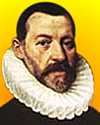
Born 19 Feb 1526; died 4 Apr 1609 at age 83.
Charles de L'Écluse (aka Carolus Clusius) was a French botanist who introduced the tulip to Holland. He travelled and collected botanical information throughout Europe, and introduced new plants from outside Europe. Leaving France to escape religious perscution as a Protestant, he spent time in Prague and Vienna. Late in life, in 1593, he succeeded Dodoens as the chair of botany at the University of Leiden in the Netherlands. He established the botanical garden there and grew a collection of flowering bulbs, including the tulip which initiated the Dutch bulb industry. He is also attributed with cultivating the peony, hyacinth, potato and chestnut.«
Charles de L'Écluse (aka Carolus Clusius) was a French botanist who introduced the tulip to Holland. He travelled and collected botanical information throughout Europe, and introduced new plants from outside Europe. Leaving France to escape religious perscution as a Protestant, he spent time in Prague and Vienna. Late in life, in 1593, he succeeded Dodoens as the chair of botany at the University of Leiden in the Netherlands. He established the botanical garden there and grew a collection of flowering bulbs, including the tulip which initiated the Dutch bulb industry. He is also attributed with cultivating the peony, hyacinth, potato and chestnut.«
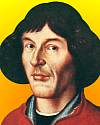
Born 19 Feb 1473; died 24 May 1543 at age 70. quotes
Polish astronomer who proposed the heliocentric model of the Solar System in which all the planets orbit around the Sun at the centre. He recognized that the Earth is a planet which, besides orbiting the Sun annually, also turns once daily on its own axis; and that very slow, long-term changes in the direction of this axis account for theprecession of the equinoxes. He understood the immense distance of the stars. He wrote his ideas in a book, De Orbium Coelestium Revolutionibus. Although completed in 1530, he requested it be published after his death in 1543. Until 1758, the Roman Catholic Church banned the book as contrary to religious dogma.« more
Polish astronomer who proposed the heliocentric model of the Solar System in which all the planets orbit around the Sun at the centre. He recognized that the Earth is a planet which, besides orbiting the Sun annually, also turns once daily on its own axis; and that very slow, long-term changes in the direction of this axis account for theprecession of the equinoxes. He understood the immense distance of the stars. He wrote his ideas in a book, De Orbium Coelestium Revolutionibus. Although completed in 1530, he requested it be published after his death in 1543. Until 1758, the Roman Catholic Church banned the book as contrary to religious dogma.« more
The Book Nobody Read: Chasing the Revolutions of Nicolaus Copernicus, by Owen Gingerich. - book suggestion.

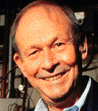
Died 19 Feb 2013 at age 75 (born 26 Jun 1937).
Robert Coleman Richardson was an American physicist who (with Douglas Osheroff and David Lee) was awarded the 1996 Nobel Prize for Physics for their discovery of superfluidity in the isotope helium-3. As helium is reduced in temperature toward almost absolute zero, a strange phase transition occurs, and the helium takes on the form of a superfluid. The atoms had until that point had moved with random speeds and directions. But as a superfluid, the atoms then move in a co-ordinated manner! more
Robert Coleman Richardson was an American physicist who (with Douglas Osheroff and David Lee) was awarded the 1996 Nobel Prize for Physics for their discovery of superfluidity in the isotope helium-3. As helium is reduced in temperature toward almost absolute zero, a strange phase transition occurs, and the helium takes on the form of a superfluid. The atoms had until that point had moved with random speeds and directions. But as a superfluid, the atoms then move in a co-ordinated manner! more
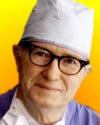
Died 19 Feb 2003 at age 84 (born 14 May 1918).
James Daniel Hardy was an American surgeon who headed teams that performed the first human lung transplant in 1963; the first animal-to-human heart transplant in 1964; and a double-lung transplant that left the heart in place in 1987. Three years before Christiaan Barnard performed the first successful human-to-human heart transplant, on 23 Jan 1964, 68-year-old Boyd Rush was admitted to the hospital. No human was heart available; Hardy decided to use the heart of a chimpanzee named Bino. The newly-transplanted heart beat on its own; but it was too small to maintain independent circulation and Rush died after 90 minutes. Hardy had to endure some severe criticism. Overall, his work helped to alter perceptions about the transplantation process.
James Daniel Hardy was an American surgeon who headed teams that performed the first human lung transplant in 1963; the first animal-to-human heart transplant in 1964; and a double-lung transplant that left the heart in place in 1987. Three years before Christiaan Barnard performed the first successful human-to-human heart transplant, on 23 Jan 1964, 68-year-old Boyd Rush was admitted to the hospital. No human was heart available; Hardy decided to use the heart of a chimpanzee named Bino. The newly-transplanted heart beat on its own; but it was too small to maintain independent circulation and Rush died after 90 minutes. Hardy had to endure some severe criticism. Overall, his work helped to alter perceptions about the transplantation process.
The Academic Surgeon, by James Hardy. - book suggestion.
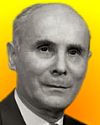
Died 19 Feb 1988 at age 92 (born 24 Sep 1895).
André Frederic Cournand was a French-American physiologist and physician who was one of three who shared the 1956 Nobel Prize for Physiology or Medicine “for their discoveries concerning heart catheterization and pathological changes in the circulatory system.” Cournand extended the technique pioneered by Werner Forssmann, by which a flexible tube, known as a catheter, could be threaded through a vein into the heart to withdraw blood samples to determine cardiac abnormalities. In addition, it permits the measurement of blood pressure, blood flow or gas concentrations in various parts of the cardiac circulatory system (atrium, ventricles, or artery). This gives valuable information in the treatment of heart disease, defect or injury.«
André Frederic Cournand was a French-American physiologist and physician who was one of three who shared the 1956 Nobel Prize for Physiology or Medicine “for their discoveries concerning heart catheterization and pathological changes in the circulatory system.” Cournand extended the technique pioneered by Werner Forssmann, by which a flexible tube, known as a catheter, could be threaded through a vein into the heart to withdraw blood samples to determine cardiac abnormalities. In addition, it permits the measurement of blood pressure, blood flow or gas concentrations in various parts of the cardiac circulatory system (atrium, ventricles, or artery). This gives valuable information in the treatment of heart disease, defect or injury.«
From Roots to Late Budding: Adventures of a Medical Student, by Andre Cournand. - book suggestion.
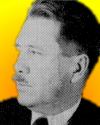
Died 19 Feb 1983 at age 79 (born 4 Mar 1903).
American immunochemist, who with his wife Lyle, during the 1930's, made a worldwide survey of the distribution of blood types. He discovered that blood groups are inherited and not influenced by environment. By genetic analysis of the blood groups that human races are populations that differ in the difference of their alleles. On this basis, he divided the world population into 13 geographically distinct races with different blood group gene profiles. Later, Boyd discovered lectins, which are antibody-like proteins, in plants. He also studied the blood groups of mummies.
American immunochemist, who with his wife Lyle, during the 1930's, made a worldwide survey of the distribution of blood types. He discovered that blood groups are inherited and not influenced by environment. By genetic analysis of the blood groups that human races are populations that differ in the difference of their alleles. On this basis, he divided the world population into 13 geographically distinct races with different blood group gene profiles. Later, Boyd discovered lectins, which are antibody-like proteins, in plants. He also studied the blood groups of mummies.
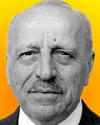
Died 19 Feb 1962 at age 78 (born 13 May 1883). quotes
George Nicholas Papanicolaou was a Greek-American cytologist and pathologist who devised the test now known as the 'Pap smear'. Cancer of the uterus and cervix can be detected by smearing mucus secretions on a microscope slide, and examining the stained cells for abnormalities indicating cancer. A few years after receiving his M.D. in Greece, he emigrated to the U.S. with his wife, landing on Ellis Island on 19 Sep 1913. He shortly thereafter became a medical assistant in New York and turned to research. As early as 1923, he had started using his smear technique. He recognised it as an easily performed screening test for cancer, which he announced at a 1928 medical conference. It was initially received with scepticism, but its widespread use began in the early 1950s.
George Nicholas Papanicolaou was a Greek-American cytologist and pathologist who devised the test now known as the 'Pap smear'. Cancer of the uterus and cervix can be detected by smearing mucus secretions on a microscope slide, and examining the stained cells for abnormalities indicating cancer. A few years after receiving his M.D. in Greece, he emigrated to the U.S. with his wife, landing on Ellis Island on 19 Sep 1913. He shortly thereafter became a medical assistant in New York and turned to research. As early as 1923, he had started using his smear technique. He recognised it as an easily performed screening test for cancer, which he announced at a 1928 medical conference. It was initially received with scepticism, but its widespread use began in the early 1950s.
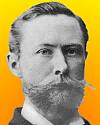
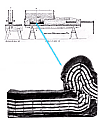
U.S. geologist known for his structural and geomorphological analysis of the Appalachian Mountains and Mount Ranier. His interests were primarily in the broader aspects of physical and dynamic geology, in the formation and origin of rock structures. His work included studies of denudation (a form of erosion) chronology in North and South America and Africa, model experiments of folding and deformation, paleogeographic mapping of North America, and theories of the differentiation of the Earth's crust. He was interested in California geology, especially in faulting, seismology, and earthquake hazards. His concern over earthquakes led him to study the engineering hazards of the Golden Gate Bridge and to fight for a more stringent municipal building code.[Image (right): Willis' experiment on folding of rock layers] more
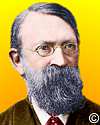
Died 19 Feb 1916 at age 78 (born 18 Feb 1838). quotes
Austrian physicist and philosopher who established important principles of optics, mechanics, and wave dynamics. His early physical works were devoted to electric discharge and induction. Between 1860 and 1862 he studied in depth the Doppler Effect by optical and acoustic experiments. He introduced the “Mach number” for the ratio of speed of object to speed of sound is named for him. When supersonic planes travel today, their speed is measured in terms that keep Mach’s name alive. His lifetime interest, however, was in psychology and human perception. He supported the view that all knowledge is a conceptual organization of the data of sensory experience (or observation).
Austrian physicist and philosopher who established important principles of optics, mechanics, and wave dynamics. His early physical works were devoted to electric discharge and induction. Between 1860 and 1862 he studied in depth the Doppler Effect by optical and acoustic experiments. He introduced the “Mach number” for the ratio of speed of object to speed of sound is named for him. When supersonic planes travel today, their speed is measured in terms that keep Mach’s name alive. His lifetime interest, however, was in psychology and human perception. He supported the view that all knowledge is a conceptual organization of the data of sensory experience (or observation).
Space and Geometry: In the Light of Physiological, Psychological and Physical Inquiry, by Ernst Mach. - book suggestion.
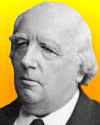
Died 19 Feb 1897 at age 81 (born 31 Oct 1815). quotes
Karl (Theodor Wilhelm) Weierstrass was a German mathematician who is known as the "father of modern analysis" for his rigour in analysis led to the modern theory of functions, and considered one of the greatest mathematics teachers of all-time. He was doing mathematical research while a secondary school teacher, when in 1854, he published a paper on Abelian functions in the famous Crelle Journal. The paper so impressed the mathematical community that he shortly received an honorary doctorate and by 1856, he had a University appointment in Berlin. In 1871, he demonstrated that there exist continuous functions in an interval which have no derivatives nowhere in the interval. He also did outstanding work on complex variables.«
Karl (Theodor Wilhelm) Weierstrass was a German mathematician who is known as the "father of modern analysis" for his rigour in analysis led to the modern theory of functions, and considered one of the greatest mathematics teachers of all-time. He was doing mathematical research while a secondary school teacher, when in 1854, he published a paper on Abelian functions in the famous Crelle Journal. The paper so impressed the mathematical community that he shortly received an honorary doctorate and by 1856, he had a University appointment in Berlin. In 1871, he demonstrated that there exist continuous functions in an interval which have no derivatives nowhere in the interval. He also did outstanding work on complex variables.«
Died 19 Feb 1553 at age 41 (born 22 Oct 1511). quotes
German mathematician who was a leading mathematical astronomer in his time. He carefully calculated the first set of planetary tables applying Copernican theory, published in 1551. They were named after his financial supporter (Albert, Duke of Prussia) as the Tabulae Prutenicae. Although Reinhold's work furthered the acceptance of Copernican views, he expressed no enthusiasm for the heliocentric assumption. He merely accepted it for having merit as a mathematical device yielding practical results. His tables were superceded in three-quarters of a century by Kepler's improvements.«
German mathematician who was a leading mathematical astronomer in his time. He carefully calculated the first set of planetary tables applying Copernican theory, published in 1551. They were named after his financial supporter (Albert, Duke of Prussia) as the Tabulae Prutenicae. Although Reinhold's work furthered the acceptance of Copernican views, he expressed no enthusiasm for the heliocentric assumption. He merely accepted it for having merit as a mathematical device yielding practical results. His tables were superceded in three-quarters of a century by Kepler's improvements.«
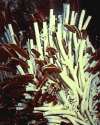
Tube worms
In 1977, deep-ocean researchers found an extraordinary oasis of extremophile life. John B. Corliss and John M. Elmond used the research submersible Alvin, to descend to the Pacific Ocean floor off the Galapagos Islands. New types of worms, clams and crabs were seen thriving around geothermal hot water vents. The food-chain of the ecosystem depends upon bacteria oxidizing hydrogen sulphide contained in the volcanic gases that spew out of the hot springs. Thus, the energy source that sustains this deep-ocean ecosystem is not sunlight, but rather the energy from chemical reaction (chemosynthesis).
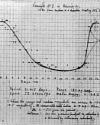
In 1924, Edwin Hubble wrote a letter to Harlow Shapley, which he concluded by saying, “...the distance [to the Andromeda nebula] comes out something over 300,000 parsecs.” Hubble discussed in the letter his measurement of the magnitudes of the Cepheid variable stars in the Andromeda nebula he had found and confirmed. He used their measured characteristics to calculate their distance, definitely about a million light years from our Solar System. This was the evidence that Andromeda was a separate galaxy, far beyond the Milky Way. This was the first proof of an “island universe.” After collecting more data, Hubble sent a paper read on 1 Jan 1925 to a meeting of the American Astronomical Society. Meanwhile, Shapley remained unconvinced, as when he debated Heber Curtis on 26 Apr 1920.«[Image: graph of light curve of the first Andromeda Cepheid Hubble discovered, from his letter to Shapley.]
Edwin Hubble, The Discoverer of the Big Bang Universe, by Aleksandr Sergeevich Sharov, Igor Dmitrievich Novikov. - book suggestion.
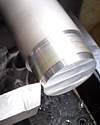
In 1910, patents titled “Metal-Cutting Tool and Method of Making Same” were issued to Frederick W. Taylor and Maunsel White (U.S. Patent Nos. 668,269 and -70). The process they invented produced a tougher steel capable of operating at higher temperatures than existing carbon tool-steels. Thus, metal machining—which causes heating of the tool—could be performed at higher speed. This high-speed steel was a significant improvement for production machine shops in industry. Within a few years, it was regarded as one of the “top inventions of the epoch”, listed with revolutionary inventions like the telephone and the air brake. The steel was alloyed with chromium and tungsten or molybdenum and hardened at high temperatures.«
In 1878, the phonograph was patented by Thomas A. Edison. His first recording was made reciting “Mary Had a Little Lamb” into a large horn which transmitted vibrations to a needle which scribed a recording on a cylinder rotated by hand. (US patent No. 200521)
In 1863, the first pipeline running from an oilfield to a refinery was completed at Oil Creek, Penn. It was two inches in diameter, running 2.5 miles from James Tarr's farm to the Humboldt refinery. Unfortunately, excessive leaks made it impractical to use.
In 1856, the first U.S. patent for the tintype photographic picture process was issued to Professor Hamilton L. Smith of Gambier, Ohio (No. 14,300), "For the Use of Japanned Metallic Plates in Photography" to obtain "positive impressions upon a japanned surface previously prepared upon an iron or other metallic plate or sheets; and it consists in the use of collodion and a solution of a salt of silver and an ordinary camera." The patent described the preparation of the black varnish, and its application and baking as the japanned surface. Smith had described the chemical developing and fixing process in a previous patent application. Despite the popular "tintype" name, tin was not used. It referred to the thin metallic form of the iron backing.«
In 1855, Urabain-Jean Le Verrier presented the first weather map at the French Academy of Sciences.
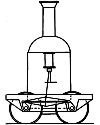
In 1831, the York locomotive made its first trial run. Though it was not the first to be invented, it was in service for several years, and is regarded as the first practical coal-burning locomotive built in America. It was designed with a vertical boiler by Phineas Davis for the B. and O. Railroad competition for inventors, which it won, and was adopted by the B & O. The name comes from York, Pennsylvania, where it was built and tested. It was the first locomotive constructed with coupled wheels and two pairs of drivers. The wheels were 30 inches diameter, and the engine weight was 3½ tons. On 27 Sep 1835, while on an excursion for employees, Phineas Davis, was on board the locomotive observing its operation when the train derailed due to defective track, and Davis died in the accident.«
more





