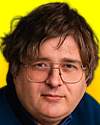
Born 8 Dec 1948; died 16 Oct 2002 at age 53.
Danish theoretical physicist who coined the term “self-organized criticality” in a paper he co-authored (1987). As an illustration, consider the conical sand pile growing in the bottom of an hourglass. Numerous small disturbances of individual sand grains cause little change, but are punctuated with unpredictable landslides. Critical changes are impossible to predict exactly in time, or to the explicit grain. Although challenging, trying to create mathematical descriptions extends to earthquakes, or traffic jams, or answering how the universe of simple fundamental particles (such as quarks and gluons) assembled itself into complex structures like animals.«
Danish theoretical physicist who coined the term “self-organized criticality” in a paper he co-authored (1987). As an illustration, consider the conical sand pile growing in the bottom of an hourglass. Numerous small disturbances of individual sand grains cause little change, but are punctuated with unpredictable landslides. Critical changes are impossible to predict exactly in time, or to the explicit grain. Although challenging, trying to create mathematical descriptions extends to earthquakes, or traffic jams, or answering how the universe of simple fundamental particles (such as quarks and gluons) assembled itself into complex structures like animals.«
How Nature Works: The Science of Self-Organized Criticality, by Per Bak. - book suggestion.
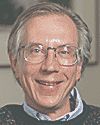
Born 8 Dec 1947.
American biochemist and molecular biologist who, with Sidney Altman, was awarded the 1989 Nobel Prize for Chemistry for their discoveries concerning RNA (ribonucleic acid). Prior to Cech’s research on RNA, most scientists believed that proteins were the only catalysts in living cells. Discoveries by both Cech and Altman overturned the notion that RNA is merely a genetic messenger - an intermediate in the synthesis of proteins from DNA. Cech showed that RNA could have an independent catalytic function, a “ribozyme”, aiding a chemical reaction without being consumed or changed. This discovery had major implications for genetic engineering as well as for understanding how life arose.
American biochemist and molecular biologist who, with Sidney Altman, was awarded the 1989 Nobel Prize for Chemistry for their discoveries concerning RNA (ribonucleic acid). Prior to Cech’s research on RNA, most scientists believed that proteins were the only catalysts in living cells. Discoveries by both Cech and Altman overturned the notion that RNA is merely a genetic messenger - an intermediate in the synthesis of proteins from DNA. Cech showed that RNA could have an independent catalytic function, a “ribozyme”, aiding a chemical reaction without being consumed or changed. This discovery had major implications for genetic engineering as well as for understanding how life arose.
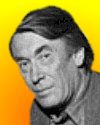
Born 8 Dec 1924; died 22 Nov 2003 at age 78.
English microbiologist who was a pioneer in the field of nucleic acid research. He helped to establish the structure of RNA and to discover the methylation of the bases in bacterial DNA. The RNA structure information was crucial to the double-stranded model of DNA proposed by Watson and Crick. He contributed to the methodology involved in the unravelling of the secrets of the genome. In the early 1960s, Smith became involved in unravelling the process whereby the sequence of bases in DNA determines the assembly of the different amino acid sequences of proteins which are responsible for all our bodily functions (structural, enzymatic, hormonal, and so on), a process known as protein synthesis.
English microbiologist who was a pioneer in the field of nucleic acid research. He helped to establish the structure of RNA and to discover the methylation of the bases in bacterial DNA. The RNA structure information was crucial to the double-stranded model of DNA proposed by Watson and Crick. He contributed to the methodology involved in the unravelling of the secrets of the genome. In the early 1960s, Smith became involved in unravelling the process whereby the sequence of bases in DNA determines the assembly of the different amino acid sequences of proteins which are responsible for all our bodily functions (structural, enzymatic, hormonal, and so on), a process known as protein synthesis.
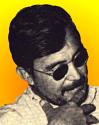
Born 8 Dec 1916; died 1 Mar 1998 at age 81.
Brazilian anthropologist and activist whose life was dedicated to the search for and protection of the country's indigenous people as their lands were taken over and developed; he and his brother Orlando aided in the creation of the Xingu National Park reservation in 1961 and the National Indian Foundation six years later. He helped to build more than 30 airfields in the middle of the jungle and opened more than 1,000 miles of trails under the Amazon canopy. Together with his brothers, Cláudio contacted some of the most feared tribes like the Kalapalos, Kayabi, Kamaiurás, Meinacos, and Txucarramães. In 1973 they made contact for the first time with the Kreen-Akarore Indians (or Panarás, the giant Indians) in the north of the state of Mato Grosso.
Brazilian anthropologist and activist whose life was dedicated to the search for and protection of the country's indigenous people as their lands were taken over and developed; he and his brother Orlando aided in the creation of the Xingu National Park reservation in 1961 and the National Indian Foundation six years later. He helped to build more than 30 airfields in the middle of the jungle and opened more than 1,000 miles of trails under the Amazon canopy. Together with his brothers, Cláudio contacted some of the most feared tribes like the Kalapalos, Kayabi, Kamaiurás, Meinacos, and Txucarramães. In 1973 they made contact for the first time with the Kreen-Akarore Indians (or Panarás, the giant Indians) in the north of the state of Mato Grosso.
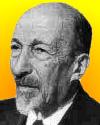
Born 8 Dec 1865; died 17 Oct 1963 at age 97. quotes
French mathematician who proved the prime-number theorem (as n approaches infinity, the limit of the ratio of (n) and n/ln n is 1, where (n) is the number of positive prime numbers not greater than n). Conjectured in the 18th century, this theorem was not proved until 1896, when Hadamard and also Charles de la Vallée Poussin, used complex analysis. Hadamard's work includes the theory of integral functions and singularities of functions represented by Taylor series. His work on the partial differential equations of mathematical physics is important. He introduced the concept of a well-posed initial value and boundary value problem. In considering boundary value problems he introduced a generalisation of Green's functions (1932).
French mathematician who proved the prime-number theorem (as n approaches infinity, the limit of the ratio of
(n) and n/ln n is 1, where (n) is the number of positive prime numbers not greater than n). Conjectured in the 18th century, this theorem was not proved until 1896, when Hadamard and also Charles de la Vallée Poussin, used complex analysis. Hadamard's work includes the theory of integral functions and singularities of functions represented by Taylor series. His work on the partial differential equations of mathematical physics is important. He introduced the concept of a well-posed initial value and boundary value problem. In considering boundary value problems he introduced a generalisation of Green's functions (1932).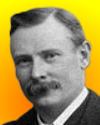
Born 8 Dec 1845; died 23 Feb 1925 at age 79. quotes
English chemist and author whose work in inorganic chemistry included the supervision of research into determining the presence of arsenic in beer and how to make pottery glazes without lead. In his early studies, while a chemistry student under Roscoe, he became a research assistant in his pioneering research work on vanadium, and the determination of its atomic weight. After graduation he worked first with Bunsen and then Kekulé. He then spent time teaching at the Royal College of Science, London (which became Imperial College). Later in life, he was director of the government laboratories (1894-1909). His research included study of phosphorus fluorides and oxides, in which he discovered the valence of five for phosphorus in phosphorus pentafluoride. As well as textbooks in chemistry, he wrote about chemistry history.« more
English chemist and author whose work in inorganic chemistry included the supervision of research into determining the presence of arsenic in beer and how to make pottery glazes without lead. In his early studies, while a chemistry student under Roscoe, he became a research assistant in his pioneering research work on vanadium, and the determination of its atomic weight. After graduation he worked first with Bunsen and then Kekulé. He then spent time teaching at the Royal College of Science, London (which became Imperial College). Later in life, he was director of the government laboratories (1894-1909). His research included study of phosphorus fluorides and oxides, in which he discovered the valence of five for phosphorus in phosphorus pentafluoride. As well as textbooks in chemistry, he wrote about chemistry history.« more
(EB)
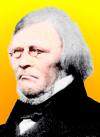
Born 8 Dec 1795; died 28 Mar 1874 at age 78.
Danish astronomer whose most important work was the improvement of the theories and tables of the orbits of the principal bodies in the solar system. At Altona observatory he assisted in measuring the arc of meridian (1821). He became the director (1825) of Seeberg observatory, which was removed to Gotha in a new observatory built for him (1857). He worked on theoretical geodesy, optics, and the theory of probability. The work in celestial mechanics for which he is best known are his theories of motion for comets, minor planets, moon and his lunar tables (1857) which were in use until 1923. He published his lunar theory in Fundamenta ("Foundation") in 1838, and Darlegung ("Explanation") in 1862-64.
Danish astronomer whose most important work was the improvement of the theories and tables of the orbits of the principal bodies in the solar system. At Altona observatory he assisted in measuring the arc of meridian (1821). He became the director (1825) of Seeberg observatory, which was removed to Gotha in a new observatory built for him (1857). He worked on theoretical geodesy, optics, and the theory of probability. The work in celestial mechanics for which he is best known are his theories of motion for comets, minor planets, moon and his lunar tables (1857) which were in use until 1923. He published his lunar theory in Fundamenta ("Foundation") in 1838, and Darlegung ("Explanation") in 1862-64.
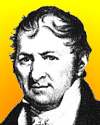
Born 8 Dec 1765; died 8 Jan 1825 at age 59. quotes
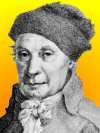
American inventor, mechanical engineer, and manufacturer, who invented the cotton gin and developed the idea and methods for mass-production of interchangeable parts. The cotton gin is a machine that separates cotton fibre from the seeds. The device, patented in 1793, greatly stimulated cotton growing in the southern USA. Whitney subsequently turned to firearms manufacture, into which he introduced the notion of interchangeable parts. This he applied in his fulfilment of a US government contract (1797) to supply muskets. Whitney manufactured these in standardized parts for reassembly, meaning that for the first time worn parts could be replaced by spares rather than requiring special replacements to be made.
American inventor, mechanical engineer, and manufacturer, who invented the cotton gin and developed the idea and methods for mass-production of interchangeable parts. The cotton gin is a machine that separates cotton fibre from the seeds. The device, patented in 1793, greatly stimulated cotton growing in the southern USA. Whitney subsequently turned to firearms manufacture, into which he introduced the notion of interchangeable parts. This he applied in his fulfilment of a US government contract (1797) to supply muskets. Whitney manufactured these in standardized parts for reassembly, meaning that for the first time worn parts could be replaced by spares rather than requiring special replacements to be made.
1793 (EB)
Born 8 Dec 1730; died 18 Feb 1799 at age 68.
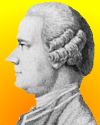
German botanist who did more than any other scientist to advance the knowledge of mosses (bryology). He dealt with the anatomy, fertilization, and reproduction of mosses and introduced a new method of classification based on the distribution of spores (reproductive bodies). Hedwig was the first to recognize the true organs of reproduction in mosses. He demonstrated the close relationship between mosses and liverworts. He described the development of the spore capsule (sporogonium) bryophytes, and was one of the first to observe, and the first to illustrate, conjugation in the aglae Spirogyra and Chara. Skilled in the use of the microscope, he identified more mosses than any other botanist of his time and produced a series of well-illustrated, informative books on them, illustrated by accurate and beautiful figures, many of which were drawn from highly magnified images. His posthumous Species Muscorum (1801), based on natural groupings, was a landmark in moss taxonomy and has been adopted as the starting point of moss nomenclature. The moss genus Hedwigia is named for him.
German botanist who did more than any other scientist to advance the knowledge of mosses (bryology). He dealt with the anatomy, fertilization, and reproduction of mosses and introduced a new method of classification based on the distribution of spores (reproductive bodies). Hedwig was the first to recognize the true organs of reproduction in mosses. He demonstrated the close relationship between mosses and liverworts. He described the development of the spore capsule (sporogonium) bryophytes, and was one of the first to observe, and the first to illustrate, conjugation in the aglae Spirogyra and Chara. Skilled in the use of the microscope, he identified more mosses than any other botanist of his time and produced a series of well-illustrated, informative books on them, illustrated by accurate and beautiful figures, many of which were drawn from highly magnified images. His posthumous Species Muscorum (1801), based on natural groupings, was a landmark in moss taxonomy and has been adopted as the starting point of moss nomenclature. The moss genus Hedwigia is named for him.
Born 8 Dec 1730; died 7 Sep 1799 at age 68. quotes
Dutch-English physician who discovered photosynthesis by identifying that sunlight gave green plants the ability to take in carbon dioxide, fix the carbon, and purified the air (returned oxygen) to the benefit of respiration of animals. Earlier, as a physician, he promoted Edward Jenner's use of inoculation with live smallpox vaccine to induce protection against the disease. Ingenhousz was a diligent experimenter, who studied soils and plant nutrition. He introduced the use of cover slips on microscope slides. He improved phosphorus matches and an apparatus for generating static electricity; investigated Brownian motion and heat conduction in metals, invented a hydrogen-fueled lighter, and mixed an explosive propellant for firing pistols.«
Dutch-English physician who discovered photosynthesis by identifying that sunlight gave green plants the ability to take in carbon dioxide, fix the carbon, and purified the air (returned oxygen) to the benefit of respiration of animals. Earlier, as a physician, he promoted Edward Jenner's use of inoculation with live smallpox vaccine to induce protection against the disease. Ingenhousz was a diligent experimenter, who studied soils and plant nutrition. He introduced the use of cover slips on microscope slides. He improved phosphorus matches and an apparatus for generating static electricity; investigated Brownian motion and heat conduction in metals, invented a hydrogen-fueled lighter, and mixed an explosive propellant for firing pistols.«
Baptized 8 Dec 1723; died 21 Jan 1789 at age 65. quotes
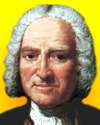
Paul-Henri Thiry, Baron d'Holbach (born Paul Heinrich Dietrich, Baron von Holbach) was a German-French philosopher of science who skillfully popularized technical and scientific information in hundreds of articles he wrote for the Encyclopédie, in fields ranging from psychology, history of religion, anthropology and ethnology. He was born in Germany, studied at the University of Leiden, moved to Paris (1749), and naturalized as a French citizen. He subsequently became known by a Frenchified version of his birth name, and inherited his title and a large fortune in 1753. D’Holbach published his methodical magus opus in 1770. He wrote in his Système de la Nature (System of Nature), about the laws of the physical and moral worlds, while affirming materialism and atheism. (He was one of the first European self-declared atheists.)«[Sources differ on his dates. His date of birth is unknown, and his date of baptism is sometimes given instead.]
Paul-Henri Thiry, Baron d'Holbach (born Paul Heinrich Dietrich, Baron von Holbach) was a German-French philosopher of science who skillfully popularized technical and scientific information in hundreds of articles he wrote for the Encyclopédie, in fields ranging from psychology, history of religion, anthropology and ethnology. He was born in Germany, studied at the University of Leiden, moved to Paris (1749), and naturalized as a French citizen. He subsequently became known by a Frenchified version of his birth name, and inherited his title and a large fortune in 1753. D’Holbach published his methodical magus opus in 1770. He wrote in his Système de la Nature (System of Nature), about the laws of the physical and moral worlds, while affirming materialism and atheism. (He was one of the first European self-declared atheists.)«[Sources differ on his dates. His date of birth is unknown, and his date of baptism is sometimes given instead.]


Died 8 Dec 2016 at age 95 (born 18 Jul 1921). quotes
John Herschel Glenn Jr. was an American astronaut and statesman who was the first American astronaut to orbit Earth, on 20 Feb 1962, making three orbits in about five hours aboard his Friendship 7 capsule. He was a Marine pilot during WW II. By 1957, he was an airplane test pilot, and set a speed record in 1957 flying from Los Angeles to New York in less than 3½ hours. In 1959, Glenn was picked as one of the “Mercury Seven,” the first group of NASA astronauts. Another was Alan Shepard who was the first launched for a five minute flight in suborbital space on 5 May 1961. Glenn retired from NASA in 1964. From 1974 to 1999, he was a U.S. Senator for Ohio. In 1998, he returned to space at age 77, flying on Space Shuttle Discovery.«
John Herschel Glenn Jr. was an American astronaut and statesman who was the first American astronaut to orbit Earth, on 20 Feb 1962, making three orbits in about five hours aboard his Friendship 7 capsule. He was a Marine pilot during WW II. By 1957, he was an airplane test pilot, and set a speed record in 1957 flying from Los Angeles to New York in less than 3½ hours. In 1959, Glenn was picked as one of the “Mercury Seven,” the first group of NASA astronauts. Another was Alan Shepard who was the first launched for a five minute flight in suborbital space on 5 May 1961. Glenn retired from NASA in 1964. From 1974 to 1999, he was a U.S. Senator for Ohio. In 1998, he returned to space at age 77, flying on Space Shuttle Discovery.«
John Glenn: A Memoir, by John Glenn. - book suggestion.

Died 8 Dec 1986 at age 69 (born 26 Sep 1917).
Harrison (Scott) Brown was an American geochemist known for his role in isolating plutonium for its use in the first atomic bombs and for his studies regarding meteorites and the Earth's origin. He was one of 67 concerned Manhattan Project scientists at Oak Ridge to sign a July 1945 petition to the President, which said, in part, "...Therefore we recommend that before this weapon be used without restriction in the present conflict, its powers should be adequately described and demonstrated, and the Japanese nation should be given the opportunity to consider the consequences of further refusal to surrender." His later studies included mass spectroscopy, thermal diffusion, fluorine and plutonium chemistry, geochemistry and planetary structure.
Harrison (Scott) Brown was an American geochemist known for his role in isolating plutonium for its use in the first atomic bombs and for his studies regarding meteorites and the Earth's origin. He was one of 67 concerned Manhattan Project scientists at Oak Ridge to sign a July 1945 petition to the President, which said, in part, "...Therefore we recommend that before this weapon be used without restriction in the present conflict, its powers should be adequately described and demonstrated, and the Japanese nation should be given the opportunity to consider the consequences of further refusal to surrender." His later studies included mass spectroscopy, thermal diffusion, fluorine and plutonium chemistry, geochemistry and planetary structure.
Died 8 Dec 1970 at age 86 (born 1 Jan 1884).
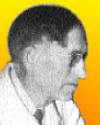
American endocrinologist who demonstrated the importance of the pituitary. Beginning in 1916, often collaborating with his wife, Smith set out to study the embryonic frog pituitary. He painstakingly made the microinstruments needed to operate on the pituitary anlage (bud) of the 4-mm tadpole. In 1926, he fashioned a minute pipette to remove the rat pituitary by suction without damage to the brain. He showed that such “hypophysectomy” resulted in the cessation of growth and atrophy of the other adrenal glands, such as the thyroid, the adrenal cortex, and the reproductive glands. Smith was thus able to study “pure” hypopituitarism and hormone replacement therapy and to publish a paper immediately recognized as classic.
American endocrinologist who demonstrated the importance of the pituitary. Beginning in 1916, often collaborating with his wife, Smith set out to study the embryonic frog pituitary. He painstakingly made the microinstruments needed to operate on the pituitary anlage (bud) of the 4-mm tadpole. In 1926, he fashioned a minute pipette to remove the rat pituitary by suction without damage to the brain. He showed that such “hypophysectomy” resulted in the cessation of growth and atrophy of the other adrenal glands, such as the thyroid, the adrenal cortex, and the reproductive glands. Smith was thus able to study “pure” hypopituitarism and hormone replacement therapy and to publish a paper immediately recognized as classic.
Died 8 Dec 1970 at age 77 (born 28 Oct 1893). quotes
English chemist who fundamentally transformed our understanding of organic reaction mechanisms. Ingold elucidated the electronic theory of organic reactions, introducing the concepts of nucleophiles and electrophiles. Ingold’s findings on resonance structures, aromaticity, and molecular orbital theory played pivotal roles in the development of modern organic chemistry. He also coined the E/Z notation for geometric isomerism. His studies on substitution reactions in haloalkanes advanced the S_N1 and S_N2 nomenclature, delineating between uni- and bimolecular nucleophilic substitution processes. Ingold’s legacy lies in framing the rules and concepts that underpin the discipline today.«
English chemist who fundamentally transformed our understanding of organic reaction mechanisms. Ingold elucidated the electronic theory of organic reactions, introducing the concepts of nucleophiles and electrophiles. Ingold’s findings on resonance structures, aromaticity, and molecular orbital theory played pivotal roles in the development of modern organic chemistry. He also coined the E/Z notation for geometric isomerism. His studies on substitution reactions in haloalkanes advanced the S_N1 and S_N2 nomenclature, delineating between uni- and bimolecular nucleophilic substitution processes. Ingold’s legacy lies in framing the rules and concepts that underpin the discipline today.«
Died 8 Dec 1955 at age 70 (born 9 Nov 1885). quotes
Hermann Klaus Hugo Weyl was a German-American mathematician whose widely varied contributions in mathematics linked pure mathematics and theoretical physics. He made significant contributions to quantum mechanics and the theory of relativity. He attempted to incorporate electromagnetism into the geometric formalism of general relativity. Weyl published Die Idee der Riemannschen Fläche (1913) which united analysis, geometry and topology. He produced the first guage theory in which the Maxwell electromagnetic field and the gravitational field appear as geometrical properties of space-time. He evolved (1923-38) the concept of continuous groups using matrix representations. Applying group theory to quantum mechanics he set up the modern subject.«
Hermann Klaus Hugo Weyl was a German-American mathematician whose widely varied contributions in mathematics linked pure mathematics and theoretical physics. He made significant contributions to quantum mechanics and the theory of relativity. He attempted to incorporate electromagnetism into the geometric formalism of general relativity. Weyl published Die Idee der Riemannschen Fläche (1913) which united analysis, geometry and topology. He produced the first guage theory in which the Maxwell electromagnetic field and the gravitational field appear as geometrical properties of space-time. He evolved (1923-38) the concept of continuous groups using matrix representations. Applying group theory to quantum mechanics he set up the modern subject.«
Died 8 Dec 1942 at age 73 (born 21 Mar 1869).
German-American industrial architect and planner who is considered the world's foremost in his time: “father of modern factory design.” His rise coincided with the growth of U.S. industry, particularly for the auto industry in Detroit. Shortly after founding Albert Kahn Associates in 1895, he designed Detroit's first large auto plants for the Packard Motor Car Company. Kahn's design for Packard's tenth building was the first concrete- reinforced auto factory. The building was strong, fireproof, and with large areas free of columns, an advance over the dangerous, inefficient, timber-framed plants of the era. Kahn designed Ford Motor Company's famous Highland Park plant, where Henry Ford produced of the Model T and perfected the assembly line process.
German-American industrial architect and planner who is considered the world's foremost in his time: “father of modern factory design.” His rise coincided with the growth of U.S. industry, particularly for the auto industry in Detroit. Shortly after founding Albert Kahn Associates in 1895, he designed Detroit's first large auto plants for the Packard Motor Car Company. Kahn's design for Packard's tenth building was the first concrete- reinforced auto factory. The building was strong, fireproof, and with large areas free of columns, an advance over the dangerous, inefficient, timber-framed plants of the era. Kahn designed Ford Motor Company's famous Highland Park plant, where Henry Ford produced of the Model T and perfected the assembly line process.
Died 8 Dec 1933 at age 76 (born 1 Nov 1857). quotes
Irish geologist and physicist whose interests spanned several fields. Using Edmond Halley's method of measuring the degree of salinity of the oceans, and then by examining radioactive decay in rocks, he estimated Earth's age at 80-90 million years (1898). Later, he revised this figure to 100 million years. He published Radioactivity and Geology (1909) in which he demonstrated that the rate of radioactive decay has been more or less constant through time. He also developed a method for extracting radium (1914) and pioneered its use for cancer treatment, and invented a constant- volume gas thermometer, a photometer, and a differential steam calorimeter for measuring the specific heat capacity of gases at constant volume.
Irish geologist and physicist whose interests spanned several fields. Using Edmond Halley's method of measuring the degree of salinity of the oceans, and then by examining radioactive decay in rocks, he estimated Earth's age at 80-90 million years (1898). Later, he revised this figure to 100 million years. He published Radioactivity and Geology (1909) in which he demonstrated that the rate of radioactive decay has been more or less constant through time. He also developed a method for extracting radium (1914) and pioneered its use for cancer treatment, and invented a constant- volume gas thermometer, a photometer, and a differential steam calorimeter for measuring the specific heat capacity of gases at constant volume.
Radioactivity and Geology: ...Terrestrial History, by John Joly. - book suggestion.
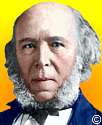
Died 8 Dec 1903 at age 83 (born 27 Apr 1820). quotes
English sociologist and philosopher who was an early adherent of evolutionary theory. He regarded society as an organism which was evolving from a simple primitive state to a complex heterogeneous form according to the designs of an unknown and unknowable absolute force. Similarly, knowledge developed from an undifferentiated mass into the various separate sciences. Formulating his ideas independently of Darwin, Spencer coined the phrase “survival of the fittest” as early as 1852. He applied Darwin's theory of natural selection (proposed four years later) to social development and in A System of Synthetic Philosophy (1862-96) presented a philosophical system to the natural and social sciences, synthesizing metaphysics, biology, psychology, sociology, and ethics.
English sociologist and philosopher who was an early adherent of evolutionary theory. He regarded society as an organism which was evolving from a simple primitive state to a complex heterogeneous form according to the designs of an unknown and unknowable absolute force. Similarly, knowledge developed from an undifferentiated mass into the various separate sciences. Formulating his ideas independently of Darwin, Spencer coined the phrase “survival of the fittest” as early as 1852. He applied Darwin's theory of natural selection (proposed four years later) to social development and in A System of Synthetic Philosophy (1862-96) presented a philosophical system to the natural and social sciences, synthesizing metaphysics, biology, psychology, sociology, and ethics.
Herbert Spencer and the Invention of Modern Life, by Mark Francis. - book suggestion.
Died 8 Dec 1896 at age 75 (born 26 Mar 1821). quotes
German statistician, the head of the Prussian Statistical Bureau (1860-82), known for the "Engel curve," or Engel's law, which states that the proportion of expenditure on food will fall as income rises, i.e. food is a necessary good. Engel's law applies to goods as a whole. Demand for food, clothing and shelter - and for most manufactured products - doesn't keep pace with increases in incomes. Engel curves are useful for separating the effect of income on demand from the effects of changes in relative prices. Engel also examined the relationship between the size of the Prussian rye harvest and the average price of rye over a number of years prior to 1860, probably the first empirical study of the relationship between price and supply.
German statistician, the head of the Prussian Statistical Bureau (1860-82), known for the "Engel curve," or Engel's law, which states that the proportion of expenditure on food will fall as income rises, i.e. food is a necessary good. Engel's law applies to goods as a whole. Demand for food, clothing and shelter - and for most manufactured products - doesn't keep pace with increases in incomes. Engel curves are useful for separating the effect of income on demand from the effects of changes in relative prices. Engel also examined the relationship between the size of the Prussian rye harvest and the average price of rye over a number of years prior to 1860, probably the first empirical study of the relationship between price and supply.
Died 8 Dec 1894 at age 73 (born 16 May 1821). quotes
Russian mathematician who founded the St. Petersburg mathematical school (sometimes called the Chebyshev school), who is remembered primarily for his work on the theory of prime numbers, including the determination of the number of primes not exceeding a given number. He wrote about many subjects, including the theory of congruences in 1849, probability theory, quadratic forms, orthogonal functions, the theory of integrals, the construction of maps, and the calculation of geometric volumes. Chebyshev was also interested in mechanics and studied the problems involved in converting rotary motion into rectilinear motion by mechanical coupling. The Chebyshev parallel motion is three linked bars approximating rectilinear motion.[Old style dates: Born 4 May 1821; died 26 Nov 1894]
Russian mathematician who founded the St. Petersburg mathematical school (sometimes called the Chebyshev school), who is remembered primarily for his work on the theory of prime numbers, including the determination of the number of primes not exceeding a given number. He wrote about many subjects, including the theory of congruences in 1849, probability theory, quadratic forms, orthogonal functions, the theory of integrals, the construction of maps, and the calculation of geometric volumes. Chebyshev was also interested in mechanics and studied the problems involved in converting rotary motion into rectilinear motion by mechanical coupling. The Chebyshev parallel motion is three linked bars approximating rectilinear motion.[Old style dates: Born 4 May 1821; died 26 Nov 1894]
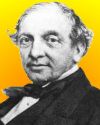
Died 8 Dec 1870 at age 65 (born 7 Nov 1805).
Early English railway contractor who built railway lines worldwide. While working as a land surveyor he and George Stephenson became friends. In 1834, Stephenson helped Brassey to obtain a contract to build a railway viaduct at Bromborough. In 1835, he constructed a section of the Grand Junction railway and later helped complete the London and Southampton line. With W. Mackenzie, he built the Paris to Rouen line (1841-43) and lines in Netherlands, Italy, Prussia, Spain. With Sir S.M. Peto and E.L. Betts, Brassey built the Grand Trunk railway, Canada (1853-59), the Crimean railway (1854); and also built in India, Australia and South America. He built more than 10,000 km (6,500 miles) of railways worldwide, including one-sixth of the British network.
Early English railway contractor who built railway lines worldwide. While working as a land surveyor he and George Stephenson became friends. In 1834, Stephenson helped Brassey to obtain a contract to build a railway viaduct at Bromborough. In 1835, he constructed a section of the Grand Junction railway and later helped complete the London and Southampton line. With W. Mackenzie, he built the Paris to Rouen line (1841-43) and lines in Netherlands, Italy, Prussia, Spain. With Sir S.M. Peto and E.L. Betts, Brassey built the Grand Trunk railway, Canada (1853-59), the Crimean railway (1854); and also built in India, Australia and South America. He built more than 10,000 km (6,500 miles) of railways worldwide, including one-sixth of the British network.
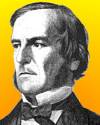
Died 8 Dec 1864 at age 49 (born 2 Nov 1815). quotes
English mathematician and logician who helped establish modern symbolic logic and an algebra of logic, now called Boolean algebra. By replacing logical operations by symbols, Boole showed that the operations could be manipulated to give logically consistent results. Boole's logical algebra is essentially an algebra of classes, being based on such concepts as complement and union of classes. The study of mathematical or symbolic logic developed mainly from his ideas, and is basic to the design of digital computer circuits. Boolean algebras also find important applications in such diverse fields as topology, measure theory, probability and statistics. Boole also wrote important works on differential equations and other branches of mathematics.
English mathematician and logician who helped establish modern symbolic logic and an algebra of logic, now called Boolean algebra. By replacing logical operations by symbols, Boole showed that the operations could be manipulated to give logically consistent results. Boole's logical algebra is essentially an algebra of classes, being based on such concepts as complement and union of classes. The study of mathematical or symbolic logic developed mainly from his ideas, and is basic to the design of digital computer circuits. Boolean algebras also find important applications in such diverse fields as topology, measure theory, probability and statistics. Boole also wrote important works on differential equations and other branches of mathematics.
An Investigation of the Laws of Thought, by George Boole. - book suggestion.
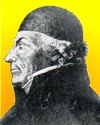
Died 8 Dec 1818 at age 73 (born 19 Aug 1745).
Swedish mineralogist and crystallographer who was born in an iron-ming town, and followed mining as a career. At the copper mine in Falun, he improved smelting methods and the use of by-products. He discovered manganese (1774), and also selenium. Gahn assisted his friend Carl Wilhelm Scheele (discoverer of chlorine) in finding phosphoric acid in bones. His limited published work included essays on the balance and use of the blowpipe as a convenient analytical tool. During the American Revolutionary War, one of his companies supplied copper for sheathing ships. Gahnite, a dark green to brown or black mineral, (ZnAl2O4), also called zinc spinel was named after Gahn.
Swedish mineralogist and crystallographer who was born in an iron-ming town, and followed mining as a career. At the copper mine in Falun, he improved smelting methods and the use of by-products. He discovered manganese (1774), and also selenium. Gahn assisted his friend Carl Wilhelm Scheele (discoverer of chlorine) in finding phosphoric acid in bones. His limited published work included essays on the balance and use of the blowpipe as a convenient analytical tool. During the American Revolutionary War, one of his companies supplied copper for sheathing ships. Gahnite, a dark green to brown or black mineral, (ZnAl2O4), also called zinc spinel was named after Gahn.
In 1994, approximately one month after announcing the creation of element 110, a team of German scientists led by Peter Armbruster at the Gesellschaft für schwerionenforschung (GSI) facility at Darmstadt, Germany, claimed to have created element 111. Its atom has 111 protons and 161 neutrons in its nucleus, giving it a mass number of 272. As a new element it was named unununium, symbol Uuu, according to an internationally adopted system for naming new elements. Only three atoms of the element were made by accelerating nickel atoms to high speed and bombarding them into bismuth. When an atom of each fused to make the new nucleus, it lasted for about four-thousandths of a second before decaying into smaller nuclei.
In 1993, the U.S. Secretary of Defense declared that the Global Positioning System, accurate within 100 meters, had 24 GPS satellites operating in their assigned orbits, available for navigation use at Standard Positioning Service (SPS) levels for civil users. This Initial Operational Capability was followed on 27 Apr 1995 with a formal declaration by the U.S. Air Force Space Command that the GPS satellite constellation had met the requirement for Full Operational Capability after successful testing for military functionality. This worldwide, satellite-based radionavigation system used as the DoD's primary radionavigation system provided authorized users encrypted Precise Positioning Service accurate to at least 22 meters.
In 1953, President Dwight Eisenhower gave his “Atoms for Peace” speech in an address before the General Assembly of the United Nations. He proposed the establishment of the International Atomic Energy Agency to devise “methods whereby this fissionable material would be allocated to serve the peaceful pursuits of mankind ... to apply atomic energy to the needs of agriculture, medicine and other peaceful activities. A special purpose would be to provide abundant electrical energy in the power-starved areas of the world.” This initiated commercial nuclear power. Shortly thereafter, the U.S. Congress passed the 1954 Atomic Energy Act which permitted, for the first time, the wide use of atomic energy for peaceful purposes.
In 1946, the first test in the U.S. of a snow-melting apparatus embedded in a sidewalk was made in New York City. The department store, Best & Co. installed 15 coils made up from 4,530 feet of pipe. A mixture of about 67% water with 33% Zerex was circulated, effective to prevent freezing to as low as -5 deg.F. It was first put to use shortly thereafter, on 26 Dec 1946, during a blizzard. This was not the first method to melt snow devised in the U.S. On 27 May 1890, black American inventor F.J. Farrell was issued a patent for an "Apparatus for melting snow" (No. 428,670), which was a cast-iron box laid beneath the street gutter and heated with steam.
The Inventive Spirit of African Americans: Patented Ingenuity, by Patricia Carter Sluby. - book suggestion.

In 1931, the invention of coaxial cable was issued a U.S. patent for the first time in the U.S., described as a "concentric conducting system". The inventors were Lloyd Espenschied of Kew Gardens, N.Y. and Herman A. Affel of Ridgewood, N.J. The patent was assigned to the American Telegraph and Telephone Co. of New York City. (No. 1,835,031). The application was television, for which a wide range of transmision frequencies is required. Whereas individual channel requirements for telegraphy are of the order of a few hundred cycles at most, and telephony perhaps a few thousand cycles, television requires bands of hundreds of thousands of cycles in width to ensure a reasonable degree of picture detail. A single pair concentric conductor arrangement is used.

In 1896, a patent for an improvement in a Lemon Squeezer was issued to the Black-American inventor J.T. White (U.S. No. 572,849). It made squeezing lemons and straining the juice easy and also kept hands clean while juicing.
In 1866, the first transpacific side-wheeler steamship launched in the U.S. was the Celestial Empire (later named China) with capacity for 1,300 passengers. The keel was laid on 13 Jan 1866, and built in less than a year by William H. Webb of New York with a wooden hull and three masts, for the Pacific Mail SS Co.. Webb introduced many features of naval architecture in this liner, since in common use. On 1 Jul 1867, the steamer set off for Panama, picked up passengers and continued to San Francisco, arriving 20 Sep 1867. The boilers burned 45 tons of coal per day. It was 370-ft x beam 47.49-ft, 3,386 tons. After transpacific service, China was sold (1883) to Henry Villard, became a receiving ship for smallpox patients (1884) and was scrapped in 1886.




