Born 8 Feb 1906; died 19 Sep 1968 at age 62. quotes
Chester Floyd Carlson was an American physicist who invented xerography (22 Oct 1938), an electrostatic dry-copying process that found applications ranging from office copying to reproducing out-of-print books. The process involved sensitizing a photoconductive surface to light by giving it an electrostatic charge Carlson developed it between 1934 and 1938, and initially described it as electrophotography It was immediately protected by Carlson with an impenetrable web of patents, though it was not until 1944 that he was able to obtain funding for further development. In 1947 he sold the commercial rights for his invention to the Haloid Company, a small manufacturer of photographic paper (which later became the Xerox Corporation).
Chester Floyd Carlson was an American physicist who invented xerography (22 Oct 1938), an electrostatic dry-copying process that found applications ranging from office copying to reproducing out-of-print books. The process involved sensitizing a photoconductive surface to light by giving it an electrostatic charge Carlson developed it between 1934 and 1938, and initially described it as electrophotography It was immediately protected by Carlson with an impenetrable web of patents, though it was not until 1944 that he was able to obtain funding for further development. In 1947 he sold the commercial rights for his invention to the Haloid Company, a small manufacturer of photographic paper (which later became the Xerox Corporation).
Copies in Seconds... Chester Carlson and the Birth of the Xerox Machine, by David Owen. - book suggestion.
Born 8 Feb 1897; died 25 May 1972 at age 75.
American psychiatrist and educator who developed the Austrian psychologist Alfred Adler's system of individual psychology into a pragmatic method for understanding the purposes of reprehensible behaviour in children and for stimulating cooperative behaviour without punishment or reward.
American psychiatrist and educator who developed the Austrian psychologist Alfred Adler's system of individual psychology into a pragmatic method for understanding the purposes of reprehensible behaviour in children and for stimulating cooperative behaviour without punishment or reward.
Born 8 Feb 1886; died 23 Jan 1961 at age 74.
Roman Catholic priest and cultural anthropologist who advocated a comparative, historical approach to understanding cultural phenomena and whose investigations of hunting and food-gathering tribes produced theories on the origin and development of society.
Roman Catholic priest and cultural anthropologist who advocated a comparative, historical approach to understanding cultural phenomena and whose investigations of hunting and food-gathering tribes produced theories on the origin and development of society.
Born 8 Feb 1868; died 27 Aug 1937 at age 69.
British zoologist and collector (2nd Baron Rothschild (of Tring)) who founded the Walter Rothschild Zoological Museum, Tring, which opened to the public in 1892 and is now part of the Natural History Museum. His interest in natural history began when he was a child, collecting butterflies. Numerous species and sub-species of animals were named after him. From Tring, he issued Novitates Zoologicae, and published scores of scientific papers. He was the eldest son of financier Nathan Mayer Rothschild, 1st Baron Rothschild, whom he disappointed by devoting his life to natural history instead of the family banking business. He received his titles on the death of his father in 1915.«
British zoologist and collector (2nd Baron Rothschild (of Tring)) who founded the Walter Rothschild Zoological Museum, Tring, which opened to the public in 1892 and is now part of the Natural History Museum. His interest in natural history began when he was a child, collecting butterflies. Numerous species and sub-species of animals were named after him. From Tring, he issued Novitates Zoologicae, and published scores of scientific papers. He was the eldest son of financier Nathan Mayer Rothschild, 1st Baron Rothschild, whom he disappointed by devoting his life to natural history instead of the family banking business. He received his titles on the death of his father in 1915.«
Dear Lord Rothschild: Birds, Butterflies and History, by Miriam Rothschild. - book suggestion.
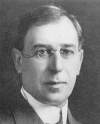
Born 8 Feb 1866; died 12 Feb 1947 at age 81.
Russian-born American chemist who initiated the study of free radicals in chemistry when in 1900 he prepared the first authentic one, triphenylmethyl. Organic free radicals are essential to body functioning as well as being implicated in aging and diseases. Also, they play a major role in the production of plastics and other widely used synthetic materials. Organic free radicals contain a form of carbon with an unpaired electron which allows the radical to react readily with another molecule. Until Gomberg synthesized triphenylmethyl, free radicals containing carbon had been thought not to exist. Gomberg's discovery led to modern theories of the structure and reactivity of organic molecules, and led to the development of an entire field of research.
Russian-born American chemist who initiated the study of free radicals in chemistry when in 1900 he prepared the first authentic one, triphenylmethyl. Organic free radicals are essential to body functioning as well as being implicated in aging and diseases. Also, they play a major role in the production of plastics and other widely used synthetic materials. Organic free radicals contain a form of carbon with an unpaired electron which allows the radical to react readily with another molecule. Until Gomberg synthesized triphenylmethyl, free radicals containing carbon had been thought not to exist. Gomberg's discovery led to modern theories of the structure and reactivity of organic molecules, and led to the development of an entire field of research.
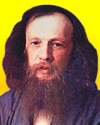
Born 8 Feb 1834; died 2 Feb 1907 at age 72. quotes
Russian chemist who developed the periodic classification of the elements. In his final version of the periodic table (1871) he left gaps, foretelling that they would be filled by elements not then known. He predicted the properties of three of those elements.[a.k.a. Dimitri Mendeleyev. New Style dates (used by Dict. of Sci. Biog.: 8 Feb 1834 - 2 Feb 1907. Old Style dates: 27 Jan 1834 - 20 Jan 1907.] more
Russian chemist who developed the periodic classification of the elements. In his final version of the periodic table (1871) he left gaps, foretelling that they would be filled by elements not then known. He predicted the properties of three of those elements.[a.k.a. Dimitri Mendeleyev. New Style dates (used by Dict. of Sci. Biog.: 8 Feb 1834 - 2 Feb 1907. Old Style dates: 27 Jan 1834 - 20 Jan 1907.] more
Dmitry Ivanovich Mendeleyev: His Life and His Work, by O. N. Pisarzhevsky. - book suggestion.
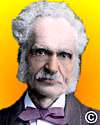
Born 8 Feb 1825; died 16 Feb 1892 at age 67. quotes
Henry Walter Bates was an English naturalist and explorer whose demonstration of the operation of natural selection in animal mimicry (the imitation by a species of other life forms or inanimate objects), published in 1861, gave firm support to Charles Darwin's theory of evolution. He and Alfred Russel Wallace left England in 1842 to explore and collect insects in the Amazon basin. Bates spent 11 years in Amazonia amassing large collections of insects that were sent back to museums and collectors in Europe. Bates was quick to embrace Darwin's and Wallace's theory of evolution by natural selection. Bates' own theory of mimicry, which now bears his name (Batesian mimicry), provided evidence for evolution by natural selection.
Henry Walter Bates was an English naturalist and explorer whose demonstration of the operation of natural selection in animal mimicry (the imitation by a species of other life forms or inanimate objects), published in 1861, gave firm support to Charles Darwin's theory of evolution. He and Alfred Russel Wallace left England in 1842 to explore and collect insects in the Amazon basin. Bates spent 11 years in Amazonia amassing large collections of insects that were sent back to museums and collectors in Europe. Bates was quick to embrace Darwin's and Wallace's theory of evolution by natural selection. Bates' own theory of mimicry, which now bears his name (Batesian mimicry), provided evidence for evolution by natural selection.
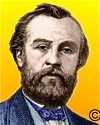
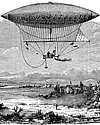
Baptiste Henry Jacques Giffard was a French engineer who built the first successful airship. On 24 Sep 1852, he travelled from Paris in his airship 28 km (17 miles) to Trappes, at a top speed of 8 km/hr (5 mph). His cigar-shaped balloon, was powered by a lightweight, one-cylinder steam engine which turned a large propeller. He became rich from inventing an injector for feeding water into the boiler of steam locomotives (1859), which earned the Academie des Sciences prize for mechanics. Later, he constructed successively larger tethered hydrogen balloons. At the 1878 Paris Exposition, one carried 52 passengers on each ascent, returned to the ground by a cable on a steam-powered winch. Giffard died by suicide after becoming blind. He left much money in his will for humanitarian and scientific purposes.« more
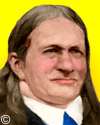
Born 8 Feb 1795; died 25 Mar 1867 at age 72. quotes
German chemist considered to be the originator of the widely used analytic technique of paper chromatography. In the course of his research on synthetic dyes, he isolated and named several important components of coal-tar oil, among them carbolic acid (1934, now called phenol), pyrrole, rosolic acid (aurin), and cyanol (aniline). He did not analyze any of these compounds, however. In 1850, Runge published the first systematic study of chromatography: concentric circles of different coloured substances diffused through paper. He also noted the ability of belladonna to induce long-lasting dilation of the pupil of the eye (mydriasis), and he developed a process for obtaining sugar from beet juice. He investigated dry distillation and the composition of matter.
German chemist considered to be the originator of the widely used analytic technique of paper chromatography. In the course of his research on synthetic dyes, he isolated and named several important components of coal-tar oil, among them carbolic acid (1934, now called phenol), pyrrole, rosolic acid (aurin), and cyanol (aniline). He did not analyze any of these compounds, however. In 1850, Runge published the first systematic study of chromatography: concentric circles of different coloured substances diffused through paper. He also noted the ability of belladonna to induce long-lasting dilation of the pupil of the eye (mydriasis), and he developed a process for obtaining sugar from beet juice. He investigated dry distillation and the composition of matter.

Born 8 Feb 1777; died 27 Sep 1838 at age 61. quotes
French chemist who discovered the element iodine. As the son of a saltpeter manufacturer from Dijon, he grew interested in chemistry and was apprenticed to a pharmacist. While in military service as a pharmacist, he became the first to isolate pure morphine from opium (1804). He returned to assist at his father's saltpeter business, where the ashes of kelp seaweed were leached for sodium and potassium salts using sulphuric acid. In 1811, from the mother liquor, he observed rising clouds of purple vapour which condensed on cold surfaces as dark crystals with a metallic lustre. He thought these could be a new element, but lacked ability to fully confirm his suspicion. This was later verified by Joseph-Louis Gay-Lussac and Humphry Davy.« more
French chemist who discovered the element iodine. As the son of a saltpeter manufacturer from Dijon, he grew interested in chemistry and was apprenticed to a pharmacist. While in military service as a pharmacist, he became the first to isolate pure morphine from opium (1804). He returned to assist at his father's saltpeter business, where the ashes of kelp seaweed were leached for sodium and potassium salts using sulphuric acid. In 1811, from the mother liquor, he observed rising clouds of purple vapour which condensed on cold surfaces as dark crystals with a metallic lustre. He thought these could be a new element, but lacked ability to fully confirm his suspicion. This was later verified by Joseph-Louis Gay-Lussac and Humphry Davy.« more
Iodine: Why You Need It, Why You Can't Live Without It, by Charles Harvard Gibbs-Smith. - book suggestion.
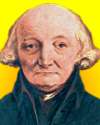
Born 8 Feb 1727; died 7 Nov 1817 at age 90. quotes
Swiss-born British geologist and meteorologist whose theoretical work was influential on 19th-century writing about meteorology. Deluc was educated in mathematics and the natural sciences. While a businessman in Switzerland during the first half of his life, during his travels, he collected mineral and plant specimens in the Alps. A commercial failure in 1773 induced him to emigrate to England and devote himself to science, his long-time avocation. He held the doctrine of catastrophism to explain present geological formations, opposing the view that present processes have acted continuously during past ages.
Swiss-born British geologist and meteorologist whose theoretical work was influential on 19th-century writing about meteorology. Deluc was educated in mathematics and the natural sciences. While a businessman in Switzerland during the first half of his life, during his travels, he collected mineral and plant specimens in the Alps. A commercial failure in 1773 induced him to emigrate to England and devote himself to science, his long-time avocation. He held the doctrine of catastrophism to explain present geological formations, opposing the view that present processes have acted continuously during past ages.
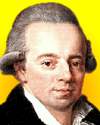
Born 8 Feb 1700; died 17 Mar 1782 at age 82. quotes
French mathematician who was the most distinguished in the second generation of the Bernoulli family of mathematicians. His talents were broad, including medicine, biology, physiology, mechanics, physics, astronomy, and oceanography. Bernoulli’s theorem which he derived, is named after him. (Put simply, it relates the pressure and velocity of a fluid, in effect an application of the conservation of energy.) He won several prizes for papers on diverse subjects, including the tides, planetary orbits, optimal shape of hourglasses, and reducing pitch and roll of ships. With his work, Daniel Bernoulli established mathematical physics. He was the first to show the advantage of resolving compound motion into a motions of translation and of rotation.«Birth date: 8 Feb 1700 (New Style) is 29 Jan 1700 (Old Style).
French mathematician who was the most distinguished in the second generation of the Bernoulli family of mathematicians. His talents were broad, including medicine, biology, physiology, mechanics, physics, astronomy, and oceanography. Bernoulli’s theorem which he derived, is named after him. (Put simply, it relates the pressure and velocity of a fluid, in effect an application of the conservation of energy.) He won several prizes for papers on diverse subjects, including the tides, planetary orbits, optimal shape of hourglasses, and reducing pitch and roll of ships. With his work, Daniel Bernoulli established mathematical physics. He was the first to show the advantage of resolving compound motion into a motions of translation and of rotation.«Birth date: 8 Feb 1700 (New Style) is 29 Jan 1700 (Old Style).
Born 8 Feb 1630; died 26 Jan 1721 at age 90.
French scholar, antiquary, scientist, and bishop whose incisive skepticism, particularly as embodied in his cogent attacks on René Descartes, greatly influenced contemporary philosophers. Huet wrote a number of philosophical works that asserted the fallibility of human reason in addition to scientific work in the fields of astronomy, anatomy, and mathematics.
French scholar, antiquary, scientist, and bishop whose incisive skepticism, particularly as embodied in his cogent attacks on René Descartes, greatly influenced contemporary philosophers. Huet wrote a number of philosophical works that asserted the fallibility of human reason in addition to scientific work in the fields of astronomy, anatomy, and mathematics.


Died 8 Feb 2017 at age 83 (born 9 Oct 1933).
English physicist who, at age 70, shared the 2003 Nobel Prize in Physiology or Medicine with Paul Lauterbur for discoveries leading to magnetic resonance imaging (MRI). His work transformed MRI from theory to a practical diagnostic tool that revolutionized medicine. Mansfield developed rapid imaging techniques that made scans of the brain and other organs possible, and he was the first person to undergo an MRI scan himself. In MRI, patients lie within a strong magnetic field while radio waves excite atomic nuclei; the re-emitted signals, mainly from hydrogen in water, reveal the body’s blood vessels, muscles, organs and other internal structures. Differences in water content allow doctors to detect diseaed tissue, tumors and brain abnormalities with remarkable precision.«
English physicist who, at age 70, shared the 2003 Nobel Prize in Physiology or Medicine with Paul Lauterbur for discoveries leading to magnetic resonance imaging (MRI). His work transformed MRI from theory to a practical diagnostic tool that revolutionized medicine. Mansfield developed rapid imaging techniques that made scans of the brain and other organs possible, and he was the first person to undergo an MRI scan himself. In MRI, patients lie within a strong magnetic field while radio waves excite atomic nuclei; the re-emitted signals, mainly from hydrogen in water, reveal the body’s blood vessels, muscles, organs and other internal structures. Differences in water content allow doctors to detect diseaed tissue, tumors and brain abnormalities with remarkable precision.«
Died 8 Feb 1983 at age 65 (born 29 Jul 1917).
Henry Albert Howard “Harry” Boot was an English physicist who worked with John Randall developing the cavity magnetron, the microwave-generating device used in radar. This made a major contribution to winning WWII. Earlier magnetrons made in the 1920s gave low power output. By Feb 1940, advances by Randall and Boot in the design of the small-sized cavity magnetron, produced centimeter wavelengths at much higher power, which allowed radar to detect smaller objects. In turn, this more compact equipment with a smaller antenna permitted easy mobile installation of high-resolution radar in aircraft.«
Henry Albert Howard “Harry” Boot was an English physicist who worked with John Randall developing the cavity magnetron, the microwave-generating device used in radar. This made a major contribution to winning WWII. Earlier magnetrons made in the 1920s gave low power output. By Feb 1940, advances by Randall and Boot in the design of the small-sized cavity magnetron, produced centimeter wavelengths at much higher power, which allowed radar to detect smaller objects. In turn, this more compact equipment with a smaller antenna permitted easy mobile installation of high-resolution radar in aircraft.«
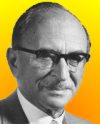
Died 8 Feb 1979 at age 78 (born 5 Jun 1900). quotes
Hungarian-British physicist and electrical engineer who was awarded the Nobel Prize for Physics in 1971 for his invention of holography, a system of lensless, three-dimensional photography that has many applications. He first conceived the idea of holography in 1947 using conventional filtered-light sources. Because such sources had limitations of either too little light or too diffuse, holography was not commercially feasible until the invention of the laser (1960), which amplifies the intensity of light waves. He also did research on high-speed oscilloscopes, communication theory, physical optics, and television. Gabor held more than 100 patents.[EB, a NYT obituary and the Nobel Prize website give the date of death as 8 Feb 1979. Some sources give 9 Feb 1979.]
Hungarian-British physicist and electrical engineer who was awarded the Nobel Prize for Physics in 1971 for his invention of holography, a system of lensless, three-dimensional photography that has many applications. He first conceived the idea of holography in 1947 using conventional filtered-light sources. Because such sources had limitations of either too little light or too diffuse, holography was not commercially feasible until the invention of the laser (1960), which amplifies the intensity of light waves. He also did research on high-speed oscilloscopes, communication theory, physical optics, and television. Gabor held more than 100 patents.[EB, a NYT obituary and the Nobel Prize website give the date of death as 8 Feb 1979. Some sources give 9 Feb 1979.]
Died 8 Feb 1975 at age 88 (born 13 Sep 1886). quotes
English chemist who received the 1947 Nobel Prize for Chemistry for his research on a wide range of organic compounds, notably alkaloids (complex, naturally occurring, nitrogen-containing organic compounds that can have profound effects on living things). In his early research, he studied plant pigments and synthesized anthocyanins and flavones. Later, working with alkaloids, he discovered the structures of morphine (1925) and strychnine (1946).
English chemist who received the 1947 Nobel Prize for Chemistry for his research on a wide range of organic compounds, notably alkaloids (complex, naturally occurring, nitrogen-containing organic compounds that can have profound effects on living things). In his early research, he studied plant pigments and synthesized anthocyanins and flavones. Later, working with alkaloids, he discovered the structures of morphine (1925) and strychnine (1946).
Robert Robinson: Scientist Extraordinary, by Trevor I. Williams. - book suggestion.
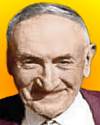
Died 8 Feb 1974 at age 75 (born 14 Feb 1898). quotes
Swiss-American astronomer and physicist who proposed the existence of dark matter accounting for additional mass universe in the universe. His work on supernovas produced an improved theoretical understanding of these infrequent stars that have exceptional brightness for a short period. His career included contributions to jet propulsion and the physics of crystals, liquids and gases but he is best known for astrophysics. He searched for supernovas, and calculated their frequency as rare as one per millenium per typicl galaxy. After Lev Landau proposed extremely dense and compact neutron stars in 1932, Zwicky with Walter Baade suggested that they might be at the core of supernovas, which contributed to the development of the theory of stellar evolution. His abrasive personality delayed the acceptance of his innovative interpretations.«
Swiss-American astronomer and physicist who proposed the existence of dark matter accounting for additional mass universe in the universe. His work on supernovas produced an improved theoretical understanding of these infrequent stars that have exceptional brightness for a short period. His career included contributions to jet propulsion and the physics of crystals, liquids and gases but he is best known for astrophysics. He searched for supernovas, and calculated their frequency as rare as one per millenium per typicl galaxy. After Lev Landau proposed extremely dense and compact neutron stars in 1932, Zwicky with Walter Baade suggested that they might be at the core of supernovas, which contributed to the development of the theory of stellar evolution. His abrasive personality delayed the acceptance of his innovative interpretations.«
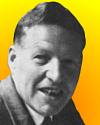
Died 8 Feb 1972 at age 63 (born 18 Aug 1908).
Frederick Charles Bawden was an English plant pathologist whose research interest was in plant viruses, and how best to ensure that a farmer could grow healthy and productive crops. With his associates, in 1937, he discovered that the tobacco mozaic virus contained ribonucleic acid (RNA). Nucleic acids were known to be present in all cells, but this was the first time that RNA was observed in a virus, which is a subcellular infectious agent. Nucleic acids have subsequently been found in all identifiable viruses. (Since the tobacco mosaic virus was first identified by Martinus Beijerinck (1898), it has proved particularly amenable to laboratory research.). Bawden travelled a number of times to Africa to help solve problems with diseased crops.«
Frederick Charles Bawden was an English plant pathologist whose research interest was in plant viruses, and how best to ensure that a farmer could grow healthy and productive crops. With his associates, in 1937, he discovered that the tobacco mozaic virus contained ribonucleic acid (RNA). Nucleic acids were known to be present in all cells, but this was the first time that RNA was observed in a virus, which is a subcellular infectious agent. Nucleic acids have subsequently been found in all identifiable viruses. (Since the tobacco mosaic virus was first identified by Martinus Beijerinck (1898), it has proved particularly amenable to laboratory research.). Bawden travelled a number of times to Africa to help solve problems with diseased crops.«
Died 8 Feb 1964 at age 75 (born 8 Oct 1888). quotes
German psychiatrist who attempted to correlate body build and physical constitution with personality characteristics and mental illness. Kretschmer analyzed over 4,000 criminal cases using his 3 body type model: (1) leptosome or asthenic [tall and thin], (2) athletic [well developed muscles], and (3) pyknic [short and fat]. His conclusion was that were is a greater number of violent criminals who correspond to the athletic type, while the asthenic are more likely to be involved in petty theft and fraud. Finally, Kretschmer found that the pyknic tended toward crimes involving deception and fraud but were also sometimes involved in violent crimes.
German psychiatrist who attempted to correlate body build and physical constitution with personality characteristics and mental illness. Kretschmer analyzed over 4,000 criminal cases using his 3 body type model: (1) leptosome or asthenic [tall and thin], (2) athletic [well developed muscles], and (3) pyknic [short and fat]. His conclusion was that were is a greater number of violent criminals who correspond to the athletic type, while the asthenic are more likely to be involved in petty theft and fraud. Finally, Kretschmer found that the pyknic tended toward crimes involving deception and fraud but were also sometimes involved in violent crimes.
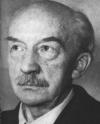
Died 8 Feb 1957 at age 66 (born 8 Jan 1891). quotes
Walther Wilhelm Georg Franz Bothe was a German physicist who developed the coincidence method of detecting the emission of electrons by x-rays in which electrons passing through two adjacent Geiger tubes at almost the same time are registered as a coincidental event. He used it to show that momentum and energy are conserved at the atomic level. In 1929 he applied the method to the study of cosmic rays and was able to show that they consisted of massive particles rather than photons. This research brought him a share (with Max Born) in the Nobel Prize for 1954. In 1930, he observed a strange radiation emitted from beryllium when it was exposed to alpha particles, later identified by Chadwick as consisting of neutrons. He built Germany's first cyclotron (1943).
Walther Wilhelm Georg Franz Bothe was a German physicist who developed the coincidence method of detecting the emission of electrons by x-rays in which electrons passing through two adjacent Geiger tubes at almost the same time are registered as a coincidental event. He used it to show that momentum and energy are conserved at the atomic level. In 1929 he applied the method to the study of cosmic rays and was able to show that they consisted of massive particles rather than photons. This research brought him a share (with Max Born) in the Nobel Prize for 1954. In 1930, he observed a strange radiation emitted from beryllium when it was exposed to alpha particles, later identified by Chadwick as consisting of neutrons. He built Germany's first cyclotron (1943).
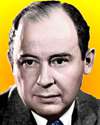
Died 8 Feb 1957 at age 53 (born 28 Dec 1903). quotes
Hungarian-American mathematician who made important contributions in quantum physics, logic, meteorology, and computer science. He invented game theory, the branch of mathematics that analyses strategy and is now widely employed for military and economic purposes. During WW II, he studied the implosion method for bringing nuclear fuel to explosion and he participated in the development of the hydrogen bomb. He also set quantum theory upon a rigorous mathematical basis. In computer theory, von Neumann did much of the pioneering work in logical design, in the problem of obtaining reliable answers from a machine with unreliable components, the function of “memory,” and machine imitation of “randomness.”[Image left: Von Neumann with ENIAC computer.]
Hungarian-American mathematician who made important contributions in quantum physics, logic, meteorology, and computer science. He invented game theory, the branch of mathematics that analyses strategy and is now widely employed for military and economic purposes. During WW II, he studied the implosion method for bringing nuclear fuel to explosion and he participated in the development of the hydrogen bomb. He also set quantum theory upon a rigorous mathematical basis. In computer theory, von Neumann did much of the pioneering work in logical design, in the problem of obtaining reliable answers from a machine with unreliable components, the function of “memory,” and machine imitation of “randomness.”[Image left: Von Neumann with ENIAC computer.]
John von Neumann: The Scientific Genius Who Pioneered..., by Norman MacRae. - book suggestion.
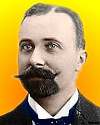
Died 8 Feb 1946 at age 78 (born 21 Jan 1868).
German chemist who discovered aspirin, while a researcher for Bayer & Co. At first, he considered pharmacy but turned to chemistry. He earned a Ph.D. degree, then joined Friedrich Bayer's company in 1894. He was interest in finding a better pain reliever for his father's chronic rheumatism, to replace the use of salicylic acid which had a bad taste and caused stomach upset. On 10 Aug 1897, he formed a derivative, acetylsalicylic acid by acetylating salicylic acid with acetic acid. Company testing showed it was a safe and efffective drug for pain relief, lowering fever, and as an anti-inflammatory. It was marketed from 1899. Hoffman's name is on the patent, and he became head of the pharmaceutical marketing department, but received no financial share of its worldwide success. In 1928, he retired to Switzerland.«
German chemist who discovered aspirin, while a researcher for Bayer & Co. At first, he considered pharmacy but turned to chemistry. He earned a Ph.D. degree, then joined Friedrich Bayer's company in 1894. He was interest in finding a better pain reliever for his father's chronic rheumatism, to replace the use of salicylic acid which had a bad taste and caused stomach upset. On 10 Aug 1897, he formed a derivative, acetylsalicylic acid by acetylating salicylic acid with acetic acid. Company testing showed it was a safe and efffective drug for pain relief, lowering fever, and as an anti-inflammatory. It was marketed from 1899. Hoffman's name is on the patent, and he became head of the pharmaceutical marketing department, but received no financial share of its worldwide success. In 1928, he retired to Switzerland.«
Aspirin: The Remarkable Story of a Wonder Drug, by Diarmuid Jeffreys. - book suggestion.
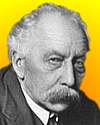
Died 8 Feb 1926 at age 64 (born 8 Aug 1861).
English biologist who published the first English translation (1900) of Gregor Mendel's work on heredity which he confirmed with his own experiments, and further demonstrated that heredity was apparent in animals as well as plants. His support of Mendel was as effective in awakening modern understanding of heredity as Thomas Huxley provided for Charles Darwin on evolution. Bateson coined (1905) the term genetics for the new science. He recognized gene linkage by which some characteristics are inherited together, rather than all characteristics being inherited independently (as later explained by Thomas Morgan). Earlier, he had contributed to understanding of embryology when, in 1885, proposed that the chordates evolved from primitive echinoderms.«
English biologist who published the first English translation (1900) of Gregor Mendel's work on heredity which he confirmed with his own experiments, and further demonstrated that heredity was apparent in animals as well as plants. His support of Mendel was as effective in awakening modern understanding of heredity as Thomas Huxley provided for Charles Darwin on evolution. Bateson coined (1905) the term genetics for the new science. He recognized gene linkage by which some characteristics are inherited together, rather than all characteristics being inherited independently (as later explained by Thomas Morgan). Earlier, he had contributed to understanding of embryology when, in 1885, proposed that the chordates evolved from primitive echinoderms.«
Mendel's Principles of Heredity, by William Bateson. - book suggestion.
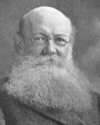
Died 8 Feb 1921 at age 78 (born 21 Dec 1842). quotes
Russian geographer and revolutionist, who combined biological and historical fact to arrive at his theory of Mutual Aid (1902). While an army officer in Siberia (1862-67), he studied the native animals, made geographical surveys, and examined the effects of the Ice Age in Asia and Europe. His investigation of the structural lines of mountain ranges revised the cartography of eastern Asia. He wrote a series of articles against social Darwinism and its tenet of the benefits of competition. Kropotkin asserted that sociability characterized animals. Thus, he held, cooperation rather than struggle guided the evolution of man and human intelligence. His greatest renown, though, was as an anarchist.«
Russian geographer and revolutionist, who combined biological and historical fact to arrive at his theory of Mutual Aid (1902). While an army officer in Siberia (1862-67), he studied the native animals, made geographical surveys, and examined the effects of the Ice Age in Asia and Europe. His investigation of the structural lines of mountain ranges revised the cartography of eastern Asia. He wrote a series of articles against social Darwinism and its tenet of the benefits of competition. Kropotkin asserted that sociability characterized animals. Thus, he held, cooperation rather than struggle guided the evolution of man and human intelligence. His greatest renown, though, was as an anarchist.«
Mutual Aid: A Factor of Evolution, by Peter Kropotkin. - book suggestion.
Died 8 Feb 1919 at age 94 (born 9 Jul 1824).
French soil scientist who (with Achille Muntz) proved (1877) that nitrification is a biological process in the soil by using chloroform vapors to inhibit the production of nitrate. Although years before (1859), Louis Pasteur had theorized that the process was biological, he was never able to prove it. Schloesing and Muntz used antiseptic followed by heating to sterilize a soil sample, thus completely halting the nitrification process. They demonstrated that by mixing a small amount of non-sterile soil into sterile soil, the nitrification process would be restored. One of the greatest practical applications of this knowledge has been to utilize a community of nitrifying bacteria in the treatment of sewerage.«[Schloesing, J., and Muntz, A., 1877, Sur La Nitrification Par Les Ferments Organises, Comptes Rendus de l’Academie des Sciences, Paris, LXXXXIV:301]
French soil scientist who (with Achille Muntz) proved (1877) that nitrification is a biological process in the soil by using chloroform vapors to inhibit the production of nitrate. Although years before (1859), Louis Pasteur had theorized that the process was biological, he was never able to prove it. Schloesing and Muntz used antiseptic followed by heating to sterilize a soil sample, thus completely halting the nitrification process. They demonstrated that by mixing a small amount of non-sterile soil into sterile soil, the nitrification process would be restored. One of the greatest practical applications of this knowledge has been to utilize a community of nitrifying bacteria in the treatment of sewerage.«[Schloesing, J., and Muntz, A., 1877, Sur La Nitrification Par Les Ferments Organises, Comptes Rendus de l’Academie des Sciences, Paris, LXXXXIV:301]
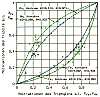
Died 8 Feb 1907 at age 52 (born 24 Oct 1854).
Dutch physical chemist who publicized Gibbs's phase rule throughout Europe. Having originally heard about it from Van der Waals, Bakhuis-Roozeboom converted Gibbs theory into practice. Whereas Gibbs had rarely experimented, Bakhuis-Roozeboom made all sorts of measurements that served to prove the validity of the phase rule, and in addition, worked out the details of its application to many individual cases. The modern chemistry of alloys benefits greatly from his amplification of the understanding of the phase rule*. In 1899, he and Albert Ladenburg demonstrated, independently of each other, when an inactive separable substance will be a racemic compound or mixture of the inactive compounds.[Image: a Roozeboom diagram]
Dutch physical chemist who publicized Gibbs's phase rule throughout Europe. Having originally heard about it from Van der Waals, Bakhuis-Roozeboom converted Gibbs theory into practice. Whereas Gibbs had rarely experimented, Bakhuis-Roozeboom made all sorts of measurements that served to prove the validity of the phase rule, and in addition, worked out the details of its application to many individual cases. The modern chemistry of alloys benefits greatly from his amplification of the understanding of the phase rule*. In 1899, he and Albert Ladenburg demonstrated, independently of each other, when an inactive separable substance will be a racemic compound or mixture of the inactive compounds.[Image: a Roozeboom diagram]
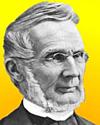
Died 8 Feb 1884 at age 76 (born 28 Sep 1807).
Swiss-American geographer and geologist, who, with glaciologist Louis Agassiz, studied the glaciers of his native Switzerland and proved that they were moving - building a foundation for the theory of ice ages. Upon moving to the United States (1848), Guyot began the first systematic instruction in geology at Princeton University. Later, as head of the meteorological department at the Smithsonian Institution, he set up a system of 50 weather observatories that utimately grew into the U. S. Weather Bureau. Using a barometer to measure altitude, he proved that Newfound Gap is the lowest pass through Appalachia's Great Smoky Mountains. The guyot, a flat-topped volcanic peak rising from the ocean floor, is named after him.« more
Swiss-American geographer and geologist, who, with glaciologist Louis Agassiz, studied the glaciers of his native Switzerland and proved that they were moving - building a foundation for the theory of ice ages. Upon moving to the United States (1848), Guyot began the first systematic instruction in geology at Princeton University. Later, as head of the meteorological department at the Smithsonian Institution, he set up a system of 50 weather observatories that utimately grew into the U. S. Weather Bureau. Using a barometer to measure altitude, he proved that Newfound Gap is the lowest pass through Appalachia's Great Smoky Mountains. The guyot, a flat-topped volcanic peak rising from the ocean floor, is named after him.« more
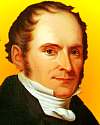
Died 8 Feb 1878 at age 83 (born 15 Aug 1794).
who was one of the fathers of mycology, who developed the first system used to classify fungi, which had been an area of difficulty and confusion in the pre- Darwin era. His interest in the subject began as a school-boy. His three-volume work, Systema mycologicum (1821-32) remains an important source for nomenclature. The major taxonomic characteristics he applied were spore color and arrangement of the hymenophore (such as smooth surfaces, lamellae, folds, tubes, or toothlike). He also investigated algae and lichens, and published works to educate lay persons.«
who was one of the fathers of mycology, who developed the first system used to classify fungi, which had been an area of difficulty and confusion in the pre- Darwin era. His interest in the subject began as a school-boy. His three-volume work, Systema mycologicum (1821-32) remains an important source for nomenclature. The major taxonomic characteristics he applied were spore color and arrangement of the hymenophore (such as smooth surfaces, lamellae, folds, tubes, or toothlike). He also investigated algae and lichens, and published works to educate lay persons.«
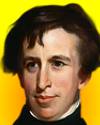
Died 8 Feb 1877 at age 78 (born 3 Apr 1798).
American oceanographer, who was a U.S. naval officer and explorer distinguished for his scientific achievements. He commanded the first major ocean expedition, the global United States Exploring Expedition (1838–42). Wilkes surveyed Pacific islands, gathered vast collections of natural history specimens, and produced valuable charts. He led his ships around over 1,500 miles of the Antarctic coast, proving that the region was a continent rather than a chain of islands. His findings laid the groundwork for later Antarctic science. Many specimens collected on the voyage became part of the Smithsonian’s first scientific collections, cementing his role in advancing American exploration and research.«
American oceanographer, who was a U.S. naval officer and explorer distinguished for his scientific achievements. He commanded the first major ocean expedition, the global United States Exploring Expedition (1838–42). Wilkes surveyed Pacific islands, gathered vast collections of natural history specimens, and produced valuable charts. He led his ships around over 1,500 miles of the Antarctic coast, proving that the region was a continent rather than a chain of islands. His findings laid the groundwork for later Antarctic science. Many specimens collected on the voyage became part of the Smithsonian’s first scientific collections, cementing his role in advancing American exploration and research.«
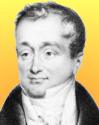
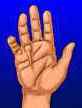
French surgeon and pathologist, noted as diagnostician, lecturer, and surgeon; best known for his development of surgical procedures for alleviating "Dupuytren's contracture" (1832), in which fibrosis of deep tissues of the palm causes permanent retraction of one or more fingers. He wrote about congenital dislocation of the hip, the nature of callus formation, subungal exostosis, the Trendelenburg sign, tenotomy in torticollis, differentiated osteosarcoma from "spina ventosa", and a treatise on gunshot wounds. Dupuytren was not an original investigator in surgical subjects, but he was an excellent observer and a great worker, who knew how to adopt and adapt others' ideas very practically. He founded the chair of pathological anatomy at the Univ. of Paris.

In 1974, the third and final astronaut crew returned from the U.S. earth-orbiting Skylab Space Station, completing their mission in space that began on 16 Nov 1973. Overall, Skylab had orbited Earth 2,476 times during the 171 days of its occupation during a total of three manned Skylab missions which started with the first crew on 25 May 1973. During that time, about 2,000 hours of scientific and medical experiments had been conducted by the three crews, many of which concerned how astronauts adapted to prolonged time spent under conditions of microgravity. The coronal holes in the Sun were discovered. After spending time in a parking orbit, the vacant Skylab was steered to Earth, disintegrated in its atmosphere on 11 Jul 1979.«
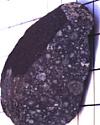
In 1969, pieces of a large meteorite were recovered in Chihuahua, Mexico. It fell at 1:05 am as a huge fireball that scattering several tons of material over an area measuring 48 by 7 km. Named after the nearby village of Allende, samples of this carbonaceous chondrite stone contain an aggregated mass of particles several of which can be easily identified as chondrules. This ancient material comes from before our Solar System formed, thus over 4.6 billion years old. Since these remnants represent the most primitive geological material from which planets were formed, and carry information to help explain the evolution of the our galaxy, Allende is one of the most studied meteorites in the world.«[Image: A piece of the Chihuahua meteorite shown again a one-centimeter grid]
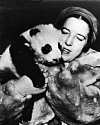
In 1937, the first giant panda to live outside China, Su Lin, was acquired by Brookfield Zoo, Chicago, U.S., from Ruth Harkness who brought the infant back from an expedition into the bamboo forests of the mountains between Tibet and China. She sailed back to Manhattan, arriving 18 Dec 1936. Su Lin caused a media sensation. She first offered the panda to the Bronx Zoo, New York, in return for funding her next expedition, but they declined. Instead, the Brookfield Zoo underwrote her next quest for another panda. Su Lin was first exhibited there to the public in August 1937, and the zoo had its highest attendance since its opening day. The public loved Su Lin and attitudes changed to reject any trophy hunt to ever shoot a panda.«[Image: Ruth Harkness with Su Lin]
The Lady and the Panda: The True Adventures of Ruth Harkness..., by Vicki Constantine Croke. - book suggestion.
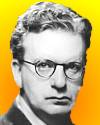
In 1928, John Logie Baird’s transmission of a TV image was received across the Atlantic ocean using short wave radio, from station 2 KZ at Purley, England to Hartsdale, NY. Though imperfect, an image showed the face of Mrs. Mia Howe. Baird's system was electromechanical: a light sensitive camera behind a rotating disc. The picture was crudely formed from a scan of thirty lines at twelve frames per second. The television receiver displayed a tiny, uneven image. This caused a sensation. The New York Times compared the event to Marconi’s sending of the letter “S” by radio across the Atlantic, 27 years earlier.
Television And Me: The Memoirs of John Logie Baird, by John Logie Baird, Malcolm Baird. - book suggestion.
In 1898, the first envelope folding and gumming machine recieved patent No. 598,716. John Ames Sherman of Worcester, Mass., had designed a "mechanism for folding and sealing envelopes, which reduced the manufacturing cost per thousand from 60 cents to 8 cents.
In 1883, Louis Waterman began experimenting with ideas that would lead to the invention of the fountain pen.
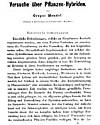
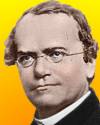
1862
The Monk in the Garden: The Lost and Found Genius of Gregor Mendel, the Father of Genetics, by Robin Marantz Henig. - book suggestion.
In 1862, the East Indian Railway set up the first full-fledged railway workshop facility in India at Jamalpur. This site was was close to not only the main trunk route of the Sahibganj loop, but also to Bihar for a source of skilled mechanical craftsmen. "Lady Curzon," CA 764 was the first locomotive completed in 1899. A training school associated with the Jamalpur workshops eventually became the Indian Railway Institute of Mechanical and Electrical Engineering.«

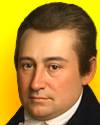
A History of Simon Willard: Inventor and Clockmaker, by John Ware Willard,. - book suggestion.
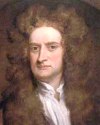
In 1672, Isaac Newton read his first optics paper before Royal Society in London. He had been elected a member only the previous month, recognising his original design of the first reflecting telescope. Newton had already spent several years investigating optics, beginning in 1665. His studies of the colours from glass prisms with their dispersion of light were recorded in his essay New Theory about Light and Colors (1672), and expanded later in Opticks (1704).«




