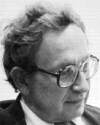
Born 13 Dec 1923; died 29 Mar 2020 at age 96. quotes
Philip Warren Anderson was an American physicist who shared (with John H. Van Vleck and Sir Nevill F. Mott) the 1977 Nobel Prize for Physics for his research on semiconductors, superconductivity, and magnetism. He made contributions to the study of solid-state physics, and research on molecular interactions has been facilitated by his work on the spectroscopy of gases. He conceived a model (known as the Anderson model) to describe what happens when an impurity atom is present in a metal. He also investigated magnetism and superconductivity, and his work is of fundamental importance for modern solid-state electronics, making possible the development of inexpensive electronic switching and memory devices in computers.
Philip Warren Anderson was an American physicist who shared (with John H. Van Vleck and Sir Nevill F. Mott) the 1977 Nobel Prize for Physics for his research on semiconductors, superconductivity, and magnetism. He made contributions to the study of solid-state physics, and research on molecular interactions has been facilitated by his work on the spectroscopy of gases. He conceived a model (known as the Anderson model) to describe what happens when an impurity atom is present in a metal. He also investigated magnetism and superconductivity, and his work is of fundamental importance for modern solid-state electronics, making possible the development of inexpensive electronic switching and memory devices in computers.
Concepts in Solids, by Philip W. Anderson. - book suggestion.
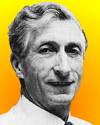
Born 13 Dec 1910; died 7 Jan 1974 at age 63. quotes
British theoretical chemist known for the application of molecular orbital theory to chemical bonding, the electronic structures of molecules and the concept of partial valency. He developed many mathematical techniques for solving chemical and physical problems. His molecular orbital theory treats a molecule as a whole, and extends atomic quantum theory with “allowed” states of electrons associated with two or more atomic nuclei. With this approach, he explained the structure of benzene and other conjugated systems, and using what he called partial valency, he described the bonding in such compounds as diborane. After writing on Waves (1941) and Electricity (1941), his book Valence (1952) was highly influential. He also wrote on reconciling scientific and religious views, believing religious faith was an essential in the pursuit of science.«
British theoretical chemist known for the application of molecular orbital theory to chemical bonding, the electronic structures of molecules and the concept of partial valency. He developed many mathematical techniques for solving chemical and physical problems. His molecular orbital theory treats a molecule as a whole, and extends atomic quantum theory with “allowed” states of electrons associated with two or more atomic nuclei. With this approach, he explained the structure of benzene and other conjugated systems, and using what he called partial valency, he described the bonding in such compounds as diborane. After writing on Waves (1941) and Electricity (1941), his book Valence (1952) was highly influential. He also wrote on reconciling scientific and religious views, believing religious faith was an essential in the pursuit of science.«
Coulson's Valence, by C.A. Coulson and Roy McWeeny (ed.). - book suggestion.
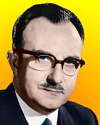
Born 13 Dec 1904; died 25 Apr 1999 at age 94. quotes
Sir William Hunter McCrea was an Irish theoretical astrophysicist whose early work was in quantum physics, relativity and pure mathmatics, but he gradually turned to applying theoretical physics in astronomy. He ranged from considering the stellar atmospheres, planet formation, cosmology and indeed, the formation of stars and the universe. He was an early advocate that stars have a high hydrogen content. He studied gas dynamics, as in the formation of hydrogen in molecular form in dusty interstellar clouds, and developed a theory of the transition from increasing density to conditions sufficient for gravitational collapse and possible star formation. Although he at first was open-minded to the steady state theory of the universe proposed by Hermann Bondi, Thomas Gold and Fred Hoyle, McCrea's work and others accumulated evidence for the Big Bang theory.«
Sir William Hunter McCrea was an Irish theoretical astrophysicist whose early work was in quantum physics, relativity and pure mathmatics, but he gradually turned to applying theoretical physics in astronomy. He ranged from considering the stellar atmospheres, planet formation, cosmology and indeed, the formation of stars and the universe. He was an early advocate that stars have a high hydrogen content. He studied gas dynamics, as in the formation of hydrogen in molecular form in dusty interstellar clouds, and developed a theory of the transition from increasing density to conditions sufficient for gravitational collapse and possible star formation. Although he at first was open-minded to the steady state theory of the universe proposed by Hermann Bondi, Thomas Gold and Fred Hoyle, McCrea's work and others accumulated evidence for the Big Bang theory.«
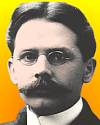
Born 13 Dec 1870; died 29 Nov 1929 at age 58. quotes
American professor of English who was among the most popular nature writers of his time. His essays familiarized his readers with the natural world on their doorstep in the local woods and fields. In 1901 he published his first book, Wild Life Near Home. Rather than expansive vistas of the wilderness, Sharp wrote in the small-scale about flora and fauna of the back yard and pasture, such as the pines, persimmon, bees, chipmunks, muskrat and chick-a-dee. He urged people to take an interest in conservation, as in his bookThe Lay of the Land. Some of his books sold over one hundred thousand copies. He wrote many essays for popular magzines such as Atlantic Monthly. He died of a brain tumour with more than 20 books to his credit.«
American professor of English who was among the most popular nature writers of his time. His essays familiarized his readers with the natural world on their doorstep in the local woods and fields. In 1901 he published his first book, Wild Life Near Home. Rather than expansive vistas of the wilderness, Sharp wrote in the small-scale about flora and fauna of the back yard and pasture, such as the pines, persimmon, bees, chipmunks, muskrat and chick-a-dee. He urged people to take an interest in conservation, as in his bookThe Lay of the Land. Some of his books sold over one hundred thousand copies. He wrote many essays for popular magzines such as Atlantic Monthly. He died of a brain tumour with more than 20 books to his credit.«
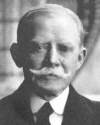
Born 13 Dec 1844; died 7 May 1922 at age 77.
American manufacturer who founded NCR (National Cash Register Co.) and helped popularize the modern cash register by means of aggressive and innovative sales techniques. In the 1870s, when he and his brother Frank established a successful business selling coal and miner's supplies, unrecorded sales were a problem. After reading a description of the cash register designed by James Ritty and sold by the National Manufacturing Company in Dayton, John ordered two, sight unseen. In six months they reduced his debt from $16,000 to $3,000 and the books showed a profit of $5,000. These modern machines had solved the old problems of disorganization and dishonesty. Patterson "was so impressed that he bought the company."
American manufacturer who founded NCR (National Cash Register Co.) and helped popularize the modern cash register by means of aggressive and innovative sales techniques. In the 1870s, when he and his brother Frank established a successful business selling coal and miner's supplies, unrecorded sales were a problem. After reading a description of the cash register designed by James Ritty and sold by the National Manufacturing Company in Dayton, John ordered two, sight unseen. In six months they reduced his debt from $16,000 to $3,000 and the books showed a profit of $5,000. These modern machines had solved the old problems of disorganization and dishonesty. Patterson "was so impressed that he bought the company."

Born 13 Dec 1838; died 15 Dec 1902 at age 64.
French botanist who developed the first successful fungicide and also saved the vineyards of France from destruction by the greenish yellow grape phylloxera, an aphidlike plant pest introduced into Europe on vines imported from the United States for grafting (1858-63). The insect swiftly spread extensive destruction. Millardet controlled this plague with resistant American vines as grafting stock, but these brought in the downy mildew fungus. In Oct 1882, he saw chemicals used by farmers for other reasons (a mixture of copper sulfate, lime and water) and after three years of testing, he found it acted as a suitable fungicide for the mildew. Known as the Bordeaux mixture, was the first fungicide to receive large-scale use the world over.
French botanist who developed the first successful fungicide and also saved the vineyards of France from destruction by the greenish yellow grape phylloxera, an aphidlike plant pest introduced into Europe on vines imported from the United States for grafting (1858-63). The insect swiftly spread extensive destruction. Millardet controlled this plague with resistant American vines as grafting stock, but these brought in the downy mildew fungus. In Oct 1882, he saw chemicals used by farmers for other reasons (a mixture of copper sulfate, lime and water) and after three years of testing, he found it acted as a suitable fungicide for the mildew. Known as the Bordeaux mixture, was the first fungicide to receive large-scale use the world over.
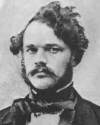
Born 13 Dec 1816; died 6 Dec 1892 at age 75.
German electrical engineer who played an important role in originating the modern electrical industry. Siemens combined his skill as a successful inventor and an entrepreneur beginning with his firm, Siemens & Halske. Its first work was in the telegraph industry, building Germany's first important telegraph line, then others in Europe and Asia. The company he expanded more broadly into electric technology became the present multinational Siemens company. His birth name was Ernst Werner Siemens, until ennobled as Werner von Siemens. His younger brother, Sir William Siemens, moved to England, invented the regenerative fuel system for the steel-making furnace and was also active in electrical technology.«
German electrical engineer who played an important role in originating the modern electrical industry. Siemens combined his skill as a successful inventor and an entrepreneur beginning with his firm, Siemens & Halske. Its first work was in the telegraph industry, building Germany's first important telegraph line, then others in Europe and Asia. The company he expanded more broadly into electric technology became the present multinational Siemens company. His birth name was Ernst Werner Siemens, until ennobled as Werner von Siemens. His younger brother, Sir William Siemens, moved to England, invented the regenerative fuel system for the steel-making furnace and was also active in electrical technology.«
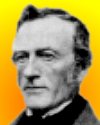
Born 13 Dec 1805; died 6 Aug 1879 at age 73.
Scottish-born German astronomer noted for discovering (1852) that the magnetic field of the Earth fluctuates with a 10.3-year activity cycle, but does not correlate it with the period of the sunspot cycle. From 1 Aug 1840, Johann von Lamont (as director of the Royal Astronomical Observatory in Munich) started regular and permanent observations of the earth's magnetic field. In the 1850's he started making regional magnetic surveys in the kingdom of Bavaria, later extended to other states in south Germany, France, Holland, Belgium, Spain, Portugal, Prussia and Denmark. His central European maps with isolines of geomagnetic elements, reduced to 1854, were the first worldwide.
Scottish-born German astronomer noted for discovering (1852) that the magnetic field of the Earth fluctuates with a 10.3-year activity cycle, but does not correlate it with the period of the sunspot cycle. From 1 Aug 1840, Johann von Lamont (as director of the Royal Astronomical Observatory in Munich) started regular and permanent observations of the earth's magnetic field. In the 1850's he started making regional magnetic surveys in the kingdom of Bavaria, later extended to other states in south Germany, France, Holland, Belgium, Spain, Portugal, Prussia and Denmark. His central European maps with isolines of geomagnetic elements, reduced to 1854, were the first worldwide.
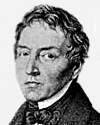
Born 13 Dec 1780; died 24 Mar 1849 at age 68.
German chemist whose observation (1829) that when certain triads of elements were arranged in order of increasing atomic mass, the mass of the central member was approximately the average of the other two, and intermediate in chemical properties between the other two elements. The triads are now found as consecutive members of the groups of the periodic table. For example, the atomic weight of bromine (80.970) was the arithmetic mean of the atomic weights of chlorine (35.470) and iodine (126.470) and the properties of the three elements varied in an orderly manner, from chlorine to bromine to iodine. Döbereiner found two other such "triads" - calcium, strontium, barium; and sulfur, selenium, tellurium. He was one of the first chemists to offer laboratory instruction in chemistry. He studied in general, pharmaceutical, and analytical chemistry. Also, he invented a lamp in which hydrogen ignited on contact with a platinum sponge (1823). Although the lamp had limited application, Döbereiner was interested in catalysis in general. He discovered the catalytic action of manganese dioxide in the decomposition of potassium chlorate.
German chemist whose observation (1829) that when certain triads of elements were arranged in order of increasing atomic mass, the mass of the central member was approximately the average of the other two, and intermediate in chemical properties between the other two elements. The triads are now found as consecutive members of the groups of the periodic table. For example, the atomic weight of bromine (80.970) was the arithmetic mean of the atomic weights of chlorine (35.470) and iodine (126.470) and the properties of the three elements varied in an orderly manner, from chlorine to bromine to iodine. Döbereiner found two other such "triads" - calcium, strontium, barium; and sulfur, selenium, tellurium. He was one of the first chemists to offer laboratory instruction in chemistry. He studied in general, pharmaceutical, and analytical chemistry. Also, he invented a lamp in which hydrogen ignited on contact with a platinum sponge (1823). Although the lamp had limited application, Döbereiner was interested in catalysis in general. He discovered the catalytic action of manganese dioxide in the decomposition of potassium chlorate.
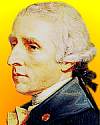
Born 13 Dec 1730; died 6 Apr 1803 at age 72. quotes
English diplomat, archaeologist and geologist who spent his years as British envoy to the court of Naples (1764-1800) also conducting archaeological investigations and collecting antiquities. He took a particular interest in the volcanic remains around Vesuvius (Italy) and Etna (Sicily) and published several studies (1772-83) on earthquakes and volcanoes. His excavations included Herculaneum and Pompeii, the towns buried by the eruption of Vesuvius in A.D. 79, where he collected lava samples, ashes and minerals. In 1767, he designed an apparatus to depict an eruption of Vesuvius using a combination of clockwork-driven moving pictures, light and sound effects - the first example of an animated picture with sound.«
English diplomat, archaeologist and geologist who spent his years as British envoy to the court of Naples (1764-1800) also conducting archaeological investigations and collecting antiquities. He took a particular interest in the volcanic remains around Vesuvius (Italy) and Etna (Sicily) and published several studies (1772-83) on earthquakes and volcanoes. His excavations included Herculaneum and Pompeii, the towns buried by the eruption of Vesuvius in A.D. 79, where he collected lava samples, ashes and minerals. In 1767, he designed an apparatus to depict an eruption of Vesuvius using a combination of clockwork-driven moving pictures, light and sound effects - the first example of an animated picture with sound.«
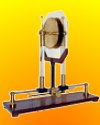
Born 13 Dec 1724; died 10 Aug 1802 at age 77. quotes
German mathematician and physicist whose Tentamen theoriae electricitatis et magnetismi (1759; "An Attempt at a Theory of Electricity and Magnetism") was the first work to apply mathematics to the theory of electricity and magnetism. Aepinus' experiments led to the design of the parallel-plate capacitor, a device used to store energy in an electric field. He also discovered the electric properties of the mineral tourmaline and investigated pyroelectricity, the state of electrical polarization produced in tourmaline and various other crystals by a change of temperature. Other achievements of Aepinus include improvements to the microscope, and his demonstration of the effects of parallax in the transit of a planet across the Sun's disk (1764).Image: Aepinus Condenser,1880
German mathematician and physicist whose Tentamen theoriae electricitatis et magnetismi (1759; "An Attempt at a Theory of Electricity and Magnetism") was the first work to apply mathematics to the theory of electricity and magnetism. Aepinus' experiments led to the design of the parallel-plate capacitor, a device used to store energy in an electric field. He also discovered the electric properties of the mineral tourmaline and investigated pyroelectricity, the state of electrical polarization produced in tourmaline and various other crystals by a change of temperature. Other achievements of Aepinus include improvements to the microscope, and his demonstration of the effects of parallax in the transit of a planet across the Sun's disk (1764).Image: Aepinus Condenser,1880

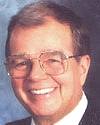
Died 13 Dec 1999 at age 72 (born 27 Jul 1927).
American engineer and inventor of the "ball-in tube" or electromechanical crash sensor (EMS). He formed Breed Corp. in 1961 to develop and manufacture safety and arming devices for the military. Later, he recognized that these safety devices could be applied toward the development of crash sensors for automotive airbag systems. Breed developed his first airbag sensor design in 1968. His persistence within the automotive industry and with Congress helped bring airbags to the forefront of the US automotive market in the early 1980s. In 1984 passive restraint led to the birth of the airbag industry.
American engineer and inventor of the "ball-in tube" or electromechanical crash sensor (EMS). He formed Breed Corp. in 1961 to develop and manufacture safety and arming devices for the military. Later, he recognized that these safety devices could be applied toward the development of crash sensors for automotive airbag systems. Breed developed his first airbag sensor design in 1968. His persistence within the automotive industry and with Congress helped bring airbags to the forefront of the US automotive market in the early 1980s. In 1984 passive restraint led to the birth of the airbag industry.
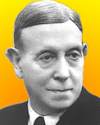
Died 13 Dec 1955 at age 81 (born 29 Nov 1874).
Portuguese neurologist and statesman who was the founder of modern psychosurgery. In the 1920s, he pioneered the technique of cerebral angiography, enabling X-ray examination of arteries in the brain. In the 1930s, he developed the original form of prefrontal leucotomy (lobotomy), an operation for relieving severe symptoms of psychiatric illness. The operation consisted of inserting a sharp knife into the prefrontal lobe of the brain, roughly the area above and between the eyes; it required the minimum of equipment and lasted less than five minutes. For this development, he was awarded a share of the 1949 Nobel Prize for Physiology or Medicine with Walter Hess.
Portuguese neurologist and statesman who was the founder of modern psychosurgery. In the 1920s, he pioneered the technique of cerebral angiography, enabling X-ray examination of arteries in the brain. In the 1930s, he developed the original form of prefrontal leucotomy (lobotomy), an operation for relieving severe symptoms of psychiatric illness. The operation consisted of inserting a sharp knife into the prefrontal lobe of the brain, roughly the area above and between the eyes; it required the minimum of equipment and lasted less than five minutes. For this development, he was awarded a share of the 1949 Nobel Prize for Physiology or Medicine with Walter Hess.
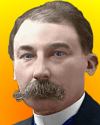
Died 13 Dec 1935 at age 64 (born 6 May 1871). quotes
(François-Auguste-)Victor Grignard was a French chemist and corecipient and corecipient (with Paul Sabatier) of the Nobel Prize for Chemistry in 1912, for his development of the Grignard reaction. He discovered the alkyl magnesium halides (1901), which are prepared by reacting magnesium with an organic halide in dry ether, producing compounds of the type RMgX, where X is a halogen (Cl, Br, I) and R an organic group. These Grignard reagents are extremely important in organic syntheses. They are very versatile and permit the synthesis of a large number of different classes of compounds, particularly secondary and tertiary alcohols, hydrocarbons, and carboxylic acids facilitate a number of chemical reactions and Grignard spent much of his life working on them.
(François-Auguste-)Victor Grignard was a French chemist and corecipient and corecipient (with Paul Sabatier) of the Nobel Prize for Chemistry in 1912, for his development of the Grignard reaction. He discovered the alkyl magnesium halides (1901), which are prepared by reacting magnesium with an organic halide in dry ether, producing compounds of the type RMgX, where X is a halogen (Cl, Br, I) and R an organic group. These Grignard reagents are extremely important in organic syntheses. They are very versatile and permit the synthesis of a large number of different classes of compounds, particularly secondary and tertiary alcohols, hydrocarbons, and carboxylic acids facilitate a number of chemical reactions and Grignard spent much of his life working on them.
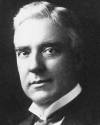
Died 13 Dec 1934 at age 80 (born 18 Jan 1854). quotes
American telephone pioneer and shipbuilder who was one of the original organizers of the Bell Telephone Company. He later turned to shipbuilding and constructed a number of vessels for the United States government. In 1872 he got a job in Boston in the electrical shop of Charles Williams, Jr., at 109 Court Street. A number of inventors had their models made at Williams' shop, and in 1874 Watson did some work for Alexander Graham Bell, with whom he worked thereafter during all the experimental period of the telephone and the years that followed until it was commercially established. Thomas Watson was given an interest in the business (1877) and when Bell went to Europe he became the research and technical head of the Bell Telephone Company.
American telephone pioneer and shipbuilder who was one of the original organizers of the Bell Telephone Company. He later turned to shipbuilding and constructed a number of vessels for the United States government. In 1872 he got a job in Boston in the electrical shop of Charles Williams, Jr., at 109 Court Street. A number of inventors had their models made at Williams' shop, and in 1874 Watson did some work for Alexander Graham Bell, with whom he worked thereafter during all the experimental period of the telephone and the years that followed until it was commercially established. Thomas Watson was given an interest in the business (1877) and when Bell went to Europe he became the research and technical head of the Bell Telephone Company.
Thomas A.Watson: Does That Name Ring a Bell?, by Ted Clarke. - book suggestion.
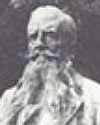
Died 13 Dec 1931 at age 90 (born 7 May 1841). quotes
French social psychologist best known for his study of the psychological characteristics of crowds, The Crowd, Study of Popular Mind. In this early effort to explain group behavior, Le Bon gave two propositions: that people in groups adopt a group mind, and that groups as a collective are emotional and irrational. He theorized that in the right situations, the emotions of one person spread through the group like a cold through a schoolhouse. Control mechanisms such as values, ethics, and learned social rules are broken down and forgotten for the time. He was also the author of a number of works on social psychology, in which he expounded theories of national traits and racial superiority.
French social psychologist best known for his study of the psychological characteristics of crowds, The Crowd, Study of Popular Mind. In this early effort to explain group behavior, Le Bon gave two propositions: that people in groups adopt a group mind, and that groups as a collective are emotional and irrational. He theorized that in the right situations, the emotions of one person spread through the group like a cold through a schoolhouse. Control mechanisms such as values, ethics, and learned social rules are broken down and forgotten for the time. He was also the author of a number of works on social psychology, in which he expounded theories of national traits and racial superiority.
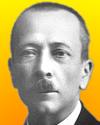
Died 13 Dec 1930 at age 61 (born 3 Sep 1869).
Austrian chemist awarded the 1923 Nobel Prize for Chemistry for developing techniques in the microanalysis of organic compounds. Pregl began research on bile acids in about 1904. With only tiny yields to study, he pioneered techniques of microanalysis. Whereas Justus von Liebig had needed about 1 gram of a substance before he could make an accurate analysis; through his new techniques, Pregl could work with 2.5 milligrams. This was achieved by the careful scaling down of his analytic equipment and the design of a new balance (produced in collaboration with the instrument maker W. Kuhlmann of Hamburg) capable of weighing 20 grams to an accuracy of 0.001 milligram. His techniques are of immense importance in organic chemistry.
Austrian chemist awarded the 1923 Nobel Prize for Chemistry for developing techniques in the microanalysis of organic compounds. Pregl began research on bile acids in about 1904. With only tiny yields to study, he pioneered techniques of microanalysis. Whereas Justus von Liebig had needed about 1 gram of a substance before he could make an accurate analysis; through his new techniques, Pregl could work with 2.5 milligrams. This was achieved by the careful scaling down of his analytic equipment and the design of a new balance (produced in collaboration with the instrument maker W. Kuhlmann of Hamburg) capable of weighing 20 grams to an accuracy of 0.001 milligram. His techniques are of immense importance in organic chemistry.
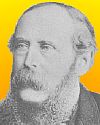
Died 13 Dec 1891 at age 78 (born 21 Aug 1813).
Belgian chemist, notable for his accurate determinations of atomic weights. He had worked under the direction of Dumas, with whom he established the atomic weight of carbon. Stas worked assiduously to make more accurate measurements of other atomic weights than had ever been done before. Stas wished to prove the hypothesis of Joseph Proust, that all atoms were conglomerations of hydrogen atoms, though this could not be achieved. Stas was probably the most skilful chemical analyst of the nineteenth century.
Belgian chemist, notable for his accurate determinations of atomic weights. He had worked under the direction of Dumas, with whom he established the atomic weight of carbon. Stas worked assiduously to make more accurate measurements of other atomic weights than had ever been done before. Stas wished to prove the hypothesis of Joseph Proust, that all atoms were conglomerations of hydrogen atoms, though this could not be achieved. Stas was probably the most skilful chemical analyst of the nineteenth century.
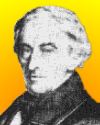
Died 13 Dec 1868 at age 74 (born 17 Apr 1794).
German botanist best known for his work on Brazilian flora. He spent three years on expedition with zoologist Johann Baptist von Spix to study the botany, zoology, mineralogy, and ethnology of Brazil, covering 6,500 km of Brazilian territory. Upon returning to Munich, they carried with them numerous examples of mammals, birds, fish, insects and vegetation. They also had written descriptions and etchings of all they had observed. Martius dedicated his life to the study of the material collected during his expedition to Brazil. In this way, such works as Flora Brasiliensis, considered to be one of the most important works on a country's flora, took form. It took 66 years to complete and the collaboration of 57 botanists from various parts of the world.
German botanist best known for his work on Brazilian flora. He spent three years on expedition with zoologist Johann Baptist von Spix to study the botany, zoology, mineralogy, and ethnology of Brazil, covering 6,500 km of Brazilian territory. Upon returning to Munich, they carried with them numerous examples of mammals, birds, fish, insects and vegetation. They also had written descriptions and etchings of all they had observed. Martius dedicated his life to the study of the material collected during his expedition to Brazil. In this way, such works as Flora Brasiliensis, considered to be one of the most important works on a country's flora, took form. It took 66 years to complete and the collaboration of 57 botanists from various parts of the world.
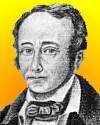
Died 13 Dec 1850 at age 48 (born 8 Aug 1802).
Swiss-Russian chemist whose studies of heat in chemical reactions formed the foundation of thermochemistry. He formulated an empirical law, Hess's law of constant heat summation (1840), which states that the heat evolved or absorbed in a chemical process is the same whether the process takes place in one or in several steps. It is explained by thermodynamic theory, which holds that enthalpy is a state function. Chemists have made great use of the law of Hess in establishing the heats of formation of compounds which are not easily formed from their constituent elements. His early investigations concerned minerals and the natural gas found near Baku, and he also discovered the oxidation of sugars to yield saccharic acid.DSB gives dates as 8 Aug 1802 - 13 Dec 1850. EB gives 7 Aug 1802 - 30 Nov 1850.]
Swiss-Russian chemist whose studies of heat in chemical reactions formed the foundation of thermochemistry. He formulated an empirical law, Hess's law of constant heat summation (1840), which states that the heat evolved or absorbed in a chemical process is the same whether the process takes place in one or in several steps. It is explained by thermodynamic theory, which holds that enthalpy is a state function. Chemists have made great use of the law of Hess in establishing the heats of formation of compounds which are not easily formed from their constituent elements. His early investigations concerned minerals and the natural gas found near Baku, and he also discovered the oxidation of sugars to yield saccharic acid.DSB gives dates as 8 Aug 1802 - 13 Dec 1850. EB gives 7 Aug 1802 - 30 Nov 1850.]
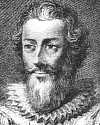
Died 13 Dec 1603 (born 1540).
French mathematician who introduced the first systematic algebraic notation and contributed to the theory of equations. As Henry IV's cryptographer, he broke an elaborate cipher used by Spanish agents. In algebra, he made a number of innovations in the use of symbolism and several technical terms still in use (e.g., coefficient) were introduced by him. By using algebraic rather than geometric methods, Viète was able to solve a number of geometrical problems. In his In artem analyticam isagoge (1591) Viète introduced such basic algebraic conventions as using letters to represent both known and unknown quantities, while improving the notation for the expression of square and cubic numbers.
French mathematician who introduced the first systematic algebraic notation and contributed to the theory of equations. As Henry IV's cryptographer, he broke an elaborate cipher used by Spanish agents. In algebra, he made a number of innovations in the use of symbolism and several technical terms still in use (e.g., coefficient) were introduced by him. By using algebraic rather than geometric methods, Viète was able to solve a number of geometrical problems. In his In artem analyticam isagoge (1591) Viète introduced such basic algebraic conventions as using letters to represent both known and unknown quantities, while improving the notation for the expression of square and cubic numbers.
Died 13 Dec 1565 at age 49 (born 26 Mar 1516). quotes
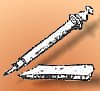
Swiss physician, naturalist, and encyclopedist is best known for his monumental works. Gesner's aim was to survey all the world's recorded knowledge. His books included systematic compilations of information on animals and plants. Elaborately illustrated, Historiae animalium comprised five volumes, the first appearing in 1551, each covering a portion of the animal kingdom. Gesner's pictures made his works both more appealing and less ambiguous. Although he listed all the animals known in Europe, he had no idea of the relationships one animal to another. Yet, in Historica Plantarum (History of Plants), published two centuries after his death, he was the first to recognize that similar species could be grouped to form genera.Image: The first known illustration of a lead pencil is found in Gesner's book on fossils (1565). [Name sometimes spelled as 'Konrad'.]
Swiss physician, naturalist, and encyclopedist is best known for his monumental works. Gesner's aim was to survey all the world's recorded knowledge. His books included systematic compilations of information on animals and plants. Elaborately illustrated, Historiae animalium comprised five volumes, the first appearing in 1551, each covering a portion of the animal kingdom. Gesner's pictures made his works both more appealing and less ambiguous. Although he listed all the animals known in Europe, he had no idea of the relationships one animal to another. Yet, in Historica Plantarum (History of Plants), published two centuries after his death, he was the first to recognize that similar species could be grouped to form genera.Image: The first known illustration of a lead pencil is found in Gesner's book on fossils (1565). [Name sometimes spelled as 'Konrad'.]
Died 13 Dec 1557 (born 1499). quotes
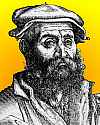
Italian mathematician who originated the science of ballistics. His proper name was Niccolo Fontana although he is always known by his nickname, Tartaglia, which means the "stammerer." When the French sacked Brescia in 1512, soldiers killed his father and left young Tartaglia for dead with a sabre wound that cut his jaw and palate. In 1535, by winning a competition to solve cubic equations, he gained fame as the discoverer of the formula for their algebraic solution (which was published in Cardan's Ars Magna, 1545) Tartaglia wrote Nova Scientia (1537) on the application of mathematics to artillery fire. He described new ballistic methods and instruments, including the first firing tables. He was the first Italian translator and publisher of Euclid's Elements (1543).
Italian mathematician who originated the science of ballistics. His proper name was Niccolo Fontana although he is always known by his nickname, Tartaglia, which means the "stammerer." When the French sacked Brescia in 1512, soldiers killed his father and left young Tartaglia for dead with a sabre wound that cut his jaw and palate. In 1535, by winning a competition to solve cubic equations, he gained fame as the discoverer of the formula for their algebraic solution (which was published in Cardan's Ars Magna, 1545) Tartaglia wrote Nova Scientia (1537) on the application of mathematics to artillery fire. He described new ballistic methods and instruments, including the first firing tables. He was the first Italian translator and publisher of Euclid's Elements (1543).
Died 13 Dec 1250 at age 55 (born 26 Dec 1194).
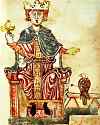
Frederick II of Hohenstaufen was a German emperor and ornithologist who was a German ruler, residing in Sicily. He was a multilingual man of learning, who corresponded with and patronized scholars. He battled with the papacy, but otherwise practiced religious tolerance, and interacted with learned Jews, Muslims and Christians. His interest spanned science, especially natural history. He kept a menagerie which at various times had not only monkeys and camels, but also a giraffe and an elephant. His notable contribution to scientific ornithology was with a six-volume work, De arte venandi cum avibus (c.1244-48). In addition to some treatment of falconry, he presented his own observations (rather than perpetuating accepted hearsay knowledge) with remarks on hundreds of kinds of birds, with generalizations on their behaviour, anatomy and physiology. «[Miniature painting of Holy Roman Emperor Frederick II with a falcon from De arte venandi cum avibus, in Vatican Library.]
Frederick II of Hohenstaufen was a German emperor and ornithologist who was a German ruler, residing in Sicily. He was a multilingual man of learning, who corresponded with and patronized scholars. He battled with the papacy, but otherwise practiced religious tolerance, and interacted with learned Jews, Muslims and Christians. His interest spanned science, especially natural history. He kept a menagerie which at various times had not only monkeys and camels, but also a giraffe and an elephant. His notable contribution to scientific ornithology was with a six-volume work, De arte venandi cum avibus (c.1244-48). In addition to some treatment of falconry, he presented his own observations (rather than perpetuating accepted hearsay knowledge) with remarks on hundreds of kinds of birds, with generalizations on their behaviour, anatomy and physiology. «[Miniature painting of Holy Roman Emperor Frederick II with a falcon from De arte venandi cum avibus, in Vatican Library.]

1966
In 1968, the journal Science published the classic essay Tragedy of the Commons by Garrett Hardin. He presented issues of ecology and social ethics in the form of a parable about farmers who, when allowed to graze their cattle in one field as much as they wanted to, each acted in their own self-interest, and the field was destroyed. The idea of self-interest extends beyond the individual to households, villages, companies, industries or nations. His concept of the commons includes ecosystems, rivers, oceans, organisms or mineral resources with actions such as over-fishing, deforestation, resource depletion and greenhouse gas emissions. He concluded that the Earth will likewise be destroyed by overpopulation.«
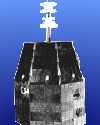
In 1962, Relay I, the first U.S. communications earth satellite to transmit telephone, television, teleprinter and facsimile signals was launched. The first test patterns were not transmitted until 3 Jan 1963, when the solar cells had built up sufficient battery charge. It had 8,215 solar cells, 3 nickel cadmium batteries and 5 external antennas. The signals were relayed between the U.S. and England, Italy and Brazil. The satellite payload, which was 33-in high, 29-in diameter and 172-lb weight, was launched on a Thor-Delta rocket from the Atlantic Missile Range at Cape Canaveral, Florida, into an orbit with perigee 817.7 miles and apogee 4,610.9 miles. Earlier communications satellites had been launched for testing purposes, such as the Echo I, on 12 Aug 1960.

In 1938, the first U.S. patent was issued for casein fibre (No. 2,140,274). Earl Ovando Whittier and Stephen Philip Gould of Washington, D.C. had first produced casein fibre in December 1935. They dedicated the patent "to the free use of the people of the United States of America." Casein is the main protein found in milk. Their invention was to produce dispersions of casein (mixed usually with plasticizers and salts), to be extruded into fibres having the requisite characteristics of strength, water resistance, flexibility, and softness necessary to make them suitable as substitutes for wool and other fibres. Some of the best plasticizers suggested were the fat acids to give the fibres flexibility, softness and water repellancy. Sodium aluminate improved the fibre's strength.
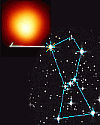
In 1920, first U.S. measurement of the size of a fixed star was made on Betelgeuse, the bright red star in the right shoulder of Orion, which was found to be 260 million miles in diameter - 150 times greater than the Sun. Dr. Francis G. Pease made the measurement on the 100-inch telescope at the Mount Wilson Observatory using a beam interferometer designed by Professor A. A. Michelson. Betelgeuse was selected as the first test object since theoretical calculations had suggested that the star was unusually great in size. The apparent angular size of Betelgeuse was found to average about .044 arcseconds. Direct interferometer measurements can only be used with large stars. The majority of stars rely upon more indirect methods of determining stellar sizes.

In 1913, the Lincoln Highway, the first improved coast-to-coast highway in America, had its first section named in New Jersey, between Jersey City and Newark. What had been known as the Jersey City Plank Road for over 100 years was rededicated as the Essex-Hudson Lincoln Highway after having been reconstructed as a boulevard 100-ft wide overall at a cost of $1,250,000. It was bordered by street lights and 10-ft wide sidewalks on each side. The traffic surfaces were of brick and concrete. Of its cost, $500,000 had been spend on its bridges. The new name for the road was adopted at the request of the Associated Automobile Clubs of New Jersey and the Newark Motor Club. The transcontinental project was guided by the Lincoln Highway Association, formed 1 Jul 1913.« [References on the Web to 10 Sep 1913 as the opening date of the Lincoln Highway are obviously wrong.See Reference.] more
[References on the Web to 10 Sep 1913 as the opening date of the Lincoln Highway are obviously wrong.See Reference.] more The Lincoln Highway: Coast to Coast from Times Square to the Golden Gate, by Michael Wallis et al. - book suggestion.
In 1900, Albert Einstein dated his first published article, sent from Zurich, though it did not appear in print until the following March. In 'Conclusions Drawn from the Phenomena of Capillarity', he applied both thermodynamic and molecular-theoretical methods to explain the nature of intermolecular forces for the phenomena of capillarity in neutral liquids. At the time of publication, about to turn 21, he had recently graduated from the Swiss Federal Polytechnical School in Zurich. He was unemployed, and although with offprints of the article sent to several prominent physicists (including Wilhelm Ostwald, cited in the paper), his attempt to find a position as Assistent at some university was without success.«['Folgerungen aus den Capillaritatserscheinungen', Annalen der Physik, ser. 4, (1 Mar 1901), 513-523.]
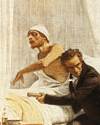
In 1893, the first tuberculosis diagnostic community laboratory in the U.S. was authorized in New York City and opened by the New York City Dept. of Health under the direction of Dr. Hermann Michael Biggs. The laboratory administered sputum examinations, reporting and registrations (compulsory by institutions and voluntary by physicians), official supervision of isolation, terminal disinfection, provision of hospital facilities, and public education. The first research laboratory in the U.S. was established the following year, in 1894, by Dr. Edward Livingston Trudeau in a room in his home at Saranac Lake, N.Y.
Hives of Sickness: Public Health and Epidemics in New York City, by David Rosner, editor. - book suggestion.
In 1856, Charles Dickens, as editor of Household Words, published an article (by another unnamed author) that commented on Henri Sainte-Claire Deville's success in developing the first practical industrial process for producing aluminium, predicted: “Aluminium may probably send tin to the right about face, drive copper saucepans into penal servitude, and blow up German-silver sky-high into nothing.” Aluminium is the third most abundant element, comprising some 8 percent of the earth's crust. Yet it was only as recently as during Dicken's lifetime—just a century ago—that a viable production process was established (1854). Aluminium is the most recently (1808) discovered metal in common use.
In 1816, the first U.S. patent for a dry dock was issued to John Adamson of Boston, Mass. A floating dry dock was built a few years later in Weehawhen Cave, Hoboken, N.J. for the dry docking and repair of canal boats. The patent was extended 14 years by act of Congress, 2 Mar 1831 (6 Stat. L. 458).
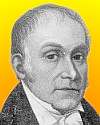
In 1809, the first U.S. ovariotomy (abdominal surgical removal of an ovarian tumour) was decided upon by Dr. Ephraim McDowell (1771-1830), the “Father of Ovariotomy.” He had been called to the house of Jane Todd Crawford, 45, in Motley’s Glen, Kentucky. She had been previously attended by less skilled practioners who had first thought she was pregnant with twins. McDowell instead diagnosed a huge tumour. A few days later, on 25 Dec 1809, and 60 miles away at his Danville practice, McDowell operated to remove a 22-pound ovarian tumour—in an era that had no anaesthetic. She quickly recovered, and lived to be 78. His published account (1817) of the operation created a sensation. He performed eight more ovariotomies, the last in 1826. Since 1929, his statue stands in the U.S. Capitol.«





