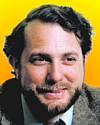

American physicist who was a pioneer in medical imaging and fine-arts holography. His fascination with optical phenomena began with the 3-D glasses he used as an 11-year-old to watch the 1953 movie House of Wax. In 1968, he invented the “rainbow holograms” as seen on credit cards while working for Polaroid Corporation. He turned to academia as an assistant professor at Harvard (1968) and later a professor at Massachusetts Institute of Technology from 1985 where he helped set up the Spatial Imaging Group and headed the M.I.T. media art and sciences program. Benton was a pioneer in natural light holography as a artistic medium, and was a curator at the Museum of Holography in Manhanttan until it closed in 1992.«[Image right: Benton hologram used on a credit card.]
Born 1 Dec 1925; died 7 Dec 1998 at age 73.
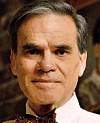
American biochemist who was awarded the 1994 Nobel Prize for Physiology or Medicine for his discovery in the 1960s of natural signal transducers called G-proteins that help cells in the body communicate with each other. He shared the prize with Alfred G. Gilman, who later proved Rodbell's hypothesis, by isolating the G-protein, which is so named because it binds to nucleotides called guanosine diphosphate and guanosine triphosphate, or GDP and GTP. Prior to Rodbell's research, scientists believed that only two substances—a hormone receptor and an interior cell enzyme—were responsible for cellular communication. Rodbell, however, discovered that the G-protein acted as an intermediate signal transducer between the two.
American biochemist who was awarded the 1994 Nobel Prize for Physiology or Medicine for his discovery in the 1960s of natural signal transducers called G-proteins that help cells in the body communicate with each other. He shared the prize with Alfred G. Gilman, who later proved Rodbell's hypothesis, by isolating the G-protein, which is so named because it binds to nucleotides called guanosine diphosphate and guanosine triphosphate, or GDP and GTP. Prior to Rodbell's research, scientists believed that only two substances—a hormone receptor and an interior cell enzyme—were responsible for cellular communication. Rodbell, however, discovered that the G-protein acted as an intermediate signal transducer between the two.
Born 1 Dec 1847; died 5 Mar 1930 at age 82.
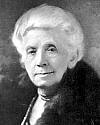
(née Ladd) American scientist and logician known for contributions to the theory of colour vision accounting for the development of man's color sense which countered the established views of Helmholtz, Young, and Hering. Her position was that color-sense developed in stages. Ladd- Franklin's conclusions were particularly useful in accounting for color-blindness in some individuals. In logic, she published an original method for reducing all syllogisms to a single formula (1883)
(née Ladd) American scientist and logician known for contributions to the theory of colour vision accounting for the development of man's color sense which countered the established views of Helmholtz, Young, and Hering. Her position was that color-sense developed in stages. Ladd- Franklin's conclusions were particularly useful in accounting for color-blindness in some individuals. In logic, she published an original method for reducing all syllogisms to a single formula (1883)
1884
Born 1 Dec 1846; died 20 Apr 1933 at age 86.
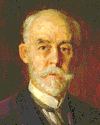
American archaeologist, artist, and museum director who helped to establish professional archaeology in the United States. He was a geologist and outstanding illustrator who turned to archaeology while working for the U.S. Geological Survey (1875) and became an expert on southwestern Indian art and prehistoric ceramics and stone implements. His knowledge of geology, archaeology, anthropology, and ethnology made him a master in the scientific documentation of landscapes. His achievements included important publications on Indian cultures in prehistory and on Mayan civilization at Chichen Itza. He was chief of the Bureau of American Ethnology (1902-09) and director of the National Gallery of Art (1920-32).
American archaeologist, artist, and museum director who helped to establish professional archaeology in the United States. He was a geologist and outstanding illustrator who turned to archaeology while working for the U.S. Geological Survey (1875) and became an expert on southwestern Indian art and prehistoric ceramics and stone implements. His knowledge of geology, archaeology, anthropology, and ethnology made him a master in the scientific documentation of landscapes. His achievements included important publications on Indian cultures in prehistory and on Mayan civilization at Chichen Itza. He was chief of the Bureau of American Ethnology (1902-09) and director of the National Gallery of Art (1920-32).
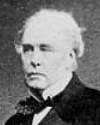
Born 1 Dec 1802; died 1 Feb 1880 at age 77.
Irish physician and author (baronet) who wrote several reports on diseases of the heart. His paper on aortic insufficiency (1832) is generally regarded as the classic description of the condition. Many medical eponyms come from his diverse studies: Corrigan's respiration (a shallow respiration in fever), Corrigan's pulse (also called waterhammer pulse; a jerking pulse-beat associated with disease of one of the heart valves) and Corrigan's cirrhosis. His published material was based on observation of patients at various Dublin hospitals. His better-known studies were on cirrhosis of the lung (1838), aortitis as a cause of angina pectoris (1837), and mitral stenosis (1838). Corrigan also supported making a distinction between typhus and typhoid fever.
Irish physician and author (baronet) who wrote several reports on diseases of the heart. His paper on aortic insufficiency (1832) is generally regarded as the classic description of the condition. Many medical eponyms come from his diverse studies: Corrigan's respiration (a shallow respiration in fever), Corrigan's pulse (also called waterhammer pulse; a jerking pulse-beat associated with disease of one of the heart valves) and Corrigan's cirrhosis. His published material was based on observation of patients at various Dublin hospitals. His better-known studies were on cirrhosis of the lung (1838), aortitis as a cause of angina pectoris (1837), and mitral stenosis (1838). Corrigan also supported making a distinction between typhus and typhoid fever.
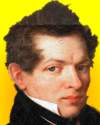
Born 1 Dec 1792; died 24 Feb 1856 at age 63. quotes
Russian mathematician who, with János Bolyai of Hungary, is considered the founder of non-Euclidean geometry. Lobachevsky constructed and studied a type of geometry in which Euclid’s parallel postulate is false (the postulate states that through a point not on a certain line only one line can be drawn not meeting the first line). This was not well received at first, but his greatest vindication came with the advent of Einstein’s theory of relativity when it was demonstrated experimentally that the geometry of space is not described by Euclid’s geometry. Apart from geometry, Lobachevsky also did important work in the theory of infinite series, algebraic equations, integral calculus, and probabilty.[EB gives New Style: born 1 Dec 1792, died 24 Feb 1856. (Old Style: 20 Nov 1792, died 12 Feb 1856). DSB>give birth as 2 Dec 1792.]
Russian mathematician who, with János Bolyai of Hungary, is considered the founder of non-Euclidean geometry. Lobachevsky constructed and studied a type of geometry in which Euclid’s parallel postulate is false (the postulate states that through a point not on a certain line only one line can be drawn not meeting the first line). This was not well received at first, but his greatest vindication came with the advent of Einstein’s theory of relativity when it was demonstrated experimentally that the geometry of space is not described by Euclid’s geometry. Apart from geometry, Lobachevsky also did important work in the theory of infinite series, algebraic equations, integral calculus, and probabilty.[EB gives New Style: born 1 Dec 1792, died 24 Feb 1856. (Old Style: 20 Nov 1792, died 12 Feb 1856). DSB>give birth as 2 Dec 1792.]
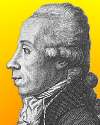
Born 1 Dec 1743; died 1 Jan 1817 at age 73. quotes
German chemist, who as a founder of analytical chemistry discovered uranium (1789), zirconium (1789), cerium (1803), and contributed to the identification of others. Although he did not isolate them as pure metal samples, he was able to recognize them as new elements. He apprenticed at age 16, to an apothecary. After reading chemistry at Hanover, he settled in Berlin (1771) and started his own apothecary shop (1780). By the late 1780, he was Europe's leading analytical chemist. Klaproth found ways of treating particularly insoluble compounds, took care to avoid contamination from his apparatus, and significantly insisted on reporting "small" weight discrepancies in analytical work as consistent results. He spread the ideas of Antoine Lavoisier.
German chemist, who as a founder of analytical chemistry discovered uranium (1789), zirconium (1789), cerium (1803), and contributed to the identification of others. Although he did not isolate them as pure metal samples, he was able to recognize them as new elements. He apprenticed at age 16, to an apothecary. After reading chemistry at Hanover, he settled in Berlin (1771) and started his own apothecary shop (1780). By the late 1780, he was Europe's leading analytical chemist. Klaproth found ways of treating particularly insoluble compounds, took care to avoid contamination from his apparatus, and significantly insisted on reporting "small" weight discrepancies in analytical work as consistent results. He spread the ideas of Antoine Lavoisier.
The Formation of the German Chemical Community, 1720-1795, by Karl Hufbauer. - book suggestion.
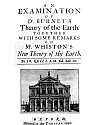
Born 1 Dec 1671; died 31 Aug 1721 at age 49.
Scottish mathematician and natural philosopher, who was a major proponent of Newton's theories. He began his university education at Edinburgh under David Gregory, whom he followed to Oxford, where Keill lectured on Newton's work, and eventually became professor of astronomy. In his book, An Examination of Dr. Burnett's Theory of the Earth (1698), Keill applied Newtonian principles challenging Burnett's unsupportable speculations on Earth's formation. In 1701, Keill published Introductio ad Veram Physicam, which was the first series of experimental lectures and provided a clear and influential introduction to Isaac Newton's Principia. He supported Newton against priority claims by Leibnitz for the invention of calculus. (James Keill was his younger brother.)«
Scottish mathematician and natural philosopher, who was a major proponent of Newton's theories. He began his university education at Edinburgh under David Gregory, whom he followed to Oxford, where Keill lectured on Newton's work, and eventually became professor of astronomy. In his book, An Examination of Dr. Burnett's Theory of the Earth (1698), Keill applied Newtonian principles challenging Burnett's unsupportable speculations on Earth's formation. In 1701, Keill published Introductio ad Veram Physicam, which was the first series of experimental lectures and provided a clear and influential introduction to Isaac Newton's Principia. He supported Newton against priority claims by Leibnitz for the invention of calculus. (James Keill was his younger brother.)«

Died 1 Dec 2002 at age 70 (born 1 Apr 1932).
American computer scientist who created ALOHANET, the first modern data network, which formed the basis of the protocols essential in the Ethernet now in wide use. It opened in 1970, operating at 9600 bits per second, using radio to provide a wireless packet-switched data network between several Hawaii islands. Its innovations included the first packet radio sensors, the first packet radio repeaters, the first satellite packet network and the first radio access to the Internet. Abramson's U.S. patents include the first patent for CRC redundancy checks to provide data error control technique (No. 3,114,130), and the first patent issued for the design of burst errors in digital systems (No. 3,163,848).«
American computer scientist who created ALOHANET, the first modern data network, which formed the basis of the protocols essential in the Ethernet now in wide use. It opened in 1970, operating at 9600 bits per second, using radio to provide a wireless packet-switched data network between several Hawaii islands. Its innovations included the first packet radio sensors, the first packet radio repeaters, the first satellite packet network and the first radio access to the Internet. Abramson's U.S. patents include the first patent for CRC redundancy checks to provide data error control technique (No. 3,114,130), and the first patent issued for the design of burst errors in digital systems (No. 3,163,848).«
Computer Communications Network, by Norman Abramson, F. Kuo. - book suggestion.
Died 1 Dec 1964 at age 72 (born 5 Nov 1892). quotes
John Burdon Sanderson Haldane was an English geneticist and biometrician who opened new paths of research in population genetics and evolution. He began studying science at the age of eight, as assistant to his father (the noted physiologist John Scott Haldane). J.B.S. Haldane also worked in biochemistry, and on the effects of diving on human physiology. A Marxist from the 1930s, Haldane was well known for his outspoken Marxist views. He resigned from the Communist Party c. 1950 on the issue of Trofim Lysenko's claims to have manipulated the genetic structure of plants and “Stalin's interference with science.” He became known to a large public as a witty popularizer of science with such works as Daedalus (1924), and Possible Worlds (1927).
John Burdon Sanderson Haldane was an English geneticist and biometrician who opened new paths of research in population genetics and evolution. He began studying science at the age of eight, as assistant to his father (the noted physiologist John Scott Haldane). J.B.S. Haldane also worked in biochemistry, and on the effects of diving on human physiology. A Marxist from the 1930s, Haldane was well known for his outspoken Marxist views. He resigned from the Communist Party c. 1950 on the issue of Trofim Lysenko's claims to have manipulated the genetic structure of plants and “Stalin's interference with science.” He became known to a large public as a witty popularizer of science with such works as Daedalus (1924), and Possible Worlds (1927).
J. B. S.: The Life and Work of J.B.S. Haldane, by Ronald William Clark. - book suggestion.
Died 1 Dec 1951 (born c. 1877).
Sir Peter Henry Buck (original name Te Rangi Hiroa) was a Maori anthropologist, physician and scholar. He was born the son of a Maori chiefess and an Irish father in Urenui, New Zealand. He practised medicine, was a member of parliament (1909-14), served in WW I, then became an anthropologist. In 1927, he joined the Bishop Museum in Honolulu, Hawaii, becoming its director from 1936 until his death. He made major contributions to Maori public health and became one of the world's leading Polynesian studies scholars. His initial interest in Maori arts and crafts expanded to other Polynesian island cultures, including Samoa, the Cook Islands, Kapingamarangi, and Hawaii. He was knighted in 1946.«
Sir Peter Henry Buck (original name Te Rangi Hiroa) was a Maori anthropologist, physician and scholar. He was born the son of a Maori chiefess and an Irish father in Urenui, New Zealand. He practised medicine, was a member of parliament (1909-14), served in WW I, then became an anthropologist. In 1927, he joined the Bishop Museum in Honolulu, Hawaii, becoming its director from 1936 until his death. He made major contributions to Maori public health and became one of the world's leading Polynesian studies scholars. His initial interest in Maori arts and crafts expanded to other Polynesian island cultures, including Samoa, the Cook Islands, Kapingamarangi, and Hawaii. He was knighted in 1946.«
Vikings of the Pacific, by Peter Buck. - book suggestion.
Died 1 Dec 1947 at age 70 (born 7 Feb 1877). quotes
English mathematician known for his work in number theory and mathematical analysis. Hardy's interests covered many topics of pure mathematics - Diophantine analysis, summation of divergent series, Fourier series, the Riemann zeta function, and the distribution of primes. Although Hardy considered himself a pure mathematician, early in his career, he nevertheless worked in applied mathematics when he formulated a law that describes how proportions of dominant and recessive genetic traits will propagate in a large population (1908). Hardy considered it unimportant but it has proved of major importance in blood group distribution. As it was also independently discovered by Weinberg, it is known as the Hardy-Weinberg principle.«
English mathematician known for his work in number theory and mathematical analysis. Hardy's interests covered many topics of pure mathematics - Diophantine analysis, summation of divergent series, Fourier series, the Riemann zeta function, and the distribution of primes. Although Hardy considered himself a pure mathematician, early in his career, he nevertheless worked in applied mathematics when he formulated a law that describes how proportions of dominant and recessive genetic traits will propagate in a large population (1908). Hardy considered it unimportant but it has proved of major importance in blood group distribution. As it was also independently discovered by Weinberg, it is known as the Hardy-Weinberg principle.«
A Mathematician's Apology, by G. H. Hardy. - book suggestion.
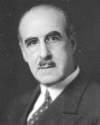
Died 1 Dec 1942 at age 67 (born 11 Jan 1875).
Canadian metallurgist who held more than one hundred patents, covering a wide range of electric furnace and chemical products, notably ferro-alloys, calcium carbide, and special chromium steels. He developed a process of using silicon instead of carbon as a reducing agent in metal production, thus making low-carbon ferroalloys and certain steels practical. His processes for the production of low carbon ferro-alloys had world-wide application.
Canadian metallurgist who held more than one hundred patents, covering a wide range of electric furnace and chemical products, notably ferro-alloys, calcium carbide, and special chromium steels. He developed a process of using silicon instead of carbon as a reducing agent in metal production, thus making low-carbon ferroalloys and certain steels practical. His processes for the production of low carbon ferro-alloys had world-wide application.
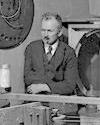
Died 1 Dec 1935 at age 56 (born 30 Mar 1879).
Astronomer and optical instrument maker who invented the telescope named for him. In 1929, he devised a new mirror system for reflecting telescopes which overcame previous problems of aberration of the image. He used a vacuum to suck the glass into a mold, polishing it flat, then allowing in to spring back into shape. The Schmidt telescope is now widely used in astronomy to photograph large sections of the sky because of its large field of view and its fine image definition. He lost his arm as a child while experimenting with explosives. Schmidt spent the last year of his life in a mental hospital.
Astronomer and optical instrument maker who invented the telescope named for him. In 1929, he devised a new mirror system for reflecting telescopes which overcame previous problems of aberration of the image. He used a vacuum to suck the glass into a mold, polishing it flat, then allowing in to spring back into shape. The Schmidt telescope is now widely used in astronomy to photograph large sections of the sky because of its large field of view and its fine image definition. He lost his arm as a child while experimenting with explosives. Schmidt spent the last year of his life in a mental hospital.
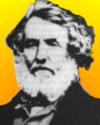
Died 1 Dec 1866 at age 76 (born 4 Jul 1790).
Welsh military engineer and geodesist who worked on the trigonometrical survey of India (1818-43), providing the accurate mapping of the subcontinent. For more than twenty-five years and despite numerous hardships, he surveyed the longest arc of the meridian ever accomplished at the time. Everest was relentless in his pursuit of accuracy. He made countless adaptations to the surveying equipment, methods, and mathematics in order to minimize problems specific to the Great Survey: immense size and scope, the terrain, weather conditions, and the desired accuracy. Mount Everest, formerly called Peak XV, was renamed in his honour in 1865.
Welsh military engineer and geodesist who worked on the trigonometrical survey of India (1818-43), providing the accurate mapping of the subcontinent. For more than twenty-five years and despite numerous hardships, he surveyed the longest arc of the meridian ever accomplished at the time. Everest was relentless in his pursuit of accuracy. He made countless adaptations to the surveying equipment, methods, and mathematics in order to minimize problems specific to the Great Survey: immense size and scope, the terrain, weather conditions, and the desired accuracy. Mount Everest, formerly called Peak XV, was renamed in his honour in 1865.
The Great Arc: The Dramatic Tale of How India Was Mapped and Everest Was Named, by John Keay. - book suggestion.
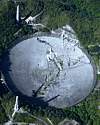
In 2020, the equipment platform suspended over the radio telescope dish of the Arecibo Observatory, Puerto Rico, collapsed. One of its main suspension cables had snapped early in the previous August, leaving it in a dangerous unstable condition. The decision to shut down the instrument was made by its owner, the US National Science Foundation (NSF). Before demolition was planned, gravity caused the sudden unplanned destruction when another cable snapped. The 900-ton platform smashed into the 1,000 feet wide dish 500 feet below. Thus ended a nearly 60-year era of world-class research, which included detection of the first binary pulsar in 1974.«
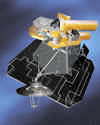
In 2005, the Deep Impact space probe was launched on a Delta II rocket. On 3 Jul 2005, it was to release a special impactor spacecraft to crash into comet Tempel 1. The impactor's camera relayed closeup images of the comet's nucleus before the collision (4 Jul 2005). The impact ejecta was analyzed spectroscopically, and was found to have more dust and less ice then expected. Also identified were clays, carbonates, sodium, crystalline silicates, and a surprisingly high number of organic molecules. The comet nucleus was highly porous, with up to 80% empty space. Deep Impact continued as the EPOXI mission to the hyperactive comet Hartley 2 (4 Nov 2010), comet Garradd (Jan 2012) and comet Ison. It abruptly fell silent (8 Aug 2013), and was declared dead on 20 Sep 2013.
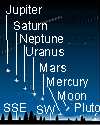
In 1997, eight planets from our Solar System lined up from West to East beginning with Pluto, followed by Mercury, Mars, Venus, Neptune, Uranus, Jupiter, and Saturn, with a crescent moon alongside, in a rare alignment visible from Earth that lasted until Dec 8. Mercury, Mars, Venus, Jupiter and Saturn are visible to the naked eye, with Venus and Jupiter by far the brightest. A good pair of binoculars is needed to see the small blue dots that are Uranus and Neptune. Pluto is visible only by telescope. The planets also aligned in May 2000, but too close to the sun to be visible from Earth. It will be at least another 100 years before so many planets will be so close and so visible.
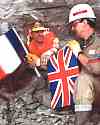
In 1990, British and French workers digging the Channel Tunnel between their countries finally met in the service tunnel after knocking out a passage large enough to walk through and shake hands, 22.3 km from the UK and 15.6 km from France. When British construction worker Graham Fagg and his French counterpart, Philippe Cozette, drilled through the final piece of rock, the United Kingdom and France were now linked for the first time in 8,000 years. The event was witnessed photographers, reporters, and a small handful of privileged spectators. The tunnelling began three years earlier, on this same day in 1987.
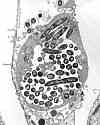
In 1977, the isolation of the bacterium Legionella pneumophila that was the cause of Legionnaire's Disease, was described in a scientific paper published in The New England Journal of Medicine by scientists at the Centers for Disease Control (CDC) in Atlanta, Georgia, USA*. They had first announced that they had sufficient laboratory evidence to implicate a bacterium on 18 Jan 1977 as responsible for an outbreak of this disease in Philadelphia in 1976, largely among people attending a state convention of the American Legion, which led to the name "Legionnaires' Disease." After the bacterium causing the illness was named, the name of the illness was changed to legionellosis.[Image: Legionella pneumophila multiplying inside a cultured human lung fibroblast. Multiple intracellular bacilli, including dividing bacilli, are visible in longitudinal and cross section. Transmission electron micrograph.]
In 1959, the first colour photograph of the earth from outer space was taken from the nose of a Thor missile launched from Cape Canaveral, Florida. The data capsule containing the camera was recovered 16 Feb 1960 on the beach of Mayaguana Island, Bahama Islands, approximately 1,700 miles from the take-off point.

(USPTO)
In 1936, the first U.S. patent was issued for the soiless culture of plants in a large commercial hydroponicum (No. 2,062,755) to Ernest Walfrid Brundin and Frank Farrington Lyon as a “system of water culture.” Their installation, the first on a large scale in the U.S., was established on 5 Dec 1935 in Montebello, California, with a circulating system. They incorporated as the Chemi-Culture Company on 19 Oct 1937. The word hydroponics was coined in the early 1930s, by Professor Gericke at the University of California at Los Angeles to describe the growing of plants with their roots suspended in water containing mineral nutrients. It comes from two Greek words: “hydro” (water) and “ponos” (to work, labor).
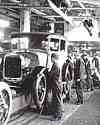
In 1913, the continuous moving assembly line introduced by Ford in his Highland Park, Detroit, Michigan, factory was capable of delivering a car every 2-min 38-sec. By the summer of 1913, three subassemblies (magnetos, motors, and transmissions) were assembled on moving lines using conveyor belts. Because these moving lines produced subassemblies faster than the main production line could take them, a moving chassis line was added to replace his “push” assembly line. The method was so successful that the Ford Motor Co. became the world's largest car manufacturer. Business men the world over flocked to Detroit to glean the secrets of the moving assembly line.
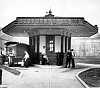
In 1913, the first U.S. drive-in automobile service station opened at the high traffic intersection of Baum Boulevard and St. Clair Street, Pittsburgh, Pennsylvania, operated by the Gulf Refining Company. The brick, pagoda-style station featured free air, water, crankcase service, restrooms and a lighted sign for "Good Gulf Gasoline." It was open all night. Opening-day sales amounted to just 30 gallons, at 27 cents each. By the first Saturday, however, the word had spread: Gulf sold over 350 gallons that day. (The Standard Oil Company of California opened the first service station, little more than a shed, in 1907, near its Seattle kerosene refinery.)
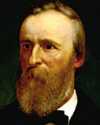
President Hayes
In 1878, the White House, Washington, DC, had its first telephone installed by Alexander Graham Bell himself, during the President Rutherford B. Hayes administration. It is reported that the first outgoing call went to Bell, thirteen miles away. Hayes first words instructed Bell to speak more slowly. President Hayes did not use it very often, however, because there were not many other telephones in Washington.
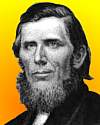
Ball
In 1857, a U.S. patent was issued to Ephraim Ball for his mower design, which became the first widely successful of the two-wheeled flexible or hinged bar mowers. This “Ball's Ohio Mower” greatly influenced the change from single driving-wheel machines to those with double drivers. Ball began inventing with a turn-top stove. Then in 1840 he established a foundry for making ploughs. His invention of the “Ball's Blue Plough” sold well, and in 1851 he joined with others to expand with a larger company with factories in Canton, Ohio. After his “Ohio Mower” he continued inventing farm machinery. The “World Mower and Reaper,” and “Buckeye Machine” (1858) sold extensively. He followed these with the “New American Harvester,” of which 10,000 were produced annually (1865).«
more
In 1841, the first steamboat engine built in America for a screw-propelled vessel, installed on the Vandalia, was launched*. It was designed by John Ericsson and built by Captain Sylvester Doolittle. The engine had two vertical cylinders with a diameter of 14-in and a stroke of 22-in. Ericsson had previously built two engines for British ships. The Vandalia was the first screw-propelled vessel on the Great Lakes. Unlike the pioneer screw-steamers in England, which were towing vessels, the Vandalia was built to carry passengers and freight through the canals. The Vandalia, demonstrated that propellers could pass easily through the narrow locks where side-wheelers could not.
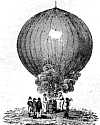
In 1783, the first manned voyage of a hydrogen balloon left Paris carrying Professor Jacques Alexander Cesar Charles and Marie-Noel Robert to about 600 m and landed 43 km away after 2 hours in the air. Robert then left the balloon, and Charles continued the flight briefly to 2700 m altitude, measured by a barometer. This hydrogen-filled balloon was generally spherical and used a net, load ring, valve, open appendix and sand ballast, all of which were to be universally adopted later. His hydrogen generator mixed huge quantities of sulfuric acid with iron filings. On 27 Aug 1783, Charles had launched an unmanned hydrogen balloon, just before the Montgolfiers' flight.[Image: from 1897 Encyclopedia Britannica]





