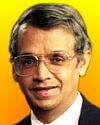
Born 24 Nov 1944. quotes
Indian atmospheric scientist who in 1999 discovered the “Asian Brown Cloud” - wandering layers of air pollution as wide as a continent and deeper than the Grand Canyon. The dark particles in these brown clouds may reduce rainfall, dry the planet's surface, cool the tropics and reduce sunlight - Global Dimming. In 1975, Ramanathan was the first to demonstrate that CFCs are major greenhouse gases. His calculations showed each CFC molecule in the atmosphere contributes more to the greenhouse effect that over 10,000 molecules of carbon dioxide. In the 1980s, he led a study discovering numerous trace gases contributing to global warming, and a NASA study that demonstrated that clouds had a net global cooling effect on the planet.«
Indian atmospheric scientist who in 1999 discovered the “Asian Brown Cloud” - wandering layers of air pollution as wide as a continent and deeper than the Grand Canyon. The dark particles in these brown clouds may reduce rainfall, dry the planet's surface, cool the tropics and reduce sunlight - Global Dimming. In 1975, Ramanathan was the first to demonstrate that CFCs are major greenhouse gases. His calculations showed each CFC molecule in the atmosphere contributes more to the greenhouse effect that over 10,000 molecules of carbon dioxide. In the 1980s, he led a study discovering numerous trace gases contributing to global warming, and a NASA study that demonstrated that clouds had a net global cooling effect on the planet.«
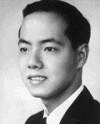
Born 24 Nov 1926. quotes
Chinese-born American physicist who received (with Chen Ning Yang) the 1957 Nobel Prize for Physics for their "penetrating investigation" of violations of the principle of parity conservation (the quality of space reflection symmetry of subatomic particle interactions), which has led to important discoveries regarding the elementary particles. Conservation of parity had previously been regarded as a “law” of nature. (Parity holds that the laws of physics are the same in a right-handed system of coordinates as in a left-handed system.) The theory was subsequently confirmed experimentally by Chien-Shiung Wu in observations of beta decay.
Chinese-born American physicist who received (with Chen Ning Yang) the 1957 Nobel Prize for Physics for their "penetrating investigation" of violations of the principle of parity conservation (the quality of space reflection symmetry of subatomic particle interactions), which has led to important discoveries regarding the elementary particles. Conservation of parity had previously been regarded as a “law” of nature. (Parity holds that the laws of physics are the same in a right-handed system of coordinates as in a left-handed system.) The theory was subsequently confirmed experimentally by Chien-Shiung Wu in observations of beta decay.
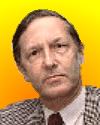
Born 24 Nov 1925; died 4 Mar 2011 at age 85.
Dutch engineer and physicist who, with Italian physicist Carlo Rubbia, discovered the W particle and the Z particle by colliding protons and antiprotons, for which both men shared the Nobel Prize for Physics. These subatomic particles (units of matter smaller than an atom) transmit the weak nuclear force, one of four fundamental forces in nature. The discovery supported the unified electroweak theory put forward in the 1970s. Working at CERN in Switzerland, Van der Meer improved the design of particle accelerators used produce collisions between beams of subatomic particles. He invented a device that would monitor and adjust the particle beam with correcting magnetic fields by a system of “kickers” placed around the accelerator ring.
Dutch engineer and physicist who, with Italian physicist Carlo Rubbia, discovered the W particle and the Z particle by colliding protons and antiprotons, for which both men shared the Nobel Prize for Physics. These subatomic particles (units of matter smaller than an atom) transmit the weak nuclear force, one of four fundamental forces in nature. The discovery supported the unified electroweak theory put forward in the 1970s. Working at CERN in Switzerland, Van der Meer improved the design of particle accelerators used produce collisions between beams of subatomic particles. He invented a device that would monitor and adjust the particle beam with correcting magnetic fields by a system of “kickers” placed around the accelerator ring.

Born 24 Nov 1921; died 19 May 2009 at age 87. quotes
Herbert Frank York was an American nuclear physicist whose scientific research in support of national defense began in 1943 when he began work at Oak Ridge, Tenn., on the electromagnetic separation of uranium 235 as part of the Manhattan Project during WW II. In 1952, he became the first director of Lawrence Livermore Laboratory. He left in Mar 1958 to join the Department of Defense as chief scientist of the Advanced Research Projects Agency, and shortly became the Department of Defense's director of research and engineering (Dec 1958). He returned to the University of California in 1961 as chancellor and professor of physics. He was chief negotiator for the comprehensive test ban during the Carter administration.«
Herbert Frank York was an American nuclear physicist whose scientific research in support of national defense began in 1943 when he began work at Oak Ridge, Tenn., on the electromagnetic separation of uranium 235 as part of the Manhattan Project during WW II. In 1952, he became the first director of Lawrence Livermore Laboratory. He left in Mar 1958 to join the Department of Defense as chief scientist of the Advanced Research Projects Agency, and shortly became the Department of Defense's director of research and engineering (Dec 1958). He returned to the University of California in 1961 as chancellor and professor of physics. He was chief negotiator for the comprehensive test ban during the Carter administration.«
Arms and the Physicist, by Herbert F. York. - book suggestion.
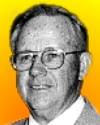
Born 24 Nov 1921; died 3 Jan 1989 at age 67.
American chemist who co-discovered crystalline polypropylene polymer, with J. Paul Hogan. They were assigned by Phillips Petroleum, in 1946, to research ways to take the natural gas products propylene and ethylene and turn them into useful gasoline components. On 5 Jun 1951, their experiments using catalysts yielded polypropylene - now used in fibers for rope, indoor-outdoor carpeting and plastics. Banks and Hogan also found how to make a new high-density polyethylene which was more heat resistant than the previously existing polyethylene. Further, their catalysts produced the new polyethylene at only a few hundred psi pressure instead of the existing free radical process which required pressures of up to 30,000 psi.«
American chemist who co-discovered crystalline polypropylene polymer, with J. Paul Hogan. They were assigned by Phillips Petroleum, in 1946, to research ways to take the natural gas products propylene and ethylene and turn them into useful gasoline components. On 5 Jun 1951, their experiments using catalysts yielded polypropylene - now used in fibers for rope, indoor-outdoor carpeting and plastics. Banks and Hogan also found how to make a new high-density polyethylene which was more heat resistant than the previously existing polyethylene. Further, their catalysts produced the new polyethylene at only a few hundred psi pressure instead of the existing free radical process which required pressures of up to 30,000 psi.«
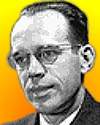
Born 24 Nov 1912; died 30 Jul 2002 at age 89.
American nuclear physicist who led the construction of the Graphite Research Reactor (BGRR), at Brookhaven National Laboratory. After work on the Manhattan Project in WW II. he organized about 1,300 scientists, and spoke before Congress to keep atomic research under civilian control, to avoid a worldwide nuclear arms race. In 1946, with Karl Morgan, he developed a film badge to measure worker exposure to fast neutrons. BGRR, completed in 1949, was the first reactor built solely to research peacetime uses of atomic energy. In its first year of operation, Borst announced the production of radioactive iodine suitable for treating thyroid cancer. In 1952, he explained how beryllium-7 from helium fusion triggers supernovae.«
American nuclear physicist who led the construction of the Graphite Research Reactor (BGRR), at Brookhaven National Laboratory. After work on the Manhattan Project in WW II. he organized about 1,300 scientists, and spoke before Congress to keep atomic research under civilian control, to avoid a worldwide nuclear arms race. In 1946, with Karl Morgan, he developed a film badge to measure worker exposure to fast neutrons. BGRR, completed in 1949, was the first reactor built solely to research peacetime uses of atomic energy. In its first year of operation, Borst announced the production of radioactive iodine suitable for treating thyroid cancer. In 1952, he explained how beryllium-7 from helium fusion triggers supernovae.«
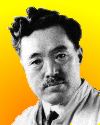
Born 24 Nov 1876; died 21 May 1928 at age 51.
Japanese bacteriologist who was the first to obtain pure cultures of Trepanema pallidum, the spirochete that causes syphilis, which he found in the brains of persons who had died of paresis. He demonstrated the syphilitic origin of certain forms of general paralysis, developed one of the first tests to diagnose syphilis and proved that both Oroya fever and verruga peruana could be produced by Bartonella bacilliformis, now known to be different phases of Carrion's disease (bartonellosis). He found ways to cultivate microorganisms that had never before been grown in the test tube. Noguchi studied poliomyelitis, and trachoma and worked on a vaccine and serum for yellow fever. He died of yellow fever, while researching the disease in Africa.
Japanese bacteriologist who was the first to obtain pure cultures of Trepanema pallidum, the spirochete that causes syphilis, which he found in the brains of persons who had died of paresis. He demonstrated the syphilitic origin of certain forms of general paralysis, developed one of the first tests to diagnose syphilis and proved that both Oroya fever and verruga peruana could be produced by Bartonella bacilliformis, now known to be different phases of Carrion's disease (bartonellosis). He found ways to cultivate microorganisms that had never before been grown in the test tube. Noguchi studied poliomyelitis, and trachoma and worked on a vaccine and serum for yellow fever. He died of yellow fever, while researching the disease in Africa.
Noguchi and His Patrons, by Isabel Rosanoff Plesset. - book suggestion.
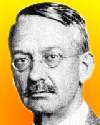
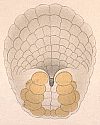
embryo
American biologist and embryologist. In 1905, when working with a small marine creature called a tunicate, Conklin made a striking observation: the contents of the tunicate egg weren't uniform. Different parts of it were differently colored. When the mother egg began to divide, the new daughter cells that came from different colored areas became, as they split away, different types of tissue. The yellow stuff in the egg produced muscle cells, for instance, and the grayish stuff became the gut. In addition to his work in embryology, he published a number of works on evolution. He estimated he made a thousand public lectures interpreting evolution to religious and lay groups. He was a leading critic of society's response to advanced technology.
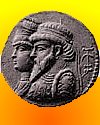
Parthian coin
Born 24 Nov 1846; died 17 Jul 1937 at age 90.
English archaeologist and historian who studied Greek antiquities and numismatics. In 1871, he joined the British Museum as assistant in the department of coins and metals. He acted as field assistant for W. M. Flinders Petrie in the excavation of the Greek settlement of Naucritus in Egypt. In 1883, his Types of Greek Coins, the first of the modern accounts of classical numismatics, Gardner demonstrated how the history and art of a period is shown by its coinage. While professor of archaeology at Oxford University, (1887-1925), Gardner actively expanded its archaeology library and built a collection of classical sculpture busts. He supervised repair of inept prior restorations of the Arundel marbles held by the University Galleries.«
English archaeologist and historian who studied Greek antiquities and numismatics. In 1871, he joined the British Museum as assistant in the department of coins and metals. He acted as field assistant for W. M. Flinders Petrie in the excavation of the Greek settlement of Naucritus in Egypt. In 1883, his Types of Greek Coins, the first of the modern accounts of classical numismatics, Gardner demonstrated how the history and art of a period is shown by its coinage. While professor of archaeology at Oxford University, (1887-1925), Gardner actively expanded its archaeology library and built a collection of classical sculpture busts. He supervised repair of inept prior restorations of the Arundel marbles held by the University Galleries.«
Archaeology and the Types of Greek Coins, by Percy Gardner. - book suggestion.
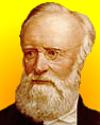
Born 24 Nov 1816; died 23 Jun 1895 at age 78. quotes
English naturalist who founded modern paleobotany, the study of fossil plants found in sediments and rocks. His father was a geologist and a friend of William Smith, the father of English geology. At age 18, he presented his first paper (1834) on organic remains in the Lias of Yorkshire. The next year, he was appointed curator of the Manchester Natural History Museum while pursuing medical training. He contributed to Lindley and Hutton's Fossil Flora of Great Britain. He practiced medicine from 1842, but still made time for significant scientific work. From 1845 to 1857, he published a notable series of papers on the development of scales and teeth of fish. By his later years, his body of work investigating the structure of fossil plants, especially those found in coal measures, made him an acknowledged master in the field.«
English naturalist who founded modern paleobotany, the study of fossil plants found in sediments and rocks. His father was a geologist and a friend of William Smith, the father of English geology. At age 18, he presented his first paper (1834) on organic remains in the Lias of Yorkshire. The next year, he was appointed curator of the Manchester Natural History Museum while pursuing medical training. He contributed to Lindley and Hutton's Fossil Flora of Great Britain. He practiced medicine from 1842, but still made time for significant scientific work. From 1845 to 1857, he published a notable series of papers on the development of scales and teeth of fish. By his later years, his body of work investigating the structure of fossil plants, especially those found in coal measures, made him an acknowledged master in the field.«

Died 24 Nov 1998 at age 90 (born 14 May 1908). quotes
Nicholas Kurti [formerly Miklós Mór Kürti] was a Hungarian-British physicist and chef who researched in ultra-low temperature physics, and in a record-breaking nuclear cooling experiments that came within a millionth of a degree of absolute zero. As a young man, in 1933, he left the Univeristy of Berlin to flee from the Nazis. Most of his life was then spent at Oxford, England. During WWII, he investigated how to separate the isotopes of uranium (which became of interest in the Manhattan Project to build the atomic bomb). He had a side interest in food science, combining his hobby as a chef with a study of the physics and chemistry of cooking, for which he coined the term molecular gastronomy. (With his wife, he edited the first Royal Society cook book: But the Crackling Is Superb: An Anthology on Food and Drink by Fellows and Foreign Members of the Royal Society (1988).«
Nicholas Kurti [formerly Miklós Mór Kürti] was a Hungarian-British physicist and chef who researched in ultra-low temperature physics, and in a record-breaking nuclear cooling experiments that came within a millionth of a degree of absolute zero. As a young man, in 1933, he left the Univeristy of Berlin to flee from the Nazis. Most of his life was then spent at Oxford, England. During WWII, he investigated how to separate the isotopes of uranium (which became of interest in the Manhattan Project to build the atomic bomb). He had a side interest in food science, combining his hobby as a chef with a study of the physics and chemistry of cooking, for which he coined the term molecular gastronomy. (With his wife, he edited the first Royal Society cook book: But the Crackling Is Superb: An Anthology on Food and Drink by Fellows and Foreign Members of the Royal Society (1988).«
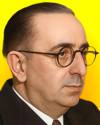
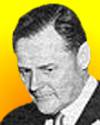
Died 24 Nov 1972 at age 78 (born 19 Dec 1893).
Roger Lowell Putnam was a businessman and politician who facilitated the search for Pluto. He pursued a business career in Boston but had an amateur love of astronomy. His uncle, Percival Lowell, had founded the Lowell Observatory in Flagstaff, Arizona, where he began a quest to find the suspected planet he called “Planet X.” Lowell died in 1916, and left considerable funds in his will for his observatory to continue that work. The search languished while his widow contested the Observatory's trust fund. She lost the case, but the legal costs of the fight halved the fund. Putnam became its trustee in 1927, and he revived the search for Planet X. He organized, and helped fund, a new 13-inch refracting telescope and astrograph for that purpose. It was this instrument Clyde Tombaugh used to make the photographic plates on which he identified the new planet on 13 Mar 1930.«
Roger Lowell Putnam was a businessman and politician who facilitated the search for Pluto. He pursued a business career in Boston but had an amateur love of astronomy. His uncle, Percival Lowell, had founded the Lowell Observatory in Flagstaff, Arizona, where he began a quest to find the suspected planet he called “Planet X.” Lowell died in 1916, and left considerable funds in his will for his observatory to continue that work. The search languished while his widow contested the Observatory's trust fund. She lost the case, but the legal costs of the fight halved the fund. Putnam became its trustee in 1927, and he revived the search for Planet X. He organized, and helped fund, a new 13-inch refracting telescope and astrograph for that purpose. It was this instrument Clyde Tombaugh used to make the photographic plates on which he identified the new planet on 13 Mar 1930.«
A Yankee image: The life and times of Roger Lowell Putnam, by William Lowell Putnam. - book suggestion.
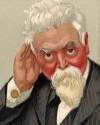
Died 24 Nov 1916 at age 76 (born 5 Feb 1840). quotes
Hiram Stevens Maxim was an American-English inventor whose best known innovation is the Maxim machine gun. His first patent was for a hair-curling iron (1866), followed by a device for generating illuminating gas and a locomotive headlight. In 1878, he was hired as chief engineer of the United States Electric Lighting Company, the first such company in the United States. In that post he produced a basic invention, a method of manufacturing carbon filaments. In 1881 he exhibited an electric pressure regulator at the Paris Exposition. Among his hundreds of other patents in the U.S. and Great Britain are a mousetrap, an automatic sprinkling system, an automatic steam-powered water pump, vacuum pumps, engine governors, and gas motors.
Hiram Stevens Maxim was an American-English inventor whose best known innovation is the Maxim machine gun. His first patent was for a hair-curling iron (1866), followed by a device for generating illuminating gas and a locomotive headlight. In 1878, he was hired as chief engineer of the United States Electric Lighting Company, the first such company in the United States. In that post he produced a basic invention, a method of manufacturing carbon filaments. In 1881 he exhibited an electric pressure regulator at the Paris Exposition. Among his hundreds of other patents in the U.S. and Great Britain are a mousetrap, an automatic sprinkling system, an automatic steam-powered water pump, vacuum pumps, engine governors, and gas motors.
Amazing Hiram Maxim, an Intimate Biography, by Arthur Hawkey. - book suggestion.
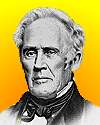
Died 24 Nov 1864 at age 85 (born 8 Aug 1779). quotes
American geologist and chemist who founded the American Journal of Science and wielded a powerful influence in the development of science in the U.S. He was Yale's first professor of chemistry and natural history (1802). He is best known for researching the chemical composition of a meteorite that fell in 1807, his report being the first scientific account of any American meteor, showed that meteorites are made of materials that exist on the earth. The mineral sillimanite was named after Silliman. In 1811, while experimenting with the oxy-hydric blow-pipe, he reduced many minerals previously considered as elements. His son, also named Benjamin Silliman, became a chemist who recognized that petroleum could be distilled into separate fractions.
American geologist and chemist who founded the American Journal of Science and wielded a powerful influence in the development of science in the U.S. He was Yale's first professor of chemistry and natural history (1802). He is best known for researching the chemical composition of a meteorite that fell in 1807, his report being the first scientific account of any American meteor, showed that meteorites are made of materials that exist on the earth. The mineral sillimanite was named after Silliman. In 1811, while experimenting with the oxy-hydric blow-pipe, he reduced many minerals previously considered as elements. His son, also named Benjamin Silliman, became a chemist who recognized that petroleum could be distilled into separate fractions.
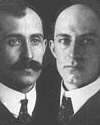
In 1909, the Wright brothers formed a million-dollar corporation for the commercial manufacture of airplanes. The brothers found themselves immersed in business affairs, manufacturing and selling planes, arranging flying exhibitions, training pilots, and engaging in patent suits against Glenn Curtiss and others. The courts decided the suits in favor of the Wrights, but worn out by the long patent struggle, Wilbur died of typhoid fever in Dayton, 30 May 1912, at the height of his career. He had made his last flights in May 1910. Orville continued flying actively until 1915 when he sold his interest in the Wright Company. His last flight was in 1918. The Curtiss Wright Corporation was formed in 1929 with the merger of the Wright and Curtiss companies.
(USPTO)
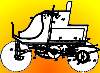
In 1903, the first U.S. patent for an automobile electric self-starter was issued to Clyde J. Coleman of New York City (No. 745,157). He invented the self-starter in 1899, but the invention was impractical. The license was purchased by the Delco Company, which was taken over by the General Motors Corporation. Charles Kettering at General Motors perfected the self-starter, which was first installed on Cadillac cars in 1911. This was a response to the death of a friend, who had died from injuries suffered when a car hand-crank recoiled against him. Having eliminated the dangerous job of cranking the engine, it put women behind the wheel in greater numbers.
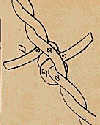
In 1874, the first U.S. patent for barbed wire was issued to Joseph F. Glidden of DeKalb, Illinois (No. 157,124). Having filed his application on 27 Oct 1873, Glidden began manufacturing on 1 Nov 1873, in DeKalb. The barbs were cut from sheet metal and were inserted between two wires which were twisted considerably more than with today's common design. This product would transform the West. Before this innovation, settlers on the treeless plains had no easy way to fence livestock away from cropland, and ranchers had no way to prevent their herds from roaming far and wide. Glidden's barbed wire opened the plains to large-scale farming, and closed the open range, bringing the era of the cowboy and the round-up to an end.[Image: detail from patent application diagram]
Devil's Rope: A Cultural History of Barbed Wire, by Alan Krell. - book suggestion.
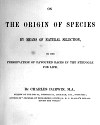
In 1859, The Origin of Species by Means of Natural Selection, Darwin's groundbreaking book, was published in England to great acclaim. The British naturalist, Charles Darwin detailed the scientific evidence he had collected since his voyage on the Beagle in the 1830s. He presented his idea that species are the result of a gradual biological evolution in which nature encourages, through natural selection, the propagation of those species best suited to their environments. He had been prompted to publish at this time by Charles Lyell, who advised him that Alfred Russel Wallace, a naturalist working in Borneo, was approaching the same conclusions. Lyell believed Darwin should publish without further delay to establish priority.  [Image: Title page from 1859 edition]
[Image: Title page from 1859 edition] Origin of Species, by Charles Darwin. - book suggestion.
In 1793, following the French Revolution, the new government wanted a new Calendar of Reason, also known as the French Revolutionary Calendar or Republican calendar to replace the Gregorian calendar. It was developed by a committee of mathematicians, astronomers, poets and dramatists. The year still had 12 months, but all were 30 days long, each having three 10-day décades instead of 7-day weeks. Five supplementary days were added to make a 365 day year (six in a leap year). A scheme of new names was introduced for the months, and even a name for every day of the year. The calendar was back-dated in the sense that the first day of the first year was set at 22 Sep 1792, to mark the start of the new Republic. The scheme was in place for about 14 years, but abolished on 31 Dec 1805.«