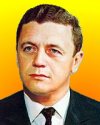
Born 23 Nov 1935; died 29 Jun 1971 at age 35.
Soviet cosmonaut who was flight engineer on the Soyuz 7 (1969) and the Soyuz 11 (1971) missions. The Soyuz 11 had accomplished the first space station flight, two years before the American Skylab, and docked with the Salyut 1 scientific station. Equipment aboard Salyut 1 included a telescope, spectrometer, electrophotometer, and television. On a record 24-day stay, the three-man crew checked spacecraft systems and conducted medico- biological research. The planned 30-day stay was aborted due to a small fire and difficult working conditions. Volkov died during re-entry, when a premature cabin decompression caused the death of all the crew, who had no space suits. The Soyuz was thereafter redesigned to accomodate only two crew, but in spacesuits.
Soviet cosmonaut who was flight engineer on the Soyuz 7 (1969) and the Soyuz 11 (1971) missions. The Soyuz 11 had accomplished the first space station flight, two years before the American Skylab, and docked with the Salyut 1 scientific station. Equipment aboard Salyut 1 included a telescope, spectrometer, electrophotometer, and television. On a record 24-day stay, the three-man crew checked spacecraft systems and conducted medico- biological research. The planned 30-day stay was aborted due to a small fire and difficult working conditions. Volkov died during re-entry, when a premature cabin decompression caused the death of all the crew, who had no space suits. The Soyuz was thereafter redesigned to accomodate only two crew, but in spacesuits.
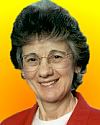
Born 23 Nov 1934.
(née Rita Rossi) American microbiologist and as the 11th director of the National Science Foundation (4 Aug 1998), the first woman - and the first biologist since the advent of modern biotechnology - to head the NSF. In the 1960s, she became the first U.S. scientist to create a computer program that analyzed data related to the taxonomic classification of different strains of bacteria. This led to her revolutionary discovery that the strain of cholera bacteria that had been linked to the disease belonged to the same species as benign strains of cholera. With her team of researchers she later found that both the harmless and the disease-causing (toxin-producing) strains were found commonly in estuaries and coastal waters.
(née Rita Rossi) American microbiologist and as the 11th director of the National Science Foundation (4 Aug 1998), the first woman - and the first biologist since the advent of modern biotechnology - to head the NSF. In the 1960s, she became the first U.S. scientist to create a computer program that analyzed data related to the taxonomic classification of different strains of bacteria. This led to her revolutionary discovery that the strain of cholera bacteria that had been linked to the disease belonged to the same species as benign strains of cholera. With her team of researchers she later found that both the harmless and the disease-causing (toxin-producing) strains were found commonly in estuaries and coastal waters.
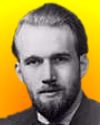
Born 23 Nov 1924; died 28 Jul 1994 at age 69.
Colin Macmillan Turnbull was an English-American anthropologist who is notable for his book The Forest People (1962), a detailed study of the tribe of Mbuti Pygmies in Zaire, with whom he lived in affectionate intimacy for several years. In 1972, he wrote his most controversial book, The Mountain People, describing the Ik, an obscure nomadic tribe of hunters on the Kenya-Uganda border. They were living on the brink of starvation and cultural extinction, surviving (in diminishing numbers). Within one generation they had changed to a gross ethic of selfishness, having discarded love and morality. After the death of his African-American partner of 30 years, Turnbull retreated to a Buddhist monastery where he lived out his remaining years.
Colin Macmillan Turnbull was an English-American anthropologist who is notable for his book The Forest People (1962), a detailed study of the tribe of Mbuti Pygmies in Zaire, with whom he lived in affectionate intimacy for several years. In 1972, he wrote his most controversial book, The Mountain People, describing the Ik, an obscure nomadic tribe of hunters on the Kenya-Uganda border. They were living on the brink of starvation and cultural extinction, surviving (in diminishing numbers). Within one generation they had changed to a gross ethic of selfishness, having discarded love and morality. After the death of his African-American partner of 30 years, Turnbull retreated to a Buddhist monastery where he lived out his remaining years.
In the Arms of Africa: The Life of Colin M. Turnbull, by Roy Richard Grinker. - book suggestion.
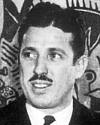

American industrial designer who helped establish industrial design as a profession. He made inventive use of industrial materials for decorative purposes. Deskey invented a high-pressure laminate known as Weldtex. He designed the familiar goosenecked street lights on commission for New York City in 1958 as a new prototype streetlight standard. He brought a new, modernist look to furniture and interiors, including that of Radio City Music Hall. Deskey package designs for Procter & Gamble and Johnson & Johnson include Tide laundry detergent, Prell shampoo, Crest toothpaste, and other packaged goods that are now firmly embedded in American consumer culture and serve as models of the role that design played in everyday life.
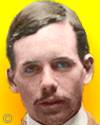
Born 23 Nov 1887; died 10 Aug 1915 at age 27. quotes
Henry Gwyn-Jeffreys Moseley was an English physicist who experimentally demonstrated that the major properties of an element are determined by the atomic number, not by the atomic weight, and firmly established the relationship between atomic number and the charge of the atomic nucleus. He began his research under Ernest Rutherford while serving as lecturer at the Univ. of Manchester. Using X-ray photographic techniques, he determined a mathematical relation between the radiation wavelength and the atomic numbers of the emitting elements. Moseley obtained several quantitative relationships from which he predicted the existence of three missing elements (numbers 43, 61, and 75) in the periodic table, all of which were subsequently identified. Moseley was killed in action during WW I.
Henry Gwyn-Jeffreys Moseley was an English physicist who experimentally demonstrated that the major properties of an element are determined by the atomic number, not by the atomic weight, and firmly established the relationship between atomic number and the charge of the atomic nucleus. He began his research under Ernest Rutherford while serving as lecturer at the Univ. of Manchester. Using X-ray photographic techniques, he determined a mathematical relation between the radiation wavelength and the atomic numbers of the emitting elements. Moseley obtained several quantitative relationships from which he predicted the existence of three missing elements (numbers 43, 61, and 75) in the periodic table, all of which were subsequently identified. Moseley was killed in action during WW I.
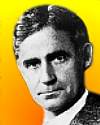
Born 23 Nov 1883; died 8 Aug 1973 at age 89.
Canadian marine ecologist, zoologist and educator who was a pioneer oceanographer and fisheries biologist. Although he received a MD degree, he never practiced medicine. Instead, he conducted biological oceanographic research in the early years of this century at both Nanaimo and St. Andrews. While best known for his research on Atlantic salmon, his scientific interests were very broad and he made important contributions to oceanography, marine invertebrates, marine ecology, growth and fatigue in fishes, fish migration, philosophy, the economics of fishing, and fish technology. He also was a pioneer in the methods of packaging frozen fish fillets, which enabled more people abroad to sample Canada's ocean fish.
Canadian marine ecologist, zoologist and educator who was a pioneer oceanographer and fisheries biologist. Although he received a MD degree, he never practiced medicine. Instead, he conducted biological oceanographic research in the early years of this century at both Nanaimo and St. Andrews. While best known for his research on Atlantic salmon, his scientific interests were very broad and he made important contributions to oceanography, marine invertebrates, marine ecology, growth and fatigue in fishes, fish migration, philosophy, the economics of fishing, and fish technology. He also was a pioneer in the methods of packaging frozen fish fillets, which enabled more people abroad to sample Canada's ocean fish.
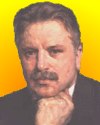
Born 23 Nov 1869; died 23 Jul 1942 at age 72.
Danish engineer and inventor who in 1903 developed the first device for generating continuous radio waves, thus aiding the development of radio broadcasting. His arc transmitter increased the frequency range of William Duddell's Singing Arc (1900) from the audio range to radio waves, enabling speech to be transmitted up to a radius of 150 miles. By 1920 the Poulsen Arc transmitter was as powerful as 1000kW with ranges of up to 2,500 miles. An earlier invention was the Telegraphone, (Danish patent on 1 Dec 1898). This was the first device in history to use magnetic sound recording, though commercially impractical due to low sound output until the 1930’s advance of vacuum tube amplifiers.«[Biog. Dict. of the Hist. of Tech. gives date of death 23 Jul 1942. DSB and EB give Jul 1942.]
Danish engineer and inventor who in 1903 developed the first device for generating continuous radio waves, thus aiding the development of radio broadcasting. His arc transmitter increased the frequency range of William Duddell's Singing Arc (1900) from the audio range to radio waves, enabling speech to be transmitted up to a radius of 150 miles. By 1920 the Poulsen Arc transmitter was as powerful as 1000kW with ranges of up to 2,500 miles. An earlier invention was the Telegraphone, (Danish patent on 1 Dec 1898). This was the first device in history to use magnetic sound recording, though commercially impractical due to low sound output until the 1930’s advance of vacuum tube amplifiers.«[Biog. Dict. of the Hist. of Tech. gives date of death 23 Jul 1942. DSB and EB give Jul 1942.]
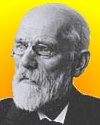
Born 23 Nov 1837; died 9 Mar 1923 at age 85.
Dutch physicist who was awarded the 1910 Nobel Prize for Physics for his research on the gaseous and liquid states of matter. He was largely self-taught in science and he originally worked as a school teacher. His main work was to develop an equation (the van der Waals equation) that—unlike the laws of Charles Boyle and Jacques Charles—applied to real gases. Since the molecules do have attractive forces and volume (however small), van der Waals introduced into the theory two further constants to take these properties into account. The weak electrostatic attractive forces between molecules and between atoms are called van der Waals forces in his honour. His valuable results enabled James Dewar and Heike Kamerlingh-Onnes to work out methods of liquefying the permanent gases.[Note: Alphabetizing under rules for Dutch names, usage is "Waals, Johannes van der". Notice use of lower case for "van der". Contrast German names like "Von Braun, Werner".]
Dutch physicist who was awarded the 1910 Nobel Prize for Physics for his research on the gaseous and liquid states of matter. He was largely self-taught in science and he originally worked as a school teacher. His main work was to develop an equation (the van der Waals equation) that—unlike the laws of Charles Boyle and Jacques Charles—applied to real gases. Since the molecules do have attractive forces and volume (however small), van der Waals introduced into the theory two further constants to take these properties into account. The weak electrostatic attractive forces between molecules and between atoms are called van der Waals forces in his honour. His valuable results enabled James Dewar and Heike Kamerlingh-Onnes to work out methods of liquefying the permanent gases.[Note: Alphabetizing under rules for Dutch names, usage is "Waals, Johannes van der". Notice use of lower case for "van der". Contrast German names like "Von Braun, Werner".]
Born 23 Nov 1828; died 24 Apr 1898 at age 69.
Cornelius Nevius Hoagland was an American physician who founded the Hoagland Laboratory (1887), the first institutional laboratory in America. erected, equipped and endowed by private means for the sole purpose of original medical research. It opened at 335 Henry Street, Brooklyn, N. Y. on 1 Oct 1888 with special departments for physiology, histology and bacteriology. In addition to the over $100,000 to establish the building and its facilities, Hoagland provided a $50,000 endowment. He became wealthy in partnership with his brother owning the Royal Baking Powder Company. (Private bacteriological laboratories had been established earlier by individual physicians.) Other charitable contributions included to the Brooklyn Eye and Ear Hospital, and the Brooklyn Free Kindergarten Society, which named one of its16 kindergartens after him.«[Image shows Hoagland while Surgeon, 71st Ohio Volunteers.] more
Cornelius Nevius Hoagland was an American physician who founded the Hoagland Laboratory (1887), the first institutional laboratory in America. erected, equipped and endowed by private means for the sole purpose of original medical research. It opened at 335 Henry Street, Brooklyn, N. Y. on 1 Oct 1888 with special departments for physiology, histology and bacteriology. In addition to the over $100,000 to establish the building and its facilities, Hoagland provided a $50,000 endowment. He became wealthy in partnership with his brother owning the Royal Baking Powder Company. (Private bacteriological laboratories had been established earlier by individual physicians.) Other charitable contributions included to the Brooklyn Eye and Ear Hospital, and the Brooklyn Free Kindergarten Society, which named one of its16 kindergartens after him.«[Image shows Hoagland while Surgeon, 71st Ohio Volunteers.] more
Born 23 Nov 1819; died 19 Aug 1896 at age 76. quotes
American geologist and chemist, known for his studies of the regional geology of California. Whitney was an independent consulting expert in mining (1849-54) when he was appointed chemist for the state of Iowa and professor of mineralogy at the University of Iowa. He was California State Geologist (1860-1874). His name was given by a California Geological Survey field party to Mount Whitney (1864) in east-central California, the highest summit on the U.S. mainland outside Alaska. The survey was significant for the men it trained and the methods it introduced - notably topographical mapping by triangulation. During his years in California, Whitney was active in promoting the California Academy of Science, and served as a commissioner of Yosemite Park.
American geologist and chemist, known for his studies of the regional geology of California. Whitney was an independent consulting expert in mining (1849-54) when he was appointed chemist for the state of Iowa and professor of mineralogy at the University of Iowa. He was California State Geologist (1860-1874). His name was given by a California Geological Survey field party to Mount Whitney (1864) in east-central California, the highest summit on the U.S. mainland outside Alaska. The survey was significant for the men it trained and the methods it introduced - notably topographical mapping by triangulation. During his years in California, Whitney was active in promoting the California Academy of Science, and served as a commissioner of Yosemite Park.
Born 23 Nov 1805; died 14 May 1881 at age 75.
Mary Jane Grant Seacole, née Mary Jane Grant was a Jamaican nurse who inherited her mother’s nursing home for invalids in Kingston, Jamaica, where she grew up in the practice. After marriage (1836) to Edwin Horatio Seacole, she gained knowledge of local medicines and treatments on their trips to the Bahamas, Haiti, and Cuba. After his death (1844), she traveled to nurse cholera victims in Panama, returned to Jamaica to care for yellow fever patients. After more time in Panama she wanted to tend to wounded soldiers in the Crimea. She was a contemporary of Florence Nightingale, but was rejected to be an army nurse (probably due to racial prejudice). So Seacole went there in 1855 and worked independently establishing a store, the “British Hotel”, and nursed British soldiers, even at the battlefront.«
Mary Jane Grant Seacole, née Mary Jane Grant was a Jamaican nurse who inherited her mother’s nursing home for invalids in Kingston, Jamaica, where she grew up in the practice. After marriage (1836) to Edwin Horatio Seacole, she gained knowledge of local medicines and treatments on their trips to the Bahamas, Haiti, and Cuba. After his death (1844), she traveled to nurse cholera victims in Panama, returned to Jamaica to care for yellow fever patients. After more time in Panama she wanted to tend to wounded soldiers in the Crimea. She was a contemporary of Florence Nightingale, but was rejected to be an army nurse (probably due to racial prejudice). So Seacole went there in 1855 and worked independently establishing a store, the “British Hotel”, and nursed British soldiers, even at the battlefront.«
Wonderful Adventures of Mrs. Seacole in Many Lands, by Mary Seacole. - book suggestion.
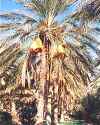
Born 23 Nov 1553; died 23 Nov 1616 at age 63.
Italian botanist and physician who is credited with the introduction to Europe of coffee and bananas. He made an extensive study of Egyptian and Mediterranean flora. He spent three years in Egypt, and from a practice in the management of date-trees, which he observed in that country, he seems to have deduced the doctrine of the sexual difference of plants, which was adopted as the foundation of the Linnaean system. He says that "the female date-trees or palms do not bear fruit unless the branches of the male and female plants are mixed together; or, as is generally done, unless the dust found in the male sheath or male flowers is sprinkled over the female flowers." He is reputed to have been the first to fertilize date palms. He died on his birthday.
Italian botanist and physician who is credited with the introduction to Europe of coffee and bananas. He made an extensive study of Egyptian and Mediterranean flora. He spent three years in Egypt, and from a practice in the management of date-trees, which he observed in that country, he seems to have deduced the doctrine of the sexual difference of plants, which was adopted as the foundation of the Linnaean system. He says that "the female date-trees or palms do not bear fruit unless the branches of the male and female plants are mixed together; or, as is generally done, unless the dust found in the male sheath or male flowers is sprinkled over the female flowers." He is reputed to have been the first to fertilize date palms. He died on his birthday.
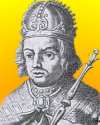
Born 23 Nov 1221; died 4 Apr 1284 at age 62. quotes
Spanish monarch and astronomer who encouraged the preparation of revised planetary tables (1252), published on the day of his accession to the throne as king of Castile and León. These “Alfonsine Tables” a revision and improvement of the Ptolemaic tables, were the best available during the Middle Ages; they were not replaced by better ones for over three centuries. The astronomical data tabulating the positions and movements of the planets was compiled by about 50 astronomers he had assembled for this purpose. He questioned the complexity of the Ptolemaic model centuries before Copernicus. “If the Lord Almighty had consulted me before embarking on the Creation, I would have recommended something simpler.” He also wrote a commentary on alchemy.
Spanish monarch and astronomer who encouraged the preparation of revised planetary tables (1252), published on the day of his accession to the throne as king of Castile and León. These “Alfonsine Tables” a revision and improvement of the Ptolemaic tables, were the best available during the Middle Ages; they were not replaced by better ones for over three centuries. The astronomical data tabulating the positions and movements of the planets was compiled by about 50 astronomers he had assembled for this purpose. He questioned the complexity of the Ptolemaic model centuries before Copernicus. “If the Lord Almighty had consulted me before embarking on the Creation, I would have recommended something simpler.” He also wrote a commentary on alchemy.

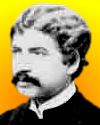
Died 23 Nov 1937 at age 78 (born 30 Nov 1858). quotes
Indian physicist and plant physiologist who investigated the properties of very short radio waves, wireless telegraphy, and radiation-induced fatigue in inorganic materials. His physiological work involved comparative measurements of the responses of plants exposed to stress. His invention of highly sensitive instruments for the detection of minute responses by living organisms to external stimuli enabled him to anticipate the parallelism between animal and plant tissues noted by later biophysicists.[a.k.a. Jagadis]
Indian physicist and plant physiologist who investigated the properties of very short radio waves, wireless telegraphy, and radiation-induced fatigue in inorganic materials. His physiological work involved comparative measurements of the responses of plants exposed to stress. His invention of highly sensitive instruments for the detection of minute responses by living organisms to external stimuli enabled him to anticipate the parallelism between animal and plant tissues noted by later biophysicists.[a.k.a. Jagadis]
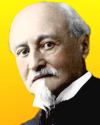
Died 23 Nov 1910 at age 78 (born 18 Feb 1832). quotes
American aeronautical engineer whose work and interests profoundly influenced Orville Wright and Wilbur Wright and the invention of the airplane. Chanute was a successful engineer who took up the invention of the airplane as a hobby following his early retirement. Knowing how railroad bridges were strengthened, he experimented with box kites using the same basic strengthening method, which he then incorporated into wing design of gliders. Through thousands of letters, he drew geographically isolated pioneers into an informal international community. He organized sessions of aeronautical papers for the professional engineering societies that he led; attracted fresh talent and new ideas into the field through his lectures; and produced important publications. more
American aeronautical engineer whose work and interests profoundly influenced Orville Wright and Wilbur Wright and the invention of the airplane. Chanute was a successful engineer who took up the invention of the airplane as a hobby following his early retirement. Knowing how railroad bridges were strengthened, he experimented with box kites using the same basic strengthening method, which he then incorporated into wing design of gliders. Through thousands of letters, he drew geographically isolated pioneers into an informal international community. He organized sessions of aeronautical papers for the professional engineering societies that he led; attracted fresh talent and new ideas into the field through his lectures; and produced important publications. more
Progress in Flying Machines, by Octave Chanute. - book suggestion.
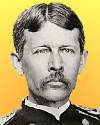
Died 23 Nov 1902 at age 51 (born 13 Sep 1851).
US Army pathologist and bacteriologist who led the experiments in Cuba (1900) that proved that yellow fever is transmitted by the bite of a mosquito. Thereafter sanitary efforts to eradicate mosquitos, and protection from their bite, eliminated epidemics of yellow fever in Cuba and the U.S. The Walter Reed Hospital in Washington, D.C., was named in his honour.[DSB gives date of death 23 Nov 1902. EB gives 22 Nov 1902.] more
US Army pathologist and bacteriologist who led the experiments in Cuba (1900) that proved that yellow fever is transmitted by the bite of a mosquito. Thereafter sanitary efforts to eradicate mosquitos, and protection from their bite, eliminated epidemics of yellow fever in Cuba and the U.S. The Walter Reed Hospital in Washington, D.C., was named in his honour.[DSB gives date of death 23 Nov 1902. EB gives 22 Nov 1902.] more
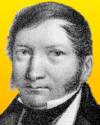
Died 23 Nov 1864 at age 71 (born 15 Apr 1793).
German-Russian astronomer, one of the greatest 19th-century astronomers and the first in a line of four generations of distinguished astronomers. He founded the modern study of binary (double) stars. In 1817, he became director of the Dorpat Observatory, which he equipped with a 9.5-inch (24-cm) refractor that he used in a massive survey of binary stars from the north celestial pole to 15°S. He measured 3112 binaries—discovering well over 2000—and cataloged his results in Stellarum Duplicium Mensurae Micrometricae (1837). In 1835, Czar Nicholas I persuaded Struve to set up a new observatory at Pulkovo, near St. Petersburg. There in 1840 Struve became, with Friedrich Bessel and Thomas Henderson, one of the first astronomers to detect parallax. Astronomer Otto Struve was his great-grandson.
German-Russian astronomer, one of the greatest 19th-century astronomers and the first in a line of four generations of distinguished astronomers. He founded the modern study of binary (double) stars. In 1817, he became director of the Dorpat Observatory, which he equipped with a 9.5-inch (24-cm) refractor that he used in a massive survey of binary stars from the north celestial pole to 15°S. He measured 3112 binaries—discovering well over 2000—and cataloged his results in Stellarum Duplicium Mensurae Micrometricae (1837). In 1835, Czar Nicholas I persuaded Struve to set up a new observatory at Pulkovo, near St. Petersburg. There in 1840 Struve became, with Friedrich Bessel and Thomas Henderson, one of the first astronomers to detect parallax. Astronomer Otto Struve was his great-grandson.
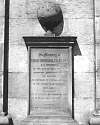
Died 23 Nov 1844 at age 45 (born 28 Dec 1798).
Scottish astronomer, the first Scottish Astronomer Royal (1834), who was first to measure the parallax of a star (Alpha Centauri, observed at the Cape of Good Hope) in 1831-33, but delayed publication of his results until Jan 1839. By then, a few months earlier, both Friedrich Bessel and Friedrich Struve had been recognized as first for their measurements of stellar parallaxes. Alpha Centauri can be observed from the Cape, though not from Britain. It is now known to be the nearest star to the Sun, but is still so distant that its light takes 4.5 years to reach us. As Scottish Astronomer Royal in 1834, he worked diligently at the Edinburgh observatory for ten years, making over 60,000 observations of star positions before his death in 1844.«[Image: Memorial tablet at the City Observatory, Edinburgh. No proper portrait of him exists]
Scottish astronomer, the first Scottish Astronomer Royal (1834), who was first to measure the parallax of a star (Alpha Centauri, observed at the Cape of Good Hope) in 1831-33, but delayed publication of his results until Jan 1839. By then, a few months earlier, both Friedrich Bessel and Friedrich Struve had been recognized as first for their measurements of stellar parallaxes. Alpha Centauri can be observed from the Cape, though not from Britain. It is now known to be the nearest star to the Sun, but is still so distant that its light takes 4.5 years to reach us. As Scottish Astronomer Royal in 1834, he worked diligently at the Edinburgh observatory for ten years, making over 60,000 observations of star positions before his death in 1844.«[Image: Memorial tablet at the City Observatory, Edinburgh. No proper portrait of him exists]
Parallax: The Race to Measure the Cosmos, by Alan W. Hirshfeld. - book suggestion.
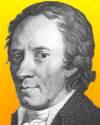
Died 23 Nov 1826 at age 79 (born 19 Jan 1747).
German astronomer best known for his popularization of Bode's law. In 1766, his compatriot Johann Titius had discovered a curious mathematical relationship in the distances of the planets from the sun. If 4 is added to each number in the series 0, 3, 6, 12, 24,... and the answers divided by 10, the resulting sequence gives the distances of the planets in astronomical units (earth = 1). Also known as the Titius-Bode law, the idea fell into disrepute after the discovery of Neptune, which does not conform with the 'law' - nor does Pluto. Bode was director at the Berlin Observatory, where he published Uranographia (1801), one of the first successful attempts at mapping all stars visible to the naked eye without any artistic interpretation of the stellar constellation figures.
German astronomer best known for his popularization of Bode's law. In 1766, his compatriot Johann Titius had discovered a curious mathematical relationship in the distances of the planets from the sun. If 4 is added to each number in the series 0, 3, 6, 12, 24,... and the answers divided by 10, the resulting sequence gives the distances of the planets in astronomical units (earth = 1). Also known as the Titius-Bode law, the idea fell into disrepute after the discovery of Neptune, which does not conform with the 'law' - nor does Pluto. Bode was director at the Berlin Observatory, where he published Uranographia (1801), one of the first successful attempts at mapping all stars visible to the naked eye without any artistic interpretation of the stellar constellation figures.
Died 23 Nov 1616 at age 63 (born 23 Nov 1553).
Italian botanist and physician who is credited with the introduction to Europe of coffee and bananas. He made an extensive study of Egyptian and Mediterranean flora. He spent three years in Egypt, and from a practice in the management of date-trees, which he observed in that country, he seems to have deduced the doctrine of the sexual difference of plants, which was adopted as the foundation of the Linnaean system. He says that "the female date-trees or palms do not bear fruit unless the branches of the male and female plants are mixed together; or, as is generally done, unless the dust found in the male sheath or male flowers is sprinkled over the female flowers." He is reputed to have been the first to fertilize date palms. He died on his birthday.
Italian botanist and physician who is credited with the introduction to Europe of coffee and bananas. He made an extensive study of Egyptian and Mediterranean flora. He spent three years in Egypt, and from a practice in the management of date-trees, which he observed in that country, he seems to have deduced the doctrine of the sexual difference of plants, which was adopted as the foundation of the Linnaean system. He says that "the female date-trees or palms do not bear fruit unless the branches of the male and female plants are mixed together; or, as is generally done, unless the dust found in the male sheath or male flowers is sprinkled over the female flowers." He is reputed to have been the first to fertilize date palms. He died on his birthday.
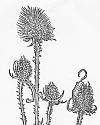
Died 23 Nov 1534 (born c. 1488).
German botanist, considered by Carolus Linnaeus to be one of the founders of modern botany. His Herbarum vivae eicones (1530-36) was the first of the great printed herbals. It has been stated that his work may be considered as a link between ancient and modern botany. He adopted the ancient classification of plants as woody and herbaceous. Brunfels rejected the alphabetical sequence of genera in favor of an association based on agreement in medicinal value but he gave no thought to the nomenclature of species. The illustrations were lifelike and not copies from earlier herbals. The plants were drawn from nature by Hans (II) Weiditz, using live models rather than earlier drawings.[Image: "Carduus Fullonum. Kartendystel," from Herbarum vivae eicones ... Tomus herbarii III, page 32]
German botanist, considered by Carolus Linnaeus to be one of the founders of modern botany. His Herbarum vivae eicones (1530-36) was the first of the great printed herbals. It has been stated that his work may be considered as a link between ancient and modern botany. He adopted the ancient classification of plants as woody and herbaceous. Brunfels rejected the alphabetical sequence of genera in favor of an association based on agreement in medicinal value but he gave no thought to the nomenclature of species. The illustrations were lifelike and not copies from earlier herbals. The plants were drawn from nature by Hans (II) Weiditz, using live models rather than earlier drawings.[Image: "Carduus Fullonum. Kartendystel," from Herbarum vivae eicones ... Tomus herbarii III, page 32]
In 1964, Dr. Michael E. DeBakey of Houston performed the first successful coronary artery bypass graft procedure.
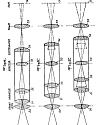
In 1948, the first U.S. patent for a lens to provide zoom effects for television cameras was issued to F.G. Back (No. 2,454,686) as a "varifocal lens for cameras." His Zoomar lens was adjustable for closeups or long-distance shots without requiring the camera be moved toward or away from the object televised. It had been demonstrated 16 Apr 1947 by the National Broadcasting Company in New York City. The early Zoomar lens was controlled by a plunger at the rear of the camera. The zoom action wasn't very smooth, but this design eliminated having to use a lens turret with multiple focal length lenses.
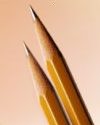
In 1897, a U.S. patent was issued for a pencil sharpener to its black American inventor, John Lee Love of Fall River, Mass. Love's invention was the very simple, portable pencil sharpener that many artists use: the pencil is put into the opening of the sharpener and rotated by hand, and the shavings stay inside the sharpener (No. 594,114). By rotating the outer case, internal gears turn a pencil sharpener blade around the inserted pencil. Two years earlier, Love had previously received a patent two years earlier for his invention of a "plasterers' hawk," which is a flat board, about 18-in square, with a handle underneath, used to carry a small amount of plaster material being worked onto a wall face (9 Jul 1895). This kind of device is still used today.
The Pencil: A History of Design and Circumstance, by Henry Petroski. - book suggestion.
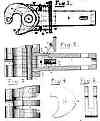
In 1897, a U.S. patent was issued to black American inventor, Andrew Jackson Beard for his invention of the "Jenny coupler," (U.S. No. 594,059). It does the dangerous job of hooking railroad cars together by simply allowing them to bump into each other, when "horizontal jaws engage each other to connect the cars." Beard's idea has probably saved countless lives and limbs. It remains in use today. He received $50,000 for the patent rights to the "Jenny Coupler." Beard was born a slave on a plantation in Alabama, shortly before slavery ended. He was a farmer, carpenter, blacksmith, a railroad worker, a businessman and finally an inventor. Beard's other patents included a steam driven rotary engine, and a double plow.
Great Discoveries and Inventions by African-Americans, by David M. Foy. - book suggestion.

In 1897, a U.S. patent for an improvement in "Casting Composite or Other Wheels" was issued to black American inventor E.R. Robinson (No. 594,286). It gave a method for casting wheels wherein the outer sides are of one metal and the interior portions are of another metal. The importance was not only to enable casting a metal of high electrical conductivity, such as brass, in a groove of an iron trolley wheel - but also to permit an entirely new contruction consisting of two outer disks or flanges and an intermediate, uniting portion, which extends from the contact portion of the wheel with a web extending to the centre and an integral bushing. Robinson also held a previous patent, issued four years earlier, for an "electric railway trolley."[Image: plan view of bottom section of a wheel three-part mold]
Great Discoveries and Inventions by African-Americans, by David M. Foy. - book suggestion.
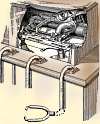
In 1889, the first jukebox was installed when an entrepreneur named Louis Glass and his business associate, William S. Arnold, placed a coin-operated Edison cylinder phonograph in the Palais Royale Saloon in San Francisco. The machine, an Edison Class M Electric Phonograph with oak cabinet, had been fitted locally in San Francisco with a coin mechanism invented and soon patented by Glass and Arnold. This was before the time of vacuum tubes, so there was no amplification. For a nickel a play, a patron could listen using one of four listening tubes. Known as “Nickel-in-the-Slot,” the machine was an instant success, earning over $1000 in less than six months.[Image: From U.S. Patent No. 428,750 "coin actuated attachment for phonographs" issued to Glass and Arnold on 27 May 1890]
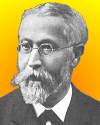
In 1874, a paper by Ferdinand Braun (1850-1918) was published in the Annalen der Physik und Chemie describing his discovery of the electrical rectifier effect. He observed that certain crystals of metal sulphides have a larger or smaller resistance to an electric current, depending on its direction of flow. He used a galena crystal, a semiconductor material composed of lead sulfide. He found the rectifying effect especially true if at least one of the electrodes was a pointed wire. Thus, he had discovered the point-contact rectifier effect, the first semiconductor device. This effect wasn't used until over 30 years later in the form of the “cat's whisker” crystal radio detector which ultimately led to the point-contact transistor first produced in 1948.
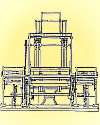
In 1869, William and John W. Murkland were issued a patent for their invention of a carpet power-loom (No. 97,106) as "an improvement in power-loom for weaving in-grain carpet" or other figured fabrics. By making several simplifications to reduce complexity of the machinery, their design reduced the number of cams and levers involved in operating the loom. As a result, less power was required to maintain the motion of the machine. Having fewer parts also reduced maintenance and repair costs.

In 1852, the first of four British pillar boxes was installed at Jersey's capital, St. Helier. The red cast iron free-standing boxes were used as a street-side receptacles of letters ready for collection by the Post Office. Anthony Trollope (later a famous novelist) was a Surveyor's Clerk who recommended their use after being sent to inspect Channel Islands postal services in 1851. He did not invent the pillar box, which had first appeared in Belgium, but he prompted their use in Britain. After approval by the Postmaster- General, the first pillar box on the English mainland was installed in Carlisle in 1853. London had six installed on 11 Apr 1855.*«[Image, right: The hexagonal box as designed and cast by St. Helier blacksmith John Vaudin]
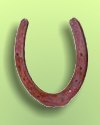
In 1835, the first U.S. patent for a horseshoe manufacturing machine was issued to Henry Burden (1791-1871) of Troy, N.Y. He made nearly all the horseshoes used by the Union calvary during the Civil War. His machine produced a horseshoe from a rod of iron that was fed into it. With improvements made in later years, his nine machines were capable of making sixty horseshoes a minute. Production was both more rapid and uniform than the handmade method which it superceded. Burden was born in Scotland and emigrated to the U.S.in 1819. He started in the Troy iron industry in 1822, as superintendent of the Troy Iron and Nail Factory. His horseshoe-making machines, and Burden's other inventions which automated work that was previously done by hand, made the factory extremely profitable. By periodically buying shares of the stock of the corporation, he owned it by 1848.«




