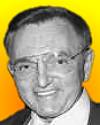

John W. “Jack” Ryan was an American inventor who for 20 years designed best-selling toys for Mattell Inc., including the Barbie doll, Hot Wheels and Chatty Cathy talking doll. His technical savvy and knowledge of materials came from his earlier employment, working as an engineer for the Raytheon Company designing the Navy's Sparrow III and Hawk guided missiles. Ryan's association with Mattell began as a self-employed consultant for several years prior to becoming its vice president for research and design. Ryan invented the joints that allowed Barbie to bend at the waist and the knee. He also introduced the pull-string, talking voice boxes for Mattel's dolls.«[Image right: Barbie doll.]
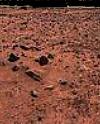
Born 12 Nov 1924.
French astronomer who was the successor to Bernard Lyot as the principal French authority on the solar system. Dollfus made several balloon flights for high-altitude observations, including the first stratospheric ascension in France. On the basis of comparative light-polarizing qualities, he concluded that the surface material of Mars consists of pulverized limonite (an iron oxide, Fe2O3) and prepared a map of Venus showing what he believed to be permanent features. On 15 Dec 1966, he discovered Saturn's tenth known satellite, Janus. Subsequently lost, it is now accepted to be satellite 1980S1 orbiting Saturn in an almost circular orbit of radius 151,472 km in a period of 0.69433 days. A small satellite of diameter no more than 220 km, Janus is a co-orbital satellite with Epimetheus.
French astronomer who was the successor to Bernard Lyot as the principal French authority on the solar system. Dollfus made several balloon flights for high-altitude observations, including the first stratospheric ascension in France. On the basis of comparative light-polarizing qualities, he concluded that the surface material of Mars consists of pulverized limonite (an iron oxide, Fe2O3) and prepared a map of Venus showing what he believed to be permanent features. On 15 Dec 1966, he discovered Saturn's tenth known satellite, Janus. Subsequently lost, it is now accepted to be satellite 1980S1 orbiting Saturn in an almost circular orbit of radius 151,472 km in a period of 0.69433 days. A small satellite of diameter no more than 220 km, Janus is a co-orbital satellite with Epimetheus.
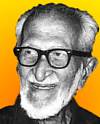
Born 12 Nov 1896; died 27 Jul 1987 at age 90.
Indian ornithologist, the “birdman of India,” who championed conservation of India's biological diversity. His fieldwork provided scientific guidance for the Indian government's conservation efforts. His love of birds began at age 10, when he began writing his observations. Eventually, he undertook professional education in ornithology. In 1930 he began a bird survey of Hyderabad State. By 1976, he had published several popular regional field guides of Indian birds for which he is famous. These surveys were based on extensive travels throughout India and Pakistan. The title of his autobiography “The Fall of a Sparrow” (1987) recalls the first sparrow that drew his interest as a boy.«
Indian ornithologist, the “birdman of India,” who championed conservation of India's biological diversity. His fieldwork provided scientific guidance for the Indian government's conservation efforts. His love of birds began at age 10, when he began writing his observations. Eventually, he undertook professional education in ornithology. In 1930 he began a bird survey of Hyderabad State. By 1976, he had published several popular regional field guides of Indian birds for which he is famous. These surveys were based on extensive travels throughout India and Pakistan. The title of his autobiography “The Fall of a Sparrow” (1987) recalls the first sparrow that drew his interest as a boy.«
The Book of Indian Birds, by Salim Ali. - book suggestion.
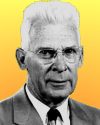
Born 12 Nov 1891; died 2 Jul 1963 at age 71.
Seth Barnes Nicholson was an American astronomer best known for discovering four satellites of Jupiter. As a graduate student at the University of California, while photographing the recently-discovered 8th moon of Jupiter with the 36-inch Crossley reflector, he discovered a 9th (1914). During his life career at Mt.Wilson Observatory, he discovered two more Jovian satellites (1938) and the 12th (1951), as well as a Trojan asteroid, and computed orbits of several comets and of Pluto. His main assignment at Mt. Wilson was observing the sun with the 150-foot solar tower telescope, and he produced annual reports on sunspot activity and magnetism for decades. With Edison Pettit, he measured the temperatures of the moon, planets, sunspots, and stars in the early 1920s.
Seth Barnes Nicholson was an American astronomer best known for discovering four satellites of Jupiter. As a graduate student at the University of California, while photographing the recently-discovered 8th moon of Jupiter with the 36-inch Crossley reflector, he discovered a 9th (1914). During his life career at Mt.Wilson Observatory, he discovered two more Jovian satellites (1938) and the 12th (1951), as well as a Trojan asteroid, and computed orbits of several comets and of Pluto. His main assignment at Mt. Wilson was observing the sun with the 150-foot solar tower telescope, and he produced annual reports on sunspot activity and magnetism for decades. With Edison Pettit, he measured the temperatures of the moon, planets, sunspots, and stars in the early 1920s.
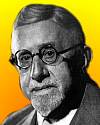
Born 12 Nov 1871; died 11 Oct 1962 at age 90.
Austrian agronomist who was one of three scientists who independently (as did Hugo de Vries and Carl Correns) rediscovered Gregor Mendel's work on the laws of genetics of the 1860's. Von Tschermak published his findings in June 1900.«
Austrian agronomist who was one of three scientists who independently (as did Hugo de Vries and Carl Correns) rediscovered Gregor Mendel's work on the laws of genetics of the 1860's. Von Tschermak published his findings in June 1900.«
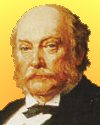
Born 12 Nov 1842; died 30 Jun 1919 at age 76. quotes
John William Strutt, Third Baron Rayleigh was an English physical scientist, 3rd Baron of Rayleigh (of Terling Place) who made fundamental discoveries in the fields of acoustics and optics that are basic to the theory of wave propagation in fluids. He received the Nobel Prize for Physics in 1904 for his investigations into the densities of the most important gases and his successful isolation of argon, an inert atmospheric gas.
John William Strutt, Third Baron Rayleigh was an English physical scientist, 3rd Baron of Rayleigh (of Terling Place) who made fundamental discoveries in the fields of acoustics and optics that are basic to the theory of wave propagation in fluids. He received the Nobel Prize for Physics in 1904 for his investigations into the densities of the most important gases and his successful isolation of argon, an inert atmospheric gas.
Born 12 Nov 1802; died 26 Aug 1867 at age 64.
German anthropologist who developed the concept of three stages of cultural evolution and is thought to have influenced the prominent English anthropologist Sir Edward Burnett Tylor. Klemm spent most of his life as director of the royal library at Dresden (from 1831). He distinguishing three stages of cultural evolution (which he identified as those of savagery, domestication, and freedom). Klemm divided mankind into active and inactive races and believed that peoples differed in mentality and temperament. He wrote about this 10 volume work, Allgemeine Kulturgeschichte der Menschheit.[Death date uncertain: given by Enc. Brit. as died 25/26 Aug 1867.]
German anthropologist who developed the concept of three stages of cultural evolution and is thought to have influenced the prominent English anthropologist Sir Edward Burnett Tylor. Klemm spent most of his life as director of the royal library at Dresden (from 1831). He distinguishing three stages of cultural evolution (which he identified as those of savagery, domestication, and freedom). Klemm divided mankind into active and inactive races and believed that peoples differed in mentality and temperament. He wrote about this 10 volume work, Allgemeine Kulturgeschichte der Menschheit.[Death date uncertain: given by Enc. Brit. as died 25/26 Aug 1867.]
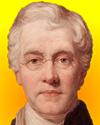
Born 12 Nov 1774; died 28 Apr 1842 at age 67. quotes
Scottish anatomist and surgeon whose New Idea of Anatomy of the Brain (1811) has been called the “Magna Carta of neurology.” After further research on the anatomy of the brain he published an expanded version, entitled The Nervous System of the Human Body (1830). In these books Bell distinguished between sensory nerves that conduct impulses to the central nervous system and motor nerves that convey impulses from the brain or from other nerve centres to a peripheral organ of response. He announced that the anterior roots of the spinal nerves are motor in function, while the posterior roots are sensory. This observation was confirmed eleven years later and more fully elaborated by François Magendie.
Scottish anatomist and surgeon whose New Idea of Anatomy of the Brain (1811) has been called the “Magna Carta of neurology.” After further research on the anatomy of the brain he published an expanded version, entitled The Nervous System of the Human Body (1830). In these books Bell distinguished between sensory nerves that conduct impulses to the central nervous system and motor nerves that convey impulses from the brain or from other nerve centres to a peripheral organ of response. He announced that the anterior roots of the spinal nerves are motor in function, while the posterior roots are sensory. This observation was confirmed eleven years later and more fully elaborated by François Magendie.
The Life and Labours of Sir Charles Bell, by Amédée Pichot. - book suggestion.
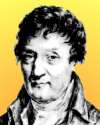
Born 12 Nov 1746; died 7 Apr 1823 at age 76. quotes
French mathematician, physicist, and inventor. When Benjamin Franklin visited France in 1779, Charles was inspired to study physics. He soon became an eloquent speaker to non-scientific audiences. His lectures and demonstrations attracted notable patrons and helped popularize Franklin's theory of electricity and other new scientific concepts. With Anne-Jean and Nicolas Robert, he made several balloon ascents, and was the first to use hydrogen for balloon inflation (1783). Charles invented most of the equipment that is still used in today's balloons. About 1787 he developed Charles's law concerning the thermal expansion of gases that for a gas at constant pressure, its volume is directly proportional to its absolute temperature.
French mathematician, physicist, and inventor. When Benjamin Franklin visited France in 1779, Charles was inspired to study physics. He soon became an eloquent speaker to non-scientific audiences. His lectures and demonstrations attracted notable patrons and helped popularize Franklin's theory of electricity and other new scientific concepts. With Anne-Jean and Nicolas Robert, he made several balloon ascents, and was the first to use hydrogen for balloon inflation (1783). Charles invented most of the equipment that is still used in today's balloons. About 1787 he developed Charles's law concerning the thermal expansion of gases that for a gas at constant pressure, its volume is directly proportional to its absolute temperature.

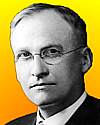
Died 12 Nov 1944 at age 60 (born 21 Mar 1884).
American mathematician, foremost of the early 20th century, who formulated the ergodic theorem. As the first American dynamicist, Birkhoff picked up where Poincaré left off, gaining distinction in 1913 with his proof of Poincaré's Last Geometric Theorem, a special case of the 3-body problem. Although primarily a geometer, he discovered new symbolic methods. He saw beyond the theory of oscillations, created a rigorous theory of ergodic behavior, and foresaw dynamical models for chaos. His ergodic theorem transformed the Maxwell- Boltzmann ergodic hypothesis of the kinetic theory of gases (to which exceptions are known) into a rigorous principle through use of the Lebesgue measure theory. He also produced a mathematical model of gravity.
American mathematician, foremost of the early 20th century, who formulated the ergodic theorem. As the first American dynamicist, Birkhoff picked up where Poincaré left off, gaining distinction in 1913 with his proof of Poincaré's Last Geometric Theorem, a special case of the 3-body problem. Although primarily a geometer, he discovered new symbolic methods. He saw beyond the theory of oscillations, created a rigorous theory of ergodic behavior, and foresaw dynamical models for chaos. His ergodic theorem transformed the Maxwell- Boltzmann ergodic hypothesis of the kinetic theory of gases (to which exceptions are known) into a rigorous principle through use of the Lebesgue measure theory. He also produced a mathematical model of gravity.
Dynamical Systems: A Renewal of Mechanism: Centennial of George David Birkhoff, by George David Birkhoff, et al. - book suggestion.
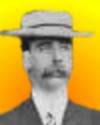
Died 12 Nov 1938 at age 64 (born 17 Apr 1874).
American communications executive and philanthropist who supervised the completion of the first transpacific cable between the United States and the Far East in 1904. He laid a cable between New York and Cuba in 1907 and later established cable communication with southern Europe via the Azores and with northern Europe via Ireland. In 1928, he became the first to combine radio, cables, and telegraphs under one management. Unfortunately the Postal Telegraph-Commercial Cable empire he had inherited from his father was shattered in the depression of 1929, going into receivership in 1935. In 1943 the Mackay land lines merged with Western Union. He founded the multinational company International Telephone and Telegraph.
American communications executive and philanthropist who supervised the completion of the first transpacific cable between the United States and the Far East in 1904. He laid a cable between New York and Cuba in 1907 and later established cable communication with southern Europe via the Azores and with northern Europe via Ireland. In 1928, he became the first to combine radio, cables, and telegraphs under one management. Unfortunately the Postal Telegraph-Commercial Cable empire he had inherited from his father was shattered in the depression of 1929, going into receivership in 1935. In 1943 the Mackay land lines merged with Western Union. He founded the multinational company International Telephone and Telegraph.
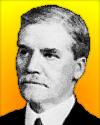
Died 12 Nov 1932 at age 78 (born 31 Mar 1854).
Scottish inventor of the two-stroke Clerk cycle motorcycle engine, widely used on light motorcycles and other small machines. In 1881 he patented an engine he built in 1876 to run on hydrocarbon vapour which used an explosion once every two strokes of the piston rather than the once every fourof the more common Otto cycle used by most automobile engines. In another major research direction, he studied the properties of gaseous fuel and its heating and lighting applications. The British Admiralty appointed him director of engineering research in 1916, followed by his knighting in 1917. His work appears in the two volumes of The Gas, Petrol, and Oil Engine.
Scottish inventor of the two-stroke Clerk cycle motorcycle engine, widely used on light motorcycles and other small machines. In 1881 he patented an engine he built in 1876 to run on hydrocarbon vapour which used an explosion once every two strokes of the piston rather than the once every fourof the more common Otto cycle used by most automobile engines. In another major research direction, he studied the properties of gaseous fuel and its heating and lighting applications. The British Admiralty appointed him director of engineering research in 1916, followed by his knighting in 1917. His work appears in the two volumes of The Gas, Petrol, and Oil Engine.
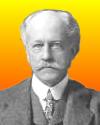
Died 12 Nov 1916 at age 61 (born 13 Mar 1855). quotes
American astronomer who predicted the existence of the planet Pluto and initiated the search that ended in its discovery. Lowell was also passionately committed to finding proof of intelligent life on Mars. In 1894, he founded the Lowell Observatory, atop Mars Hill, at Flagstaff as Arizona's first astronomical observatory. Studying Mars, Lowell drew in intricate detail, the network of several hundred fine, straight lines and their intersection in a number of "oases." Lowell concluded that the bright areas were deserts and the dark ones were patches of vegetation. He believed further, that water from the melting polar cap flowed down the canals toward the equatorial region to revive the vegetation.
American astronomer who predicted the existence of the planet Pluto and initiated the search that ended in its discovery. Lowell was also passionately committed to finding proof of intelligent life on Mars. In 1894, he founded the Lowell Observatory, atop Mars Hill, at Flagstaff as Arizona's first astronomical observatory. Studying Mars, Lowell drew in intricate detail, the network of several hundred fine, straight lines and their intersection in a number of "oases." Lowell concluded that the bright areas were deserts and the dark ones were patches of vegetation. He believed further, that water from the melting polar cap flowed down the canals toward the equatorial region to revive the vegetation.
Percival Lowell: The Culture and Science of a Boston Brahmin, by David Strauss. - book suggestion.
Died 12 Nov 1908 at age 60 (born 25 Mar 1848).
American zoologist known for his research on the anatomy and embryology of marine animals, especially the tunicates, crustaceans (e.g., crayfish), and mollusks (notably the oyster). He was one of the first morphologists to accept Charles Darwin's evolutionary concepts. Brooks advocated the study of marine organisms in their natural habitats. Though remaining in the tradition of 19th-century descriptive morphology, through his more able students, he influenced the transition to an experimental, causal approach to 20th-century biology, particularly in cytology, genetics, and embryology. He founded the Chesapeake Zoological Laboratory (1878) and championed the conservation of the Chesapeake Bay oyster.
American zoologist known for his research on the anatomy and embryology of marine animals, especially the tunicates, crustaceans (e.g., crayfish), and mollusks (notably the oyster). He was one of the first morphologists to accept Charles Darwin's evolutionary concepts. Brooks advocated the study of marine organisms in their natural habitats. Though remaining in the tradition of 19th-century descriptive morphology, through his more able students, he influenced the transition to an experimental, causal approach to 20th-century biology, particularly in cytology, genetics, and embryology. He founded the Chesapeake Zoological Laboratory (1878) and championed the conservation of the Chesapeake Bay oyster.
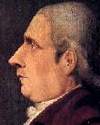
(1805)
Died 12 Nov 1832 at age 80 (born 17 Jul 1752).
Italian astronomer, geodesist and priest who, shortly after ordination (1776), joined Brera Observatory in Milan, and eventually became its director (1802). Oriani found (1779) the Virgo Cluster galaxies M49, M60 and M61. In 1785, he published calculations on the orbit of Uranus (discovered in Mar 1781 by William Herschel). For 37 years, he worked closely with Giuseppe Piazzi on various projects, including Piazzi’s discovery (1801) of the first known asteroid, Ceres. As cartographer for the new Italian Republic (1802), Oriani measured the arc of the meridian between Rome and Rimini. Besides continuing astronomical contributions to the Effemeridi di Milano, he published memoirs on spherical trigonometry.«
Italian astronomer, geodesist and priest who, shortly after ordination (1776), joined Brera Observatory in Milan, and eventually became its director (1802). Oriani found (1779) the Virgo Cluster galaxies M49, M60 and M61. In 1785, he published calculations on the orbit of Uranus (discovered in Mar 1781 by William Herschel). For 37 years, he worked closely with Giuseppe Piazzi on various projects, including Piazzi’s discovery (1801) of the first known asteroid, Ceres. As cartographer for the new Italian Republic (1802), Oriani measured the arc of the meridian between Rome and Rimini. Besides continuing astronomical contributions to the Effemeridi di Milano, he published memoirs on spherical trigonometry.«
Died 12 Nov 1806 at age 73 (born 27 Apr 1733).
German botanist who was a pioneer in the study of plant hybrids. He was first to develop a scientific application of the discovery, made in 1694 by the German botanist Rudolph Jacob Camerarius, of sex in plants. In his work with plants he was the first to use artificial fertilization. He was the first to cross plants of different species.
German botanist who was a pioneer in the study of plant hybrids. He was first to develop a scientific application of the discovery, made in 1694 by the German botanist Rudolph Jacob Camerarius, of sex in plants. In his work with plants he was the first to use artificial fertilization. He was the first to cross plants of different species.
Died 12 Nov 1793 at age 57 (born 15 Sep 1736). quotes
French astronomer who computed an orbit for Halley's Comet (1759) and studied the four satellites of Jupiter then known. He was the first Mayor of Paris (1789-91). He was executed by guillotine in Paris during the French Revolution.
French astronomer who computed an orbit for Halley's Comet (1759) and studied the four satellites of Jupiter then known. He was the first Mayor of Paris (1789-91). He was executed by guillotine in Paris during the French Revolution.
In 1999, in Bartlesville, Oklahoma, a plaque was placed on the site of the laboratory where the polymer polypropylene was invented, designating it a National Historic Chemical Landmark by the American Chemical Society. The first commercially successful use of the new material was in the Hula Hoop®. In 1951, J. Paul Hogan and Robert L. Banks, research chemists working for Phillips Petroleum Company, discovered the polymer unexpectedly during experiments with catalysts while trying to convert the natural gas components ethylene and propylene into compounds useful for gasoline. Later, they also developed a new catalytic process for making high-density polyethylene. Phillips soon invested in new plastic manufacturing plants.
In 1984, astronauts executed the first salvage operation in space when a Palapa B-2 satellite was retrieved. It was transported back to Earth in the cargo bay of the space shuttle Discovery.«
In 1980, the space probe Voyager I travelled under the rings and within 77,000 miles of Saturn.

In 1974, a salmon was found in the River Thames, England, for the first time since 1833. The 8-lb 4½-oz female, discovered entangled in the protective nets around West Thurrock power station,* was a major surprise. It was sent to the British Museum for positive identification. Victorian era sewage and factory waste polluted the once-thriving salmon river, and by 1849 all salmon had disappeared. On 7 Jul 1855, Michael Faraday wrote in The Times about the putrid state of the Thames. From 1961, improved sewage treatment and limits on industrial discharges gradually brought about a cleaner river. The salmon’s life cycle requires a high standard of water quality, so the species reflects the environmental quality.«
The Great Stink of London: Sir Joseph Bazalgette and the Cleansing of the Victorian Metropolis, by Stephen Halliday. - book suggestion.
In 1968, the U.S. Supreme Court invalidated a 1928 Arkansas law criminalizing the teaching of evolution in public or state-supported schools of that state. The landmark ruling in Epperson v. Arkansas, was held 9-0. Arkansas’ law violated the First Amendment’s Establishment Clause, which proscribes legislation to favor the tenets of a particular religion. The Court found that the goal of the law was to restrict teachers from introducing the theory of evolution, as contrary to the belief of Christian Fundamentalists, that Genesis was the exclusive doctrine for humanity’s origin. The law was modeled on the Tennessee Butler Act (1925). The case was filed by a Little Rock teacher, Susan Epperson, and parent, H.H. Blanchard.«
In 1966, the first photograph was taken from the atmosphere by the satellite Gemini XII.
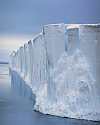
In 1956, the largest iceberg on record was sighted by the USS Glacier, a U. S. Navy icebreaker, about 150 miles west of Scott Island in the Southern Hemisphere. It had broken from the Ross ice shelf in the Antarctic. Its size was about the size of Belgium - 208 miles long and 60 miles wide (335 km by 96 km). This record iceberg was many times larger than any seen in the Northern Hemisphere, where the largest iceberg on record was encountered near Baffin Island in 1882. It was 13 km long by 6 km wide, had a freeboard (height above water) of about 20 m, and a mass in excess of 9 billion tonnes. The USS Glacier, commissioned in 1955, was at the time of her construction, the largest icebreaker ever built.«[Image: Iceberg B-19, a more recent huge iceberg that calved in Mar 2000]
In 1948, the world’s first mobile (i.e. moveable) betatron began operation at the U.S. Naval Ordnance Laboratory, White Oak, Md, in a building with 3-foot-thick reinforced concrete walls to protect persons. Using 10 million volts to accelerate electrons, the betatron produced a sharp beam of high-energy X-rays capable of penetrating 16-in. (40 cm) of steel. The limit for earlier industrial machines was 12-in. (30 cm) of steel. Moved by a crane, the new betatron was also unique because it could be aimed in any direction. The instrument was used in studies of the complicated internal assemblies of mines, torpedoes, and other ordnance equipment. It was built by General Electric Company, Schenectady, N.Y.«
In 1946, the first “autobank,” The Exchange National Bank (banking by car) was established in Chicago.
In 1941, Alma Heflin, the first American female test pilot for standard production aircraft made her first test flight for the Piper Aircraft Corporation of Lock Haven, Pennsylvania.
In 1941, the first heredity clinic in the U.S. was opened by the University of Michigan, Ann Arbor. Data on human heredity was collected, and family counselling was offered.

In 1936, the Oakland Bay Bridge, California, U.S., opened for traffic, six months before the Golden Gate Bridge opened for traffic on 28 May 1937. Construction of the Bay Bridge began on 9 Jul 1933 to be a toll bridge across the San Francisco Bay linking Oakland and San Francisco. It is in effect two bridges connecting a central island, Yerba Buena Island, with each shore. From San Francisco, two suspension bridges end-to-end with a central anchorage reach the island, then traffic continues to Oakland over a truss causeway of five medium-span truss bridges and a double-tower cantilever span. The bridges were designed by Ralph Modjeski. When they opened, they were the longest suspended-deck bridge in the world and the longest cantilever bridge in the world.«
The Bay Bridge, by Paul C. Trimble and John C. Alioto Jr. - book suggestion.
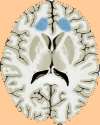
In 1935, the first modern surgery on the frontal lobes for treatment of mental disorders was performed by Egas Moniz at Santa Marta Hospital in Lisbon, Portugal. Moniz injected absolute alcohol into the frontal lobes of a mental patient through two holes drilled in the skull. Moniz later used a technique that severed neurons and led to the prefrontal lobotomy techniques of the 1940s. Moniz was later awarded a Nobel Prize in Physiology or Medicine for 1949. Such radical surgery fell out of favour when psychoactive medication became available.[Image: blue spots show the operation sites]
In 1929, Commander Richard E. Byrd made the first flight over the South Pole. He and three companions set off at 3:29pm in the Floyd Bennett the previous day from “Little America” base on the Ross Ice Shelf. Magnetic compasses fail near a Pole, so Byrd navigated by the sun. The Pole was reached about 1am. He dropped a British flag in honour of Scott, and an American flag weighted with a stone from the grave of Floyd Bennett, with whom he had flown over the North Pole (9 May 1926). To allow for navigation error, the plane criss-crossed the area, then returned to base. The round trip took 18 hr 14 min. Byrd returned on 16 Feb 1947 and dropped a carton with 54 flags of United Nations states. His fifth and last Antarctic expedition was in 1955, two years before he died.«
In 1927, the Holland Tunnel connecting N.Y. and N.J., the world's first underwater vehicular tunnel, officially opened.
In 1926, the first recorded airplane bombing took place in Williamson County, Illinois, during a feud between rival beer and liquor factions, the Sheltons and the Birgers.
In 1912, the body of Robert F. Scott was discovered in the Antarctic, who died during an attempt to reach the South Pole
In 1901, decisions on the the first Nobel Prizes for Physics and for Chemistry were made at a meeting of The Royal Swedish Academy of Sciences. The first Nobel Prize in Physics was to be awarded to Wilhelm Röntgen for his discovery of X-rays. The first Nobel Prize in Chemistry was to be awarded to Jacobus H. van't Hoff for his work on rates of reaction, equilibrium and osmotic pressure. It was two days earlier, on 30 Oct 1901, that the Nobel diploma was dated and signed by staff at Karolinska Institutet in Stockholm, for the first Nobel Prize in Physiology or Medicine 1901 that would be awarded to Emil von Behring. The prizes were presented to the recipients at an Award Ceremony on 10 Dec 1901, the anniversary of Alfred Nobel's death.«
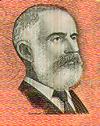
In 1894, Lawrence Hargrave, the Australian inventor of the box kite, linked four huge box kites together, added a sling seat, and flew - attached to the ground by piano wire. Due to their innate abilities to carry heavy payloads, steady flight, and capacity for high altitude flight these kites have had many industrial and military uses in the past. Box kites were used until the 1930's to carry meteorological equipment for high altitude weather studies and by the Royal Air Force as sea rescue equipment to deliver radio aerials. Hargrave also made important studies of wing surfaces and worked with rotary engines and gliders.
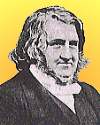
In 1847, in England, Sir James Young Simpson, father of modern anesthetics, made his first use of chloroform (“perchloride of formyle”) anesthetic in an operation. He wasn’t thefirst to use it, but it was his persistentadvocacywhich led to the acceptance of chloroform. Later, as Queen Victoria was to give birth to Prince Leopold (1853), she accepted chloroform for help. Despite a greatcontroversyabout the morality of whether women should use such anesthetics in childbirth, Victoria’s leadership freed people from superstition and fear. Simpson was a natural inventor, always eager to experiment, including in the fight against puerperal fever, creating new types of forceps and combating cholera.«
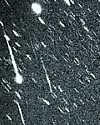
In 1833, the great shower of the Leonid Meteors was recorded. Many observers clearly reported that the meteors seemed to radiate from a spot in Leo and that, as the constellation moved slowly westward during the night, the radiant point moved with it. Within weeks a Yale mathematician, Denison Olmsted, showed that this radiant point was simply an effect of perspective. The millions of meteors that fell that night had in fact been moving along parallel paths. They appeared to diverge from a point in Leo for the same reason that parallel lines on the ground (such as railroad tracks), appear to diverge from a point on the horizon. Following this realization, the meteors were given the Latin family name for their apparent place of origin: the Leonids  [Image: Photo of the Leonids in 1966.]
[Image: Photo of the Leonids in 1966.] The Heavens On Fire: The Great Leonid Meteor Storms, by Mark Littmann. - book suggestion.
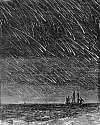
In 1799, Andrew Ellicott wrote the first known record of a meteor shower observed in the U.S. He viewed the display from a ship off the coast of Florida Keys at full moon. He wrote: “In every instant the meteors were as numerous as the stars,” and that the “whole heaven appeared as if illuminated with sky rockets, flying in an infinity of directions, and I was in constant expectation of some of them falling on the vessel. They continued until put out by the light of the sun after day break.” His account was read to the American Philosophical Society on 16 Jan 1801. The Leonids meteor shower is an annual event that is greatly enhanced every 33 years when accompanied by the appearance of the comet Tempel-Tuttle «[Image: illustration from The Midnight Sky by Edward Dunkin (1872)]
«[Image: illustration from The Midnight Sky by Edward Dunkin (1872)]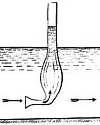
In 1732, Henri Pitot read a paper to the Royal Academy of Sciences in Paris about an instrument he had invented to measure the flow velocity at different depths of water in the River Seine*. It had a scale and two open vertical glass tubes on a wood frame. The lower end of one pointed down, the other bent at 90º facing the flow. The belief of the time was that flow velocity at a given depth was proportional to the mass above it, meaning increasing velocity at greater depth. Recording the difference in liquid levels in the two tubes, he showed the opposite was true. Henri Darcy improved the design, with the support of Henri Bazin. Today, the Pitot tube has an important application in aerodynamics for the measurement of the airspeed of aircraft.«[Image: Book illustration showing a variation on Pitot tube by another practitioner presented by Fanning,1877.]




