
Born 4 Nov 1929; died 21 Apr 2013 at age 83.
Indian computer and astrologer who demonstrated her gift as an arithmetical prodigy in public performances (beginning at age 6 years old), rapidly computing answers to addition of several up to 13-digit numbers. Using her mental skills, she applied shortcuts using mathematical algorithms, though she could not explain that ability. Her calculations included using large numbers in multiplication and division of large numbers. She also quickly gave square and cube roots, and could name the day of the week for any date in the last century. Examples include taking the cube root of 188,132,517 or naming which days of the week the 14th of each month occurred in 1935. Her skill was one of computation, but she did not have a photographic memory for other facts, and could have memory lapses such as recognizing people met in years past.«
Indian computer and astrologer who demonstrated her gift as an arithmetical prodigy in public performances (beginning at age 6 years old), rapidly computing answers to addition of several up to 13-digit numbers. Using her mental skills, she applied shortcuts using mathematical algorithms, though she could not explain that ability. Her calculations included using large numbers in multiplication and division of large numbers. She also quickly gave square and cube roots, and could name the day of the week for any date in the last century. Examples include taking the cube root of 188,132,517 or naming which days of the week the 14th of each month occurred in 1935. Her skill was one of computation, but she did not have a photographic memory for other facts, and could have memory lapses such as recognizing people met in years past.«


Ruth Mosko Handler was an American inventor who created the Barbie Doll (1959), a teenage doll with a tiny waist and slender hips, and Ken, a boy doll (1961), which she named after her children. She co-founded the Mattel company in 1942. The business originally sold picture frames, and later dollhouse furniture which shortly led to specializing in toys. With a blonde ponytail and a zebra-striped swimsuit, the first "Barbie Teen-Age Fashion Model" sold over 350,000 the first year. The company soon made $100m annually. After being diagnosed with breast cancer in 1970, resulting in a mastectomy, she founded Ruthton Corporation to manufacture and market a prosthetic breast for women with a similar need.«[Image right: Original Barbie.]
Dream Doll: The Ruth Handler Story, by Ruth Handler, Jacqueline Shannon. - book suggestion.
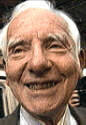
Born 4 Nov 1908; died 31 Aug 2005 at age 96. quotes
Polish-British physicist who is a leading critic of nuclear weaponry. Rotblat and the Pugwash Conferences, "for their efforts to diminish the part played by nuclear arms in international politics and in the longer run to eliminate such arms," received the Nobel Peace Prize in 1995. Forty years earlier, he and other scientists, with philosopher Bertrand Russelland Albert Einstein, published a manifesto calling on researchers to take responsibility for their work, particularly those working on the atomic bomb. This led to the Pugwash Conferences on Science and World Affairs, first convened in 1957 in Pugwash, Nova Scotia, Canada. He was secretary-general (1957-73), and president (from 1988) of this London-based worldwide organization.
Polish-British physicist who is a leading critic of nuclear weaponry. Rotblat and the Pugwash Conferences, "for their efforts to diminish the part played by nuclear arms in international politics and in the longer run to eliminate such arms," received the Nobel Peace Prize in 1995. Forty years earlier, he and other scientists, with philosopher Bertrand Russelland Albert Einstein, published a manifesto calling on researchers to take responsibility for their work, particularly those working on the atomic bomb. This led to the Pugwash Conferences on Science and World Affairs, first convened in 1957 in Pugwash, Nova Scotia, Canada. He was secretary-general (1957-73), and president (from 1988) of this London-based worldwide organization.
Born 4 Nov 1901; died 1 Oct 1974 at age 72. quotes
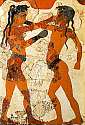
Spyridon Nikolaou Marinatos was a Greek archaeologist whose most notable discovery was the site of an ancient port city on the island of Thera, in the southern Aegean Sea. The city, the name of which was not discovered, apparently had about 20,000 inhabitants when it was destroyed by the great volcanic eruption of 1500 BC. Among the finds made at the site were the finest frescoes discovered in the Mediterranean region to that time, surpassing even those found at Knossos in Crete. The most famous of these murals is the "Two Boys Boxing" (left).[Image: "Two Boys Boxing" mural, Marinatos's most famous fresco discovery.]
Spyridon Nikolaou Marinatos was a Greek archaeologist whose most notable discovery was the site of an ancient port city on the island of Thera, in the southern Aegean Sea. The city, the name of which was not discovered, apparently had about 20,000 inhabitants when it was destroyed by the great volcanic eruption of 1500 BC. Among the finds made at the site were the finest frescoes discovered in the Mediterranean region to that time, surpassing even those found at Knossos in Crete. The most famous of these murals is the "Two Boys Boxing" (left).[Image: "Two Boys Boxing" mural, Marinatos's most famous fresco discovery.]

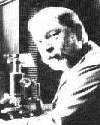
Born 4 Nov 1855; died 11 Apr 1948 at age 92.
English botanist whose study of primitive land plants, especially the ferns, contributed greatly to a modern emphasis on the study of the origins and evolutionary development of these plants. He is best known for his interpolation theory of the evolutionary development of the vegetative, or asexual, sporophyte. From his many years studying liverworts, mosses, and ferns Bower concluded that they had evolved from algal ancestors. He authored Origin of a Land Flora (1908), Ferns (1923-28), Primitive Land Plants (1935).
English botanist whose study of primitive land plants, especially the ferns, contributed greatly to a modern emphasis on the study of the origins and evolutionary development of these plants. He is best known for his interpolation theory of the evolutionary development of the vegetative, or asexual, sporophyte. From his many years studying liverworts, mosses, and ferns Bower concluded that they had evolved from algal ancestors. He authored Origin of a Land Flora (1908), Ferns (1923-28), Primitive Land Plants (1935).
Botany of the Living Plant, by Frederick O. Bower. - book suggestion.
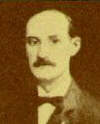
Born 4 Nov 1841; died 3 Aug 1888 at age 46.
Benjamin Franklin Goodrich was an American industrialist who founded the B.F. Goodrich Rubber Co. in Akron, Ohio. After the Civil War, during which he served as an Army surgeon, Goodrich with J.P. Morris acquired the Hudson River Rubber Co. for $5,000.00 under a license agreement with Charles Goodyear. This company, failed, as did their next in Melrose, NY. Goodrich moved to Akron and began a partnership, the Goodrich, Tew and Co., on 31 Dec 1870 and began making such rubber products as fire hoses, industrial belts and bicycle tires on 19 Feb 1871. Following its reorganization (1874), the B.F. Goodrich Company was incorporated in 1880.
Benjamin Franklin Goodrich was an American industrialist who founded the B.F. Goodrich Rubber Co. in Akron, Ohio. After the Civil War, during which he served as an Army surgeon, Goodrich with J.P. Morris acquired the Hudson River Rubber Co. for $5,000.00 under a license agreement with Charles Goodyear. This company, failed, as did their next in Melrose, NY. Goodrich moved to Akron and began a partnership, the Goodrich, Tew and Co., on 31 Dec 1870 and began making such rubber products as fire hoses, industrial belts and bicycle tires on 19 Feb 1871. Following its reorganization (1874), the B.F. Goodrich Company was incorporated in 1880.
B. F. Goodrich: Tradition and Transformation, 1870-1995, by Mansel G. Blackford and K. Austin Kerr. - book suggestion.
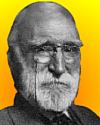
Born 4 Nov 1837; died 25 Jun 1918 at age 80.
Canadian-American metallurgist, mining engineer and philanthropist who developed the copper mining industry in the U.S. Southwest. He was co-inventor of the Hunt-Douglas process for copper extraction, which brought him to the attention of the Phelps-Dodge Corp. In 1881, he examined copper ore deposits in Arizona for the company which then from 1885 operated the Copper Queen Mine, at Bisbee, Arizona. Under Douglas, it became one of the top copper producing mines in the U.S. He grew wealthy, and became the president of Phelps-Dodge 1908-18. The company built the El Paso and Southwestern Railroad (from 1887) to transport its ore. He founded a huge smelting centre at the town of Douglas, Ariz., named for him.«
Canadian-American metallurgist, mining engineer and philanthropist who developed the copper mining industry in the U.S. Southwest. He was co-inventor of the Hunt-Douglas process for copper extraction, which brought him to the attention of the Phelps-Dodge Corp. In 1881, he examined copper ore deposits in Arizona for the company which then from 1885 operated the Copper Queen Mine, at Bisbee, Arizona. Under Douglas, it became one of the top copper producing mines in the U.S. He grew wealthy, and became the president of Phelps-Dodge 1908-18. The company built the El Paso and Southwestern Railroad (from 1887) to transport its ore. He founded a huge smelting centre at the town of Douglas, Ariz., named for him.«
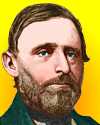
Born 4 Nov 1806; died 28 Sep 1879 at age 72.
German analytical chemist and geologist who invented or improved a number of titration procedures. His book (1855) on the subject was the first to broadly cover the new field of analytical chemistry, and was well received. It was translated, and had eight editions. His name remains associated with the Mohr pinchcock burrette.[Name also spelled Carl.] more
German analytical chemist and geologist who invented or improved a number of titration procedures. His book (1855) on the subject was the first to broadly cover the new field of analytical chemistry, and was well received. It was translated, and had eight editions. His name remains associated with the Mohr pinchcock burrette.[Name also spelled Carl.] more

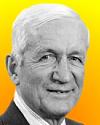
Died 4 Nov 2011 at age 96 (born 27 Aug 1915). quotes
Norman Foster Ramsey was an American physicist who shared (with Wolfgang Paul and Hans Georg Dehmelt) the 1989 Nobel Prize for Physics in 1989 for “for the invention of the separated oscillatory fields method and its use in the hydrogen maser and other atomic clocks.” His work produced a more precise way to observe the transitions within an atom switching from one specific energy level to another. In the cesium atomic clock, his method enables observing the transitions between two very closely spaced levels (hyperfine levels). The accuracy of such a clock is about one part in ten thousand billion. In 1967, one second was defined as the time during which the cesium atom makes exactly 9,192,631,770 oscillations.«
Norman Foster Ramsey was an American physicist who shared (with Wolfgang Paul and Hans Georg Dehmelt) the 1989 Nobel Prize for Physics in 1989 for “for the invention of the separated oscillatory fields method and its use in the hydrogen maser and other atomic clocks.” His work produced a more precise way to observe the transitions within an atom switching from one specific energy level to another. In the cesium atomic clock, his method enables observing the transitions between two very closely spaced levels (hyperfine levels). The accuracy of such a clock is about one part in ten thousand billion. In 1967, one second was defined as the time during which the cesium atom makes exactly 9,192,631,770 oscillations.«
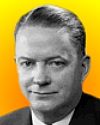
Died 4 Nov 1989 at age 88 (born 9 Apr 1901).
American physician who founded the science of rehabilitation medicine (also known as physiatry or physical therapy), which he established through efforts to rehabilitate wounded soldiers during and after WW II. He established the Rehabilitation Services in the Air Force for the casualties returning from combat. The program operated in 215 hospitals and 12 rehabilitation centers.Now this specialized medical service is aimed at rehabilitating persons disabled by such diverse problems as fractures, burns, tuberculosis, painful backs, strokes, nerve and spinal cord injuries, diabetes, birth defects, arthritis, and vision and speech impairments. He wrote a weekly column for the New York Times (1945-70).
American physician who founded the science of rehabilitation medicine (also known as physiatry or physical therapy), which he established through efforts to rehabilitate wounded soldiers during and after WW II. He established the Rehabilitation Services in the Air Force for the casualties returning from combat. The program operated in 215 hospitals and 12 rehabilitation centers.Now this specialized medical service is aimed at rehabilitating persons disabled by such diverse problems as fractures, burns, tuberculosis, painful backs, strokes, nerve and spinal cord injuries, diabetes, birth defects, arthritis, and vision and speech impairments. He wrote a weekly column for the New York Times (1945-70).
A World to Care For: The Autobiography of Howard A. Rusk, M.D., by Howard A. Rusk. - book suggestion.
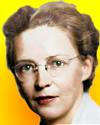
Died 4 Nov 1980 at age 75 (born 27 Mar 1905).
Elizabeth Muriel Gregory MacGill was a Canadian aeronautical engineer who was the world’s first female aeronautical engineer, as well as the first female engineer to practice in Canada (Master’s degree in aeronautical engineering, 1929). From her early career she was involved in design, construction and testing of aircraft. By 1938, MacGill became chief aeronautical engineer of Canadian Car & Foundry (Can Car). During World War II, she oversaw Can Car’s production of 1,450 Hawker Hurricane aircraft. Hawker Hurricanes were one of the main fighters flown by Canadian and Allied airmen in the Battle of Britain. Postwar, MacGill founded her own successful consulting engineering company. She also became known as a prominent Canadian feminist.«
Elizabeth Muriel Gregory MacGill was a Canadian aeronautical engineer who was the world’s first female aeronautical engineer, as well as the first female engineer to practice in Canada (Master’s degree in aeronautical engineering, 1929). From her early career she was involved in design, construction and testing of aircraft. By 1938, MacGill became chief aeronautical engineer of Canadian Car & Foundry (Can Car). During World War II, she oversaw Can Car’s production of 1,450 Hawker Hurricane aircraft. Hawker Hurricanes were one of the main fighters flown by Canadian and Allied airmen in the Battle of Britain. Postwar, MacGill founded her own successful consulting engineering company. She also became known as a prominent Canadian feminist.«
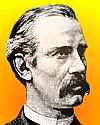
Died 4 Nov 1921 at age 78 (born 9 Sep 1843).
Swedish archaeologist who sought to establish foundations for prehistoric chronology, especially that of the Bronze Age in the British Isles and Europe northward to Scandinavia. He developed a relative chronological dating method, known as Swedish seriation. During the early ages of archaeology, accurate records were sometimes kept, sometimes not. His technique dated artifacts based on geography and comparisons from artifacts within a certain geographical area. Montelius' method looked at individual artifacts and placed them using contemporary written records on a timeline specific to the location. Based on the absolute date of that artifact, other artifacts of that geographical region are compared and dated.
Swedish archaeologist who sought to establish foundations for prehistoric chronology, especially that of the Bronze Age in the British Isles and Europe northward to Scandinavia. He developed a relative chronological dating method, known as Swedish seriation. During the early ages of archaeology, accurate records were sometimes kept, sometimes not. His technique dated artifacts based on geography and comparisons from artifacts within a certain geographical area. Montelius' method looked at individual artifacts and placed them using contemporary written records on a timeline specific to the location. Based on the absolute date of that artifact, other artifacts of that geographical region are compared and dated.

Died 4 Nov 1917 at age 45 (born 1 Jul 1872).
English electrical engineer who invented the sensitive moving coil oscillograph able to photographically record a light spot tracing the oscillations of an electrical voltage, and other electrical instruments. He devised what may be regarded as the first electric musical instrument, the Singing Arc (1899), based on the sounds emitted by an electric carbon arc lamp when its supply voltage was varied. It was an outcome of his investigation to solve the problem of the undesirable humming or whining noises generated by carbon arc street lighting. This research discovered an associated principle of negative resistance. The audio frequencies were generated by switching suitable resonant circuits to the arc. Duddell died aged only 45 years old.« more
English electrical engineer who invented the sensitive moving coil oscillograph able to photographically record a light spot tracing the oscillations of an electrical voltage, and other electrical instruments. He devised what may be regarded as the first electric musical instrument, the Singing Arc (1899), based on the sounds emitted by an electric carbon arc lamp when its supply voltage was varied. It was an outcome of his investigation to solve the problem of the undesirable humming or whining noises generated by carbon arc street lighting. This research discovered an associated principle of negative resistance. The audio frequencies were generated by switching suitable resonant circuits to the arc. Duddell died aged only 45 years old.« more
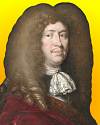

Danish physician, mathematician and physicist (Latin Bartholinus) who discovered the optical phenomenon of double refraction. In 1669, Bartholin observed that images seen through Icelandic feldspar (calcite) were doubled and that, when the crystal was rotated, one image remained stationary while the other rotated with the crystal. Such behaviour of light could not be explained using Isaac Newton's optical theories of the time. Subsequently, this was explained as the effect of the polarisation of the light. Bartholin wrote a large number of mathematical works, and made astronomical observations, including the comets of 1665. He is also famed for his medical work, in particular his introduction of quinine in the fight against malaria.[Image right: calcite crystal on pencil showing double refraction.]

In 2007, Daylight Saving Time in the U.S. ended at 2 am, the duration of DST during the year having been extended by Congress under The Energy Policy Act of 2005 to run from the second Sunday in March 2007. Since 1986, U.S. DST had applied from 2 a.m. on the first Sunday in April to the last Sunday of October (with some differences under state laws). Effective in 2007, DST was set to begin on the second Sunday of March and end the first Sunday of November. In the European Union, Summer Time began as before with all time zones changing at 1:00 am Universal Time (Greenwich Mean Time) on the last Sunday in March and ended at the same time on the last Sunday in October.«
Seize the Daylight: The Curious and Contentious Story of Daylight Savings Time, by David Prerau. - book suggestion.

In 1946, the United Nations Educational, Scientific and Cultural Organisation (UNESCO) Constitution became effective. The UNESCO charter was signed by 37 states in London on 16 Nov 1945. The Preamble of its Constitution declares: "Since wars begin in the minds of men it is in the minds of men that the defences of peace must be constructed." It currently has 188 Member States and 5 Associate Members. Its main objective is to contribute to peace and security in the world by promoting collaboration among nations through education, science, culture and communication. UNESCO provides for the advancement, transfer, and sharing of knowledge: relying primarily on research, training and teaching activities. It has headquarters in Paris, France.
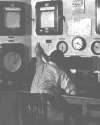
In 1943, the X-10 nuclear reactor at the Oak Ridge National Laboratory went "critical" with a self-sustaining fission reaction - the world's second reactor to achieve one. The reactor took just nine urgent months to build. Over the next year, the reactor performed flawlessly, irradiating thousands of fuel slugs, which were disassembled and dissolved so the plutonium could be extracted, bit by precious bit. It was an experimental reactor far larger and more advanced than Fermi's Chicago pile: a graphite cube 24 feet on each side, with seven-foot-thick concrete walls for radiation shielding. By the end of 1944, the reactor's most urgent mission had been completed and its focus shifted to radioisotope production for medicine and research.[Image: X-10 control console]

1939 V-12 Coupe
In 1939, the first air-conditioned automobile was exhibited by its manufacturer, Packard Motor Co. of Detroit Michigan. The public exhibition at the 40th Automobile Show in Chicago, Illinois ran between 4-12 Nov. Air in the car was cooled, dehumidified, filtered and circulated. Heat was provided for use in the winter. The refrigerating coils were located behind the rear seat in an air duct, with heating coils in another compartment of the same duct. The capacity of the unit was equivalent to 1.5 tons of ice in 24 hours when the car was driven at 60 mph. Cadillac followed in 1941. The huge evaporator left little room for luggage in the trunk, and the only way to shut it off was to stop, raise the hood, and remove the compressor belt. Cadillac followed in 1941.
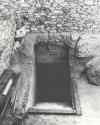
In 1922, the entrance to King Tutankhamen's tomb was discovered in Egypt in the Valley of the Kings where the English archaeologist Howard Carter had been making extended excavations. One of Carter's labourers stumbled upon a stone step, the first step in a sunken stairway that ran down into the rock. Later in the month, Carter opened the virtually intact tomb of the largely unknown child-king Tutankhamen, who became pharaoh at age 9 and died at 19. Carter's association with Egyptology began in 1891, as a commercial artist hired by Egyptologist Percy Newberry to finish a series of drawings of reliefs. In 1907, Lord Carnarvon, a wealthy English aristocrat with a passion for archaeology, hired Carter and financed their various excavations.

In 1879, African-American Thomas Elkins patented a refrigerating apparatus (No. 221,222) designed for chilling or cooling food, or even, according to the patent, human corpses. A porous chilling box enveloped in fabric rests on a grated floor through which a circulation of air aids the evaporation of water supplied from a trough to the fabric. As the water evaporates, latent heat is withdrawn from the chilling box. He also held patents for a table (a dining and ironing table combined with a quilting frame, 20 Feb 1870, No. 100,020) and a commode (9 Jan 1872, No. 122,518).
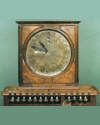
In 1879, James Jacob Ritty (1837-1918) with help from his brother John invented the first cash register, intended to combat stealing by bartenders in the Pony House Restaurant, his Dayton, Ohio saloon. His idea came on a cruise, when he saw a device that counted the revolutions of the ship's propeller. Their first model looked like a clock, but instead of the hands indicating hours and minutes, they indicated dollars and cents. Behind the dial two adding discs accumulated the total of the amounts recorded. Known as "the incorruptible cashier," with no cash drawer, it would show anyone within sight how much had been recorded. However, the Ritty brothers failed to sell their cash registers in large quantities - largely because shop staff distrusted this "thief trap".[Image: Model of the Ritty brothers' first cash register]
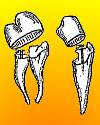
In 1873, the first U.S. patent for a gold crown was issued: to Dr. John B. Beers of San Francisco, California on "artificial crowns for teeth" (No. 144,182). His technique was to prepare a hollow metal crown which would be slipped over the projecting portion of the old tooth and secured to it so that it would continue to function for chewing as before, while also preventing further decay. A gold screw was mounted in the old tooth, the hollow crown slipped over it and cemented with oxychloride of zinc. This replaced the old method of restoring decayed or broken teeth by condensing gold upon it with a hammer until it had taken the desired shape - which difficult process was costly, tedious, and frequently resulted in inflammation from the hammering on the jaw.

In 1873, the first U.S. patent was issued for a meat-slicing machine to Anthony Iske of Lancaster, Pennsylvania (No. 144,206). It used an oblique knife in a vertical sliding frame for slicing dried beef.
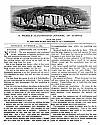
In 1869, the first issue was published of the journal Nature, editted by astronomer Sir Norman Lockyer. The first issue included articles on astronomy, plants, moths, science teaching in schools, an obituary for Thomas Graham, paleontology and meeting notices. Nature remains one of the most popular and well respected science journals in the world, printing research articles from across a wide range of scientific fields.«
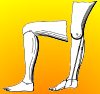
In 1846, the first U.S. patent for an artificial leg was granted to Benjamin F. Palmer of Meredith, New Hampshire (No. 4,834). The leg had a pliable joint that worked noiselessly and preserved its contour in all positions. It presented no openings in the exterior of the legs about the joints and contained tendons of gut and springs arranged in such a manner as to give more elasticity, stength, durability and freedom of motion than previously available. Artificial legs had been used previously: in 1837 one was exhibited by Howland & Co of Brookfield, Mass., at the Massachusetts Charitable Mechanics Association.
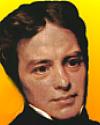
In 1845, Michael Faraday, working in his laboratory at the Royal Institution, hung a piece of heavy glass between the poles of an electro-magnet and observed that the glass aligned itself across the lines of force of the magnet. He further experimented on many other substances, with similar results, a phenomena that he named diamagnetism. These investigations showed Faraday that magnetism was inherent within matter. This led to his lecture “Thoughts on Ray-vibrations” in April 1846, which he expanded in the following years into his field theory of electro-magnetism. This was the progenitor for mathematical descriptions formed by Thomson, and especially for the seminal work of James Clerk Maxwell.«
The Electric Life Of Michael Faraday, by Alan W. Hirshfeld. - book suggestion.




