
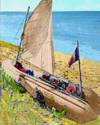
l'Hérétique boat
French biologist and physician who made a single-handed voyage across the Atlantic Ocean in a small boat to test his theory that a shipwrecked person could survive without provisions. He was age 27 when he left the Canary Islands on 19 Oct 1952 with almost no provisions and only a sextant for navigation. He ate raw fish he speared with a home-made harpoon and netted surface plankton. He drank seawater, limited to occasional sips. His Zodiac inflatable boat, l’Hérétique, was just 4.5 m (15-ft) long and fitted with a sail. Bombard reached Barbados 65 days later on 23 Dec 1952, having lost about 25-kg (55-lb) in weight.«
The Voyage of the Heretique, by Alain Bombard. - book suggestion.
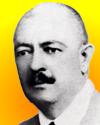
Born 27 Oct 1878; died 27 Oct 1945 at age 67.
Bulgarian physician and microbiologist who discovered Lactobacillus bulgaricus in 1905, the rod-shaped microorganism that causes fermentation of yogurt. This is one of now several known bacteria which, by a fermentation process, convert the lactose sugar in milk into lactic acid. The process produces yogurt’s thickened texture with a tart and sour flavor. He published an important paper (1906) about the first use of penicillin fungi to fight tuberculosis. In Le Press Medical, he described his trials of vaccine with rabbits. During World War I, he observed that soldiers that had been eating moldy bread did not contract cholera. This indicated another use for a penicillin vaccine, which saved hundreds of soldiers’ lives.«
Bulgarian physician and microbiologist who discovered Lactobacillus bulgaricus in 1905, the rod-shaped microorganism that causes fermentation of yogurt. This is one of now several known bacteria which, by a fermentation process, convert the lactose sugar in milk into lactic acid. The process produces yogurt’s thickened texture with a tart and sour flavor. He published an important paper (1906) about the first use of penicillin fungi to fight tuberculosis. In Le Press Medical, he described his trials of vaccine with rabbits. During World War I, he observed that soldiers that had been eating moldy bread did not contract cholera. This indicated another use for a penicillin vaccine, which saved hundreds of soldiers’ lives.«
Milk! A 10,000-Year Food Fracas, by Mark Kurlansky. - book suggestion.
(EB)
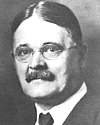
Born 27 Oct 1870; died 1 Jul 1964 at age 93.
American jurist and chief advocate of “sociological jurisprudence” who was first active as a botanist and educator. He followed his B.A. in botany with studies in law. Meanwhile, he served as director of the Nebraska state botanical survey (1892-1903), during which time he discovered a rare fungus, subsequently named Roscopoundia. Having been admitted to the Nebraska bar, Pound turned to the practice of law, and eventually became a leader in the reform of court administration in the United States.
American jurist and chief advocate of “sociological jurisprudence” who was first active as a botanist and educator. He followed his B.A. in botany with studies in law. Meanwhile, he served as director of the Nebraska state botanical survey (1892-1903), during which time he discovered a rare fungus, subsequently named Roscopoundia. Having been admitted to the Nebraska bar, Pound turned to the practice of law, and eventually became a leader in the reform of court administration in the United States.
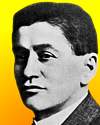
Born 27 Oct 1864; died 14 Mar 1924 at age 59.
John M. “Jack” Mack was an American inventor and manufacturer who co-founded the Mack Brothers Company (1902), which became Mack Trucks Inc. (1922), manufacturers of tough heavy-duty trucks. In 1890, he began working for a business making carriages and wagons in New York City, which he subsequently bought (1893) and ran with his brothers. By 1900, the Mack brothers produced their first successful large vehicle, a 40-hp 20-passenger sight-seeing bus, called the Manhattan. They built more buses, and by 1905, they expanded into making trucks, with about 100 workers. In 1910, Mack produced the first motorized hook-and-ladder fire truck. John invented the Mack “Bulldog” type engine. The bulldog remains the present company's icon and part of its logo. He left the company in 1912 to start another manufacturing business. He died in a car accident.« more
John M. “Jack” Mack was an American inventor and manufacturer who co-founded the Mack Brothers Company (1902), which became Mack Trucks Inc. (1922), manufacturers of tough heavy-duty trucks. In 1890, he began working for a business making carriages and wagons in New York City, which he subsequently bought (1893) and ran with his brothers. By 1900, the Mack brothers produced their first successful large vehicle, a 40-hp 20-passenger sight-seeing bus, called the Manhattan. They built more buses, and by 1905, they expanded into making trucks, with about 100 workers. In 1910, Mack produced the first motorized hook-and-ladder fire truck. John invented the Mack “Bulldog” type engine. The bulldog remains the present company's icon and part of its logo. He left the company in 1912 to start another manufacturing business. He died in a car accident.« more
History of Mack Trucks, by Tom Brownell. - book suggestion.
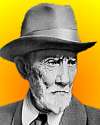
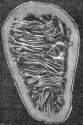
Russian horticulturist, of little education, who crossbred over 300 new types of fruit trees and berries, some able to survive the winters of Central Russia, and was praised by Soviet officials. His theory of hybridization held the fanciful the idea that acquired characteristics were inheritable. His private orchard at Koslov, became a state institution, and in 1932 the city known as Kozlov for four centuries became Michurinsk. When Mendelian genetics came under attack in the Soviet Union, Michurin's controversial theory became state doctrine. It was elaborated by Trofim D. Lysenko, a Bolshevik bureaucrat, as a uniquely communist approach to agriculture, despite the nearly universal rejection of this doctrine by the world's scientists.«[Image right: noodle squash crossbred by Michurin from bush squash and an early-ripening melon.]
Born 27 Oct 1827; died 3 Apr 1897 at age 69.
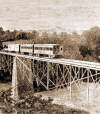
German-born American railroad engineer and executive who was the first to investigate the economics of railroad operation on a systematic basis. He was also inventor of the Fink truss, used to support the roofs of buildings and for bridges. Instead of being supported with an arch or cables, a truss bridge is held up with a latticework of rods that reinforce its stiffness, as shown (left) on the Louisville-Nashville Railroad Bridge constructed in 1857-1859 to span the Green River, Ky. (until destroyed in October 1861 during the Civil war.) His truss, patented in 1850, was one of the first intended to be built from iron instead of wood. He was involved in the construction of roundhouses for locomotives, and a courthouse in Louisville, Ky.
German-born American railroad engineer and executive who was the first to investigate the economics of railroad operation on a systematic basis. He was also inventor of the Fink truss, used to support the roofs of buildings and for bridges. Instead of being supported with an arch or cables, a truss bridge is held up with a latticework of rods that reinforce its stiffness, as shown (left) on the Louisville-Nashville Railroad Bridge constructed in 1857-1859 to span the Green River, Ky. (until destroyed in October 1861 during the Civil war.) His truss, patented in 1850, was one of the first intended to be built from iron instead of wood. He was involved in the construction of roundhouses for locomotives, and a courthouse in Louisville, Ky.
Born 27 Oct 1827; died 18 Mar 1907 at age 79. quotes
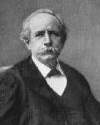
Pierre-Eugène-Marcellin Berthelot was a French chemist and science historian and government official whose creative thought and work significantly influenced the development of chemistry in the late 19th century. He helped to found the study of thermochemistry, introduced a standard method for determining the latent heat of steam, measured hundreds of heats of reactions and coined the words exothermic and endothermic. Berthelot systematically synthesized organic compounds, including some not found in nature. His syntheses of many fundamental organic compounds helped to destroy the classical division between organic and inorganic compounds.
Pierre-Eugène-Marcellin Berthelot was a French chemist and science historian and government official whose creative thought and work significantly influenced the development of chemistry in the late 19th century. He helped to found the study of thermochemistry, introduced a standard method for determining the latent heat of steam, measured hundreds of heats of reactions and coined the words exothermic and endothermic. Berthelot systematically synthesized organic compounds, including some not found in nature. His syntheses of many fundamental organic compounds helped to destroy the classical division between organic and inorganic compounds.
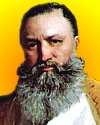
Born 27 Oct 1811; died 23 Jul 1875 at age 63.
American inventor of a practical sewing machine. While an actor, he invented an excavator (1839) and a wood carver (1849) before he turned itinerant mechanic and improved the sewing machine. His first sewing machine patent, issued 12 Aug 1851 (U.S. No. 8294), had a rocking treadle design, continuous feed, and a straight, vertical needle like modern machines. He settled with Elias Howe for infringement of his prior (1846) sewing machine patent. The company Singer then founded (1856) was, within the decade, the world's largest sewing machine manufacturer. His biggest invention was a new way of marketing to consumers. He spent lavishly on advertising, pioneered affordable purchase by installment credit, and provided after-sale service. In 1863, he retired, with 12 more patents on his machines.«
American inventor of a practical sewing machine. While an actor, he invented an excavator (1839) and a wood carver (1849) before he turned itinerant mechanic and improved the sewing machine. His first sewing machine patent, issued 12 Aug 1851 (U.S. No. 8294), had a rocking treadle design, continuous feed, and a straight, vertical needle like modern machines. He settled with Elias Howe for infringement of his prior (1846) sewing machine patent. The company Singer then founded (1856) was, within the decade, the world's largest sewing machine manufacturer. His biggest invention was a new way of marketing to consumers. He spent lavishly on advertising, pioneered affordable purchase by installment credit, and provided after-sale service. In 1863, he retired, with 12 more patents on his machines.«
Singer and the Sewing Machine: A Capitalist Romance, by Ruth Brandon. - book suggestion.
Born 27 Oct 1806; died 4 Apr 1893 at age 86.
Alphonse-Louis-Pierre Pyrame de Candolle was a Swiss botanist who began new methods of investigation and analysis in phytogeography (the geographic distribution of plants). His father, Augustin Pyrame de Candolle had developed a general scheme of plant classification, for which he coined the word taxonomy (1813). This was to dominate plant classification for 50 years. Augustin used his scheme in a major series of volumes on botany. Alphonse de Candolle, completed this series, and is mainly responsible for continuing the great work Prodromus Systematis Naturalis regni vegetablis, published over a number of years, following the original lines laid down by his father. His own Origin of Cultivated Plants was published in 1882.«[Enc. Brit. gives birth date as 27/28 Oct 1806. Dict. of Sci. Biog. gives 17 Oct 1806.]
Alphonse-Louis-Pierre Pyrame de Candolle was a Swiss botanist who began new methods of investigation and analysis in phytogeography (the geographic distribution of plants). His father, Augustin Pyrame de Candolle had developed a general scheme of plant classification, for which he coined the word taxonomy (1813). This was to dominate plant classification for 50 years. Augustin used his scheme in a major series of volumes on botany. Alphonse de Candolle, completed this series, and is mainly responsible for continuing the great work Prodromus Systematis Naturalis regni vegetablis, published over a number of years, following the original lines laid down by his father. His own Origin of Cultivated Plants was published in 1882.«[Enc. Brit. gives birth date as 27/28 Oct 1806. Dict. of Sci. Biog. gives 17 Oct 1806.]
Origin Of Cultivated Plants, by Alphonse De Candolle. - book suggestion.
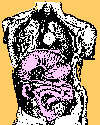
Born 27 Oct 1797; died 9 Aug 1847 at age 49.
Scottish physiologist who was the younger brother of George Combe (1788-1858) who was the author of some of the most popular works on phrenology. Andrew published The Principles of Physiology describing the “structure and functions of the skin, muscles, bones, lungs, and nervous system, the laws or conditions of their healthy action, and the unsuspected origin of many of their diseases.” He continued with The Principles of Digestion, “considered with relation to the principles of dietetics.”
Scottish physiologist who was the younger brother of George Combe (1788-1858) who was the author of some of the most popular works on phrenology. Andrew published The Principles of Physiology describing the “structure and functions of the skin, muscles, bones, lungs, and nervous system, the laws or conditions of their healthy action, and the unsuspected origin of many of their diseases.” He continued with The Principles of Digestion, “considered with relation to the principles of dietetics.”
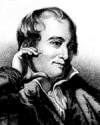
Born 27 Oct 1763; died 23 Mar 1840 at age 76. quotes
Scottish-American, born to wealth in Ayr, Scotland, William Maclure moved to the U.S. in 1778. He was an educational reformer and a geologist who is known for his geological map - the first true geological map of any part of North America and one of the earliest such maps compiled. Before 1800, he had owned businesses in the new country, traveled extensively in Europe, and joined the American Philosophical Society. Through a number of years, Maclure traveled and resided in France, Italy, Paris, Switzerland, and Spain. When Benjamin Silliman organized the American Geological Society in 1819, Maclure was elected president.
Scottish-American, born to wealth in Ayr, Scotland, William Maclure moved to the U.S. in 1778. He was an educational reformer and a geologist who is known for his geological map - the first true geological map of any part of North America and one of the earliest such maps compiled. Before 1800, he had owned businesses in the new country, traveled extensively in Europe, and joined the American Philosophical Society. Through a number of years, Maclure traveled and resided in France, Italy, Paris, Switzerland, and Spain. When Benjamin Silliman organized the American Geological Society in 1819, Maclure was elected president.
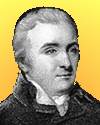
Born 27 Oct 1761; died 23 Sep 1823 at age 61. quotes
Scottish pathologist whose Morbid Anatomy of Some of the Most Important Parts of the Human Body (1793) was the first publication in English on pathology as a separate subject and the first systematic study of pathology ever made. It established morbid anatomy as an independent science. Baillie gave the first clinical descriptions of gastric ulcer and chronic obstructive pulmonary emphysema and presented one of the clearest descriptions ever written on the pulmonary lesions of tuberculosis. The first American edition was published in Albany in 1795.
Scottish pathologist whose Morbid Anatomy of Some of the Most Important Parts of the Human Body (1793) was the first publication in English on pathology as a separate subject and the first systematic study of pathology ever made. It established morbid anatomy as an independent science. Baillie gave the first clinical descriptions of gastric ulcer and chronic obstructive pulmonary emphysema and presented one of the clearest descriptions ever written on the pulmonary lesions of tuberculosis. The first American edition was published in Albany in 1795.
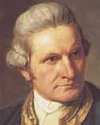
Born 27 Oct 1728; died 14 Feb 1779 at age 50. quotes
English seaman who was the first of the really scientific navigators. Captain Cook spent several years surveying the coasts of Labrador and Newfoundland. He observed a solar eclipse on 5 Aug 1766 near Cape Ray, Newfoundland. On the first of three expeditions into the Pacific (1768) he took Joseph Banks as the ship's botanist to study the flora and fauna discovered. (This practice of carrying a naturalist took place some 75 years before Charles Darwin's famous voyage.) Cook observed the transit of Venus on this voyage from the island of Tahiti on 3 Jun 1769. This would help scientists plot the distance between the sun to the earth. His geographical discoveries made him the most famous navigator since Magellan. He was killed by cannibal natives in Hawaii.
English seaman who was the first of the really scientific navigators. Captain Cook spent several years surveying the coasts of Labrador and Newfoundland. He observed a solar eclipse on 5 Aug 1766 near Cape Ray, Newfoundland. On the first of three expeditions into the Pacific (1768) he took Joseph Banks as the ship's botanist to study the flora and fauna discovered. (This practice of carrying a naturalist took place some 75 years before Charles Darwin's famous voyage.) Cook observed the transit of Venus on this voyage from the island of Tahiti on 3 Jun 1769. This would help scientists plot the distance between the sun to the earth. His geographical discoveries made him the most famous navigator since Magellan. He was killed by cannibal natives in Hawaii.

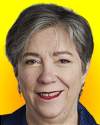
Died 27 Oct 2016 at age 67 (born 5 Jun 1949). quotes
Susan Lee Lindquist was an American molecular biologist who pioneered with her studies of protein folding. She showed that alternate structural shapes of protein molecules could result in substantially different effects. She demonstrated instances in fields as diverse as human diseases, evolution and synthetic biomaterials designed to interact with biological systems. Prion protein are known as disease agents, but her work with yeast prion proteins also demonstrated a mechanism of protein-only inheritance. She extended this to interpret involvement in cellular memory and cross-kingdom communication. On 17 Nov 2010, Lindquist was awarded a National Medal of Science for her work, presented by President Obama at the White House.«
Susan Lee Lindquist was an American molecular biologist who pioneered with her studies of protein folding. She showed that alternate structural shapes of protein molecules could result in substantially different effects. She demonstrated instances in fields as diverse as human diseases, evolution and synthetic biomaterials designed to interact with biological systems. Prion protein are known as disease agents, but her work with yeast prion proteins also demonstrated a mechanism of protein-only inheritance. She extended this to interpret involvement in cellular memory and cross-kingdom communication. On 17 Nov 2010, Lindquist was awarded a National Medal of Science for her work, presented by President Obama at the White House.«
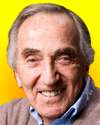
Died 27 Oct 2007 at age 80 (born 12 Jan 1927). quotes
Leslie Eleazer Orgel was an English-American evolutionary biologist and chemist whose studies of the early development of life helped form the theory of the development of DNA, and its precursor RNA. Orgel thought the idea of panspermia to be credible for investigation—that the seeds of life may have reached Earth from elsewhere in space. In 2006, he wrote in Nature that comprehending the billions of years of life on Earth was “chaotic intellectual territory”. He is known for a pair of axioms known as Orgel’s Rules. The first asserts that a primitive process is aided by the evolution of proteins that will improve its efficiency—such as enzymes. The second is that “Evolution is cleverer than you”, to mean it can take more imagination by scientists to keep up with believing what evolution can have accomplished.«
Leslie Eleazer Orgel was an English-American evolutionary biologist and chemist whose studies of the early development of life helped form the theory of the development of DNA, and its precursor RNA. Orgel thought the idea of panspermia to be credible for investigation—that the seeds of life may have reached Earth from elsewhere in space. In 2006, he wrote in Nature that comprehending the billions of years of life on Earth was “chaotic intellectual territory”. He is known for a pair of axioms known as Orgel’s Rules. The first asserts that a primitive process is aided by the evolution of proteins that will improve its efficiency—such as enzymes. The second is that “Evolution is cleverer than you”, to mean it can take more imagination by scientists to keep up with believing what evolution can have accomplished.«
The Origins of Life: Molecules and Natural Selection, by Leslie Orgel. - book suggestion.
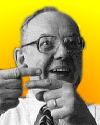
Died 27 Oct 1999 at age 72 (born 15 Apr 1927).
American physicist who shared the 1980 Rumford Premium Prize with his colleague Chen Ning Yang for their “development of a generalized gauge invariant field theory” in 1954. They proposed a tensor equation for what are now called Yang-Mills fields. Their mathematical work was aimed at understanding the strong interaction holding together nucleons in atomic nuclei. They constructed a more generalized view of electromagnetism, thus Maxwell's Equations can be derived as a special case from their tensor equation. Quantum Yang-Mills theory is now the foundation of most of elementary particle theory, and its predictions have been tested at many experimental laboratories.«
American physicist who shared the 1980 Rumford Premium Prize with his colleague Chen Ning Yang for their “development of a generalized gauge invariant field theory” in 1954. They proposed a tensor equation for what are now called Yang-Mills fields. Their mathematical work was aimed at understanding the strong interaction holding together nucleons in atomic nuclei. They constructed a more generalized view of electromagnetism, thus Maxwell's Equations can be derived as a special case from their tensor equation. Quantum Yang-Mills theory is now the foundation of most of elementary particle theory, and its predictions have been tested at many experimental laboratories.«
50 Years Of Yang-Mills Theory, by Gerardus 't Hooft. - book suggestion.
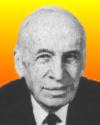
Died 27 Oct 1980 at age 81 (born 13 Mar 1899). quotes
John Hasbrouck Van Vleck was an American physicist and mathematician, a pioneer in the modern quantum mechanical theory of magnetism, who shared the 1977 Nobel Prize for Physics (with Philip W. Anderson and Sir Nevill F. Mott) for his work on the behaviour of electrons in magnetic, noncrystalline solid materials. He introduced (c.1930) the contribution of the 2nd-order Zeeman effect to the theory of paramagnetic susceptibility for ions of samarium and europium, so calculations agreed with experimental results. Van Vleck extended (c.1929) Hans Bethe's theoretical work to develop the ligand, or crystal, field theory of molecular bonding. He also studied the theory for the nature of the chemical bond, especially as related to its magnetic properties, and contributed to theory of the spectra of free molecules.«[An earlier incorrect entry for death on 28 Nov 1980 was deleted from this site on 28 Nov 2025.]
John Hasbrouck Van Vleck was an American physicist and mathematician, a pioneer in the modern quantum mechanical theory of magnetism, who shared the 1977 Nobel Prize for Physics (with Philip W. Anderson and Sir Nevill F. Mott) for his work on the behaviour of electrons in magnetic, noncrystalline solid materials. He introduced (c.1930) the contribution of the 2nd-order Zeeman effect to the theory of paramagnetic susceptibility for ions of samarium and europium, so calculations agreed with experimental results. Van Vleck extended (c.1929) Hans Bethe's theoretical work to develop the ligand, or crystal, field theory of molecular bonding. He also studied the theory for the nature of the chemical bond, especially as related to its magnetic properties, and contributed to theory of the spectra of free molecules.«[An earlier incorrect entry for death on 28 Nov 1980 was deleted from this site on 28 Nov 2025.]
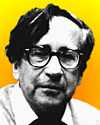
Died 27 Oct 1980 at age 62 (born 8 Jun 1918). quotes
Bernd Theodore Matthias was a German-American physicist who was a researcher in superconductivity, and discovered nearly 1,000 superconducting materials. He completed his education up to a Ph.D. degree (1943) in Germany, and immigrated to the U.S. (1947) working at M.I.T., then Bell Labs. He began low-temperature physics at the University of Chicago (1949). By 1961, he had moved to the University of California, San Diego and founded the Institute for the Study of Matter there (1962). By finding superconductivity, ferroelectricity and ferromagnetism in many hundreds of new materials, he showed these properties to be common occurences in nature, rather than in the rare instances he knew at the beginning of his work in the field. His success in finding new examples was said to be based on his intuition of the relationships he could see in the Periodic Table.«
Bernd Theodore Matthias was a German-American physicist who was a researcher in superconductivity, and discovered nearly 1,000 superconducting materials. He completed his education up to a Ph.D. degree (1943) in Germany, and immigrated to the U.S. (1947) working at M.I.T., then Bell Labs. He began low-temperature physics at the University of Chicago (1949). By 1961, he had moved to the University of California, San Diego and founded the Institute for the Study of Matter there (1962). By finding superconductivity, ferroelectricity and ferromagnetism in many hundreds of new materials, he showed these properties to be common occurences in nature, rather than in the rare instances he knew at the beginning of his work in the field. His success in finding new examples was said to be based on his intuition of the relationships he could see in the Periodic Table.«
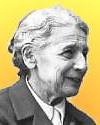
Died 27 Oct 1968 at age 89 (born 7 Nov 1878). quotes
Austrian-Swedish physicist who shared the Enrico Fermi Award (1966) with the chemists Otto Hahn and Fritz Strassmann for their joint research beginning in 1934 that led to the discovery of uranium fission. She refused to work on the atom bomb. In 1917, with Hahn, she had discovered the new radioactive element protactinium. She was the first to describe the emission of Auger electrons. In 1935, she found evidence of four other radioactive elements corresponding to atomic numbers 93-96. In 1938, she was forced to leave Nazi Germany, and went to a post in Sweden. Her other work in the field of nuclear physics includes study of beta rays, and study of the three main disintegration series. Later, she used the cyclotron as a tool.
Austrian-Swedish physicist who shared the Enrico Fermi Award (1966) with the chemists Otto Hahn and Fritz Strassmann for their joint research beginning in 1934 that led to the discovery of uranium fission. She refused to work on the atom bomb. In 1917, with Hahn, she had discovered the new radioactive element protactinium. She was the first to describe the emission of Auger electrons. In 1935, she found evidence of four other radioactive elements corresponding to atomic numbers 93-96. In 1938, she was forced to leave Nazi Germany, and went to a post in Sweden. Her other work in the field of nuclear physics includes study of beta rays, and study of the three main disintegration series. Later, she used the cyclotron as a tool.
Died 27 Oct 1945 at age 67 (born 27 Oct 1878).
Bulgarian physician and microbiologist who discovered Lactobacillus bulgaricus in 1905, the rod-shaped microorganism that causes fermentation of yogurt. This is one of now several known bacteria which, by a fermentation process, convert the lactose sugar in milk into lactic acid. The process produces yogurt’s thickened texture with a tart and sour flavor. He published an important paper (1906) about the first use of penicillin fungi to fight tuberculosis. In Le Press Medical, he described his trials of vaccine with rabbits. During World War I, he observed that soldiers that had been eating moldy bread did not contract cholera. This indicated another use for a penicillin vaccine, which saved hundreds of soldiers’ lives.«
Bulgarian physician and microbiologist who discovered Lactobacillus bulgaricus in 1905, the rod-shaped microorganism that causes fermentation of yogurt. This is one of now several known bacteria which, by a fermentation process, convert the lactose sugar in milk into lactic acid. The process produces yogurt’s thickened texture with a tart and sour flavor. He published an important paper (1906) about the first use of penicillin fungi to fight tuberculosis. In Le Press Medical, he described his trials of vaccine with rabbits. During World War I, he observed that soldiers that had been eating moldy bread did not contract cholera. This indicated another use for a penicillin vaccine, which saved hundreds of soldiers’ lives.«
Milk! A 10,000-Year Food Fracas, by Mark Kurlansky. - book suggestion.
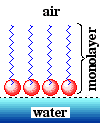
Died 27 Oct 1943 at age 83 (born 31 Mar 1860).
German physical chemist who founded capillary chemistry and whose research on liquids advanced knowledge of critical temperature (the point at which liquid and gas states of a substance are identical), osmosis, surface tension and colloids (suspensions of nanometer-sized particles). He studied liquids including gastric juice, urine, blood, and milk. He designed a viscometer to measure viscosity and a capillarimeter to measure capillary action, the rise of a liquid in a narrow tube. In 1891 he made what could be the first systematic observation of what is now commonly known as the hydrophobic effect. (A single molecular layer of a surfactant adsorbed to a planar liquid-vapour interface does so with hydrocarbon "tails" protruding.)
German physical chemist who founded capillary chemistry and whose research on liquids advanced knowledge of critical temperature (the point at which liquid and gas states of a substance are identical), osmosis, surface tension and colloids (suspensions of nanometer-sized particles). He studied liquids including gastric juice, urine, blood, and milk. He designed a viscometer to measure viscosity and a capillarimeter to measure capillary action, the rise of a liquid in a narrow tube. In 1891 he made what could be the first systematic observation of what is now commonly known as the hydrophobic effect. (A single molecular layer of a surfactant adsorbed to a planar liquid-vapour interface does so with hydrocarbon "tails" protruding.)
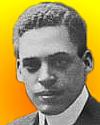
Died 27 Oct 1941 at age 58 (born 14 Aug 1883).
Black-American embryologist who pioneered understanding of cell division, researching fertilized egg cells, experimental parthenogenesis, hydration, cell division, dehydration in living cells, and the effect of ultra violet rays on egg cells. In 1915, he was awarded the first Spingarn Medal, the highest honor given by the NAACP. His research during summers 1909-30, at the Marine Biological Laboratory (MBL), Woods Hole, Mass, included thousands of experiments on marine mammal cell fertilization. Outside MBL, he experienced discrimination. Seeking more opportunities, he spent most of the 1930s in various European countries. WW II hostilities caused him to return to the U.S. in late 1940, but he died of pancreatic cancer the next year.«
Black-American embryologist who pioneered understanding of cell division, researching fertilized egg cells, experimental parthenogenesis, hydration, cell division, dehydration in living cells, and the effect of ultra violet rays on egg cells. In 1915, he was awarded the first Spingarn Medal, the highest honor given by the NAACP. His research during summers 1909-30, at the Marine Biological Laboratory (MBL), Woods Hole, Mass, included thousands of experiments on marine mammal cell fertilization. Outside MBL, he experienced discrimination. Seeking more opportunities, he spent most of the 1930s in various European countries. WW II hostilities caused him to return to the U.S. in late 1940, but he died of pancreatic cancer the next year.«
Black Apollo of Science: The Life of Ernest Everett Just, by Kenneth R. Manning. - book suggestion.
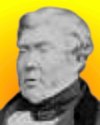
Died 27 Oct 1867 at age 69 (born 5 Aug 1798).
John Wrottesley, 2nd Baron Wrottesley, was an English astronomer, who published Catalogue Of The RA Of 1318 Stars. He was a founder member of the Royal Astronomical Society. From his first Observatory in Blackheath, London, he recorded over 12,000 observations. After he inherited the title and the Staffordshire family estate at Wrottesley in 1841, he built an observatory there. In 1855, the city of Wolverhampton nearby decreed that if any ... furnace chimney ...was built ... within three miles of the observatory, it shall be constructed on the best and approved principles “for consuming the smoke arising ... therefrom.” This of course was so that observations from the observatory would not be hampered by smoke pollution.
John Wrottesley, 2nd Baron Wrottesley, was an English astronomer, who published Catalogue Of The RA Of 1318 Stars. He was a founder member of the Royal Astronomical Society. From his first Observatory in Blackheath, London, he recorded over 12,000 observations. After he inherited the title and the Staffordshire family estate at Wrottesley in 1841, he built an observatory there. In 1855, the city of Wolverhampton nearby decreed that if any ... furnace chimney ...was built ... within three miles of the observatory, it shall be constructed on the best and approved principles “for consuming the smoke arising ... therefrom.” This of course was so that observations from the observatory would not be hampered by smoke pollution.
Died 27 Oct 1845 at age 60 (born 22 Feb 1785).
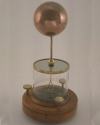
French physicist who discovered the Peltier effect (1834), that at the junction of two dissimilar metals an electric current will produce heat or cold, depending on the direction of current flow. In 1812, Peltier received an inheritance sufficient to retire from clockmaking and pursue a diverse interest in phrenology, anatomy, microscopy and meteorology. Peltier made a thermoelectric thermoscope to measure temperature distribution along a series of thermocouple circuits, from which he discovered the Peltier effect. Lenz succeeded in freezing water by this method. Its importance was not fully recognized until the later thermodynamic work of Kelvin. The effect is now used in devices for measuring temperature and non-compressor cooling units.«[Image: Peltier's atmospheric electricity gauge.]
French physicist who discovered the Peltier effect (1834), that at the junction of two dissimilar metals an electric current will produce heat or cold, depending on the direction of current flow. In 1812, Peltier received an inheritance sufficient to retire from clockmaking and pursue a diverse interest in phrenology, anatomy, microscopy and meteorology. Peltier made a thermoelectric thermoscope to measure temperature distribution along a series of thermocouple circuits, from which he discovered the Peltier effect. Lenz succeeded in freezing water by this method. Its importance was not fully recognized until the later thermodynamic work of Kelvin. The effect is now used in devices for measuring temperature and non-compressor cooling units.«[Image: Peltier's atmospheric electricity gauge.]
Died 27 Oct 1675 at age 73 (born 8 Aug 1602).
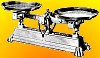
French mathematician who developed powerful methods in the early study of integration, writing Traité des indivisibles. He computed the definite integral of sin x, worked on the cycloid and computed the arc length of a spiral. Roberval is important for his discoveries on plane curves and for his method for drawing the tangent to a curve, already suggested by Torricelli. This method of drawing tangents makes Roberval the founder of kinematic geometry. In 1669 he invented the Roberval balance with an articulated parallelogram is now almost universally used for weighing scales of the balance type. He studied the vacuum and designed apparatus which was used by Pascal in his experiments and also worked in cartography
French mathematician who developed powerful methods in the early study of integration, writing Traité des indivisibles. He computed the definite integral of sin x, worked on the cycloid and computed the arc length of a spiral. Roberval is important for his discoveries on plane curves and for his method for drawing the tangent to a curve, already suggested by Torricelli. This method of drawing tangents makes Roberval the founder of kinematic geometry. In 1669 he invented the Roberval balance with an articulated parallelogram is now almost universally used for weighing scales of the balance type. He studied the vacuum and designed apparatus which was used by Pascal in his experiments and also worked in cartography
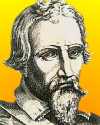
Died 27 Oct 1553 at age 42 (born 29 Sep 1511).
Spanish physician who lectured on astrology (in which he firmly believed) and defended the botanical views of his friend Leonhard Fuchs. He went to Paris in 1536 to study medicine. At a time of the Protestant Reformation, he also held radical theological views which he published in anonymously in a book (1553) in which he also described the circulation of blood through the lungs. Servetus indicated that the blood came from the heart through the pulmonary artery and back through the pulmonary vein; it did not go through the heart muscle itself. Galen’s description was still accepted, and the insight of Servetus was ignored for decades (until extended by Harvey). For his heretical theology, Servetus was burned at the stake by Calvin.
Spanish physician who lectured on astrology (in which he firmly believed) and defended the botanical views of his friend Leonhard Fuchs. He went to Paris in 1536 to study medicine. At a time of the Protestant Reformation, he also held radical theological views which he published in anonymously in a book (1553) in which he also described the circulation of blood through the lungs. Servetus indicated that the blood came from the heart through the pulmonary artery and back through the pulmonary vein; it did not go through the heart muscle itself. Galen’s description was still accepted, and the insight of Servetus was ignored for decades (until extended by Harvey). For his heretical theology, Servetus was burned at the stake by Calvin.
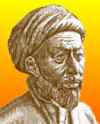
Died 27 Oct 1449 at age 55 (born 22 Mar 1394).
Mongol astronomer and mathematician who, although the only important Mongol scientist, was the greatest astronomer of his time. Pursuing this interest he built an observatory (begun in 1428) at Samarkand. In his observations he discovered a number of errors in the computations of the 2nd-century Alexandrian astronomer Ptolemy, whose figures were still being used. His star map of 994 stars was the first new one since Hipparchus. After Ulugh Beg was assassinated by his son, the observatory fell to ruins by 1500, rediscovered only in 1908. Written in Arabic, his work went unread by the world's next generation of astronomers. When his tables were translated into Latin in 1665, telescopic observations had surpassed them.
Mongol astronomer and mathematician who, although the only important Mongol scientist, was the greatest astronomer of his time. Pursuing this interest he built an observatory (begun in 1428) at Samarkand. In his observations he discovered a number of errors in the computations of the 2nd-century Alexandrian astronomer Ptolemy, whose figures were still being used. His star map of 994 stars was the first new one since Hipparchus. After Ulugh Beg was assassinated by his son, the observatory fell to ruins by 1500, rediscovered only in 1908. Written in Arabic, his work went unread by the world's next generation of astronomers. When his tables were translated into Latin in 1665, telescopic observations had surpassed them.
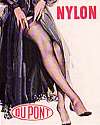
1949 Ad
In 1938, Du Pont announced a name for its new synthetic fiber yarn: “nylon.” In an address in New York City, Dr. Charles M.A. Stine, vice president of du Pont de Nemours & Co., gave this with other details of what the company chemists had called simply “Yarn 66” during its development. The name they coined, “nylon” would be a generic name for all materials defined scientifically as “synthetic fiber-forming polymeric amides having a protein-like chemical structure; derivable from coal, air and water, or other substances, and characterized by extreme toughness and strength and the peculiar ability to be formed into fibers and into various shapes, such as bristles and sheets.” Hundreds of potential uses were envisioned, including hosiery, fabrics, fishing lines, wrapping film, toothbrush bristles and more.«
Nylon and Bombs: DuPont and the March of Modern America, by Pap A. Ndiaye and Elborg Forster. - book suggestion.
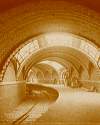
In 1904, the first underground and underwater rail system in the U.S., the New York City Subway, began operating. Even with elevated train lines springing up around the city, the need for an underground rapid transit railroad was obvious to clear street congestion and spread city development into the outlying areas. Almost 8,000 men participated in building the 21-mile (33.6 km) route, under chief engineer, William Barclay Parsons. Building the subway was a complex and dangerous task; at least 44 people died in the effort: This first rapid transit subway, the IRT (Interborough Rapid Transit), was opened in New York City by Mayor McLellan. The subway and bus fare was set at one nickel. The cars operated between the Brooklyn Bridge and 145th St at Broadway.[Image: City Hall Station platform, showing natural lighting.]

In 1891, Philip B. Downing, inventor, was awarded a U.S. patent for an improvement to the street letter (mail) box. This improvement in the covering and opening of outdoor mailboxes protected mail from both intruders and weather. It is relatively unchanged to this day. (No. 462,093)
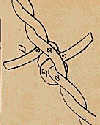
In 1873, farmer Joseph F. Glidden applied for a patent on barbed wire. The barbs were cut from sheet metal and were inserted between two wires which were twisted considerably more than with today's common design. This product would transform the West. Before this innovation, settlers on the treeless plains had no easy way to fence livestock away from cropland, and ranchers had no way to prevent their herds from roaming far and wide. Glidden's barbed wire opened the plains to large-scale farming, and closed the open range, bringing the era of the cowboy and the round-up to an end. Glidden eventually received five patents and is generally considered the inventor of barbed wire.Image: detail from patent application diagram.
Devil's Rope: A Cultural History of Barbed Wire, by Alan Krell. - book suggestion.
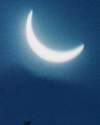
In 1780, the first U.S. astronomical expedition to record an eclipse of the sun observed the event which lasted from 11:11 am to 1:50 pm. The observers left about three weeks earlier, on 9 Oct from Harvard College, Cambridge, Mass., for Penobscot Bay, led by Samuel Williams. A boat was supplied by the Commonwealth of Massachusetts the four professors and six students. Although the U.S. was at war with Britain, the British officer in charge of Penobscot Bay permitted the expedition to land and set up equipment to observe the predicted total eclipse of the sun. The expedition was shocked to find itself outside the path of totality. They saw a thin arc of the sun instead of its complete obscuration by the moon.
more




