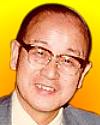
Born 23 Oct 1920; died 19 Nov 1998 at age 78.
Tetsuya Theodore Fujita was a Japanese-American meteorologist who increased the knowledge of severe storms. In 1953, he began research in the U.S. Shortly afterwards, he immigrated and established the Severe Local Storms Project. He was known as "Mr. Tornado" as a result of the Fujita scale (F-scale, Feb 1971), which he and his wife, Sumiko, developed for measuring tornadoes on the basis of their damage. Following the crash of Eastern flight 66 on 24 Jun 1975, he reviewed weather-related aircraft disasters and verified the downburst and the microburst (small downburst) phenomena, enabling airplane pilots to be trained on how to react to them. Late in his career, he turned to the study of storm tracks and El Nino.«
Tetsuya Theodore Fujita was a Japanese-American meteorologist who increased the knowledge of severe storms. In 1953, he began research in the U.S. Shortly afterwards, he immigrated and established the Severe Local Storms Project. He was known as "Mr. Tornado" as a result of the Fujita scale (F-scale, Feb 1971), which he and his wife, Sumiko, developed for measuring tornadoes on the basis of their damage. Following the crash of Eastern flight 66 on 24 Jun 1975, he reviewed weather-related aircraft disasters and verified the downburst and the microburst (small downburst) phenomena, enabling airplane pilots to be trained on how to react to them. Late in his career, he turned to the study of storm tracks and El Nino.«
The Downburst: Microburst and Macroburst, by T. Theodore Fujita. - book suggestion.
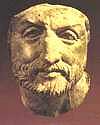
Born 23 Oct 1919; died 30 Mar 1992 at age 72.
Greek archaeologist who discovered ancient royal tombs in northern Greece, possibly belonging to the Macedonian King Philip II, the father of Alexander III the Great. In autumn 1977, an Andronicos discovered the unplundered royal tomb containing works of art of astounding richness and exquisite craftsmanship at Vergina in Macedonia. His suggestion that the tomb's occupant was probably Philip, son of Amyntas, king of the Macedonians, created understandable sensation, and aroused world-wide interest.Image: Small ivory-head, portrait of Philip II, found in the royal tomb at Vergina
Greek archaeologist who discovered ancient royal tombs in northern Greece, possibly belonging to the Macedonian King Philip II, the father of Alexander III the Great. In autumn 1977, an Andronicos discovered the unplundered royal tomb containing works of art of astounding richness and exquisite craftsmanship at Vergina in Macedonia. His suggestion that the tomb's occupant was probably Philip, son of Amyntas, king of the Macedonians, created understandable sensation, and aroused world-wide interest.Image: Small ivory-head, portrait of Philip II, found in the royal tomb at Vergina
The Acropolis, by Manolis Andronicos. - book suggestion.
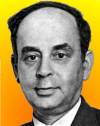
Born 23 Oct 1908; died 22 Jun 1990 at age 81.
Ilya Mikhaylovich (or Il’ja Mikhailovich) Frank was a Russian physicist who, with Igor Y. Tamm, theoretically explained the mechanism of Cherenkov radiation. In 1934, Cherenkov discovered that a peculiar blue light is emitted by charged particles traveling at very high speeds through water. Frank and Tamm provided the theoretical explanation of this effect, which occurs when the particles travel through an optically transparent medium at speeds greater than the speed of light in that medium. This discovery resulted in the development of new methods for detecting and measuring the velocity of high-speed particles and became of great importance for research in nuclear physics. For this, Frank received the Nobel Prize for Physics in 1958 (jointly with Pavel A. Cherenkov and Igor Y. Tamm).
Ilya Mikhaylovich (or Il’ja Mikhailovich) Frank was a Russian physicist who, with Igor Y. Tamm, theoretically explained the mechanism of Cherenkov radiation. In 1934, Cherenkov discovered that a peculiar blue light is emitted by charged particles traveling at very high speeds through water. Frank and Tamm provided the theoretical explanation of this effect, which occurs when the particles travel through an optically transparent medium at speeds greater than the speed of light in that medium. This discovery resulted in the development of new methods for detecting and measuring the velocity of high-speed particles and became of great importance for research in nuclear physics. For this, Frank received the Nobel Prize for Physics in 1958 (jointly with Pavel A. Cherenkov and Igor Y. Tamm).
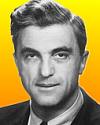
Born 23 Oct 1905; died 10 Sep 1983 at age 77. quotes
Swiss-American physicist who shared (with independent discoverer, Edward M. Purcell) the Nobel Prize for Physics in 1952 for developing the nuclear magnetic resonance (NMR) method of measuring the magnetic field of atomic nuclei. He obtained his PhD under Werner Heisenberg in 1928, then taught briefly in Germany, but as a Jew, when Hitler came to power, he left Europe for the USA. Bloch's concept of magnetic neutron polarization (1934) enabled him, in conjunction with Luiz Alvarez, to measure the neutron's magnetic moment. During WW II he worked on the atomic bomb. Thereafter, Bloch and co-workers developed NMR, now widely used technique in chemistry, biochemistry, and medicine. In 1954 he became the first director of CERN.
Swiss-American physicist who shared (with independent discoverer, Edward M. Purcell) the Nobel Prize for Physics in 1952 for developing the nuclear magnetic resonance (NMR) method of measuring the magnetic field of atomic nuclei. He obtained his PhD under Werner Heisenberg in 1928, then taught briefly in Germany, but as a Jew, when Hitler came to power, he left Europe for the USA. Bloch's concept of magnetic neutron polarization (1934) enabled him, in conjunction with Luiz Alvarez, to measure the neutron's magnetic moment. During WW II he worked on the atomic bomb. Thereafter, Bloch and co-workers developed NMR, now widely used technique in chemistry, biochemistry, and medicine. In 1954 he became the first director of CERN.
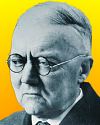
Born 23 Oct 1893; died 10 Sep 1985 at age 91.
Estonian astronomer who is best known for his studies of meteors and meteorites, and whose life work was devoted to understanding the structure and evolution of the cosmos. When Soviet occupation of Estonia was imminent, he moved to Hamburg, then to Armagh Observatory, Northern Ireland (1948-81). Among his many pioneering discoveries were: (1) the first computation of the density of a degenerate body, namely the white dwarf 40 Eri B, in 1915; (2) the first accurate determination of the distance of an extragalactic object (Andromeda Nebula) in 1922; (3) the prediction of the existence of a cloud of cometary bodies encircling the Solar System (1932), later known as the “Oort Cloud”; (4) the first composite theoretical models of dwarf stars like the Sun which showed how they evolve into giants (1938); (5) a new theory of the origin of the Ice Ages (1952).
Estonian astronomer who is best known for his studies of meteors and meteorites, and whose life work was devoted to understanding the structure and evolution of the cosmos. When Soviet occupation of Estonia was imminent, he moved to Hamburg, then to Armagh Observatory, Northern Ireland (1948-81). Among his many pioneering discoveries were: (1) the first computation of the density of a degenerate body, namely the white dwarf 40 Eri B, in 1915; (2) the first accurate determination of the distance of an extragalactic object (Andromeda Nebula) in 1922; (3) the prediction of the existence of a cloud of cometary bodies encircling the Solar System (1932), later known as the “Oort Cloud”; (4) the first composite theoretical models of dwarf stars like the Sun which showed how they evolve into giants (1938); (5) a new theory of the origin of the Ice Ages (1952).
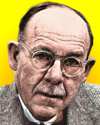
Born 23 Oct 1886; died 1 Jul 1968 at age 81. quotes
Edwin Garrigues Boring was an American psychologist and teacher who was first recognized for his experimental work but later known as a historian of psychology. When the U.S. entered WW I, Robert M. Yerkes recruited Boring to help test the intelligence of draftees. In 1922, he was invited to Harvard, where he began a long and productive career as director of the psychological laboratory (1924-49). To free psychology from its status as part of the Dept. of Philosophy, Boring succeeded in establishing a separate Dept of Psychology (1934). Upon retirement, he was appointed Edgar Pierce Professor Emeritus and continued to teach classes until he was nearly 71. Throughout his life, he wrote textbooks and edited professional journals.
Edwin Garrigues Boring was an American psychologist and teacher who was first recognized for his experimental work but later known as a historian of psychology. When the U.S. entered WW I, Robert M. Yerkes recruited Boring to help test the intelligence of draftees. In 1922, he was invited to Harvard, where he began a long and productive career as director of the psychological laboratory (1924-49). To free psychology from its status as part of the Dept. of Philosophy, Boring succeeded in establishing a separate Dept of Psychology (1934). Upon retirement, he was appointed Edgar Pierce Professor Emeritus and continued to teach classes until he was nearly 71. Throughout his life, he wrote textbooks and edited professional journals.
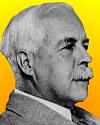
c. 1930
Born 23 Oct 1875; died 23 Mar 1946 at age 70. quotes
American chemist who collaborated with Irving Langmuir in developing an atomic theory. He developed a theory of valency, which introduced the covalent bond (c. 1916), whereby a chemical combination is made between two atoms by the sharing of a pair of electrons, one contributed from each atom. This was part of his more general octet theory, published in Valence and the Structure of Atoms and Molecules (1923). Lewis visualized the electrons in an atom as being arranged in concentric cubes. The sharing of these electrons he illustrated in the Lewis dot diagrams familiar to chemistry students. He generalized the concept of acids and bases now known as Lewis acids and Lewis bases.«
American chemist who collaborated with Irving Langmuir in developing an atomic theory. He developed a theory of valency, which introduced the covalent bond (c. 1916), whereby a chemical combination is made between two atoms by the sharing of a pair of electrons, one contributed from each atom. This was part of his more general octet theory, published in Valence and the Structure of Atoms and Molecules (1923). Lewis visualized the electrons in an atom as being arranged in concentric cubes. The sharing of these electrons he illustrated in the Lewis dot diagrams familiar to chemistry students. He generalized the concept of acids and bases now known as Lewis acids and Lewis bases.«
A Biography of Distinguished Scientist Gilbert Newton Lewis, by Edward S. Lewis. - book suggestion.
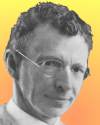
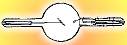
William David Coolidge was an American physicist, engineer and physical chemist whose improvement of tungsten filaments (U.S. patent No.1,082,933, issued 30 Dec 1913) was essential in the development of the modern incandescent lamp bulb and the X-ray tube. Coolidge's X-ray tube (1916, U.S. patent No. 1,203,495) completely revolutionized the generation of X-rays and remains to this day the model upon which all X-ray tubes for medical applications are patterned. He worked on many other devices such as high-quality magnetic steel, improved ventilating fans, and the electric blanket. During World War II he contributed research to projects involving radar and radar countermeasures. He was awarded 83 patents during his lifetime.
William David Coolidge: A Centenarian and His Work, by Herman Alfred Liebhafsky. - book suggestion.
Born 23 Oct 1868; died 8 Mar 1946 at age 77.
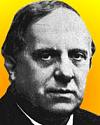
English automobile and aeronautics pioneer who built the first British petrol automobile (1896) and founded the Lanchester Engine Co in 1899. In 1901, Lanchester patented disc brakes. His production cars were scientifically designed and owed little to their competitors. His 1903 car had a balanced "vibrationless" two-cylinder horizontal engine with two counter-rotating crankshafts, electric ignition, 3 speed epicyclic gearbox with pre-selector control, tiller steering and a worm drive back axle. In 1907-8, he published an important two-volume work on aerodynamics. Lanchester is recognized as the first to grasp the role of the trailing vortices behind lifting wings and as the initiator of the circulation theory of lift. He also founded mathematical modelling for military gaming.
English automobile and aeronautics pioneer who built the first British petrol automobile (1896) and founded the Lanchester Engine Co in 1899. In 1901, Lanchester patented disc brakes. His production cars were scientifically designed and owed little to their competitors. His 1903 car had a balanced "vibrationless" two-cylinder horizontal engine with two counter-rotating crankshafts, electric ignition, 3 speed epicyclic gearbox with pre-selector control, tiller steering and a worm drive back axle. In 1907-8, he published an important two-volume work on aerodynamics. Lanchester is recognized as the first to grasp the role of the trailing vortices behind lifting wings and as the initiator of the circulation theory of lift. He also founded mathematical modelling for military gaming.
Born 23 Oct 1813; died 4 Apr 1848 at age 34. quotes
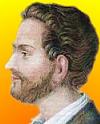
(Friedrich Wilhelm) Ludwig Leichhardt was a German explorer and naturalist who went to Australia in 1842 to study the rocks and wildlife in Queensland and the Northern Territory. In 1846 he left on an expedition with nine men to find a route from Moreton Bay (Brisbane) to Perth, rather poorly equipped. The party disappeared, leaving a mystery as to its fate which nine major expeditions in the next 90 years failed to solve. On previous travels he discovered many important rivers and reported on land suitable for grazing, but with difficulties of poor leadership and planning. His first trip (1844) ran out of supplies, and was forced to live on wildlife. In an encounter with hostile aborginals, one man was killed and two injured.«
(Friedrich Wilhelm) Ludwig Leichhardt was a German explorer and naturalist who went to Australia in 1842 to study the rocks and wildlife in Queensland and the Northern Territory. In 1846 he left on an expedition with nine men to find a route from Moreton Bay (Brisbane) to Perth, rather poorly equipped. The party disappeared, leaving a mystery as to its fate which nine major expeditions in the next 90 years failed to solve. On previous travels he discovered many important rivers and reported on land suitable for grazing, but with difficulties of poor leadership and planning. His first trip (1844) ran out of supplies, and was forced to live on wildlife. In an encounter with hostile aborginals, one man was killed and two injured.«
Born 23 Oct 1762; died 17 Apr 1843 at age 80.
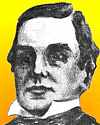
American inventor that one author called “the Edison of his day.” His inventions include raising water by wind (patented 11 Apr 1796), a rotary steam engine (14 Jul 1815), a fuel-saving fireplace (18 Jan 1813), a tide and current water wheel (13 Mar 1817), and shooting by steam (19 Jan 1819). Morey’s earliest patent (26 Jan 1793), one of the first (No. X51) to be issued in the U.S., was for a rotating, steam-powered cooking spit for roasting meat, and was signed by George Washington. His next patent (25 Mar 1795) was for a steam engine to power boats, years before Robert Fulton. He developed a method for production of water gas fuel (a mixture of carbon monoxide and hydrogen from steam passed over heated carbon substances), patented as his “American Water Burner” (11 Dec 1817). On 1 Apr 1826, he was issued the first U.S. patent for an internal-combustion engine titled “Gas or Vapour Engine.”«[Image, drawn for a magazine (1909) is likely (?) from the artist's imagination. Webmaster has not yet found any other likeness on which it could have been based.] more
American inventor that one author called “the Edison of his day.” His inventions include raising water by wind (patented 11 Apr 1796), a rotary steam engine (14 Jul 1815), a fuel-saving fireplace (18 Jan 1813), a tide and current water wheel (13 Mar 1817), and shooting by steam (19 Jan 1819). Morey’s earliest patent (26 Jan 1793), one of the first (No. X51) to be issued in the U.S., was for a rotating, steam-powered cooking spit for roasting meat, and was signed by George Washington. His next patent (25 Mar 1795) was for a steam engine to power boats, years before Robert Fulton. He developed a method for production of water gas fuel (a mixture of carbon monoxide and hydrogen from steam passed over heated carbon substances), patented as his “American Water Burner” (11 Dec 1817). On 1 Apr 1826, he was issued the first U.S. patent for an internal-combustion engine titled “Gas or Vapour Engine.”«[Image, drawn for a magazine (1909) is likely (?) from the artist's imagination. Webmaster has not yet found any other likeness on which it could have been based.] more

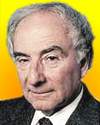
Died 23 Oct 2024 at age 94 (born 28 Feb 1930). quotes
American physicist who shared (with John Bardeen and John Robert Schrieffer) the 1972 Nobel Prize in Physics, for contributing the concept of Cooper electron pairs which forms the basis of the BCS (their initials) theory of superconductivity, which he worked on in his 20s. He went on to become a cofounder and cochairman of Nestor, Inc., an industry leader in applying neural-network systems to commercial and military applications. The company built computer-based adaptive pattern-recognition and risk-assessment systems, with such applications as accurately classifying complex patterns like targets in sonar, radar or imaging systems. He also founded and was director of Brown University’s Institute for Brain and Neural Systems to develop cognitive pharmaceuticals and intelligent systems for electronics, automobiles and communications.«[Born Leon N. Kupchik, in which the N represented nothing beyond a letter.]
American physicist who shared (with John Bardeen and John Robert Schrieffer) the 1972 Nobel Prize in Physics, for contributing the concept of Cooper electron pairs which forms the basis of the BCS (their initials) theory of superconductivity, which he worked on in his 20s. He went on to become a cofounder and cochairman of Nestor, Inc., an industry leader in applying neural-network systems to commercial and military applications. The company built computer-based adaptive pattern-recognition and risk-assessment systems, with such applications as accurately classifying complex patterns like targets in sonar, radar or imaging systems. He also founded and was director of Brown University’s Institute for Brain and Neural Systems to develop cognitive pharmaceuticals and intelligent systems for electronics, automobiles and communications.«[Born Leon N. Kupchik, in which the N represented nothing beyond a letter.]
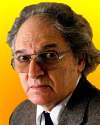
Died 23 Oct 2011 at age 94 (born 14 Feb 1917).
Herbert Aaron Hauptman was an American mathematician and crystallographer who shared the 1985 Nobel Prize for Chemistry with Jerome Karle, with whom he collaborated, “for their outstanding achievements in the development of direct methods for the determination of crystal structures.” They developed mathematical methods for interpreting the patterns formed on photographic film by X rays diffracted through a crystalline chemical compound to determine its molecular structure. The knowledge of structure has two great benefits. One, in understanding the function of molecules in biological contexts, expecially those of “signal - receptor processes.” These include such processes as enzyme activity; antigen - antibody; and scent substance - scent receptor. Another is in studying the mechanism and chemical dynamics of reactions.«
Herbert Aaron Hauptman was an American mathematician and crystallographer who shared the 1985 Nobel Prize for Chemistry with Jerome Karle, with whom he collaborated, “for their outstanding achievements in the development of direct methods for the determination of crystal structures.” They developed mathematical methods for interpreting the patterns formed on photographic film by X rays diffracted through a crystalline chemical compound to determine its molecular structure. The knowledge of structure has two great benefits. One, in understanding the function of molecules in biological contexts, expecially those of “signal - receptor processes.” These include such processes as enzyme activity; antigen - antibody; and scent substance - scent receptor. Another is in studying the mechanism and chemical dynamics of reactions.«
On the Beauty of Science: A Nobel Laureate Reflects on the Universe, God, and the Nature of Discovery, by Herbert A. Hauptman and D. J. Grothe (Ed.). - book suggestion.
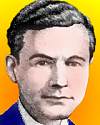
Died 23 Oct 1997 at age 92 (born 28 Jan 1905).
Turkish-born American whose over 200 inventions included the TelePrompter, a self-posing portrait camera, automatic postage metering equipment, and an indoor golf practice range. In WW II, his Range Estimation Trainer provided a simulator for pilots to learn to identify aircraft types, their distance and speed. It used synchronized moving mirrors, controlled lighting and a miniature airplane to present various speeds, lighting, and angles. From 1939, he held 20 patents for an early form of an automated teller machine, and in 1960 his Bankograph (US patent No. 3,079,603) was given a trial by New York's First National City Bank (now CitiBank). It was able to take deposits, photograph the money and issue a receipt showing those images.« more
Turkish-born American whose over 200 inventions included the TelePrompter, a self-posing portrait camera, automatic postage metering equipment, and an indoor golf practice range. In WW II, his Range Estimation Trainer provided a simulator for pilots to learn to identify aircraft types, their distance and speed. It used synchronized moving mirrors, controlled lighting and a miniature airplane to present various speeds, lighting, and angles. From 1939, he held 20 patents for an early form of an automated teller machine, and in 1960 his Bankograph (US patent No. 3,079,603) was given a trial by New York's First National City Bank (now CitiBank). It was able to take deposits, photograph the money and issue a receipt showing those images.« more
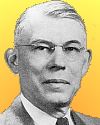
Died 23 Oct 1986 at age 92 (born 13 Nov 1893).
Edward Adelbert Doisy was an American biochemist who shared (with Henrik Dam) the 1943 Nobel Prize for Physiology or Medicine for his isolation and synthesis of vitamin K, a substance that encourages blood clotting (1939), used in medicine and surgery. With the embryologist Edgar Allen (1922-34), he developed assay techniques that facilitated research on sex hormones. Doisy and his associates isolated the sex hormones estrone (theelin, 1929; the first estrogen to be crystallized), estriol (theelol, 1930), and estradiol (dihydrotheelin, 1935). In 1936-39 he isolated two forms of the vitamin, (K1 from lucerne seed and K2 from fish meal, in a pure crystalline form), determined their chemical structures, and synthesized the vitamin.«
Edward Adelbert Doisy was an American biochemist who shared (with Henrik Dam) the 1943 Nobel Prize for Physiology or Medicine for his isolation and synthesis of vitamin K, a substance that encourages blood clotting (1939), used in medicine and surgery. With the embryologist Edgar Allen (1922-34), he developed assay techniques that facilitated research on sex hormones. Doisy and his associates isolated the sex hormones estrone (theelin, 1929; the first estrogen to be crystallized), estriol (theelol, 1930), and estradiol (dihydrotheelin, 1935). In 1936-39 he isolated two forms of the vitamin, (K1 from lucerne seed and K2 from fish meal, in a pure crystalline form), determined their chemical structures, and synthesized the vitamin.«
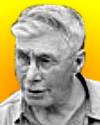
Died 23 Oct 1971 at age 93 (born 4 Dec 1877).
English-born Canadian farmer, mammalogist, and plant breeder who kept meticulous field notes of mammal (and bird) life. He carried out many breeding experiments with sunflowers, corn, and lilies and had a new variety of lily named after him. He was a charter member of the American Society of Mammalogists. Although he had no formal schooling, he was awarded an honorary D.Sc. at the first convocation of Brandon University in 1968. His older brother Norman Criddle was known as the "dean of entomology" in western Canada, and is recognized for his development of the "Criddle mixture" for grasshopper control and for his early application of biological observations to insect control. Stuart immigrated into Canada as a boy with his family in 1882.
English-born Canadian farmer, mammalogist, and plant breeder who kept meticulous field notes of mammal (and bird) life. He carried out many breeding experiments with sunflowers, corn, and lilies and had a new variety of lily named after him. He was a charter member of the American Society of Mammalogists. Although he had no formal schooling, he was awarded an honorary D.Sc. at the first convocation of Brandon University in 1968. His older brother Norman Criddle was known as the "dean of entomology" in western Canada, and is recognized for his development of the "Criddle mixture" for grasshopper control and for his early application of biological observations to insect control. Stuart immigrated into Canada as a boy with his family in 1882.
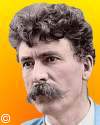
Died 23 Oct 1946 at age 86 (born 14 Aug 1860). quotes
English-American naturalist, author and illustrator who applied these skills in over forty books on wild life, woodcraft, Indian lore and animal-fiction stories. As a capable naturalist, in his field observations he made detailed studies of morphology, physiology, distribution, and behaviour. His fame as author began with Wild Animals I Have Known (1898) - still in print a century later. Over a period of twenty years he delivered over three thousand lectures. Believing in promoting the values of ethology and ecology, he was chairman of the committee that established the Boy Scouts in the U.S. (1910). Seton envisioned the North American Indian as a model for the movement, but Baden-Powell's military structure was adopted as in Britain.« more
English-American naturalist, author and illustrator who applied these skills in over forty books on wild life, woodcraft, Indian lore and animal-fiction stories. As a capable naturalist, in his field observations he made detailed studies of morphology, physiology, distribution, and behaviour. His fame as author began with Wild Animals I Have Known (1898) - still in print a century later. Over a period of twenty years he delivered over three thousand lectures. Believing in promoting the values of ethology and ecology, he was chairman of the committee that established the Boy Scouts in the U.S. (1910). Seton envisioned the North American Indian as a model for the movement, but Baden-Powell's military structure was adopted as in Britain.« more
Ernest Thompson Seton: The Life and Legacy of an Artist and Conservationist, by David Witt. - book suggestion.
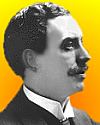
Died 23 Oct 1944 at age 67 (born 7 Jun 1877).
Charles Glover Barkla was an English physicist who was awarded the Nobel Prize for Physics in 1917 for his work on X-ray scattering. This technique is applied to the investigation of atomic structures, by studying how X-rays passing through a material and are deflected by the atomic electrons. In 1903, he showed that the scattering of x-rays by gases depends on the molecular weight of the gas. His experiments on the polarization of x-rays (1904) and the direction of scattering of a beam of x-rays (1907) showed X-rays to be electromagnetic radiation like light (whereas, at the time, William Henry Bragg who held that X-rays were particles.) Barkla further discovered that each element has its own characteristic x-ray spectrum.«
Charles Glover Barkla was an English physicist who was awarded the Nobel Prize for Physics in 1917 for his work on X-ray scattering. This technique is applied to the investigation of atomic structures, by studying how X-rays passing through a material and are deflected by the atomic electrons. In 1903, he showed that the scattering of x-rays by gases depends on the molecular weight of the gas. His experiments on the polarization of x-rays (1904) and the direction of scattering of a beam of x-rays (1907) showed X-rays to be electromagnetic radiation like light (whereas, at the time, William Henry Bragg who held that X-rays were particles.) Barkla further discovered that each element has its own characteristic x-ray spectrum.«
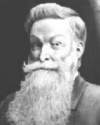
Died 23 Oct 1921 at age 81 (born 5 Feb 1840).
Scottish inventor who was a pioneer of the pneumatic tyre. In 1887, when his 9-yr-old son complained of the rough ride he experienced on his tricycle over the cobbled streets of Belfast. Dunlop devised and fitted rubber air tubes held on to a wooden ring by tacking a linen covering fixed around the wheels. Due to the major improvement in riding comfort, Dunlop continued development, until he patented the idea, issued on 7 Dec 1889 (No. 10607) as "An improvement in Tyres of Wheels for Bicycles, Tricycles or other Road Cars".
Scottish inventor who was a pioneer of the pneumatic tyre. In 1887, when his 9-yr-old son complained of the rough ride he experienced on his tricycle over the cobbled streets of Belfast. Dunlop devised and fitted rubber air tubes held on to a wooden ring by tacking a linen covering fixed around the wheels. Due to the major improvement in riding comfort, Dunlop continued development, until he patented the idea, issued on 7 Dec 1889 (No. 10607) as "An improvement in Tyres of Wheels for Bicycles, Tricycles or other Road Cars".
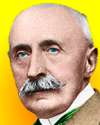
Died 23 Oct 1920 at age 61 (born 3 Jul 1859).
Pierre-Marie Termier was a French geologist whose interests covered metamorphic petrology, structural geology, and geotectonics. He is noted for his comprehensive study of the Alps (1930). His vocation began in 1880 at the Écoles des Mines in Paris. By 1883, he was appointed an inspector of mines. Termier made a substantial contribution to knowledge of Alpine geology, with his initial report (1891) which was the first time the progressive stages of the regional metamorphism were mapped over a considerable distance. In 1911, Termier was appointed as director of the Service of Geologic Maps of France. Although he overall did not believe Wegener’s idea of continental drift, Termier still believed in crustal block motion forming the Alps.« more
Pierre-Marie Termier was a French geologist whose interests covered metamorphic petrology, structural geology, and geotectonics. He is noted for his comprehensive study of the Alps (1930). His vocation began in 1880 at the Écoles des Mines in Paris. By 1883, he was appointed an inspector of mines. Termier made a substantial contribution to knowledge of Alpine geology, with his initial report (1891) which was the first time the progressive stages of the regional metamorphism were mapped over a considerable distance. In 1911, Termier was appointed as director of the Service of Geologic Maps of France. Although he overall did not believe Wegener’s idea of continental drift, Termier still believed in crustal block motion forming the Alps.« more
Died 23 Oct 1918 at age 68 (born 17 Feb 1850).
German bacteriologist.
German bacteriologist.
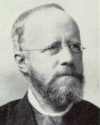
Died 23 Oct 1913 at age 79 (born 6 Feb 1834).
Theodor Albrecht Edwin Klebs was a German physician and bacteriologist who was noted for his work on the bacterial theory of infection. Klebs' first success was the invention of the paraffin wax embedding of sections of tissue for histological investigation With Friedrich August Johannes Löffler in 1884, he discovered the diphtheria bacillus, known as the Klebs-Löffler bacillus. He died, as so many physicians of his time, of tuberculosis.
Theodor Albrecht Edwin Klebs was a German physician and bacteriologist who was noted for his work on the bacterial theory of infection. Klebs' first success was the invention of the paraffin wax embedding of sections of tissue for histological investigation With Friedrich August Johannes Löffler in 1884, he discovered the diphtheria bacillus, known as the Klebs-Löffler bacillus. He died, as so many physicians of his time, of tuberculosis.
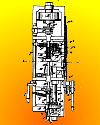
(USPTO)
Died 23 Oct 1868 at age 67 (born 4 Sep 1801).
American inventor and machinist of Providence, RI, who patented the first practical screw machine in the U.S. for making pointed screws (14 Dec 1852, No. 9,477). Early screws had blunt ends, and it was necessary to drill a starter hole. In Oct 1840, he was one of ten incorporators of The New England Screw Co. He invented a machine for the company to use cutting the threads of screws (patented 18 Aug 1842), another for shaving the heads of screws (patented 6 Apr 1843) and one for removing the burs left in cutting the slots in the heads (patented 19 Apr 1843). He invented and patented seven other machines or devices for improving the manufacture of screws, such as a Screw-Blank Feeding mechanism (3 Jun 1856, No.15,052).«
American inventor and machinist of Providence, RI, who patented the first practical screw machine in the U.S. for making pointed screws (14 Dec 1852, No. 9,477). Early screws had blunt ends, and it was necessary to drill a starter hole. In Oct 1840, he was one of ten incorporators of The New England Screw Co. He invented a machine for the company to use cutting the threads of screws (patented 18 Aug 1842), another for shaving the heads of screws (patented 6 Apr 1843) and one for removing the burs left in cutting the slots in the heads (patented 19 Apr 1843). He invented and patented seven other machines or devices for improving the manufacture of screws, such as a Screw-Blank Feeding mechanism (3 Jun 1856, No.15,052).«
In 1977, American paleontologist Elso S. Barghoorn of Harvard announced the discovery of Pre-Cambian spherical one-celled algae microfossils (named Eobacterium) 3.4 billion years old, earth's earliest life forms. Barghoorn, with J. William Schopf, studied the ancient chert (a flintlike or quartz-like rock) of the Fig Tree formation in Transvaal, South Africa. Rubidium and strontium ratios in the chert are used to establish the age of the rock, and the fossils contained in it. The fossils are a kind of Prokaryotes, organisms with simple cell wall containing organic chemicals, and examples of cell division are visibile in the remains. A huge number of varieties exist today. They all produce oxygen; and, in the Precambrian period, began to change the earth's primoidal reducing atmosphere to the oxygenated one we have today.
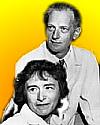
In 1947, the first American husband and wife team to win a Nobel Prize, Carl and Gerty Cori (née Radnitz) of Washington University Medical School, were awarded the Physiology or Medicine Prize for “the discovery on how glycogen is converted to glucose in the body, and for the effects of hypophysis hormones on sugar metabolism.” The prize was shared with Pierre and Marie Curie were awarded the Nobel Prize in Physics “in recognition of the extraordinary services they have rendered by their joint researches on the radiation phenomena discovered by Professor Henri Becquerel.” (Marie was born in Poland.)«
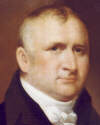

 [Image: Benjamin Wright] more
 Wedding of the Waters: The Erie Canal and the Making of a Great Nation, by Peter L. Bernstein. - book suggestion.
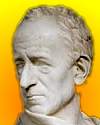
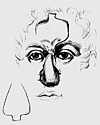
Plate from a Carpue publication showing a refined flap.
An Account of Two Successful Operations for Restoring a Lost Nose, by Joseph Constantine Carpue. - book suggestion.
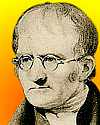
1825
In 1803, John Dalton presented an essay on the absorption of gases by water, at the conclusion of which he gave a series of atomic weights for 21 simple and compound elements. He read his paper at a meeting of the Manchester Literary and Philosophical Society.
John Dalton and the Atomic Theory: The Biography of a Natural Philosopher, by Elizabeth C. Patterson. - book suggestion.
In 4004 BC, according to biblical interpretation by church leaders in 1650, the Earth was supposed to have been created.




