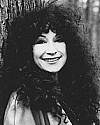
Born 7 Oct 1948.
American writer and poet whose works often reflect her interest in natural science by crafting careful scientific information into stylish prose, including a series of nature books for children. Her bestseller A Natural History of the Senses was made into a 1995 PBS series hosted by the author. She also has the rare distinction of having a molecule named after her (dianeackerone, a novel secretory product from a crocodile).
American writer and poet whose works often reflect her interest in natural science by crafting careful scientific information into stylish prose, including a series of nature books for children. Her bestseller A Natural History of the Senses was made into a 1995 PBS series hosted by the author. She also has the rare distinction of having a molecule named after her (dianeackerone, a novel secretory product from a crocodile).
The Moon by Whale Light: And Other Adventures Among Bats, Penguins, Crocodilians, and Whales, by Diane Ackerman. - book suggestion.
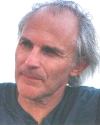
Born 7 Oct 1939; died 30 Apr 2016 at age 76. quotes
English chemist who shared (with Richard E. Smalley and Robert F. Curl, Jr.) the 1996 Nobel Prize for Chemistry for their joint discovery of the carbon compounds called fullerenes. These new forms of the element carbon contain 60 or more atoms arranged in closed shells. The number of carbon atoms in the shell can vary, and for this reason numerous new carbon structures have become known. Formerly, six crystalline forms of the element carbon were known, namely two kinds of graphite, two kinds of diamond, chaoit (1968) and carbon(VI) (1972). Fullerenes are formed when vaporised carbon condenses in an atmosphere of inert gas. The carbon clusters can then be analysed with mass spectrometry.
English chemist who shared (with Richard E. Smalley and Robert F. Curl, Jr.) the 1996 Nobel Prize for Chemistry for their joint discovery of the carbon compounds called fullerenes. These new forms of the element carbon contain 60 or more atoms arranged in closed shells. The number of carbon atoms in the shell can vary, and for this reason numerous new carbon structures have become known. Formerly, six crystalline forms of the element carbon were known, namely two kinds of graphite, two kinds of diamond, chaoit (1968) and carbon(VI) (1972). Fullerenes are formed when vaporised carbon condenses in an atmosphere of inert gas. The carbon clusters can then be analysed with mass spectrometry.
The Most Beautiful Molecule: The Discovery of the Buckyball, by Hugh Aldersey-Williams. - book suggestion.
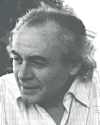
Born 7 Oct 1927; died 23 Aug 1989 at age 61. quotes
Ronald David Laing was a British psychiatrist who was noted for his alternative approach to the treatment of schizophrenia. His first book, The Divided Self, was an attempt to explain schizophrenia by using existentialist philosophy to vividly portray the inner world of a schizophrenic, which Laing presented as an attempt to live in an unlivable situation. His work tends to be dismissed by most psychiatrists; however, droves of mentally ill people insist that this was a man who truly understood how they felt. Laing always insisted that psychotherapists should act as shamans, exorcising the illness through a process of mutual catharsis. Since Laing refused to view mental illness in biomedical/clinical terms, he has often been labelled as part of the so-called 'antipsychiatry' movement.
Ronald David Laing was a British psychiatrist who was noted for his alternative approach to the treatment of schizophrenia. His first book, The Divided Self, was an attempt to explain schizophrenia by using existentialist philosophy to vividly portray the inner world of a schizophrenic, which Laing presented as an attempt to live in an unlivable situation. His work tends to be dismissed by most psychiatrists; however, droves of mentally ill people insist that this was a man who truly understood how they felt. Laing always insisted that psychotherapists should act as shamans, exorcising the illness through a process of mutual catharsis. Since Laing refused to view mental illness in biomedical/clinical terms, he has often been labelled as part of the so-called 'antipsychiatry' movement.
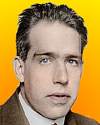
Born 7 Oct 1885; died 18 Nov 1962 at age 77. quotes
Niels Henrik David Bohr was a Danish physicist who was the first to apply the quantum theory, which restricts the energy of a system to certain discrete values, to the problem of atomic and molecular structure. For this work he received the Nobel Prize for Physics in 1922. He developed the so-called Bohr theory of the atom and liquid model of the nucleus. Bohr was of Jewish origin and when the Nazis occupied Denmark he escaped in 1943 to Sweden on a fishing boat. From there he was flown to England where he began to work on the project to make a nuclear fission bomb. After a few months he went with the British research team to Los Alamos in the USA where they continued work on the project.
Niels Henrik David Bohr was a Danish physicist who was the first to apply the quantum theory, which restricts the energy of a system to certain discrete values, to the problem of atomic and molecular structure. For this work he received the Nobel Prize for Physics in 1922. He developed the so-called Bohr theory of the atom and liquid model of the nucleus. Bohr was of Jewish origin and when the Nazis occupied Denmark he escaped in 1943 to Sweden on a fishing boat. From there he was flown to England where he began to work on the project to make a nuclear fission bomb. After a few months he went with the British research team to Los Alamos in the USA where they continued work on the project.
Suspended In Language: Niels Bohr's Life, Discoveries, And The Century He Shaped, by Jim Ottaviani. - book suggestion.
Born 7 Oct 1858.
American meteorologist and inventor who invented the clinometer that figures height of clouds over airports. He was Chief of the U.S. Weather Bureau (1913-34). He worked on, and wrote about, the Robinson cup anemometer, from early in his career with the Weather Bureau until years after his retirement. For early systematic investigations of the upper air, he designed and constructed kites and kite instruments. He also devised the Marvin pyrheliometer and inaugurated the regular measurement of solar radiation intensity by the Weather Bureau. Marvin designed a seismograph operated by the Weather Bureau. He was also particularly interested in the application of mathematical statistics to meteorological problems.
American meteorologist and inventor who invented the clinometer that figures height of clouds over airports. He was Chief of the U.S. Weather Bureau (1913-34). He worked on, and wrote about, the Robinson cup anemometer, from early in his career with the Weather Bureau until years after his retirement. For early systematic investigations of the upper air, he designed and constructed kites and kite instruments. He also devised the Marvin pyrheliometer and inaugurated the regular measurement of solar radiation intensity by the Weather Bureau. Marvin designed a seismograph operated by the Weather Bureau. He was also particularly interested in the application of mathematical statistics to meteorological problems.
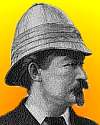
Born 7 Oct 1847; died 21 Feb 1902 at age 54.
Czech naturalist who travelled extensively in south central Africa gathering varied and valuable natural history collections that he distributed to museums and schools throughout Europe.
Czech naturalist who travelled extensively in south central Africa gathering varied and valuable natural history collections that he distributed to museums and schools throughout Europe.
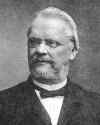
Born 7 Oct 1822; died 6 Feb 1898 at age 75. quotes
Rudolf (Karl Georg Friedrich) Leuckart was a German zoologist and teacher who initiated the modern science of parasitology. As a youth, he showed an early interest in zoology and in insects in particular. While attending medical school at the University of Gottingen, he studied under the renowned zoologist, Rudolph Wagner, who encouraged him to research in this branch of science. In 1847, he was appointed a zoology lecturer. He made an expedition to the North Sea for the study of marine invertebrates. Leuckart also described the complicated life histories of various parasites, including tapeworms and the liver fluke, and demonstrated that some human diseases, such as trichinosis, are caused by multicellular animals of the various wormlike phyla.
Rudolf (Karl Georg Friedrich) Leuckart was a German zoologist and teacher who initiated the modern science of parasitology. As a youth, he showed an early interest in zoology and in insects in particular. While attending medical school at the University of Gottingen, he studied under the renowned zoologist, Rudolph Wagner, who encouraged him to research in this branch of science. In 1847, he was appointed a zoology lecturer. He made an expedition to the North Sea for the study of marine invertebrates. Leuckart also described the complicated life histories of various parasites, including tapeworms and the liver fluke, and demonstrated that some human diseases, such as trichinosis, are caused by multicellular animals of the various wormlike phyla.
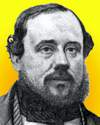
Born 7 Oct 1816; died 29 Oct 1891 at age 75.
Edward Hammond Hargraves was an English prospector whose discovery of gold started the Australian Gold Rush, which attracted many new migrants from around the world in search of gold. Previously, when he heard of the California Gold Rush (started 24 Jan 1848) Hargraves travelled there. He learned the necessary skills, but had no success. So he next tried in Australia. On 12 Feb 1851, aged 34, he rode on horseback along Lewis Ponds Creek, north of Guyong, New South Wales with a guide, John Lister, age 18. They stopped at a water hole. There, Hargraves was excited by the similarity of terrain to his days prospecting in California. Panning the dirt in a schistose dyke, he soon found a few specks of gold, and more in further explorations of the region.«
Edward Hammond Hargraves was an English prospector whose discovery of gold started the Australian Gold Rush, which attracted many new migrants from around the world in search of gold. Previously, when he heard of the California Gold Rush (started 24 Jan 1848) Hargraves travelled there. He learned the necessary skills, but had no success. So he next tried in Australia. On 12 Feb 1851, aged 34, he rode on horseback along Lewis Ponds Creek, north of Guyong, New South Wales with a guide, John Lister, age 18. They stopped at a water hole. There, Hargraves was excited by the similarity of terrain to his days prospecting in California. Panning the dirt in a schistose dyke, he soon found a few specks of gold, and more in further explorations of the region.«
The Gold Rush: The Fever That Forever Changed Australia, by David Hill. - book suggestion.

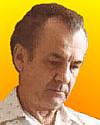
Died 7 Oct 1995 at age 77 (born 25 Apr 1918).
French-born U.S. astronomer whose pioneering studies of distant galaxies contributed to knowledge of the age and large-scale structure of the universe. He produced three Reference Catalogues of bright galaxies (1964, 1976, 1991). Each was a homogenization of data from widely different sources, so that the catalogues would not be merely finding lists or data collection lists, but astrophysically useful databases. Using data in the Reference Catalogues, he was able to develop new distance indicators and refine others. His unique philosophy on distance matters was "spreading the risks," that is, applying as many different and independent techniques as possible to check for scale and zero-point errors.
French-born U.S. astronomer whose pioneering studies of distant galaxies contributed to knowledge of the age and large-scale structure of the universe. He produced three Reference Catalogues of bright galaxies (1964, 1976, 1991). Each was a homogenization of data from widely different sources, so that the catalogues would not be merely finding lists or data collection lists, but astrophysically useful databases. Using data in the Reference Catalogues, he was able to develop new distance indicators and refine others. His unique philosophy on distance matters was "spreading the risks," that is, applying as many different and independent techniques as possible to check for scale and zero-point errors.
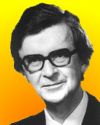
Died 7 Oct 1994 at age 82 (born 23 Dec 1911). quotes
Niels Kaj Jerne was a Danish immunologist who shared (with César Milstein and Georges Köhler) the 1984 Nobel Prize for Physiology or Medicine. Jerne has provided three important theories of immunology. (1) Natural selection theory of anti-body formation (1955) which initiated modern cellular immunology since the1960s. (2) Somatic generation theory of the generation of antibody diversity (1968) which brought together molecular and cellular immunology in the 1970s. (3) Network theory (1974), which explains a complex system of interactions when the immune system is activated to counteract disease and then is shut down after the need passes. The principles of this theory are beginning to be exploited in prevention, diagnosis and treatment of disease.«
Niels Kaj Jerne was a Danish immunologist who shared (with César Milstein and Georges Köhler) the 1984 Nobel Prize for Physiology or Medicine. Jerne has provided three important theories of immunology. (1) Natural selection theory of anti-body formation (1955) which initiated modern cellular immunology since the1960s. (2) Somatic generation theory of the generation of antibody diversity (1968) which brought together molecular and cellular immunology in the 1970s. (3) Network theory (1974), which explains a complex system of interactions when the immune system is activated to counteract disease and then is shut down after the need passes. The principles of this theory are beginning to be exploited in prevention, diagnosis and treatment of disease.«
Science As Autobiography: The Troubled Life of Niels Jerne, by Thomas Soderqvist. - book suggestion.
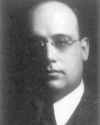
Died 7 Oct 1965 at age 68 (born 3 Jul 1897).
American mathematician who was awarded one of the first two Fields Medals in 1936 for solving the Plateau problem. which had first been posed by the Italian-French mathematician Joseph-Louis Lagrange in 1760. The Plateau problem is one of finding the surface with minimal area determined by a fixed boundary. Experiments (1849) by the Belgian physicist Joseph Plateau demonstrated that the minimal surface can be obtained by immersing a wire frame, representing the boundaries, into soapy water. Douglas developed what is now called the Douglas functional, so that by minimizing this functional he could prove the existence of the solution to the Plateau problem. Douglas later developed an interest in group theory.
American mathematician who was awarded one of the first two Fields Medals in 1936 for solving the Plateau problem. which had first been posed by the Italian-French mathematician Joseph-Louis Lagrange in 1760. The Plateau problem is one of finding the surface with minimal area determined by a fixed boundary. Experiments (1849) by the Belgian physicist Joseph Plateau demonstrated that the minimal surface can be obtained by immersing a wire frame, representing the boundaries, into soapy water. Douglas developed what is now called the Douglas functional, so that by minimizing this functional he could prove the existence of the solution to the Plateau problem. Douglas later developed an interest in group theory.
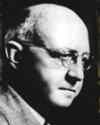
Died 7 Oct 1956 at age 69 (born 9 Dec 1886).
American naturalist and inventor of the deep freezing food method and co-founder of General Foods Corp. On Arctic trips as a field naturalist for the United States government, he noticed that freshly caught fish, when placed onto the Arctic ice and exposed to the icy wind and frigid temperatures, froze solid almost immediately. He learned, too, that the fish, when thawed and eaten, still had all its fresh characteristics. He concluded that quickly freezing certain items kept large crystals from forming, preventing damage to their cellular structure. In Sep 1922, Clarence organized his own company, Birdseye Seafoods, Inc., New York City, where he began processing chilled fish fillets. In 1924, he developed an entirely new type of process to freeze dressed fish packed in cartons. more
American naturalist and inventor of the deep freezing food method and co-founder of General Foods Corp. On Arctic trips as a field naturalist for the United States government, he noticed that freshly caught fish, when placed onto the Arctic ice and exposed to the icy wind and frigid temperatures, froze solid almost immediately. He learned, too, that the fish, when thawed and eaten, still had all its fresh characteristics. He concluded that quickly freezing certain items kept large crystals from forming, preventing damage to their cellular structure. In Sep 1922, Clarence organized his own company, Birdseye Seafoods, Inc., New York City, where he began processing chilled fish fillets. In 1924, he developed an entirely new type of process to freeze dressed fish packed in cartons. more
Birdseye: The Adventures of a Curious Man, by Mark Kurlansky. - book suggestion.
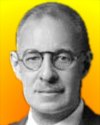
Died 7 Oct 1955 at age 79 (born 16 Oct 1875).
Henry Clapp Sherman was an American biochemist who did pioneer work in developing assay methods and determining functions of vitamins. He established the average human requirements for calcium (1931), phosphorus, and iron, and for many years his studies were considered the best guides to the health requirements for these minerals. He also determined the human daily requirement of calcium (1931) and B vitamins (1932), and his major study on vitamin A defined a suitable weekly dose (1934), and its storage in the body (1940). In other nutrition studies, he also identified iron-deficiency anaemia, began investigating cobalt in 1946, and debunked the value of spinach.
Henry Clapp Sherman was an American biochemist who did pioneer work in developing assay methods and determining functions of vitamins. He established the average human requirements for calcium (1931), phosphorus, and iron, and for many years his studies were considered the best guides to the health requirements for these minerals. He also determined the human daily requirement of calcium (1931) and B vitamins (1932), and his major study on vitamin A defined a suitable weekly dose (1934), and its storage in the body (1940). In other nutrition studies, he also identified iron-deficiency anaemia, began investigating cobalt in 1946, and debunked the value of spinach.
Chemistry of Food and Nutrition, by Henry C. Sherman. - book suggestion.
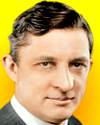
(1915)
Died 7 Oct 1950 at age 73 (born 26 Nov 1876).
American inventor who initiated modern building air conditioning. He graduated in 1901 with an M.E. In 1902, he designed his first system to control temperature and humidity in a Brooklyn printing plant. By 2 Jan 1906, he patented an “Apparatus for Treating Air,” the world’s first spray type air conditioning method, (US No. 808,897). His “Rational Psychrometric Formulae,” (1911) remain essential for air conditioning engineers. In 1915, he started the Carrier Engineering Corporation, to treat temperature and humidity conditions in the industrial environment. Next were public buildings and then homes. He developed the first safe, low pressure centrifugal refrigeration machine using nontoxic, nonflammable refrigerant.«
American inventor who initiated modern building air conditioning. He graduated in 1901 with an M.E. In 1902, he designed his first system to control temperature and humidity in a Brooklyn printing plant. By 2 Jan 1906, he patented an “Apparatus for Treating Air,” the world’s first spray type air conditioning method, (US No. 808,897). His “Rational Psychrometric Formulae,” (1911) remain essential for air conditioning engineers. In 1915, he started the Carrier Engineering Corporation, to treat temperature and humidity conditions in the industrial environment. Next were public buildings and then homes. He developed the first safe, low pressure centrifugal refrigeration machine using nontoxic, nonflammable refrigerant.«
Willis Haviland Carrier Father of Air Conditioning, by Margaret Ingels. - book suggestion.
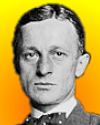
Died 7 Oct 1939 at age 70 (born 8 Apr 1869). quotes
Harvey Williams Cushing was an American neurosurgeon who was a pioneer of neurosurgery, and studied blood pressure. His clinical contributions are legendary: the use of x-rays in surgical practice, physiological saline for irrigation during surgery, the discovery of the pituitary as the master hormone gland, founding the clinical specialty of endocrinology, the anesthesia record, the use of blood pressure measurement in surgical practice, and the physiological consequences of increased intracranial pressure. He performed the first brain surgery in the U.S. on 21 Feb 1902.
Harvey Williams Cushing was an American neurosurgeon who was a pioneer of neurosurgery, and studied blood pressure. His clinical contributions are legendary: the use of x-rays in surgical practice, physiological saline for irrigation during surgery, the discovery of the pituitary as the master hormone gland, founding the clinical specialty of endocrinology, the anesthesia record, the use of blood pressure measurement in surgical practice, and the physiological consequences of increased intracranial pressure. He performed the first brain surgery in the U.S. on 21 Feb 1902.
Genius With a Scalpel: Harvey Cushing, by Justin F. Denzel. - book suggestion.
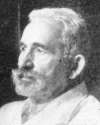
Died 7 Oct 1926 at age 70 (born 15 Feb 1856).
German psychiatrist, one of the most influential of his time, who developed a classification system for mental illness that influenced subsequent classifications. Kraepelin made distinctions between schizophrenia and manic-depressive psychosis that remain valid today. Kraepelin employed Wundt's experimental techniques to study the effects of drugs, alcohol, and fatigue on psychological functioning and in 1881 published a study of the influence of infectious diseases on the onset of mental illness. In his first classification of disorders (1883) Kraepelin divided mental illnesses into exogenous disorders (treatable, caused by external conditions) and endogenous disorders (untreatable, from biological causes such as organic brain damage or hereditary factors).
German psychiatrist, one of the most influential of his time, who developed a classification system for mental illness that influenced subsequent classifications. Kraepelin made distinctions between schizophrenia and manic-depressive psychosis that remain valid today. Kraepelin employed Wundt's experimental techniques to study the effects of drugs, alcohol, and fatigue on psychological functioning and in 1881 published a study of the influence of infectious diseases on the onset of mental illness. In his first classification of disorders (1883) Kraepelin divided mental illnesses into exogenous disorders (treatable, caused by external conditions) and endogenous disorders (untreatable, from biological causes such as organic brain damage or hereditary factors).
Died 7 Oct 1920 at age 66 (born 13 May 1854).
French zoologist known for his research and elucidation of invertebrate physiology and anatomy. He also discovered the equilibrium-stabilizing function of the semicircular canals in the inner ear (1886). Delage studied circulation in crustaceans, made important discoveries in the embryology of sponges (such as Sacculina), and investigated the nervous system of barnacles (Peltogaster) and flatworms (Convoluta). He developed a method for culturing sea urchins following artificial fertilization of the eggs with chemicals. Turning late in his career to more general problems of biology, he considered how life in individual organisms and species is manifested through cytoplasm, and he examined mechanical problems of the cell.
French zoologist known for his research and elucidation of invertebrate physiology and anatomy. He also discovered the equilibrium-stabilizing function of the semicircular canals in the inner ear (1886). Delage studied circulation in crustaceans, made important discoveries in the embryology of sponges (such as Sacculina), and investigated the nervous system of barnacles (Peltogaster) and flatworms (Convoluta). He developed a method for culturing sea urchins following artificial fertilization of the eggs with chemicals. Turning late in his career to more general problems of biology, he considered how life in individual organisms and species is manifested through cytoplasm, and he examined mechanical problems of the cell.
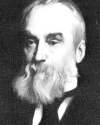
Died 7 Oct 1911 at age 76 (born 4 Apr 1835). quotes
English neurologist whose studies of epilepsy, speech defects, and nervous-system disorders arising from injury to the brain and spinal cord remain among the most useful and highly documented in the field. He was one of the first to state that abnormal mental states may result from structural brain damage. Jackson's epilepsy studies initiated the development of modern methods of clinical localization of brain lesions and the investigation of localized brain functions. His definition (1873) of epilepsy as "a sudden, excessive, and rapid discharge" of brain cells has been confirmed by electroencephalography, a method of recording electric currents generated in the brain.
English neurologist whose studies of epilepsy, speech defects, and nervous-system disorders arising from injury to the brain and spinal cord remain among the most useful and highly documented in the field. He was one of the first to state that abnormal mental states may result from structural brain damage. Jackson's epilepsy studies initiated the development of modern methods of clinical localization of brain lesions and the investigation of localized brain functions. His definition (1873) of epilepsy as "a sudden, excessive, and rapid discharge" of brain cells has been confirmed by electroencephalography, a method of recording electric currents generated in the brain.
Died 7 Oct 1894 at age 85 (born 29 Aug 1809). quotes
American physician and writer was best-known as an essayist-poet, but in medicine was famous for his 1843 article 'The Contagiousness of Puerperal Fever,' concerning the high mortality of women giving birth in hospitals. He asserted that the infection was carried from patient to patient by physicians and nurses. Because that defied the conventional wisdom, he received abuse from the obstetricians of the time. (A few years later, Ignaz Semmelweiss demonstrated the importance of hand-washing and hygiene. Before them, John Burton in 1751, and Charles White in 1773 had suspected the role of medical attendants.) Holmes coined the term “anesthesia,” from Greek words meaning “no feeling”. He was the father of the Supreme Court judge of the same name.«
American physician and writer was best-known as an essayist-poet, but in medicine was famous for his 1843 article 'The Contagiousness of Puerperal Fever,' concerning the high mortality of women giving birth in hospitals. He asserted that the infection was carried from patient to patient by physicians and nurses. Because that defied the conventional wisdom, he received abuse from the obstetricians of the time. (A few years later, Ignaz Semmelweiss demonstrated the importance of hand-washing and hygiene. Before them, John Burton in 1751, and Charles White in 1773 had suspected the role of medical attendants.) Holmes coined the term “anesthesia,” from Greek words meaning “no feeling”. He was the father of the Supreme Court judge of the same name.«
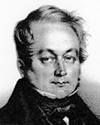
Died 7 Oct 1855 at age 72 (born 6 Oct 1783). quotes
French physiologist was first to demonstrate the distinct functions of the spinal nerve roots. With section experiments he confirmed Charles Bell’s idea: anterior roots are motor, dorsal roots sensory (the Bell-Magendie law). A pioneer of experimental physiology (with Johannes Peter Müller) and founder of experimental pharmacology, he tested drugs on animals and humans. He helped introduce alkaloids (such as morphine, strychnine, emetine, and quinine) into medical practice. Magendie trained a generation of physiologists, edited Journal de Physiologie Expérimentale, and described the median aperture of the brain’s fourth ventricle (foramen of Magendie), elucidating cerebrospinal fluid flow.«
French physiologist was first to demonstrate the distinct functions of the spinal nerve roots. With section experiments he confirmed Charles Bell’s idea: anterior roots are motor, dorsal roots sensory (the Bell-Magendie law). A pioneer of experimental physiology (with Johannes Peter Müller) and founder of experimental pharmacology, he tested drugs on animals and humans. He helped introduce alkaloids (such as morphine, strychnine, emetine, and quinine) into medical practice. Magendie trained a generation of physiologists, edited Journal de Physiologie Expérimentale, and described the median aperture of the brain’s fourth ventricle (foramen of Magendie), elucidating cerebrospinal fluid flow.«
A Biography of François Magendie, by Percy M. Dawson. - book suggestion.
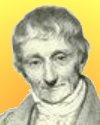
Died 7 Oct 1847 at age 77 (born 5 Feb 1770).
French mineralogist, geologist, and naturalist, who first arranged the geologic formations of the Tertiary Period (from 66.4 to 1.6 million years ago) in chronological order and described them. He made the first systematic study of trilobites, an extinct group of arthropods that became important in determining the chronology of Paleozoic strata (from 540 to 245 million years ago). He helped introduce the principle of geologic dating by the identification of distinctive fossils found in each stratum and noted that the Paris formations had been created under alternate freshwater and saltwater conditions. From 1800, he was also director of the Sèvres Porcelain Factory, improving ceramics and enameling, and made Sèvres the leading European factory of its kind.
French mineralogist, geologist, and naturalist, who first arranged the geologic formations of the Tertiary Period (from 66.4 to 1.6 million years ago) in chronological order and described them. He made the first systematic study of trilobites, an extinct group of arthropods that became important in determining the chronology of Paleozoic strata (from 540 to 245 million years ago). He helped introduce the principle of geologic dating by the identification of distinctive fossils found in each stratum and noted that the Paris formations had been created under alternate freshwater and saltwater conditions. From 1800, he was also director of the Sèvres Porcelain Factory, improving ceramics and enameling, and made Sèvres the leading European factory of its kind.
Died 7 Oct 1813 at age 67 (born 2 Oct 1746).
Swedish mineralogist.
Swedish mineralogist.
In 1970, BP made the first big oil find in the British sector of the North Sea. The Sea Quest drilling platform found found oil 2,135 metres below the seabed in a 170 metre layer in water depth of 128 metres. This was the first major oilfield discovered in the British sector of the North Sea. The oil is a valuable light crude with low wax and sulphur content. Production was inaugurated on 3 Nov 1975 by the Queen.
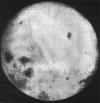
In 1959, the dark far side of the Moon was photographed for the first time and pictures relayed back to Earth by Russia's Luna 3 spacecraft. After passing the moon, the Luna 3 looked back from a distance of 63,500 km to take 29 photos of the sunlit far side of the moon. The photos, taken over a period of 40 mins. were developed onboard and radioed back to earth on 18 Oct 1959. They covered 70% of the far side. The photographs were very noisy and of low resolution, but many features could be recognized. Despite the poor quality, they provided the first view ever of this part of the moon. (The far side of the moon cannot be viewed from earth because the moon rotates and revolves in such a way that the same part always faces Earth.)
In 1954, in Poughkeepsie, IBM displayed a large all-transistor calculator needing only 5% of the power of comparable electronic ones. Three years later, in 1957, IBM introduced the IBM 608, the first all-transistor commercial calculator.
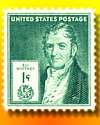
In 1940, a U.S. 1-cent stamp commemorating inventor Eli Whitney was issued, with first-day-of-issue ceremonies in Savannah, Georgia. The stamp was one of a series of 35 stamps released that year showing "Famous Americans" which also included five scientists and four other inventors. Whitney had been employed in Savannah to tutor the children of the owner of Mulberry Grove Plantation. There, having heard from the planters of the labour-intensive difficulty of separating seed from the cotton fibres, Whitney invented his famous cotton gin to accomplish this mechanically, in 1793. With this problem solved, cotton quickly spread as a newly valuable cash crop for farmers across the southern states.
In 1931, the first U.S.short-exposure infrared photograph taken of a large group of people in apparently total darkness was taken in Rochester, NY at the Eastman Kodak Research Laboratories. They were in a room that was flooded with invisible infrared light (waves 700 to 900 nanometers long, beyond the red end of the visible spectrum). A group of 50 people visiting the laboratory was photographed on a new photographic emulsion sensitive to infrared. Since then, scientists have made use of infrared photography in medical applications and aerial photography. Since plant chlorophyll reflects infrared rays more intensely than other green materials, infrared photos yield a precise indication of where vegetation is present on the ground.
In 1856, the first practical U.S. folding machine to fold book and newspaper sheets was patented by Cyrus Chambers, Jr. of Pennsylvania (No. 15,842). It made three right angle folds to produce a sixteen page folded signature. The machine was installed in the Bible printing house of Jasper Harding & Son, Philadelphia, Pa. Although the accuracy of early folders was poor, with hand folding still predominating for better grade work, development of the folding machine after 1862 was rapid, and in 1873 a machine was patented that would fold a 16-page section and one of 8 pages, inset the latter, and paste it in place. That same year devices to cut and slit paper as it went through the machine were introduced.
In 1806, Englishman Ralph Wedgwood secured the first patent for carbon paper, which he described as an “apparatus for producing duplicates of writings.” In his process, thin paper was saturated with printer's ink, then dried between sheets of blotting paper. His idea for the carbon paper was a byproduct of his invention of a machine to help blind people write, and the “black paper” was really just a substitute for ink. In its original form, Wedgwood's “Stylographic Writer” employed a metal stylus instead of a quill for writing, with the carbon paper placed between two sheets of paper in order to transfer a copy onto the bottom sheet.




