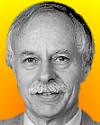
Born 30 Jan 1929; died 30 May 2022 at age 93.
Roger Newland Shepard was an American psychologist who was awarded the National Medal of Science (1995) for his research work that provided major new insights into the nature of mental processes, previously considered impossible to study. His results caused fundamental changes in both popular and scientific understanding of the nature of mental imagery. His work impacted further research in a wide range of fields, such as psychology, philosophy, computer science, linguistics and neuroscience. His basic research laid the theoretical groundwork for a number of significant applications developed by others, including enhancement of radiologists' ability to diagnose breast cancer, and prediction of the performance of prospective airplane pilots.«
Roger Newland Shepard was an American psychologist who was awarded the National Medal of Science (1995) for his research work that provided major new insights into the nature of mental processes, previously considered impossible to study. His results caused fundamental changes in both popular and scientific understanding of the nature of mental imagery. His work impacted further research in a wide range of fields, such as psychology, philosophy, computer science, linguistics and neuroscience. His basic research laid the theoretical groundwork for a number of significant applications developed by others, including enhancement of radiologists' ability to diagnose breast cancer, and prediction of the performance of prospective airplane pilots.«
Mind Sights: Original Visual Illusions, Ambiguities, and Other Anomalies, by Roger N. Shepard. - book suggestion.
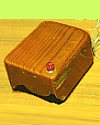
Early mouse
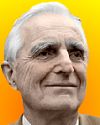
Douglas Carl Engelbart was an American electrical engineer and inventor who invented the computer mouse, which he developed in the 1960s and patented 17 Nov 1970. For input, he also collaborated in the invention of joystick, track ball and light pen devices. It was part of his larger work developing a computer graphical user interface (as opposed to merely keyboard input and text display). This involved a multiple window display, and the ability to display not only text, but also images, audio, video in a single document. After earning his Ph.D. (1955), he joined the Stanford Research Institute (SRI). There, he also worked on ARPANET. By 9 Dec 1968, at a computer conference, he conducted the world's first video conference, multiple window display, as well as collaboration online, and his mouse device for input. Further research was done at Xerox.«
Bootstrapping: Douglas Engelbart, Coevolution, and the Origins of Personal Computing, by Thierry Bardini. - book suggestion.
Born 30 Jan 1903; died 17 May 1991 at age 88.
George Evelyn Hutchinson was an English-born American zoologist known as the “father of modern limnology” for his ecological studies of freshwater lakes.
George Evelyn Hutchinson was an English-born American zoologist known as the “father of modern limnology” for his ecological studies of freshwater lakes.
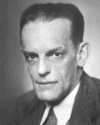
Born 30 Jan 1899; died 11 Aug 1972 at age 73.
American microbiologist who won the 1951 Nobel Prize for Physiology or Medicine for his research on yellow fever. Theiler's discovery that mice are susceptible to yellow fever facilitated research and eventual development of a vaccine against the disease in humans. Upon graduation from medical training in tropical medicine in London, he joined the department of tropical medicine at the Harvard Medical School, U.S. and studied infectious diseases. His research on yellow fever led to development of the first attenuated strain of the virus. He moved to the Rockefeller Institute for Medical, N.Y. (1930-64), where with his associates he developed the improved (17-D) vaccine, widely used for human immunization against yellow fever.
American microbiologist who won the 1951 Nobel Prize for Physiology or Medicine for his research on yellow fever. Theiler's discovery that mice are susceptible to yellow fever facilitated research and eventual development of a vaccine against the disease in humans. Upon graduation from medical training in tropical medicine in London, he joined the department of tropical medicine at the Harvard Medical School, U.S. and studied infectious diseases. His research on yellow fever led to development of the first attenuated strain of the virus. He moved to the Rockefeller Institute for Medical, N.Y. (1930-64), where with his associates he developed the improved (17-D) vaccine, widely used for human immunization against yellow fever.
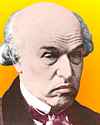
Born 30 Jan 1815; died 7 Dec 1898 at age 83.
Sir William Jenner was an English physician who distinguished between typhus and typhoid. Beginning in 1847 at the London Fever Hospital, by clinical and post mortem examination of thirty-six patients, he recognised that under the name of "continued fever" doctors had confused the two different diseases. He published the results in 1849. His reputation as a pathologist principally rests on making this distinction. In 1861 he was appointed physician extraordinary, and in 1862 physician-in-ordinary to Queen Victoria in 1862, and to the Prince of Wales (later Edward VIII) in 1863. He attended both the prince consort during the attack of typhoid fever which caused his death, and the prince of Wales in his attack of typhoid fever.«
Sir William Jenner was an English physician who distinguished between typhus and typhoid. Beginning in 1847 at the London Fever Hospital, by clinical and post mortem examination of thirty-six patients, he recognised that under the name of "continued fever" doctors had confused the two different diseases. He published the results in 1849. His reputation as a pathologist principally rests on making this distinction. In 1861 he was appointed physician extraordinary, and in 1862 physician-in-ordinary to Queen Victoria in 1862, and to the Prince of Wales (later Edward VIII) in 1863. He attended both the prince consort during the attack of typhoid fever which caused his death, and the prince of Wales in his attack of typhoid fever.«
Born 30 Jan 1744; died 22 Oct 1815 at age 71.
American blacksmith and inventor who began manufacturing farm tools, domestic utensils and cut nails using water power at Pawtucket, Rhode Island, from about 1783. He expanded with an anchor-forging shop the next year, and later added a metal rolling and slitting mill. About 1786, he began making iron screws for clothier's and oil presses. In 1791 he built a reverbatory air furnace. By 1800, Wilkinson and his sons had established themselves as the centre of iron products manufacturing in New England, supplying the machinery parts needed by new industries. Wilkinson joined his son-in-law Samuel Slater in the textile industry. Oziel's son, David furnished the iron forgings and castings for the first carding and spinning machines at Slater's Mill.«
American blacksmith and inventor who began manufacturing farm tools, domestic utensils and cut nails using water power at Pawtucket, Rhode Island, from about 1783. He expanded with an anchor-forging shop the next year, and later added a metal rolling and slitting mill. About 1786, he began making iron screws for clothier's and oil presses. In 1791 he built a reverbatory air furnace. By 1800, Wilkinson and his sons had established themselves as the centre of iron products manufacturing in New England, supplying the machinery parts needed by new industries. Wilkinson joined his son-in-law Samuel Slater in the textile industry. Oziel's son, David furnished the iron forgings and castings for the first carding and spinning machines at Slater's Mill.«

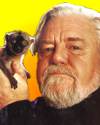
Died 30 Jan 1995 at age 70 (born 7 Jan 1925). quotes
British conservationist whose life work was the preservation of endangered animal species. The five years of his youth spent on the sub-tropical Greek island of Corfu yielded much material for his book My Family And Other Animals. After WW II, he joined Whipsnade Zoo in England as a keeper. In 1958, he established a wildlife preserve on the Channel Island of Jersey where he conducted scientific research, implementing new ways of raising and breeding rare animals. From his captive-breeding programs for endangered creatures he wished to return these animals back into the wild. He was a prolific author.«
British conservationist whose life work was the preservation of endangered animal species. The five years of his youth spent on the sub-tropical Greek island of Corfu yielded much material for his book My Family And Other Animals. After WW II, he joined Whipsnade Zoo in England as a keeper. In 1958, he established a wildlife preserve on the Channel Island of Jersey where he conducted scientific research, implementing new ways of raising and breeding rare animals. From his captive-breeding programs for endangered creatures he wished to return these animals back into the wild. He was a prolific author.«
My Family and Other Animals, by Gerald Durrell. - book suggestion.
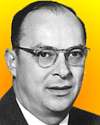
Died 30 Jan 1991 at age 82 (born 23 May 1908). quotes
American physicist who was cowinner of the Nobel Prize for Physics in both 1956 and 1972. He shared the 1956 prize with William B. Shockley and Walter H. Brattain for their joint invention of the transistor. With Leon N. Cooper and John R. Schrieffer he was awarded the 1972 prize for development of the theory of superconductors, usually called the BCS-theory (after the initials of their names).
American physicist who was cowinner of the Nobel Prize for Physics in both 1956 and 1972. He shared the 1956 prize with William B. Shockley and Walter H. Brattain for their joint invention of the transistor. With Leon N. Cooper and John R. Schrieffer he was awarded the 1972 prize for development of the theory of superconductors, usually called the BCS-theory (after the initials of their names).
True Genius: The Life And Science Of John Bardeen, by Lillian Hoddeson. - book suggestion.
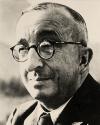
Died 30 Jan 1958 at age 70 (born 24 Jan 1888).
German aircraft engineer who built the first rocket-powered aircraft. He was chief designer of the Albatros Aircraft Company in Berlin before World War I. He founded the Heinkel-Flugzeugwerke at Warnemünde (1922), making at first seaplanes, and later bombers and fighters which achieved fame in World War II. He built the first jet plane, the HE-178 (1939), and the first rocket powered aircraft, the HE-176. After Adolf Hitler came to power, Heinkel's designs formed a vital part of the Luffwaffe's growing strength. Heinkel was a critic of Hitler's regime and in 1942 the government took control of his factories. At the end of the war Heinkel was arrested by the Allies but evidence of anti-Hitler activities led to his acquittal.
German aircraft engineer who built the first rocket-powered aircraft. He was chief designer of the Albatros Aircraft Company in Berlin before World War I. He founded the Heinkel-Flugzeugwerke at Warnemünde (1922), making at first seaplanes, and later bombers and fighters which achieved fame in World War II. He built the first jet plane, the HE-178 (1939), and the first rocket powered aircraft, the HE-176. After Adolf Hitler came to power, Heinkel's designs formed a vital part of the Luffwaffe's growing strength. Heinkel was a critic of Hitler's regime and in 1942 the government took control of his factories. At the end of the war Heinkel was arrested by the Allies but evidence of anti-Hitler activities led to his acquittal.
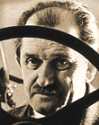
Died 30 Jan 1951 at age 75 (born 3 Sep 1875).
Austrian automotive engineer who designed the popular Volkswagen car. In 1900, as a young engineer and test driver, Porsche had devised the wheel hub motors on the Lohner-Porsche Electric Car exhibited at the Paris Exposition, making the name Porsche famous worldwide. In 1935, the brainchild of Adolph Hitler - the VW Beetle - was designed by Porsche. Hitler wanted a car built for the masses. By 1938 the first Beetle was completed - just before the outbreak of World War II. The car offered innovative technology, including an air-cooled motor, an atypical shape, no front grill and a rear motor. It was not until 1946 that the Volkswagen (which name means "people's car") went into series production. His son, Ferdinand, continued the business.
Austrian automotive engineer who designed the popular Volkswagen car. In 1900, as a young engineer and test driver, Porsche had devised the wheel hub motors on the Lohner-Porsche Electric Car exhibited at the Paris Exposition, making the name Porsche famous worldwide. In 1935, the brainchild of Adolph Hitler - the VW Beetle - was designed by Porsche. Hitler wanted a car built for the masses. By 1938 the first Beetle was completed - just before the outbreak of World War II. The car offered innovative technology, including an air-cooled motor, an atypical shape, no front grill and a rear motor. It was not until 1946 that the Volkswagen (which name means "people's car") went into series production. His son, Ferdinand, continued the business.
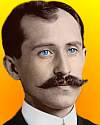
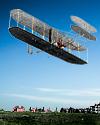
American inventor and aviator, who with his brother, Wilbur, invented the first powered airplane, Flyer, capable of sustained, controlled flight (17 Dec 1903). At Kitty Hawk, North Carolina, Orville made the first ever manned powered flight, airborn for 12 sec. By 1905, they had improved the design, built and and made several long flights in Flyer III, which was the first fully practical airplane (1905), able to fly up to 38-min and travel 24 miles (39-km). Their Model A was produced in 1908, capable of flight for over two hours of flight. They sold considerable numbers, but European designers became strong competitors. After Wilbur died of typhoid in 1912, Orville sold his interest in the Wright Company in 1915. more
To Conquer the Air: The Wright Brothers and the Great Race for Flight, by James Tobin. - book suggestion.
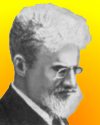
Died 30 Jan 1945 at age 90 (born 28 Nov 1854).
Austrian botanist, pioneer in the development of physiological plant anatomy, and the first person to study plant tissue culture (1921). In Physiologische Pflanzenanatomie (1884; "Physiological Plant Anatomy") he distinguished 12 tissue systems based on function (mechanical, absorptive, photosynthetic, etc.) Although his system was not accepted by other botanists, the analysis of the relations between structure and environment has been useful in the study of plant adaptations to different habitats. In 1902, he released the hypothesis of "totipotency" - that even the smallest unit of a cell is capable of forming a complete plant in the future. In 1913, Haberlandt discovered that a compound found in phloem had the ability to stimulate cell division.
Austrian botanist, pioneer in the development of physiological plant anatomy, and the first person to study plant tissue culture (1921). In Physiologische Pflanzenanatomie (1884; "Physiological Plant Anatomy") he distinguished 12 tissue systems based on function (mechanical, absorptive, photosynthetic, etc.) Although his system was not accepted by other botanists, the analysis of the relations between structure and environment has been useful in the study of plant adaptations to different habitats. In 1902, he released the hypothesis of "totipotency" - that even the smallest unit of a cell is capable of forming a complete plant in the future. In 1913, Haberlandt discovered that a compound found in phloem had the ability to stimulate cell division.
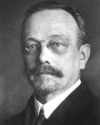
Died 30 Jan 1928 at age 60 (born 23 Apr 1867).
Johannes Andreas Grib Fibiger was a Danish pathologist who received the Nobel Prize for Physiology or Medicine in 1926 for his discovery of the Spiroptera carcinoma, achieving the first controlled induction of cancer in laboratory animals, a development of profound importance to cancer research.
Johannes Andreas Grib Fibiger was a Danish pathologist who received the Nobel Prize for Physiology or Medicine in 1926 for his discovery of the Spiroptera carcinoma, achieving the first controlled induction of cancer in laboratory animals, a development of profound importance to cancer research.
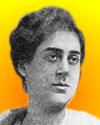
Died 30 Jan 1925 at age 54 (born 10 Sep 1870).
Lilian Suzette Gibbs was an independent English botanist who organized botanical expeditions to some of the most remote places on Earth. After her education at Swanley Horticultural College and in botany at the Royal College of Science, she made a botanical trip to Southern Rhodesia (Zimbabwe) in 1905, followed by expeditions in 1907 to Fiji and New Zealand, Queensland and Tasmania. In 1910, she became the first woman to reach the summit of Mount Kinabulu in Borneo. She contributed over 1,000 botanical specimens from that trip to the British Museum. Bambusa gibbsiae (Miss Gibbs's bamboo) was named for her. In 1912 she made a botanical trip to Iceland, and in 1913, to the East Indies and Dutch New Guinea.«
Lilian Suzette Gibbs was an independent English botanist who organized botanical expeditions to some of the most remote places on Earth. After her education at Swanley Horticultural College and in botany at the Royal College of Science, she made a botanical trip to Southern Rhodesia (Zimbabwe) in 1905, followed by expeditions in 1907 to Fiji and New Zealand, Queensland and Tasmania. In 1910, she became the first woman to reach the summit of Mount Kinabulu in Borneo. She contributed over 1,000 botanical specimens from that trip to the British Museum. Bambusa gibbsiae (Miss Gibbs's bamboo) was named for her. In 1912 she made a botanical trip to Iceland, and in 1913, to the East Indies and Dutch New Guinea.«
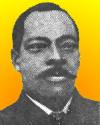
Died 30 Jan 1910 at age 53 (born 23 Apr 1856). quotes
American inventor who held numerous patents in diverse fields. As the most prolific black inventor by career of the late 19th and early 20th century in the U.S., he has been called the Black Edison. Wood's first patent (3 Jun 1884) was for a locomotive steam boiler. He started the Woods Electric Company, in Cincinnati, Ohio, to commercially develop a variety of electrical devices. In 1887 he patented his Synchronous Multiplex Railway Telegraph, which enabled moving railway trains to maintain communications links thus avoiding accidents. His other patents included a telephone transmitter, an electric railway, an electric incubator for hatching chickens (1900) and an important safety device - an automatic air-brake for railroad use (10 Jun 1902).« more
American inventor who held numerous patents in diverse fields. As the most prolific black inventor by career of the late 19th and early 20th century in the U.S., he has been called the Black Edison. Wood's first patent (3 Jun 1884) was for a locomotive steam boiler. He started the Woods Electric Company, in Cincinnati, Ohio, to commercially develop a variety of electrical devices. In 1887 he patented his Synchronous Multiplex Railway Telegraph, which enabled moving railway trains to maintain communications links thus avoiding accidents. His other patents included a telephone transmitter, an electric railway, an electric incubator for hatching chickens (1900) and an important safety device - an automatic air-brake for railroad use (10 Jun 1902).« more
Black Inventors in the Age of Segregation, by Rayvon Fouche. - book suggestion.
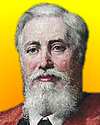
Died 30 Jan 1908 at age 75 (born 26 May 1832).
Scottish comparative anatomist who made anatomical, physical, and physiological researches, especially on the flight of insects, birds and bats. He began in 1861 as a house surgeon Royal Infirmary, Edinburgh, and a year later contributed dissections to the collection as assistant in the Hunterian Museum at the Royal College of Surgeons of England. By 1867, he became interested in the mechanical aspects of animal flight, and spent two years in Ireland in its study. In 1870, He published an article on the physiology of wings. Also experimenting on artificial flight, he wrote Animal Locomotion, or, Walking, Swimming, and Flying with a Dissertation on aeronautics (1873). For the last ten years of his life, he produced his magnum opus, the three-volume, Design in Nature (1908), published shortly after his death in 1908.«
Scottish comparative anatomist who made anatomical, physical, and physiological researches, especially on the flight of insects, birds and bats. He began in 1861 as a house surgeon Royal Infirmary, Edinburgh, and a year later contributed dissections to the collection as assistant in the Hunterian Museum at the Royal College of Surgeons of England. By 1867, he became interested in the mechanical aspects of animal flight, and spent two years in Ireland in its study. In 1870, He published an article on the physiology of wings. Also experimenting on artificial flight, he wrote Animal Locomotion, or, Walking, Swimming, and Flying with a Dissertation on aeronautics (1873). For the last ten years of his life, he produced his magnum opus, the three-volume, Design in Nature (1908), published shortly after his death in 1908.«
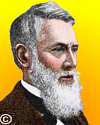
1865
Died 30 Jan 1888 at age 77 (born 18 Nov 1810). quotes
America's leading botanist in the mid-19th century, extensively studying North American flora, he did more work than any other botanist to unify the taxonomic knowledge of plants of this region. He was Darwin's strongest early supporter in the U.S.; in 1857, he was the third scientist to be told of his theory (after Joseph Hooker and Charles Lyell). He debated Louis Agassiz between 1859 and 1861 on variation and geographic distribution Gray's discovery of close affinities between East Asian and North American floras was a key piece of evidence in favor of evolution. Though not fully comfortable with selection, he argued that evolution was compatible with religious belief and slid towards theistic evolutionism. Gray co-authoredFlora of North America.
America's leading botanist in the mid-19th century, extensively studying North American flora, he did more work than any other botanist to unify the taxonomic knowledge of plants of this region. He was Darwin's strongest early supporter in the U.S.; in 1857, he was the third scientist to be told of his theory (after Joseph Hooker and Charles Lyell). He debated Louis Agassiz between 1859 and 1861 on variation and geographic distribution Gray's discovery of close affinities between East Asian and North American floras was a key piece of evidence in favor of evolution. Though not fully comfortable with selection, he argued that evolution was compatible with religious belief and slid towards theistic evolutionism. Gray co-authoredFlora of North America.
Asa Gray: American Botanist, Friend of Darwin, by A. Hunter Dupree. - book suggestion.
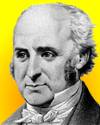
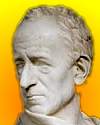
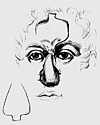
Joseph Constantine Carpue was an English surgeon and anatomist who introduced the Indian method rhinoplasty, reconstructing a nose from a flap of forehead skin. Having first practiced on several cadavers, Carpue operated at the Duke of York's Hospital, Chelsea, England, on a British military officer who had lost his nose to the toxic effects of mercury treatments for his liver, though his nasal bones were entire (23 Oct 1814), and another whose nose and cheek was mutilated by a sword. These two successful operations mark the first modern plastic surgery. He published the technique in 1816. However, it had been practiced from ancient times in India. Gaspar Tagliacotius, a Venetian surgeon had described, in 1598, how nose replacement skin could be grafted from the skin of the shoulder or arm, but the procedure fell into disuse in Italy.«[Image right: Plate from a Carpue publication showing a refined flap.] more
An Account of Two Successful Operations for Restoring a Lost Nose, by Joseph Constantine Carpue. - book suggestion.
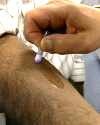
In 1998, a new glue, Dermabond, able to replace painful stitches, won the unanimous vote of a medical advisory panel for the Food and Drug Administration, which, in Aug 1998, approved it for marketing in the U.S. It was the first such product in the U.S. The manufacturer, Closure Medical, said Dermabond could seal off certain wounds quickly, without the need for painful shots, With the use of Dermabond, a wound can be kept closed, sterile and flexible while it is healing. A doctor simply presses the cut's edges together and paints the glue across the top. Proper medical application takes skill and practice, so the glue isn't meant for home use. This is medical-grade glue that is a chemical cousin of Crazy Glue (which is too toxic to repair cuts) using proprietary cyanoacrylate technology.

In 1995, the drughydroxyurea, the first effective treatment for sickle-cell anemia, was announced by the U.S. National Heart, Lung, and Blood Institute in Washington. (This was not a new drug, but it was a new application for a drug previously approved by the FDA for other medical conditions.) Trials had been so successful that scientists felt early announcement was preferable to a longer testing period. In sickle-cell anemia, red blood cells contain defective hemoglobin causing the erythrocytes to take on the "sickle" shape. The abnormal, rigid cells clog the blood vessels, resulting in painful episodes. Hydroxyurea, acts to increase the production of fetal hemoglobin, which researchers believe prevents erythrocytes from becoming rigid,
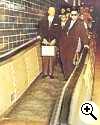
In 1958, the first two-way, moving sidewalk, 1,425 feet long, was put in service at Love Field Air Terminal in Dallas, TX. It consisted of three loops. In each loop a continuous rubber carpet was attached to a continuous train of wheeled pallets, flexibly interconnected so they could follow vertical or horizontal curves as required. It was known not only as a moving sidewalk, but also as a passenger conveyor.
more
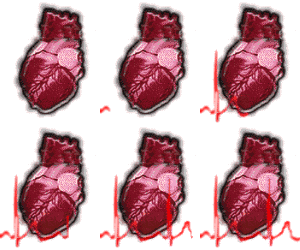
In 1957, an external artificial pacemaker with internal heart electrode is first used. To maintain a patient's heartbeat rhythm an electrode was sewn to the wall of the heart and connected through the chest to an external desk-top pulse generator. A team of scientists at the University of Minnesota, led by Dr C. Walton Lillehei, made this medical advance. However, such bulky equipment was not a good long-term solution since infection often occurred along the electrode wires, and the device required no interruption in the house electricity. So Dr. Lillehei also initiated research on the use of a small portable external pacemaker for these patients with heart block. This ultimately led to the development of the billion-dollar pacemaker industry.

In 1950, development of the hydrogen fusion bomb (H-bomb) was ordered by U.S. President Truman. The codename of "Super" for the project reflected the far greater power of this thermonuclear device over the earlier fission bombs used to end WW II.
Dark Sun: The Making of the Hydrogen Bomb, by Richard Rhodes. - book suggestion.
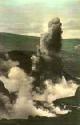
In 1901, the world's tallest geyser was discovered by Dr Humphrey Haines on the North Island of New Zealand. He was following up reports of great clouds of steam, and found the Waimangu Geyser near Rotorua. It appeared after an enormous eruption of Mt. Tarawera in 1886. The Waimangu Geyser was the largest geyser in the world and erupted on a 36 hour cycle for four years, hurling black mud and rocks in the air. Waimangu is Maori for "black water." It stopped in 1904 when a landslide changed the local water table. Eruptions would typically reach 600 feet. Some superbursts are known to have reached 1,600 feet (10 times as high as Yellowstone's famous Old Faithful, and which would be higher than the Empire State Building.)
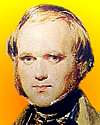
In 1868, Charles Darwin's book - Variation of Animals and Plants under Domestication - was published. He was 58. It is probably the second in importance of all his works. This was a follow-up work, written in response to criticisms that his theory of evolution was unsubstantiated. Darwin here supports his views via analysis of various aspects of plant and animal life, including an inventory of varieties and their physical and behavioral characteristics, and an investigation of the impact of a species' surrounding environment and the effect of both natural and forced changes in this environment.
From So Simple a Beginning: Darwin's Four Great Books, by Charles Darwin, Edward O. Wilson. - book suggestion.
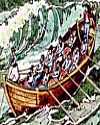
In 1790, the first lifeboat - built specially to rescue people from stormy sea, the Original, was first tested at sea by its English builder, Henry Greathead of South Shields. The Original was 30ft long, twelve oars, self-righting, and had seven hundredweight of cork for buoyancy. She went out to wrecks for forty years, saving hundreds of lives. It was built based on the design of William Wouldhave, parish clerk of South Shields, who won the prize offered by Newcastle businessmen following a local tragedy on Mar 1789. At the mouth of the river Tyne, the ship Adventure had ran ashore in a violent storm. Though in sight of help, the crew of eight all perished. Spectators offered local boatmen rewards to save the crew, but none would venture out to face certain death.




