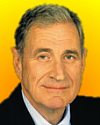
Born 18 Jan 1933.
American physicist, engineer, and inventor of the Dolby Noise Reduction Systems. Dolby is famous for innovations ranging from the high-quality cassettes we use in our car stereos to the latest digital surround sound in movie theaters. As a high school student he went to work part time for Ampex Corporation. While still in college, he joined the small team of Ampex engineers dedicated to inventing the world's first practical video tape recorder, the Ampex VTR (1956). Dolby founded his own company, Dolby Laboratories, in 1965. His first development was Dolby A-type noise reduction, an audio compression and expansion which dramatically reduced background hiss in professional tape recording with no discernible side-effects.
American physicist, engineer, and inventor of the Dolby Noise Reduction Systems. Dolby is famous for innovations ranging from the high-quality cassettes we use in our car stereos to the latest digital surround sound in movie theaters. As a high school student he went to work part time for Ampex Corporation. While still in college, he joined the small team of Ampex engineers dedicated to inventing the world's first practical video tape recorder, the Ampex VTR (1956). Dolby founded his own company, Dolby Laboratories, in 1965. His first development was Dolby A-type noise reduction, an audio compression and expansion which dramatically reduced background hiss in professional tape recording with no discernible side-effects.
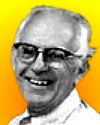
Born 18 Jan 1921; died 19 Jun 2003 at age 82.
Belding Hibbard Scribner was an American physician who invented the Scribner shunt, making long-term kidney dialysis possible. The dialysis machine, which filters the blood of kidney disease patients, as originally developed by Dr. Willem J. Kolff, used glass tubes that were inserted into veins and arteries. These were painful and could not be used indefinitely because of progressive damage to the blood vessels. Scribner's key contribution (1960) was the shunt, a device implanted in a patient that allowed doctors to tap into their blood vessels and keep them on dialysis indefinitely. Scribner also led a team that developed the “artificial gut,” a method using a catheter to provide nourishment to patients who have lost their stomachs and intestines.
Belding Hibbard Scribner was an American physician who invented the Scribner shunt, making long-term kidney dialysis possible. The dialysis machine, which filters the blood of kidney disease patients, as originally developed by Dr. Willem J. Kolff, used glass tubes that were inserted into veins and arteries. These were painful and could not be used indefinitely because of progressive damage to the blood vessels. Scribner's key contribution (1960) was the shunt, a device implanted in a patient that allowed doctors to tap into their blood vessels and keep them on dialysis indefinitely. Scribner also led a team that developed the “artificial gut,” a method using a catheter to provide nourishment to patients who have lost their stomachs and intestines.
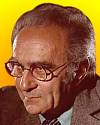
Born 18 Jan 1908; died 22 Aug 1974 at age 66. quotes
Polish-British mathematician and science writer who eloquently presented the case for the humanistic aspects of science as the writer and presenter of the BBC television series, The Ascent of Man. Bronowski, who had a Ph.D. in algebraic geometry, spent WW II in Operations Research, and was an official observer of the after-effects of the Nagasaki and Hiroshima bombings. After this experience, he turned to biology, to better understand the nature of violence.«
Polish-British mathematician and science writer who eloquently presented the case for the humanistic aspects of science as the writer and presenter of the BBC television series, The Ascent of Man. Bronowski, who had a Ph.D. in algebraic geometry, spent WW II in Operations Research, and was an official observer of the after-effects of the Nagasaki and Hiroshima bombings. After this experience, he turned to biology, to better understand the nature of violence.«
The Ascent of Man, by Jacob Bronowski. - book suggestion.
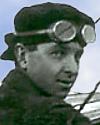
Born 18 Jan 1888; died 27 Jan 1989 at age 101.
English aircraft designer and aircraft manufacturer whose pioneering firm was famous for British WWI military aircraft. Sopwith's interest in motor racing led in 1910 to flying a monoplane, with which he won the Baron de Forest prize for flying across the English Channel on 18 Dec 1910. In June 1912, Sopwith with Fred Sigrist and others set up The Sopwith Aviation Company and began manufacturing the Sopwith Tabloid biplane. Piloted by Harry Hawker this plane won the British altitude record of 13,000 ft (4000 m) on 16 June 1913. During WWI, the firm manufactured some of the best Allied fighters, including the legendary Sopwith Camel (named after the fuselage shape with a humplike cowl over the guns, in front of the pilot), Sopwith Pup, and Sopwith Snipe. He lived to the age of 101.«
English aircraft designer and aircraft manufacturer whose pioneering firm was famous for British WWI military aircraft. Sopwith's interest in motor racing led in 1910 to flying a monoplane, with which he won the Baron de Forest prize for flying across the English Channel on 18 Dec 1910. In June 1912, Sopwith with Fred Sigrist and others set up The Sopwith Aviation Company and began manufacturing the Sopwith Tabloid biplane. Piloted by Harry Hawker this plane won the British altitude record of 13,000 ft (4000 m) on 16 June 1913. During WWI, the firm manufactured some of the best Allied fighters, including the legendary Sopwith Camel (named after the fuselage shape with a humplike cowl over the guns, in front of the pilot), Sopwith Pup, and Sopwith Snipe. He lived to the age of 101.«
Pure Luck: the Authorized Biography of Thomas Sopwith, by Alan Bramson. - book suggestion.
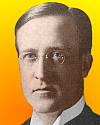
Born 18 Jan 1873; died 11 Mar 1922 at age 49.
Gordon Morton McGregor was a Canadian industrialist who established the Ford Motor Company of Canada. He signed an agreement with Henry Ford on 10 Aug 1904 which gave 51% of the stock of Ford of Canada to the Shareholders of Ford U.S.A. Earlier, McGregor began in business in partnership with his father manufacturing wagons. McGregor was aware of Henry Ford's operation in America, which he visited, and they were far-sighted in sharing the opportunity to build cars in Canada. McGregor, at the age of 31, had the drive and perseverance to be successful. Production in Windsor began on 10 Oct 1904, and by the end of the calendar year 25 cars had been produced. Assembly initially used parts shipped from Detroit, with bodies and wheel made in Canada. In time, parts were built in Canada. An engine plant opened in May 1913.«
Gordon Morton McGregor was a Canadian industrialist who established the Ford Motor Company of Canada. He signed an agreement with Henry Ford on 10 Aug 1904 which gave 51% of the stock of Ford of Canada to the Shareholders of Ford U.S.A. Earlier, McGregor began in business in partnership with his father manufacturing wagons. McGregor was aware of Henry Ford's operation in America, which he visited, and they were far-sighted in sharing the opportunity to build cars in Canada. McGregor, at the age of 31, had the drive and perseverance to be successful. Production in Windsor began on 10 Oct 1904, and by the end of the calendar year 25 cars had been produced. Assembly initially used parts shipped from Detroit, with bodies and wheel made in Canada. In time, parts were built in Canada. An engine plant opened in May 1913.«
In the Shadow of Detroit: Gordon M. McGregor, Ford of Canada, and Motoropolis, by David Roberts. - book suggestion.
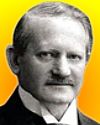
Born 18 Jan 1861; died 21 May 1923 at age 62.
Johann (Hans) Wilhelm Goldschmidt was a German chemist who invented the thermite (alumino-thermic) process which was adopted worldwide for welding railroad and streetcar rails, and is still in use for on-site welding. The first track so welded was laid in Essen. This method evolved from his Goldschmidt reduction process that he began investigating in 1893 for the preparation of carbon-free metals. He used the reactions of oxides of certain metals with aluminum to yield aluminum oxide and the free metal. It has been applied to separate chromium, manganese, and cobalt from their oxide ores. Goldschmidt was also a co-inventor of sodium amalgam. His father, Theodor Goldschmidt, founded Chemische Fabrik Th. Goldschmidt which became the modern company, Degussa.«[Date of death corrected from 25 May (EB) to 21 May given in journals.] more
Johann (Hans) Wilhelm Goldschmidt was a German chemist who invented the thermite (alumino-thermic) process which was adopted worldwide for welding railroad and streetcar rails, and is still in use for on-site welding. The first track so welded was laid in Essen. This method evolved from his Goldschmidt reduction process that he began investigating in 1893 for the preparation of carbon-free metals. He used the reactions of oxides of certain metals with aluminum to yield aluminum oxide and the free metal. It has been applied to separate chromium, manganese, and cobalt from their oxide ores. Goldschmidt was also a co-inventor of sodium amalgam. His father, Theodor Goldschmidt, founded Chemische Fabrik Th. Goldschmidt which became the modern company, Degussa.«[Date of death corrected from 25 May (EB) to 21 May given in journals.] more
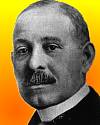
Born 18 Jan 1858; died 4 Aug 1931 at age 73.
American physician remembered as the first black American to suture the pericardium (the fluid sac surrounding the heart muscle). On 9 Jul 1893, he operated on a 24-yr-old stabbing victim and sutured the wound to the pericardium, but left the heart muscle itself alone, allowing a small (1/10" long) nick to heal on its own. The patient recovered and lived for at least 20 years afterward. (A similar procedure was performed earlier by H.C. Dalton on 6 Sep 1891. The first surgery on heart muscle was done on 10 Sep 1896, by Ludwig Rehn who sutured a myocardial laceration). Williams helped establish the Provident Hospital and Medical Center in Chicago (1891), the oldest free-standing black owned hospital in the U.S.«
American physician remembered as the first black American to suture the pericardium (the fluid sac surrounding the heart muscle). On 9 Jul 1893, he operated on a 24-yr-old stabbing victim and sutured the wound to the pericardium, but left the heart muscle itself alone, allowing a small (1/10" long) nick to heal on its own. The patient recovered and lived for at least 20 years afterward. (A similar procedure was performed earlier by H.C. Dalton on 6 Sep 1891. The first surgery on heart muscle was done on 10 Sep 1896, by Ludwig Rehn who sutured a myocardial laceration). Williams helped establish the Provident Hospital and Medical Center in Chicago (1891), the oldest free-standing black owned hospital in the U.S.«
Daniel Hale Williams: Negro Surgeon, by Helen Buckler. - book suggestion.
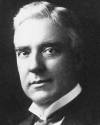
Born 18 Jan 1854; died 13 Dec 1934 at age 80. quotes
American telephone pioneer and shipbuilder who was one of the original organizers of the Bell Telephone Company. He later turned to shipbuilding and constructed a number of vessels for the United States government. In 1872 he got a job in Boston in the electrical shop of Charles Williams, Jr., at 109 Court Street. A number of inventors had their models made at Williams' shop, and in 1874 Watson did some work for Alexander Graham Bell, with whom he worked thereafter during all the experimental period of the telephone and the years that followed until it was commercially established. Thomas Watson was given an interest in the business (1877) and when Bell went to Europe he became the research and technical head of the Bell Telephone Company.
American telephone pioneer and shipbuilder who was one of the original organizers of the Bell Telephone Company. He later turned to shipbuilding and constructed a number of vessels for the United States government. In 1872 he got a job in Boston in the electrical shop of Charles Williams, Jr., at 109 Court Street. A number of inventors had their models made at Williams' shop, and in 1874 Watson did some work for Alexander Graham Bell, with whom he worked thereafter during all the experimental period of the telephone and the years that followed until it was commercially established. Thomas Watson was given an interest in the business (1877) and when Bell went to Europe he became the research and technical head of the Bell Telephone Company.
Thomas A.Watson: Does That Name Ring a Bell?, by Ted Clarke. - book suggestion.
Born 18 Jan 1825; died 9 Aug 1899 at age 74. quotes
English chemist who was one of the first investigators in the field of structural chemistry, invented the chemical bond, and became known as the father of valency. He studied organometallic compounds - hybrid molecules of the familiar organic non-metallic elements (such as carbon, hydrogen, nitrogen, sulphur, phosphorus) with true metals. By 1850, he had prepared small organic molecules containing such metals as zinc. Subsequently, he devised the theory of valence (announced 10 May 1852), that each type of atom has a fixed capacity for combination with other atoms. For his investigations on water purification and for his services to the government as water analyst, Frankland was knighted in 1897.
English chemist who was one of the first investigators in the field of structural chemistry, invented the chemical bond, and became known as the father of valency. He studied organometallic compounds - hybrid molecules of the familiar organic non-metallic elements (such as carbon, hydrogen, nitrogen, sulphur, phosphorus) with true metals. By 1850, he had prepared small organic molecules containing such metals as zinc. Subsequently, he devised the theory of valence (announced 10 May 1852), that each type of atom has a fixed capacity for combination with other atoms. For his investigations on water purification and for his services to the government as water analyst, Frankland was knighted in 1897.
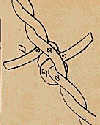
American inventor who was an Illinois farmer when he developed the design of the first commercial barbed wire, patented 24 Nov 1874, a product that would transform the West. Before this innovation, settlers on the treeless plains had no easy way to fence livestock away from cropland, and ranchers had no way to prevent their herds from roaming far and wide. Glidden's barbed wire opened the plains to large-scale farming, and closed the open range, bringing the era of the cowboy and the round-up to an end. With his partner, Isaac L. Ellwood, Glidden formed the Barb Fence Company of De Kalb, Illinois, and quickly became one of the wealthiest men in the nation.[Image right: detail from patent application diagram. source]
Barbs, Prongs, Points, Prickers, and Stickers... Barbed Wire, by Robert T. Clifton. - book suggestion.
Born 18 Jan 1799; died 15 Jun 1869 at age 70.
American inventor and manufacturer who pioneered the industrial use of graphite and many other innovations. As a printer and a photographer, he designed a mirror into a camera that was the forerunner of the viewfinder, patented a double-crank steam engine, evolved a method of printing banknotes to foil counterfeiters, and patented a new method for tunneling under water. As a manufacturer and entrepreneur, Joseph Dixon produced the first pencil made in the U.S., 2 Apr 1827, and was responsible for the development of the graphite industry there. When he died, the Joseph Dixon Crucible Company was the largest manufacturer of graphite products in the world. His friends included the American inventors Fulton, Morse, and Bell.
American inventor and manufacturer who pioneered the industrial use of graphite and many other innovations. As a printer and a photographer, he designed a mirror into a camera that was the forerunner of the viewfinder, patented a double-crank steam engine, evolved a method of printing banknotes to foil counterfeiters, and patented a new method for tunneling under water. As a manufacturer and entrepreneur, Joseph Dixon produced the first pencil made in the U.S., 2 Apr 1827, and was responsible for the development of the graphite industry there. When he died, the Joseph Dixon Crucible Company was the largest manufacturer of graphite products in the world. His friends included the American inventors Fulton, Morse, and Bell.
The Pencil: A History of Design and Circumstance, by Henry Petroski. - book suggestion.
Born 18 Jan 1779; died 12 Sep 1869 at age 90.
English physician who, in 1814, invented a "log-log" slide rule for calculating the roots and powers of numbers. After studying medicine at the University of Edinburgh, he helped establish a medical school at Manchester, and practiced in London (1808-40). Upon retirement, from age 61 to 73, he produced his famous Thesaurus of English Words and Phrases (1852). He was a fellow of the Royal Society from 1815, and its secretary from 1827.
English physician who, in 1814, invented a "log-log" slide rule for calculating the roots and powers of numbers. After studying medicine at the University of Edinburgh, he helped establish a medical school at Manchester, and practiced in London (1808-40). Upon retirement, from age 61 to 73, he produced his famous Thesaurus of English Words and Phrases (1852). He was a fellow of the Royal Society from 1815, and its secretary from 1827.
Born 18 Jan 1734; died 22 Feb 1794 at age 60. quotes
German physiologist, known as the "founder of modern embryology." In Theoria Generationis (1759) he first wrote an epigenetic theory of development: that the organs of living things take shape gradually from non-specific tissue. Wolff applied the microscope to the study of animal embryology and remarked that "the particles which constitute all animal organs in their earliest inception are little globules, which may be distinguished under a microscope." The book was ignored for half a century, as the prevailing idea was held that life begins preformed in a small body that grows larger in the same form. His name is found describing parts of the kidneys of embryos: the Wolffian body and the Wolffian ducts.
German physiologist, known as the "founder of modern embryology." In Theoria Generationis (1759) he first wrote an epigenetic theory of development: that the organs of living things take shape gradually from non-specific tissue. Wolff applied the microscope to the study of animal embryology and remarked that "the particles which constitute all animal organs in their earliest inception are little globules, which may be distinguished under a microscope." The book was ignored for half a century, as the prevailing idea was held that life begins preformed in a small body that grows larger in the same form. His name is found describing parts of the kidneys of embryos: the Wolffian body and the Wolffian ducts.

(EB)
Died 18 Jan 1995 at age 91 (born 24 Mar 1903).
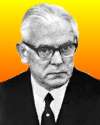
German biochemist who was the co-winner (with Leopold Ruzicka) of the 1939 Nobel Prize for Chemistry for pioneering work (1929-34) on sex hormones, primarily the isolation of estrone (a hormone that influences development of the female reproductive tract.) Although forced by the Nazi government to refuse the prize, he was able to accept the honour in 1949.
German biochemist who was the co-winner (with Leopold Ruzicka) of the 1939 Nobel Prize for Chemistry for pioneering work (1929-34) on sex hormones, primarily the isolation of estrone (a hormone that influences development of the female reproductive tract.) Although forced by the Nazi government to refuse the prize, he was able to accept the honour in 1949.
Died 18 Jan 1971 at age 87 (born 30 Sep 1883).
American civil engineer whose professional and political activities built on her family's tradition of women leaders. In 1905, she was the first woman in the U.S. to obtain a degree in civil engineering and the first junior member of the American Society of Civil Engineers. Fresh from college, she wrote a paper on the water supply of Washington, DC which was a reference for studies on the transport of solids in liquids for over 50 years. In 1908, she married Lee De Forest, inventor of the radio vacuum tube, for whom she worked as a laboratory assistant until 1909, when they separated (they divorced in 1912). In 1908, on a honeymoon trip to France, De Forest transmitted voice communication from the Eiffel Tower to receivers 500 miles away.
American civil engineer whose professional and political activities built on her family's tradition of women leaders. In 1905, she was the first woman in the U.S. to obtain a degree in civil engineering and the first junior member of the American Society of Civil Engineers. Fresh from college, she wrote a paper on the water supply of Washington, DC which was a reference for studies on the transport of solids in liquids for over 50 years. In 1908, she married Lee De Forest, inventor of the radio vacuum tube, for whom she worked as a laboratory assistant until 1909, when they separated (they divorced in 1912). In 1908, on a honeymoon trip to France, De Forest transmitted voice communication from the Eiffel Tower to receivers 500 miles away.
Died 18 Jan 1963 at age 63 (born 1 Jun 1899). quotes
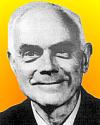
English mathematician whose contributions to analysis placed him in the forefront of his profession. His contributions helped resolve the differences between the general theory of quantum mechanics and the methods used to solve particular problems in quantum theory. All Titchmarsh's work is in analysis. His early studies were on Fourier series, Fourier integrals, functions of a complex variable, integral equations and the Riemann zeta function. From 1939, Titchmarsh concentrated on the theory of series expansions of eigenfunctions of differential equations, work which helped to resolve problems in quantum mechanics. His work on this topic occupied him for the last 25 years of his life.
English mathematician whose contributions to analysis placed him in the forefront of his profession. His contributions helped resolve the differences between the general theory of quantum mechanics and the methods used to solve particular problems in quantum theory. All Titchmarsh's work is in analysis. His early studies were on Fourier series, Fourier integrals, functions of a complex variable, integral equations and the Riemann zeta function. From 1939, Titchmarsh concentrated on the theory of series expansions of eigenfunctions of differential equations, work which helped to resolve problems in quantum mechanics. His work on this topic occupied him for the last 25 years of his life.
Theory of Functions, by Edward Charles Titchmarsh. - book suggestion.
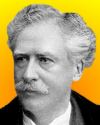
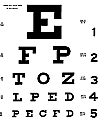
Dutch ophthalmologist whose Snellen Chart imprinted with lines of black letters is used for testing visual acuity. Test types were invented in 1843 by Heinrich Kuechler (1811-1873) and were improved by the Vienna oculist Eduard Jaeger Ritter von Jaxtthal (1818-1884) in 1854. Shortly after this Snellen invented his chart of square shaped letters. This chart soon gained acceptance around the world. The Snellen fraction is a ratio, for instance 20/20 or 20/100 (metric equivalent 6/6, 6/30), measuring the acuity of a person's eyesight compared to a standard observer with good normal acuity. 20/20 means he can resolve 2 target features at 20 feet.[Image right: Snellen-type acuity chart (source)]
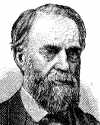
Died 18 Jan 1903 at age 80 (born 31 Jul 1822).
American engineer, industrialist, made first Bessemer steel in the US. He was also a philanthropist, and politician who in 1886 defeated Henry George and Theodore Roosevelt to become mayor of New York City. Hewitt was a partner in a company owning several iron works. At the Cheltenham meeting of the British Association for the Advancement of Science in the summer of 1856 he heard the presentation of Henry Bessemer on the production of steel without fuel. Within the same year, Hewitt arranged an experiment with that process at the furnace of Cooper and Hewitt, at Philipsburgh, in New Jersey, with successful results.
American engineer, industrialist, made first Bessemer steel in the US. He was also a philanthropist, and politician who in 1886 defeated Henry George and Theodore Roosevelt to become mayor of New York City. Hewitt was a partner in a company owning several iron works. At the Cheltenham meeting of the British Association for the Advancement of Science in the summer of 1856 he heard the presentation of Henry Bessemer on the production of steel without fuel. Within the same year, Hewitt arranged an experiment with that process at the furnace of Cooper and Hewitt, at Philipsburgh, in New Jersey, with successful results.
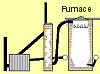
typical layout 1870s hot air blast furnace
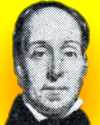
Scottish inventor who introduced the use of a hot-air blast instead of a cold-air blast for the smelting of iron, which he patented on 1 Oct 1828. His process reduced the amount of coal needed and increased efficiency to satisfy the demands of the rail and shipbuilding industries. While manager of the Glasgow Gas-works, he had experimented with the effect of heated air on the illuminating power of gas, by bringing up a stream of it in a tube so as to surround the gas burner. He found the combustion of the gas was more intense and brighter. Then, experimenting on a common smith’s fire, by blowing the fire with heated air, the effect was the same; the fire was much more brilliant, and accompanied by an unusually intense degree of heat.« more
The British Iron Industry, 1700-1850, by J.R. Harris. - book suggestion.
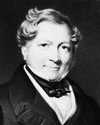
(EB)
Died 18 Jan 1861 at age 77 (born 7 Aug 1783).
Pioneering English inventor of lace-making machinery. As a boy, Heathcoat made stockings and became familiar with the machines and used this knowledge to develop and patent his lace net machine (1809) which was capable of the intricate, complicated motions and delicate operations needed to produce lace. His machines made lace hundreds of times faster than it could be manufactured by hand. He established a company in 1808 and based his original factory in Nottingham. However in 1816, the Luddites burnt down the factory and destroyed most of his machines, and so he relocated the company to Tiverton, Devon, where he had previously purchased an old woolen mill on the banks of the River Exe.Image: Heathcoat, detail of an engraving by T.L. Atkinson after a portrait by W. Beetham, mid-19th century.
Pioneering English inventor of lace-making machinery. As a boy, Heathcoat made stockings and became familiar with the machines and used this knowledge to develop and patent his lace net machine (1809) which was capable of the intricate, complicated motions and delicate operations needed to produce lace. His machines made lace hundreds of times faster than it could be manufactured by hand. He established a company in 1808 and based his original factory in Nottingham. However in 1816, the Luddites burnt down the factory and destroyed most of his machines, and so he relocated the company to Tiverton, Devon, where he had previously purchased an old woolen mill on the banks of the River Exe.Image: Heathcoat, detail of an engraving by T.L. Atkinson after a portrait by W. Beetham, mid-19th century.
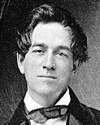
Died 18 Jan 1859 at age 51 (born 25 Sep 1807).
American telegraph pioneer and an associate and financial backer of Samuel F.B. Morse in the experimentation that made the telegraph a commercial reality. The final form of the Morse code was perfected by Vail who simplified the whole process by introducing the telegraph key. Vail is responsible for the efficiency of the code, using the principle that the most frequently sent letters should have the shortest code.
American telegraph pioneer and an associate and financial backer of Samuel F.B. Morse in the experimentation that made the telegraph a commercial reality. The final form of the Morse code was perfected by Vail who simplified the whole process by introducing the telegraph key. Vail is responsible for the efficiency of the code, using the principle that the most frequently sent letters should have the shortest code.
Died 18 Jan 1782 at age 74 (born 10 Apr 1707).
(1st Baronet) British physician, an early exponent of the importance of ordinary putrefactive processes in the production of disease. His application of this principle to the administration of hospitals and army camps has earned him distinction as the founder of modern military medicine.
(1st Baronet) British physician, an early exponent of the importance of ordinary putrefactive processes in the production of disease. His application of this principle to the administration of hospitals and army camps has earned him distinction as the founder of modern military medicine.
In 1994, the U.S. Department of Energy announced production of solar panels giving nearly twice the efficiency of existing panels. Made by United Solar Systems of Troy, Mich., these amorphous silicon submodule (1 ft2) panels converted 10.2% of solar energy into electricity, as compared to 6% previously possible. This was possible by using new thin-film photovoltaic technology. The company has subsequently produced flexible solar shingles based on thin film photovoltaics that can permit the roofs of ordinary commercial and residential buildings to evolve from simply providing protection from the weather to becoming a source of much-needed electric power.
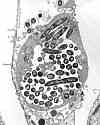
In 1977, scientists at the Centers for Disease Control (CDC) in Atlanta, Georgia, USA, first announced* that they had sufficient laboratory evidence to implicate a bacterium as the cause of Legionnaire's Disease, now named Legionella pneumophila. An outbreak of this disease in Philadelphia in 1976, largely among people attending a state convention of the American Legion, led to the name "Legionnaires' Disease." After the bacterium causing the illness was named, the name of the illness was changed to legionellosis. The scientific paper describing the isolation of the bacterium as published 1 Dec 1977 in The New England Journal of Medicine.[Image: Legionella pneumophila multiplying inside a cultured human lung fibroblast. Multiple intracellular bacilli, including dividing bacilli, are visible in longitudinal and cross section. Transmission electron micrograph.]
In 1936, the first live giant panda outside China was brought, by clothing designer Ruth Harkness, to the U.S. from China. Named Su-Lin, the male bear cub arrived in San Francisco, Cal., and was subsequently sold to the Brookfield Zoo for $8,750, but lived only until April 1938. Harkness’ book The Lady and the Panda, published in 1938 became a best seller.
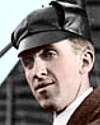
In 1911, the first landing of an aircraft on a ship took place as pilot Lt. Eugene B. Ely brought his 50-hp Curtiss pusher biplane in for a safe landing on a 119-ft wooden platform attached the deck of the U.S.S. Pennsylvania in San Francisco Harbor. To arrest his plane upon landing, its landing gear was provided with hooks adapted to catch ropes secured by sandbags stretched across the landing platform. Improved versions of this ingenious arrangement were to become standard equipment on aircraft carriers. After spending an hour aboard the ship, he took off and flew back to his hangar near San Francisco. These flights demonstrated the adaptability of aircraft to ship-board operations. The previous year, on 14 Nov 1910 he first made a take off from a ship.
In 1896, an x-ray machine was not exhibited at Casino Chambers, New York City, though some sources state it was. The news of Wilhelm Röntgen's discovery of the astonishingly penetrating X-rays had only been revealed to the world earlier in the month. So, riding on the wave of that publicity, the Cabaret du Neant opened, charging 25 cents admission to see the “Parisian sensation.” What the audiences actually saw was only a theatrical illusion of an x-ray image using only magic lantern techniques and the Peppers Ghost effect. No actual x-ray equipment was used. However, just a few days earlier, the first X-ray photograph in the U.S. has been credited to have been taken by Dr. Henry Lewis Smith in Davidson, N.C., on 12 Jan 1896. He had acted very quickly, as Röntgen made his discovery on 8 Nov 1895, announced it on 1 Jan 1896, and the first newspaper report, in Austria, was on 5 Jan 1896.«[The numerous incorrect statements on the web about this “exhibition” are likely a viral effect, perhaps resulting from an erroneous entry in a reference book. According to the 4th edition (1981) of Joseph Nathan Kane, Famous First Facts, “the first x-ray machine in the U.S. was exhibited on January 18th, 1896. Viewers were charged 25 cents admission to see the ‘Parisian sensation.’” However, webmaster found no corroborating report in the New York Times. Readers should note that the entry had been removed by the 6th edition (2006). Instead, see New York World (18 Jan 1896), 10. Thank you to Lita Tirak for providing that reference with authentic information.]
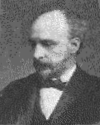
In 1895, James Dewar demonstrated the intimate connection between phosphorescence and photographic action of the electric light on bodies cooled to the temperature of boiling liquid air. Presented at the Royal Institution, these experiments were reported as “very remarkable.”
more
In 1733, a white bear cub, captured in Greenland, was exhibited for the first time in the U.S. The 9-month-old cub, named "Ursa Major" was shown in a cage at Clark's Wharf in Boston's north end.





