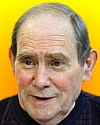
Born 13 Jan 1927. quotes
South African biologist who shared (with H. Robert Horvitz and John E. Sulston) the Nobel Prize in Physiology or Medicine for 2002 for their discoveries concerning how the genes regulate organ development and programmed cell death (apoptosis). Brenner established Caenorhabditis elegans as a model organism for the investigation of animal development including neural development. He chose this organism, a 1-mm-long soil roundworm, because of its simple structure, ease to grow in bulk populations, and finding that it is convenient for genetic analysis.
South African biologist who shared (with H. Robert Horvitz and John E. Sulston) the Nobel Prize in Physiology or Medicine for 2002 for their discoveries concerning how the genes regulate organ development and programmed cell death (apoptosis). Brenner established Caenorhabditis elegans as a model organism for the investigation of animal development including neural development. He chose this organism, a 1-mm-long soil roundworm, because of its simple structure, ease to grow in bulk populations, and finding that it is convenient for genetic analysis.
My Life in Science, by Dr. Sydney Brenner. - book suggestion.
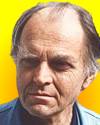
Born 13 Jan 1924; died 11 Feb 1994 at age 70. quotes
Austrian-American philosopher of science whose provocative critiques sparked discussions on the nature of scientific inquiry. His most influential work, Against Method (1975), challenged the notion that science follows a single, fixed methodology, instead advocating for an “anything goes” approach. He held that scientific progress often results from breaking traditional rules rather than adhering to them, citing historical examples such as Galileo’s defense of heliocentrism. Feyerabend emphasized the role of social, historical, and political factors in shaping scientific theories. He became an American citizen in 1935, but spent parts of his his life in other countries, including England and New Zealand. He also wrote Science in a Free Society.«
Austrian-American philosopher of science whose provocative critiques sparked discussions on the nature of scientific inquiry. His most influential work, Against Method (1975), challenged the notion that science follows a single, fixed methodology, instead advocating for an “anything goes” approach. He held that scientific progress often results from breaking traditional rules rather than adhering to them, citing historical examples such as Galileo’s defense of heliocentrism. Feyerabend emphasized the role of social, historical, and political factors in shaping scientific theories. He became an American citizen in 1935, but spent parts of his his life in other countries, including England and New Zealand. He also wrote Science in a Free Society.«
Born 13 Jan 1900; died 17 Oct 1978 at age 78.
Gertrude Mary Cox was a statistician who was a pioneer in the development of modern statistical methods. She was the first woman to receive a professional appointment at North Carolina State University, where from 1940, she headed the newly established Department of Experimental Statistics. Even after her official retirement, she continued to promote the development of statistical programs with work in Thailand and Egypt. Cox co-authored (with William G. Cochran) the classic book, Experimental Designs (1950). She stressed that before beginning research, the outline of the data analysis plan should be drawn up. This approach avoids afterwards choosing analysis to give preconceived desired results.«
Gertrude Mary Cox was a statistician who was a pioneer in the development of modern statistical methods. She was the first woman to receive a professional appointment at North Carolina State University, where from 1940, she headed the newly established Department of Experimental Statistics. Even after her official retirement, she continued to promote the development of statistical programs with work in Thailand and Egypt. Cox co-authored (with William G. Cochran) the classic book, Experimental Designs (1950). She stressed that before beginning research, the outline of the data analysis plan should be drawn up. This approach avoids afterwards choosing analysis to give preconceived desired results.«
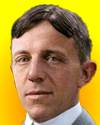
Born 13 Jan 1876; died 28 Oct 1965 at age 89.
Luther Pfahler Eisenhart was an American mathematician who was active in differential and Riemann geometry, plus contributions in relativity theory. Differential geometry extends the concepts of plane geometry (such as the distance between two points, the angle between two crossing curves, or curvature of a plane curve), to study the geometry of smooth shapes and spaces, also known as smooth manifolds. This involves applying calculus. It extends into physics as it provides tools to formulate general relativity. Eisenhart’s career at Princeton began in Sep 1900 as an instructor in mathematics. When this campus added the Institute of Advanced Studies, he began to work with Albert Einstein, as well as Oswald Veblen, and John von Neumann.«
Luther Pfahler Eisenhart was an American mathematician who was active in differential and Riemann geometry, plus contributions in relativity theory. Differential geometry extends the concepts of plane geometry (such as the distance between two points, the angle between two crossing curves, or curvature of a plane curve), to study the geometry of smooth shapes and spaces, also known as smooth manifolds. This involves applying calculus. It extends into physics as it provides tools to formulate general relativity. Eisenhart’s career at Princeton began in Sep 1900 as an instructor in mathematics. When this campus added the Institute of Advanced Studies, he began to work with Albert Einstein, as well as Oswald Veblen, and John von Neumann.«
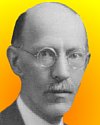
Born 13 Jan 1870; died 30 Sep 1959 at age 89.
American zoologist who developed the first successful animal-tissue cultures and pioneered organ transplantation techniques. In an early experiment, using tissue grafting techniques, he joined parts of embryos from differently coloured frogs to observe the movement of cells during the subsequent development of the embryos produced in this way. In another experiment, he took tissue from an amphibian embryo that would have formed a left limb, inverted and transferred it to the embryo's right side, where it formed a right limb. He discovered the hanging-drop culture method (1907), a new method of studying cells, by which he kept fragments of living tissue alive in suitable media and watch them multiply. Using this technique, he settled a controversy about the embryonic origins of nerve fibres. The hanging-drop method has also been valuable in oncology, genetics, virology and other fields.
American zoologist who developed the first successful animal-tissue cultures and pioneered organ transplantation techniques. In an early experiment, using tissue grafting techniques, he joined parts of embryos from differently coloured frogs to observe the movement of cells during the subsequent development of the embryos produced in this way. In another experiment, he took tissue from an amphibian embryo that would have formed a left limb, inverted and transferred it to the embryo's right side, where it formed a right limb. He discovered the hanging-drop culture method (1907), a new method of studying cells, by which he kept fragments of living tissue alive in suitable media and watch them multiply. Using this technique, he settled a controversy about the embryonic origins of nerve fibres. The hanging-drop method has also been valuable in oncology, genetics, virology and other fields.
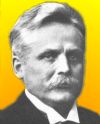
Born 13 Jan 1864; died 30 Aug 1928 at age 64. quotes
German physicist who received the Nobel Prize for Physics in 1911 for his displacement law concerning the radiation emitted by the perfectly efficient blackbody (a surface that absorbs all radiant energy falling on it). While studying streams of ionized gas Wien, in 1898, identified a positive particle equal in mass to the hydrogen atom. Wien, with this work, laid the foundation of mass spectroscopy. J. J. Thomson refined Wien's apparatus and conducted further experiments in 1913 then, after work by Ernest Rutherford in 1919, Wien's particle was accepted and named the proton. Wien also made important contributions to the study of cathode rays, X-rays and canal rays.
German physicist who received the Nobel Prize for Physics in 1911 for his displacement law concerning the radiation emitted by the perfectly efficient blackbody (a surface that absorbs all radiant energy falling on it). While studying streams of ionized gas Wien, in 1898, identified a positive particle equal in mass to the hydrogen atom. Wien, with this work, laid the foundation of mass spectroscopy. J. J. Thomson refined Wien's apparatus and conducted further experiments in 1913 then, after work by Ernest Rutherford in 1919, Wien's particle was accepted and named the proton. Wien also made important contributions to the study of cathode rays, X-rays and canal rays.
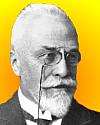
Born 13 Jan 1858; died 18 Jul 1931 at age 73.
German physiologist and pathologist who introduced the concept that diabetes results from suppression of a pancreatic substance (later found to be the hormone insulin). After studying how fat is metabolized by the body, in 1889, Oskar Minkowski and Joseph von Mering uncovered the role of the pancreas in diabetes. In an experiment in which they removed the pancreas from a dog, it consequently developed diabetes. He was the brother of mathematician Hermann Minkowski (whose idea of a four-dimensional or "Minkowski space", laid the mathematical foundation of Albert Einstein's general theory of relativity). Oskar's son, Rudolf Minkowski was a physicist and astronomer.
German physiologist and pathologist who introduced the concept that diabetes results from suppression of a pancreatic substance (later found to be the hormone insulin). After studying how fat is metabolized by the body, in 1889, Oskar Minkowski and Joseph von Mering uncovered the role of the pancreas in diabetes. In an experiment in which they removed the pancreas from a dog, it consequently developed diabetes. He was the brother of mathematician Hermann Minkowski (whose idea of a four-dimensional or "Minkowski space", laid the mathematical foundation of Albert Einstein's general theory of relativity). Oskar's son, Rudolf Minkowski was a physicist and astronomer.
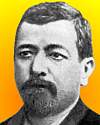
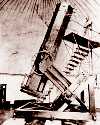
François-Félix Tisserand was a French astronomer whose 4-volume textbook Traité de mécanique céleste (1889-96; "Treatise on Celestial Mechanics") updated Pierre-Simon Laplace's work. At age 28, he was named Director at Toulouse Observatory (1873-78). He went to Japan to observe the 1874 transit of Venus. The 83-cm telescope he installed at the Toulouse Observatory in 1875 had a wooden base insufficiently stable for photographic work, but he was able to use it for observation of the satellites of Jupiter and of Saturn. From 1892 until his death he was director of the Paris Observatory, where he completed the major work, Catalogue photographique de la carte du ciel, and arranged for its publication.«[Image right: Tisserands's 83-cm telescope.]
Born 13 Jan 1843; died 19 Mar 1928 at age 85.
Scottish neurologist.
Scottish neurologist.
click to enlarge
Born 13 Jan 1804; died 19 Sep 1859 at age 55. quotes
Scottish astronomer and author who, after a few years early in his career as a teacher and headmaster, was appointed in 1836 as Regius Professor of Practical Astronomy at the University of Glasgow, where he spent the rest of his life. While in this position, he also became a popular public lecturer on astronomy and wrote a number of books on science. His fund-raising efforts paid for a new observatory at Horeslethill (1841), which was acquired by the University in 1845. While giving lectures in Natural Philosophy during the two-year absence during the illness of a colleague, it is said he inspired William Thomson as a young student who later became the famed Lord Kelvin. Nichols' last complete work was a Dictionary of the Physical Sciences.
Scottish astronomer and author who, after a few years early in his career as a teacher and headmaster, was appointed in 1836 as Regius Professor of Practical Astronomy at the University of Glasgow, where he spent the rest of his life. While in this position, he also became a popular public lecturer on astronomy and wrote a number of books on science. His fund-raising efforts paid for a new observatory at Horeslethill (1841), which was acquired by the University in 1845. While giving lectures in Natural Philosophy during the two-year absence during the illness of a colleague, it is said he inspired William Thomson as a young student who later became the famed Lord Kelvin. Nichols' last complete work was a Dictionary of the Physical Sciences.

Died 13 Jan 1953 at age 64 (born 26 Jun 1888).
Swiss mineralogist who originated the idea of a systematic deduction of the patterns in the internal structure of crystals by means of X-ray data. He supplied a complete outline of methods that have since been used to determine these patterns. There are 230 possible different internal patterns for different crystals. Because the patterns describe a three-dimensional arrangement, they are known as space groups. Niggli also developed a notation that described the individual space groups, and co-authored a definitive set of tables describing them. more
Swiss mineralogist who originated the idea of a systematic deduction of the patterns in the internal structure of crystals by means of X-ray data. He supplied a complete outline of methods that have since been used to determine these patterns. There are 230 possible different internal patterns for different crystals. Because the patterns describe a three-dimensional arrangement, they are known as space groups. Niggli also developed a notation that described the individual space groups, and co-authored a definitive set of tables describing them. more

Paul-Urich Villard was a French physicist and chemist who in 1900 identified a third kind of natural radiation, later called gamma rays. He was studying the radiations from uranium salts discovered by Henri Becquerel four years before. Charged particles whose paths were bent in a magnetic field were known, but Villard found a form of penetrating radiation that was not deviated, but it drew little attention from contemporary scientists. A year before, in 1899, Ernest Rutherford named the first two kinds of natural radiation—positive alpha particles and negative beta rays. The third kind became known as gamma rays—with energy higher than X-rays, weak power of ionization, and which Rutherford characterized (1914) as a form of electromagnetic radiation, like light. Villard invented several radiological instruments, including the osmoregulator and Villard's valve. He researched hydrates, and discovered silver hydrate. He wrote Les Rayons Cathodiques (1900).«[Ref: 'Les rayons cathodiques et les rayons Roentgen', Bulletin de la Société Internationale des Electriciens, XVII/I (1900), 169-184. He read his paper to the society in Apr 1900.]
Died 13 Jan 1930 at age 65 (born 9 Apr 1864).
English electrical engineer who promoted the installation of large electrical generating stations and alternating current distribution networks in England. He was interested in electrical and mechanical devices as a youth, and in 1881, began such employment while in his late teens. In his 20's, he began planning an ambitious generating station about 8 miles outside London, to use transmission at an unprecedented 10,000 volts - four times greater than previously practical. For this he began designing suitable cables, transformers and generators. His idea of making high voltage flexible cables using wax-impregnated paper for insulation was a landmark development used exclusively until the advent of synthetic materials. His 176 patents cover varied inventions.
English electrical engineer who promoted the installation of large electrical generating stations and alternating current distribution networks in England. He was interested in electrical and mechanical devices as a youth, and in 1881, began such employment while in his late teens. In his 20's, he began planning an ambitious generating station about 8 miles outside London, to use transmission at an unprecedented 10,000 volts - four times greater than previously practical. For this he began designing suitable cables, transformers and generators. His idea of making high voltage flexible cables using wax-impregnated paper for insulation was a landmark development used exclusively until the advent of synthetic materials. His 176 patents cover varied inventions.
Ferranti and the British Electrical Industry, 1864-1930, by J. F. Wilson. - book suggestion.
Died 13 Jan 1906 at age 46 (born 16 Mar 1859).
Russian physicist.
Russian physicist.
Died 13 Jan 1900 at age 66 (born 29 Jun 1833).
Norwegian chemist who, with his brother-in-law Cato Guldberg published the mass action law in 1864. The law states that the rate of a chemical change depends on the concentrations of the reactants. Thus for a reaction: A + B —> C the rate of reaction is proportional to [A][B], where [A] and [B] are concentrations. They also investigated the effects of temperature. Their work did not gain full credit at the time, partly due to their first publishing the law in Norwegian. Even when published in French (1867) the law received little attention. Waage later turned to practical problems relating to nutrition and public health, and he also engaged in social and religious work. (The law was rediscovered by William Esson and Vernon Harcourt.)
Norwegian chemist who, with his brother-in-law Cato Guldberg published the mass action law in 1864. The law states that the rate of a chemical change depends on the concentrations of the reactants. Thus for a reaction: A + B —> C the rate of reaction is proportional to [A][B], where [A] and [B] are concentrations. They also investigated the effects of temperature. Their work did not gain full credit at the time, partly due to their first publishing the law in Norwegian. Even when published in French (1867) the law received little attention. Waage later turned to practical problems relating to nutrition and public health, and he also engaged in social and religious work. (The law was rediscovered by William Esson and Vernon Harcourt.)
Died 13 Jan 1875 (born c. 1791).
Irish surgeon known for his contributions to the knowledge of heart, respiratory, vascular and joint diseases, particularly on gout (which he suffered himself). In 1827 he described a condition characterized by a very slow pulse and by transient giddiness or convulsive seizures, now known as the Adams-Stokes disease or syndrome.
Irish surgeon known for his contributions to the knowledge of heart, respiratory, vascular and joint diseases, particularly on gout (which he suffered himself). In 1827 he described a condition characterized by a very slow pulse and by transient giddiness or convulsive seizures, now known as the Adams-Stokes disease or syndrome.
glucose
Died 13 Jan 1855 at age 73 (born 29 May 1781).
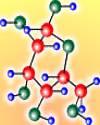
French naturalist and chemist known for isolating glucose, a simple sugar, directly from such plant material as sawdust, linen or bark by boiling them with acid (1819). Previously, glucose had only been derived from starch. In 1811, he was the first to find fungtine - in mushrooms. (It was named chitin in the 1830s when it was also isolated in insects.) Chitin is one of the most abundant polysaccharides found in nature. In 1832, Braconnot prepared “xyloidine” by treating starch, sawdust, and cotton with nitric acid. He found that this material was soluble in wood vinegar and attempted to make coatings, films, and shaped articles from it. This was an early discovery preceding the work of other scientists with nitrocellulose that led to the advent of plastics and rayon.
French naturalist and chemist known for isolating glucose, a simple sugar, directly from such plant material as sawdust, linen or bark by boiling them with acid (1819). Previously, glucose had only been derived from starch. In 1811, he was the first to find fungtine - in mushrooms. (It was named chitin in the 1830s when it was also isolated in insects.) Chitin is one of the most abundant polysaccharides found in nature. In 1832, Braconnot prepared “xyloidine” by treating starch, sawdust, and cotton with nitric acid. He found that this material was soluble in wood vinegar and attempted to make coatings, films, and shaped articles from it. This was an early discovery preceding the work of other scientists with nitrocellulose that led to the advent of plastics and rayon.
Died 13 Jan 1641 (born 1618).
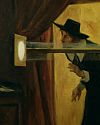
English astronomer and clergyman who applied Johannes Kepler's laws of planetary motion to observations of the Moon and Venus. Once Horrocks managed to obtain a small telescope, his observations convinced him that Lansberg's tables were incorrect. He accepted Kepler's elliptical orbits, and in working on the moon he applied an elliptical orbit to it and established that the line of apsides precessed, an effect which he ascribed to the influence of the sun. Horrocks predicted and observed a transit of Venus on 24 Nov 1639, the first one ever observed, and from the observation he corrected the solar parallax, indicating a much greater distance of the sun than anyone before him had admitted. He died at age only 22.[DSB gives dates as 1618 - 13 Jan 1641. EB gives 1617 - 3 Jan 1641.]
English astronomer and clergyman who applied Johannes Kepler's laws of planetary motion to observations of the Moon and Venus. Once Horrocks managed to obtain a small telescope, his observations convinced him that Lansberg's tables were incorrect. He accepted Kepler's elliptical orbits, and in working on the moon he applied an elliptical orbit to it and established that the line of apsides precessed, an effect which he ascribed to the influence of the sun. Horrocks predicted and observed a transit of Venus on 24 Nov 1639, the first one ever observed, and from the observation he corrected the solar parallax, indicating a much greater distance of the sun than anyone before him had admitted. He died at age only 22.[DSB gives dates as 1618 - 13 Jan 1641. EB gives 1617 - 3 Jan 1641.]
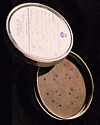
Radon test kit
On 13 Jan 2005, the U.S. Surgeon General, Richard H. Carmona, issued a national health advisory to warn the public about the risks of breathing indoor radon. The public was cautioned that radon gas seeping from the ground into homes poses a serious health risk. Exposure to elevated levels of radon is a significant cause of lung cancer, with a higher risk for smokers. The deaths of 20,000 Americans every year is attributed to radon-related lung cancer. High radon levels affect millions of homes (1 in every 15 homes nationwide). Radon, an invisible, odorless, tasteless, radioactive gas, is a decay product of naturally occurring uranium and thorium in the earth. However, “Simple test kits can reveal the amount of radon in any building. Those with high levels can be fixed with simple and affordable venting techniques.”
In 1978, NASA selected its first U.S. women astronauts.
In 1976, the first machine for reading printed matter aloud was given its first public demonstration, by its inventor, Raymond Kurzwell. Using a camera with a computer, pages of printed matter could be scanned, the letters analysed, and reproduced in synthesized English speech at 150 words per minute. The material used could be books, magazines or typewritten correspondence. The machine was manufactured by the Kurzwell Computer Products, Inc., and was tested by the National Federation for the Blind.
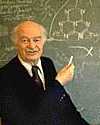
Pauling
In 1958, Linus Pauling (1901-1994) presented the petition of 9,000 scientists to the U.N., asking to halt the testing of nuclear bombs. Pauling, together with his wife, was instrumental in collecting thousands of signatures from scientists all over the world for the petition to end nuclear bomb testing, which was presented to Dag Hammarskjöld, secretary general of the United Nations. A few months later the Soviet Union called for an immediate halt to nuclear testing, and in October, after more tests by both sides that added markedly to world concern about fallout, talks began in Geneva to discuss details of a possible test ban.
Linus Pauling in His Own Words: Selections From his Writings, Speeches and Interviews, by Barbara Marinacci. - book suggestion.
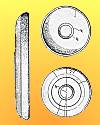
In 1957, the Wham-O Company developed the first frisbee. A representative of the company got the idea for the product when he saw some truck drivers from the Frisbee Pie Co. of Connecticut showing Yale students how to throw pie pins in the air. On 26 Dec 1967, a U.S. patent was issued to the Wham-O Mfg. Co. for their improvement of the Frisbee (U.S. No. 3,359,678) - an “aerodynamic toy to be thrown through the air … in throwing games.” It was described as a saucer shaped throwing implement with a series of concentric discontinuities adjacent the rim on its convex side.Image: patent diagrams of the Frisbee.
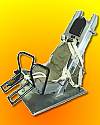
In 1942, the first use of an ejection seat to save a pilot was made. Helmut Schenk, a German test pilot, required its use when his Heinkel He 280 refused to separate from the tow aircraft due to the cable release mechanism icing up. As a precaution, Schenk ejected and landed safely. The tow was being made because the He-280 was powered by two Argus pulse-jets that required a high forward speed to start up. The first ejection seat was made by Heinkel, for the He 280. It was powered by compressed air, and accelerated the pilot upwards at between seven-g and nine-g. The He-280 was the first twin-jet engined aircraft and the first jet aircraft to go beyond prototype stage. The earliest known experiment to produce an airplane ejection seat took place on 12 Dec 1912.[Image: Heinkel He-162 ejection seat.]
Eject!: The Complete History of U.S. Aircraft Escape Systems, by Jim Tuttle. - book suggestion.
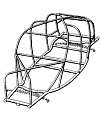
In 1942, the first U.S. patent for construction of an automobile using plastic was issued to Henry Ford of Dearborn, Mich. It covered an automobile body construction, an auto body chassis frame made of steel tubes or pipes designed for use with automobiles made from plastics. The first such car manufactured in the U.S. was produced by the Ford Motor Company, Dearborn, Mich. in Aug 1941. Fourteen plastic panels were mounted on a tubular welded frame. Together with windows and windshield made of acrylic sheets, a decrease in weight of approximately 30 percent was accomplished. (No. 2,269,451)
In 1928, three television sets were installed by RCA and GE in homes in Schenectady, New York. American inventor E.F.W. Alexanderson demonstrated the first home television receiver which delivered a poor and unsteady picture only 1.5 inches square. The picture, with 48 lines at 16 frames per second, was transmitted over 2XAF on 37.8 meters and the sound was transmitted over WGY radio station. The sets were in the homes of Alexanderson and two board members. On 28 May 1928, the first television station WGY began broadcasting regular programs on Tuesday, Thursday, and Friday afternoons from 1:30 to 3:30 pm, using 24 lines. Sets were built and distributed by General Electric in Schenectady.
In 1908, Henry Farman, an English-born Frenchman, flew the first one-kilometer circuit, winning the Grand Prix de Aviation and its 50,000 franc purse. He crossed the starting poles about 4-m (13-ft) in the air, then flew straight out for about 500-m. Slowly climbing to 12-m (40-ft) he then made a wide, flat turn, using rudder alone to slide around the marker. He came back and made another turn, crossed the point at which he started, and landed gently. The entire flight lasted 28-sec, and covered the prescribed kilometer. Although the Wrights may have accomplished this at an earlier date, this was the first such flight in front of official witnesses.
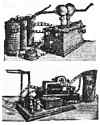
In 1906, this date is sometimes given for the first U.S. advertisement for a radio receiver. However, the earliest one-inch advertisement for the Telimco appeared in the 25 Nov 1905 issue of the Scientific American. Both these, and several similar weekly advertisements in between, were run by Hugo Gernsback of The Electro Importing Company of New York. It seems that Gernsback himself appeared to have forgotten the exact date on which the first Telimco advertisement appeared. The Electro Importing catalogs from the mid-teens state that the ads premiered in Scientific American in Nov 1905. However, in a special issue of Radio Craft published in Mar 1938, Gernsback gave the date as 13 Jan 1906.
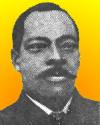
In 1903, Black American inventor, Granville T. Woods, was issued a U.S. patent for an "Electric Railway System." of the type that "current for the car-motor is taken from working contacts or conductors along the road bed." The object of Woods' invention was to "insure safety from shock at the working conductor or contacts, reduce leakage to a minimum, economize current in the operation of the system, and at the same time provide a system which can be easily constructed and perfectly controlled." He assigned the right to the General Electric Company of New York. Woods produced many inventions relating to railways. (No. 718,183)
Black Inventors in the Age of Segregation, by Rayvon Fouche. - book suggestion.
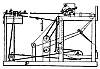
In 1863, the first U.S. patent for a chenille manufacturing machine was issued to William Canter of New York City, who made the first such machine in the U.S. (No. 37,415)
In 1857, the first U.S. patent for a railway track scale was issued to Thaddeus Fairbanks (No. 16,381). Such a platform scale was introduced by the E. and T. Fairbanks and Company of St. Johnsbury, Vermont. It was designed to weigh railway cars either alone or in train. The platform of the scale was fitted with two rails arranged in line with the railway track such that cars and carriages could readily be rolled on and off. The mechanism beneath was set in a pit. It was constructed with suitable levers and bearings to permit weighing a great range of loads accurately. Thaddeus and his brother built their company's scale business starting over two decades earlier with their invention of a platform scale for merchandise, which they patented 30 Jun 1831.
In 1854, the first U.S. patent for an accordion was issued to Anthony Faas of Philadephia. Pa. (No. 11,062). Faas claimed two improvements. First, he combined with the diatonic scale of the large keys two other scales, namely, one for producing all the intermediate notes, or semitones, and the other founded upon the subdominant of said diatonic scale, and both arranged so as to be fingered by a single set of small keys for the purpose of enabling the instrument to produce full and correct harmony in any key. His second improvement consisted in providing the accordion with a sound-board, for the purpose of producing more strength, fullness and resonance of tone with the instrument.
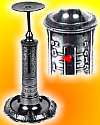
In 1840, a postal scale was registered by R.W. Winfield, of Birmingham. This “candlestick” pattern of spring scale was introduced at the same time as the penny post. R.W. Winfield & Co. was a large manufacturer of brass bedsteads, cots, sofas, chairs gas fittings, chandeliers and general brassfounder's items. The vertical scale on the left was calibrated up to 4 “oz,” with half-ounce divisions, and on the right in "D" from up to 8d, since the postal rate was one penny per half ounce. Now, as an antique, a good specimen might auction for up to £500.[Image: a detail is inset, with a red mark added to highlight the scale pointer.]
Scientific instruments, 1500-1900: An Introduction, by Gerard L'Estrange Turner. - book suggestion.
(NASA)
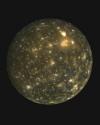
In 1610, Galileo Galilei discovered Callisto, the fourth satellite of Jupiter. Galileo originally called the Jupiter's moons the “Medicean planets,” after the Medici family and referred to the individual moons numerically as I, II, III and IV. Galileo's naming system would be used for a couple of centuries. It wouldn't be until the mid-1800s that the names of the Galilean moons, Io, Europa, Ganymede and Callisto, would be officially adopted, and only after it became apparent that naming moons by number would be very confusing as new additional moons were being discovered. It is now known that Callisto is larger than the planet Mercury, and composed mostly of water and water ice with large quantities of ice exposed on the surface.
Galileo: A Life, by James Reston. - book suggestion.
In 1404, English alchemists were forbidden to use their knowledge to create precious metals. Since the time of Roger Bacon, it had fascinated the imagination of many ardent men in England. During the reign of Henry IV, the Act of Multipliers was passed by the Parliament, declaring the use of transmutation to “multiply” gold and silver to be felony. Great alarm was felt at that time lest any alchemist should succeed in his projects, and perhaps bring ruin upon the state, by furnishing boundless wealth to some designing tyrant, who would make use of it to enslave his country. In 1689, Robert Boyle lobbied for repeal of the Act.




