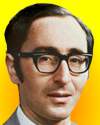
Born 4 Jan 1940. quotes
Brian David Josephson is a Welsh physicist who discovered the Josephson effect (1962), a flow of electric current as electron pairs, called Cooper Pairs, between two superconducting materials (which at low temperatures lack electrical resistance) that are separated by an extremely thin insulator. This arrangement is called a Josephson Junction, and the current occurs between the two superconductors without an applied voltage. If a rectified voltage is added, an alternating current can result. This tunneling phenomenon results as a quantum physics effect. Josephson was a graduate student, 22 years old, at the time he began this research. He later shared the 1973 Nobel Prize for Physics (with Leo Esaki and Ivar Giaever).«
Brian David Josephson is a Welsh physicist who discovered the Josephson effect (1962), a flow of electric current as electron pairs, called Cooper Pairs, between two superconducting materials (which at low temperatures lack electrical resistance) that are separated by an extremely thin insulator. This arrangement is called a Josephson Junction, and the current occurs between the two superconductors without an applied voltage. If a rectified voltage is added, an alternating current can result. This tunneling phenomenon results as a quantum physics effect. Josephson was a graduate student, 22 years old, at the time he began this research. He later shared the 1973 Nobel Prize for Physics (with Leo Esaki and Ivar Giaever).«
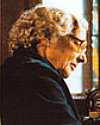
Born 4 Jan 1915; died 17 Feb 1998 at age 83. quotes
German-Swiss psychologist who was a Jungian analyst (1948-98) in collaboration with Carl Jung for over 30 years. She was also fairy-tale expert whose research showed common themes in tales from many cultures, which she linked with experiences in daily life. She began analysis with Jung at eighteen, and worked with him until his death in 1961. As Jung's primary partner in his research into alchemical texts, her first major publication, Aurora Consurgens, is a companion volume to Jung's last major work, Mysterium Cuniuntionis. Other works include On Dreams and Myths and C.G. Jung: His Myth in Our Time.[EB gives birth date as 16/17 Feb 1998.]
German-Swiss psychologist who was a Jungian analyst (1948-98) in collaboration with Carl Jung for over 30 years. She was also fairy-tale expert whose research showed common themes in tales from many cultures, which she linked with experiences in daily life. She began analysis with Jung at eighteen, and worked with him until his death in 1961. As Jung's primary partner in his research into alchemical texts, her first major publication, Aurora Consurgens, is a companion volume to Jung's last major work, Mysterium Cuniuntionis. Other works include On Dreams and Myths and C.G. Jung: His Myth in Our Time.[EB gives birth date as 16/17 Feb 1998.]
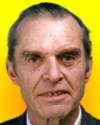
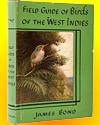
(revised ed.)
American ornithologist, a former curator of ornithology at the Academy of Natural Science in Philadelphia, was long a leading expert on the birds of the West Indies. In his career, he traveled up the Amazon (1925), and visited more than 100 Caribbean islands for his studies. He proved that birds of the Caribbean originated in North America, rather than South America. The Birds of the West Indies book (1936), that he wrote, was seen by author Ian Fleming, an avid bird watcher. Fleming later told Bond’s wife that he named his James Bond thrillers’ hero came from the cover of that book. Because it struck Fleming as ordinary—but masculine-sounding—the ornithologist’s name has entered literary history.«
The Real James Bond: A True Story of Identity Theft, Avian Intrigue, and Ian Fleming, by Jim Wright. - book suggestion.
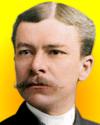

Edward Hibberd Johnson was an American electrical engineer and inventor who spent many years in various business projects with Thomas Edison, including as vice-president of the Edison Electric Light Company. They met when Johnson, as manager of the Automatic Telegraph Company, hired the 24-year-old Thomas Edison. As Edison's talent as an inventor propelled him into developing his invention laboratory and commercial enterprises, Johnson became his business executive and eventually president of Edison Electric Illuminating Co. of New York (organized 17 Dec 1880) which later became today's Con Edison. Johnson created the first electric lights on a Christmas tree on 22 Dec 1882, which he displayed in the window of his New York home. The hand-wired string of bulbs had been made for him, with 80 walnut-sized lamps glowing in equal numbers of red, white and blue light.«* more
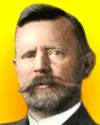
Born 4 Jan 1839; died 12 Apr 1896 at age 57.
German engineer and archaeologist, best known for excavations at the ancient Greek city of Pergamum (now Bergama Turkey). His early work was supervising railway construction for the Ottoman government in Anatolia, Turkey, which led him into significant discoveries in Hellenistic sculpture and urban planning. During 1878 to 1886, he unearthed many important structures, choice sculptures, and parts of the Altar of Zeus, at Pergamum. He also made archaeological explorations in northern Syria, and excavated the Hellenistic city of Magnesia on the Menderes River, Turkey. His books, Results of the Excavations at Pergamum and Travels in Asia Minor and Northern Syria, document his extensive work and discoveries.«
German engineer and archaeologist, best known for excavations at the ancient Greek city of Pergamum (now Bergama Turkey). His early work was supervising railway construction for the Ottoman government in Anatolia, Turkey, which led him into significant discoveries in Hellenistic sculpture and urban planning. During 1878 to 1886, he unearthed many important structures, choice sculptures, and parts of the Altar of Zeus, at Pergamum. He also made archaeological explorations in northern Syria, and excavated the Hellenistic city of Magnesia on the Menderes River, Turkey. His books, Results of the Excavations at Pergamum and Travels in Asia Minor and Northern Syria, document his extensive work and discoveries.«
Pergamon and the Hellenistic Kingdoms of the Ancient World, by Carlos A. Picón and Seán Hemingway. - book suggestion.
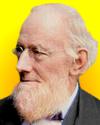
Born 4 Jan 1813; died 12 Jan 1897 at age 84.
English inventor of the Phonetic Shorthand System was a philanthropic headmaster whose shorthand system was initially taught free of charge, and has since been adapted for such diverse languages as Arabic, Hebrew, Hindi, Japanese, Latin, Persian, Welsh, and Tamil. In 1829, he learned Samuel Taylor's system of shorthand, and offered a manual of that system to a publisher who suggested that Pitman should invent a new system of his own. In Stenographic Soundhand (1837) he set forth a shorthand system based on phonetic rather than orthographic principles. He published books about shorthand using his own publishing house. His brother, Benn Pitman (1822-1910) emigrated to the U.S. in 1852 where he introduced the Pitman system.
English inventor of the Phonetic Shorthand System was a philanthropic headmaster whose shorthand system was initially taught free of charge, and has since been adapted for such diverse languages as Arabic, Hebrew, Hindi, Japanese, Latin, Persian, Welsh, and Tamil. In 1829, he learned Samuel Taylor's system of shorthand, and offered a manual of that system to a publisher who suggested that Pitman should invent a new system of his own. In Stenographic Soundhand (1837) he set forth a shorthand system based on phonetic rather than orthographic principles. He published books about shorthand using his own publishing house. His brother, Benn Pitman (1822-1910) emigrated to the U.S. in 1852 where he introduced the Pitman system.
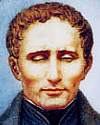
Born 4 Jan 1809; died 6 Jan 1852 at age 43.
French educator who developed a tactile form of printing and writing, known as braille, since widely adopted by the blind. He himself knew blindness from the age four, following an accident while playing with an awl. In 1821, while Braille was at a school for the blind, a soldier named Charles Barbier visited and showed a code system he had invented. The system, called "night writing" had been designed for soldiers in war trenches to silently pass instructions using combinations of twelve raised dots. Young Braille realised how useful this system of raised dots could be. He developed a simpler scheme using six dots. In 1827 the first book in braille was published. Now the blind could also write it for themselves using a simple stylus to make the dots.
French educator who developed a tactile form of printing and writing, known as braille, since widely adopted by the blind. He himself knew blindness from the age four, following an accident while playing with an awl. In 1821, while Braille was at a school for the blind, a soldier named Charles Barbier visited and showed a code system he had invented. The system, called "night writing" had been designed for soldiers in war trenches to silently pass instructions using combinations of twelve raised dots. Young Braille realised how useful this system of raised dots could be. He developed a simpler scheme using six dots. In 1827 the first book in braille was published. Now the blind could also write it for themselves using a simple stylus to make the dots.
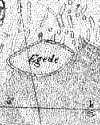
part of the Mappa Selenographica
German banker and amateur astronomer who owned a notable Fraunhofer refractor telescope, using it in his own private observatory. Collaborating with Johann Heinrich von Mädler, they created the first large-scale, micrometrically precise moon map, Mappa Selenographica (1836). This detailed lithograph, dividing the Moon into quadrants, offered the most comprehensive lunar surface depiction in the 19th century’s first half. Drawn at just over 38 inches to the lunar diameter, it minutely charted lunar features. Mädler also established a naming convention for small craters, using Roman letters alongside the name of the nearest major crater (example Egede A, B, C).«
Born 4 Jan 1747; died 27 Apr 1825 at age 78.
Dominique Vivant, Baron Denon was a French archaeologist, museum director and artist who played a pivotal role in expanding the Louvre’s collection. He joined Napoleon on his 1798 Egyptian expedition, sketching ancient monuments and sites, often amid battle. Denon became probably the first artist who discovered and drew the temples and ruins at Thebes, Esna, Edfu, and Philae. His “Voyage dans la basse et la haute Égypte” (“Travels in Lower and Upper Egypt”,1802) detailed these travels. Appointed by Napoleon as director general of museums (1804-1815), he advised the Emperor on art acquisitions from Austria, Spain, and Poland, including some pillaged from the various conquered countries. Eventually, these significantly enriched the Louvre.«
Dominique Vivant, Baron Denon was a French archaeologist, museum director and artist who played a pivotal role in expanding the Louvre’s collection. He joined Napoleon on his 1798 Egyptian expedition, sketching ancient monuments and sites, often amid battle. Denon became probably the first artist who discovered and drew the temples and ruins at Thebes, Esna, Edfu, and Philae. His “Voyage dans la basse et la haute Égypte” (“Travels in Lower and Upper Egypt”,1802) detailed these travels. Appointed by Napoleon as director general of museums (1804-1815), he advised the Emperor on art acquisitions from Austria, Spain, and Poland, including some pillaged from the various conquered countries. Eventually, these significantly enriched the Louvre.«
Born 4 Jan 1746; died 19 Apr 1813 at age 67. quotes
American physician, most remembered as a signer of the Declaration of Independence, but was also prominent as a U.S. physician, the first professor of medical chemistry in America. He was active in combatting the yellow fever epidemics of the 1790s. For his pioneering investigations in the field, Rush is regarded as the father of American psychiatry, and his work, Medical Inquiries and Observations upon the Diseases of the Mind (1812) was the first book in this field published in America. Although he promoted clinical research, he still believed in bleeding, purging and other depleting remedies.«
American physician, most remembered as a signer of the Declaration of Independence, but was also prominent as a U.S. physician, the first professor of medical chemistry in America. He was active in combatting the yellow fever epidemics of the 1790s. For his pioneering investigations in the field, Rush is regarded as the father of American psychiatry, and his work, Medical Inquiries and Observations upon the Diseases of the Mind (1812) was the first book in this field published in America. Although he promoted clinical research, he still believed in bleeding, purging and other depleting remedies.«
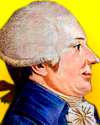
Born 4 Jan 1737; died 2 Jan 1816 at age 78. quotes
French chemist who collaborated with Antoine Lavoisier and others to establish a systematic chemical nomenclature, helping to distinguish elements from compounds. He published studies on phlogiston and crystallization, and also liquified ammonia gas. He wrote the chemical section of the Encyclopédie méthodique (Vol. I, 1786). In 1761, Guyton proposed that the name “alumine” (hence aluminium) be used for the base in alum (potassium aluminium sulphate; Latin alumen = alum). Guyton was one of the first to conclude that iron and steel differ solely in their carbon content, improved the manufacture of gunpowder, was the first to use chlorine and hydrochloric acid gas as disinfectants, and one of the first balloonists (1784).
French chemist who collaborated with Antoine Lavoisier and others to establish a systematic chemical nomenclature, helping to distinguish elements from compounds. He published studies on phlogiston and crystallization, and also liquified ammonia gas. He wrote the chemical section of the Encyclopédie méthodique (Vol. I, 1786). In 1761, Guyton proposed that the name “alumine” (hence aluminium) be used for the base in alum (potassium aluminium sulphate; Latin alumen = alum). Guyton was one of the first to conclude that iron and steel differ solely in their carbon content, improved the manufacture of gunpowder, was the first to use chlorine and hydrochloric acid gas as disinfectants, and one of the first balloonists (1784).

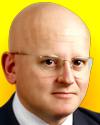
Died 4 Jan 2020 at age 81 (born 8 Aug 1938). quotes
Sir Jack Edward Baldwin was an English chemist who originated Baldwin’s Rules for ring closure reactions in organic chemistry. Based on empirical evidence, these rules consider the relative rates (or favorabilities) of ring closure in alicyclic compounds. During his Ph.D. studies at Imperial College, London, he worked for the Nobel laureate, Sir Derek Barton. After his training as a synthetic organic chemist, he retained an interest in the challenge of the synthesis of complex natural compounds. His early work was at M.I.T. (1969-1978), but Baldwin spent the majority of his research career in laboratories at Oxford. He was knighted in 1997 for his contributions to organic chemistry.«
Sir Jack Edward Baldwin was an English chemist who originated Baldwin’s Rules for ring closure reactions in organic chemistry. Based on empirical evidence, these rules consider the relative rates (or favorabilities) of ring closure in alicyclic compounds. During his Ph.D. studies at Imperial College, London, he worked for the Nobel laureate, Sir Derek Barton. After his training as a synthetic organic chemist, he retained an interest in the challenge of the synthesis of complex natural compounds. His early work was at M.I.T. (1969-1978), but Baldwin spent the majority of his research career in laboratories at Oxford. He was knighted in 1997 for his contributions to organic chemistry.«

Died 4 Jan 2014 at age 80 (born 25 Dec 1933).
Inna A. Dobruskina was an Israeli paleobotanist and geologist who was one of the foremost experts on Triassic paleobotany. She studied non-petroleum geology at Moscow State University (1952-57), a choice of science made to avoid a job working for the government politically and without direct military implications. As a young graduate, she joined the Amur Expedition to geologically survey the region of a joint Sino-Soviet hydroelectric dam. Then, for a Ph.D. she began an interest in Triassic flora, a passion for 25 years, travelling widely. By the mid 1980s, frustrated by Soviet authorities, she took an opportunity to emigrate to Israel, and settled in Jerusalem (1989-99). Her monograph on the Triassic floras of Eurasia remains an outstanding work.«
Inna A. Dobruskina was an Israeli paleobotanist and geologist who was one of the foremost experts on Triassic paleobotany. She studied non-petroleum geology at Moscow State University (1952-57), a choice of science made to avoid a job working for the government politically and without direct military implications. As a young graduate, she joined the Amur Expedition to geologically survey the region of a joint Sino-Soviet hydroelectric dam. Then, for a Ph.D. she began an interest in Triassic flora, a passion for 25 years, travelling widely. By the mid 1980s, frustrated by Soviet authorities, she took an opportunity to emigrate to Israel, and settled in Jerusalem (1989-99). Her monograph on the Triassic floras of Eurasia remains an outstanding work.«
Died 4 Jan 1998 at age 71 (born 2 Feb 1926).
American physiologist who was a pioneer in cardiac electrophysiology. His research on the contraction of heart cells was important in developing ways to better treat heart disease. He was one of the first researchers able to devise techniques to investigate the behavior of individual heart cells. His study of frog heart muscle (1960s-1970s) showed heart contractions could be controlled by changes in calcium ion concentrations outside heart cells. This knowledge helped with the development of drugs for heart disease.«
American physiologist who was a pioneer in cardiac electrophysiology. His research on the contraction of heart cells was important in developing ways to better treat heart disease. He was one of the first researchers able to devise techniques to investigate the behavior of individual heart cells. His study of frog heart muscle (1960s-1970s) showed heart contractions could be controlled by changes in calcium ion concentrations outside heart cells. This knowledge helped with the development of drugs for heart disease.«
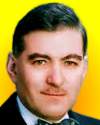
Died 4 Jan 1995 at age 87 (born 30 Oct 1907).
American cultural anthropologist, founder of the Current Anthropology journal and initiator of the Fox Project, a study of the culture of the Fox and Sauk Indians. Soon after receiving his Ph.D (1935), Tax began his study of the Omaha kinship pattern among the Fox. This study was done on the Fox and Sauk Indians in Tama, Iowa. He worked with the Indians from 1948 to 1962. His work led to him to develop a pan-Indian organization and to help native American tribes preserve their cultural identity.
American cultural anthropologist, founder of the Current Anthropology journal and initiator of the Fox Project, a study of the culture of the Fox and Sauk Indians. Soon after receiving his Ph.D (1935), Tax began his study of the Omaha kinship pattern among the Fox. This study was done on the Fox and Sauk Indians in Tama, Iowa. He worked with the Indians from 1948 to 1962. His work led to him to develop a pan-Indian organization and to help native American tribes preserve their cultural identity.
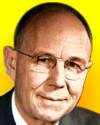

Video: How Edgerton froze time in his pictures (click on image)
Harold Eugene Edgerton was an American engineer and ultra-high-speed photographer who, as a graduate at the Massachusetts Institute of Technology (1926), used a strobe light in his studies, which,. by 1931, he applied the strobe to ultra-high-speed photography. He formed a company (1947) to specialize in electronic technology, which led to inventing the Rapatronic camera, capable of photographing US nuclear bomb test explosions from a distance of 7 miles. Throughout his career he applied high-speed photography as a tool in various scientific applications. He also developed sonar to study the ocean floor. Using side-scan sonar, in 1973, he helped locate the sunken Civil War battleship USS Monitor, lost since 1862, off Cape Hatteras, NC.« more
Stopping Time: The Photographs of Harold Edgerton, by Gus Kayafas, Estelle Jussim. - book suggestion.
Died 4 Jan 1976 at age 80 (born 28 May 1895).
German astronomer who studied spectra, distributions, and motions of planetary nebulae and more than doubled the number known. He investigated novae and supernovae and their remnants, especially the the physics and expansion of the Crab Nebula (a pulsar remnant). With Walter Baade, Minkowski divided supernovae into Types I and II on the basis of spectral characteristics and they identified optical counterparts of many of the early radio sources, including Cygnus A, Virgo A (M87), Perseus A (NGC 1275), and Centaurus A (NGC 5128). Just before retirement he found what was for years the largest known redshift in a galaxy. He was awarded the Bruce Medal in 1961 for distinguished services to astronomy.
German astronomer who studied spectra, distributions, and motions of planetary nebulae and more than doubled the number known. He investigated novae and supernovae and their remnants, especially the the physics and expansion of the Crab Nebula (a pulsar remnant). With Walter Baade, Minkowski divided supernovae into Types I and II on the basis of spectral characteristics and they identified optical counterparts of many of the early radio sources, including Cygnus A, Virgo A (M87), Perseus A (NGC 1275), and Centaurus A (NGC 5128). Just before retirement he found what was for years the largest known redshift in a galaxy. He was awarded the Bruce Medal in 1961 for distinguished services to astronomy.
Died 4 Jan 1961 at age 73 (born 12 Aug 1887). quotes
Austrian theoretical physicist who shared the 1933 Nobel Prize for Physics with the British physicist P.A.M. Dirac. Erwin Schrödinger took Louis de Broglie's concept of atomic particles as having wave-like properties, and modified the earlier Bohr model of the atom to accommodate the wave nature of the electrons. This made a major contribution to the development of quantum mechanics. Schrödinger realized the possible orbits of an electron would be confined to those in which its matter waves close in an exact number of wavelengths. This condition, similar to a standing wave, would account for only certain orbits being possible, and none possible in between them. This provided an explanation for discrete lines in the spectrum of excited atoms.«
Austrian theoretical physicist who shared the 1933 Nobel Prize for Physics with the British physicist P.A.M. Dirac. Erwin Schrödinger took Louis de Broglie's concept of atomic particles as having wave-like properties, and modified the earlier Bohr model of the atom to accommodate the wave nature of the electrons. This made a major contribution to the development of quantum mechanics. Schrödinger realized the possible orbits of an electron would be confined to those in which its matter waves close in an exact number of wavelengths. This condition, similar to a standing wave, would account for only certain orbits being possible, and none possible in between them. This provided an explanation for discrete lines in the spectrum of excited atoms.«
Schrödinger: Life and Thought, by Walter J. Moore. - book suggestion.
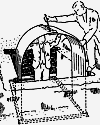
Died 4 Jan 1958 at age 75 (born 8 Jul 1882).
Sir John Anderson, Viscount Waverley was a Scottish politician known for the Anderson shelter during WW II, the type of civil defence air-raid shelter built in gardens of houses. At university, he first studied chemistry, but turned to government for his lifelong career. By Jun 1938, he was a newly-elected M.P. addressing air-raid precautions in his first speech. As a Cabinet minister (Oct 1938) he started production of the Anderson bomb shelter, designed at his request by Sir William Paterson. Over two million of these bomb shelters were built by the time of the Blitz. The shelter, a 6-ft (1.8m) tall inverted U-shape formed from corrugated steel panels, was half-buried in the ground and covered with earth. Four to six people could shelter in the 6½ × 4½ ft structure (2 × 1.4 m). Anderson was replaced on 8 Oct 1940, and his project was superceded by Herbert Morrison's ideas.«
Sir John Anderson, Viscount Waverley was a Scottish politician known for the Anderson shelter during WW II, the type of civil defence air-raid shelter built in gardens of houses. At university, he first studied chemistry, but turned to government for his lifelong career. By Jun 1938, he was a newly-elected M.P. addressing air-raid precautions in his first speech. As a Cabinet minister (Oct 1938) he started production of the Anderson bomb shelter, designed at his request by Sir William Paterson. Over two million of these bomb shelters were built by the time of the Blitz. The shelter, a 6-ft (1.8m) tall inverted U-shape formed from corrugated steel panels, was half-buried in the ground and covered with earth. Four to six people could shelter in the 6½ × 4½ ft structure (2 × 1.4 m). Anderson was replaced on 8 Oct 1940, and his project was superceded by Herbert Morrison's ideas.«
Died 4 Jan 1958 at age 80 (born 26 Apr 1877).
English aviator who was the first in Britain to construct and fly his own airplane. Having heard of the success of the brothers Orville and Wilbur Wright, Roe set out to build his own plane. On 8 Jun 1908, he flew his biplane a distance of 75 feet (23 m).
English aviator who was the first in Britain to construct and fly his own airplane. Having heard of the success of the brothers Orville and Wilbur Wright, Roe set out to build his own plane. On 8 Jun 1908, he flew his biplane a distance of 75 feet (23 m).
Died 4 Jan 1912 at age 70 (born 15 May 1841). quotes
American geologist who coined the term isostasy for his explanation that continents rise higher on the Earth's surface by virtue of their less dense crustal rock; ocean basins are denser material. After the civil war, while still an army officer, from 1875, he assisted in Powell's survey of the Rocky Mountains. From 1880 until his retirement from the army in 1891, he worked for the U.S. Geological Survey (USGS). He made geological investigations of the Grand Canyon in Colorado, the plateaus of Utah, and the 1886 Charleston earthquake. In seismology, he pioneered a method to determine the depth of the focus of an earthquake and the speed of its seismic waves. In 1887, he became the first head of the USGS division of volcanic geology.«
American geologist who coined the term isostasy for his explanation that continents rise higher on the Earth's surface by virtue of their less dense crustal rock; ocean basins are denser material. After the civil war, while still an army officer, from 1875, he assisted in Powell's survey of the Rocky Mountains. From 1880 until his retirement from the army in 1891, he worked for the U.S. Geological Survey (USGS). He made geological investigations of the Grand Canyon in Colorado, the plateaus of Utah, and the 1886 Charleston earthquake. In seismology, he pioneered a method to determine the depth of the focus of an earthquake and the speed of its seismic waves. In 1887, he became the first head of the USGS division of volcanic geology.«
Tertiary History of the Grand Canyon District, by Clarence Edward Dutton. - book suggestion.
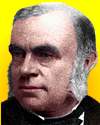
Died 4 Jan 1882 at age 70 (born 5 May 1811). quotes
English-American chemist who pioneered in photochemistry. He recognized that light initiated chemical reactions as molecules absorbed light energy. The Draper Point is the name given to the point at which all substances glow a dull red (about 525 degrees C.). He described the effect of rise in temperature as the addition of more and more of the visible light region produced a white glow (1847). His interest in spectroscopy and photography was applied to give the first astronomical photograph. Its subject was the moon (1840). He also studied photographs of the solar spectrum to show that contained both infrared and ultraviolet light. His photographs of persons include the oldest surviving photographic portrait (1840), and he was one of the first to produce microphotographs. more
English-American chemist who pioneered in photochemistry. He recognized that light initiated chemical reactions as molecules absorbed light energy. The Draper Point is the name given to the point at which all substances glow a dull red (about 525 degrees C.). He described the effect of rise in temperature as the addition of more and more of the visible light region produced a white glow (1847). His interest in spectroscopy and photography was applied to give the first astronomical photograph. Its subject was the moon (1840). He also studied photographs of the solar spectrum to show that contained both infrared and ultraviolet light. His photographs of persons include the oldest surviving photographic portrait (1840), and he was one of the first to produce microphotographs. more
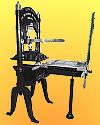
Died 4 Jan 1833 at age 48 (born 29 Oct 1784).
English-American printing-press manufacturer. The Smith brothers established a carpenter shop in New York City with Hoe's assistance under the firm name of Smith, Hoe & Company, specializing in wooden hand presses. Later, they made cast-iron frame presses with the toggle-joint principle instead of the screw for pressure. After the Smiths died, Hoe continued the business under the name of R. Hoe & Company (1823-33). He purchased (1827) Samuel Rust's patent for a wrought-iron framed printing press, made improvements and successfully manufactured it as the "Washington" press. His son Richard continued the business after his death and developed the rotary press which increased newspaper production.
English-American printing-press manufacturer. The Smith brothers established a carpenter shop in New York City with Hoe's assistance under the firm name of Smith, Hoe & Company, specializing in wooden hand presses. Later, they made cast-iron frame presses with the toggle-joint principle instead of the screw for pressure. After the Smiths died, Hoe continued the business under the name of R. Hoe & Company (1823-33). He purchased (1827) Samuel Rust's patent for a wrought-iron framed printing press, made improvements and successfully manufactured it as the "Washington" press. His son Richard continued the business after his death and developed the rotary press which increased newspaper production.
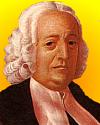
Died 4 Jan 1761 at age 83 (born 17 Sep 1677). quotes
English botanist, chemist and physiologist who pioneered the quantitative experimental approach in plant and animal physiology. He was a clergyman whose work in plant physiology, Vegetable Staticks (1787), included early demonstrations of the importance of air and light in plant growth, and of the role of transpiration in causing upward sap flow. He also measured the rates of growth of shoots and leaves and the pressure roots exert on sap, and he investigated plant respiration. Hales was the first to quantitatively measure blood pressure, measured the capacity of the left ventricle of the heart, and the output of the heart per minute. He invented an artificial ventilator that could convey fresh air into prisons, ships' holds, and granaries.[DSB gives date of birth as 17 Sep 1677. EB gives 7/17 Sep 1677.]
English botanist, chemist and physiologist who pioneered the quantitative experimental approach in plant and animal physiology. He was a clergyman whose work in plant physiology, Vegetable Staticks (1787), included early demonstrations of the importance of air and light in plant growth, and of the role of transpiration in causing upward sap flow. He also measured the rates of growth of shoots and leaves and the pressure roots exert on sap, and he investigated plant respiration. Hales was the first to quantitatively measure blood pressure, measured the capacity of the left ventricle of the heart, and the output of the heart per minute. He invented an artificial ventilator that could convey fresh air into prisons, ships' holds, and granaries.[DSB gives date of birth as 17 Sep 1677. EB gives 7/17 Sep 1677.]
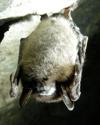
In 2013, a bat with symptoms of deadly white-nose syndrome, found in Long Cave, Kentucky, was euthanized and sent for laboratory testing, which confirmed the disease. Long Cave is a 1.3-mile-long undeveloped cave within the boundaries of Mammoth Cave National Park. Though not inter-connected with Mammoth Cave, the world's longest cave, Long Cave is significant as the park's largest bat hibernaculum for two endangered species, Indiana bats and gray bats. Other non-threatened species are also present. Public tours of the heavily-visited Mammoth Cave were not stopped, but decontamination of visitors' footwear was continued. The concern is the disease is spread by a fungus, causing whole colony deaths. Cavers in non-tourist cave areas in the park are not allowed to wear or carry any gear used in any other cave.«
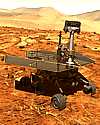
Artist’s conception
In 2004, the robot Mars Rover Spirit, landed on Mars to analyze the planet’s rocks, looking for evidence of water. It has taken the only photo of Earth from another planet. Surviving dust storms, it far outlasted its expected useful life. A twin robot rover, Opportunity, landed three weeks later, on 25 Jan 2004, on the other side of the planet. They had identical suites of five scientific instruments: a panoramic camera, a miniature thermal emission spectrometer, a Moessbauer spectrometer, an alpha particle X-ray spectrometer, and a microscopic imager. A rock abrasion tool could remove weathered surfaces of rocks to expose fresh interiors for examination.«

In 1996, the EV1 electric car, running on nickel-metal-hydride batteries, was announced by General Motors at the Greater Los Angeles Auto Show. Its limited introduction began later in the year, available only on lease, and only in California and Arizona. Although its wider adoption would have met requirement to move toward zero-emission cars, when California backed down from its stricter air-pollution standards, the GM scrapped the electric model in 2003, citing excessive production and maintenance expenses. Instead, the company fed consumers' whims for sport-utility vehicles (SUVs) and small trucks, rather than downsizing their fleet or developing hybrids in the face of more fuel-efficient imports. The company went bankrupt in 2008, and was bailed out by the U.S. government.«
In 1967, Donald Campbell died instantly when his jet-powered boat, the Bluebird K7, left the water at a speed over 300 mph, somersaulted, crashed on the water surface, and broke apart. After a famous record-breaking career on land and water, he was trying to break his own previous water speed record of 276 mph. Decades later, on 8 Mar 2001, the wreck was recovered from Coniston Water, Cumbria in the English Lake District. His remains were located, on 28 May 2001, confirmed 10 Aug 2011 by DNA testing, and buried on 12 Sep 2001. He was the son of Sir Malcolm Campbell, who set the land speed record in 1935. In 2000, Don Wales, Sir Malcolm's gransdson, Donald's nephew, in the family tradition, broke the British land speed record for an electrically-powered car.«

In 1962, the first fully automated subway train began revenue service with passengers in New York City. This began a six-month trial period as a shuttle 2,600-ft between the Times Square and Grand Central stations. A ceremony was followed by a run carrying invited guests and reporters. Next day, it began service for three hours each morning and evening rush hours. With a top speed of 30 m.p.h., a round trip took 4-1/2 mins including waiting time in the station. The three-car train carried a stand-by motorman. A strike threat by the Transport Workers Union had delayed an earlier scheduled trial beginning the previous 15 Dec, and resulted in a contract agreement that a motorman would still be aboard each train during the trial period. It remained in service until 21 Apr 1964, until destroyed by the spread of a nearby major fire in a station.«[Image: Earlier R-22 car in Coney Island Yard, in Jun 1960 after use for testing runs.]
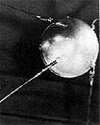
(NASA)
In 1958, the Russian Sputnik I satellite, the first man-made object to orbit the earth, fell back into the atmosphere and disintegrated, after 92 days in space. The Sputnik (meaning “companion” or “fellow traveller”) was launched from Kazakhstan. The craft circled the earth every 95 minutes at almost 20,000 miles per hour 500 miles above the Earth. The 184-lb satellite had transmitted a radio signal picked up around the world, and instrumentation for temperature measurement.
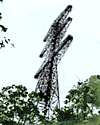
In 1940, Edwin H. Armstrong demonstrated the first “network” relay of an FM radio broadcast through several stations from Yonkers, N.Y., via Alpine, N.J., Meriden, Conn., and Paxton, Mass. to Mount Washington. Next the signal was relayed by the ordinary method to Winchester, Mass., then by telephone wire to the Yankee network headquarters in Boston, Mass. From Yonkers to Mount Washington, the broadcast needed no wire. The 60-minute program included selections by various musical instruments to test fidelity, free from static, distortion, fading and interference. It was exactly 17 years since the first network broadcast via telephone wires from New York to Boston on 4 Jan 1923. The following day, 5 Jan 1940, a similar demonstration was made for representatives of operators in the FM Broadcasters group.«[Image: Armstrong's 425-ft tower, Alpine, NJ, still serviceable.]
In 1912, the closest approach to earth by the moon was 221,441 miles apart center to center.
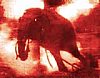
In 1904, Thomas Edison's movie crew filmed the electrocution of an elephant. Topsy was being destroyed by its owners after she killed three men in as many years. The third was a man that fed her a lit cigarette. The event was a public spectacle to a paying audience of 1500 people at Coney Island, where the elephant had been kept on show. Edison was the consultant chosen to arrange the electrocution death after cyanide-laced carrots had failed. Thereafter, he showed the film around the country as part of his unsuccessful effort to discredit the “dangerous” alternating current of George Westinghouse, and promote Edison's direct current electricity system. Eventually, A.C. was universally adopted, however, as more practical for long-distance transmission.
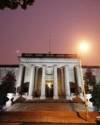
In 1902, the Carnegie Institute of Washington, was founded, incorporated at a meeting at the State Department. Andrew Carnegie pledged $10,000,000 to establish it as a centre for cutting-edge scientific research. On 8 Jun 1902, the New York Times reported Dr. Daniel C. Gilman, lately president of Johns Hopkins University, was to head it, and he planned to go to Europe for advice on its organization from the best French, German and British educators. It was envisaged that the institute would provide scholarships and professorates enabling talented individuals to conduct research fulltime. It is now an endowed, independent, nonprofit institution, with additional support from federal grants and private donations. In his lifetime, Carnegie established other unaffiliated organizations which bear his name, for example, the Carnegie Institute in Pittsburgh (1895), unrelated except for sharing their benefactor's name.«
In 1885, Dr. William West Grant of Davenport, Iowa, performed what is believed (sources disagree) to be the first successful appendectomy in the U.S. His patient was 22-year-old Mary Gartside, on whom he performed surgery by opening her abdomen and removing a perforated appendix. She recovered and lived until 1919, when she died from an unrelated illness. The first appendectomy in Britain took place in 1848 by Dr Hancock. In Canada, Dr Abraham Groves wrote in his book, All In The Day's Work (1934), that he performed his first appendectomy to successfully remove an inflamed appendix on 10 May 1883 on a boy in the log cabin in which he lived. Although the boy recovered, at the time, medical opinion had a negative reaction.«*
In 1863, four-wheeled roller skates were patented by James Plimpton of New York.
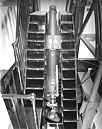
In 1850, the Airy Transit Circle was first used at the Royal Observatory, Greenwich. The instrument was designed by George Biddell Airy, the Astronomer Royal. It was set up on the Prime Meridian - the north-south line of longitude 0° - which marks the start of the Universal day for the world. The time at which a star passed over the meridian was measured with a regulator (an extremely accurate clock). The transit was used to measure the angle of a star at that instant. From this data, the co-ordinates of that star could be determined and plotted on a star chart. Navigation at sea depended on the accuracy of these charts, and the Airy Transit Circle was a great improvement on the previous technology.«




