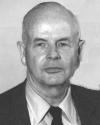
Born 3 Jan 1906; died 21 Jun 1994 at age 88. quotes
American astronomer who, in 1951, provided the first evidence that the Milky Way Galaxy has spiral arms. He spent his entire career at the Yerkes Observatory, including three years as director. Eschewing theory, his research was devoted to morphology, the classification of objects by their form and structure. With Keenan and Kellman, he introduced stellar luminosity classes and the two-dimensional classification of stellar spectra strictly based on the spectra themselves. With Osterbrock and Sharpless he demonstrated the existence of spiral arms in the Galaxy using precise distances of O and B stars obtained from spectral classifications. Morgan invented the UBV system of magnitudes and colors.
American astronomer who, in 1951, provided the first evidence that the Milky Way Galaxy has spiral arms. He spent his entire career at the Yerkes Observatory, including three years as director. Eschewing theory, his research was devoted to morphology, the classification of objects by their form and structure. With Keenan and Kellman, he introduced stellar luminosity classes and the two-dimensional classification of stellar spectra strictly based on the spectra themselves. With Osterbrock and Sharpless he demonstrated the existence of spiral arms in the Galaxy using precise distances of O and B stars obtained from spectral classifications. Morgan invented the UBV system of magnitudes and colors.
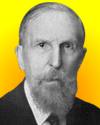
Born 3 Jan 1868; died 25 Aug 1947 at age 79. quotes
Franz-Valéry-Marie Cumont was a Belgian archaeologist and philologist, who studied Roman pagan cults, and in particular the Mediterranean cult of Mithraism. Cumont was the first to propose that their believes grew from Zoroastrianism. He actively researched their practice of astrology on his expeditions to Syria and Turkey. The drawings and inscriptions on monuments that he discovered helped support his theories. His book The Mysteries of Mithras: The Pagan Belief That Shaped the Christian World is a classic work, in which he traces the original worship of Mithras back to ancient Hinduism, through Persia, and the Roman Empire.«
Franz-Valéry-Marie Cumont was a Belgian archaeologist and philologist, who studied Roman pagan cults, and in particular the Mediterranean cult of Mithraism. Cumont was the first to propose that their believes grew from Zoroastrianism. He actively researched their practice of astrology on his expeditions to Syria and Turkey. The drawings and inscriptions on monuments that he discovered helped support his theories. His book The Mysteries of Mithras: The Pagan Belief That Shaped the Christian World is a classic work, in which he traces the original worship of Mithras back to ancient Hinduism, through Persia, and the Roman Empire.«
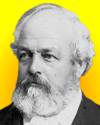

English engineer who invented the modern torpedo. He was the first to produce an effective, sub-surface, self-propelled torpedo. It much improved on the spar torpedo used during the American Civil War, which used a charge triggered by a long pole and floated to its target on a small boat. Whitehead’s first torpedo lacked speed and range. However, by 1870 he had increased its speed to 7 knots, able to hit a target 2100-ft away. The following year the British Navy purchased Whitehead’s invention.Whitehead’s torpedo was propelled by a compressed-air engine, and carried 18-lbs. of dynamite. Its most important feature was a self-regulating device which kept the torpedo at a constant preset depth. Edison made a movie of a Whitehead torpedo launch (12 May 1900). more
The Devil’s Device: The Story of Robert Whitehead, by Edwyn Gray. - book suggestion.
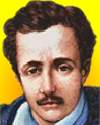
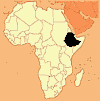
French geographer, was born with his younger brother Arnaud-Michel d’Abbadie (1815-93) in Ireland to a French father. For 12 years, they traveled extensively in Ethiopia, studying its geology, natural history and archaeology. Antoine d’Abbadie was the first scientific explorer to travel throughout eastern Africa. He returned to France with numerous astronomic, geodaesical, geophysical, geographical and meteorological results. He contributed to the challenging task of understanding the sources of the Blue and White tributories of the Nile. He had the magnificent castle of Abbadia built at Hendaye, in southern France, where he continued his astronomical observations. He left this estate to the Académie des Sciences.«[Image right: (source)]

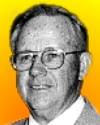
Died 3 Jan 1989 at age 67 (born 24 Nov 1921).
American chemist who co-discovered crystalline polypropylene polymer, with J. Paul Hogan. They were assigned by Phillips Petroleum, in 1946, to research ways to take the natural gas products propylene and ethylene and turn them into useful gasoline components. On 5 Jun 1951, their experiments using catalysts yielded polypropylene - now used in fibers for rope, indoor-outdoor carpeting and plastics. Banks and Hogan also found how to make a new high-density polyethylene which was more heat resistant than the previously existing polyethylene. Further, their catalysts produced the new polyethylene at only a few hundred psi pressure instead of the existing free radical process which required pressures of up to 30,000 psi.«
American chemist who co-discovered crystalline polypropylene polymer, with J. Paul Hogan. They were assigned by Phillips Petroleum, in 1946, to research ways to take the natural gas products propylene and ethylene and turn them into useful gasoline components. On 5 Jun 1951, their experiments using catalysts yielded polypropylene - now used in fibers for rope, indoor-outdoor carpeting and plastics. Banks and Hogan also found how to make a new high-density polyethylene which was more heat resistant than the previously existing polyethylene. Further, their catalysts produced the new polyethylene at only a few hundred psi pressure instead of the existing free radical process which required pressures of up to 30,000 psi.«
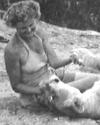
Adamson with Elsa
Died 3 Jan 1980 at age 69 (born 20 Jan 1910).
Austrian naturalist known as the author of the best-selling book Born Free. As well as a legacy of water-colour paintings of indigenous plants painted by Adamson during her early years in Kenya, she collected many botanical specimens. Her records include information concerning local uses of plant parts in ritual and medicinal practices, and for insecticides, dyes, fibres and food. On 1 Feb 1956, a completely new period in her life began with the arrival of an orphan lioness cub. With this cub, named Elsa, and later with a cheetah and a leopard, she proved that by skilful and considered action wild animals raised up by man can be taught to manage in nature independently. She was killed in Northern Kenya by a servant in a wage dispute.
Austrian naturalist known as the author of the best-selling book Born Free. As well as a legacy of water-colour paintings of indigenous plants painted by Adamson during her early years in Kenya, she collected many botanical specimens. Her records include information concerning local uses of plant parts in ritual and medicinal practices, and for insecticides, dyes, fibres and food. On 1 Feb 1956, a completely new period in her life began with the arrival of an orphan lioness cub. With this cub, named Elsa, and later with a cheetah and a leopard, she proved that by skilful and considered action wild animals raised up by man can be taught to manage in nature independently. She was killed in Northern Kenya by a servant in a wage dispute.
Born Free: A Lioness of Two Worlds, by Joy Adamson and George Page. - book suggestion.
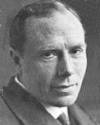
Died 3 Jan 1967 at age 91 (born 20 Jun 1875). quotes
Reginald Crundall Punnett was an English geneticist who, with the English biologist William Bateson, were among the first English Mendelian geneticists. They reported the discovery of two new genetic principles: the first account of genetic linkage in sweet pea; and gene interaction (1905). Punnett devised the Punnett square to depict the number and variety of genetic combinations. Punnett had a role in connecting Mendelism with statistics. In 1908, Punnett was asked at a lecture to explain, “ if brown eyes were dominant, then why wasn't the whole country becoming brown-eyed?” Punnett in turn asked his friend the mathematician, G. H. Hardy. Out of this conversation came the Hardy-Weinberg Law which calculates how population affects genetic inheritance.
Reginald Crundall Punnett was an English geneticist who, with the English biologist William Bateson, were among the first English Mendelian geneticists. They reported the discovery of two new genetic principles: the first account of genetic linkage in sweet pea; and gene interaction (1905). Punnett devised the Punnett square to depict the number and variety of genetic combinations. Punnett had a role in connecting Mendelism with statistics. In 1908, Punnett was asked at a lecture to explain, “ if brown eyes were dominant, then why wasn't the whole country becoming brown-eyed?” Punnett in turn asked his friend the mathematician, G. H. Hardy. Out of this conversation came the Hardy-Weinberg Law which calculates how population affects genetic inheritance.
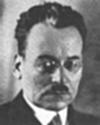
Died 3 Jan 1958 at age 74 (born 14 Sep 1883).
Austrian engineer whose work in antenna design, amplification, and detection advanced the development of radio telegraphy. In 1907 he joined the Telefunken Company of Berlin, where he conducted research on radio problems. He improved the design of antennas for transmitting at long wavelengths, devised new vacuum-tube circuits and amplification systems, and developed the heterodyne principle for radio reception. In 1911 Meissner designed the first rotary radio beacon to aid in the navigation of the Zeppelin airships. In 1913 he was the first to amplify high-frequency radio signals by using feedback in a vacuum triode; this principle made it possible to build radio receivers more sensitive than any earlier type.
Austrian engineer whose work in antenna design, amplification, and detection advanced the development of radio telegraphy. In 1907 he joined the Telefunken Company of Berlin, where he conducted research on radio problems. He improved the design of antennas for transmitting at long wavelengths, devised new vacuum-tube circuits and amplification systems, and developed the heterodyne principle for radio reception. In 1911 Meissner designed the first rotary radio beacon to aid in the navigation of the Zeppelin airships. In 1913 he was the first to amplify high-frequency radio signals by using feedback in a vacuum triode; this principle made it possible to build radio receivers more sensitive than any earlier type.
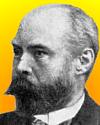
Died 3 Jan 1932 at age 73 (born 14 Oct 1858).
Norwegian geologist and petrologist who pioneered in the use of physical-chemical methods in the study of the origin of igneous rocks and ores. He did important work on the chemistry of silicates as the basis for igneous rock petrology, and on differentiation in cooling magmas. Vogt is often called the father of modern physiochemical petrology. He also made studies of ore geology, especially magmatic ores. Petrology is a branch of geology that deals with the origin, composition, structure, and alteration of rocks.
Norwegian geologist and petrologist who pioneered in the use of physical-chemical methods in the study of the origin of igneous rocks and ores. He did important work on the chemistry of silicates as the basis for igneous rock petrology, and on differentiation in cooling magmas. Vogt is often called the father of modern physiochemical petrology. He also made studies of ore geology, especially magmatic ores. Petrology is a branch of geology that deals with the origin, composition, structure, and alteration of rocks.

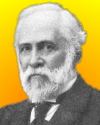
Died 3 Jan 1916 at age 84 (born 12 Apr 1831).
American civil engineer who was responsible for much of the railroad construction in the western and southwestern U.S. during the 19th century. Before the Civil War, he did railroad work in the West. During the war, with the Union forces, his skill in rapidly rebuilding the bridges and railroads destroyed by Confederates was of great value to Grant and Sherman in their Western campaigns. He became a Union general. He was severely wounded at the siege of Atlanta. After campaigning (1865-66) against the Native Americans, he left the army (May 1866). Then as chief engineer of the Union Pacific Railroad, his efficient, rapid construction of that line was his greatest achievement. Dodge was a Republican Congressman from Iowa (1867-69).
American civil engineer who was responsible for much of the railroad construction in the western and southwestern U.S. during the 19th century. Before the Civil War, he did railroad work in the West. During the war, with the Union forces, his skill in rapidly rebuilding the bridges and railroads destroyed by Confederates was of great value to Grant and Sherman in their Western campaigns. He became a Union general. He was severely wounded at the siege of Atlanta. After campaigning (1865-66) against the Native Americans, he left the army (May 1866). Then as chief engineer of the Union Pacific Railroad, his efficient, rapid construction of that line was his greatest achievement. Dodge was a Republican Congressman from Iowa (1867-69).
Died 3 Jan 1908 at age 73 (born 15 Dec 1834).
American astronomer who made the first observations of the flash spectrum of the Sun, proved the gaseous nature of the sun's corona and discovered the reversing layer of the solar atmosphere. He was a pioneer in the study of the spectrum of the sun and experimented in photographing solar prominences in full sunlight. On 22 Dec 1870, at the eclipse in Spain, he saw the lines of the solar spectrum all become bright for perhaps a second and a half (the "flash spectrum") and announced the "reversing layer." By exploring from the high altitude of Sherman, Wy. (1872), he more than doubled the number of bright lines he had observed in the chromosphere, By a comparison of observations, he concluded that magnetic conditions on the earth respond to solar disturbances.
American astronomer who made the first observations of the flash spectrum of the Sun, proved the gaseous nature of the sun's corona and discovered the reversing layer of the solar atmosphere. He was a pioneer in the study of the spectrum of the sun and experimented in photographing solar prominences in full sunlight. On 22 Dec 1870, at the eclipse in Spain, he saw the lines of the solar spectrum all become bright for perhaps a second and a half (the "flash spectrum") and announced the "reversing layer." By exploring from the high altitude of Sherman, Wy. (1872), he more than doubled the number of bright lines he had observed in the chromosphere, By a comparison of observations, he concluded that magnetic conditions on the earth respond to solar disturbances.
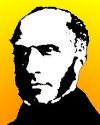
Died 3 Jan 1858 at age 54 (born 10 Jun 1803).
Henri-Philibert-Gaspard Darcy was a French hydraulic engineer who first derived the equation (now known as Darcy's law) that governs the laminar (nonturbulent) flow of fluids in homogeneous, porous media. In 1856, modern studies of groundwater began when Darcy was commissioned to develop a water-purification system for the city of Dijon, France. He constructed the first experimental apparatus to study the flow characteristics of water through the earth. From his experiments, he derived the Darcy's Law equation, describing the flow of water in nature, which is fundamental to understanding groundwater systems. He performed extensive tests on filtration and pipe resistance. He initiated the open-channel studies carried out by Bazin.
Henri-Philibert-Gaspard Darcy was a French hydraulic engineer who first derived the equation (now known as Darcy's law) that governs the laminar (nonturbulent) flow of fluids in homogeneous, porous media. In 1856, modern studies of groundwater began when Darcy was commissioned to develop a water-purification system for the city of Dijon, France. He constructed the first experimental apparatus to study the flow characteristics of water through the earth. From his experiments, he derived the Darcy's Law equation, describing the flow of water in nature, which is fundamental to understanding groundwater systems. He performed extensive tests on filtration and pipe resistance. He initiated the open-channel studies carried out by Bazin.
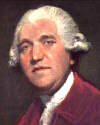
Died 3 Jan 1795 at age 64 (born 12 Jul 1730).
English inventor, artist and potter who began a new branch of the pottery industry in the early 1760s. This inventor placed the manufacture of stoneware on a scientific basis, and founded the potteries of North Staffordshire. The agateware and unglazed blue or green stoneware he decorated with white neo-classical designs, used pigments he invented. In 1768 he used his engineering skills to design the machinery and high-temperature beehive-shaped kilns. For his invention of a pyrometer for measuring high temperatures, Wedgwood was made a fellow of the Royal Society. He was a major financial supporter of Dr. Thomas Beddoes’ Pneumatic Institute near Bristol, where Humphry Davy studied nitrous oxide (1800).
English inventor, artist and potter who began a new branch of the pottery industry in the early 1760s. This inventor placed the manufacture of stoneware on a scientific basis, and founded the potteries of North Staffordshire. The agateware and unglazed blue or green stoneware he decorated with white neo-classical designs, used pigments he invented. In 1768 he used his engineering skills to design the machinery and high-temperature beehive-shaped kilns. For his invention of a pyrometer for measuring high temperatures, Wedgwood was made a fellow of the Royal Society. He was a major financial supporter of Dr. Thomas Beddoes’ Pneumatic Institute near Bristol, where Humphry Davy studied nitrous oxide (1800).
Wedgwood: The First Tycoon, by Brian Dolan. - book suggestion.
In 1999, the U.S. Mars Polar Lander was launched.
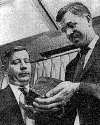
In 1970, a fireball was visible over a large area of the U.S. midwest. The meteorite that fell was the first to be detected by the Prairie Network operated by the Smithsonian Institution's Astrophysical Observatory since 1964. Its path was photographed by two of the system's 16 cameras funded by a NASA grant. Using these records, scientists calculated the meteorite's impact point. Gunther Schwartz, field manager of the network found the 21.6-lb meteorite six days later within a half-mile of the predicted site, near the rural hamlet Lost City, about 45 miles east of Tulsa, OK. The fast retrieval enabled examination of radioactivity produced by the meteorite's exposure to cosmic rays, looking for clues to how the universe was created.*«[Image: Dr Richard McCrosky of the Smithsonian Astrophysical Laboratory holds the meteorite retrieved by Gunther Schwartz (left).]

In 1957, the world's first electric watch was introduced in Lancaster, PA by the Hamilton Watch Company. Research began in 1946, but it was to take more than ten years to develop a viable watch. On this day, Hamilton held a press conference. The idea of a watch which never needed winding was very exciting to 1950s consumers, who were captivated by progress and modernity. The Hamilton Electric was an instant hit. Its popularity was enhanced by a number of very dramatic case styles with non-traditional asymmetrical styling; they were visual reminders of the ultra-modern movements inside the case. By 1969, when production ended, more advanced technology had already rendered the Hamilton Electric obsolete.
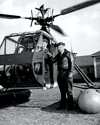
In 1944, the first mercy flight of a U.S. helicopter carried 40 units of blood plasma from Battery Park, Manhattan, N.Y., to Sandy Hook, N.J. to save some lives of injured crew members that had survived the explosion and sinking of the U.S.S. Turner. The Coast Guard Sikorsky HNS-1 Hoverfly helicopter was flown by Comdr. F.A. Erickson, USCG, with two cases of the lifesaving medical supplies lashed to the floats of the aircraft. The destroyer, Turner, had been anchored off Ambrose Light, New York. Explosions mostly in the internal ammunition stowage area culminated in a final violent explosion at about 07:50 a.m. Within 40 minutes the ship had capsized and sank. Out of the 276 men on board, 124 were rescued by nearby ships.«
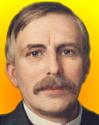
In 1919, Professor Ernest Rutherford succeeded in splitting the atom. By bombarding nitrogen atoms with alpha particles emitted by radioactive materials he transmuted the nitrogen atoms into oxygen.«
A Force of Nature: The Frontier Genius of Ernest Rutherford, by Richard Reeves. - book suggestion.
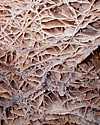
In 1901, a bill creating Wind Cave National Park was signed by President Theodore Roosevelt. It lies 10 miles (16-km) north of Hot Springs, South Dakota, the eighth U.S. National Park to be created and the first protecting a cave. (Mammoth Cave in Kentucky was authorized as a national park in 1926.) For centuries, Indians knew the entrance to Wind Cave, and its strong air movements in or out. The first person reported to explore the cave was Charlie Crary in fall of 1881. It was first systematically explored by Alvin McDonald from 1890 until his death, at age 20, from typhoid fever in 1893. He had been hired for the job by the South Dakota Mining Company. No minerals were found to mine, but the company may have been interested in developing tours. The cave is noted for its rare cave formations known as boxwork, a honeycomb of thin blades of calcite projecting from veins in the walls and ceilings.«
Wind Cave National Park: The First 100 Years, by Peggy Sanders. - book suggestion.

In 1888, the first wax drinking straw and the spiral winding tube-making process was patented by Marvin C. Stone in Washington, DC. Stone was already a manufacturer of paper cigarette holders. His idea was to make paper drinking straws to replace the use of natural rye grass straws. Stone made his prototype straw by winding strips of paper around a pencil and gluing it together. He then tried paraffin-coated manila paper, so the straws would not become soggy while someone was drinking. The first straws were hand rolled, and by 1890 his factory was producing more straws than cigarette holders.By 1905, he had also invented a machine to roll his straws, necessary to keep up with the growing demand, and new applications of spiral-wound tubing.
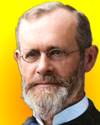
Abbe
In 1871, Cleveland Abbe became the chief scientist of the newly formed U.S. weather service. From 1 Sep 1869, he had been preparing weather forecasts from his own private weather reporting service at Cincinnati, Ohio, based on telegraphic reports. The U.S. Congress authorized its new federal weather service, as part of the Signal Corps, on 9 Feb 1870. Cleveland Abbe's experience made him a natural choice to be offered a leading position, which from then became his lifetime career. Abbe not only developed an extensive observing system for which he trained new personnel, but also established a scientific foundation for the meteorological study of forecasting, climatology and physical theory. The service was renamed as the Weather Bureau when moved to the Department of Agriculture (1891).«
In 1871, oleomargarine was patented by Henry Bradley in Binghamton, NY. A "compound for culinary use" called margarine. U.S. Patent No. 110,626.




