|
The idea of a self-propelled vehicle, however, could not be exiled. It made its appearance again when Lenoir, in 1860, built the first practical internal combustion engine in which the fire that operated it was in the engine cylinder. Thirty-four years after this, Levassor, later of the well-known Panhard-Levassor Company, departed from the horse-drawn vehicle design. He placed the engine out in front, used a clutch, a gear box and a differential - it was no longer a "horseless carriage," it was an "automobile," a word, which along with many other automotive terms came from the French. 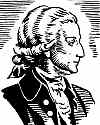 French scientists, however, were not idle in this period. In the
middle of the 18th century there lived a man who has been given credit
for founding the science of chemistry - his name - Antoine Lavoisier.
We must remember that in those days there was no science of chemistry.
The nearest thing to a chemist was the alchemist, a sort of magician
who was constantly searching for the "Philosopher's Stone" to turn base
metals into gold.
French scientists, however, were not idle in this period. In the
middle of the 18th century there lived a man who has been given credit
for founding the science of chemistry - his name - Antoine Lavoisier.
We must remember that in those days there was no science of chemistry.
The nearest thing to a chemist was the alchemist, a sort of magician
who was constantly searching for the "Philosopher's Stone" to turn base
metals into gold. |