|
|
|
51. Catching Up With Nature
Using the most modern sound recording devices
the men found that
while in flight the bat emits a sound which has a frequency of
vibration reaching a maximum of about 80,000 cycles - or, in musical
terms, about 8½ octaves above middle "c." We call these sounds
"supersonic" because their pitch is so high they cannot be heard by the
human ear. Our range of hearing is somewhat greater than the highest
note produced by instruments of the orchestra. The harmonics on the E
string of the violin are about 10,000 cycles per second. Apparently,
the bat while in flight sends out these inaudible sounds in short
squeaks which strike the obstacle he is approaching and are reflected
back and are picked up by his sensitive ears in time for him to steer
clear of the object.
 This method of sound reflection has been used for many years to
determine the depths of the ocean and the pilots of boats in Alaskan
waters often use the echo of their boat whistles to determine if they
are getting too near the cliffs when travelling in dense fog. Many
other applications of this system are in daily use in laboratories for
determining faults in materials and undoubtedly after the war it will
be applied in many other ways.
This method of sound reflection has been used for many years to
determine the depths of the ocean and the pilots of boats in Alaskan
waters often use the echo of their boat whistles to determine if they
are getting too near the cliffs when travelling in dense fog. Many
other applications of this system are in daily use in laboratories for
determining faults in materials and undoubtedly after the war it will
be applied in many other ways.
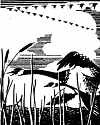 We feel proud of our recently developed sound echo devices even
though the bat has been using it in the dark for thousands of years. We
marvel at the automatic flying instrumentation of planes but every year
flocks of birds go from their southern homes to
their northern ones and return to precisely the same location with only
their natural instrumentation.
We feel proud of our recently developed sound echo devices even
though the bat has been using it in the dark for thousands of years. We
marvel at the automatic flying instrumentation of planes but every year
flocks of birds go from their southern homes to
their northern ones and return to precisely the same location with only
their natural instrumentation.
|
|