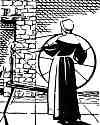
 Clothing, like the furniture, was in most cases home made. In
every house there were a hand loom and a spinning wheel. The
housewife's duties, like her husband's, began at daybreak and went on
until after dark - cooking, spinning, weaving, making clothes; and,
very often she had to be the family doctor even to the extent of
preparing her own medicines. As one historian puts it, "The basic
principles of human conduct in the Puritan civilization were Work and
Piety."
Clothing, like the furniture, was in most cases home made. In
every house there were a hand loom and a spinning wheel. The
housewife's duties, like her husband's, began at daybreak and went on
until after dark - cooking, spinning, weaving, making clothes; and,
very often she had to be the family doctor even to the extent of
preparing her own medicines. As one historian puts it, "The basic
principles of human conduct in the Puritan civilization were Work and
Piety."It is difficult for us today to realize that this was America three centuries ago. Try to imagine ourselves in that civilization with no transportation, or communication, no stoves, furnaces or running water. There were no newspapers, telegraph or telephone. |