
 Short Stories of Science and InventionA Collection of Radio Talks byCharles F. KetteringINDEXWeekly, from September 1942 to July 1945, Charles F. Kettering gave five-minute intermission talks about Science and Invention during the radio broadcasts of the General Motors Symphony of the Air. Kettering invented the first automobile self-starter, and for 31 years directed a research laboratory for General Motors. These radio talks are a fascinating legacy from the mind of a prolific inventor. The obvious anachronisms now add a historical perspective of the war-time period in which they were written. These web pages now preserve some of the most popular stories for a new generation to read The text and art come from a General Motors booklet of selected talks. (Reprint, March 1959) |
A Radio Talk by Charles F. Kettering Broadcast from Loudonville, Ohio, August 27, 1944 Loudonville is a town of 2200 people. It is the trading center of a prosperous farming community. Thousands of such places make up rural America. What has taken place here is typical of what has happened everywhere, for we must remember that every city was once a small town. The development of this community is an example of what Agriculture, Industry and Labor can produce in cooperation with Science, Engineering and Management. 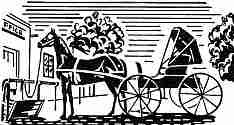 As a farm boy I attended the high school here and can remember what the town was like fifty years ago; no paved streets in town - only dirt roads in the country. We had no modern conveniences. There were two means of transportation; horse and buggy and the railroads. Of course, you could always walk. Our communications consisted of the telegraph at the depot and one telephone in a drug store. After graduation when I was teaching a district school several miles from here, an incident happened which shows some of the thinking at that time. For one day only, Friday, a railroad car of the California Land and Fruit Growers Association was exhibited at the depot siding to stimulate interest in California as a new place to live and prosper. The car must have been a great success if it was responsible in even a small way for California's great development. |







