
 Short Stories of Science and InventionA Collection of Radio Talks byCharles F. KetteringINDEXWeekly, from September 1942 to July 1945, Charles F. Kettering gave five-minute intermission talks about Science and Invention during the radio broadcasts of the General Motors Symphony of the Air. Kettering invented the first automobile self-starter, and for 31 years directed a research laboratory for General Motors. These radio talks are a fascinating legacy from the mind of a prolific inventor. The obvious anachronisms now add a historical perspective of the war-time period in which they were written. These web pages now preserve some of the most popular stories for a new generation to read The text and art come from a General Motors booklet of selected talks. (Reprint, March 1959) |
Patriot, Statesman and Scientist A Radio Talk by Charles F. Kettering 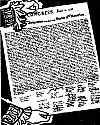 Last Tuesday, Americans at home and abroad paid tribute to the men
who drew up the Declaration of Independence. These men realized that
they were embarking on a struggle of life or death. But they had
Freedom and the hope of Constitutional government as their goal. They
also knew that it would require all of their physical resources and
ingenuity to win. No one appreciated these facts more than the
Commander - George Washington. Fortunately, for us today, Washington
was a long range thinker. He realized that Governmental enthusiasm and
idealism were practically worthless unless they were backed up by
physical things such as guns, ammunition and other military equipment.
Last Tuesday, Americans at home and abroad paid tribute to the men
who drew up the Declaration of Independence. These men realized that
they were embarking on a struggle of life or death. But they had
Freedom and the hope of Constitutional government as their goal. They
also knew that it would require all of their physical resources and
ingenuity to win. No one appreciated these facts more than the
Commander - George Washington. Fortunately, for us today, Washington
was a long range thinker. He realized that Governmental enthusiasm and
idealism were practically worthless unless they were backed up by
physical things such as guns, ammunition and other military equipment.Compared to England, our resources in those days were small - both in men and material, but we did have a peculiar kind of mechanical ingenuity. This was, in a way, a product of our environment. A gun was not an ornament over the fireplace - it served as a means of subsistence and a weapon against the constant threat of hostile Indians. Consequently these ingenious pioneers developed a gun unlike any other in the world. By 1750 skilled Pennsylvania gunsmiths had produced a very light and accurate rifle far superior to the heavy musket then in military use. Equipped with this unique rifle the men of the Colonies in the next twenty-five years became the most deadly sharpshooters in the world. When the Revolution came along, Washington sent out a call and ten companies of riflemen responded. These experts proved to be the backbone of the Continental Army. It was the combination of these new rifles and Washington's strategy that paved the way to final Victory. |







