 (source)
|
Gilbert White
(18 Jul 1720 - 26 Jun 1793)
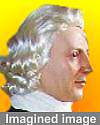
English clergyman and naturalist whose much-loved book, The Natural History and Antiquities of Selbourne, has been continuously in print since it was published in 1789. It contains his extensive, detailed observations of his region's flora and fauna. No authentic picture of White is known. The thumbnail image shown here is from an artist’s imagination for a mannequin representing White on display at Gilbert White’s House.
|
Gilbert White
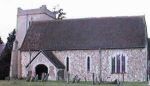
Gilbert White was educated at Oriel College, Oxford, took holy orders in 1747, and became curate of his home town of Selborne in Southern England (1756).
He was a pioneering naturalist, regarded as England's first ecologist, who recorded his observations of nature drawn from life, rather than from knowledge gained in laboratory by examination of dead specimens. His own notes were supplemented by an exchange of letters with Thomas Pennant and Daines Barrington, two friends who were also naturalists.
His careful studies, from 1765 covered a wide range of natural history subjects around the parish. He detailed the flora, and the habits and lives of the local mammals, birds and insects. He published the collected work of about 20 years in a book in 1789, The Natural History and Antiquities of Selborne. (Actually published in Dec. 1788 though given a 1789 date by his publisher, in order to make the book appear fresh for longer. This book has been in print continously since then, and is the fourth most published book in the English language.) The exact, but engagingly written, scientific descriptions of the commonplace creatures of the English countryside appealed to generations of homesick administrators of Empire.
For example, it was at Selborne in 1767 that Gilbert White first noticed that the harvest mouse (Micromys minutus), the smallest European mouse, with a body only two inches long, was a different species from other mice. In a letter to Thomas Pennant on Nov 4 that year, reproduced as part of his The Natural History of Selborne, he wrote:
The harvest mouse nests in the longest grasses in meadows, in a tennis ball-sized nest. White was apparently the first to notice that the mouse closes up the hole in the side after it enters or leaves its nest. The mouse, whose Latin name Micromys minutus means “the smallest tiny mouse,” is so light that it can climb between grass stems using its two-inch prehensile tail, without touching the ground.
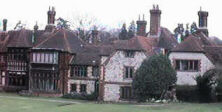
Sadly, the effects of agricultural intensification in modern Britain have greatly reduced the natural habitat for this endearing animal. However, the grounds of Gilbert White's house are now a museum, managed with conservation efforts in mind. In 1998, there was excitement to find that the otherwise increasingly rare harvest mouse had been discovered again nesting in the gardens.
Gilbert White inherited his house, The Wakes, from his uncle, Charles White, in March 1763. To the present day, the countryside around the village remains mostly unchanged from when White knew it in the 18th Century, and is now mainly owned by The National Trust. The Gilbert White House is now a museum preserving many of his items of furniture, possessions, and family portraits. The original manuscript for The Natural History of Selborne is on display. The garden is being restored to White's original designs. (White's House also contains a memorial to the Oates family, including relics and an account of Captain Lawrence Oates's ill-fated expedition to the South Pole.)
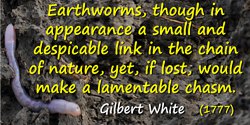
- Science Quotes by Gilbert White.
- 18 Jul - short biography, births, deaths and events on date of White's birth.
- Gilbert White of Selborne from Macmillan's Magazine (1893).
- The Natural History of Selborne, by Gilbert White. - book suggestion.





