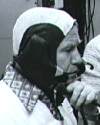
Born 30 May 1934; died 11 Oct 2019 at age 85. quotes
Aleksey (Alexei) Arkhipovich Leonov was a Soviet cosmonaut, who was the first man to climb out of a spacecraft in space. On 18 Mar 1965, Voskhod 2 was launched into space carrying Leonov with Pavel Belyayev aboard. On the second orbit Leonov left the spacecraft through the air lock while still tethered to the vessel. He took motion pictures and practiced moving outside of the spacecraft for 10 minutes. Voskhod 2 made 17 orbits at about 110 miles (177 km) above earth. Ten years later, on 17 Jul 1975, Leonov commanded the Soviet Soyuz craft that linked in orbit with a U.S. Apollo craft.
Aleksey (Alexei) Arkhipovich Leonov was a Soviet cosmonaut, who was the first man to climb out of a spacecraft in space. On 18 Mar 1965, Voskhod 2 was launched into space carrying Leonov with Pavel Belyayev aboard. On the second orbit Leonov left the spacecraft through the air lock while still tethered to the vessel. He took motion pictures and practiced moving outside of the spacecraft for 10 minutes. Voskhod 2 made 17 orbits at about 110 miles (177 km) above earth. Ten years later, on 17 Jul 1975, Leonov commanded the Soviet Soyuz craft that linked in orbit with a U.S. Apollo craft.
Born 30 May 1916; died 5 May 1957 at age 40. quotes
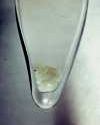
Joseph William Kennedy was an American chemist and physicist, one of four co-discoverers of plutonium, (element 94) which was produced from uranium oxide bombarded with deuterons in a cyclotron at the Univ. of California at Berkeley. Subsequently, on 28 Mar 1941, Glenn Seaborg, Emilio Segrè and Joseph Kennedy demonstrated that plutonium, like U235, is fissionable with slow neutrons, thus neutrons of any speed, which implies it's a potential fission bomb material. He was a chemistry instructor while working on the research project led by Glenn Seaborg at the University of California, Berkeley. After working with Seaborg, Kennedy was chosen by J. Robert Oppenheimer to lead the Chemistry Division of the Manhattan Project.Image: plutonium hydroxide, 20 microgram in a capillary tube, Sep 1942.
Joseph William Kennedy was an American chemist and physicist, one of four co-discoverers of plutonium, (element 94) which was produced from uranium oxide bombarded with deuterons in a cyclotron at the Univ. of California at Berkeley. Subsequently, on 28 Mar 1941, Glenn Seaborg, Emilio Segrè and Joseph Kennedy demonstrated that plutonium, like U235, is fissionable with slow neutrons, thus neutrons of any speed, which implies it's a potential fission bomb material. He was a chemistry instructor while working on the research project led by Glenn Seaborg at the University of California, Berkeley. After working with Seaborg, Kennedy was chosen by J. Robert Oppenheimer to lead the Chemistry Division of the Manhattan Project.Image: plutonium hydroxide, 20 microgram in a capillary tube, Sep 1942.
1970
Born 30 May 1912; died 29 Dec 2004 at age 92.
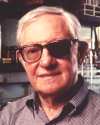
American biochemist and pharmacologist who (with British biophysicist Sir Bernard Katz and Swedish physiologist Ulf von Euler) received the 1970 Nobel Prize for Physiology or Medicine. Axelrod investigated the mechanism of formation of the hormone noradrenaline, as an important nerve impulse transmitter, specifically his discovery and isolation of the enzyme he called catechol-o-methyl transferase, which degrades chemical neurotransmitters when no longer needed. In effect this resets the nerve to nerve connections ready to transmit the next impulse that arrives. This helped the search for treatment of nervous and mental illnesses. He studied certain psychotropic drugs on the nervous system and the specific route taken by injected drugs.
American biochemist and pharmacologist who (with British biophysicist Sir Bernard Katz and Swedish physiologist Ulf von Euler) received the 1970 Nobel Prize for Physiology or Medicine. Axelrod investigated the mechanism of formation of the hormone noradrenaline, as an important nerve impulse transmitter, specifically his discovery and isolation of the enzyme he called catechol-o-methyl transferase, which degrades chemical neurotransmitters when no longer needed. In effect this resets the nerve to nerve connections ready to transmit the next impulse that arrives. This helped the search for treatment of nervous and mental illnesses. He studied certain psychotropic drugs on the nervous system and the specific route taken by injected drugs.
Born 30 May 1909; died 20 Aug 1997 at age 88.
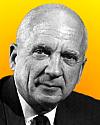
Norris Edwin Bradbury was an American physicist who succeeded J. Robert Oppenheimer as director of the Los Alamos (New Mexico) Scientific Laboratory (1945-70). He joined Los Alamos in 1944 to head the assembly of the non-nuclear components of the nuclear weapons. He guided the Los Alamos facility in its conversion to peacetime work, in basic nuclear research and nuclear power applications, testing several exploratory reactor designs, including solid and liquid plutonium fuels and gas-cooled uranium reactors. Bradbury also encouraged expansion of the laboratory's research into other areas, such as physics, chemistry, metallurgy, and space technology, as well as establishing programs in biological and medical health research.
Norris Edwin Bradbury was an American physicist who succeeded J. Robert Oppenheimer as director of the Los Alamos (New Mexico) Scientific Laboratory (1945-70). He joined Los Alamos in 1944 to head the assembly of the non-nuclear components of the nuclear weapons. He guided the Los Alamos facility in its conversion to peacetime work, in basic nuclear research and nuclear power applications, testing several exploratory reactor designs, including solid and liquid plutonium fuels and gas-cooled uranium reactors. Bradbury also encouraged expansion of the laboratory's research into other areas, such as physics, chemistry, metallurgy, and space technology, as well as establishing programs in biological and medical health research.
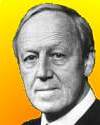
Born 30 May 1908; died 2 Apr 1995 at age 86. quotes
Hannes Olof Gösta Alfvén was a Swedish astrophysicist who was one of the founders of the field of plasma physics (the study of ionized gases). He shared the 1970 Nobel Prize in Physics (with Frenchman Louis Néel). Alfvén was recognized “for fundamental work in magnetohydrodynamics with fruitful applications in different parts of plasma physics.” He conceived plasma cosmology as an alternative to the Big Bang theory of the origin of the universe. In the concept of plasma cosmology, the universe has no specific beginning nor has any forseeable end. Instead of a dominance by gravitational forces, the theory maintains that it is the electromagnetic forces of plasma throughout the universe that organizes the matter of the universe into its observed structure of stars.«
Hannes Olof Gösta Alfvén was a Swedish astrophysicist who was one of the founders of the field of plasma physics (the study of ionized gases). He shared the 1970 Nobel Prize in Physics (with Frenchman Louis Néel). Alfvén was recognized “for fundamental work in magnetohydrodynamics with fruitful applications in different parts of plasma physics.” He conceived plasma cosmology as an alternative to the Big Bang theory of the origin of the universe. In the concept of plasma cosmology, the universe has no specific beginning nor has any forseeable end. Instead of a dominance by gravitational forces, the theory maintains that it is the electromagnetic forces of plasma throughout the universe that organizes the matter of the universe into its observed structure of stars.«
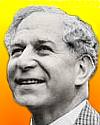
Born 30 May 1904; died 1 Apr 1993 at age 88.
Solly Zuckerman Thorpe, Baron Zuckerman of Burnham was a British zoologist and political adviser was born in South Africa. After completing medical studies in England, his first career was teaching anatomy at University College London and doing research at London Zoo on primate behaviour (1928-32). When WW II began, he became a scientific adviser for the British Defense Ministry, beginning with experimental studies of concussion (the effects that bomb blast shock waves have on the body) and became a military strategist and government adviser (1939-46; 1960-66). He remained busy after retirement, as President of the Zoological Society of London, as a campaigner against the nuclear arms race, and as a promoter of environmental research.
Solly Zuckerman Thorpe, Baron Zuckerman of Burnham was a British zoologist and political adviser was born in South Africa. After completing medical studies in England, his first career was teaching anatomy at University College London and doing research at London Zoo on primate behaviour (1928-32). When WW II began, he became a scientific adviser for the British Defense Ministry, beginning with experimental studies of concussion (the effects that bomb blast shock waves have on the body) and became a military strategist and government adviser (1939-46; 1960-66). He remained busy after retirement, as President of the Zoological Society of London, as a campaigner against the nuclear arms race, and as a promoter of environmental research.
Solly Zuckerman, a Scientist Out of the Ordinary, by John Peyton. - book suggestion.
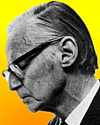
Born 30 May 1902; died 7 Jan 1996 at age 93.
Seton Howard Frederick Lloyd was an English archaeologist who is noted for his rediscovery, in the mid 1950s, of the ancient empire of Arzawa in Turkey. This civilization was conquered by the Hittites in about 1200 B.C. Although he was trained as an architect, in 1928 he accepted an invitation to join an excavation team on a project in Egypt. From this start, he progressed to leading a number of digs in Iraq and Turkey, which he wrote about in a number of books. These include Sennacherib's Aqueduct at Jerwan, a report of its discovery he made in Iraq with Thorkild Jaconsen. It was built about 700 B.C. by the Assyrian King Sennacherib. Other books include Mesopotamia: Excavations on Sumerian Sites (1935) and Ruined Cities of Iraq, (1980). His best known work Foundations in the Dust: A Story of Mesopotamian Exploration (1947) was reissued in 1976 and 1980. He served as the first director of the British Institute of Archaeology at Ankara, Turkey (1949-1961).«
Seton Howard Frederick Lloyd was an English archaeologist who is noted for his rediscovery, in the mid 1950s, of the ancient empire of Arzawa in Turkey. This civilization was conquered by the Hittites in about 1200 B.C. Although he was trained as an architect, in 1928 he accepted an invitation to join an excavation team on a project in Egypt. From this start, he progressed to leading a number of digs in Iraq and Turkey, which he wrote about in a number of books. These include Sennacherib's Aqueduct at Jerwan, a report of its discovery he made in Iraq with Thorkild Jaconsen. It was built about 700 B.C. by the Assyrian King Sennacherib. Other books include Mesopotamia: Excavations on Sumerian Sites (1935) and Ruined Cities of Iraq, (1980). His best known work Foundations in the Dust: A Story of Mesopotamian Exploration (1947) was reissued in 1976 and 1980. He served as the first director of the British Institute of Archaeology at Ankara, Turkey (1949-1961).«
Foundations in the Dust: A Story of Mesopotamian Exploration, by Lloyd Seton. - book suggestion.
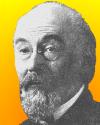
Born 30 May 1859; died 24 Feb 1947 at age 87. quotes
French psychopathologist and neurologist influential in bringing about in France and the United States a connection between academic psychology and the clinical treatment of mental illnesses. He stressed psychological factors in hypnosis and contributed to the modern concept of mental and emotional disorders involving anxiety, phobias, and other abnormal behaviour. Janet is remembered for his dissociation theory of hysteria and hypnosis. His first case study, that of a hypnotic subject named Léonie, was published in 1886. He introduced the words dissociation and subconscious into psychological terminology and attributed hysteria and hypnotic susceptibility to inherited dispositions toward imbalances in psychic energy and psychic tension.
French psychopathologist and neurologist influential in bringing about in France and the United States a connection between academic psychology and the clinical treatment of mental illnesses. He stressed psychological factors in hypnosis and contributed to the modern concept of mental and emotional disorders involving anxiety, phobias, and other abnormal behaviour. Janet is remembered for his dissociation theory of hysteria and hypnosis. His first case study, that of a hypnotic subject named Léonie, was published in 1886. He introduced the words dissociation and subconscious into psychological terminology and attributed hysteria and hypnotic susceptibility to inherited dispositions toward imbalances in psychic energy and psychic tension.
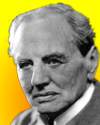

Born 30 May 1790; died 24 Feb 1868 at age 77.
English physicist and journalist was self-educated in mathematics and science. An early interest investigating a theory of lunar motion (1811) led to considering the nature of heat and derived an equation relating the pressure and volume of a gas to the number, mass and speed of its particles. He published a preliminary notice of his theory in Annals of Philosophy in 1816. In his later career, he took an interest in steam-powered transportation, and became the editor (1836) of Railway Magazine and Annals of Science. He published in it his own scientific papers, including one giving a calculation (1932) on the speed of sound in air, which is the first known calculation of the mean molecular speed of a molecule from the kinetic theory of gases, though it is often Joule's later work that is recognized for this accomplishment.
English physicist and journalist was self-educated in mathematics and science. An early interest investigating a theory of lunar motion (1811) led to considering the nature of heat and derived an equation relating the pressure and volume of a gas to the number, mass and speed of its particles. He published a preliminary notice of his theory in Annals of Philosophy in 1816. In his later career, he took an interest in steam-powered transportation, and became the editor (1836) of Railway Magazine and Annals of Science. He published in it his own scientific papers, including one giving a calculation (1932) on the speed of sound in air, which is the first known calculation of the mean molecular speed of a molecule from the kinetic theory of gases, though it is often Joule's later work that is recognized for this accomplishment.
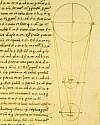
Born 30 May 1423; died 8 Apr 1461 at age 37.
Austrian mathematician and astronomer who promoted the use of Arabic numerals (introduced 250 years earlier in place of Roman numerals), especially in a table of sines he calculated with unprecedented accuracy. He died before this project was finished, and his pupil, Regiomontanus continued it until his own death. Peurbach was a follower of Ptolomy's astronomy. He insisted on the solid reality of the crystal spheres of the planets, going somewhat further than in Ptolomy's writings. He calculated tables of eclipses in Tabulae Ecclipsium, observed Halley's comet in Jun 1456 and the lunar eclipse of 3 Sep 1457 from a site near Vienna. Peurbach wrote on astronomy, his observations and devised astronomical instruments.[Image: from Epitome of the Almagest.]
Austrian mathematician and astronomer who promoted the use of Arabic numerals (introduced 250 years earlier in place of Roman numerals), especially in a table of sines he calculated with unprecedented accuracy. He died before this project was finished, and his pupil, Regiomontanus continued it until his own death. Peurbach was a follower of Ptolomy's astronomy. He insisted on the solid reality of the crystal spheres of the planets, going somewhat further than in Ptolomy's writings. He calculated tables of eclipses in Tabulae Ecclipsium, observed Halley's comet in Jun 1456 and the lunar eclipse of 3 Sep 1457 from a site near Vienna. Peurbach wrote on astronomy, his observations and devised astronomical instruments.[Image: from Epitome of the Almagest.]

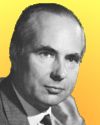
Died 30 May 2012 at age 94 (born 22 Nov 1917).
Andrew Fielding Huxley was an English physiologist who shared (with Sir Alan Hodgkin and Sir John Carew Eccles) the 1963 Nobel Prize for Physiology or Medicine. He collaborated with Alan Hodgkin in elucidating the chemical phenomena - the “sodium pump” mechanism—by which nerve impulses are transmitted. He has also done important work on muscular contraction theory and has been involved in the development of the interference microscope and ultramicrotome. He received a knighthood in 1974. He was a grandson of noted biologist T.H. Huxley.
Andrew Fielding Huxley was an English physiologist who shared (with Sir Alan Hodgkin and Sir John Carew Eccles) the 1963 Nobel Prize for Physiology or Medicine. He collaborated with Alan Hodgkin in elucidating the chemical phenomena - the “sodium pump” mechanism—by which nerve impulses are transmitted. He has also done important work on muscular contraction theory and has been involved in the development of the interference microscope and ultramicrotome. He received a knighthood in 1974. He was a grandson of noted biologist T.H. Huxley.
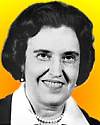
Died 30 May 2011 at age 89 (born 19 Jul 1921). quotes
Rosalyn Sussman Yalow was an American biophysicist who shared (with Andrew V. Schally and Roger Guillemin) the 1977 Nobel Prize for Physiology or Medicine, making her the second woman to win the Nobel Prize in medicine, “for the development of radioimmuno assays (RIA) of peptide hormone.” RIA brought about a revolution in biological and medical research. With her coworkers, she applied RIA to study of the physiology of the peptide hormones insulin, ACTH, growth hormone, and also to throw light upon the pathogenesis of diseases caused by abnormal secretion of these hormones. This was pioneering work that opened diabetes research in new directions. She has been called the “Madame Curie of the Bronx..”«
Rosalyn Sussman Yalow was an American biophysicist who shared (with Andrew V. Schally and Roger Guillemin) the 1977 Nobel Prize for Physiology or Medicine, making her the second woman to win the Nobel Prize in medicine, “for the development of radioimmuno assays (RIA) of peptide hormone.” RIA brought about a revolution in biological and medical research. With her coworkers, she applied RIA to study of the physiology of the peptide hormones insulin, ACTH, growth hormone, and also to throw light upon the pathogenesis of diseases caused by abnormal secretion of these hormones. This was pioneering work that opened diabetes research in new directions. She has been called the “Madame Curie of the Bronx..”«
Rosalyn Yalow, Nobel Laureate: Her Life and Work in Medicine, by Eugene Straus. - book suggestion.
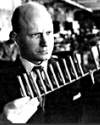
Died 30 May 1994 at age 79 (born 29 Jul 1914).
French inventor who built his business empire by creating throwaway Bic pens, razors and lighters. In 1945, Marcel Bich and his friend, Edouard Buffard, acquired an empty factory shell near Paris, France, and soon developed a thriving business, producing parts for fountain pens and mechanical lead pencils. Later, Bich spent two years developing his ballpoint pen design, and in 1949, he was able to produce a reliable, low cost ballpoint pen. In 1973 the Bic Lighter was introduced in the U.S., followed by Bic Shavers, first introduced in 1976
French inventor who built his business empire by creating throwaway Bic pens, razors and lighters. In 1945, Marcel Bich and his friend, Edouard Buffard, acquired an empty factory shell near Paris, France, and soon developed a thriving business, producing parts for fountain pens and mechanical lead pencils. Later, Bich spent two years developing his ballpoint pen design, and in 1949, he was able to produce a reliable, low cost ballpoint pen. In 1973 the Bic Lighter was introduced in the U.S., followed by Bic Shavers, first introduced in 1976
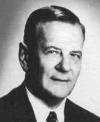
Died 30 May 1992 at age 91 (born 26 Dec 1900). quotes
Polish-American mathematician who created a major analysis research centre at Chicago, and recognized in 1986 for this with the National Medal for Science. In 1940, he escaped with his wife and son from German controlled Poland to the USA. He did much work in harmonic analysis, a statistical method for determining the amplitude and period of certain harmonic or wave components in a set of data with the aid of Fourier series. Such technique can be applied in various fields of science and technology, including natural phenomena such as sea tides. He also did major work in Fourier analysis and its application to partial differential equations. Zygmund's book Trigonometric Series (1935) is a classic, definitive work on the subject.«
Polish-American mathematician who created a major analysis research centre at Chicago, and recognized in 1986 for this with the National Medal for Science. In 1940, he escaped with his wife and son from German controlled Poland to the USA. He did much work in harmonic analysis, a statistical method for determining the amplitude and period of certain harmonic or wave components in a set of data with the aid of Fourier series. Such technique can be applied in various fields of science and technology, including natural phenomena such as sea tides. He also did major work in Fourier analysis and its application to partial differential equations. Zygmund's book Trigonometric Series (1935) is a classic, definitive work on the subject.«
Trigonometric Series, by Antoni Zygmund. - book suggestion.
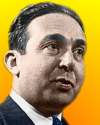
Died 30 May 1964 at age 66 (born 11 Feb 1898). quotes
Hungarian-American physicist who, with Enrico Fermi, designed the first nuclear reactor that sustained nuclear chain reaction (2 Dec 1942). In 1933, Szilard had left Nazi Germany for England. The same year he conceived the neutron chain reaction. Moving to N.Y. City in 1938, he conducted fission experiments at Columbia University. Aware of the danger of nuclear fission in the hands of the German government, he persuaded Albert Einstein to write to President Roosevelt, urging him to commission American development of atomic weapons. In 1943, Major General Leslie Groves, leader of the Manhattan Project designing the atomic bomb, forced Szilard to sell his atomic energy patent rights to the U.S. government.
Hungarian-American physicist who, with Enrico Fermi, designed the first nuclear reactor that sustained nuclear chain reaction (2 Dec 1942). In 1933, Szilard had left Nazi Germany for England. The same year he conceived the neutron chain reaction. Moving to N.Y. City in 1938, he conducted fission experiments at Columbia University. Aware of the danger of nuclear fission in the hands of the German government, he persuaded Albert Einstein to write to President Roosevelt, urging him to commission American development of atomic weapons. In 1943, Major General Leslie Groves, leader of the Manhattan Project designing the atomic bomb, forced Szilard to sell his atomic energy patent rights to the U.S. government.
Genius in the Shadows: A Biography of Leo Szilard, the Man Behind the Bomb, by William Lanouette and Bela Silard. - book suggestion.
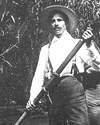
Early 1900's
Died 30 May 1947 at age 81 (born 11 Oct 1865). quotes
American zoologist whose classification of many new species of marine protozoans helped establish systematic marine biology. Named director of the University of Illinois Biological Experiment Station in Havana, IL. (1895-1903), Kofoid investigated plankton in the river and backwater lakes. He joined the newly founded Scripps Institution of Oceanography (1903). Kofoid was a member of their scientific staff on the US Fish Commission Steamer Albatross during the Albatross Expedition (l904-5) off the coast of San Diego, CA. Two summers (1908,9), he toured the marine biological stations of Europe, buying instruments and collecting information on buildings and aquaria to help plan the San Diego Marine Biological Station.
American zoologist whose classification of many new species of marine protozoans helped establish systematic marine biology. Named director of the University of Illinois Biological Experiment Station in Havana, IL. (1895-1903), Kofoid investigated plankton in the river and backwater lakes. He joined the newly founded Scripps Institution of Oceanography (1903). Kofoid was a member of their scientific staff on the US Fish Commission Steamer Albatross during the Albatross Expedition (l904-5) off the coast of San Diego, CA. Two summers (1908,9), he toured the marine biological stations of Europe, buying instruments and collecting information on buildings and aquaria to help plan the San Diego Marine Biological Station.
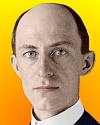
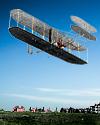
American inventor and aviator, who with his brother Orville, invented the first powered airplane, Flyer, capable of sustained, controlled flight (17 Dec 1903). Orville made the first flight, airborn for 12-sec. Wilbur took the second flight, covering 853-ft (260-m) in 59 seconds. By 1905, they had improved the design, built and and made several long flights in Flyer III, which was the first fully practical airplane (1905), able to fly up to 38-min and travel 24 miles (39-km). Their Model A was produced in 1908, capable of flight for over two hours of flight. They sold considerable numbers, but European designers became strong competitors. After Wilbur died of typhoid in 1912, Orville sold his interest in the Wright Company in 1915.« more
To Conquer the Air: The Wright Brothers and the Great Race for Flight, by James Tobin. - book suggestion.


(16 Sep 1870)
American astrophysicist and spectroscopist who made the first telescopes designed for celestial photography. He produced a classification scheme of stars based on their spectra (which compares with the Italian astronomer, Angelo Secchi). Rutherfurd spent his life working in his own small observatory, built in the garden of his New York City home (1856), where he photographed (from 1858) the Moon, Jupiter, Saturn, the Sun, and stars down to the fifth magnitude. While using photography to map star clusters, he devised a new micrometer to measure distances between stars with improved accuracy. When Rutherford began (1862) spectroscopic studies, he devised a machine to rule highly sophisticated diffraction gratings.« more
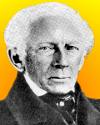
Died 30 May 1864 at age 77 (born 6 Dec 1786).
Swiss mechanic and prolific inventor of machine tools and textile-making machinery. In 1824 he established a small factory at Bolton, Lancashire, to manufacture machinery that made the process from carding to spinning wool continuous. This machinery was widely adopted in England and the U.S. and is said to have revolutionized the industry. He worked on the improvement of the conveyor belt, and contrived new methods so that it could transport heavier material and for a greater variety of uses. He was an exceedingly versatile inventor, and worked on machine tools, a gear-making machine, spinning machines, water wheels, steam engines, locomotives, and a traveling crane. He is credited with inventing the cylinder with opposed pistons for steam engines.
Swiss mechanic and prolific inventor of machine tools and textile-making machinery. In 1824 he established a small factory at Bolton, Lancashire, to manufacture machinery that made the process from carding to spinning wool continuous. This machinery was widely adopted in England and the U.S. and is said to have revolutionized the industry. He worked on the improvement of the conveyor belt, and contrived new methods so that it could transport heavier material and for a greater variety of uses. He was an exceedingly versatile inventor, and worked on machine tools, a gear-making machine, spinning machines, water wheels, steam engines, locomotives, and a traveling crane. He is credited with inventing the cylinder with opposed pistons for steam engines.
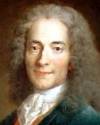
Died 30 May 1778 at age 83 (born 21 Nov 1694). quotes
François Marie Arouet Voltaire was a French author who popularized Isaac Newton's work in France by arranging a translation of Principia Mathematica to which he added his own commentary (1737). The work of the translation was done by the marquise de Châtelet who was one of his mistresses, but Voltaire's commentary bridged the gap between non-scientists and Newton's ideas at a time in France when the pre-Newtonian views of Descartes were still prevalent. Although a philosopher, Voltaire advocated rational analysis. He died on the eve of the French Revolution.
François Marie Arouet Voltaire was a French author who popularized Isaac Newton's work in France by arranging a translation of Principia Mathematica to which he added his own commentary (1737). The work of the translation was done by the marquise de Châtelet who was one of his mistresses, but Voltaire's commentary bridged the gap between non-scientists and Newton's ideas at a time in France when the pre-Newtonian views of Descartes were still prevalent. Although a philosopher, Voltaire advocated rational analysis. He died on the eve of the French Revolution.
The attitude of Voltaire to magic and the sciences, by Margaret Libby. - book suggestion.

In 1987, North American Philips Company introduced the compact disc video (CD-V), a 12 cm (4-3/4 inch) CD-sized implementation of the earlier Laser Vision format (previously available in 20 cm (8") and 30 cm (12") since 1977). The CD-V discs were gold rather than silver. They used the same full motion video system (analog, about 5-6 minutes) as LaserVision but with additional CD digital audio (about 20 minutes). They were marketed as “CDs with pictures,” and most titles released were music. CD-V required a special CD-V drive, and was used mostly in the music industry and commercial video production arena. Despite the higher picture quality than possible with videotape, the CD-V format was never commercially successful.
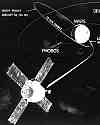
In 1971, the U.S. Mars space probe Mariner 9 blasted off from Cape Kennedy, Florida. It carried cameras, infrared spectrometer and radiometer, ultraviolet spectrometer, radio occultation and celestial mechanics instruments. On 13 Nov 1971, it entered orbit as the first artificial satellite of Mars. After waiting for a month-long planet-wide dust storm to clear, it began compiling a global mosaic of high-quality images for 100% of the Martian surface. The photos showed gigantic volcanoes, a grand canyon stretching 4,800 kilometers (3,000 miles) and relics of ancient riverbeds that were carved in the landscape of this seemingly dry and dusty planet. It also sent the first closeup pictures of the two Martian moons, Phobos and Deimos.
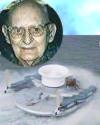
In 1959, the first experimental hovercraft, the SR.N1 made its first trip at Cowes on the Isle of Wight. It was designed by Sir Christopher Cockerell and built by Saunders-Roe. The invention was considered initially only for military use, but was released for civilian use in 1959. On 25 Jul 1959, the prototype crossed the English Channel. Cockerell first considered the possibility of travel by hovercraft, a vehicle that can move across land or water on a cushion of air, in the early 1950s. Using a can of cat food inside a coffee tin and reversed air-flow from a vacuum cleaner, he proved his theory on the mud floor of his boatyard. The hovercraft is now used in a variety of roles, from military transportation to ferrying cars and passengers across the Channel.

(USPTO)
In 1899, black American inventor George Cook of Louisville, Kentucky, received a U.S. patent for an "Automatic Fishing Device" (No. 625,829). The device featured a trip lever activated by tension on the fishing line. This would release a spring-loaded carriage that slid back on short rails within the frame of the device immediately and also would also ring an alarm-gong by releasing a spring-actuated striker. The carriage contained a spring-driven reel which then takes up the line.
The Inventive Spirit of African Americans: Patented Ingenuity, by Patricia Carter Sluby. - book suggestion.
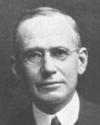
Travers
In 1898, Morris William Travers, an English chemist, while working with Sir Willam Ramsay in London, discovered the element krypton. The name derives from the Greek word for “hidden.” It was a fraction separated from liquified air, which when placed in a Plücker tube connected to an induction coil yielded a spectrum with a bright yellow line with a greener tint than the known helium line and a brilliant green line that corresponded to nothing seen before.
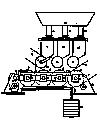
In 1893, a patent for a "Roller for Crushing Ore or Other Material" was issued to Thomas A. Edison (U.S. No. 498,385). Edison had in mind crushing iron ore. "It is usual in ore crushing machines employing rollers to mount them in pairs on suitable supporting frames and to provide means for driving each pair, and for feeding material to be crushed separately to each pair of rollers and to provide separate means for pressing the rollers of each pair together. In the machine to be described I employ three or more rollers supported side by side in a frame and moveable towards or away from each other, instead of using them in pairs, and a single weight and lever serves to press all of said rollers together."Image: drawing of the side elevation of the apparatus.
178222
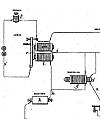
In 1876, Thomas A. Edison was issued three patents for "Duplex Telegraphs" (U.S. No. 178,221; -3). These were for "an Improvement in Duplex Telegraphs" which enable a transmitted signal be sent on the same wire that could be receiving a signal. In patent 178,222, Edison describes "A balanced battery is used for transmitting when the balance is disturbed. An electromagnet is used, through which both the received and transmitted pulsations pass, and the connections are made so that the action of the current sent is balanced, while that coming from the distant station is operative, to work a balanced relay and local circuit or sounder."
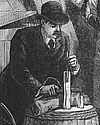
In 1856, the first milk quality law in the U.S. was signed by the Governor of Massachusetts prohibiting adulteration of milk. An individual had to take a complaint to court. With no official enforcement, the law was ineffective against “swill milk,” the poor, thin output of cows kept in sicky conditions and fed on distillery refuse. Unsafe milk was a public health hazard, sometimes deadly to infants. So the state passed a law on (6 Apr 1859) authorizing cities to appoint their own official Inspector of Milk. He was empowered to enter the premises of handlers of milk, and to take specimens for analysis, the results of which could be evidence used for prosecution. The law set ten dollar fines for selling swill milk. Boston was the first city in the U.S. to appoint a full-time Inspector of Milk, on 10 Aug 1859.«[Image: A New York City inspector at a grocery testing milk with a lactometer, c.1887.] more
The Untold Story of Milk: The History, Politics and Science, by Ron Schmid. - book suggestion.
(USPTO)
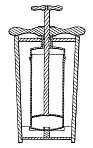
In 1848, an early U.S. patent for an ice cream freezer was issued to William G. Young of Baltimore, Md. (U.S. No. 5,601). The first freezer patent was issued to Nancy M Johnson on 9 Sep 1834 (No. 3254), which had a revolving shaft inside with two curved wings to move the cream in the freezer. Young's idea made the freezer itself turn rapidly within the ice-tub as well as the cream inside. A piston-rod had a perforated disk at its end to move the cream. It was designed to be used while both agitating the cream and turning the freezer using the weighted top-mounted handle. The beating both moved the cream into better contact with the cold sides, and the air trapped with its motion serves to make the cream lighter.«
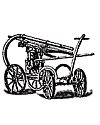
In 1821, a fire hose of cotton web lined with rubber was patented by James Boyd of Boston, Mass. He invented it to replace riveted leather hose. Leather hose had many drawbacks, including drying out, cracking and bursting from excessive pressure. The introduction of rivets (1807), to replace stiching, had allowed higher pressures and greater delivery of water on the fireground. The improved hose now was 40 to 50 feet in length and weighed more than 85 pounds with the couplings. Hose oilers were developed to keep the leather supple and pliable. Various types of oils and other substances were used to keep the hose in shape. By 1871, the Cincinnati Fire Department was using the B.F. Goodrich Company's new rubber hose reinforced with cotton ply.




