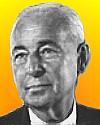
Born 1 Feb 1905; died 4 Jun 1967 at age 62.
American physicist and engineer who first measured the extent, including height and density, of the ionosphere (ionized layers of the Earth's atmosphere), leading to a complete understanding of radio wave propagation and he helped develop radar systems, especially the Distant Early Warning system. He later investigated the origin and development of the Earth’s atmosphere. Early in his career, he worked on radio navigation beacons for the Airways division of the Bureau of Lighthouses (1927-28), as radio engineer on the Byrd Antarctic expedition (1928-30). Returning to the U.S. Bureau of Standards (1930-33) he studied the ionosphere using radio-pulse transmissions, then terrestrial magnetism with the Carnegie Institution (1933-51).
American physicist and engineer who first measured the extent, including height and density, of the ionosphere (ionized layers of the Earth's atmosphere), leading to a complete understanding of radio wave propagation and he helped develop radar systems, especially the Distant Early Warning system. He later investigated the origin and development of the Earth’s atmosphere. Early in his career, he worked on radio navigation beacons for the Airways division of the Bureau of Lighthouses (1927-28), as radio engineer on the Byrd Antarctic expedition (1928-30). Returning to the U.S. Bureau of Standards (1930-33) he studied the ionosphere using radio-pulse transmissions, then terrestrial magnetism with the Carnegie Institution (1933-51).
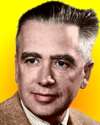
Born 1 Feb 1905; died 22 Apr 1989 at age 84. quotes
Emilio Gino Segrè was an Italian-American physicist who shared (with Owen Chamberlain) the 1959 Nobel Prize for Physics for the discovery of the antiproton, an antiparticle having the same mass as a proton but opposite in electrical charge. He also created atoms of the man-made new element technetium (1937) and astatine (1940). Technetium occupied a hitherto unfilled space in the body of the Periodic Table, and was the first man-made element not found in nature. Astatine exists naturally only in exceedingly small quantities because as a decay product of larger atoms, and having a half-life of only a few days, it quickly disappears by radioactively decay to become atoms of another element.
Emilio Gino Segrè was an Italian-American physicist who shared (with Owen Chamberlain) the 1959 Nobel Prize for Physics for the discovery of the antiproton, an antiparticle having the same mass as a proton but opposite in electrical charge. He also created atoms of the man-made new element technetium (1937) and astatine (1940). Technetium occupied a hitherto unfilled space in the body of the Periodic Table, and was the first man-made element not found in nature. Astatine exists naturally only in exceedingly small quantities because as a decay product of larger atoms, and having a half-life of only a few days, it quickly disappears by radioactively decay to become atoms of another element.
A Mind Always in Motion: The Autobiography of Emilio Segrè, by Emilio Segrè. - book suggestion.
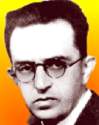
Born 1 Feb 1896; died 30 Nov 1970 at age 74.
Mexican archaeologist and government official who explored the early Oaxacan cultures and is best remembered for his excavation of Tomb Seven at Monte Albán, the earliest-known North American necropolis. His first book, El mapa de Teozacoalco, (1949), is a key to Mixtec history. For 40 years, he studied prehispanic writing, striving to decipher the forgotten inscriptions. His most famous work, Kings and Kingdoms of the Mixteca, was finished only a few days before he died in 1970.
Mexican archaeologist and government official who explored the early Oaxacan cultures and is best remembered for his excavation of Tomb Seven at Monte Albán, the earliest-known North American necropolis. His first book, El mapa de Teozacoalco, (1949), is a key to Mixtec history. For 40 years, he studied prehispanic writing, striving to decipher the forgotten inscriptions. His most famous work, Kings and Kingdoms of the Mixteca, was finished only a few days before he died in 1970.
Born 1 Feb 1889; died 18 Apr 1985 at age 96.
English archaeologist who distinguished two prehistoric cultures in the Al-Fayyum depression of Upper Egypt, the older dating to about 5000 BC and the younger to about 4500 BC.
English archaeologist who distinguished two prehistoric cultures in the Al-Fayyum depression of Upper Egypt, the older dating to about 5000 BC and the younger to about 4500 BC.
Mixed Memoirs, by Gertrude Caton-Thompson. - book suggestion.
Born 1 Feb 1859; died 10 Mar 1928 at age 69.
Lydia Maria DeWitt (née Adams) was an American experimental pathologist who investigated the chemotherapy of tuberculosis. Prior to 1910 she made studies in microscopic anatomy. The remainder of her career she worked in pathology, bacteriology and chemotherapeutics. She searched for dyes that would penetrate tuberculous lesions, and especially with dyes modified by the incorporation of metal atoms such as copper, gold, and mercury. These were tested in animal studies for their potential as an anti-tuberculosis drug. She also conducted influential investigations on the anatomy of the nervous system and on public health practices. She started the Women's Research Club at the University of Michigan to encourage research by women, and served as its president for several years.«
Lydia Maria DeWitt (née Adams) was an American experimental pathologist who investigated the chemotherapy of tuberculosis. Prior to 1910 she made studies in microscopic anatomy. The remainder of her career she worked in pathology, bacteriology and chemotherapeutics. She searched for dyes that would penetrate tuberculous lesions, and especially with dyes modified by the incorporation of metal atoms such as copper, gold, and mercury. These were tested in animal studies for their potential as an anti-tuberculosis drug. She also conducted influential investigations on the anatomy of the nervous system and on public health practices. She started the Women's Research Club at the University of Michigan to encourage research by women, and served as its president for several years.«
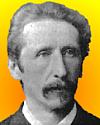
Born 1 Feb 1844; died 19 May 1912 at age 68. quotes
German botanist and plant cytologist who accurately described the embryonic sac in gymnosperms (such as conifers) and angiosperms (flowering plants), along with demonstrating double-fertilization in angiosperms. He recognized that new cell nuclei can only result from the division of other nuclei and showed that the sperm and the egg have half the number of chromosomes found in body cells. He coined the terms cytoplasm for the fluid found in a cell and nucleoplasm (1882) for the fluid found in the nucleus. The upward movement of sap in trees was demonstrated by his research to be physical, rather than a physiological, process.«[DSB and obituary in Botanical Gazette gives date of death as 19 May 1912. EB gives 18 May 1912.]
German botanist and plant cytologist who accurately described the embryonic sac in gymnosperms (such as conifers) and angiosperms (flowering plants), along with demonstrating double-fertilization in angiosperms. He recognized that new cell nuclei can only result from the division of other nuclei and showed that the sperm and the egg have half the number of chromosomes found in body cells. He coined the terms cytoplasm for the fluid found in a cell and nucleoplasm (1882) for the fluid found in the nucleus. The upward movement of sap in trees was demonstrated by his research to be physical, rather than a physiological, process.«[DSB and obituary in Botanical Gazette gives date of death as 19 May 1912. EB gives 18 May 1912.]
Strasburger's Textbook of Botany, by Eduard Strasburger. - book suggestion.
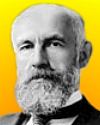
Born 1 Feb 1844; died 24 Apr 1924 at age 80. quotes
Granville Stanley Hall was an American psychologist who distinguished experimental psychology in the U.S. from the philosophical psychology that dominated in America at the time. He developed child psychology and educational psychology. He coined the phrase “Storm and Stress” relative to adolescence, with the three key aspects of conflict with parents, mood disruptions, and risky behaviour. Influenced by Charles Darwin's Theory of Evolution, Hall undertook a scientific examination of child development in the aspect of the inheritance of behaviour. He also pioneered the use of questionnaires. In 1887, Hall founded the American Journal of Psychology to publish psychological research from authors regardless of their disciplinary background.«
Granville Stanley Hall was an American psychologist who distinguished experimental psychology in the U.S. from the philosophical psychology that dominated in America at the time. He developed child psychology and educational psychology. He coined the phrase “Storm and Stress” relative to adolescence, with the three key aspects of conflict with parents, mood disruptions, and risky behaviour. Influenced by Charles Darwin's Theory of Evolution, Hall undertook a scientific examination of child development in the aspect of the inheritance of behaviour. He also pioneered the use of questionnaires. In 1887, Hall founded the American Journal of Psychology to publish psychological research from authors regardless of their disciplinary background.«
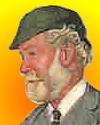
Born 1 Feb 1843; died 28 Jun 1928 at age 85.
English naval architect and engineer who founded the Thornycroft shipbuilding company, in 1864 with a shipyard on the River Thames. He was only 19 when he built his first steam launch. By 1877, he built the first modern torpedo boat for the Royal Navy. In 1877, he patented an air-lubricated hull that could skim, rather than cut through, the water. He also designed water-tube boilers for torpedo boats as well as one of the earliest ship stabilizers. During WW I, he built warships including 29 destroyers and flotilla leaders, 3 submarines and coastal torpedo speedboats, which could skim over minefields. He pioneered the use of oil fuel for the Royal Navy. Steam powered lorries were a manufacturing off-shoot of his shipyard (1896) which led to a major new business building petrol-engined lorries (from 1902).«[Image: Detail from a Vanity Fair caricature, 1905.]
English naval architect and engineer who founded the Thornycroft shipbuilding company, in 1864 with a shipyard on the River Thames. He was only 19 when he built his first steam launch. By 1877, he built the first modern torpedo boat for the Royal Navy. In 1877, he patented an air-lubricated hull that could skim, rather than cut through, the water. He also designed water-tube boilers for torpedo boats as well as one of the earliest ship stabilizers. During WW I, he built warships including 29 destroyers and flotilla leaders, 3 submarines and coastal torpedo speedboats, which could skim over minefields. He pioneered the use of oil fuel for the Royal Navy. Steam powered lorries were a manufacturing off-shoot of his shipyard (1896) which led to a major new business building petrol-engined lorries (from 1902).«[Image: Detail from a Vanity Fair caricature, 1905.]

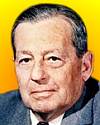
Died 1 Feb 1981 at age 88 (born 6 Apr 1892).
Donald Wills Douglas was an American aircraft designer whose Douglas Aircraft Company produced military and civil aircraft. He graduating from the Massachusetts Institute of Technology as its first aeronautics student (1914), then consulted and designed for others until he founded his own business (1920). Over the years his company set the industry standard for reliability and safety. The DC series of commercial passenger planes, beginning with the DC-1 (which entered service in 1933) led to the DC-8, the first commercial jet airliner in 1958. In addition to military aircraft, the company also produced military missiles and spacecraft. The business merged with McDonnell Aircraft Company in 1967, and after his death, with Boeing in 1997.«
Donald Wills Douglas was an American aircraft designer whose Douglas Aircraft Company produced military and civil aircraft. He graduating from the Massachusetts Institute of Technology as its first aeronautics student (1914), then consulted and designed for others until he founded his own business (1920). Over the years his company set the industry standard for reliability and safety. The DC series of commercial passenger planes, beginning with the DC-1 (which entered service in 1933) led to the DC-8, the first commercial jet airliner in 1958. In addition to military aircraft, the company also produced military missiles and spacecraft. The business merged with McDonnell Aircraft Company in 1967, and after his death, with Boeing in 1997.«
Donald W. Douglas: A Heart With Wings, by Wilbur H. Morrison. - book suggestion.

Died 1 Feb 1976 at age 74 (born 5 Dec 1901). quotes
Werner Karl Heisenberg was the German physicist and philosopher who discovered a way to formulate quantum mechanics in terms of matrices (1925). For that discovery, he was awarded the Nobel Prize for Physics for 1932. In 1927 he published his indeterminacy, or uncertainty, principle, upon which he built his philosophy and for which he is best known. He also made important contributions to the theories of the hydrodynamics of turbulence, the atomic nucleus, ferromagnetism, cosmic rays, and elementary particles, and he planned the first post-World War II German nuclear reactor, at Karlsruhe, then in West Germany.
Werner Karl Heisenberg was the German physicist and philosopher who discovered a way to formulate quantum mechanics in terms of matrices (1925). For that discovery, he was awarded the Nobel Prize for Physics for 1932. In 1927 he published his indeterminacy, or uncertainty, principle, upon which he built his philosophy and for which he is best known. He also made important contributions to the theories of the hydrodynamics of turbulence, the atomic nucleus, ferromagnetism, cosmic rays, and elementary particles, and he planned the first post-World War II German nuclear reactor, at Karlsruhe, then in West Germany.
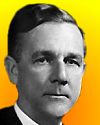
Died 1 Feb 1976 at age 97 (born 28 Aug 1878).
George Hoyt Whipple was an American physician and pathologist who shared the 1934 Nobel Prize for Physiology or Medicine with George R. Minot and William P. Murphy for “their discoveries of a treatment of pernicious anemia with a special diet of liver.” Whipple began a study in 1920 of the influence of food on blood regeneration. From experiments on dogs bled to reduce blood volume, he found the best food to stimulate the bone marrow for the production of the new red blood corpuscles was raw liver. Other foods, including kidney and apricots were also found helpful. Minot and Murphy applied Whipple's discovery of the value of liver. They designed a special diet for humans with a particular noninfectious disease - pernicious anemia. The three researchers made a major advance with a non-drug treatment of this condition.«
George Hoyt Whipple was an American physician and pathologist who shared the 1934 Nobel Prize for Physiology or Medicine with George R. Minot and William P. Murphy for “their discoveries of a treatment of pernicious anemia with a special diet of liver.” Whipple began a study in 1920 of the influence of food on blood regeneration. From experiments on dogs bled to reduce blood volume, he found the best food to stimulate the bone marrow for the production of the new red blood corpuscles was raw liver. Other foods, including kidney and apricots were also found helpful. Minot and Murphy applied Whipple's discovery of the value of liver. They designed a special diet for humans with a particular noninfectious disease - pernicious anemia. The three researchers made a major advance with a non-drug treatment of this condition.«
George Hoyt Whipple and his friends: The life-story of a Nobel prize pathologist, by George Washington Corner. - book suggestion.
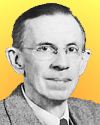
1946 (EB)
Died 1 Feb 1958 at age 76 (born 22 Oct 1881). quotes
American physicist who shared the Nobel Prize for Physics in 1937 (with Englishman George P. Thomson) for discovering that electrons can be diffracted like light waves, thus verifying the thesis of Louis de Broglie that electrons behave both as waves and as particles. Davisson studied the effect of electron bombardment on surfaces, and observed (1925) the angle of reflection could depend on crystal orientation. Following Louis de Broglie's theory of the wave nature of particles, he realized that his results could be due to diffraction of electrons by the pattern of atoms on the crystal surface. Davisson worked with Lester Germer in an experiment in which electrons bouncing off a nickel surface produced wave patterns similar to those formed by light reflected from a diffraction grating, and supporting de Broglie's electron wavelength = (h/p). This discovery has been applied to the study of nuclear, atomic, and molecular structure. Davisson helped develop the electron microscope which uses the wave nature of electrons to view details smaller than the wavelength of visible light.
American physicist who shared the Nobel Prize for Physics in 1937 (with Englishman George P. Thomson) for discovering that electrons can be diffracted like light waves, thus verifying the thesis of Louis de Broglie that electrons behave both as waves and as particles. Davisson studied the effect of electron bombardment on surfaces, and observed (1925) the angle of reflection could depend on crystal orientation. Following Louis de Broglie's theory of the wave nature of particles, he realized that his results could be due to diffraction of electrons by the pattern of atoms on the crystal surface. Davisson worked with Lester Germer in an experiment in which electrons bouncing off a nickel surface produced wave patterns similar to those formed by light reflected from a diffraction grating, and supporting de Broglie's electron wavelength = (h/p). This discovery has been applied to the study of nuclear, atomic, and molecular structure. Davisson helped develop the electron microscope which uses the wave nature of electrons to view details smaller than the wavelength of visible light.
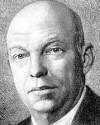
Died 1 Feb 1954 at age 63 (born 18 Dec 1890). quotes
Edwin Howard Armstrong was an American electrical engineer and inventor who laid the foundation for much of modern radio and electronic circuitry. Fascinated by radio from childhood, he built a 125-foot-tall antenna in the front yard in 1910 and invented the continuous-wave transmitter (1912), the regenerative circuit (1912), superheterodyne circuits (1918), and frequency modulation for the FM radio system (1933). His inventions and developments form the backbone of radio communications as we know it. Exhausted by nonstop patent battles from the 1920s on, he took his own life. Nevertheless, he won most of the suits posthumously.[His date of death is either (EB 31 Jan 1954 or (DSB 1 Feb 1954 because his suicide occurred at some unknown time during the night between those dates.]
Edwin Howard Armstrong was an American electrical engineer and inventor who laid the foundation for much of modern radio and electronic circuitry. Fascinated by radio from childhood, he built a 125-foot-tall antenna in the front yard in 1910 and invented the continuous-wave transmitter (1912), the regenerative circuit (1912), superheterodyne circuits (1918), and frequency modulation for the FM radio system (1933). His inventions and developments form the backbone of radio communications as we know it. Exhausted by nonstop patent battles from the 1920s on, he took his own life. Nevertheless, he won most of the suits posthumously.[His date of death is either (EB 31 Jan 1954 or (DSB 1 Feb 1954 because his suicide occurred at some unknown time during the night between those dates.]
Died 1 Feb 1903 at age 83 (born 13 Aug 1819). quotes
British theoretical physicist (1st Baronet) who studied viscous fluids and formulated his law of viscosity for the speed of a solid sphere falling in a fluid. Other laws and mathematical work for which he is known includes Stokes's theorem, in the field of vector analysis. Stokes also worked in optics, the wave theory of light, diffraction (1849), the ultraviolet spectrum and other spectrum analysis. He coined the word fluorescence (1852) while studying that phenomenon and was a founder of the field of geodesy with his study of variations in gravity (1849). From 1849 until his death in 1903, he held the Lucasian Chair of Mathematics at Cambridge (held earlier by Isaac Newton, and currently by Stephen Hawking). He came from a family with generations of scientists, mathematicians and engineers.«
British theoretical physicist (1st Baronet) who studied viscous fluids and formulated his law of viscosity for the speed of a solid sphere falling in a fluid. Other laws and mathematical work for which he is known includes Stokes's theorem, in the field of vector analysis. Stokes also worked in optics, the wave theory of light, diffraction (1849), the ultraviolet spectrum and other spectrum analysis. He coined the word fluorescence (1852) while studying that phenomenon and was a founder of the field of geodesy with his study of variations in gravity (1849). From 1849 until his death in 1903, he held the Lucasian Chair of Mathematics at Cambridge (held earlier by Isaac Newton, and currently by Stephen Hawking). He came from a family with generations of scientists, mathematicians and engineers.«
The Correspondence between Sir George Gabriel Stokes and Sir William Thomson, by David B. Wilson (ed.). - book suggestion.
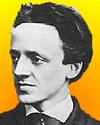
Died 1 Feb 1885 at age 34 (born 16 Apr 1850).
British metallurgist and inventor who developed (1875), with his cousin Percy Gilchrist, the Thomas-Gilchrist process that eliminates the phosphorus impurity of certain iron ores in the Bessemer converter. Phosphorus causes steel to be brittle and of little use. Yet most iron ores from British, French, German, and Belgian sources was phosphoric. Thomas conceived the idea of incorporating lime (or magnesia or magnesian limestone with similar basic chemical properties), as the lining of the Bessemer converter. Gilchrist, an industrial chemist at a large ironworks, confirmed that idea 4 Apr 1879. Thomas filed a patent in 1878. Even the waste slag was profitable to the early artificial fertilizer industry. He died at age 34 of tuberculosis.«
British metallurgist and inventor who developed (1875), with his cousin Percy Gilchrist, the Thomas-Gilchrist process that eliminates the phosphorus impurity of certain iron ores in the Bessemer converter. Phosphorus causes steel to be brittle and of little use. Yet most iron ores from British, French, German, and Belgian sources was phosphoric. Thomas conceived the idea of incorporating lime (or magnesia or magnesian limestone with similar basic chemical properties), as the lining of the Bessemer converter. Gilchrist, an industrial chemist at a large ironworks, confirmed that idea 4 Apr 1879. Thomas filed a patent in 1878. Even the waste slag was profitable to the early artificial fertilizer industry. He died at age 34 of tuberculosis.«
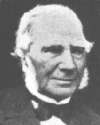
Died 1 Feb 1882 at age 87 (born 29 May 1794).
Antoine Alexandre Brutus Bussy was a French chemist who first prepared magnesium in a coherent form (Mg, element 12). Although mostly a pharmaceutical researcher, in Mémoire sur le Radical métallique de la Magnésie (1831)*, he described a method to isolate magnesium. He heated magnesium chloride and potassium in a glass tube. When he washed out the potassium chloride, small, shining globules of magnesium remained. Magnesium was discovered by Sir Humphry Davy (1808) but prepared in a very small amount. It is a ductile silver white alkaline earth metal. Magnesium is the eighth most abundant element in the Earth's crust. Bussy also prepared beryllium, independently of Wöhler, in Aug 1928, by the action of potassium on beryllium chloride.
Antoine Alexandre Brutus Bussy was a French chemist who first prepared magnesium in a coherent form (Mg, element 12). Although mostly a pharmaceutical researcher, in Mémoire sur le Radical métallique de la Magnésie (1831)*, he described a method to isolate magnesium. He heated magnesium chloride and potassium in a glass tube. When he washed out the potassium chloride, small, shining globules of magnesium remained. Magnesium was discovered by Sir Humphry Davy (1808) but prepared in a very small amount. It is a ductile silver white alkaline earth metal. Magnesium is the eighth most abundant element in the Earth's crust. Bussy also prepared beryllium, independently of Wöhler, in Aug 1928, by the action of potassium on beryllium chloride.
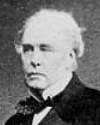
Died 1 Feb 1880 at age 77 (born 1 Dec 1802).
Irish physician and author (baronet) who wrote several reports on diseases of the heart. His paper on aortic insufficiency (1832) is generally regarded as the classic description of the condition. Many medical eponyms come from his diverse studies: Corrigan's respiration (a shallow respiration in fever), Corrigan's pulse (also called waterhammer pulse; a jerking pulse-beat associated with disease of one of the heart valves) and Corrigan's cirrhosis. His published material was based on observation of patients at various Dublin hospitals. His better-known studies were on cirrhosis of the lung (1838), aortitis as a cause of angina pectoris (1837), and mitral stenosis (1838). Corrigan also supported making a distinction between typhus and typhoid fever.
Irish physician and author (baronet) who wrote several reports on diseases of the heart. His paper on aortic insufficiency (1832) is generally regarded as the classic description of the condition. Many medical eponyms come from his diverse studies: Corrigan's respiration (a shallow respiration in fever), Corrigan's pulse (also called waterhammer pulse; a jerking pulse-beat associated with disease of one of the heart valves) and Corrigan's cirrhosis. His published material was based on observation of patients at various Dublin hospitals. His better-known studies were on cirrhosis of the lung (1838), aortitis as a cause of angina pectoris (1837), and mitral stenosis (1838). Corrigan also supported making a distinction between typhus and typhoid fever.
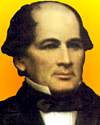
Died 1 Feb 1873 at age 67 (born 14 Jan 1806). quotes
American naval officer, oceanographer and hydrographer who was a pioneer, hydrographer. He was the first person to undertake a systematic and comprehensive study of the ocean. His work on oceanography and navigation led to an international conference (Brussels, 1853) the first ever of its kind in the world. In 1855, during the Western gold rush, Maury's updated information helped sea captains cut a ship's average travel time from New York to San Francisco from 180 to 133 days. That same year, Maury prepared a report that proved the practicality - and assured the success - of the first trans-Atlantic cable between the United States and Europe. Maury was director of the U.S. Naval Observatory from 1844 to 1861.
American naval officer, oceanographer and hydrographer who was a pioneer, hydrographer. He was the first person to undertake a systematic and comprehensive study of the ocean. His work on oceanography and navigation led to an international conference (Brussels, 1853) the first ever of its kind in the world. In 1855, during the Western gold rush, Maury's updated information helped sea captains cut a ship's average travel time from New York to San Francisco from 180 to 133 days. That same year, Maury prepared a report that proved the practicality - and assured the success - of the first trans-Atlantic cable between the United States and Europe. Maury was director of the U.S. Naval Observatory from 1844 to 1861.
Matthew Fontaine Maury: Scientist of the Sea, by Frances Leigh Williams. - book suggestion.
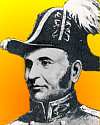
Died 1 Feb 1836 at age 56 (born 7 Aug 1779). quotes
English military engineer who constructed the 126-mile (202-km) Rideau Canal connecting the Ottawa River and Lake Ontario, Canada, which was originally intended as a military supply route. It was designed to provide an alternative to the St. Lawrence River route which was vulnerable in case of war with the U.S., which was seen as a possibility after the American Revolution. Work began in 1826 near the junction of the Ottawa and Rideau rivers. Engineering challenges included an arched dam at Jones Falls with four locks with a total lift of 60 feet (three locks, a turning basin and a fourth lock). When the waterway was opened in Spring 1832, Lt. Col. By returned to England. The settlement that grew at the canal's mouth, at first known as Bytown, was named Ottawa in 1855, and is now the nation's capital.«[Note: for comparison, the Panama Canal is 51 miles long.] more
English military engineer who constructed the 126-mile (202-km) Rideau Canal connecting the Ottawa River and Lake Ontario, Canada, which was originally intended as a military supply route. It was designed to provide an alternative to the St. Lawrence River route which was vulnerable in case of war with the U.S., which was seen as a possibility after the American Revolution. Work began in 1826 near the junction of the Ottawa and Rideau rivers. Engineering challenges included an arched dam at Jones Falls with four locks with a total lift of 60 feet (three locks, a turning basin and a fourth lock). When the waterway was opened in Spring 1832, Lt. Col. By returned to England. The settlement that grew at the canal's mouth, at first known as Bytown, was named Ottawa in 1855, and is now the nation's capital.«[Note: for comparison, the Panama Canal is 51 miles long.] more
Building the Rideau Canal: A Pictorial History, by Robert W. Passfield. - book suggestion.

In 1972, the first scientific hand-held calculator was introduced for $395 by Hewlett- Packard, named the HP-35 for having 35 keys. It was the first hand-held calculator able to perform logarithmic and trigonometric functions with one keystroke. The red LED display could give scientific notation up to 10 digits mantissa and 2 digits exponent. The price was reduced several times, eventually to $195. By Feb 1975 (when production of the model was discontinued), 300,000 had been sold. The numbers and functions for calculations were entered in “Reverse Polish Notation”(RPN), which used an “ENTER” key but needed no parentheses or “=” key. It ran on rechargeable batteries and had electronics with several integrated circuits in a 79 ×147×34 mm (3.1" x 5.8" x 1.4") case.«
The HP Way: How Bill Hewlett and I Built Our Company, by David Packard. - book suggestion.

In 1963, the Peacock was announced as its National Bird by the Indian government. The peacock has a rich tradition in Indian religion and legends, though this was not the only reason for this choice. The blue (common) peafowl is native within India, thus truly “national.” The peacock is easily drawn as an abstract icon (useful when used, for example, on government publications). It is distinctive—not used as a bird emblem by another nation. The peacock is the largest member of the pheasant family. The male is noted for its striking tail feathers. In Hinduism, the Indian peacock is the mount of the god of war, Kartikeya. Carl Linnaeus gave it the scientific name of Pavo cristatus, in Systema Naturae (1758), where classical Latin pavo = peacock and cristatus = crested.«
In 1951, the first X-ray moving picture process was demonstrated.

In 1951, the TV station KTLA broadcast of an atomic explosion was the first to be seen publicly on television. The event was captured by an NBC camera on Mount Wilson, 300 miles away from the test blast at Frenchman Flats, Nevada.
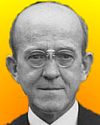
In 1944, DNA was identified as the hereditary agent in a virus, published in a report by O.T. Avery, Colin MacLeod, and Maclyn McCarty. This crucial discovery in molecular genetics - that genetic information is carried in the nucleotide sequence of DNA - arose incidentally while studying pneumococcus to monitor the epidemic spread of pneumonia. Since 1928, when British physician Frederick Griffith had found that extracts of a pathogenic strain of that virus could transform a harmless strain into a pathogenic one, scientists had searched for the "transforming factor." The work by Avery, et al., now identified the transforming molecule as DNA, having ruled out, through extract digestions, RNA, protein, and polysaccharide capsular material.[Ref.: Studies on the chemical nature of the substance inducing transformation of pneumococcal types. Induction of transformation by a deoxyribonucleic acid fraction isolated from pneumococcus type III. Journal of Experimental Medicine. 79:137-158., issue of 1 Feb 1944]
The Transforming Principle: Discovering That Genes Are Made of DNA, by MacLyn McCarty. - book suggestion.
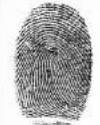
In 1911, Thomas Jennings was found guilty with the first use of fingerprint evidence in the U.S. He was convicted at the Criminal Court of Cook County for killing Clarence B. Hiller. Upon appeal, 21 Dec 1911, the Illionis Supreme Court ruled the evidence was admissible. Two months later, Jennings was executed on 16 Feb 1912.
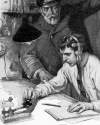
In 1904, the code “CQD” became effective as the first international radio distress signal. It was established on 7 Jan 1904 by the Marconi Company. “CQ” had been in use on English landlines as a code for a general call to “all stations.” The “D” was added to made the code for a distress call. It didn't last long. Two years later, “SOS” was specified in a document signed on 3 Nov 1906 at the second International Wireless Telegraph Convention in Berlin, by representatives of 27 nations. “SOS” was to supercede “CQD” effective in Jul 1908.
In 1893, inventor Thomas A. Edison completed work on the world's first motion picture studio, his "Black Maria," in West Orange, New Jersey.

In 1851, evaporated milk was invented by Gail Borden.
The Untold Story of Milk, by Ron Schmid. - book suggestion.
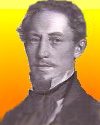
In 1851, the submarine, Le Plongeur-Marin (“The Marine Diver”) was tested in Kiel Harbour, but it suffered leaks in the hull and sank 50 feet. Its builder, Sebastian Wilhelm Valentin Bauer, a German pioneer inventor of submarines, was on board. He survived by waiting for the inside air pressure, compressed as more water leaked in, to match the water pressure outside. Seven hours later, he and his crew opened the hatch and rose to the surface to find funeral services in progress. He was not deterred by the accident, and went on to build a treadmill-powered, 52-ft iron submarine, Le Diable-Marin (“The Marine Devil”) carrying 11 crew. The photographs Bauer made through its windows are probably the first taken underwater.«
In 1838, a U.S. patent was issued for the screw propeller to John Ericsson (No. 588). A Swedish American, John Ericsson (1803-89) was an engineering genius who involved himself in the development or improvement of power transmission. He invented the ship propeller and later designed and built the Monitor for the Union Navy in the War of the Rebellion.
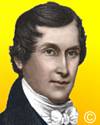
In 1820, a U.S. patent for a cement that hardened under water was issued to Canvass White, an engineer building the Erie Canal. Good stone locks required hydraulic cement as a water-proof mortar joints. At the time, all hydraulic cement was made in Europe and much too costly to import. However, in 1818, canal contractors accidentally found there a natural cement rock. It was a type of limestone that could be pulverized into a powder and when mixed with sand, would harden when put in water. White had spent time in England in 1817 to prepare for the construction project, observing canal and aqueduct work using hydraulic cement. This experience enabled him to improve the process by calcining the local stone to make a quick-lime mortar.« more
more
more Great Engineers and Pioneers in Technology, Vol 1, by Roland Turner and Steven L. Goulden (eds.). - book suggestion.
In 1793, Ralph Hodgson of Lansingburg, NY, patented oiled silk.
In 1788, a patent for a steamboat was issued by the state of Georgia to Isaac Briggs and William Longstreet. The patent was the only one ever to be issued by Georgia, and first in the U.S. for a steamboat. Much development had to follow before the steamboat would be commercially viable.




