 (source)
|
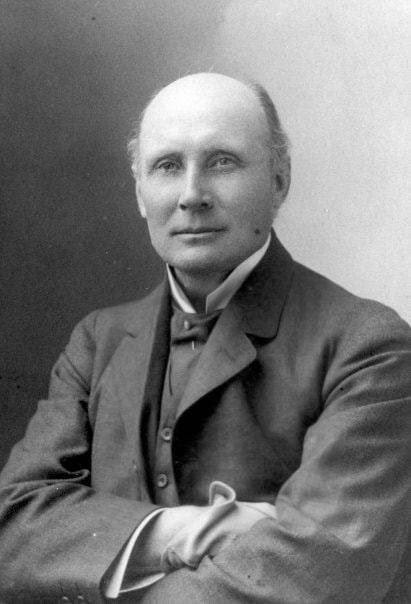
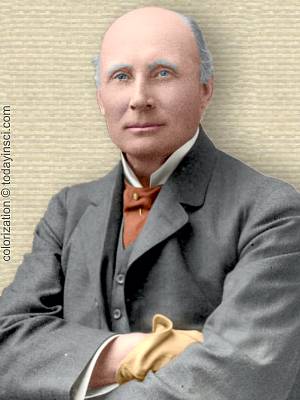
Alfred North Whitehead
(15 Feb 1861 - 30 Dec 1947)
English mathematician and philosopher who worked in logic, physics, and later in his life spent more time on the philosophy of science and metaphysics. He worked with Bertrand Russell on Principia Mathematica which shows that logic underlies all mathematics.
|
Science Quotes by Alfred North Whitehead (138 quotes)
>> Click for Alfred North Whitehead Quotes on | Application | Civilization | Discovery | Education | Error | Fact | Idea | Imagination | Importance | Invention | Knowledge | Learning | Life | Literature | Logic | Mathematics | Mind | Particular | Philosophy | Progress | Science | Thought | Truth |
>> Click for Alfred North Whitehead Quotes on | Application | Civilization | Discovery | Education | Error | Fact | Idea | Imagination | Importance | Invention | Knowledge | Learning | Life | Literature | Logic | Mathematics | Mind | Particular | Philosophy | Progress | Science | Thought | Truth |
“One and one make two” assumes that the changes in the shift of circumstance are unimportant. But it is impossible for us to analyze this notion of unimportant change.
— Alfred North Whitehead
In Science and Philosophy (1948), 103.
[During the Reformation] The beginnings of the scientific movement were confined to a minority among the intellectual élite.
— Alfred North Whitehead
In 'The Origins of Modern Science', Science and the Modern World (1926, 2011), 2.
[During the Renaissance] for the first time physiology is asserting itself as an effective body of knowledge, as distinct from a scrap-heap.
— Alfred North Whitehead
In Science in the Modern World: Lowell Lectures, 1925 (1926), 24.
[For imaginary numbers,] their success … has been what the French term a succès de
scandale.
— Alfred North Whitehead
In An Introduction to Mathematics (1911), 87. The French phrase (success from scandal), is applied to notoriety attributed to public controversy.
[In his generation] the worst that happened to men of science was that Galileo suffered an honorable detention and a mild reproof, before dying peacefully in his bed.
— Alfred North Whitehead
In 'The Origins of Modern Science', Science and the Modern World (1926, 2011), 2.
A clash of doctrines is not a disaster—it is an opportunity.
— Alfred North Whitehead
In Science and the Modern World: The Lowell Lectures, 1925 (1926), 230.
A few generations ago the clergy, or to speak more accurately, large sections of the clergy were the standing examples of obscurantism. Today their place has been taken by scientists.
— Alfred North Whitehead
In The Function of Reason (1929), 34-35.
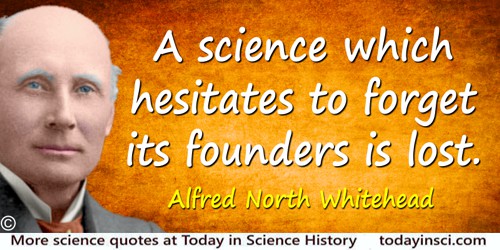
A science which hesitates to forget its founders is lost.
— Alfred North Whitehead
Address to the British Association, Newcastle. 'The Organisation of Thought,' printed in Nature (28 Sep 1916), 98, 80. Also collected in The Aims of Education: & Other Essays (1917), 162.
A single tree by itself is dependent upon all the adverse chances of shifting circumstances. The wind stunts it: the variations in temperature check its foliage: the rains denude its soil: its leaves are blown away and are lost for the purpose of fertilisation. You may obtain individual specimens of line trees either in exceptional circumstances, or where human cultivation had intervened. But in nature the normal way in which trees flourish is by their association in a forest. Each tree may lose something of its individual perfection of growth, but they mutually assist each other in preserving the conditions of survival. The soil is preserved and shaded; and the microbes necessary for its fertility are neither scorched, nor frozen, nor washed away. A forest is the triumph of the organisation of mutually dependent species.
— Alfred North Whitehead
In Science and the Modern World (1926), 296-7.
Algebra reverses the relative importance of the factors in ordinary language. It is essentially a written language, and it endeavors to exemplify in its written structures the patterns which it is its purpose to convey. The pattern of the marks on paper is a particular instance of the pattern to be conveyed to thought. The algebraic method is our best approach to the expression of necessity, by reason of its reduction of accident to the ghost-like character of the real variable.
— Alfred North Whitehead
In Science and Philosophy (1948), 116.
All science as it grows toward perfection becomes mathematical in its ideas.
— Alfred North Whitehead
In An Introduction to Mathematics (1911), 14. This is part of a longer quote that begins, “In modern times the belief that the ultimate explanation…”, on the Alfred North Whitehead Quotes page of this website.
Almost all really new ideas have a certain aspect of foolishness when they are first produced.
— Alfred North Whitehead
In Science and the Modern World (1926, 2011), 60.
Any ignorance is blank ignorance, because knowledge of any factor requires no ignorance.
— Alfred North Whitehead
'The Relatedness of Nature', The Principle of Relativity (1922, 2007), 22.
Apart from blunt truth, our lives sink decadently amid the perfume of hints and suggestions.
— Alfred North Whitehead
In Adventures of Ideas (1933), 321.
Archimedes, who combined a genius for mathematics with a physical insight, must rank with Newton, who lived nearly two thousand years later, as one of the founders of mathematical physics. … The day (when having discovered his famous principle of hydrostatics he ran through the streets shouting Eureka! Eureka!) ought to be celebrated as the birthday of mathematical physics; the science came of age when Newton sat in his orchard.
— Alfred North Whitehead
In An Introduction to Mathematics (1911), 37.
Aristotle discovered all the half-truths which were necessary to the creation of science.
— Alfred North Whitehead
From Dialogue XLII in Alfred North Whitehead and Lucien Price (ed.), Dialogues of Alfred North Whitehead (1954, 1977), 344.
Before the introduction of the Arabic notation, multiplication was difficult, and the division even of integers called into play the highest mathematical faculties. Probably nothing in the modern world could have more astonished a Greek mathematician than to learn that, under the influence of compulsory education, the whole population of Western Europe, from the highest to the lowest, could perform the operation of division for the largest numbers. This fact would have seemed to him a sheer impossibility. … Our modern power of easy reckoning with decimal fractions is the most miraculous result of a perfect notation.
— Alfred North Whitehead
In Introduction to Mathematics (1911), 59.
By relieving the brain of all unnecessary work, a good notation sets it free to concentrate on more advanced problems, and in effect increases the mental power of the race.
— Alfred North Whitehead
In An Introduction to Mathematics (1911), 59.
Culture is activity of thought, and receptiveness to beauty and humane feeling. Scraps of information have nothing to do with it. A merely well informed man is the most useless bore on God’s earth. What we should aim at producing is men who possess both culture and expert knowledge in some special direction.
— Alfred North Whitehead
Opening sentences of Chapter 1,'The Aims of Education', in Aims of Education and Other Essays (1917), 1.
Definition of Mathematics.—It has now become apparent that the traditional field of mathematics in the province of discrete and continuous number can only be separated from the general abstract theory of classes and relations by a wavering and indeterminate line. Of course a discussion as to the mere application of a word easily degenerates into the most fruitless logomachy. It is open to any one to use any word in any sense. But on the assumption that “mathematics” is to denote a science well marked out by its subject matter and its methods from other topics of thought, and that at least it is to include all topics habitually assigned to it, there is now no option but to employ “mathematics” in the general sense of the “science concerned with the logical deduction of consequences from the general premisses of all reasoning.”
— Alfred North Whitehead
In article 'Mathematics', Encyclopedia Britannica (1911, 11th ed.), Vol. 17, 880. In the 2006 DVD edition of the encyclopedia, the definition of mathematics is given as “The science of structure, order, and relation that has evolved from elemental practices of counting, measuring, and describing the shapes of objects.” [Premiss is a variant form of “premise”. —Webmaster]
During the school period the student has been mentally bending over his desk; at the University he should stand up and look around. For this reason it is fatal if the first year at the University be frittered away in going over the old work in the old spirit. At school the boy painfully rises from the particular towards glimpses at general ideas; at the University he should start from general ideas and study their applications to concrete cases.
— Alfred North Whitehead
In 'The Rhythm of Education', The Aims of Education and Other Essays (1929), 26.
Euclid always contemplates a straight line as drawn between two definite points, and is very careful to mention when it is to be produced beyond this segment. He never thinks of the line as an entity given once for all as a whole. This careful definition and limitation, so as to exclude an infinity not immediately apparent to the senses, was very characteristic of the Greeks in all their many activities. It is enshrined in the difference between Greek architecture and Gothic architecture, and between Greek religion and modern religion. The spire of a Gothic cathedral and the importance of the unbounded straight line in modern Geometry are both emblematic of the transformation of the modern world.
— Alfred North Whitehead
In Introduction to Mathematics (1911), 119.
Even now there is a very wavering grasp of the true position of mathematics as an element in the history of thought. I will not go so far as to say that to construct a history of thought without profound study of the mathematical ideas of successive epochs is like omitting Hamlet from the play which is named after him That would be claiming too much. But it is certainly analogous to cutting out the part of Ophelia. This simile is singularly exact. For Ophelia is quite essential to the play, she is very charming—and a little mad. Let us grant that the pursuit of mathematics is a divine madness of the human spirit, a refuge from the goading urgency of contingent happenings.
— Alfred North Whitehead
From Lecture to the Mathematical Society, Brown University, 'Mathematics as an Element in the History of Thought', collected as Chap. 2 in Science and the Modern World: Lowell Lectures, 1925 (1925), 31.
Every intellectual revolution which has ever stirred humanity into greatness has been a passionate protest against inert ideas. Then, alas, with pathetic ignorance of human psychology, it has proceeded by some educational scheme to, bind humanity afresh with inert ideas of its own fashioning.
— Alfred North Whitehead
In 'The Aims of Education', The Aims of Education and Other Essays (1929), 14.
Every philosophy is tinged with the colouring of some secret imaginative background, which never emerges explicitly into its train of reasoning.
— Alfred North Whitehead
In Science and the Modern World (1925), 7.
Every scheme for the analysis of nature has to face these two facts, change and endurance.
— Alfred North Whitehead
In Science and the Modern World: Lowell Lectures, 1925 (1960), 126.
Familiar things happen, and mankind does not bother about them. It requires a very unusual mind to undertake the analysis of the obvious.
— Alfred North Whitehead
In Science and the Modern World: Lowell Lectures, 1925 (1925), 6.
Fundamental progress has to do with the reinterpretation of ideas.
— Alfred North Whitehead
In Science and Philosophy (1948), 228.
Giordano Bruno was the martyr; though the cause for which he suffered was not that of science, but that of free imaginative speculation. His death in the year 1600 ushered in the first century of modern science in the strict sense of the term.
— Alfred North Whitehead
In 'The Origins of Modern Science', Science and the Modern World (1926, 2011), 1.
I am sure that one secret of a successful teacher is that he has formulated quite clearly in his mind what the pupil has got to know in precise fashion. He will then cease from half-hearted attempts to worry his pupils with memorising a lot of irrelevant stuff of inferior importance.
— Alfred North Whitehead
In 'The Rhythmic Claims of Freedom and Discipline', The Aims of Education and Other Essays (1929), 46.
I do not share in this reverence for knowledge as such. It all depends on who has the knowledge and what he does with it. That knowledge which adds greatly to character is knowledge so handled as to transform every phase of immediate experience.
— Alfred North Whitehead
In 'The Rhythmic Claims of Freedom and Discipline', The Aims of Education and Other Essays (1929), 32.
I regret that it has been necessary for me in this lecture to administer such a large dose of four-dimensional geometry. I do not apologize, because I am really not responsible for the fact that nature in its most fundamental aspect is four-dimensional. Things are what they are; and it is useless to disguise the fact that “what things are” is often very difficult for our intellects to follow.
— Alfred North Whitehead
From The Concept of Nature (1920, 1964), 118.
I will not go so far as to say that to construct a history of thought without profound study of the mathematical ideas of successive epochs is like omitting Hamlet from the play which is named after him. That would be claiming too much. But it is certainly analogous to cutting out the part of Ophelia. This simile is singularly exact. For Ophelia is quite essential to the play, she is very charming-and a little mad. Let us grant that the pursuit of mathematics is a divine madness of the human spirit, a refuge from the goading urgency of contingent happenings.
— Alfred North Whitehead
In Science and the Modern World (1926), 31.
Imagination is a contagious disease. It cannot be measured by the yard, or weighed by the pound, and then delivered to the students by members of the faculty. It can only be communicated by a faculty whose members themselves wear their learning with imagination.
— Alfred North Whitehead
In 'Universities and Their Function', The Aims of Education: & Other Essays (1917), 139.
In formal logic a contradiction is the signal of a defeat, but in the evolution of real knowledge it marks the first step in progress toward a victory. This is one great reason for the utmost toleration of variety of opinion. Once and forever, this duty of toleration has been summed up in the words, “Let both grow together until the harvest.”
— Alfred North Whitehead
In 'Religion and Science', The Atlantic (Aug 1925).
In modern times the belief that the ultimate explanation of all things was to be found in Newtonian mechanics was an adumbration of the truth that all science, as it grows towards perfection, becomes mathematical in its ideas.
— Alfred North Whitehead
In An Introduction to Mathematics (1911), 13-14. [To suggest, disclose, or outline partially, produces an “adumbration”, which gives only the main facts and not the details. —Webmaster]
In the first place, there can be no living science unless there is a widespread instinctive conviction in the existence of an Order of Things, and, in particular, of an Order of Nature.
— Alfred North Whitehead
In Science and the Modern World (1927), 4.
In the study of ideas, it is necessary to remember that insistence on hard-headed clarity issues from sentimental feeling, as it were a mist, cloaking the perplexities of fact. Insistence on clarity at all costs is based on sheer superstition as to the mode in which human intelligence functions. Our reasonings grasp at straws for premises and float on gossamers for deductions.
— Alfred North Whitehead
In Adventure of Ideas (1933), 91.
Inventive genius requires pleasurable mental activity as a condition for its vigorous exercise. “Necessity is the mother of invention” is a silly proverb. “Necessity is the mother of futile dodges” is much closer to the truth. The basis of growth of modern invention is science, and science is almost wholly the outgrowth of pleasurable intellectual curiosity.
— Alfred North Whitehead
In 'Technical Education and Its Relation to Science and Literature', The Aims of Education and Other Essays (1917), 69.
It does not matter what men say in words, so long as their activities are controlled by settled instincts. The words may ultimately destroy the instincts. But until this has occurred, words do not count.
— Alfred North Whitehead
In Science and the Modern World (1925), 4.
It is a profoundly erroneous truism, repeated by all copy-books and eminent people when they are making speeches, that we should cultivate habit of thinking of what we are doing. The precise opposite is the case. Civilization advances by extending the number of important operations which we can perform without thinking about them. Operations of thought are like cavalry charges in a battle—they are strictly limited in number, they require fresh horses, and must only be made at decisive moments.
— Alfred North Whitehead
In An Introduction to Mathematics (1911), 61.
It is a safe rule to apply that, when a mathematical or philosophical author writes with a misty profoundity, he is talking nonsense.
— Alfred North Whitehead
In An Introduction to Mathematics (1911), 227.
It is a temptation for philosophers that they should weave a fairy tale of the adjustment of factors; and then as an appendix introduce the notion of frustration, as a secondary aspect. I suggest to you that this is the criticism to be made on the monistic idealisms of the nineteenth century, and even of the great Spinoza. It is quite incredible that the Absolute, as conceived in monistic philosophy, should evolve confusion about its own details.
— Alfred North Whitehead
In Modes of Thought (1938), 69-70.
It is evident that scientists and philosophers can help each other. For the scientist sometimes wants a new idea, and the philosopher is enlightened as to meanings by the study of the scientific consequences.
— Alfred North Whitehead
From Epilogue to a collection of lectures, 'The Aim of Philosophy', Modes of Thought (1938), 235.
It is impossible not to feel stirred at the thought of the emotions of man at certain historic moments of adventure and discovery—Columbus when he first saw the Western shore, Pizarro when he stared at the Pacific Ocean, Franklin when the electric spark came from the string of his kite, Galileo when he first turned his telescope to the heavens. Such moments are also granted to students in the abstract regions of thought, and high among them must be placed the morning when Descartes lay in bed and invented the method of co-ordinate geometry.
— Alfred North Whitehead
Quoted in James Roy Newman, The World of Mathematics (2000), Vol. 1, 239.
It is more important that a proposition be interesting than it be true. … But of course a true proposition is more apt to be interesting than a false one.
— Alfred North Whitehead
In Adventures of Ideas (1933, 1967), 244.
It is no paradox to say that in our most theoretical moods we may be nearest to our most practical applications.
— Alfred North Whitehead
In Introduction to Mathematics, 100.
It is rigid dogma that destroys truth; and, please notice, my emphasis is not on the dogma, but on the rigidity. When men say of any question, “This is all there is to be known or said of the subject; investigation ends here,” that is death. It may be that the mischief comes not from the thinker but for the use made of his thinking by late-comers. Aristotle, for example, gave us our scientific technique … yet his logical propositions, his instruction in sound reasoning which was bequeathed to Europe, are valid only within the limited framework of formal logic, and, as used in Europe, they stultified the minds of whole generations of mediaeval Schoolmen. Aristotle invented science, but destroyed philosophy.
— Alfred North Whitehead
Dialogues of Alfred North Whitehead, as recorded by Lucien Price (1954, 2001), 165.
It is the business of the future to be dangerous; and it is among the merits of science that it equips the future for its duties.
— Alfred North Whitehead
Science and the Modern World: Lowell Lectures, 1925 (1925), 291.
It must never be forgotten that education is not a process of packing articles in a trunk. Such a simile is entirely inapplicable. It is, of course, a process completely of its own peculiar genus. Its nearest analogue is the assimilation of food by a living organism: and we all know how necessary to health is palatable food under suitable conditions.
— Alfred North Whitehead
In 'The Rhythmic Claims of Freedom and Discipline', The Aims of Education and Other Essays (1929), 42.
Knowledge does not keep any better than fish. You may be dealing with knowledge of the old species, with some old truth; but somehow or other it must come to the students, as it were, just drawn out of the sea and with the freshness of its immediate importance.
— Alfred North Whitehead
In 'Universities and Their Function', The Aims of Education and Other Essays (1929), 98.
Life is an offensive, directed against the repetitious mechanism of the Universe.
— Alfred North Whitehead
In Adventures of Ideas (1933), 102.
Mathematical reasoning is deductive in the sense that it is based upon definitions which, as far as the validity of the reasoning is concerned (apart from any existential import), needs only the test of self-consistency. Thus no external verification of definitions is required in mathematics, as long as it is considered merely as mathematics.
— Alfred North Whitehead
In Universal Algebra (1898), Preface, vi.
Mathematics … is necessarily the foundation of exact thought as applied to natural phenomena.
— Alfred North Whitehead
In An Introduction to Mathematics (1911), 8.
MATHEMATICS … the general term for the various applications of mathematical thought, the traditional field of which is number and quantity. It has been usual to define mathematics as “the science of discrete and continuous magnitude.”
— Alfred North Whitehead
Opening statement in article 'Mathematics', Encyclopedia Britannica (1911, 11th ed.), Vol. 17, 878. Whitehead then indicated this was an inadequate definition, which he then discussed at length and tried to give an improved definition later in the article. See the quote beginning “Definition of Mathematics…” on the Alfred North Whitehead Quotes page on this website.
Mathematics as a science commenced when first someone, probably a Greek, proved propositions about any things or about some things, without specification of definite particular things. These propositions were first enunciated by the Greeks for geometry; and, accordingly, geometry was the great Greek mathematical science.
— Alfred North Whitehead
In An Introduction to Mathematics (1911), 15.
Mathematics in its widest signification is the development of all types of formal, necessary, deductive reasoning.
— Alfred North Whitehead
In Universal Algebra (1898), Preface, vi.
Mathematics is often considered a difficult and mysterious science, because of the numerous symbols which it employs. Of course, nothing is more incomprehensible than a symbolism which we do not understand. … But this is not because they are difficult in themselves. On the contrary they have invariably been introduced to make things easy. … [T]he symbolism is invariably an immense simplification. It … represents an analysis of the ideas of the subject and an almost pictorial representation of their relations to each other.
— Alfred North Whitehead
In Introduction to Mathematics (1911), 59-60.
Moral education is impossible apart from the habitual vision of greatness.
— Alfred North Whitehead
In 'The Place of Classics in Education', The Aims of Education: & Other Essays (1917), 106.
No man of science wants merely to know. He acquires knowledge to appease his passion for discovery. He does not discover in order to know, he knows in order to discover.
— Alfred North Whitehead
In 'Technical Education and Its Relation to Science and Literature', The Aims of Education: & Other Essays (1917), 74.
No more impressive warning can be given to those who would confine knowledge and research to what is apparently useful, than the reflection that conic sections were studied for eighteen hundred years merely as an abstract science, without regard to any utility other than to satisfy the craving for knowledge on the part of mathematicians, and that then at the end of this long period of abstract study, they were found to be the necessary key with which to attain the knowledge of the most important laws of nature.
— Alfred North Whitehead
In Introduction to Mathematics (1911), 136-137.
No part of Mathematics suffers more from the triviality of its initial presentation to beginners than the great subject of series. Two minor examples of series, namely arithmetic and geometric series, are considered; these examples are important because they are the simplest examples of an important general theory. But the general ideas are never disclosed; and thus the examples, which exemplify nothing, are reduced to silly trivialities.
— Alfred North Whitehead
In An Introduction to Mathematics (1911), 194.
No Roman ever died in contemplation over a geometrical diagram.
— Alfred North Whitehead
Referring to the death of Archimedes, to show the difference between the Greek and Roman mind. As quoted, without citation, in Howard W. Eves, Mathematical Circles Squared (1972), 153.
Nobody can be a good reasoner unless by constant practice he has realised the importance of getting hold of the big ideas and hanging on to them like grim death.
— Alfred North Whitehead
In 'Presidential Address to the London Branch of the Mathematical Association', Mathematical Gazette (Mar 1913), 7, No. 104, 92.
Not ignorance, but ignorance of ignorance is the death of knowledge. [Attributed]
— Alfred North Whitehead
As quoted in a number of sources, but usually without further citation, for example, in Wordsworth Dictionary of Quotations (1998), 459. Webmaster so far cannot confirm, so if you know the primary source, please make contact.
Order is not sufficient. What is required, is something much more complex. It is order entering upon novelty; so that the massiveness of order does not degenerate into mere repetition; and so that the novelty is always reflected upon a background of system.
— Alfred North Whitehead
Alfred North Whitehead, David Ray Griffin (ed.), Donald W. Sherburne (ed.), Process and Reality: an Essay in Cosmology (2nd Ed.,1979), 339.
Our minds are finite, and yet even in these circumstances of finitude we are surrounded by possibilities that are infinite, and the purpose of human life is to grasp as much as we can out of the infinitude.
— Alfred North Whitehead
Dialogue 21 (28 Jun 1941). Dialogues of Alfred North Whitehead (1954, 2001) 160.
Our problem is, in fact, to lit the world to our perceptions, and not our perceptions to the world.
— Alfred North Whitehead
In The Organisation of Thought: Educational and Scientific (1917), 228.
Panic of error is the death of progress; and love of truth is its safeguard.
— Alfred North Whitehead
From 'Importance', Lecture One in Modes of Thought (1938), 22.
People make the mistake of talking about “natural laws.” There are no natural laws. There are only temporary habits of nature.
— Alfred North Whitehead
In Alfred North Whitehead and Lucien Price (ed.), Dialogues of Alfred North Whitehead (1954), 267.
Periods of tranquillity are seldom prolific of creative achievement. Mankind has to be stirred up.
— Alfred North Whitehead
From Dialogue XIX in Alfred North Whitehead and Lucien Price (ed.), Dialogues of Alfred North Whitehead (1954, 1977), 154.
Philosophy asks the simple question, What is it all about?
— Alfred North Whitehead
In 'Remarks: Analysis of Meaning', The Philosophical Review (Mar 1937), 46,
No. 2, 178. Collected in Barbara MacKinnon, American Philosophy: A Historical Anthology (1985), 406.
Philosophy begins in wonder. And, at the end, when philosophic thought has done its best, the wonder remains. There have been added, however, some grasp of the immensity of things, some purification of emotion by understanding.
— Alfred North Whitehead
In Modes of Thought: Six Lectures Delivered in Wellesley College, Massachusetts, and Two Lectures in the University of Chicago (1908, 1938), 168
Religion will not regain its old power until it can face change in the same spirit as does science. Its principles may be eternal, but the expression of those principles requires continual development.
— Alfred North Whitehead
In 'Religion and Science', The Atlantic (Aug 1925).
Science has never shaken off the impress of its origin In the historical revolt of the later Renaissance, It has remained predominately an anti-rationalistic movement, based on a naive faith. What reasoning it has wanted it borrowed from mathematics, which is a surviving relic of Greek rationalism, following the deductive method. Science repudiated Philosophy. In other words, it never cared to justify its faith or explain its meaning; it has remained blandly indifferent to its refutation by Hume.
— Alfred North Whitehead
In Science and the Modern World: Lowell Lectures, 1925 (1926), 23-24.
Science repudiates philosophy. In other words, it has never cared to justify its truth or explain its meaning.
— Alfred North Whitehead
Lowell Lecture (Feb 1925), 'The Origins of Modern Science', collected in Science and the Modern World (1925), 17.
Science started its modern career by taking over ideas derived from the weakest side of the philosophies of Aristotle’s successors.
— Alfred North Whitehead
In Science in the Modern World: Lowell Lectures, 1925 (1926), 24-25.
So far as the mere imparting of information is concerned, no university has had any justification for existence since the popularization of printing in the fifteenth century.
— Alfred North Whitehead
In 'Universities and Their Function', The Aims of Education & Other Essays (1917), 138-139.
Symbolic Logic…has been disowned by many logicians on the plea that its interest is mathematical, and by many mathematicians on the plea that its interest is logical.
— Alfred North Whitehead
In 'Preface', A Treatise on Universal Algebra: With Applications (1898), Vol. 1, vi.
The aim of science is to seek the simplest explanations of complex facts. We are apt to fall into the error of thinking that the facts are simple because simplicity is the goal of our quest. The guiding motto in the life of every natural philosopher should be, Seek simplicity and distrust it.
— Alfred North Whitehead
In The Concept of Nature: Tarner Lectures Delivered in Trinity College, November 1919 (1920), 163.
The anxious precision of modern mathematics is necessary for accuracy, … it is necessary for research. It makes for clearness of thought and for fertility in trying new combinations of ideas. When the initial statements are vague and slipshod, at every subsequent stage of thought, common sense has to step in to limit applications and to explain meanings. Now in creative thought common sense is a bad master. Its sole criterion for judgment is that the new ideas shall look like the old ones, in other words it can only act by suppressing originality.
— Alfred North Whitehead
In Introduction to Mathematics (1911), 157.
The art of progress is to preserve order amid change and to preserve change amid order. Life refuses to be embalmed alive. The more prolonged the halt in some unrelieved system of order, the greater the crash of the dead society.
— Alfred North Whitehead
In Process and Reality: An Essay in Cosmology (1929), 515. As cited in Paul Grimley Kuntz, Alfred North Whitehead (1984), 14.
The art of reasoning consists in getting hold of the subject at the right end, of seizing on the few general ideas that illuminate the whole, and of persistently organizing all subsidiary facts round them.
— Alfred North Whitehead
In 'Presidential Address to the London Branch of the Mathematical Association', Mathematical Gazette (Mar 1913), 7, No. 104, 92.
The fading of ideals is sad evidence of the defeat of human endeavour. In the schools of antiquity philosophers aspired to impart wisdom, in modern colleges our humbler aim is to teach subjects
— Alfred North Whitehead
Opening lines of 'The Rhythmic Claims of Freedom and Discipline', The Aims of Education: & Other Essays (1917), 45.
The first acquaintance which most people have with mathematics is through arithmetic. That two and two make four is usually taken as the type of a simple mathematical proposition which everyone will have heard of. … The first noticeable fact about arithmetic is that it applies to everything, to tastes and to sounds, to apples and to angels, to the ideas of the mind and to the bones of the body.
— Alfred North Whitehead
In An Introduction to Mathematics (1911), 9.
The function of Latin literature is its expression of Rome. When to England and France your imagination can add Rome in the background, you have laid firm the foundations of culture. The understanding of Rome leads back to the Mediterranean civilisation of which Rome was the last phase, and it automatically exhibits the geography of Europe, and the functions of seas and rivers and mountains and plains. The merit of this study in the education of youth is its concreteness, its inspiration to action, and the uniform greatness of persons, in their characters and their staging. Their aims were great, their virtues were great, and their vices were great. They had the saving merit of sinning with cart ropes.
— Alfred North Whitehead
In 'The Place of Classics in Education', The Aims of Education: & Other Essays (1917), 106.
The greatest invention of the nineteenth century was the invention of the method of invention.
— Alfred North Whitehead
In Science and the Modern World (1925, 1997), 96.
The history of Europe is the history of Rome curbing the Hebrew and the Greek, with their various impulses of religion, and of science, and of art, and of quest for material comfort, and of lust of domination, which are all at daggers drawn with each other. The vision of Rome is the vision of the unity of civilisation.
— Alfred North Whitehead
In 'The Place of Classics in Education', The Aims of Education and Other Essays (1929), 79.
The ideal of mathematics should be to erect a calculus to facilitate reasoning in connection with every province of thought, or of external experience, in which the succession of thoughts, or of events can be definitely ascertained and precisely stated. So that all serious thought which is not philosophy, or inductive reasoning, or imaginative literature, shall be mathematics developed by means of a calculus.
— Alfred North Whitehead
In Universal Algebra (1898), Preface.
The invention of the differential calculus marks a crisis in the history of mathematics. The progress of science is divided between periods characterized by a slow accumulation of ideas and periods, when, owing to the new material for thought thus patiently collected, some genius by the invention of a new method or a new point of view, suddenly transforms the whole subject on to a higher level.
— Alfred North Whitehead
In An Introduction to Mathematics (1911), 217. Whitehead continued by quoting the poet, Percy Shelley, who compared the slow accumulation of thoughts leading to an avalanche following the laying down of a great truth. See the poetic quote beginning, “The sun-awakened avalanche…” on the Percy Shelley Quotations page.
The laws of physics are the decrees of fate.
— Alfred North Whitehead
In Science and the Modern World (1926), 13.
The momentous laws of induction between currents and between currents and magnets were discovered by Michael Faraday in 1831-32. Faraday was asked: “What is the use of this discovery?” He answered: “What is the use of a child—it grows to be a man.” Faraday’s child has grown to be a man and is now the basis of all the modern applications of electricity.
— Alfred North Whitehead
In An Introduction to Mathematics (1911), 34-35.
The originality of mathematics consists in the fact that in mathematical science connections between things are exhibited which, apart from the agency of human reason, are extremely unobvious.
— Alfred North Whitehead
In Science and the Modern World (1938), 32.
The point about zero is that we do not need to use it in the operations of daily life. No one goes out to buy zero fish. It is the most civilized of all the cardinals, and its use is only forced on us by the needs of cultivated modes of thought.
— Alfred North Whitehead
In An Introduction to Mathematics (1911), 63.
The point of mathematics is that in it we have always got rid of the particular instance, and even of any particular sorts of entities. So that for example, no mathematical truths apply merely to fish, or merely to stones, or merely to colours. … Mathematics is thought moving in the sphere of complete abstraction from any particular instance of what it is talking about.
— Alfred North Whitehead
In 'Mathematics', Science and the Modern World (1926, 2011), 27.
The point of mathematics is that in it we have always got rid of the particular instance, and even of any particular sorts of entities. So that for example, no mathematical truths apply merely to fish, or merely to stones, or merely to colours. So long as you are dealing with pure mathematics, you are in the realm of complete and absolute abstraction. … Mathematics is thought moving in the sphere of complete abstraction from any particular instance of what it is talking about.
— Alfred North Whitehead
In Science and the Modern World: Lowell Lectures, 1925 (1925), 31.
The progress of Science consists in observing interconnections and in showing with a patient ingenuity that the events of this ever-shifting world are but examples of a few general relations, called laws. To see what is general in what is particular, and what is permanent in what is transitory, is the aim of scientific thought.
— Alfred North Whitehead
In An Introduction to Mathematics (1911), 11.
The pupils have got to be made to feel that they are studying something, and are not merely executing intellectual minuets.
— Alfred North Whitehead
In 'The Aims of Education', The Aims of Education and Other Essays (1929), 21.
The really profound changes in human life all have their ultimate origin in knowledge pursued for its own sake. The use of the compass was not introduced into Europe till the end of the twelfth century A.D., more than three thousand years after its first use in China. The importance which the science of electromagnetism has since assumed in every department of human life is due not to the superior practical bias of Europeans, but to the fact that in the West electrical and magnetic phenomena were studied by men who were dominated by abstract theoretic interests.
— Alfred North Whitehead
In Introduction to Mathematics (1911), 32-33.
The result of teaching small parts of a large number of subjects is the passive reception of disconnected ideas, not illuminated with any spark of vitality. Let the main ideas which are introduced into a child’s education be few and important, and let them be thrown into every combination possible.
— Alfred North Whitehead
In The Organisation of Thought: Educational and Scientific (1917), 5.
The results of science are never quite true. By a healthy independence of thought perhaps we sometimes avoid adding other people’s errors to our own.
— Alfred North Whitehead
In 'Space, Time and Relativity', The Aims of Education and Other Essays (1929), 149.
The safest general characterization of the European philosophical tradition is that it consists of a series of footnotes to Plato. I do not mean the systematic scheme of thought which scholars have doubtfully extracted from his writings. I allude to the wealth of general ideas scattered through them.
— Alfred North Whitehead
In Process and Reality (1929), 39.
The science [of mathematics] has grown to such vast proportion that probably no living mathematician can claim to have achieved its mastery as a whole.
— Alfred North Whitehead
In An Introduction to Mathematics (1911), 262.
The science of pure mathematics … may claim to be the most original creation of the human spirit.
— Alfred North Whitehead
In Science and the Modern World: Lowell Lectures, 1925 (1925), 29.
The sense for style … is an aesthetic sense, based on admiration for the direct attainment of a foreseen end, simply and without waste. Style in art, style in literature, style in science, style in logic, style in practical execution have fundamentally the same aesthetic qualities, namely, attainment and restraint. The love of a subject in itself and for itself, where it is not the sleepy pleasure of pacing a mental quarter-deck, is the love of style as manifested in that study. Here we are brought back to the position from which we started, the utility of education. Style, in its finest sense, is the last acquirement of the educated mind; it is also the most useful. It pervades the whole being. The administrator with a sense for style hates waste; the engineer with a sense for style economises his material; the artisan with a sense for style prefers good work. Style is the ultimate morality of the mind.
— Alfred North Whitehead
In 'The Aims of Education', The Aims of Education and Other Essays (1929), 23.
The study of mathematics is apt to commence in disappointment. … We are told that by its aid the stars are weighed and the billions of molecules in a drop of water are counted. Yet, like the ghost of Hamlet's father, this greatest science eludes the efforts of our mental weapons to grasp it.
— Alfred North Whitehead
Opening of Chap 1, in An Introduction to Mathematics (1911), 7.
The study of mathematics is apt to commence in disappointment. The important applications of the science, the theoretical interest of its ideas, and the logical rigour of its methods all generate the expectation of a speedy introduction to processes of interest. We are told that by its aid the stars are weighed and the billions of molecules in a drop of water are counted. Yet, like the ghost of Hamlet's father, this great science eludes the efforts of our mental weapons to grasp it.
— Alfred North Whitehead
Opening to An Introduction to Mathematics (1911), 7.
The task of a university is to weld together imagination and experience.
— Alfred North Whitehead
In 'Universities and Their Function', Aims of Education: & Other Essays (1917), 140.
The tragedy of the world is that those who are imaginative have but slight experience, and those who are experienced have feeble imaginations. Fools act on imagination without knowledge, pedants act on knowledge without imagination.
— Alfred North Whitehead
In 'Universities and Their Function', Aims of Education: & Other Essays (1917), 140.
The true method of discovery is like the flight of an aeroplane. It starts from the ground of particular observation; it makes a flight in the thin air of imaginative generalization; and it again lands for renewed observation rendered acute by rational interpretation.
— Alfred North Whitehead
Gifford lectures delivered in the University of Edinburgh during the session 1927-28. Process and Reality: An Essay in Cosmology (1929, 1979), 5.
The university imparts information, but it imparts it imaginatively. At least, this is the function which it should perform for society. A university which fails in this respect has no reason for existence. This atmosphere of excitement, arising from imaginative consideration, transforms knowledge. A fact is no longer a bare fact: it is invested with all its possibilities. It is no longer a bur. den on the memory: it is energising as the poet of our dreams, and as the architect of our purposes.
— Alfred North Whitehead
In 'Universities and Their Function', The Aims of Education: & Other Essays (1917), 139.
The vitality of thought is in adventure. Idea's won't keep. Something must be done about them. When the idea is new, its custodians have fervour, live for it, and, if need be, die for it. Their inheritors receive the idea, perhaps now strong and successful, but without inheriting the fervour; so the idea settles down to a comfortable middle age, turns senile, and dies.
— Alfred North Whitehead
In Alfred North Whitehead and Lucien Price (ed.), Dialogues of Alfred North Whitehead (1954, 1977), 100.
The way in which the persecution of Galileo has been remembered is a tribute to the quiet commencement of the most intimate change in outlook which the human race had yet encountered. Since a babe was born in a manger, it may be doubted whether so great a thing has happened with so little stir
— Alfred North Whitehead
In Science and the Modern World (1925), 2.
The whole of Mathematics consists in the organization of a series of aids to the imagination in the process of reasoning.
— Alfred North Whitehead
In Universal Algebra (1898), 12.
There are no whole truths; all truths are half-truths. It is trying to treat them as whole truths
that plays the devil.
— Alfred North Whitehead
In Dialogues of Alfred North Whitehead (1954), 16.
There is a tradition of opposition between adherents of induction and of deduction. In my view it would be just as sensible for the two ends of a worm to quarrel.
— Alfred North Whitehead
From address to the Mathematical and Physical Science Section of the British Association, Newcastle-on-Tyne (1916). In The Chemical News and Journal of Physical Science (22 Sep 1916), 142.114, No. 2965,
There is no more common error than to assume that, because prolonged and accurate mathematical calculations have been made, the application of the result to some fact of nature is absolutely certain.
— Alfred North Whitehead
In An Introduction to Mathematics (1911), 27.
There is no nature at an instant.
— Alfred North Whitehead
In The Concept of Nature (1920), 61. Whitehead repeats this in Nature and Life (1934, 2012), 48, intriduced with: “Since there are no instants, conceived as simple primary entities,…”.
There is no royal road to learning. But it is equally an error to confine attention to technical processes, excluding consideration of general ideas. Here lies the road to pedantry.
— Alfred North Whitehead
In An Introduction to Mathematics (1911), 8.

There is only one subject matter for education, and that is Life in all its manifestations. Instead of this single unity, we offer children—Algebra, from which nothing follows; Geometry, from which nothing follows; Science, from which nothing follows; History, from which nothing follows; a Couple of Languages, never mastered; and lastly, most dreary of all, Literature, represented by plays of Shakespeare, with philological notes and short analyses of plot and character to be in substance committed to memory.
— Alfred North Whitehead
In 'The Aims of Education', The Aims of Education: & Other Essays (1917), 10.
Through and through the world is infected with quantity: To talk sense is to talk quantities. It is not use saying the nation is large—How large? It is no use saying the radium is scarce—How scarce? You cannot evade quantity. You may fly to poetry and music, and quantity and number will face you in your rhythms and your octaves.
— Alfred North Whitehead
In 'The Aims of Education', The Aims of Education: & Other Essays (1917), 11.
To come very near to a true theory, and to grasp its precise application, are two different things, as the history of science teaches us. Everything of importance has been said before by someone who did not discover it.
— Alfred North Whitehead
In The Organisation of Thought (1917), 127. Collected in The Interpretation of Science: Selected Essays (1961), 33.
Very little of Roman literature will find its way into the kingdom of heaven, when the events of this world will have lost their importance. The languages of heaven will be Chinese, Greek, French, German, Italian, and English, and the blessed Saints will dwell with delight on these golden expressions of eternal life. They will be wearied with the moral fervour of Hebrew literature in its battle with a vanished evil, and with Roman authors who have mistaken the Forum for the footstool of the living God.
— Alfred North Whitehead
In 'The Place of Classics in Education', The Aims of Education: & Other Essays (1917), 104.
War can protect; it cannot create.
— Alfred North Whitehead
In "An Appeal to Sanity' (Mar 1939). Collected in Science and Philosophy (1948), 83.
We forget how strained and paradoxical is the view of nature which modern science imposes on our thoughts.
— Alfred North Whitehead
In Science and the Modern World (1925), 104.
We think in generalities, but we live in detail. To make the past live, we must perceive it in detail in addition to thinking of it in generalities.
— Alfred North Whitehead
In 'The Education of an Englishman', The Atlantic Monthly (Aug 1926), 138, 192.
What is peculiar and new to the [19th] century, differentiating it from all its predecessors, is its technology. It was not merely the introduction of some great isolated inventions. It is impossible not to feel that something more than that was involved. … The process of change was slow, unconscious, and unexpected. In the nineteeth century, the process became quick, conscious, and expected. … The whole change has arisen from the new scientific information. Science, conceived not so much in its principles as in its results, is an obvious storehouse of ideas for utilisation. … Also, it is a great mistake to think that the bare scientific idea is the required invention, so that it has only to be picked up and used. An intense period of imaginative design lies between. One element in the new method is just the discovery of how to set about bridging the gap between the scientific ideas, and the ultimate product. It is a process of disciplined attack upon one difficulty after another This discipline of knowledge applies beyond technology to pure science, and beyond science to general scholarship. It represents the change from amateurs to professionals. … But the full self-conscious realisation of the power of professionalism in knowledge in all its departments, and of the way to produce the professionals, and of the importance of knowledge to the advance of technology, and of the methods by which abstract knowledge can be connected with technology, and of the boundless possibilities of technological advance,—the realisation of all these things was first completely attained in the nineteeth century.
— Alfred North Whitehead
In Science and the Modern World (1925, 1997), 96.
What purpose is effected by a catalogue of undistinguished kings and queens? Tom, Dick, or Harry, they are all dead. General resurrections are failures, and are better postponed.
— Alfred North Whitehead
In 'The Aims of Education', The Aims of Education and Other Essays (1929), 20.
Whatever be the detail with which you cram your student, the chance of his meeting in after life exactly that detail is almost infinitesimal; and if he does meet it, he will probably have forgotten what you taught him about it. The really useful training yields a comprehension of a few general principles with a thorough grounding in the way they apply to a variety of concrete details. In subsequent practice the men will have forgotten your particular details; but they will remember by an unconscious common sense how to apply principles to immediate circumstances. Your learning is useless to you till you have lost your textbooks, burnt your lecture notes, and forgotten the minutiae which you learned by heart for the examination. What, in the way of detail, you continually require will stick in your memory as obvious facts like the sun and the moon; and what you casually require can be looked up in any work of reference. The function of a University is to enable you to shed details in favor of principles. When I speak of principles I am hardly even thinking of verbal formulations. A principle which has thoroughly soaked into you is rather a mental habit than a formal statement. It becomes the way the mind reacts to the appropriate stimulus in the form of illustrative circumstances. Nobody goes about with his knowledge clearly and consciously before him. Mental cultivation is nothing else than the satisfactory way in which the mind will function when it is poked up into activity.
— Alfred North Whitehead
In 'The Rhythm of Education', The Aims of Education: & Other Essays (1917), 41.
When one considers in its length and in its breadth the importance of this question of the education of the nation's young, the broken lives, the defeated hopes, the national failures, which result from the frivolous inertia with which it is treated, it is difficult to restrain within oneself a savage rage. In the conditions of modern life the rule is absolute, the race which does not value trained intelligence is doomed. Not all your heroism, not all your social charm, not all your wit, not all your victories on land or at sea, can move back the finger of fate. To-day we maintain ourselves. To-morrow science will have moved forward yet one more step, and there will be no appeal from the judgment which will then be pronounced on the uneducated.
— Alfred North Whitehead
In 'Organisation of Thought', The Aims of Education: & Other Essays (1917), 22.
When questioned by Stanislaw Ulam, “Which is more important, ideas or things?” Alfred North Whitehead instantly replied, “Ideas about things.”
— Alfred North Whitehead
As described by Martin Gardner in book review, 'Adventures Of a Mathematician: The Man Who Invented the H-Bomb', New York Times (9 May 1976), 201.
When the Romans besieged the town [Sicily] (in 212 to 210 B.C.), he [Archimedes] is said to have burned their ships by concentrating on them, by means of mirrors, the sun’s rays. The story is highly improbable, but is good evidence of the reputation which he had gained among his contemporaries for his knowledge of optics.
— Alfred North Whitehead
In An Introduction to Mathematics (1911), 37.
When you are criticizing the philosophy of an epoch do not chiefly direct your attention to these intellectual positions which its exponents feel it necessary to defend. There will be some fundamental assumption which adherents of all the various systems of the epoch unconsciously presuppose.
— Alfred North Whitehead
In Science and the Modern World (1925, 2011), 61. This idea can be seen summarized as “All epochs of thought have unconscious assumptions,” but this is not a quote found in these few words in Whitehouse’s writings.
Whenever a textbook is written of real educational worth, you may be quite certain that some reviewer will say that it will be difficult to teach from it. Of course it will be difficult to teach from it. It it were easy, the book ought to be burned; for it cannot be educational. In education as elsewhere, the broad primrose path leads to a nasty place. This evil path is represented by a book or a set of lectures which will practically enable the student to learn by heart all the questions likely to be asked at the next external examination.
— Alfred North Whitehead
In 'The Aims of Education', The Aims of Education: & Other Essays (1917), 6-7.
Without adventure civilization is in full decay. ... The great fact [is] that in their day the great achievements of the past were the adventures of the past.
— Alfred North Whitehead
In Adventures of Ideas (1933), 36.
Without deductive logic science would be entirely useless. It is merely a barren game to ascend from the particular to the general, unless afterwards we can reverse the process and descend from the general to the particular, ascending and descending like angels on Jacob’s ladder.
— Alfred North Whitehead
In 'Technical Education and Its Relation to Science and Literature', The Aims of Education: & Other Essays (1917), 80.
You may not divide the seamless coat of learning. What education has to impart is an intimate sense for the power of ideas, for the beauty of ideas, and for the structure of ideas, together with a particular body of knowledge which has peculiar reference to the life of the being possessing it.
— Alfred North Whitehead
In 'The Aims of Education', The Aims of Education and Other Essays (1929), 23.
You may take the noblest poetry in the world, and, if you stumble through it at snail's pace, it collapses from a work of art into a rubbish heap.
— Alfred North Whitehead
In 'The Place of Classics in Education', The Aims of Education and Other Essays (1929), 76.
Quotes by others about Alfred North Whitehead (5)
Professor Whitehead has recently restored a seventeenth century phrase—"climate of opinion." The phrase is much needed. Whether arguments command assent or not depends less upon the logic that conveys them than upon the climate of opinion in which they are sustained.
In The Heavenly City of the Eighteenth-Century Philosophers (1932, 2003), 5
Philosophers no longer write for the intelligent, only for their fellow professionals. The few thousand academic philosophers in the world do not stint themselves: they maintain more than seventy learned journals. But in the handful that cover more than one subdivision of philosophy, any given philosopher can hardly follow more than one or two articles in each issue. This hermetic condition is attributed to “technical problems” in the subject. Since William James, Russell, and Whitehead, philosophy, like history, has been confiscated by scholarship and locked away from the contamination of general use.
In The Culture We Deserve (1989), 9.
Religion and science ... constitute deep-rooted and ancient efforts to find richer experience and deeper meaning than are found in the ordinary biological and social satisfactions. As pointed out by Whitehead, religion and science have similar origins and are evolving toward similar goals. Both started from crude observations and fanciful concepts, meaningful only within a narrow range of conditions for the people who formulated them of their limited tribal experience. But progressively, continuously, and almost simultaneously, religious and scientific concepts are ridding themselves of their coarse and local components, reaching higher and higher levels of abstraction and purity. Both the myths of religion and the laws of science, it is now becoming apparent, are not so much descriptions of facts as symbolic expressions of cosmic truths.
'On Being Human,' A God Within, Scribner (1972).
Forty years ago the philosopher Alfred North Whitehead thought it self-evident that you would get a good government if you took power out of the hands of the acquisitive and gave it to the learned and the cultivated. At present, a child in kindergarten knows better than that.
In Before the Sabbath (1979), 40-41.
Logic it is called [referring to Whitehead and Russell’s Principia Mathematica] and logic it is, the logic of propositions and functions and classes and relations, by far the greatest (not merely the biggest) logic that our planet has produced, so much that is new in matter and in manner; but it is also mathematics, a prolegomenon to the science, yet itself mathematics in its most genuine sense, differing from other parts of the science only in the respects that it surpasses these in fundamentally, generality and precision, and lacks traditionality. Few will read it, but all will feel its effect, for behind it is the urgence and push of a magnificent past: two thousand five hundred years of record and yet longer tradition of human endeavor to think aright.
In Science (1912), 35, 110, from his book review on Alfred North Whitehead and Bertrand Russell, Principia Mathematica.
See also:
- 15 Feb - short biography, births, deaths and events on date of Whitehead's birth.
- Science and the Modern World, by Alfred North Whitehead. - book suggestion.
 In science it often happens that scientists say, 'You know that's a really good argument; my position is mistaken,' and then they would actually change their minds and you never hear that old view from them again. They really do it. It doesn't happen as often as it should, because scientists are human and change is sometimes painful. But it happens every day. I cannot recall the last time something like that happened in politics or religion.
(1987) --
In science it often happens that scientists say, 'You know that's a really good argument; my position is mistaken,' and then they would actually change their minds and you never hear that old view from them again. They really do it. It doesn't happen as often as it should, because scientists are human and change is sometimes painful. But it happens every day. I cannot recall the last time something like that happened in politics or religion.
(1987) --