 (source)
|
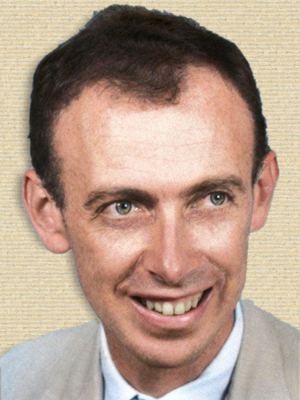
James Watson
(6 Apr 1928 - )
American biochemist and geneticist who shared the 1962 Nobel Prize for Physiology or Medicine for the discovery of the molecular structure of DNA.
|
[I doubt that in today's world, I and Francis Crick would ever have had our Eureka moment.] I recently went to my staircase at Clare College, Cambridge and there were women there! he said, with an enormous measure of retrospective sexual frustration. There have been a lot of convincing studies recently about the loss of productivity in the Western male. It may be that entertainment culture now is so engaging that it keeps people satisfied. We didn't have that. Science was much more fun than listening to the radio. When you are 16 or 17 and in that inherently semi-lonely period when you are deciding whether to be an intellectual, many now don't bother.
(Response when asked how he thought the climate of scientific research had changed since he made his discovery of the structure of life in 1953.)
(Response when asked how he thought the climate of scientific research had changed since he made his discovery of the structure of life in 1953.)
— James Watson
Quoted by Tim Adams in 'The New Age of Ignorance', The Observer (30 Jun 2007).
![James Watson quote: [Science moves] with the spirit of an adventure characterized both by youthful arrogance and by the belief t](https://todayinsci.com/W/Watson_James/WatsonJames-Pretty500x250px.jpg)
[Science proceeds with] the spirit of an adventure characterized both by youthful arrogance and by the belief that the truth, once found, would be simple as well as pretty.
— James Watson
In The Double Helix: A Personal Account of the Discovery of the Structure of DNA (1968, 2001), Preface, xi.
At lunch Francis [Crick] winged into the Eagle to tell everyone within hearing distance that we had found the secret of life.
— James Watson
Purported remark made at The Eagle pub (28 Feb 1953), near the Cavendish Laboratory in Cambridge, to celebrate the fact that they, Crick and Watson, had unravelled the structure of DNA. Stated by James Watson in The Double Helix: A Personal Account of the Discovery of the Structure of DNA (1968, 1998), 197. However Francis Crick, in What Mad Pursuit (1990), 77, writes that was “according to Jim,” but “of that I have no recollection.” Nevertheless, some quote collections report this incident with a direct quote as “We have discovered the secret of life!”
Biology has at least 50 more interesting years.
— James Watson
News summaries 31 Dec 1984. Quoted in James Beasley Simpson, Simpson's Contemporary Quotations (1988), 145
Formula for breakthroughs in research: Take young researchers, put them together in virtual seclusion, give them an unprecedented degree of freedom and turn up the pressure by fostering competitiveness.
— James Watson
In James Beasley Simpson, Simpson's Contemporary Quotations (1988), 145.
If the actual order of the bases on one of the pair of chains were given, one could write down the exact order of the bases on the other one, because of the specific pairing. Thus one chain is, as it were, the complement of the other, and it is this feature which suggests how the deoxyribonucleic acid molecule might duplicate itself.
[Co-author with Francis Crick]
[Co-author with Francis Crick]
— James Watson
In 'Genetic Implications of the Structure of Deoxyribonucleic Acid', Nature (1958), 171, 965-966.
Imagination comes first in both artistic and scientific creations, but in science there is only one answer and that has to be correct.
— James Watson
In 'Discoverers of the Double Helix', The Daily Telegraph (27 Apr 1987), in Max Perutz (ed.), Is Science Necessary: Essays on Science and Scientists (1991), 182.
It has been found experimentally that the ratio of the amounts of adenine to thymine, and the ratio of guanine to cytosine, are always very close to unity for deoxyribose nucleic acid.
[Co-author with Francis Crick]
[Co-author with Francis Crick]
— James Watson
In 'Molecular Structure of Nucleic Acids', Nature (1953), 171, 737.
Let's put it this way: I wouldn't buy gene-splicing stock for my grandmother.
Commenting to a reporter in 1981 on his doubt for the short-term possibilities of new gene-splicing companies.
Commenting to a reporter in 1981 on his doubt for the short-term possibilities of new gene-splicing companies.
— James Watson
'Shaping Life in the Lab'. In Time (9 Mar 1981).
One could not be a successful scientist without realizing that, in contrast to the popular conception supported by newspapers and mothers of scientists, a goodly number of scientists are not only narrow-minded and dull, but also just stupid.
— James Watson
The Double Helix: A Personal Account of the Discovery of the Structure of DNA (1968, 1998), 14.
One of the greatest gifts science has brought to the world is continuing elimination of the supernatural, and it was a lesson that my father passed on to me, that knowledge liberates mankind from superstition. We can live our lives without the constant fear that we have offended this or that deity who must be placated by incantation or sacrifice, or that we are at the mercy of devils or the Fates. With increasing knowledge, the intellectual darkness that surrounds us is illuminated and we learn more of the beauty and wonder of the natural world.
— James Watson
…...
Science seldom proceeds in the straightforward logical manner imagined by outsiders. Instead, its steps forward (and sometimes backward) are often very human events in which personalities and cultural traditions play major roles.
— James Watson
In The Double Helix: A Personal Account of the Discovery of the Structure of DNA (1968, 2001), Preface, xi.
The information reported in this section [about the two different forms, A and B, of DNA] was very kindly reported to us prior to its publication by Drs Wilkins and Franklin. We are most heavily indebted in this respect to the Kings College Group, and we wish to point out that without this data the formation of the picture would have been most unlikely, if not impossible.
[Co-author with Francis Crick]
[Co-author with Francis Crick]
— James Watson
In 'The Complementary Structure of Deoxyribonucleic Acid', Proceedings of the Royal Society of London, Series A (1954), 223, 82, footnote.
The novel feature of the structure is the manner in which the two chains are held together by the purine and pyrimidine bases. The planes of the bases are perpendicular to the fibre axis. They are joined together in pairs, a single base from one chain being hydrogen-bonded to a single base from the other chain, so that the two lie side by side with identical z-co-ordinates. One of the pair must be 11 purine and the other a pyrimidine for bonding to occur. The hydrogen bonds are made as follows: purine position I to pyrimidine position I; purine position 6 to pyrimidine position 6.
[Co-author with Francis Crick]
[Co-author with Francis Crick]
— James Watson
In 'Molecular Structure of Nucleic Acids', Nature (1953), 171, 737.
Today, the theory of evolution is an accepted fact for everyone but a fundamentalist minority, whose objections are based not on reasoning but on doctrinaire adherence to religious principles.
— James Watson
Molecular Biology of the Gene (1970), 2
We should first look at the evidence that DNA itself is not the direct template that orders amino acid sequences. Instead, the genetic information of DNA is transferred to another class of molecules which then serve as the protein templates. These intermediate templates are molecules of ribonucleic acid (RNA), large polymeric molecules chemically very similar to DNA. Their relation to DNA and protein is usually summarized by the central dogma, a How scheme for genetic information first proposed some twenty years ago.
— James Watson
In Molecular Biology of the Gene (1965), 281-282.
We should like to propose instead that the specificity of DNA self replication is accomplished without recourse to specific protein synthesis and that each of our complementary DNA chains serves as a template or mould for the formation onto itself of a new companion chain.
[Co-author with Francis Crick]
[Co-author with Francis Crick]
— James Watson
In James D. Watson and Francis H. C. Crick, 'The Structure of DNA', Cold Spring Harbor Symposium on Quantitative Biology (1953), 18, 128.
We wish to discuss a structure for the salt of deoxyribose nucleic acid. (D.N.A.). This structure has novel features which are of considerable biological interest. [Co-author with Francis Crick]
— James Watson
From James Watson and Francis Crick, 'Molecular Structure of Nucleic Acids: A Structure for Deoxyribose Nucleic Acid', Nature (25 Apr 1953), 171, No. 4356, 737. (Note: in W.F. Bynum and Roy Porter (eds.), Oxford Dictionary of Scientific Quotations (2005), 226, this quote is listed under Rosalind Elsie Franklin and cited, incorrectly, as from “Rosalind Franklin and R. G. Gosling, 'Molecular Structures of Nucleic Acids: A Structure for Deoxyribose Nucleic Acid', Nature, 1953, 171, 737.” However, the actual Franklin and Gosling article in that issue, is on pp.740-741, and titled 'Molecular Configuration in Sodium Thymonucleate'.)
We wish to put forward a radically different structure for the salt of deoxyribose nucleic acid. This structure has two helical chains each coiled round the same axis (see diagram).
[Co-author with Francis Crick]
[Co-author with Francis Crick]
— James Watson
From James Watson and Francis Crick, 'Molecular Structure of Nucleic Acids: A Structure for Deoxyribose Nucleic Acid', Nature (25 Apr 1953), 171, No. 4356, 737.
Quotes by others about James Watson (14)
It is one of the striking generalizations of biochemistry—which surprisingly is hardly ever mentioned in the biochemical text-books—that the twenty amino acids and the four bases, are, with minor reservations, the same throughout Nature. As far as I am aware the presently accepted set of twenty amino acids was first drawn up by Watson and myself in the summer of 1953 in response to a letter of Gamow's.
'On the Genetic Code', Nobel Lecture, 11 December 1962. In Nobel Lectures: Physiology or Medicine 1942-1962 (1964), 811.
It has not escaped our notice that the specific pairing we have postulated immediately suggests a possible copying mechanism for the genetic material.
[Concluding remark in the paper by Watson and Crick announcing discovery of the structure of DNA.]
[Concluding remark in the paper by Watson and Crick announcing discovery of the structure of DNA.]
In J.D. Watson and F.H.C. Crick, 'A Structure for Deoxyribose Nucleic Acid,' Letter in Nature (25 Apr 1953), 171, 738. Quoted in Francis Crick, What Mad Pursuit (1990), 66.
We wish to suggest a structure for the salt of deoxyribose nucleic acid (DNA). This structure has novel features which are of considerable biological interest.
[Opening remark in the paper by Watson and Crick announcing discovery of the structure of DNA.]
[Opening remark in the paper by Watson and Crick announcing discovery of the structure of DNA.]
In J.D. Watson and F.H.C. Crick, 'A Structure for Deoxyribose Nucleic Acid,' Letter in Nature (25 Apr 1953), 171, 737. Quoted in Diane Dowdey, The Researching Reader: Source-based Writings Across the Disciplines (1990), 203.
The major credit I think Jim and I deserve … is for selecting the right problem and sticking to it. It’s true that by blundering about we stumbled on gold, but the fact remains that we were looking for gold. Both of us had decided, quite independently of each other, that the central problem in molecular biology was the chemical structure of the gene. … We could not see what the answer was, but we considered it so important that we were determined to think about it long and hard, from any relevant point of view.
In What Mad Pursuit (1990), 74-75.
If Watson and I had not discovered the [DNA] structure, instead of being revealed with a flourish it would have trickled out and that its impact would have been far less. For this sort of reason Stent had argued that a scientific discovery is more akin to a work of art than is generally admitted. Style, he argues, is as important as content. I am not completely convinced by this argument, at least in this case.
What Mad Pursuit (1990), 76.
Jim and I hit it off immediately, partly because our interests were astonishingly similar and partly, I suspect, because a certain youthful arrogance, a ruthlessness, an impatience with sloppy thinking can naturally to both of us.
In What Mad Pursuit (1990), 64.
The fundamental biological variant is DNA. That is why Mendel's definition of the gene as the unvarying bearer of hereditary traits, its chemical identification by Avery (confirmed by Hershey), and the elucidation by Watson and Crick of the structural basis of its replicative invariance, are without any doubt the most important discoveries ever made in biology. To this must be added the theory of natural selection, whose certainty and full significance were established only by those later theories.
In Jacques Monod and Austryn Wainhouse (trans.), Chance and Necessity: An Essay on the Natural Philosophy of Modern Biology (1971), 104.
I think that the formation of [DNA's] structure by Watson and Crick may turn out to be the greatest developments in the field of molecular genetics in recent years.
‘Discussion des rapports de M Pauling’, Rep. Institut International de Chemie Solvay: Conference on Proteins, 6-14 April 1953 (1953), 113.
And now the announcement of Watson and Crick about DNA. This is for me the real proof of the existence of God.
As quoted in 'Playboy Interview: Salvador Dalí, a candid conversation with the flamboyantly eccentric grand vizier of surrealism', Playboy Magazine (Jul 1964). Also in Alan Lindsay Mackay, A Dictionary of Scientific Quotations (1991), 66.
It just so happens that during the 1950s, the first great age of molecular biology, the English schools of Oxford and particularly of Cambridge produced more than a score of graduates of quite outstanding ability—much more brilliant, inventive, articulate and dialectically skillful than most young scientists; right up in the Jim Watson class. But Watson had one towering advantage over all of them: in addition to being extremely clever he had something important to be clever about.
From the postscript to 'Lucky Jim', New York Review of Books (28 Mar 1968). Also collected in 'Lucky Jim', Pluto’s Republic (1982), 275. Also excerpted in Richard Dawkins (ed.), The Oxford Book of Modern Science Writing (2008), 186.
I argued that it was important not to place too much reliance on any single piece of experimental evidence. It might turn out to be misleading, as the 5.1 Å reflection undoubtedly was. Jim was a little more brash, stating that no good model ever accounted for all the facts, since some data was bound to be misleading if not plain wrong. A theory that did fit all the data would have been “carpentered” to do so and would thus be open to suspicion.
In What Mad Pursuit: A Personal View of Scientific Discovery (1988), 59-60.
Rather than believe that Watson and Crick made the DNA structure, I would rather stress that the structure made Watson and Crick.
In What Mad Pursuit: A Personal View of Scientific Discovery (1988), 76.
If, for example, I had some idea, which, as it turned out would, say, be quite wrong, was going off of the tangent, Watson would tell me in no uncertain terms this was nonsense, and vice-versa. If he had some idea I didn’t like and I would say so and this would shake his thinking about it and draw him back again. And in fact, it’s one of the requirements for collaboration of this sort that you must be perfectly candid, one might almost say rude, to the person you are working with. It’s useless, working with somebody who’s either much too junior than yourself, or much too senior, because then politeness creeps in. And this is the end of all real collaboration in science.
As quoted in Robert Olby, The Path to the Double Helix: The Discovery of the Double Helix, (1974, 1994), 316, citing Transcript of BBC TV program, The Prizewinners (1962).
Watson and I had been often discussing the problem, the ways you could go wrong solving problems of this sort, the techniques you have to use, and in particular, such rather curious things as you mustn’t pay too much attention to the all the experimental evidence, some of it may be wrong, for example.
From Transcript of BBC TV program, The Prizewinners (1962).
![James Watson quote: [Science moves] with the spirit of an adventure characterized both by youthful arrogance and by the belief t](https://todayinsci.com/W/Watson_James/WatsonJames-PrettyThm.jpg)
See also:
- 6 Apr - short biography, births, deaths and events on date of Watson's birth.
- Video: How We Discovered DNA Structure - James Watson talk (2005, 21 min).
- DNA: The Secret of Life, by James D. Watson, Andrew Berry. - book suggestion.
- Booklist for James Watson.
 In science it often happens that scientists say, 'You know that's a really good argument; my position is mistaken,' and then they would actually change their minds and you never hear that old view from them again. They really do it. It doesn't happen as often as it should, because scientists are human and change is sometimes painful. But it happens every day. I cannot recall the last time something like that happened in politics or religion.
(1987) --
In science it often happens that scientists say, 'You know that's a really good argument; my position is mistaken,' and then they would actually change their minds and you never hear that old view from them again. They really do it. It doesn't happen as often as it should, because scientists are human and change is sometimes painful. But it happens every day. I cannot recall the last time something like that happened in politics or religion.
(1987) -- 




