 (source)
|
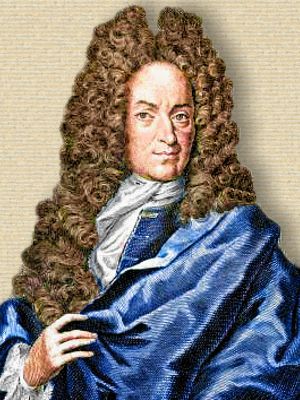
Georg Ernst Stahl
(21 Oct 1660 - 14 May 1734)
German physician and chemist who developed the phlogiston theory of combustion (as did Johann Becher),
|
Science Quotes by Georg Ernst Stahl (4 quotes)
1. Universal CHEMISTRY is the Art of resolving mixt, compound, or aggregate Bodies into their Principles; and of composing such Bodies from those Principles. 2. It has for its Subject all the mix’d, compound, and aggregate Bodies that are and resolvable and combinable and Resolution and Combination, or Destruction and Generation, for its Object. 3. Its Means in general, are either remote or immediate; that is, either Instruments or the Operations themselves. 4. Its End is either philosophical and theoretical; or medicinal, mechanical, œconomical, and practical. 5. Its efficient Cause is the Chemist.
— Georg Ernst Stahl
In Philosophical Principles of Universal Chemistry: Or, The Foundation of a Scientifical Manner of Inquiring Into and Preparing the Natural and Artificial Bodies for the Uses of Life: Both in the Smaller Way of Experiment, and the Larger Way of Business (1730), 1. Footnote to (1.): “The justness of this Definition will appear from the scope and tenour of the Work; though it is rather adapted to the perfect, than the present imperfect state of Chemistry….” Footnote to (4): “Hence universal Chemistry is commodiously resolved into several Parts or Branches, under which it must be distinctly treated to give a just notion of its due extent and usefulness. For tho’ in common acceptation of the word, Chemistry is supposed to relate chiefly to the Art of Medicine, as it supplies that Art with Remedies, this in reality is but a very small part of its use, compared with the rest; numerous other Arts, Trades, and mechanical Employments, Merchandize itself, and all natural Philosophy, being as much, and some of them more, concern’d therewith….”
Briefly, in the act of composition, as an instrument there intervenes and is most potent, fire, flaming, fervid, hot; but in the very substance of the compound there intervenes, as an ingredient, as it is commonly called, as a material principle and as a constituent of the whole compound the material and principle of fire, not fire itself. This I was the first to call phlogiston.
— Georg Ernst Stahl
Specimen Beccherianum (1703). Trans. J. R. Partington, A History of Chemistry (1961), Vol. 2, 668.
Chymia, or Alchemy and Spagyrism, is the art of resolving compound bodies into their principles and of combining these again.
— Georg Ernst Stahl
Fundamenta Chymiae (1720). Trans. J. R. Partington, A History of Chemistry (1961), Vol. 2, 664.
In my youth I often asked what could be the use and necessity of smelting by putting powdered charcoal at the bottom of the furnace. Nobody could give me any other reason except that the metal and especially lead, could bury itself in the charcoal and so be protected against the action of the bellows which would calcine or dissipate it. Nevertheless it is evident that this does not answer the question. I accordingly examined the operation of a metallurgical furnace and how it was used. In assaying some litharge [lead oxide], I noticed each time a little charcoal fell into the crucible, I always obtained a bit of lead … I do not think up to the present time foundry-men ever surmised that in the operation of founding with charcoal there was something [phlogiston] which became corporeally united with the metal.
— Georg Ernst Stahl
Traité de Soufre (1766), 64. French translation published 1766, first published in German in 1718.
Quotes by others about Georg Ernst Stahl (5)
In science, attempts at formulating hierarchies are always doomed to eventual failure. A Newton will always be followed by an Einstein, a Stahl by a Lavoisier; and who can say who will come after us? What the human mind has fabricated must be subject to all the changes—which are not progress—that the human mind must undergo. The 'last words' of the sciences are often replaced, more often forgotten. Science is a relentlessly dialectical process, though it suffers continuously under the necessary relativation of equally indispensable absolutes. It is, however, possible that the ever-growing intellectual and moral pollution of our scientific atmosphere will bring this process to a standstill. The immense library of ancient Alexandria was both symptom and cause of the ossification of the Greek intellect. Even now I know of some who feel that we know too much about the wrong things.
Voices in the Labyrinth: Nature, Man, and Science (1979), 46.
When Galileo caused balls, the weights of which he had himself previously determined, to roll down an inclined plane; when Torricelli made the air carry a weight which he had calculated beforehand to be equal to that of a definite volume of water; or in more recent times, when Stahl changed metal into lime, and lime back into metal, by withdrawing something and then restoring it, a light broke upon all students of nature. They learned that reason has insight only into that which it produces after a plan of its own, and that it must not allow itself to be kept, as it were, in nature's leading-strings, but must itself show the way with principles of judgement based upon fixed laws, constraining nature to give answer to questions of reason's own determining. Accidental observations, made in obedience to no previously thought-out plan, can never be made to yield a necessary law, which alone reason is concerned to discover.
Critique of Pure Reason (1781), trans. Norman Kemp Smith (1929), 20.
I have witnessed a most remarkable drama here, one which to me as a German was very unexpected, and quite shocking. I saw the famous M. Lavoisier hold a ceremonial auto-da-fe of phlogiston in the Arsenal. His wife... served as the sacrificial priestess, and Stahl appeared as the advocatus diaboli to defend phlogiston. In the end, poor phlogiston was burned on the accusation of oxygen. Do you not think I have made a droll discovery? Everything is literally true. I will not say whether the cause of phlogiston is now irretrievably lost, or what I think about the issue. But I am glad that this spectacle was not presented in my fatherland.
Letter to Chemische Annalen, 1789, 1, 519. Quoted (in English translation) in K. Hufbauer, The Formation of the German Chemical Community (1982), 96.
About eight days ago I discovered that sulfur in burning, far from losing weight, on the contrary, gains it; it is the same with phosphorus; this increase of weight arises from a prodigious quantity of air that is fixed during combustion and combines with the vapors. This discovery, which I have established by experiments, that I regard as decisive, has led me to think that what is observed in the combustion of sulfur and phosphorus may well take place in the case of all substances that gain in weight by combustion and calcination; and I am persuaded that the increase in weight of metallic calxes is due to the same cause... This discovery seems to me one of the most interesting that has been made since Stahl and since it is difficult not to disclose something inadvertently in conversation with friends that could lead to the truth I have thought it necessary to make the present deposit to the Secretary of the Academy to await the time I make my experiments public.
Sealed note deposited with the Secretary of the French Academy 1 Nov 1772. Oeuvres de Lavoisier, Correspondance, Fasc. II. 1770-75 (1957), 389-90. Adapted from translation by A. N. Meldrum, The Eighteenth-Century Revolution in Science (1930), 3.
I have lived myself to see the disciples of Hoffman, Boerhaave, Stalh, Cullen, Brown, succeed one another like the shifting figures of a magic lanthern, and their fancies, like the dresses of the annual doll-babies from Paris, becoming from their novelty, the vogue of the day, and yielding to the next novelty their ephemeral favor. The patient, treated on the fashionable theory, sometimes gets well in spite of the medicine.
In letter to Caspar Wistar (21 Jun 1807), collected in Thomas Jefferson Randolph (ed.), Memoir, Correspondence, And Miscellanies, From The Papers Of Thomas Jefferson (1829), Vol. 4, 93.
See also:
- 21 Oct - short biography, births, deaths and events on date of Stahl's birth.
 In science it often happens that scientists say, 'You know that's a really good argument; my position is mistaken,' and then they would actually change their minds and you never hear that old view from them again. They really do it. It doesn't happen as often as it should, because scientists are human and change is sometimes painful. But it happens every day. I cannot recall the last time something like that happened in politics or religion.
(1987) --
In science it often happens that scientists say, 'You know that's a really good argument; my position is mistaken,' and then they would actually change their minds and you never hear that old view from them again. They really do it. It doesn't happen as often as it should, because scientists are human and change is sometimes painful. But it happens every day. I cannot recall the last time something like that happened in politics or religion.
(1987) -- 




