|
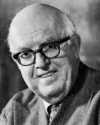
Baron C.P. Snow
(15 Oct 1905 - 1 Jul 1980)
English physicist, novelist and government administrator.
|
Science Quotes by Baron C.P. Snow (17 quotes)
A good many times I have been present at gatherings of people who, by the standards of the traditional culture, are thought highly educated and who have with considerable gusto been expressing their incredulity at the illiteracy of scientists. Once or twice I have been provoked and have asked the company how many of them could describe the Second Law of Thermodynamics. The response was cold: it was also negative. Yet I was asking something which is about the scientific equivalent of: Have you read a work of Shakespeare’s?
— Baron C.P. Snow
The Two Cultures: The Rede Lecture (1959), 15-6.
A scientist has to be neutral in his search for the truth, but he cannot be neutral as to the use of that truth when found. If you know more than other people, you have more responsibility, rather than less.
— Baron C.P. Snow
Attributed as a quote, without citation, in J. Robert Moskin, Morality in America (1966), 61. Please contact webmaster if you know a primary print source.
By the year 2070 we cannot say, or it would be imbecile to do so, that any man alive could understand Shakespearean experience better than Shakespeare, whereas any decent eighteen-year-old student of physics will know more physics than Newton.
— Baron C.P. Snow
'The Case of Leavis and the Serious Case’, Times Literary Supplement (9 Jul 1970), 737-740. Collected in Public Affairs (1971), 95.
Davy was the type of all the jumped-up second-raters of all time.
— Baron C.P. Snow
Spoken by the fictional character, Luard, an unhappy school chemistry teacher in the novel The Search (1932), 21.
Einstein, twenty-six years old, only three years away from crude privation, still a patent examiner, published in the Annalen der Physik in 1905 five papers on entirely different subjects. Three of them were among the greatest in the history of physics. One, very simple, gave the quantum explanation of the photoelectric effect—it was this work for which, sixteen years later, he was awarded the Nobel prize. Another dealt with the phenomenon of Brownian motion, the apparently erratic movement of tiny particles suspended in a liquid: Einstein showed that these movements satisfied a clear statistical law. This was like a conjuring trick, easy when explained: before it, decent scientists could still doubt the concrete existence of atoms and molecules: this paper was as near to a direct proof of their concreteness as a theoretician could give. The third paper was the special theory of relativity, which quietly amalgamated space, time, and matter into one fundamental unity.
This last paper contains no references and quotes no authority. All of them are written in a style unlike any other theoretical physicist’s. They contain very little mathematics. There is a good deal of verbal commentary. The conclusions, the bizarre conclusions, emerge as though with the greatest of ease: the reasoning is unbreakable. It looks as though he had reached the conclusions by pure thought, unaided, without listening to the opinions of others. To a surprisingly large extent, that is precisely what he had done.
This last paper contains no references and quotes no authority. All of them are written in a style unlike any other theoretical physicist’s. They contain very little mathematics. There is a good deal of verbal commentary. The conclusions, the bizarre conclusions, emerge as though with the greatest of ease: the reasoning is unbreakable. It looks as though he had reached the conclusions by pure thought, unaided, without listening to the opinions of others. To a surprisingly large extent, that is precisely what he had done.
— Baron C.P. Snow
In Variety of Men (1966), 100-101. First published in Commentary magazine.
For the first time I saw a medley of haphazard facts fall into line and order. All the jumbles and recipes and Hotchpotch of the inorganic chemistry of my boyhood seemed to fit into the scheme before my eyes-as though one were standing beside a jungle and it suddenly transformed itself into a Dutch garden. “But it’s true,” I said to myself “It’s very beautiful. And it’s true.”
— Baron C.P. Snow
How the Periodic Table was explained in a first-term university lecture to the central character in the novel by C.P. Snow, The Search (1935), 38.
I should never have made a good scientist, but I should have made a perfectly adequate one.
— Baron C.P. Snow
Interview with John Halperin. C. P. Snow, An Oral Biography, (1983), 11.
I think, on the whole that scientists make slightly better husbands and fathers than most of us, and I admire them for it.
— Baron C.P. Snow
Quoted in I. Langmuir, Langmuir: The Man and the Scientist (1962), 97.
It was through living among these groups and much more I think, through moving regularly from one to the other and back again that I got occupied with the problem of what, long before I put it on paper, I christened to myself as the ‘two cultures’. For constantly I felt I was moving among two groups [scientists and literary intellectuals] comparable in intelligence, identical in race, not grossly different in social origin, earning about the same incomes, who had almost ceased to communicate at all, who in intellectual, moral and psychological climate had so little in common that instead of going from Burlington House or South Kensington to Chelsea, one might have crossed an ocean.
— Baron C.P. Snow
The Two Cultures: The Rede Lecture (1959), 2. The places mentioned are all in London. Burlington House is the home of the Royal Society and South Kensington is the site of the Natural History Museum, whereas Chelsea represents an affluent centre of artistic life.
No scientist or student of science, need ever read an original work of the past. As a general rule, he does not think of doing so. Rutherford was one of the greatest experimental physicists, but no nuclear scientist today would study his researches of fifty years ago. Their substance has all been infused into the common agreement, the textbooks, the contemporary papers, the living present.
— Baron C.P. Snow
Attempting to distinguish between science and the humanities in which original works like Shakespeare's must be studied verbatim. 'The Case of Leavis and the Serious Case', (1970), reprinted in Public Affairs (1971), 94.
One day at Fenner's (the university cricket ground at Cambridge), just before the last war, G. H. Hardy and I were talking about Einstein. Hardy had met him several times, and I had recently returned from visiting him. Hardy was saying that in his lifetime there had only been two men in the world, in all the fields of human achievement, science, literature, politics, anything you like, who qualified for the Bradman class. For those not familiar with cricket, or with Hardy's personal idiom, I ought to mention that “the Bradman class” denoted the highest kind of excellence: it would include Shakespeare, Tolstoi, Newton, Archimedes, and maybe a dozen others. Well, said Hardy, there had only been two additions in his lifetime. One was Lenin and the other Einstein.
— Baron C.P. Snow
Variety of Men (1966), 87. First published in Commentary magazine.
Scientists ... I should say that naturally they had the future in their bones.
— Baron C.P. Snow
In The Two Cultures and the Scientific Revolution (1959).
Scientists have it within them to know what a future-directed society feels like, for science itself, in its human aspect, is just like that.
— Baron C.P. Snow
In A Postscript to Science and Government (1962).
Technology, remember…is a queer thing. It brings you great gifts with one hand, and it stabs you in the back with the other.
— Baron C.P. Snow
As quoted by Anthony Lewis, 'Dear Scoop Jackson', New York Times (15 Mar 1971). Lewis presents the quote as, “C.P. Snow said last month.” Lewis interprets, adding in his own words: “We all know that now. One of the phenomena of the age is the feeling that technology has betrayed us, that it has dehumanized life and left us at the mercy of things beyond our control.”
The intellectual life of the whole of western society is increasingly being split into two polar groups… Literary intellectuals at one pole—at the other scientists, and as the most representative, the physical scientists. Between the two a gulf of mutual incomprehension—sometimes (particularly among the young) hostility and dislike, but most of all lack of understanding.
— Baron C.P. Snow
The Two Cultures and the Scientific Revolution: The Rede Lecture (1959), 4.
The only ethical principle which has made science possible is that the truth shall be told all the time. If we do not penalize false statements made in error, we open up the way for false statements by intention. And a false statement of fact, made deliberately, is the most serious crime a scientist can commit.
— Baron C.P. Snow
In The Search (1934, rev. ed. 1959), 273.
This ability to incorporate the past gives the sharpest diagnostic tool, if one asks whether a body of knowledge is a science or not. Do present practitioners have to go back to an original work of the past? Or has it been incorporated? … Science is cumulative, and embodies its past.
— Baron C.P. Snow
'The Case of Leavis and the Serious Case’, Times Literary Supplement (9 Jul 1970), 737-740. Collected in Public Affairs (1971), 95.
Quotes by others about Baron C.P. Snow (4)
The landed classes neglected technical education, taking refuge in classical studies; as late as 1930, for example, long after Ernest Rutherford at Cambridge had discovered the atomic nucleus and begun transmuting elements, the physics laboratory at Oxford had not been wired for electricity. Intellectuals neglect technical education to this day.
Describing C.P. Snow’s observations on the neglect of technical education in Visions of Technology (1999), 23.
I am ashamed to say that C. P. Snow's “two cultures” debate smoulders away. It is an embarrassing and sterile debate, but at least it introduced us to Medawar's essays. Afterwards, not even the most bigoted aesthete doubted that a scientist could be every inch as cultivated and intellectually endowed as a student of the humanities.
From 'Words of Hope', The Times (17 May 1988). Quoted in Neil Calver, 'Sir Peter Medawar: Science, Creativity and the Popularization of Karl Popper', Notes and Records of the Royal Society (May 2013), 67, 303.
His “Mathematical Games” column in Scientific American is one of the few bridges over C.P. Snow’s famous “gulf of mutual incomprehension’' that lies between technical and literary cultures.
In 'Martin Gardner: A “Documentary”', collected in Elwyn Berlekamp and Tom Rodgers (eds.), The Mathematician and the Pied Puzzler: A Collection in Tribute to Martin Gardner (1999), 9.
I don’t think it is proper at all to take the position that C. P. Snow has: namely, that the science—the knowledge, the mathematical side of life—runs in an opposite direction to the life of spontaneous humanistic action. They supplement each other. In literature, for instance, writing sonnets: it takes a lot of practice to make that kind of structure become something that just pours out, but when it does pour out, it is possible to say things that cannot be said without the sonnet form. Form and expression are very close together.
In Diane K. Osbon (ed.), A Joseph Campbell Companion: Reflections on the Art of Living (Collected Works of Joseph Campbell) (1991, 1995), 261.
See also:
- 15 Oct - short biography, births, deaths and events on date of Snow's birth.
 In science it often happens that scientists say, 'You know that's a really good argument; my position is mistaken,' and then they would actually change their minds and you never hear that old view from them again. They really do it. It doesn't happen as often as it should, because scientists are human and change is sometimes painful. But it happens every day. I cannot recall the last time something like that happened in politics or religion.
(1987) --
In science it often happens that scientists say, 'You know that's a really good argument; my position is mistaken,' and then they would actually change their minds and you never hear that old view from them again. They really do it. It doesn't happen as often as it should, because scientists are human and change is sometimes painful. But it happens every day. I cannot recall the last time something like that happened in politics or religion.
(1987) -- 




