Pattern Quotes (118 quotes)
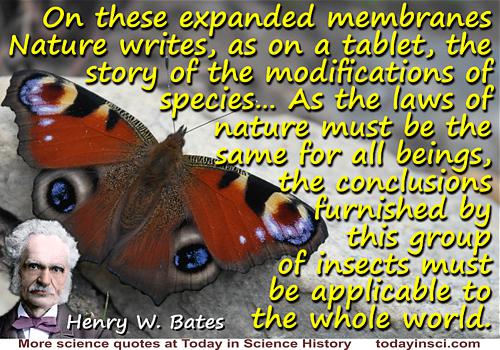
… on these expanded membranes [butterfly wings] Nature writes, as on a tablet, the story of the modifications of species, so truly do all changes of the organisation register themselves thereon. Moreover, the same colour-patterns of the wings generally show, with great regularity, the degrees of blood-relationship of the species. As the laws of nature must be the same for all beings, the conclusions furnished by this group of insects must be applicable to the whole world.
From The Naturalist on the River Amazons: A record of Adventures, Habits of Animals, Sketches of Brazilian and Indian life, and Aspects of Nature under the Equator, During Eleven Years of Travel (1864), 413.
“Archaeology is made up entirely of anomalies,” said Terrence, “rearranged to make them fit in a fluky pattern. There'd be no system to it otherwise.”
Continued on Next Rock (1970). Quoted in Gary Westfahl, Science Fiction Quotations (2005), 321
“Wu Li” was more than poetic. It was the best definition of physics that the conference would produce. It caught that certain something, that living quality that we were seeking to express in a book, that thing without which physics becomes sterile. “Wu” can mean either “matter” or “energy.” “Li” is a richly poetic word. It means “universal order” or “universal law.” It also means “organic patterns.” The grain in a panel of wood is Li. The organic pattern on the surface of a leaf is also Li, and so is the texture of a rose petal. In short, Wu Li, the Chinese word for physics, means “patterns of organic energy” (“matter/ energy” [Wu] + “universal order/organic patterns” [Li]). This is remarkable since it reflects a world view which the founders of western science (Galileo and Newton) simply did not comprehend, but toward which virtually every physical theory of import in the twentieth century is pointing!
In The Dancing Wu Li Masters: An Overview of the New Physics (1979), 5.
[Culture] denotes an historically transmitted pattern of meanings embodied in symbols, a system of inherited conceptions expressed in symbolic forms, by means of which men communicate, perpetuate, and develop their knowledge about and attitudes toward life.
The Interpretation of Cultures (1977), 89.
[Professor W.L. Bragg asserts that] In sodium chloride there appear to be no molecules represented by NaCl. The equality in number of sodium and chlorine atoms is arrived at by a chess-board pattern of these atoms; it is a result of geometry and not of a pairing-off of the atoms.
In Henry E. Armstrong, 'Poor Common Salt!', Nature (1927), 120, 478.
[The] complex pattern of the misallocation of credit for scientific work must quite evidently be described as “the Matthew effect,” for, as will be remembered, the Gospel According to St. Matthew puts it this way: For unto every one that hath shall be given, and he shall have abundance: but from him that hath not shall be taken away even that which he hath. Put in less stately language, the Matthew effect consists of the accruing of greater increments of recognition for particular scientific contributions to scientists of considerable repute and the withholding of such recognition from scientists who have not yet made their mark.
'The Matthew Effect in Science', Science (1968), 159, 58.
[There was] in some of the intellectual leaders a great aspiration to demonstrate that the universe ran like a piece of clock-work, but this was was itself initially a religious
aspiration. It was felt that there would be something defective in Creation itself—something not quite worthy of God—unless the whole system of the universe could be shown to be interlocking, so that it carried the pattern of reasonableness and orderliness. Kepler, inaugurating the scientist’s quest for a mechanistic universe in the seventeenth century, is significant here—his mysticism, his music of the spheres, his rational deity demand a system which has the beauty of a piece of mathematics.
In The Origins of Modern Science (1950), 105.
A mathematician … has no material to work with but ideas, and so his patterns are likely to last longer, since ideas wear less with time than words.
In A Mathematician's Apology (1940, 2012), 84.
A mathematician, like a painter or a poet, is a maker of patterns. If his patterns are more permanent than theirs, it is because they are made with ideas.
In A Mathematician’s Apology (1940, reprint with Foreward by C.P. Snow 1992), 84.
A painter makes patterns with shapes and colours, a poet with words. A painting may embody an “idea,” but the idea is usually commonplace and unimportant. In poetry, ideas count for a good deal more; but, as Housman insisted, the importance of ideas in poetry is habitually exaggerated. … The poverty of ideas seems hardly to affect the beauty of the verbal pattern. A mathematician, on the other hand, has no material to work with but ideas, and so his patterns are likely to last longer, since ideas wear less with time than words.
In A Mathematician’s Apology (1940, 2012), 84-85.
A surprising proportion of mathematicians are accomplished musicians. Is it because music and mathematics share patterns that are beautiful?
In 'Introduction' contributed to Donald J. Albers and Gerald L. Alexanderson, More Mathematical People: Contemporary Conversations (1990), xi.
Algebra reverses the relative importance of the factors in ordinary language. It is essentially a written language, and it endeavors to exemplify in its written structures the patterns which it is its purpose to convey. The pattern of the marks on paper is a particular instance of the pattern to be conveyed to thought. The algebraic method is our best approach to the expression of necessity, by reason of its reduction of accident to the ghost-like character of the real variable.
In Science and Philosophy (1948), 116.
All fossil anthropoids found hitherto have been known only from mandibular or maxillary fragments, so far as crania are concerned, and so the general appearance of the types they represented had been unknown; consequently, a condition of affairs where virtually the whole face and lower jaw, replete with teeth, together with the major portion of the brain pattern, have been preserved, constitutes a specimen of unusual value in fossil anthropoid discovery. Here, as in Homo rhodesiensis, Southern Africa has provided documents of higher primate evolution that are amongst the most complete extant. Apart from this evidential completeness, the specimen is of importance because it exhibits an extinct race of apes intermediate between living anthropoids and man ... Whether our present fossil is to be correlated with the discoveries made in India is not yet apparent; that question can only be solved by a careful comparison of the permanent molar teeth from both localities. It is obvious, meanwhile, that it represents a fossil group distinctly advanced beyond living anthropoids in those two dominantly human characters of facial and dental recession on one hand, and improved quality of the brain on the other. Unlike Pithecanthropus, it does not represent an ape-like man, a caricature of precocious hominid failure, but a creature well advanced beyond modern anthropoids in just those characters, facial and cerebral, which are to be anticipated in an extinct link between man and his simian ancestor. At the same time, it is equally evident that a creature with anthropoid brain capacity and lacking the distinctive, localised temporal expansions which appear to be concomitant with and necessary to articulate man, is no true man. It is therefore logically regarded as a man-like ape. I propose tentatively, then, that a new family of Homo-simidæ be created for the reception of the group of individuals which it represents, and that the first known species of the group be designated Australopithecus africanus, in commemoration, first, of the extreme southern and unexpected horizon of its discovery, and secondly, of the continent in which so many new and important discoveries connected with the early history of man have recently been made, thus vindicating the Darwinian claim that Africa would prove to be the cradle of mankind.
'Australopithicus africanus: The Man-Ape of South Africa', Nature, 1925, 115, 195.
All the summer long is the swallow a most instructive pattern of unwearied industry and affection; for, from morning to night, while there is a family to be supported, she spends the whole day in skimming close to the ground, and exerting the most sudden turns and quick evolutions. Avenues, and long walks under hedges, and pasture-fields, and mown meadows where cattle graze, are her delight, especially if there are trees interspersed; because in such spots insects most abound. When a fly is taken a smart snap from her bill is heard, resembling the noise at the shutting of a watch case; but the motion of the mandibles are too quick for the eye.
In Letter to Daines Barrington (29 Jan 1774), in In The Natural History and Antiquities of Selborne (1789), 169-170.
Applied research generates improvements, not breakthroughs. Great scientific advances spring from pure research. Even scientists renowned for their “useful” applied discoveries often achieved success only when they abandoned their ostensible applied-science goal and allowed their minds to soar—as when Alexander Fleming, “just playing about,” refrained from throwing away green molds that had ruined his experiment, studied them, and discovered penicillin. Or when C. A. Clarke, a physician affiliated with the University of Liverpool, became intrigued in the 1950s by genetically created color patterns that emerged when he cross-bred butterflies as a hobby. His fascination led him—“by the pleasant route of pursuing idle curiosity”—to the successful idea for preventing the sometimes fatal anemia that threatened babies born of a positive-Rhesus-factor father and a negative-Rhesus-factor mother.
In Jacques Cousteau and Susan Schiefelbein, The Human, the Orchid, and the Octopus: Exploring and Conserving Our Natural World (2007), 214-215.
Art matures. It is the formal elaboration of activity, complete in its own pattern. It is a cosmos of its own.
In Art Is Action: A Discussion of Nine Arts in a Modern World (1939), 29.
Biological disciplines tend to guide research into certain channels. One consequence is that disciplines are apt to become parochial, or at least to develop blind spots, for example, to treat some questions as “interesting” and to dismiss others as “uninteresting.” As a consequence, readily accessible but unworked areas of genuine biological interest often lie in plain sight but untouched within one discipline while being heavily worked in another. For example, historically insect physiologists have paid relatively little attention to the behavioral and physiological control of body temperature and its energetic and ecological consequences, whereas many students of the comparative physiology of terrestrial vertebrates have been virtually fixated on that topic. For the past 10 years, several of my students and I have exploited this situation by taking the standard questions and techniques from comparative vertebrate physiology and applying them to insects. It is surprising that this pattern of innovation is not more deliberately employed.
In 'Scientific innovation and creativity: a zoologist’s point of view', American Zoologist (1982), 22, 233.
Both religion and science must preserve their autonomy and their distinctiveness. Religion is not founded on science nor is science an extension of religion. Each should possess its own principles, its pattern of procedures, its diversities of interpretation and its own conclusions.
In Letter (1 Jun 1988) to Father George V. Coyne, Director of the Vatican Observatory. On vatican.va website.
Chromosomes … [contain] some kind of code-script the entire pattern of the individual’s future development and of its functioning in the mature state. Every complete set of chromosomes contains the full code.
In What is Life? : The Physical Aspect of the Living Cell (1944), 20.
Computers and rocket ships are examples of invention, not of understanding. … All that is needed to build machines is the knowledge that when one thing happens, another thing happens as a result. It’s an accumulation of simple patterns. A dog can learn patterns. There is no “why” in those examples. We don’t understand why electricity travels. We don’t know why light travels at a constant speed forever. All we can do is observe and record patterns.
In God's Debris: A Thought Experiment (2004), 22.
Differences between individuals are the raw materials for evolutionary change and for the evolution of adaptations, yet of course most physiologists treat these differences as noise that is to be filtered out. From the standpoint of physiological ecology, the traditional emphasis of physiologists on central tendencies rather than on variance has some unhappy consequences. Variation is not just noise; it is also the stuff of evolution and a central attribute of living systems. The physiological differences between individuals in the same species or population, and also the patterns of variation in different groups, must not be ignored.
From 'Interspecific comparison as a tool for ecological physiologists', collected in M.E. Feder, A.F. Bennett, W.W. Burggren, and R.B. Huey, (eds.), New Directions in Ecological Physiology (1987), 32-33,
Ecosystems, with their enormous origami-like relationships, are among the most complex of all natural constructions. To understand the patterns and laws of their common origins is one of the most important challenges of science in the present century.
In 'Introduction' contributed to Enric Sala, The Nature of Nature: Why We Need the Wild (2020).
For Linnaeus, Homo sapiens was both special and not special ... Special and not special have come to mean nonbiological and biological, or nurture and nature. These later polarizations are nonsensical. Humans are animals and everything we do lies within our biological potential ... the statement that humans are animals does not imply that our specific patterns of behavior and social arrangements are in any way directly determined by our genes. Potentiality and determination are different concepts.
…...
Fractal is a word invented by Mandelbrot to bring together under one heading a large class of objects that have [played] … an historical role … in the development of pure mathematics. A great revolution of ideas separates the classical mathematics of the 19th century from the modern mathematics of the 20th. Classical mathematics had its roots in the regular geometric structures of Euclid and the continuously evolving dynamics of Newton. Modern mathematics began with Cantor’s set theory and Peano’s space-filling curve. Historically, the revolution was forced by the discovery of mathematical structures that did not fit the patterns of Euclid and Newton. These new structures were regarded … as “pathological,” .… as a “gallery of monsters,” akin to the cubist paintings and atonal music that were upsetting established standards of taste in the arts at about the same time. The mathematicians who created the monsters regarded them as important in showing that the world of pure mathematics contains a richness of possibilities going far beyond the simple structures that they saw in Nature. Twentieth-century mathematics flowered in the belief that it had transcended completely the limitations imposed by its natural origins.
Now, as Mandelbrot points out, … Nature has played a joke on the mathematicians. The 19th-century mathematicians may not have been lacking in imagination, but Nature was not. The same pathological structures that the mathematicians invented to break loose from 19th-century naturalism turn out to be inherent in familiar objects all around us.
Now, as Mandelbrot points out, … Nature has played a joke on the mathematicians. The 19th-century mathematicians may not have been lacking in imagination, but Nature was not. The same pathological structures that the mathematicians invented to break loose from 19th-century naturalism turn out to be inherent in familiar objects all around us.
From 'Characterizing Irregularity', Science (12 May 1978), 200, No. 4342, 677-678. Quoted in Benoit Mandelbrot, The Fractal Geometry of Nature (1977, 1983), 3-4.
Fractals are patterns which occur on many levels. This concept can be applied to any musical parameter. I make melodic fractals, where the pitches of a theme I dream up are used to determine a melodic shape on several levels, in space and time. I make rhythmic fractals, where a set of durations associated with a motive get stretched and compressed and maybe layered on top of each other. I make loudness fractals, where the characteristic loudness of a sound, its envelope shape, is found on several time scales. I even make fractals with the form of a piece, its instrumentation, density, range, and so on. Here I’ve separated the parameters of music, but in a real piece, all of these things are combined, so you might call it a fractal of fractals.
Interview (1999) on The Discovery Channel. As quoted by Benoit B. Manelbrot and Richard Hudson in The (Mis)Behaviour of Markets: A Fractal View of Risk, Ruin and Reward (2010), 133.
Genetics was, I would say, the first part of biology to become a pretty good theoretical subject, based on the theory of the gene and patterns of inheritance of characteristics.
From interview with Neil A. Campbell, in 'Crossing the Boundaries of Science', BioScience (Dec 1986), 36, No. 11, 738.
Geometry, which before the origin of things was coeternal with the divine mind and is God himself (for what could there be in God which would not be God himself?), supplied God with patterns for the creation of the world, and passed over to Man along with the image of God; and was not in fact taken in through the eyes.
Harmonice Mundi, The Harmony of the World (1619), book IV, ch. 1. Trans. E. J. Aiton, A. M. Duncan and J. V. Field (1997), 304.
Given any domain of thought in which the fundamental objective is a knowledge that transcends mere induction or mere empiricism, it seems quite inevitable that its processes should be made to conform closely to the pattern of a system free of ambiguous terms, symbols, operations, deductions; a system whose implications and assumptions are unique and consistent; a system whose logic confounds not the necessary with the sufficient where these are distinct; a system whose materials are abstract elements interpretable as reality or unreality in any forms whatsoever provided only that these forms mirror a thought that is pure. To such a system is universally given the name MATHEMATICS.
In 'Mathematics', National Mathematics Magazine (Nov 1937), 12, No. 2, 62.
Global nuclear war could have a major impact on climate—manifested by significant surface darkening over many weeks, subfreezing land temperatures persisting for up to several months, large perturbations in global circulation patterns, and dramatic changes in local weather and precipitation rates—a harsh “nuclear winter” in any season. [Co-author with Carl Sagan]
In 'Nuclear Winter: Global Consequences of Multiple Nuclear Explosions', Science (1983), 222, 1290.
How can a modern anthropologist embark upon a generalization with any hope of arriving at a satisfactory conclusion? By thinking of the organizational ideas that are present in any society as a mathematical pattern.
In Rethinking Anthropology (1961), 2.
I can hear the sizzle of newborn stars, and know anything of meaning, of the fierce magic emerging here. I am witness to flexible eternity, the evolving past, and I know we will live forever, as dust or breathe in the face of stars, in the shifting pattern of winds.
In Secrets from the Center of the World (1989), 56.
I cannot separate land and sea: to me they interfinger like a pattern in a moss agate, positive and negative shapes irrevocably interlocked. My knowledge of this peninsula depends on that understanding: of underwater canyons that are continuations of the land, of the shell fossils far inland that measure continuations of the sea in eons past.
…...
I claim that many patterns of Nature are so irregular and fragmented, that, compared with Euclid—a term used in this work to denote all of standard geometry—Nature exhibits not simply a higher degree but an altogether different level of complexity … The existence of these patterns challenges us to study these forms that Euclid leaves aside as being “formless,” to investigate the morphology of the “amorphous.”
Cited as from Fractals: Form, Chance, and Dimension (1977), by J.W. Cannon, in review of The Fractal Geometry of Nature (1982) in The American Mathematical Monthly (Nov 1984), 91, No. 9, 594.
I conceived and developed a new geometry of nature and implemented its use in a number of diverse fields. It describes many of the irregular and fragmented patterns around us, and leads to full-fledged theories, by identifying a family of shapes I call fractals.
The Fractal Geometry of Nature (1977, 1983), Introduction, xiii.
I maintain that the human mystery is incredibly demeaned by scientific reductionism, with its claim in promissory materialism to account eventually for all of the spiritual world in terms of patterns of neuronal activity. This belief must be classed as a superstition. ... We have to recognize that we are spiritual beings with souls existing in a spiritual world as well as material beings with bodies and brains existing in a material world.
In Evolution of the Brain: Creation of the Self (1991), 241.
I took him [Lawrence Bragg] to a young zoologist working on pattern formation in insect cuticles. The zoologist explained how disturbances introduced into these regular patterns pointed to their formation being governed by some kind of gradient. Bragg listened attentively and then exclaimed: “Your disturbed gradient behaves like a stream of sand running downhill and encountering an obstacle.” “Good heavens,” replied the zoologist, “I had been working on this problem for years before this simple analogy occurred to me and you think of it after twenty minutes.”
As quoted in David Phillips, Biographical Memoirs of Fellows of the Royal Society (Nov 1979), 25, 132, citing: Perutz, M.F. 1971 New Sci. & Sci. J. 8 July 1967.
If I were not an atheist, I would believe in a God who would choose to save people on the basis of the totality of their lives and not the pattern of their words. I think he would prefer an honest and righteous atheist to a TV preacher whose every word is
…...
If patterns of ones and zeros were “like” patterns of human lives and death, if everything about an individual could be represented in a computer record by a long string of ones and zeros, then what kind of creature would be represented by a long string of lives and deaths?
Vineland (1900, 1997), 90.
If we lived on a planet where nothing ever changed, there would be little to do. There would be nothing to figure out. There would be no impetus for science. And if we lived in an unpredictable world, where things changed in random or very complex ways, we would not be able to figure things out. But we live in an in-between universe, where things change, but according to patterns, rules, or as we call them, laws of nature. If I throw a stick up in the air, it always falls down. If the sun sets in the west, it always rises again the next morning in the east. And so it becomes possible to figure things out. We can do science, and with it we can improve our lives.
Cosmos (1980, 1985), 32.
In any conceivable method ever invented by man, an automaton which produces an object by copying a pattern, will go first from the pattern to a description to the object. It first abstracts what the thing is like, and then carries it out. It’s therefore simpler not to extract from a real object its definition, but to start from the definition.
From lecture series on self-replicating machines at the University of Illinois, Lecture 5 (Dec 1949), 'Re-evaluation of the Problems of Complicated Automata—Problems of Hierarchy and Evolution', Theory of Self-Reproducing Automata (1966).
In mathematics, if a pattern occurs, we can go on to ask, Why does it occur? What does it signify? And we can find answers to these questions. In fact, for every pattern that appears, a mathematician feels he ought to know why it appears.
in Prelude to mathematics (1955), 23.
In physics we have dealt hitherto only with periodic crystals. To a humble physicist’s mind, these are very interesting and complicated objects; they constitute one of the most fascinating and complex material structures by which inanimate nature puzzles his wits. Yet, compared with the aperiodic crystal, they are rather plain and dull. The difference in structure is of the same kind as that between an ordinary wallpaper in which the same pattern is repeated again and again in regular periodicity and a masterpiece of embroidery, say a Raphael tapestry, which shows no dull repetition, but an elaborate, coherent, meaningful design traced by the great master.
…...
In systemic searches for embryonic lethal mutants of Drosophila melanogaster we have identified 15 loci which when mutated alter the segmental patterns of the larva. These loci probably represent the majority of such genes in Drosophila. The phenotypes of the mutant embryos indicate that the process of segmentation involves at least three levels of spatial organization: the entire egg as developmental unit, a repeat unit with the length of two segments, and the individual segment.
[Co-author with American physiologist Eric Wieshaus (1947-)]
[Co-author with American physiologist Eric Wieshaus (1947-)]
'Mutations Affecting Segment Number and Polarity in Drosophila', Nature, 1980, 287, 795.
In the preface to his great History of Europe, H. A. L. Fisher wrote: “Men wiser than and more learned than I have discerned in history a plot, a rhythm, a predetermined pattern. These harmonies are concealed from me. I can see only one emergency following upon another as wave follows upon wave …” It seems to me that the same is true of the much older [geological stratigraphical] history of Europe.
In The Nature of the Stratigraphical Record (1973), 79.
In this lecture I would like to conclude with … some characteristics [of] gravity … The most impressive fact is that gravity is simple. It is simple to state the principles completely and not have left any vagueness for anybody to change the ideas of the law. It is simple, and therefore it is beautiful. It is simple in its pattern. I do not mean it is simple in its action—the motions of the various planets and the perturbations of one on the other can be quite complicated to work out, and to follow how all those stars in a globular cluster move is quite beyond our ability. It is complicated in its actions, but the basic pattern or the system beneath the whole thing is simple. This is common to all our laws; they all turn out to be simple things, although complex in their actual actions.
In 'The Law of Gravitation, as Example of Physical Law', the first of his Messenger Lectures (1964), Cornell University. Collected in The Character of Physical Law (1967), 33-34.
Into every tidy scheme for arranging the pattern of human life, it is necessary to inject a certain dose of anarchism.
In Sceptical Essays (2004), 217.
Is no one inspired by our present picture of the universe? This value of science remains unsung by singers: you are reduced to hearing not a song or poem, but an evening lecture about it. This is not yet a scientific age.
Perhaps one of the reasons for this silence is that you have to know how to read music. For instance, the scientific article may say, “The radioactive phosphorus content of the cerebrum of the rat decreases to one-half in a period of two weeks.” Now what does that mean?
It means that phosphorus that is in the brain of a rat—and also in mine, and yours—is not the same phosphorus as it was two weeks ago. It means the atoms that are in the brain are being replaced: the ones that were there before have gone away.
So what is this mind of ours: what are these atoms with consciousness? Last week’s potatoes! They now can remember what was going on in my mind a year ago—a mind which has long ago been replaced. To note that the thing I call my individuality is only a pattern or dance, that is what it means when one discovers how long it takes for the atoms of the brain to be replaced by other atoms. The atoms come into my brain, dance a dance, and then go out—there are always new atoms, but always doing the same dance, remembering what the dance was yesterday.
Perhaps one of the reasons for this silence is that you have to know how to read music. For instance, the scientific article may say, “The radioactive phosphorus content of the cerebrum of the rat decreases to one-half in a period of two weeks.” Now what does that mean?
It means that phosphorus that is in the brain of a rat—and also in mine, and yours—is not the same phosphorus as it was two weeks ago. It means the atoms that are in the brain are being replaced: the ones that were there before have gone away.
So what is this mind of ours: what are these atoms with consciousness? Last week’s potatoes! They now can remember what was going on in my mind a year ago—a mind which has long ago been replaced. To note that the thing I call my individuality is only a pattern or dance, that is what it means when one discovers how long it takes for the atoms of the brain to be replaced by other atoms. The atoms come into my brain, dance a dance, and then go out—there are always new atoms, but always doing the same dance, remembering what the dance was yesterday.
'What do You Care What Other People Think?' Further Adventures of a Curious Character (1988), 244.
It never occurred to me that there was going to be any stumbling block. Not that I had the answer, but [I had] the joy of going at it. When you have that joy, you do the right experiments. You let the material tell you where to go, and it tells you at every step what the next has to be because you're integrating with an overall brand new pattern in mind.
When asked how she could have worked for two years without knowing the outcome.
When asked how she could have worked for two years without knowing the outcome.
Quoted in Evelyn Fox Keller, A Feeling for the Organism: The Life and Work of Barbara McClintock (1984), 125.
It seems to me that the view toward which we are tending is that the specificity in gene action is always a chemical specificity, probably the production of enzymes which guide metabolic processes along particular channels. A given array of genes thus determines the production of a particular kind of protoplasm with particular properties—such, for example, as that of responding to surface forces by the formation of a special sort of semipermeable membrane, and that of responding to trivial asymmetries in the play of external stimuli by polarization, with consequent orderly quantitative gradients in all physiologic processes. Different genes may now be called into play at different points in this simple pattern, either through the local formation of their specific substrates for action, or by activation of a mutational nature. In either case the pattern becomes more complex and qualitatively differentiated. Successive interactions of differentiated regions and the calling into play of additional genes may lead to any degree of complexity of pattern in the organism as a largely self-contained system. The array of genes, assembled in the course of evolution, must of course be one which determines a highly selfregulatory system of reactions. On this view the genes are highly specific chemically, and thus called into play only under very specific conditions; but their morphological effects, if any, rest on quantitative influences of immediate or remote products on growth gradients, which are resultants of all that has gone on before in the organism.
In 'Genetics of Abnormal Growth in the Guinea Pig', Cold Spring Harbor Symposia on Quantitative Biology (1934), 2, 142.
Knowing what we know from X-ray and related studies of the fibrous proteins, how they are built from long polypeptide chains with linear patterns drawn to a grand scale, how these chains can contract and take up different configurations by intramolecular folding, how the chain- groups are penetrated by, and their sidechains react with, smaller co-operating molecules, and finally how they can combine so readily with nucleic acid molecules and still maintain the fibrous configuration, it is but natural to assume, as a first working hypothesis at least, that they form the long scroll on which is written the pattern of life. No other molecules satisfy so many requirements.
William Thomas Astbury and Florence O. Bell. 'Some Recent Developments in the X-Ray Study of Proteins and Related Structures', Cold Spring Harbor Symposia on Quantitative Biology, 1938, 6, 1144.
Life is a pattern of energies. It is not easy to say more.
In The New Universe: A Biography of the Worlds in Which We Live (1926), 66.
Man’s unconscious… contains all the patterns of life and behaviour inherited from his ancestors, so that every human child, prior to consciousness, is possessed of a potential system of adapted psychic functioning.
The Basic Postulates of Analytical Psychology (1931), 186.
Many important spatial patterns of Nature are either irregular or fragmented to such an extreme degree that … classical geometry … is hardly of any help in describing their form. … I hope to show that it is possible in many cases to remedy this absence of geometric representation by using a family of shapes I propose to call fractals—or fractal sets.
In Fractals: Form, Chance, and Dimension (1977), xix.
Mathematical instruction, in this as well as in other countries, is laboring under a burden of century-old tradition. Especially is this so with reference to the teaching of geometry. Our texts in this subject are still patterned more or less closely after the model of Euclid, who wrote over two thousand years ago, and whose text, moreover, was not intended for the use of boys and girls, but for mature men.
In Lectures on Fundamental Concepts of Algebra and Geometry (1911), 5.
Mathematics is the classification and study of all possible patterns.
In Prelude to Mathematics (1955), 12.
Mathematics, among all school subjects, is especially adapted to further clearness, definite brevity and precision in expression, although it offers no exercise in flights of rhetoric. This is due in the first place to the logical rigour with which it develops thought, avoiding every departure from the shortest, most direct way, never allowing empty phrases to enter. Other subjects excel in the development of expression in other respects: translation from foreign languages into the mother tongue gives exercise in finding the proper word for the given foreign word and gives knowledge of laws of syntax, the study of poetry and prose furnish fit patterns for connected presentation and elegant form of expression, composition is to exercise the pupil in a like presentation of his own or borrowed thoughtsand their development, the natural sciences teach description of natural objects, apparatus and processes, as well as the statement of laws on the grounds of immediate sense-perception. But all these aids for exercise in the use of the mother tongue, each in its way valuable and indispensable, do not guarantee, in the same manner as mathematical training, the exclusion of words whose concepts, if not entirely wanting, are not sufficiently clear. They do not furnish in the same measure that which the mathematician demands particularly as regards precision of expression.
In Anleitung zum mathematischen Unterricht in höheren Schulen (1906), 17.
Modern anthropology has taught us, through comparative investigation of so-called primitive cultures, that the social behavior of human beings may differ greatly, depending upon prevailing cultural patterns and the types of organisation which predominate in society. It is on this that those who are striving to improve the lot of man may ground their hopes: human beings are not condemned, because of their biological constitution, to annihilate each other or to be at the mercy of a cruel, self-inflicted fate.
…...
Mother of all the sciences, it [mathematics] is a builder of the imagination, a weaver of patterns of sheer thought, an intuitive dreamer, a poet.
In The American Mathematical Monthly (1949), 56, 19. Excerpted in John Ewing (ed,), A Century of Mathematics: Through the Eyes of the Monthly (1996), 186.
Nature uses only the longest threads to weave her patterns, so that each small piece of her fabric reveals the organization of the entire tapestry.
In The Character of Physical Law (1965, 2001), 34.
On consideration, it is not surprising that Darwin's finches should recognize their own kind primarily by beak characters. The beak is the only prominent specific distinction, and it features conspicuously both in attacking behaviour, when the birds face each other and grip beaks, and also in courtship, when food is passed from the beak of the male to the beak of the female. Hence though the beak differences are primarily correlated with differences in food, secondarily they serve as specific recognition marks, and the birds have evolved behaviour patterns to this end.
Darwin's Finches (1947), 54.
One may summarize by saying that by a combination of behavior and physiology mammals can successfully occupy all but the most extreme environments on earth without anything more than quantitative shifts in the basic physiological pattern common to all.
From 'The role of physiology in the distribution of terrestrial vertebrates', collected in C.L. Hubbs (ed.), Zoogeography: Publ. 51 (1958), 87.
One summer night, out on a flat headland, all but surrounded by the waters of the bay, the horizons were remote and distant rims on the edge of space. Millions of stars blazed in darkness, and on the far shore a few lights burned in cottages. Otherwise there was no reminder of human life. My companion and I were alone with the stars: the misty river of the Milky Way flowing across the sky, the patterns of the constellations standing out bright and clear, a blazing planet low on the horizon. It occurred to me that if this were a sight that could be seen only once in a century, this little headland would be thronged with spectators. But it can be seen many scores of nights in any year, and so the lights burned in the cottages and the inhabitants probably gave not a thought to the beauty overhead; and because they could see it almost any night, perhaps they never will.
In The Sense of Wonder (1956), as condensed in Reader’s Digest (1986), 129, 174.
Our humanity rests upon a series of learned behaviors, woven together into patterns that are infinitely fragile and never directly inherited.
…...
People have wracked their brains for an explanation of benzene and how the celebrated man [Kekulé] managed to come up with the concept of the benzene theory. With regard to the last point especially, a friend of mine who is a farmer and has a lively interest in chemistry has asked me a question which I would like to share with you. My “agricultural friend” apparently believes he has traced the origins of the benzene theory. “Has Kekulé,” so ran the question, “once been a bee-keeper? You certainly know that bees too build hexagons; they know well that they can store the greatest amount of honey that way with the least amount of wax. I always liked it,” my agricultural friend went on, “When I received a new issue of the Berichte; admittedly, I don't read the articles, but I like the pictures very much. The patterns of benzene, naphthalene and especially anthracene are indeed wonderful. When I look at the pictures I always have to think of the honeycombs of my bee hives.”
A. W. Hofmann, after-dinner speech at Kekulé Benzolfest (Mar 1890). Trans. in W. H. Brock, O. Theodor Benfrey and Susanne Stark, 'Hofmann's Benzene Tree at the Kekulé Festivities', Journal of Chemical Education (1991), 68, 888.
Physics tries to discover the pattern of events which controls the phenomena we observe. But we can never know what this pattern means or how it originates; and even if some superior intelligence were to tell us, we should find the explanation unintelligible.
In Physics And Philosophy: the Revolution In Modern Science (1942), 16.
Poets say science takes away from the beauty of the stars—mere globs of gas atoms. Nothing is “mere.” I too can see the stars on a desert night, and feel them. But do I see less or more? The vastness of the heavens stretches my imagination—stuck on this carousel my little eye can catch one-million-year-old light. A vast pattern—of which I am a part. … What is the pattern, or the meaning, or the “why?” It does not do harm to the mystery to know a little about it. For far more marvelous is the truth than any artists of the past imagined it. Why do the poets of the present not speak of it? What men are poets who can speak of Jupiter if he were a man, but if he is an immense spinning sphere of methane and ammonia must be silent?
In 'Astronomy', The Feynman Lectures on Physics (1961), Vol. 1, 3-6, footnote.
Religion shows a pattern of heredity which I think is similar to genetic heredity. ... There are hundreds of different religious sects, and every religious person is loyal to just one of these. ... The overwhelming majority just happen to choose the one their parents belonged to. Not the sect that has the best evidence in its favour, the best miracles, the best moral code, the best cathedral, the best stained-glass, the best music when it comes to choosing from the smorgasbord of available religions, their potential virtues seem to count for nothing compared to the matter of heredity.
From edited version of a speech, at the Edinburgh International Science Festival (15 Apr 1992), as reprinted from the Independent newspaper in Alec Fisher, The Logic of Real Arguments (2004), 82-83.
Science is a search for a repeated pattern. Laws and regularities underlie the display.
In An Urchin in the Storm: Essays about Books and Ideas (1987, 2010), 181.
Science is the art of finding patterns in reality. How do shadows fall as the sun moves in the sky? What does light do when it shines through a prism? What direction do you go in when you fall over? Scientific experiments are designed to elicit these patterns. If they produce the same result time and again, the pattern might be important. It might reveal a law of nature.
In Massive: The Missing Particle That Sparked the Greatest Hunt in Science (), 43.
Since natural selection demands only adequacy, elegance of design is not relevant; any combination of behavioural adjustment, physiological regulation, or anatomical accommodation that allows survival and reproduction may be favoured by selection. Since all animals are caught in a phylogenetic trap by the nature of past evolutionary adjustments, it is to be expected that a given environmental challenge will be met in a variety of ways by different animals. The delineation of the patterns of the accommodations of diverse types of organisms to the environment contributes much of the fascination of ecologically relevant physiology.
In 'The roles of physiology and behaviour in the maintenance of homeostasis in the desert environment.', Symposia of the Society for Experimental Biology (1964), 11.
Such propositions are therefore called Eternal Truths, not because they are Eternal Truths, not because they are External Propositions actually formed, and antecedent to the Understanding, that at any time makes them; nor because they are imprinted on the Mind from any patterns, that are any where out of the mind, and existed before: But because, being once made, about abstract Ideas, so as to be true, they will, whenever they can be supposed to be made again at any time, past or to come, by a Mind having those Ideas, always actually be true. For names being supposed to stand perpetually for the same ideas, and the same ideas having immutably the same habitudes one to another, Propositions concerning any abstract Ideas that are once true, must needs be eternal Verities.
An Essay Concerning Human Understanding (1690). Edited by Peter Nidditch (1975), Book 4, Chapter 11, Section 14, 638-9.
The Ideas of primary Qualities of Bodies, are Resemblances of them, and their Patterns do really exist in the Bodies themselves; but the Ideas, produced in us by these Secondary Qualities, have no resemblance of them at all. There is nothing like our Ideas, existing in the Bodies themselves. They are in Bodies, we denominate from them, only a Power to produce those Sensations in us: And what is Sweet, Blue or Warm in Idea, is but the certain Bulk, Figure, and Motion of the insensible parts in the Bodies themselves, which we call so.
An Essay Concerning Human Understanding (1690). Edited by Peter Nidditch (1975), Book 2, Chapter 8, Section 15, 137.
The Analytical Engine weaves algebraical patterns just as the Jacquard loom weaves flowers and leaves.
[Describing Charles Babbage's machine.]
[Describing Charles Babbage's machine.]
In her notes as translator, following her translation of I. F. Menabrea, 'Sketch of the Analytical Engine Invented by Charles Babbage, Esq.', (from Bibliothègue Universelle de Génève (Oct 1842), No. 82) in Richard Taylor (ed.), Scientific Memoirs (1843), 3, 696.
The brain is waking and with it the mind is returning. It is as if the Milky Way entered upon some cosmic dance. Swiftly the head-mass becomes an enchanted loom where millions of flashing shuttles weave a dissolving pattern, always a meaningful pattern though never an abiding one.
Man on His Nature (1940), 225.
The cause of the six-sided shape of a snowflake is none other than that of the ordered shapes of plants and of numerical constants; and since in them nothing occurs without supreme reason—not, to be sure, such as discursive reasoning discovers, but such as existed from the first in the Creators's design and is preserved from that origin to this day in the wonderful nature of animal faculties, I do not believe that even in a snowflake this ordered pattern exists at random.
Di Nive Sexangula, On the Six-Cornered Snowflake (1611), K18, 1. 6-12. Trans. and ed. Colin Hardie (1966), 33.
The design of a book is the pattern of reality controlled and shaped by the mind of the writer. This is completely understood about poetry or fiction, but it is too seldom realized about books of fact. And yet the impulse which drives a man to poetry will send a man into the tide pools and force him to report what he finds there. Why is an expedition to Tibet undertaken, or a sea bottom dredged? Why do men, sitting at the microscope, examine the calcareous plates of a sea cucumber and give the new species a name, and write about it possessively? It would be good to know the impulse truly, not to be confused by the “services to science” platitudes or the other little mazes into which we entice our minds so that they will not know what we are doing.
In John Steinbeck and Edward Flanders Ricketts, Introduction to Sea of Cortez: a Leisurely Journal of Travel and Research (1941), opening paragraph. John Steinbeck had an interest in marine science before he met Ricketts. This book is an account of their trip in the Gulf of California, once called the Sea of Cortez, and recording the marine life to be found there.
The existence of these patterns [fractals] challenges us to study forms that Euclid leaves aside as being formless, to investigate the morphology of the amorphous. Mathematicians have disdained this challenge, however, and have increasingly chosen to flee from nature by devising theories unrelated to anything we can see or feel.
The Fractal Geometry of Nature (1977, 1983), Introduction, xiii.
The greater the man, the more he is soaked in the atmosphere of his time; only thus can he get a wide enough grasp of it to be able to change substantially the pattern of knowledge and action.
Science in History (1954), 22.
The human mind delights in finding pattern–so much so that we often mistake coincidence or forced analogy for profound meaning. No other habit of thought lies so deeply within the soul of a small creature trying to make sense of a complex world not constructed for it.
…...
The invention of IQ did a great disservice to creativity in education. ... Individuality, personality, originality, are too precious to be meddled with by amateur psychiatrists whose patterns for a “wholesome personality” are inevitably their own.
In speech, 'Education for Creativity in the Sciences', Conference at New York University, Washington Square. As quoted by Gene Currivan in 'I.Q. Tests Called Harmful to Pupil', New York Times (16 Jun 1963), 66.
The last level of metaphor in the Alice books is this: that life, viewed rationally and without illusion, appears to be a nonsense tale told by an idiot mathematician. At the heart of things science finds only a mad, never-ending quadrille of Mock Turtle Waves and Gryphon Particles. For a moment the waves and particles dance in grotesque, inconceivably complex patterns capable of reflecting on their own absurdity.
In 'Introduction', The Annotated Alice (1974), viii.
The laws of science are the permanent contributions to knowledge—the individual pieces that are fitted together in an attempt to form a picture of the physical universe in action. As the pieces
fall into place, we often catch glimpses of emerging patterns, called theories; they set us searching for the missing pieces that will fill in the gaps and complete the patterns. These theories, these provisional interpretations of the data in hand, are mere working hypotheses, and they are treated with scant respect until they can be tested by new pieces of the puzzle.
In Commencement Address, California Institute of Technology (10 Jun 1938), 'Experiment and Experience'. Collected in abridged form in The Huntington Library Quarterly (Apr 1939), 2, No. 3, 244.
The life history of the individual is first and foremost an accommodation to the patterns and standards traditionally handed down in his community. From the moment of birth the customs into which he is born shape his experience and behavior.
In 'The Science of Custom', Patterns of Culture (1934, 2005), 2-3.
The lives of scientists, considered as Lives, almost always make dull reading. For one thing, the careers of the famous and the merely ordinary fall into much the same pattern, give or take an honorary degree or two, or (in European countries) an honorific order. It could be hardly otherwise. Academics can only seldom lead lives that are spacious or exciting in a worldly sense. They need laboratories or libraries and the company of other academics. Their work is in no way made deeper or more cogent by privation, distress or worldly buffetings. Their private lives may be unhappy, strangely mixed up or comic, but not in ways that tell us anything special about the nature or direction of their work. Academics lie outside the devastation area of the literary convention according to which the lives of artists and men of letters are intrinsically interesting, a source of cultural insight in themselves. If a scientist were to cut his ear off, no one would take it as evidence of a heightened sensibility; if a historian were to fail (as Ruskin did) to consummate his marriage, we should not suppose that our understanding of historical scholarship had somehow been enriched.
'J.B.S: A Johnsonian Scientist', New York Review of Books (10 Oct 1968), reprinted in Pluto's Republic (1982), and inThe Strange Case of the Spotted Mice and Other Classic Essays on Science (1996), 86.
The mathematician's patterns … must be beautiful … Beauty is the first test; there is no permanent place in the world for ugly mathematics.
In A Mathematician's Apology (1940, 2012), 85.
The mathematician's patterns, like the painter's or the poet's must be beautiful; the ideas, like the colours or the words must fit together in a harmonious way.
In A Mathematician's Apology (1940, reprint with Foreward by C.P. Snow 1992), 85.
The methods of science aren’t foolproof, but they are indefinitely perfectible. Just as important: there is a tradition of criticism that enforces improvement whenever and wherever flaws are discovered. The methods of science, like everything else under the sun, are themselves objects of scientific scrutiny, as method becomes methodology, the analysis of methods. Methodology in turn falls under the gaze of epistemology, the investigation of investigation itself—nothing is off limits to scientific questioning. The irony is that these fruits of scientific reflection, showing us the ineliminable smudges of imperfection, are sometimes used by those who are suspicious of science as their grounds for denying it a privileged status in the truth-seeking department—as if the institutions and practices they see competing with it were no worse off in these regards. But where are the examples of religious orthodoxy being simply abandoned in the face of irresistible evidence? Again and again in science, yesterday’s heresies have become today’s new orthodoxies. No religion exhibits that pattern in its history.
…...
The methods of science may be described as the discovery of laws, the explanation of laws by theories, and the testing of theories by new observations. A good analogy is that of the jigsaw puzzle, for which the laws are the individual pieces, the theories local patterns suggested by a few pieces, and the tests the completion of these patterns with pieces previously unconsidered. … The scientist likes to fancy … that sufficient pieces may be assembled to indicate eventually the entire pattern of the puzzle, and thus to reveal the structure and behavior of the physical universe as it appears to man.
The Nature of Science and Other Lectures (1954), 11.
The Microbe is so very small,
You cannot make him out at all.
But many sanguine people hope
To see him down a microscope.
His jointed tongue that lies beneath
A hundred curious rows of teeth;
His seven tufted tails with lots
Of lovely pink and purple spots
On each of which a pattern stands,
Composed of forty separate bands;
His eyebrows of a tender green;
All these have never yet been seen
But Scientists, who ought to know,
Assure us they must be so ...
Oh! let us never, never doubt
What nobody is sure about!
You cannot make him out at all.
But many sanguine people hope
To see him down a microscope.
His jointed tongue that lies beneath
A hundred curious rows of teeth;
His seven tufted tails with lots
Of lovely pink and purple spots
On each of which a pattern stands,
Composed of forty separate bands;
His eyebrows of a tender green;
All these have never yet been seen
But Scientists, who ought to know,
Assure us they must be so ...
Oh! let us never, never doubt
What nobody is sure about!
In More Beasts for Worse Children (1897), 47-8.
The more intelligence mankind bestows upon technology, the less knowledge a child is required to learn. If this pattern is never changed, the generation of the future may become reduced to nothing more than lifeless drones born for nothing except pushing buttons on a machine that lives the lives of their masters.
…...
The notion of evolution predicts the nested pattern of relationships we find in the living world; supernatural creation, on the other hand, predicts nothing. It is concepts of this latter kind that are truly untestable.
In The Monkey in the Mirror: Essays on the Science of What Makes Us Human (2003), 15.
The process of mutation is the only known source of the raw materials of genetic variability, and hence of evolution. It is subject to experimental study, and considerable progress has been accomplished in this study in recent years. An apparent paradox has been disclosed. Although the living matter becomes adapted to its environment through formation of superior genetic patterns from mutational components, the process of mutation itself is not adaptive. On the contrary, the mutants which arise are, with rare exceptions, deleterious to their carriers, at least in the environments which the species normally encounters. Some of them are deleterious apparently in all environments. Therefore, the mutation process alone, not corrected and guided by natural selection, would result in degeneration and extinction rather than in improved adaptedness.
'On Methods of Evolutionary Biology and Anthropology', American Scientist, 1957, 45, 385.

The psychiatric interviewer is supposed to be doing three things: considering what the patient could mean by what he says; considering how he himself can best phrase what he wishes to communicate to the patient; and, at the same time, observing the general pattern of the events being communicated. In addition to that, to make notes which will be of more than evocative value, or come anywhere near being a verbatim record of what is said, in my opinion is beyond the capacity of most human beings.
From The Psychiatric Interview (1954, 1970), 48.
The reactions follow a pattern, which is valid for the blood of all humans... Basically, in fact, there are four different types of human blood, the so-called blood groups. The number of the groups follows from the fact that the erythrocytes evidently contain substances (iso-agglutinogens) with two different structures, of which both may be absent, or one or both present, in the erythrocytes of a person. This alone would still not explain the reactions; the active substances of the sera, the iso-agglutinins, must also be present in a specific distribution. This is actually the case, since every serum contains those agglutinins which react with the agglutinogens not present in the cells—a remarkable phenomenon, the cause of which is not yet known for certain.
'On Individual Differences in Human Blood', Nobel Lecture (11 Dec 1930). In Nobel Lectures: Physiology or Medicine 1922-1941 (1965), 235.
The reason that iron filings placed in a magnetic field exhibit a pattern—or have form, as we say—is that the field they are in is not homogeneous. If the world were totally regular and homogeneous, there would be no forces, and no forms. Everything would be amorphous. But an irregular world tries to compensate for its own irregularities by fitting itself to them, and thereby takes on form.
In Notes on the Synthesis of Form (1964), 15.
The sciences are taught in following order: morality, arithmetic, accounts, agriculture, geometry, longimetry, astronomy, geomancy, economics, the art of government, physic, logic, natural philosophy, abstract mathematics, divinity, and history.
From Ain-i-Akbery (c.1590). As translated from the original Persian, by Francis Gladwin in 'Akbar’s Conduct and Administrative Rules', 'Regulations For Teaching in the Public Schools', Ayeen Akbery: Or, The Institutes of the Emperor Akber (1783), Vol. 1, 290. Note: Akbar (Akber) was a great ruler; he was an enlightened statesman. He instituted a great system for general education.
The scientific method is the only authentic means at our command for getting at the significance of our everyday experiences of the world in which we live. It means that scientific method provides a working pattern of the way in which and the conditions under which experiences are used to lead ever onward and outward. … Consequently, whatever the level of experience, we have no choice but either to operate in accord with the pattern it provides or else to neglect the place of intelligence in the development and control of a living and moving experience.
In Experience And Education (1938), 88.
The theory here developed is that mega-evolution normally occurs among small populations that become preadaptive and evolve continuously (without saltation, but at exceptionally rapid rates) to radically different ecological positions. The typical pattern involved is probably this: A large population is fragmented into numerous small isolated lines of descent. Within these, inadaptive differentiation and random fixation of mutations occur. Among many such inadaptive lines one or a few are preadaptive, i.e., some of their characters tend to fit them for available ecological stations quite different from those occupied by their immediate ancestors. Such groups are subjected to strong selection pressure and evolve rapidly in the further direction of adaptation to the new status. The very few lines that successfully achieve this perfected adaptation then become abundant and expand widely, at the same time becoming differentiated and specialized on lower levels within the broad new ecological zone.
Tempo and Mode in Evolution (1944), 123.
The work I have done has, already, been adequately rewarded and recognized. Imagination reaches out repeatedly trying to achieve some higher level of understanding, until suddenly I find myself momentarily alone before one new corner of nature’s pattern of beauty and true majesty revealed. That was my reward.
Nobel Banquet Speech (10 Dec 1965).
There are pessimists who hold that such a state of affairs is necessarily inherent in human nature; it is those who propound such views that are the enemies of true religion, for they imply thereby that religious teachings are utopian ideals and unsuited to afford guidance in human affairs. The study of the social patterns in certain so-called primitive cultures, however, seems to have made it sufficiently evident that such a defeatist view is wholly unwarranted.
From a response to a greeting sent by the Liberal Ministers' Club of New York City, published in The Christian Register (Jun 1948). Collected as 'Religion and Science: Irreconcilable?', in Carl Seelig (ed.)Ideas and Opinions (1954, 2010), 52.
There are three schools of magic. One: State a tautology, then ring the changes on its corollaries; that’s philosophy. Two: Record many facts. Try to find a pattern. Then make a wrong guess at the next fact; that’s science. Three: Be aware that you live in a malevolent Universe controlled by Murphy’s Law, sometimes offset by Brewster’s Factor; that’s engineering.
From the last chapter of The Number of the Beast (1980), 553.
There is a noble vision of the great Castle of Mathematics, towering somewhere in the Platonic World of Ideas, which we humbly and devotedly discover (rather than invent). The greatest mathematicians manage to grasp outlines of the Grand Design, but even those to whom only a pattern on a small kitchen tile is revealed, can be blissfully happy. … Mathematics is a proto-text whose existence is only postulated but which nevertheless underlies all corrupted and fragmentary copies we are bound to deal with. The identity of the writer of this proto-text (or of the builder of the Castle) is anybody’s guess. …
In 'Mathematical Knowledge: Internal, Social, and Cultural Aspects', Mathematics As Metaphor: Selected Essays (2007), 4.
There is the immense sea of energy ... a multidimensional implicate order, ... the entire universe of matter as we generally observe it is to be treated as a comparatively small pattern of excitation. This excitation pattern is relatively autonomous and gives rise to approximately recurrent, stable separable projections into a three-dimensional explicate order of manifestation, which is more or less equivalent to that of space as we commonly experience it.
Wholeness and the Implicate Order? (1981), 192.
There isn’t one, not one, instance where it’s known what pattern of neural connectivity realizes a certain cognitive content, inate or learned, in either the infant’s nervous system or the adult’s. To be sure, our brains must somehow register the contents of our mental states. The trouble is: Nobody knows how—by what neurological means—they do so. Nobody can look at the patterns of connectivity (or of anything else) in a brain and figure out whether it belongs to somebody who knows algebra, or who speaks English, or who believes that Washington was the Father of his country.
In Critical Condition: Polemic Essays on Cognitive science and the Philosophy of the Mind (1988), 269-71. In Vinoth Ramachandra, Subverting Global Myths: Theology and the Public Issues Shaping our World (2008), 180.
This is Friendship 7. Can see clear back; a big cloud pattern way back across towards the Cape. Beautiful sight.
From the transcript of in-flight communications, 5 min 35 sec after launch, about his view through the porthole.
Tiny ferryboats they were, each laden with its little electric charge, unloading their etheric cargo at the opposite electrode and retracing their journeyings, or caught by a cohesive force, building up little bridges, or trees with quaint and beautiful patterns.
Describing the flow of electrons between electrodes in a vacuum tube.
Describing the flow of electrons between electrodes in a vacuum tube.
Father of Radio: the Autobiography of Lee De Forest (1950), 119. In Rodney P. Carlisle, Scientific American Inventions and Discoveries (2004), 391.
To fly, we have to have resistance. It’s all about turbulence.
Reacting to images of wave patterns in fluid motion.
Reacting to images of wave patterns in fluid motion.
In Maya Ying Lin, Jeff Fleming, Michael Brenson and Terri Dowell-Dennis, Topologies (1998), 38.
Today's water institutions—the policies and laws, government agencies and planning and engineering practices that shape patterns of water use—are steeped in a supply-side management philosophy no longer appropriate to solving today's water problems.
From a study Postel wrote for Worldwatch Institute, quoted in New York Times (22 Sep 1985), 19.
We do not inhabit a perfected world where natural selection ruthlessly scrutinizes all organic structures and then molds them for optimal utility. Organisms inherit a body form and a style of embryonic development; these impose constraint s upon future change and adaptation. In many cases, evolutionary pathways reflect inherited patterns more than current environmental demands. These inheritances constrain, but they also provide opportunity. A potentially minor genetic change ... entails a host of complex, nonadaptive consequences ... What ‘play’ would evolution have if each structure were built for a restricted purpose and could be used for nothing else? How could humans learn to write if our brain had not evolved for hunting, social cohesion, or whatever, and could not transcend the adaptive boundaries of its original purpose?
…...
We do not know of any enzymes or other chemical defined organic substances having specifically acting auto-catalytic properties such as to enable them to construct replicas of themselves. Neither was there a general principle known that would result in pattern-copying; if there were, the basis of life would be easier to come by. Moreover, there was no evidence to show that the enzymes were not products of hereditary determiners or genes, rather than these genes themselves, and they might even be products removed by several or many steps from the genes, just as many other known substances in the cell must be. However, the determiners or genes themselves must conduct, or at least guide, their own replication, so as to lead to the formation of genes just like themselves, in such wise that even their own mutations become .incorporated in the replicas. And this would probably take place by some kind of copying of pattern similar to that postulated by Troland for the enzymes, but requiring some distinctive chemical structure to make it possible. By virtue of this ability of theirs to replicate, these genes–or, if you prefer, genetic material–contained in the nuclear chromosomes and in whatever other portion of the cell manifests this property, such as the chloroplastids of plants, must form the basis of all the complexities of living matter that have arisen subsequent to their own appearance on the scene, in the whole course of biological evolution. That is, this genetic material must underlie all evolution based on mutation and selective multiplication.
'Genetic Nucleic Acid', Perspectives in Biology and Medicine (1961), 5, 6-7.
We have long been seeking a different kind of evolutionary process and have now found one; namely, the change within the pattern of the chromosomes. ... The neo-Darwinian theory of the geneticists is no longer tenable.
The Material Basis of Evolution (1940), 397.
What an amateur is, is a lover of a subject. I’m a lover of facts. The fact is the savior, as long as you don’t jam it into some preconceived pattern.
From interview, Carol Krucoff, 'The 6 O’Clock Scholar: Librarian of Congress Daniel Boorstin And His Love Affair With Books', The Washington Post (29 Jan 1984), K8.
What can be more curious than that the hand of a man, formed for grasping, that of a mole for digging, the leg of the horse, the paddle of the porpoise, and the wing of the bat, should all be constructed on the same pattern?
In Origin of Species (1869), 516.
What we remember, belonging more particularly to some special active pattern, is always normally checked by the reconstructed or the striking material of other active settings. It is, accordingly, apt to take on a peculiarity of some kind which, in any given case, expresses the temperament, or the character, of the person who effects the recall. This may be why, in almost all psychological descriptions of memory processes, memory is said to have a characteristically personal flavour … depending upon an interplay of appetites, instincts, interests and ideals peculiar to any given subject.
In Chapter 10, 'A Theory of Remembering', Remembering: A Study in Experimental and Social Psychology (1932, 1995), 213.
When carbon (C), Oxygen (o) and hydrogen (H) atoms bond in a certain way to form sugar, the resulting compound has a sweet taste. The sweetness resides neither in the C, nor in the O, nor in the H; it resides in the pattern that emerges from their interaction. It is an emergent property. Moreover, strictly speaking, is not a property of the chemical bonds. It is a sensory experience that arises when the sugar molecules interact with the chemistry of our taste buds, which in turns causes a set of neurons to fire in a certain way. The experience of sweetness emerges from that neural activity.
In The Hidden Connections (2002), 116-117.
When you repeat an old pattern in a new location, you sometimes make something new.
In The God Problem: How a Godless Cosmos Creates (2012), 24.
While the method of the natural sciences is... analytic, the method of the social sciences is better described as compositive or synthetic. It is the so-called wholes, the groups of elements which are structurally connected, which we learn to single out from the totality of observed phenomena... Insofar as we analyze individual thought in the social sciences the purpose is not to explain that thought, but merely to distinguish the possible types of elements with which we shall have to reckon in the construction of different patterns of social relationships. It is a mistake... to believe that their aim is to explain conscious action ... The problems which they try to answer arise only insofar as the conscious action of many men produce undesigned results... If social phenomena showed no order except insofar as they were consciously designed, there would indeed be no room for theoretical sciences of society and there would be, as is often argued, only problems of psychology. It is only insofar as some sort of order arises as a result of individual action but without being designed by any individual that a problem is raised which demands a theoretical explanation... people dominated by the scientistic prejudice are often inclined to deny the existence of any such order... it can be shown briefly and without any technical apparatus how the independent actions of individuals will produce an order which is no part of their intentions... The way in which footpaths are formed in a wild broken country is such an instance. At first everyone will seek for himself what seems to him the best path. But the fact that such a path has been used once is likely to make it easier to traverse and therefore more likely to be used again; and thus gradually more and more clearly defined tracks arise and come to be used to the exclusion of other possible ways. Human movements through the region come to conform to a definite pattern which, although the result of deliberate decision of many people, has yet not be consciously designed by anyone.
…...
Without the hard little bits of marble which are called 'facts' or 'data' one cannot compose a mosaic; what matters, however, are not so much the individual bits, but the successive patterns into which you arrange them, then break them up and rearrange them.
In The Act of Creation (1964), 235.
 In science it often happens that scientists say, 'You know that's a really good argument; my position is mistaken,' and then they would actually change their minds and you never hear that old view from them again. They really do it. It doesn't happen as often as it should, because scientists are human and change is sometimes painful. But it happens every day. I cannot recall the last time something like that happened in politics or religion.
(1987) --
In science it often happens that scientists say, 'You know that's a really good argument; my position is mistaken,' and then they would actually change their minds and you never hear that old view from them again. They really do it. It doesn't happen as often as it should, because scientists are human and change is sometimes painful. But it happens every day. I cannot recall the last time something like that happened in politics or religion.
(1987) -- 




