Genetics Quotes (105 quotes)
... an analysis that puts the final link in the chain, for here we see correlations between cytological evidence and genetic results that are so strong and obvious that their validity cannot be denied. This paper has been called a landmark in experimental genetics. It is more than that—it is a cornerstone.
Describing the paper 'A Correlation of Cytological and Genetic Crossings-over in Zea mays' published by Barbara McClintock and her student Harriet Creighton in the Proceedings of the National Academy of Sciences (1931), demonstrating that the exchange of genetic information that occurs during the production of sex cells is accompanied by an exchange of chromosomal material.
Describing the paper 'A Correlation of Cytological and Genetic Crossings-over in Zea mays' published by Barbara McClintock and her student Harriet Creighton in the Proceedings of the National Academy of Sciences (1931), demonstrating that the exchange of genetic information that occurs during the production of sex cells is accompanied by an exchange of chromosomal material.
Classic Papers in Genetics (1959), 156.
[May Morris (Joan Davis):] You know, I crossed the goldenrod with poison ivy once. What do you think I got? Hay fever and the seven-year itch.
From movie Josette (1938). Writer, James Edward Grant, from play by Paul Frank and Georg Fraser. In Larry Langman and Paul Gold, Comedy Quotes from the Movies (2001), 289. The phrase “seven-year itch” dates back to at least 1845, and was used as a film title in 1955.
[Other than fossils,] the most important of these other records of creation is, without doubt, ontogeny, that is, the history of the developmment of the organic individual (embryology and motamorphology). It briefly repeats in great and marked features the series of forms which the ancestors of the respective individuals have passed through from the beginning of their tribe. We have designated the palaeontological history of the development of the ancestors of a living form as the history of a tribe, or phylogeny, and we may therefore thus enunciate this exceedingly important biogenetic fundamental principle: “Ontogeny is a short and quick repetition, or recapitulation, of Phylogeny, determined by the laws of Inheritance and Adaptation.”
In Ernst Haeckel and E. Ray Lankester (trans.), The History of Creation (1876), Vol. 2, 33. Seen shortened to “Ontogeny recapitulates phylogeny.” This was Haeckel's (incorrect) answer to the vexing question of his time: what is the relationship between individual development (ontogeny) and the evolution of species and lineages (phylogeny)?
Drosophila melanogaster has been more extensively used in the study of genetics than any other organism, and the theory of heredity that is now generally accepted is based chiefly on the results obtained with this fly. … Not only has Drosophila been the most productive material for research in the subject, but it is now the standard object for laboratory instruction, and is used as such in many colleges and universities.
In The North American Species of Drosophila (1921), 12.
A bewildering assortment of (mostly microscopic) life-forms has been found thriving in what were once thought to be uninhabitable regions of our planet. These hardy creatures have turned up in deep, hot underground rocks, around scalding volcanic vents at the bottom of the ocean, in the desiccated, super-cold Dry Valleys of Antarctica, in places of high acid, alkaline, and salt content, and below many meters of polar ice. ... Some deep-dwelling, heat-loving microbes, genetic studies suggest, are among the oldest species known, hinting that not only can life thrive indefinitely in what appear to us totally alien environments, it may actually originate in such places.
In Life Everywhere: the Maverick Science of Astrobiology (2002), xi.
A million million spermatozoa,
All of them alive:
Out of their cataclysm but one poor Noah
Dare hope to survive.
And among that billion minus one
Might have chanced to be Shakespeare, another Newton, a new Donne—
But the One was Me.
All of them alive:
Out of their cataclysm but one poor Noah
Dare hope to survive.
And among that billion minus one
Might have chanced to be Shakespeare, another Newton, a new Donne—
But the One was Me.
'Fifth Philosopher's Song', Leda (1920),33.
Among innumerable footsteps of divine providence to be found in the works of nature, there is a very remarkable one to be observed in the exact balance that is maintained, between the numbers of men and women; for by this means is provided, that the species never may fail, nor perish, since every male may have its female, and of proportionable age. This equality of males and females is not the effect of chance but divine providence, working for a good end, which I thus demonstrate.
'An Argument for Divine Providence, taken from the Constant Regularity observ’d in the Births of both Sexes', Philosophical Transactions of the Royal Society, 1710-12, 27, 186. This has been regarded as the origin of mathematical statistics
Applied research generates improvements, not breakthroughs. Great scientific advances spring from pure research. Even scientists renowned for their “useful” applied discoveries often achieved success only when they abandoned their ostensible applied-science goal and allowed their minds to soar—as when Alexander Fleming, “just playing about,” refrained from throwing away green molds that had ruined his experiment, studied them, and discovered penicillin. Or when C. A. Clarke, a physician affiliated with the University of Liverpool, became intrigued in the 1950s by genetically created color patterns that emerged when he cross-bred butterflies as a hobby. His fascination led him—“by the pleasant route of pursuing idle curiosity”—to the successful idea for preventing the sometimes fatal anemia that threatened babies born of a positive-Rhesus-factor father and a negative-Rhesus-factor mother.
In Jacques Cousteau and Susan Schiefelbein, The Human, the Orchid, and the Octopus: Exploring and Conserving Our Natural World (2007), 214-215.
As a scientist and geneticist I started to feel that science would probably soon reach the point where its interference into the life processes would be counterproductive if a properly designed governing policy was not implemented. A heavily overcrowded planet, ninety-five percent urbanized with nuclear energy as the main source of energy and with all aspects of life highly computerized, is not too pleasant a place for human life. The life of any individual soon will be predictable from birth to death. Medicine, able to cure almost everything, will make the load of accumulated defects too heavy in the next two or three centuries. The artificial prolongation of life, which looked like a very bright idea when I started research in aging about twenty-five years ago, has now lost its attractiveness for me. This is because I now know that the aging process is so multiform and complex that the real technology and chemistry of its prevention by artificial interference must be too complex and expensive. It would be the privilege of a few, not the method for the majority. I also was deeply concerned about the fact that most research is now either directly or indirectly related to military projects and objectives for power.
Quoted in 'Zhores A(leksandrovich) Medvedev', Contemporary Authors Online, Gale, 2002.
As long as museums and universities send out expeditions to bring to light new forms of living and extinct animals and new data illustrating the interrelations of organisms and their environments, as long as anatomists desire a broad comparative basis human for anatomy, as long as even a few students feel a strong curiosity to learn about the course of evolution and relationships of animals, the old problems of taxonomy, phylogeny and evolution will gradually reassert themselves even in competition with brilliant and highly fruitful laboratory studies in cytology, genetics and physiological chemistry.
'Genetics Versus Paleontology', The American Naturalist, 1917, 51, 623.
Beadle believed that genetics were inseparable from chemistry—more precisely, biochemistry. They were, he said, “two doors leading to the same room.”
In Warren Weaver, Science and Imagination (1967), xii. Quoted in Thomas Hager, Force of Nature: The Life of Linus Pauling (1995), 276.
Biologists have long attempted by chemical means to induce in higher organisms predictable and specific changes which thereafter could be transmitted in series as hereditary characters. Among microorganisms the most striking example of inheritable and specific alterations in cell structure and function that can be experimentally induced and are reproducible under well defined and adequately controlled conditions is the transformation of specific types of Pneumococcus.
Oswald T. Avery (1877-1955), Colin Macleod (1909-72) and Maclyn McCarty (1911-2005), 'Studies on the Chemical Nature of the Substance Inducing Transformation of Pneumococcal Types', Journal of Experimental Medicine 1944, 79, 137.
Biology is a science of three dimensions. The first is the study of each species across all levels of biological organization, molecule to cell to organism to population to ecosystem. The second dimension is the diversity of all species in the biosphere. The third dimension is the history of each species in turn, comprising both its genetic evolution and the environmental change that drove the evolution. Biology, by growing in all three dimensions, is progressing toward unification and will continue to do so.
In 'Systematics and the Future of Biology', Systematics and the Origin of Species: on Ernst Mayr's 100th anniversary, Volume 102, Issues 22-26 (2005), 1.
Breed is stronger than pasture.
(Mary Ann Evans, English Novelist)
Cell genetics led us to investigate cell mechanics. Cell mechanics now compels us to infer the structures underlying it. In seeking the mechanism of heredity and variation we are thus discovering the molecular basis of growth and reproduction. The theory of the cell revealed the unity of living processes; the study of the cell is beginning to reveal their physical foundations.
Recent Advances in Cytology (1937), 562.
Certain students of genetics inferred that the Mendelian units responsible for the selected character were genes producing only a single effect. This was careless logic. It took a good deal of hammering to get rid of this erroneous idea. As facts accumulated it became evident that each gene produces not a single effect, but in some cases a multitude of effects on the characters of the individual. It is true that in most genetic work only one of these character-effects is selected for study—the one that is most sharply defined and separable from its contrasted character—but in most cases minor differences also are recognizable that are just as much the product of the same gene as is the major effect.
'The Relation of Genetics to Physiology and Medicine', Nobel Lecture (4 Jun 1934). In Nobel Lectures, Physiology or Medicine 1922-1941 (1965), 317.
Contrary to popular parlance, Darwin didn't discover evolution. He uncovered one (most would say the) essential mechanism by which it operates: natural selection. Even then, his brainstorm was incomplete until the Modern Synthesis of the early/mid-20th century when (among other things) the complementary role of genetic heredity was fully realized. Thousands upon thousands of studies have followed, providing millions of data points that support this understanding of how life on Earth has come to be as it is.
In online article, 'The Day That Botany Took on Bobby Jindal by Just Being Itself', Huffington Post (5 Aug 2013).
Different kinds of animals and plants live together in different places: camels in deserts, whales in the seas, gorillas in tropical forests. The totality of this diversity from the genetic level, through organisms to ecosystems and landscapes is termed collectively biological diversity.
From Reith Lecture, 'Biodiversity', on BBC Radio 4 (19 Apr 2000). Transcript and audio on BBC website.
Every book is a quotation; and every house is a quotation out of all forests and mines and stone-quarries; and every man is a quotation from all his ancestors.
Epigraph for chapter 'Quotation and Originality', in Letters and Social Aims (1875, 1917), 176.
Evolutionary plasticity can be purchased only at the ruthlessly dear price of continuously sacrificing some individuals to death from unfavourable mutations. Bemoaning this imperfection of nature has, however, no place in a scientific treatment of this subject.
Genetics and the Origin of Species (1937), 127.
Experiments on ornamental plants undertaken in previous years had proven that, as a rule, hybrids do not represent the form exactly intermediate between the parental strains. Although the intermediate form of some of the more striking traits, such as those relating to shape and size of leaves, pubescence of individual parts, and so forth, is indeed nearly always seen, in other cases one of the two parental traits is so preponderant that it is difficult or quite impossible, to detect the other in the hybrid. The same is true for Pisum hybrids. Each of the seven hybrid traits either resembles so closely one of the two parental traits that the other escapes detection, or is so similar to it that no certain distinction can be made. This is of great importance to the definition and classification of the forms in which the offspring of hybrids appear. In the following discussion those traits that pass into hybrid association entirely or almost entirely unchanged, thus themselves representing the traits of the hybrid, are termed dominating and those that become latent in the association, recessive. The word 'recessive' was chosen because the traits so designated recede or disappear entirely in the hybrids, but reappear unchanged in their progeny, as will be demonstrated later.
'Experiments on Plant Hybrids' (1865). In Curt Stern and Eva R. Sherwood (eds.), The Origin of Genetics: A Mendel Source Book (1966), 9.
Fertilization of mammalian eggs is followed by successive cell divisions and progressive differentiation, first into the early embryo and subsequently into all of the cell types that make up the adult animal. Transfer of a single nucleus at a specific stage of development, to an enucleated unfertilized egg, provided an opportunity to investigate whether cellular differentiation to that stage involved irreversible genetic modification. The first offspring to develop from a differentiated cell were born after nuclear transfer from an embryo-derived cell line that had been induced to became quiescent. Using the same procedure, we now report the birth of live lambs from three new cell populations established from adult mammary gland, fetus and embryo. The fact that a lamb was derived from an adult cell confirms that differentiation of that cell did not involve the irreversible modification of genetic material required far development to term. The birth of lambs from differentiated fetal and adult cells also reinforces previous speculation that by inducing donor cells to became quiescent it will be possible to obtain normal development from a wide variety of differentiated cells.
[Co-author of paper announcing the cloned sheep, ‘Dolly’.]
[Co-author of paper announcing the cloned sheep, ‘Dolly’.]
In I. Wilmut, A. E. Schnieke, J. McWhir, et al., 'Viable Offspring Derived from Petal and Adult Mammalian Cells', Nature (1997), 385, 810.
Fossil bones and footsteps and ruined homes are the solid facts of history, but the surest hints, the most enduring signs, lie in those miniscule genes. For a moment we protect them with our lives, then like relay runners with a baton, we pass them on to be carried by our descendents. There is a poetry in genetics which is more difficult to discern in broken bomes, and genes are the only unbroken living thread that weaves back and forth through all those boneyards.
The Self-Made Man: Human Evolution From Eden to Extinction (1996), 13.
Genetic engineering is to traditional crossbreeding what the nuclear bomb was to the sword.
Quoted in 'Animal Patenting: Impact of Bioengineering on Altering Animals', in B. Julie Johnson E: The Environmental Magazine (Apr 1994).
Geneticists believe that anthropologists have decided what a race is. Ethnologists assume that their classifications embody principles which genetic science has proved correct. Politicians believe that their prejudices have the sanction of genetic laws and the findings of physical anthropology to sustain them.
'The Concept of Race.' In Genetic Principles in Medicine and Social Science (1931), 122.
Genetics as a whole is the great over-hyped science, and geneticists know that even if they don't say it. All that genetics really is is anatomy plus an enormous research group grant. It's what anatomists did in the fifteenth century-looking at the heart and seeing how it worked. Now, we are doing the same with DNA
Quoted by Sean O'Hagan, in 'End of sperm report', The Observer (14 Sep 2002).
Genetics has always turned out to be much more complicated than it seemed reasonable to imagine. Biology is not like physics. The more we know, the less it seems that there is one final explanation waiting to be discovered.
John Mitchinson and John Lloyd, If Ignorance Is Bliss, Why Aren't There More Happy People?: Smart Quotes for Dumb Times (2009), 275.
Genetics has enticed a great many explorers during the past two decades. They have labored with fruit-flies and guinea-pigs, with sweet peas and corn, with thousands of animals and plants in fact, and they have made heredity no longer a mystery but an exact science to be ranked close behind physics and chemistry in definiteness of conception. One is inclined to believe, however, that the unique magnetic attraction of genetics lies in the vision of potential good which it holds for mankind rather than a circumscribed interest in the hereditary mechanisms of the lowly species used as laboratory material. If man had been found to be sharply demarcated from the rest of the occupants of the world, so that his heritage of physical form, of physiological function, and of mental attributes came about in a superior manner setting him apart as lord of creation, interest in the genetics of the humbler organisms—if one admits the truth—would have flagged severely. Biologists would have turned their attention largely to the ways of human heredity, in spite of the fact that the difficulties encountered would have rendered progress slow and uncertain. Since this was not the case, since the laws ruling the inheritance of the denizens of the garden and the inmates of the stable were found to be applicable to prince and potentate as well, one could shut himself up in his laboratory and labor to his heart's content, feeling certain that any truth which it fell to his lot to discover had a real human interest, after all.
Mankind at the Crossroads (1923), v-vi.
Genetics is the first biological science which got in the position in which physics has been in for many years. One can justifiably speak about such a thing as theoretical mathematical genetics, and experimental genetics, just as in physics. There are some mathematical geniuses who work out what to an ordinary person seems a fantastic kind of theory. This fantastic kind of theory nevertheless leads to experimentally verifiable prediction, which an experimental physicist then has to test the validity of. Since the times of Wright, Haldane, and Fisher, evolutionary genetics has been in a similar position.
Oral history memoir. Columbia University, Oral History Research Office, New York, 1962. Quoted in William B. Provine, Sewall Wright and Evolutionary Biology (1989), 277.
Genetics is to biology what atomic theory is to physics. Its principle is clear: that inheritance is based on particles and not on fluids. Instead of the essence of each parent mixing, with each child the blend of those who made him, information is passed on as a series of units. The bodies of successive generations transport them through time, so that a long-lost character may emerge in a distant descendant. The genes themselves may be older than the species that bear them.
Almost Like a Whale: The Origin of Species Updated (1999), 115.
Genetics seems to be everything to those who have convinced themselves they have arisen from worthy ancestors.
Epigraph in Isaac Asimov’s Book of Science and Nature Quotations (1988), 104.
Genetics was, I would say, the first part of biology to become a pretty good theoretical subject, based on the theory of the gene and patterns of inheritance of characteristics.
From interview with Neil A. Campbell, in 'Crossing the Boundaries of Science', BioScience (Dec 1986), 36, No. 11, 738.
I am quite sure that our views on evolution would be very different had biologists studied genetics and natural selection before and not after most of them were convinced that evolution had occurred.
Attributed.
I assume that each organism which the Creator educed was stamped with an indelible specific character, which made it what it was, and distinguished it from everything else, however near or like. I assume that such character has been, and is, indelible and immutable; that the characters which distinguish species now, were as definite at the first instant of their creation as now and are as distinct now as they were then. If any choose to maintain... that species were gradually bought to their present maturity from humbler forms... he is welcome to his hypothesis, but I have nothing to do with it.
Omphalos: An Attempt to Untie the Geological Knot (1857), 111.
I immediately loved working with flies. They fascinated me, and followed me around in my dreams.
1995 Nobel Prize - Nobel Autobiography
I kind of like scientists, in a funny way. … I'm kind of interested in genetics though. I think I would have liked to have met Gregor Mendel. Because he was a monk who just sort of figured this stuff out on his own. That's a higher mind, that’s a mind that's connected. … But I would like to know about Mendel, because I remember going to the Philippines and thinking “this is like Mendel’s garden” because it had been invaded by so many different countries over the years, and you could see the children shared the genetic traits of all their invaders over the years, and it made for this beautiful varietal garden.
Answering question: “If you could go back in time and have a conversation with one person, who would it be and why?” by Anniedog03 during an Internet Reddit AMA (Ask Me Anything) online session (17 Jan 2014).
I should like to compare this rearrangement which the proteins undergo in the animal or vegetable organism to the making up of a railroad train. In their passage through the body parts of the whole may be left behind, and here and there new parts added on. In order to understand fully the change we must remember that the proteins are composed of Bausteine united in very different ways. Some of them contain Bausteine of many kinds. The multiplicity of the proteins is determined by many causes, first through the differences in the nature of the constituent Bausteine; and secondly, through differences in the arrangement of them. The number of Bausteine which may take part in the formation of the proteins is about as large as the number of letters in the alphabet. When we consider that through the combination of letters an infinitely large number of thoughts may be expressed, we can understand how vast a number of the properties of the organism may be recorded in the small space which is occupied by the protein molecules. It enables us to understand how it is possible for the proteins of the sex-cells to contain, to a certain extent, a complete description of the species and even of the individual. We may also comprehend how great and important the task is to determine the structure of the proteins, and why the biochemist has devoted himself with so much industry to their analysis.
'The Chemical Composition of the Cell', The Harvey Lectures (1911), 7, 45.
I think that the formation of [DNA's] structure by Watson and Crick may turn out to be the greatest developments in the field of molecular genetics in recent years.
‘Discussion des rapports de M Pauling’, Rep. Institut International de Chemie Solvay: Conference on Proteins, 6-14 April 1953 (1953), 113.
I'd lay down my life for two brothers or eight cousins.
Quipped in a pub conversation. 'Accidental Career', New Scientist, 8 Aug 1974, 325.
If A denotes one of the two constant traits, for example, the dominating one, a the recessive, and the Aa the hybrid form in which both are united, then the expression:
A + 2Aa + a
gives the series for the progeny of plants hybrid in a pair of differing traits.
A + 2Aa + a
gives the series for the progeny of plants hybrid in a pair of differing traits.
'Experiments on Plant Hybrids' (1865). In Curt Stem and Eva R. Sherwood (eds.), The Origin of Genetics: A Mendel Source Book (1966), 16.
If we assume that there is only one enzyme present to act as an oxidizing agent, we must assume for it as many different degrees of activity as are required to explain the occurrence of the various colors known to mendelize (three in mice, yellow, brown, and black). If we assume that a different enzyme or group of enzymes is responsible for the production of each pigment we must suppose that in mice at least three such enzymes or groups of enzymes exist. To determine which of these conditions occurs in mice is not a problem for the biologist, but for the chemist. The biologist must confine his attention to determining the number of distinct agencies at work in pigment formation irrespective of their chemical nature. These agencies, because of their physiological behavior, the biologist chooses to call 'factors,' and attempts to learn what he can about their functions in the evolution of color varieties.
Experimental Studies of the Inheritance of Color in Mice (1913), 17-18.
If we had a thorough knowledge of all the parts of the seed of any animal (e.g., man), we could from that alone, by reasons entirely mathematical and certain, deduce the whole conformation and figure of each of its members, and, conversely, if we knew several peculiarities of this conformation, we would from those deduce the nature of its seed.
In a sense, genetics grew up as an orphan. In the beginning botanists and zoologists were often indifferent and sometimes hostile toward it. “Genetics deals only with superficial characters”, it was often said. Biochemists likewise paid it little heed in its early days. They, especially medical biochemists, knew of Garrod’s inborn errors of metabolism and no doubt appreciated them in the biochemical sense and as diseases; but the biological world was inadequately prepared to appreciate fully the significance of his investigations and his thinking. Geneticists, it should be said, tended to be preoccupied mainly with the mechanisms by which genetic material is transmitted from one generation to, the next.
'Genes and Chemical Reactions In Neurospora', Nobel Lecture, 11 Dec 1958. In Nobel Lectures: Physiology or Medicine 1942-1962 (1964), 598.
In its essence, the theory of natural selection is primarily an attempt to give an account of the probable mechanism of the origin of the adaptations of the organisms to their environment, and only secondarily an attempt to explain evolution at large. Some modern biologists seem to believe that the word 'adaptation' has teleological connotations, and should therefore be expunged from the scientific lexicon. With this we must emphatically disagree. That adaptations exist is so evident as to be almost a truism, although this need not mean that ours is the best of all possible worlds. A biologist has no right to close his eyes to the fact that the precarious balance between a living being and its environment must be preserved by some mechanism or mechanisms if life is to endure.
Genetics and Origin of Species (1937), 150.
In science the insights of the past are digested and incorporated into the present in the same way that the genetic material of our ancestors is incorporated into the fabric of our body.
In ‘Tradition and Understanding’, School and Society (Nov 1969). As cited by Raymond Hide in 'A Note on Aspects of Classical Physics in the Twentieth Century', The Cultural Values of Science (2002), 357.
In the course of individual development, inherited characters appear, in general, earlier than adaptive ones, and the earlier a certain character appears in ontogeny, the further back must lie in time when it was acquired by its ancestors.
Allgemeine Entwickelungsgeschichte der Organismen (1866), Vol. 2, 298. Trans. Stephen Jay Gould, Ontogeny and Phylogeny (1977), 81.
In the gametes of an individual hybrid the Anlagen for each individual parental character are found in all possible combinations but never in a single gamete the Anlagen for a pair of characters. Each combination occurs with approximately the same frequency.
'Mendel's Regel über das Verhalten der Nachkommenschaft der Rassenbastarde', Der Deutsche Botanisch Gesellschaft, 1900, 18, 158-68. Trans. in Ernst Mayr, The Growth of Biological Thought: Diversity, Evolution and Inheritance (1982), 719.
In the process of natural selection, then, any device that can insert a higher proportion of certain genes into subsequent generations will come to characterize the species.
'The Morality of the Gene'.; Sociobiology: The New Synthesis (1975, 1980), 3.

In these strenuous times, we are likely to become morbid and look constantly on the dark side of life, and spend entirely too much time considering and brooding over what we can't do, rather than what we can do, and instead of growing morose and despondent over opportunities either real or imaginary that are shut from us, let us rejoice at the many unexplored fields in which there is unlimited fame and fortune to the successful explorer and upon which there is no color line; simply the survival of the fittest.
In article urging African-Americans to engage in plant breeding to develop improved species.'A New Industry for Colored Men and Women', Colored American (Jan 1908, 14, 33. Cited in Linda O. McMurry, George Washington Carver, Scientist and Symbol (1982), 109.
In this generation, along with the dominating traits, the recessive ones also reappear, their individuality fully revealed, and they do so in the decisively expressed average proportion of 3:1, so that among each four plants of this generation three receive the dominating and one the recessive characteristic.
'Experiments on Plant Hybrids' (1865). In Curt Stern and Eva R. Sherwood (eds.), The Origin of Genetics: A Mendel Source Book (1966), 10.
Intelligence is important in psychology for two reasons. First, it is one of the most scientifically developed corners of the subject, giving the student as complete a view as is possible anywhere of the way scientific method can be applied to psychological problems. Secondly, it is of immense practical importance, educationally, socially, and in regard to physiology and genetics.
From Intelligence: Its Structure, Growth and Action: Its Structure, Growth and Action (1987), 1.
It has not escaped our notice that the specific pairing we have postulated immediately suggests a possible copying mechanism for the genetic material.
[Concluding remark in the paper by Watson and Crick announcing discovery of the structure of DNA.]
[Concluding remark in the paper by Watson and Crick announcing discovery of the structure of DNA.]
In J.D. Watson and F.H.C. Crick, 'A Structure for Deoxyribose Nucleic Acid,' Letter in Nature (25 Apr 1953), 171, 738. Quoted in Francis Crick, What Mad Pursuit (1990), 66.
It is essential for genetic material to be able to make exact copies of itself; otherwise growth would produce disorder, life could not originate, and favourable forms would not be perpetuated by natural selection.
Nobel Lecture (11 Dec 1962). In Nobel Lectures, Physiology or Medicine, 1942-1962 (1999, 762.
It is evident that certain genes which either initially or ultimately have beneficial effects may at the same time produce characters of a non-adaptive type, which will therefore be established with them. Such characters may sometimes serve most easily to distinguish different races or species; indeed, they may be the only ones ordinarily available, when the advantages with which they are associated are of a physiological nature. Further, it may happen that the chain of reactions which a gene sets going is of advantage, while the end-product to which this gives rise, say a character in a juvenile or the adult stage, is of no adaptive significance.
Mendelism and Evolution (1931), 78-9.
It is the very strangeness of nature that makes science engrossing. That ought to be at the center of science teaching. There are more than seven-times-seven types of ambiguity in science, awaiting analysis. The poetry of Wallace Stevens is crystal-clear alongside the genetic code.
In Late Night Thoughts on Listening to Mahler's Ninth Symphony(1984), 209.
Judged superficially, a progressive saturation of the germ plasm of a species with mutant genes a majority of which are deleterious in their effects is a destructive process, a sort of deterioration of the genotype which threatens the very existence of the species and can finally lead only to its extinction. The eugenical Jeremiahs keep constantly before our eyes the nightmare of human populations accumulating recessive genes that produce pathological effects when homozygous. These prophets of doom seem to be unaware of the fact that wild species in the state of nature fare in this respect no better than man does with all the artificality of his surroundings, and yet life has not come to an end on this planet. The eschatological cries proclaiming the failure of natural selection to operate in human populations have more to do with political beliefs than with scientific findings.
Genetics and Origin of Species (1937), 126.
Knowing what we now know about living systems—how they replicate and how they mutate—we are beginning to know how to control their evolutionary futures. To a considerable extent we now do that with the plants we cultivate and the animals we domesticate. This is, in fact, a standard application of genetics today. We could even go further, for there is no reason why we cannot in the same way direct our own evolutionary futures. I wish to emphasize, however—and emphatically—that whether we should do this and, if so, how, are not questions science alone can answer. They are for society as a whole to think about. Scientists can say what the consequences might be, but they are not justified in going further except as responsible members of society.
The Place of Genetics in Modern Biology (1959), 20.
Molecular genetics, our latest wonder, has taught us to spell out the connectivity of the tree of life in such palpable detail that we may say in plain words, “This riddle of life has been solved.”
From Nobel Lecture (10 Dec 1969), 'A Physicist's Renewed Look at Biology – Twenty Years Later.' in Nobel Lectures, Physiology or Medicine 1963-1970 (1972), 405.
Mutations and chromosomal changes arise in every sufficiently studied organism with a certain finite frequency, and thus constantly and unremittingly supply the raw materials for evolution. But evolution involves something more than origin of mutations. Mutations and chromosomal changes are only the first stage, or level, of the evolutionary process, governed entirely by the laws of the physiology of individuals. Once produced, mutations are injected in the genetic composition of the population, where their further fate is determined by the dynamic regularities of the physiology of populations. A mutation may be lost or increased in frequency in generations immediately following its origin, and this (in the case of recessive mutations) without regard to the beneficial or deleterious effects of the mutation. The influences of selection, migration, and geographical isolation then mold the genetic structure of populations into new shapes, in conformity with the secular environment and the ecology, especially the breeding habits, of the species. This is the second level of the evolutionary process, on which the impact of the environment produces historical changes in the living population.
Genetics and Origin of Species (1937), 13.
Mutations merely furnish random raw material for evolution, and rarely, if ever determine the course of the process.
From 'Fisher and Ford on the Sewall Wright Effect', American Scientist (Jul 1951), 39, No. 3, 452. Collected in Sewall Wright and William B. Provine, Evolution: Selected Papers (1986), 515.
My experiments with single traits all lead to the same result: that from the seeds of hybrids, plants are obtained half of which in turn carry the hybrid trait (Aa), the other half, however, receive the parental traits A and a in equal amounts. Thus, on the average, among four plants two have the hybrid trait Aa, one the parental trait A, and the other the parental trait a. Therefore, 2Aa+ A +a or A + 2Aa + a is the empirical simple series for two differing traits.
Letter to Carl Nägeli, 31 Dec 1866. In Curt Stern and Eva R. Sherwood (eds.), The Origin of Genetics: A Mendel Source Book (1966), 63.
My only wish would be to have ten more lives to live on this planet. If that were possible, I’d spend one lifetime each in embryology, genetics, physics, astronomy and geology. The other lifetimes would be as a pianist, backwoodsman, tennis player, or writer for the National Geographic. … I’d like to keep open the option for another lifetime as a surgeon-scientist.
In Tore Frängsmyr and Jan E. Lindsten (eds.), Nobel Lectures: Physiology Or Medicine: 1981-1990 (1993), 557.
Natural selection based on the differential multiplication of variant types cannot exist before there is material capable of replicating itself and its own variations, that is, before the origination of specifically genetic material or gene-material.
'Genetic Nucleic Acid', Perspectives in Biology and Medicine (1961), 5, 7.
Nature's stern discipline enjoins mutual help at least as often as warfare. The fittest may also be the gentlest.
Mankind Evolving (1962), 134.
No species … possesses a purpose beyond the imperatives created by genetic history … The human mind is a device for survival and reproduction, and reason is just one of its various techniques.
'Dilemma'. On Human Nature (1978, 1979), 2.
Not only do the various components of the cells form a living system, in which the capacity to live, react, and reproduce is dependent on the interactions of all the members of the system; but this living system is identical with the genetic system. The form of life is determined not only by the specific nature of the hereditary units but also by the structure and arrangement of the system. The whole system is more than the sum of its parts, and the effect of each of the components depends on and is influenced by all previous reactions, whose sequence is in turn determined by the whole idiotype.
'Cytoplasmic Inheritance in Epilobium and Its Theoretical Significance', Advances in Genetics (1954), 6, 320.
One of the major goals when studying specific genetic diseases is to find the primary gene product, which in turn leads to a better understanding of the biochemical basis of the disorder. The bottom line often reads, 'This may lead to effective prenatal diagnosis and eventual eradication of the disease.' But we now have the ironic situation of being able to jump right to the bottom line without reading the rest of the page, that is, without needing to identify the primary gene product or the basic biochemical mechanism of the disease. The technical capability of doing this is now available. Since the degree of departure from our previous approaches and the potential of this procedure are so great, one will not be guilty of hyperbole in calling it the 'New Genetics'.
'Prenatal Diagnosis and the New Genetics', The American Journal of Human Genetics, 1980, 32:3, 453.
Only time and money stand between us and knowing the composition of every gene in the human genome.
(1986).
Owing to the imperfection of language the offspring is termed a new animal, but it is in truth a branch or elongation of the parent; since a part of the embryon-animal is, or was, a part of the parent; and therefore in strict language it cannot be said to be entirely new at the time of its production; and therefore it may retain some of the habits of the parent-system. (1794)
Zoonomia, Or, The Laws of Organic Life, in three parts (1803), Vol. 1, 395.
Plant the Crab-Tree where you will, it will never bear Pippins.
No. 3880 in Gnomologia: Adagies and Proverbs, Wise Sentences and Witty Sayings (1732), 165.
Scientists are going to discover many subtle genetic factors in the makeup of human beings. Those discoveries will challenge the basic concepts of equality on which our society is based. Once we can say that there are differences between people that are easily demonstrable at the genetic level, then society will have to come to grips with understanding diversity—and we are not prepared for that.
(1983).
Since many cases are known in which the specificities of antigens and enzymes appear to bear a direct relation to gene specificities, it seems reasonable to suppose that the gene’s primary and possibly sole function is in directing the final configurations of protein molecules.
Assuming that each specific protein of the organism has its unique configuration copied from that of a gene, it follows that every enzyme whose specificity depends on a protein should be subject to modification or inactivation through gene mutation. This would, of course, mean that the reaction normally catalyzed by the enzyme in question would either have its rate or products modified or be blocked entirely.
Such a view does not mean that genes directly “make” proteins. Regardless of precisely how proteins are synthesized, and from what component parts, these parts must themselves be synthesized by reactions which are enzymatically catalyzed and which in turn depend on the functioning of many genes. Thus in the synthesis of a single protein molecule, probably at least several hundred different genes contribute. But the final molecule corresponds to only one of them and this is the gene we visualize as being in primary control.
Assuming that each specific protein of the organism has its unique configuration copied from that of a gene, it follows that every enzyme whose specificity depends on a protein should be subject to modification or inactivation through gene mutation. This would, of course, mean that the reaction normally catalyzed by the enzyme in question would either have its rate or products modified or be blocked entirely.
Such a view does not mean that genes directly “make” proteins. Regardless of precisely how proteins are synthesized, and from what component parts, these parts must themselves be synthesized by reactions which are enzymatically catalyzed and which in turn depend on the functioning of many genes. Thus in the synthesis of a single protein molecule, probably at least several hundred different genes contribute. But the final molecule corresponds to only one of them and this is the gene we visualize as being in primary control.
In 'Genetics and Metabolism in Neurospora', Physiological Reviews, 1945, 25, 660.
Sociobiology is not just any statement that biology, genetics, and evolutionary theory have something to do with human behavior. Sociobiology is a specific theory about the nature of genetic and evolutionary input into human behavior. It rests upon the view that natural selection is a virtually omnipotent architect, constructing organisms part by part as best solutions to problems of life in local environments. It fragments organisms into “traits,” explains their existence as a set of best solutions, and argues that each trait is a product of natural selection operating “for” the form or behavior in question. Applied to humans, it must view specific behaviors (not just general potentials) as adaptations built by natural selection and rooted in genetic determinants, for natural selection is a theory of genetic change. Thus, we are presented with unproved and unprovable speculations about the adaptive and genetic basis of specific human behaviors: why some (or all) people are aggressive, xenophobic, religious, acquisitive, or homosexual.
In Hen's Teeth and Horses Toes (1983, 2010), 242-243.
Statistically the probability of any one of us being here is so small that you would think the mere fact of existence would keep us all in a contented dazzlement of surprise. We are alive against the stupendous odds of genetics, infinitely outnumbered by all the alternates who might, except for luck, be in our places.
In 'On Probability and Possibility', The Lives of a Cell: Notes of a Biology Watcher (1974), 165.
Such as the Tree, such is the Fruit.
No. 4280 in Gnomologia: Adagies and Proverbs, Wise Sentences and Witty Sayings (1732), 183. Compare with No. 2248, “A tree is known better by its Fruit, than its Leaves”, on p.91.
The attempted synthesis of paleontology and genetics, an essential part of the present study, may be particularly surprising and possibly hazardous. Not long ago, paleontologists felt that a geneticist was a person who shut himself in a room, pulled down the shades, watched small flies disporting themselves in milk bottles, and thought that he was studying nature. A pursuit so removed from the realities of life, they said, had no significance for the true biologist. On the other hand, the geneticists said that paleontology had no further contributions to make to biology, that its only point had been the completed demonstration of the truth of evolution, and that it was a subject too purely descriptive to merit the name 'science'. The paleontologist, they believed, is like a man who undertakes to study the principles of the internal combustion engine by standing on a street corner and watching the motor cars whiz by.
Tempo and Mode in Evolution (1944), 1.
The foundations of population genetics were laid chiefly by mathematical deduction from basic premises contained in the works of Mendel and Morgan and their followers. Haldane, Wright, and Fisher are the pioneers of population genetics whose main research equipment was paper and ink rather than microscopes, experimental fields, Drosophila bottles, or mouse cages. Theirs is theoretical biology at its best, and it has provided a guiding light for rigorous quantitative experimentation and observation.
'A Review of Some Fundamental Concepts and Problems of Population Genetics', Cold Spring Harbor Symposia on Quantitative Biology, 1955, 20, 13-14.
The function of mutation is to maintain the stock of genetic variance at a high level.
(1930).
The fundamental hypothesis of genetic epistemology is that there is a parallelism between the progress made in the logical and rational organization of knowledge and the corresponding formative psychological processes. With that hypothesis, the most fruitful, most obvious field of study would be the reconstituting of human history—the history of human thinking in prehistoric man. Unfortunately, we are not very well informed in the psychology of primitive man, but there are children all around us, and it is in studying children that we have the best chance of studying the development of logical knowledge, physical knowledge, and so forth.
'Genetic Epistemology', Columbia Forum (1969), 12, 4.
The fundamental problem in the origin of species is not the origin of differences in appearance, since these arise at the level of the geographical race, but the origin of genetic segregation. The test of species-formation is whether, when two forms meet, they interbreed and merge, or whether they keep distinct.
Darwin's Finches (1947), 129.
The main steps of my argument may be summarized thus:
1. Organisms are highly coordinated structures.
2. Only certain avenues of change are compatible with their conditions of coordination.
3. The formative and selective action of these internal conditions is theoretically and empirically different from that of Darwinian selection.
4. Mutations in the mode of coordination of the genetic system lie outside the scope of the classical arguments purporting to show that natural selection is the only directive agency.
5. The coordinative conditions constitute a second directive agency.
1. Organisms are highly coordinated structures.
2. Only certain avenues of change are compatible with their conditions of coordination.
3. The formative and selective action of these internal conditions is theoretically and empirically different from that of Darwinian selection.
4. Mutations in the mode of coordination of the genetic system lie outside the scope of the classical arguments purporting to show that natural selection is the only directive agency.
5. The coordinative conditions constitute a second directive agency.
In Internal Factors in Evolution (1965), 73.
The nucleus has to take care of the inheritance of the heritable characters, while the surrounding cytoplasm is concerned with accommodation or adaptation to the environment.
Generelle Morphologie (1866), Vol. 1, 287-8. Trans. Ernst Mayr, The Growth of Biological Thought: Diversity, Evolution and Inheritance (1982), 672.
The outlook seems grim. Natural selection under civilized conditions may lead mankind to evolve towards a state of genetic overspecialization for living in gadget-ridden environments. It is certainly up to man to decide whether this direction of his evolution is or is not desirable. If it is not, man has, or soon will have, the knowledge requisite to redirect the evolution of his species pretty much as he sees fit. Perhaps we should not be too dogmatic about this choice of direction. We may be awfully soft compared to paleolithic men when it comes to struggling, unaided by gadgets, with climatic difficulties and wild beasts. Most of us feel most of the time that this is not a very great loss. If our remote descendants grow to be even more effete than we are, they may conceivably be compensated by acquiring genotypes conducive to kindlier dispositions and greater intellectual capacities than those prevalent in mankind today.
[Co-author with American statistician Gordon Allen.]
[Co-author with American statistician Gordon Allen.]
Theodosius Dobzhansky and Gordon Allen, 'Does Natural Selection Continue to Operate in Modern Mankind?', American Anthropologist, 1956, 58 599.
The prize is such an extraordinary honor. It might seem unfair, however, to reward a person for having so much pleasure over the years, asking the maize plant to solve specific problems and then watching its responses.
Quoted in the New York Times, 11 Oct 1983.
The problem [with genetic research] is, we're just starting down this path, feeling our way in the dark. We have a small lantern in the form of a gene, but the lantern doesn't penetrate more than a couple of hundred feet. We don't know whether we're going to encounter chasms, rock walls or mountain ranges along the way. We don't even know how long the path is.
Quoted in J. Madeleine Nash, et al., 'Tracking Down Killer Genes', Time magazine (17 Sep 1990).
The process of mutation is the only known source of the raw materials of genetic variability, and hence of evolution. It is subject to experimental study, and considerable progress has been accomplished in this study in recent years. An apparent paradox has been disclosed. Although the living matter becomes adapted to its environment through formation of superior genetic patterns from mutational components, the process of mutation itself is not adaptive. On the contrary, the mutants which arise are, with rare exceptions, deleterious to their carriers, at least in the environments which the species normally encounters. Some of them are deleterious apparently in all environments. Therefore, the mutation process alone, not corrected and guided by natural selection, would result in degeneration and extinction rather than in improved adaptedness.
'On Methods of Evolutionary Biology and Anthropology', American Scientist, 1957, 45, 385.
The science of genetics is in a transition period, becoming an exact science just as the chemistry in the times of Lavoisier, who made the balance an indispensable implement in chemical research.
The Genotype Conception of Heredity', The American Naturalist (1911), 45, 131.
The theory is confirmed that pea hybrids form egg and pollen cells, which, in their constitution, represent in equal numbers all constant forms which result for the combination of the characters united in fertilization.
As collected in Forest Ray Moulton (ed.), The Autobiography of Science (1945), 586.
The theory of evolution by natural selection is an ecological theory—founded on ecological observation by perhaps the greatest of all ecologists. It has been adopted by and brought up by the science of genetics, and ecologists, being modest people, are apt to forget their distinguished parenthood.
'A Darwinian Approach to Plant Ecology', Journal of Ecology, 1967, 55, 247.
The three of us have worked on the development of the small and totally harmless fruit fly, Drosophila. This animal has been extremely cooperative in our hands - and has revealed to us some of its innermost secrets and tricks for developing from a single celled egg to a complex living being of great beauty and harmony. ... None of us expected that our work would be so successful or that our findings would ever have relevance to medicine.
Nobel Banquet Speech, 10 Dec 1995
The way to eliminate the unfit is to keep them from being born… . We should not only check degeneration—negatively—but further evolution, positively, by artificial insemination and work for the production of a nobler and nobler race of beings.
(1910). In Elof Axel Carlson Genes, Radiation, and Society: The Life and Work of H.J. Muller (1981), 34.
The worst thing that will probably happen—in fact is already well underway—is not energy depletion, economic collapse, conventional war, or the expansion of totalitarian governments. As terrible as these catastrophes would be for us, they can be repaired in a few generations. The one process now going on that will take millions of years to correct is loss of genetic and species diversity by the destruction of natural habitats. This is the folly our descendants are least likely to forgive us.
Biophilia (1984), 121.(1990), 182.
There is a finite number of species of plants and animals—even of insects—upon the earth. … Moreover, the universality of the genetic code, the common character of proteins in different species, the generality of cellular structure and cellular reproduction, the basic similarity of energy metabolism in all species and of photosynthesis in green plants and bacteria, and the universal evolution of living forms through mutation and natural selection all lead inescapably to a conclusion that, although diversity may be great, the laws of life, based on similarities, are finite in number and comprehensible to us in the main even now.
Presidential Address (28 Dec 1970) to the American Association for the Advancement of Science. 'Science: Endless Horizons or Golden Age?', Science (8 Jan 1971), 171, No. 3866, 24.
There is a reference in Aristotle to a gnat produced by larvae engendered in the slime of vinegar. This must have been Drosophila.
A History of Genetics (1965), 43. Used as an Epigraph in M. M. Green, James F. Crow and William F. Dove (eds.), 'It Really Is Not a Fruit Fly', Genetics (Sep 2002), 162, 1. The article points out that Drosphila melanogaster now called the “fruit fly” was historically known in general genetics texts as the “pomace fly” (e.g. Castle, 1911) or the “vinegar fly” (e.g. Morgan, Bridges and Sturtevant, 1925). The article footnotes the origin as a sentence in Aristotle’s History of Animals, book 5, section 19: “The conops comes from a grub engendered in the slime of vinegar.” Whereas that insect would seen to be the “vinegar fly,” from descriptions elsewhere in Aristotle's writing, he also used the word “conops” for an insect like a mosquito.
To be anthropocentric is to remain unaware of the limits of human nature, the significance of biological processes underlying human behavior, and the deeper meaning of long-term genetic evolution.
Tanner Lecture on Human Values, University of Michigan, 'Comparative Social Theory' (30 Mar 1979).
We are compelled to drive toward total knowledge, right down to the levels of the neuron and the gene. When we have progressed enough to explain ourselves in these mechanistic terms...the result might be hard to accept.
'Man: From Sociobiology to Sociology'. Sociobiology: The New Synthesis (1975, 1980), 301.
We are now witnessing, after the slow fermentation of fifty years, a concentration of technical power aimed at the essential determinants of heredity, development and disease. This concentration is made possible by the common function of nucleic acids as the molecular midwife of all reproductive particles. Indeed it is the nucleic acids which, in spite of their chemical obscurity, are giving to biology a unity which has so far been lacking, a chemical unity.
Nucleic Acid (1947), 266-7.
We are survival machines—robot vehicles blindly programmed to preserve the selfish molecules known as genes. This is a truth which still fills me with astonishment.
From Preface to The Selfish Gene (1976, 2006), xxi.
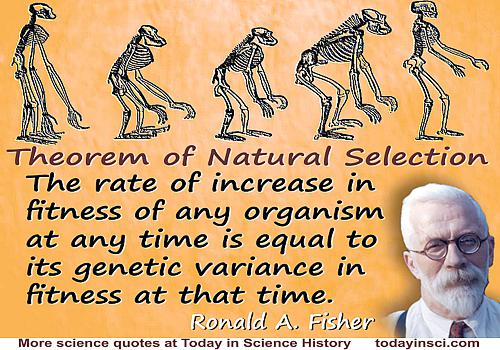
We may consequently state the fundamental theorem of Natural Selection in the form: The rate of increase in fitness of any organism at any time is equal to its genetic variance in fitness at that time.
The Genetical Theory of Natural Selection (1930), 35.
We spend long hours discussing the curious situation that the two great bodies of biological knowledge, genetics and embryology, which were obviously intimately interrelated in development, had never been brought together in any revealing way. An obvious difficulty was that the most favorable organisms for genetics, Drosophila as a prime example, were not well suited for embryological study, and the classical objects of embryological study, sea urchins and frogs as examples, were not easily investigated genetically. What might we do about it? There were two obvious approaches: one to learn more about the genetics of an embryologically favourable organism, the other to better understand the development of Drosophila. We resolved to gamble up to a year of our lives on the latter approach, this in Ephrussi’s laboratory in Paris which was admirably equipped for tissue culture, tissue or organ transplantation, and related techniques.
In 'Recollections', Annual Review of Biochemistry, 1974, 43, 6.
What politicians do not understand is that [Ian] Wilmut discovered not so much a technical trick as a new law of nature. We now know that an adult mammalian cell can fire up all the dormant genetic instructions that shut down as it divides and specializes and ages, and thus can become a source of new life. You can outlaw technique; you cannot repeal biology.
Writing after Wilmut's successful cloning of the sheep, Dolly, that research on the cloning of human beings cannot be suppressed.
Writing after Wilmut's successful cloning of the sheep, Dolly, that research on the cloning of human beings cannot be suppressed.
'A Special Report on Cloning'. Charles Krauthammer in Time (10 Mar 1997).
When there are two independent causes of variability capable of producing in an otherwise uniform population distributions with standard deviations s1 and s2, it is found that the distribution, when both causes act together, has a standard deviation vs12 + s22. It is therefore desirable in analysing the causes of variability to deal with the square of the standard deviation as the measure of variability. We shall term this quantity the Variance of the normal population to which it refers, and we may now ascribe to the constituent causes fractions or percentages of the total variance which they together produce.
'The Correlation between Relatives on the Supposition of Mendelian Inheritance,' Transactions of the Royal Society of Edinburgh, 1918, 52, 399.
When two plants, constantly different in one or several traits, are crossed, the traits they have in common are transmitted unchanged to the hybrids and their progeny, as numerous experiments have proven; a pair of differing traits, on the other hand, are united in the hybrid to form a new trait, which usually is subject to changes in the hybrids' progeny.
'Experiments on Plant Hybrids' (1865). In Curt Stern and Eva R. Sherwood (eds.), The Origin of Genetics: A Mendel Source Book (1966), 5.
While our behavior is still significantly controlled by our genetic inheritance, we have, through our brains, a much richer opportunity to blaze new behavioral and cultural pathways on short timescales.
The Dragons of Eden: Speculations on the Evolution of Human Intelligence (1977, 1986), 3.
Within the nucleus [of a cell] is a network of fibers, a sap fills the interstices of the network. The network resolves itself into a definite number of threads at each division of the cell. These threads we call chromosomes. Each species of animals and plants possesses a characteristic number of these threads which have definite size and sometimes a specific shape and even characteristic granules at different levels. Beyond this point our strongest microscopes fail to penetrate.
In A Critique of the Theory of Evolution (1916), 91.
 In science it often happens that scientists say, 'You know that's a really good argument; my position is mistaken,' and then they would actually change their minds and you never hear that old view from them again. They really do it. It doesn't happen as often as it should, because scientists are human and change is sometimes painful. But it happens every day. I cannot recall the last time something like that happened in politics or religion.
(1987) --
In science it often happens that scientists say, 'You know that's a really good argument; my position is mistaken,' and then they would actually change their minds and you never hear that old view from them again. They really do it. It doesn't happen as often as it should, because scientists are human and change is sometimes painful. But it happens every day. I cannot recall the last time something like that happened in politics or religion.
(1987) -- 





