|
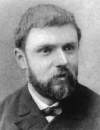
Jules Henri Poincar�
(29 Apr 1854 - 17 Jul 1912)
French mathematician, physicist and astronomer , who is often described as the last generalist in mathematics.
|
Science Quotes by Jules Henri Poincar� (19)
Derri�re la s�rie de Fourier, d'autres s�ries analogues sont entr�es dans la domaine de l'analyse; elles y sont entrees par la m�me porte; elles ont �t� imagin�es en vue des applications.
After the Fourier series, other series have entered the domain of anylsis; they entered by the same door; they have been imagined in view of applications.
After the Fourier series, other series have entered the domain of anylsis; they entered by the same door; they have been imagined in view of applications.
— Jules Henri Poincar�
La valeur de la science. In Anton Bovier, Statistical Mechanics of Disordered Systems (2006), 74.
Deviner avant de d�montrer! Ai-je besoin de rappeler que c'est ainsi que se sont faites toutes les d�couvertes importantes.
Guessing before proving! Need I remind you that it is so that all important discoveries have been made?
Guessing before proving! Need I remind you that it is so that all important discoveries have been made?
— Jules Henri Poincar�
La valeur de la science. In Anton Bovier, Statistical Mechanics of Disordered Systems (2006), 218.
En un mot, pour tirer la loi de l'exp�rience, if faut g�n�raliser; c'est une n�cessit� qui s'impose � l'observateur le plus circonspect.
In one word, to draw the rule from experience, one must generalize; this is a necessity that imposes itself on the most circumspect observer.
In one word, to draw the rule from experience, one must generalize; this is a necessity that imposes itself on the most circumspect observer.
— Jules Henri Poincar�
La valeur de la science. In Anton Bovier, Statistical Mechanics of Disordered Systems (2006), 186.
Il faut bien s'arr�ter quelque part, et pour que la science soit possible, il faut s'arr�ter quand on a trouv� la simplicit�.
Analyse data just so far as to obtain simplicity and no further.
Analyse data just so far as to obtain simplicity and no further.
— Jules Henri Poincar�
La Science et L'Hypoth�se (1902), 176. Sentence translated in A.D. Ritchie, Scientific Method: An Inquiry into the Character and Validy of Natural Law (1923), 201.
L'analyse math�matique, n'est elle donc qu'un vain jeu d'esprit? Elle ne peut pas donner au physicien qu'un langage commode; n'est-ce pa l� un m�diocre service, dont on aurait pu se passer � la rigueur; et m�me n'est il pas � craindre que ce langage artificiel ne soit pas un voile interpos� entre la r�alit� at l'oeil du physicien? Loin de l�, sans ce langage, la pluspart des anaologies intimes des choses nous seraient demeur�es � jamais inconnues; et nous aurions toujours ignor� l'harmonie interne du monde, qui est, nous le verrons, la seule v�ritable r�alit� objective.
So is not mathematical analysis then not just a vain game of the mind? To the physicist it can only give a convenient language; but isn't that a mediocre service, which after all we could have done without; and, it is not even to be feared that this artificial language be a veil, interposed between reality and the physicist's eye? Far from that, without this language most of the initimate analogies of things would forever have remained unknown to us; and we would never have had knowledge of the internal harmony of the world, which is, as we shall see, the only true objective reality.
So is not mathematical analysis then not just a vain game of the mind? To the physicist it can only give a convenient language; but isn't that a mediocre service, which after all we could have done without; and, it is not even to be feared that this artificial language be a veil, interposed between reality and the physicist's eye? Far from that, without this language most of the initimate analogies of things would forever have remained unknown to us; and we would never have had knowledge of the internal harmony of the world, which is, as we shall see, the only true objective reality.
— Jules Henri Poincar�
La valeur de la science. In Anton Bovier, Statistical Mechanics of Disordered Systems (2006), 6.
La pens�e n'est qu'un �cliar au milieu d'une longue nuit. Mais c'est cet �clair qui est tout.
Thought is only a flash in the middle of a long night. But this flash means everything.
Thought is only a flash in the middle of a long night. But this flash means everything.
— Jules Henri Poincar�
La valeur de la science. In Anton Bovier, Statistical Mechanics of Disordered Systems (2006), 159.
See also: | Thought (65)
Les faits ne parlent pas. (Facts do not speak)
— Jules Henri Poincar�
quoted in The Harvest of a Quiet Eye by Alan L. Mackay
Les math�matique sont un triple. Elles doivent fournir un instrument pour l'�tude de la nature. Mais ce n'est pas tout: elles ont un but philosophique et, j'ose le dire, un but esth�tique.
Mathematics has a threefold purpose. It must provide an instrument for the study of nature. But this is not all: it has a philosophical purpose, and, I daresay, an aesthetic purpose.
Mathematics has a threefold purpose. It must provide an instrument for the study of nature. But this is not all: it has a philosophical purpose, and, I daresay, an aesthetic purpose.
— Jules Henri Poincar�
La valeur de la science. In Anton Bovier, Statistical Mechanics of Disordered Systems (2006), 161.
Longtemps les objets dont s'occupent les math�maticiens �taient our la pluspart mal d�finis; on croyait les conna�tre, parce qu'on se les repr�sentatit avec le sens ou l'imagination; mais on n'en avait qu'une image grossi�re et non une id�e pr�cise sure laquelle le raisonment p�t avoir prise.
For a long time the objects that mathematicians dealt with were mostly ill-defined; one believed one knew them, but one represented them with the senses and imagination; but one had but a rough picture and not a precise idea on which reasoning could take hold.
For a long time the objects that mathematicians dealt with were mostly ill-defined; one believed one knew them, but one represented them with the senses and imagination; but one had but a rough picture and not a precise idea on which reasoning could take hold.
— Jules Henri Poincar�
La valeur de la science. In Anton Bovier, Statistical Mechanics of Disordered Systems (2006), 97.
Qu'une goutee de vin tombe dans un verre d'eau; quelle que soit la loi du movement interne du liquide, nous verrons bient�t se colorer d'une teinte rose uniforme et � partir de ce moment on aura beau agiter le vase, le vin et l'eau ne parta�tront plus pouvoir se s�parer. Tout cela, Maxwell et Boltzmann l'ont expliqu�, mais celui qui l'a vu plus nettement, dans un livre trop peu lu parce qu'il est difficile � lire, c'est Gibbs dans ses principes de la M�canique Statistique.
Let a drop of wine fall into a glass of water; whatever be the law that governs the internal movement of the liquid, we will soon see it tint itself uniformly pink and from th at moment on, however we may agitate the vessel, it appears that the wine and water can separate no more. All this, Maxwell and Boltzmann have explained, but the one who saw it in the cleanest way, in a book that is too little read because it is difficult to read, is Gibbs, in his Principles of Statistical Mechanics.
Let a drop of wine fall into a glass of water; whatever be the law that governs the internal movement of the liquid, we will soon see it tint itself uniformly pink and from th at moment on, however we may agitate the vessel, it appears that the wine and water can separate no more. All this, Maxwell and Boltzmann have explained, but the one who saw it in the cleanest way, in a book that is too little read because it is difficult to read, is Gibbs, in his Principles of Statistical Mechanics.
— Jules Henri Poincar�
La valeur de la science. In Anton Bovier, Statistical Mechanics of Disordered Systems (2006), 3.
See also: | Ludwig Eduard Boltzmann (6) | J. Willard Gibbs (4) | Liquid (4) | James Clerk Maxwell (56) | Statistical Mechanics (4)
Quand les physiciens nous demandent la solution d'un probl�me, ce n'est pas une corv�e qu'ils nous impsent, c'est nous au contraire qui leur doivent des remerc�ments.
When the physicists ask us for the solution of a problem, it is not drudgery that they impose on us, on the contrary, it is us who owe them thanks.
When the physicists ask us for the solution of a problem, it is not drudgery that they impose on us, on the contrary, it is us who owe them thanks.
— Jules Henri Poincar�
La valeur de la science. In Anton Bovier, Statistical Mechanics of Disordered Systems (2006), 111.
Chance ... must be something more than the name we give to our ignorance.
— Jules Henri Poincar�
In Science and Method (1908) translated by Francis Maitland (1914, 2007), 66.
If we ought not to fear mortal truth, still less should we dread scientific truth. In the first place it can not conflict with ethics? But if science is feared, it is above all because it can give no happiness? Man, then, can not be happy through science but today he can much less be happy without it.
— Jules Henri Poincar�
Henri Poincaré and George Bruce Halsted (trans.), The Value of Science (1907), 12.
It is by logic that we prove, but by intuition that we discover.
— Jules Henri Poincar�
In Science and Method (1908) translated by Francis Maitland (1914, 2007), 129.
It is often said that experiments should be made without preconceived ideas. That is impossible.
— Jules Henri Poincar�
Science and Hyphothesis, 143. In Alfred Jules Ayer and Jane O'Grady, A Dictionary of Philosophical Quotations (1994), 356.
One does not ask whether a scientific theory is true, but only whether it is convenient.
— Jules Henri Poincar�
La Science et l'Hypoth�se (1902) as quoted in Encyclopedia of World Biography, 2nd ed. Gale Research (1998)
Science is built up with facts, as a house is with stones. But a collection of facts is no more a science than a heap of stones is a house.
— Jules Henri Poincar�
Science and Hypothesis trans. George Bruce Halsted (1905), 101.
The aim of science is not things themselves, as the dogmatists in their simplicity imagine, but the relation between things.
— Jules Henri Poincar�
Science and Hypothesis, translated by William John Greenstreet, (1905, 1952), xxiv.
[Poincar� was] the last man to take practically all mathematics, pure and applied, as his province. ... Few mathematicians have had the breadth of philosophic vision that Poincare had, and none in his superior in the gift of clear exposition.
— Jules Henri Poincar�
In Eric Temple Bell, Men of Mathematics as quoted in Henri Poincare, Science and Hypothesis (1952 reprint), back cover notes.
Quotes by others about Jules Henri Poincar� (1)
Poincaré was a vigorous opponent of the theory that all mathematics can be rewritten in terms of the most elementary notions of classical logic; something more than logic, he believed, makes mathematics what it is.
Quoted in Thomson Gale, Online, 'Jules Henri Poincaré', World of Mathematics (2006).
 In science it often happens that scientists say, 'You know that's a really good argument; my position is mistaken,' and then they would actually change their minds and you never hear that old view from them again. They really do it. It doesn't happen as often as it should, because scientists are human and change is sometimes painful. But it happens every day. I cannot recall the last time something like that happened in politics or religion.
(1987) --
In science it often happens that scientists say, 'You know that's a really good argument; my position is mistaken,' and then they would actually change their minds and you never hear that old view from them again. They really do it. It doesn't happen as often as it should, because scientists are human and change is sometimes painful. But it happens every day. I cannot recall the last time something like that happened in politics or religion.
(1987) --