|
Linus Pauling
(28 Feb 1901 - 19 Aug 1994)
American chemist, physicist and author who applied quantum mechanics to the study of molecular structures, particularly in connection with chemical bonding. Pauling was the only person ever to win two unshared Nobel prizes (Chemistry in 1954, and Peace in 1962).
|
Science Quotes by Linus Pauling (49 quotes)
>> Click for Linus Pauling Quotes on | Idea | Life | Molecule | Structure | Thinking |
>> Click for Linus Pauling Quotes on | Idea | Life | Molecule | Structure | Thinking |
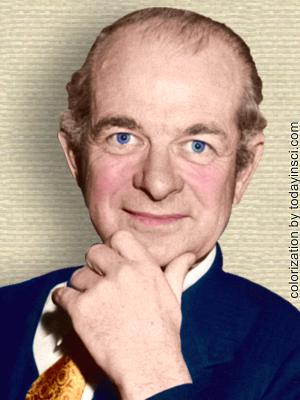
[Professor Pauling] confesses that he had harboured the feeling that sooner or later he would be the one to get the DNA structure; and although he was pleased with the double-helix, he ‘rather wished the idea had been his’.
— Linus Pauling
‘The Need to Understand’, New Scientist (1971), 50, 755.
[Using a hand calculator and writing things down longhand] I was able to solve this problem because I don’t have a computer. I know what I am doing every step, and the steps go slowly enough that I can think.
— Linus Pauling
As quoted in Charles Petit, 'The Curious Quester', The San Francisco Chronicle. Reprinted in The Courier-Journal (3 Mar 1991), Magazine, 33.
[David Harker asked: Dr Pauling, how do you have so many good ideas?]
Well David, I have a lot of ideas and throw away the bad ones.
Well David, I have a lot of ideas and throw away the bad ones.
— Linus Pauling
David Harker was one of Pauling's students in the 1930s. Quoted in Thomas Hager, Force of Nature: The Life of Linus Pauling (1995), 529.
[Instead of collecting stamps, he collected dictionaries and encyclopaedias:] Because you can learn more from them.
— Linus Pauling
'Dr Linus Pauling, Atomic Architect', Science Illustrated (1948), 3, 40.
A scientist can be productive in various ways. One is having the ability to plan and carry out experiments, but the other is having the ability to formulate new ideas, which can be about what experiments can be carried out … by making [the] proper calculations. Individual scientists who are successful in their work are successful for different reasons.
— Linus Pauling
Interview with George B. Kauffman and Laurie M. Kauffman, in 'Linus Pauling: Reflections', American Scientist (Nov-Dec 1994), 82, No. 6, 522.
An amino acid residue (other than glycine) has no symmetry elements. The general operation of conversion of one residue of a single chain into a second residue equivalent to the first is accordingly a rotation about an axis accompanied by translation along the axis. Hence the only configurations for a chain compatible with our postulate of equivalence of the residues are helical configurations.
[Co-author with American chemist, ert B. Corey (1897-1971) and H. R. Branson]
[Co-author with American chemist, ert B. Corey (1897-1971) and H. R. Branson]
— Linus Pauling
'The Structure of Proteins: Two Hydrogen-bonded Helical Configurations of the Polypeptide Chain', Proceedings of the National Academy of Sciences of the United States of America (1951), 37, 206.
Biology today is moving in the direction of chemistry. Much of what is understood in the field is based on the structure of molecules and the properties of molecules in relation to their structure. If you have that basis, then biology isn’t just a collection of disconnected facts.
— Linus Pauling
From interview with Neil A. Campbell, in 'Crossing the Boundaries of Science', BioScience (Dec 1986), 36, No. 11, 737.
During the time that [Karl] Landsteiner gave me an education in the field of imununology, I discovered that he and I were thinking about the serologic problem in very different ways. He would ask, What do these experiments force us to believe about the nature of the world? I would ask, What is the most. simple and general picture of the world that we can formulate that is not ruled by these experiments? I realized that medical and biological investigators were not attacking their problems the same way that theoretical physicists do, the way I had been in the habit of doing.
— Linus Pauling
‘Molecular Disease’, Pfizer Spectrum (1958), 6:9, 234.
Every species of plant and animal is determined by a pool of germ plasm that has been most carefully selected over a period of hundreds of millions of years. We can understand now why it is that mutations in these carefully selected organisms almost invariably are detrimental.The situation can be suggested by a statement by Dr. J.B.S. Haldane: “My clock is not keeping perfect time. It is conceivable that it will run better if I shoot a bullet through it; but it is much more probable that it will stop altogether.” Professor George Beadle, in this connection, has asked: “What is the chance that a typographical error would improve Hamlet?”
— Linus Pauling
In No More War! (1958), Chap. 4, 53.
Facts are the air of scientists. Without them you can never fly.
— Linus Pauling
…...
Genetics was, I would say, the first part of biology to become a pretty good theoretical subject, based on the theory of the gene and patterns of inheritance of characteristics.
— Linus Pauling
From interview with Neil A. Campbell, in 'Crossing the Boundaries of Science', BioScience (Dec 1986), 36, No. 11, 738.
Hemoglobin is one of the most interesting chemical substances in the world—to me it is the most interesting of all.
— Linus Pauling
In 'The Hemoglobin Molecule in Health and Disease', read 19 Apr 1951, Proceedings of the American Philosophical Society (15 Oct 1952), 96, No. 5, 556.
I have always tried to fit knowledge that I acquired into my understanding of the world. … When something comes along that I don’t understand, that I can’t fit in, that bothers me, I think about it, mull over it, and perhaps ultimately do some work with it. That’s perhaps the reason that I’ve been able to make discoveries in molecular biology.
— Linus Pauling
From interview with Neil A. Campbell, in 'Crossing the Boundaries of Science', BioScience (Dec 1986), 36, No. 11, 739.
I have been especially fortunate for about 50 years in having two memory banks available—whenever I can't remember something I ask my wife, and thus I am able to draw on this auxiliary memory bank. Moreover, there is a second way In which I get ideas ... I listen carefully to what my wife says, and in this way I often get a good idea. I recommend to ... young people ... that you make a permanent acquisition of an auxiliary memory bank that you can become familiar with and draw upon throughout your lives.
— Linus Pauling
T. Goertzel and B. Goertzel, Linus Pauling (1995), 240.
I heard … xenon was a good anesthesia. … I thought, “How can xenon, which doesn’t form any chemical compounds, serve as a general anesthetic? … I lay awake at night for a few minutes before going to sleep, and during the next couple of weeks each night I would think, “…how do anesthetic agents work?" Then I forgot to do it after a while, but I’d trained my unconscious mind to keep this question alive and to call [it] to my consciousness whenever a new idea turned up…. So seven years went by. [One day I] put my feet up on the desk and started reading my mail, and here was a letter from George Jeffrey … an x-ray crystallographer, on his determination of the structure of a hydrate crystal. Immediately I sat up, took my feet off the desk, and said, “I understand anesthesia!” … I spent a year [and] determined the structure of chloroform hydrate, and then I wrote my paper published in June of 1961.
— Linus Pauling
Interview with George B. Kauffman and Laurie M. Kauffman, in 'Linus Pauling: Reflections', American Scientist (Nov-Dec 1994), 82, No. 6, 522-523.
I keep looking for some … problem where someone has made an observation that doesn’t fit into my picture of the universe. If it doesn't fit in, then I find some way of fitting it in.
— Linus Pauling
Interview with George B. Kauffman and Laurie M. Kauffman, in 'Linus Pauling: Reflections', American Scientist (Nov-Dec 1994), 82, No. 6, 522.
I like people. I like animals, too—whales and quail, dinosaurs and dodos. But I like human beings especially, and I am unhappy that the pool of human germ plasm, which determines the nature of the human race, is deteriorating.
[Stating his alarm for the effect of radioactive fallout on human heredity. The article containing the quote was published three days after he was awarded the 1962 Nobel Peace Prize.]
[Stating his alarm for the effect of radioactive fallout on human heredity. The article containing the quote was published three days after he was awarded the 1962 Nobel Peace Prize.]
— Linus Pauling
Quoted in The New York Times (13 Oct 1962), 179.
I recognize that many physicists are smarter than I am—most of them theoretical physicists. A lot of smart people have gone into theoretical physics, therefore the field is extremely competitive. I console myself with the thought that although they may be smarter and may be deeper thinkers than I am, I have broader interests than they have.
— Linus Pauling
…...
I think that the formation of [DNA's] structure by Watson and Crick may turn out to be the greatest developments in the field of molecular genetics in recent years.
— Linus Pauling
‘Discussion des rapports de M Pauling’, Rep. Institut International de Chemie Solvay: Conference on Proteins, 6-14 April 1953 (1953), 113.
I think there will always be something interesting left to be discovered.
— Linus Pauling
From interview with Neil A. Campbell, in 'Crossing the Boundaries of Science', BioScience (Dec 1986), 36, No. 11, 739.
I try to identify myself with the atoms ... I ask what I would do If I were a carbon atom or a sodium atom.
— Linus Pauling
Comment made to George Gray (Rockefeller's resident science writer and publicist). Quoted In Thomas Hager, Force of Nature: The Life of Linus Pauling (1995), 377.
If the structure that serves as a template (the gene or virus molecule) consists of, say, two parts, which are themselves complementary In structure, then each of these parts can serve as the mould for the production of a replica of the other part, and the complex of two complementary parts thus can serve as the mould for the production of duplicates of itself.
— Linus Pauling
Molecular Architecture and the Processses of Life (1948), 10.
It has been recognized that hydrogen bonds restrain protein molecules to their native configurations, and I believe that as the methods of structural chemistry are further applied to physiological problems it will be found that the significance of the hydrogen bond for physiology is greater than that of any other single structural feature.
— Linus Pauling
Nature of the Chemical Bond and the Structure of Molecules and Crystals (1939), 265.
It is possible with … carbon … to form very large molecules that are stable. This results from the stability of the carbon-to-carbon bond. You must have complexity in order to achieve the versatility characteristic of living organisms. You can achieve this complexity with carbon forming the molecular backbone.
— Linus Pauling
From interview with Neil A. Campbell, in 'Crossing the Boundaries of Science', BioScience (Dec 1986), 36, No. 11, 739.
It is structure that we look for whenever we try to understand anything. All science is built upon this search; we investigate how the cell is built of reticular material, cytoplasm, chromosomes; how crystals aggregate; how atoms are fastened together; how electrons constitute a chemical bond between atoms. We like to understand, and to explain, observed facts in terms of structure. A chemist who understands why a diamond has certain properties, or why nylon or hemoglobin have other properties, because of the different ways their atoms are arranged, may ask questions that a geologist would not think of formulating, unless he had been similarly trained in this way of thinking about the world.
— Linus Pauling
‘The Place of Chemistry In the Integration of the Sciences’, Main Currents in Modern Thought (1950), 7, 110.
It was obvious—to me at any rate—that the answer was to why an enzyme is able to speed up a chemical reaction by as much as 10 million times. It had to do this by lowering the energy of activation—the energy of forming the activated complex. It could do this by forming strong bonds with the activated complex, but only weak bonds with the reactants or products.
— Linus Pauling
Quoted In Thomas Hager, Force of Nature: The Life of Linus Pauling (1995), 284.
It will be possible, through the detailed determination of amino-acid sequences of hemoglobin molecules and of other molecules too, to obtain much information about the course of the evolutionary process, and to illuminate the question of the origin of species.
— Linus Pauling
'Molecular Disease and Evolution'. Typescript of the Rudolph Virchow Lecture (5 Nov 1962). Quoted in T. Hager, Force of Nature: The Life of Linus Pauling (1997), 541.
John [H.] Van Vleck, who was a leading young theoretical physicist when I was also a leading young theoretical physicist, said to me one day, “I never have made a contribution to physics that I didn’t get by fiddling with the equations,” and I said, “I’ve never made a contribution that I didn’t get by just having a new idea. Then I would fiddle with the equations to help support the new idea.” Van Vleck was essentially a mathematical physicist, you might say, and I was essentially a person of ideas. I don’t think I’m primarily mathematical. … I have a great curiosity about the nature of the world as a whole, and most of my ideas are qualitative rather than quantitative.
— Linus Pauling
Interview with George B. Kauffman and Laurie M. Kauffman, in 'Linus Pauling: Reflections', American Scientist (Nov-Dec 1994), 82, No. 6, 523.
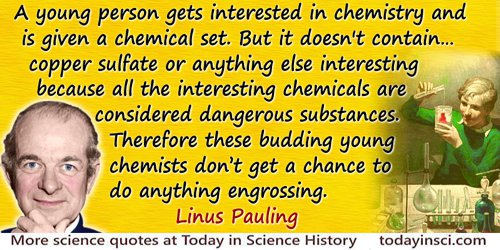
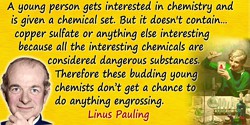
Just think of the differences today. A young person gets interested in chemistry and is given a chemical set. But it doesn't contain potassium cyanide. It doesn't even contain copper sulfate or anything else interesting because all the interesting chemicals are considered dangerous substances. Therefore, these budding young chemists don't get a chance to do anything engrossing with their chemistry sets. As I look back, I think it is pretty remarkable that Mr. Ziegler, this friend of the family, would have so easily turned over one-third of an ounce of potassium cyanide to me, an eleven-year-old boy.
— Linus Pauling
In Barbara Marinacci, Linus Pauling In His Own Words (1995), 29.
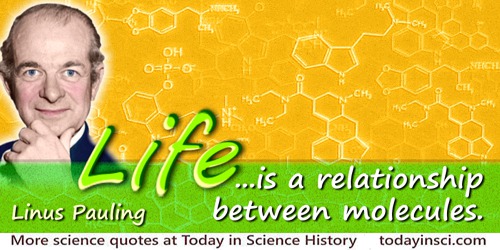
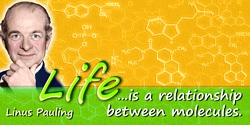
Life ... is a relationship between molecules.
— Linus Pauling
Quoted In T. Hager, Force of Nature: The Life of Linus Pauling (1997), 542.
Life is too complicated to permit a complete understanding through the study of whole organisms. Only by simplifying a biological problem—breaking it down into a multitude of individual problems—can you get the answers.
— Linus Pauling
From interview with Neil A. Campbell, in 'Crossing the Boundaries of Science', BioScience (Dec 1986), 36, No. 11, 738.

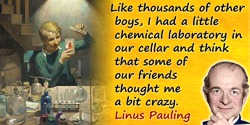
Like thousands of other boys, I had a little chemical laboratory in our cellar and think that some of our friends thought me a bit crazy.
— Linus Pauling
Quoted in 'Langmuir Winner Stumped Einstein”, New York Times (23 Aug 1931), N2.
Men will gather knowledge no matter what the consequences. Science will go on whether we are pessimistic or optimistic, as I am. More interesting discoveries than we can imagine will be made, and I am awaiting them, full of curiosity and enthusiasm.
— Linus Pauling
'Dr Linus Pauling, Atomic Architect', Science Illustrated (1948), 3, 40.
One can ask: “If I crystallize a virus to obtain a crystal consisting of the molecules that make up the virus, are those molecules lifeless or not?” … The properties of living organisms are those of aggregates of molecules. It’s very difficult to draw a line between molecules that are lifeless and molecules that are not lifeless.
— Linus Pauling
From interview with Neil A. Campbell, in 'Crossing the Boundaries of Science', BioScience (Dec 1986), 36, No. 11, 738.
One never knows how hard a problem is until it has been solved. You don’t necessarily know that you will succeed if you work harder or longer.
— Linus Pauling
From interview with Neil A. Campbell, in 'Crossing the Boundaries of Science', BioScience (Dec 1986), 36, No. 11, 739.
Science is the search for truth. It is not a game in which one tries to beat his opponent, to do harm to others. We need to have the spirit of science in international affairs, to make the conduct of international affairs the effort to find the right solution, the just solution of international problems, not the effort by each nation to get the better of other nations, to do harm to them when it is possible.
— Linus Pauling
In No More War! (1958).
Science should be taught the way mathematics is taught today. Science education should begin in kindergarten. In the first grade one would learn a little more, in the second grade, a little more, and so on. All students should get this basic science training.
— Linus Pauling
From interview with Neil A. Campbell, in 'Crossing the Boundaries of Science', BioScience (Dec 1986), 36, No. 11, 738.
Sometimes progress is slow. But then there does come a time when a lot of people accept a new idea and see ways in which it can be exploited. And because of the larger number of workers in the field, progress becomes rapid. That is what happened with the study of protein structure.
— Linus Pauling
From interview with Neil A. Campbell, in 'Crossing the Boundaries of Science', BioScience (Dec 1986), 36, No. 11, 739.
The best way to have a good idea is to have lots of ideas.
— Linus Pauling
Lilless McPherson Shilling and Linda K. Fuller, Dictionary of Quotations in Communications (1997), 112. Although widely quoted in these words, Webmaster has not yet found the primary source. If you know the primary source, please contact Webmaster.
The energy of a covalent bond is largely the energy of resonance of two electrons between two atoms. The examination of the form of the resonance integral shows that the resonance energy increases in magnitude with increase in the overlapping of the two atomic orbitals involved in the formation of the bond, the word ‘overlapping” signifying the extent to which regions in space in which the two orbital wave functions have large values coincide... Consequently it is expected that of two orbitals in an atom the one which can overlap more with an orbital of another atom will form the stronger bond with that atom, and, moreover, the bond formed by a given orbital will tend to lie in that direction in which the orbital is concentrated.
— Linus Pauling
Nature of the Chemical Bond and the Structure of Molecules and Crystals (1939), 76.
The McCarthy period came along … and many of the other scientists who had been working on these same lines gave up. Probably saying “Why should I sacrifice myself? I am a scientist, I am supposed to be working on scientific things, so I don’t need to put myself at risk by talking about these possibilities.” And I have said that perhaps I’m just stubborn… I have said “I don’t like anybody to tell me what to do or to think, except Mrs. Pauling.”
— Linus Pauling
From interview (11 Nov 1990) with Wayne Reynolds, website of the American Academy of Achievement.
The nucleic acids, as constituents of living organisms, are comparable In importance to proteins. There is evidence that they are Involved In the processes of cell division and growth, that they participate In the transmission of hereditary characters, and that they are important constituents of viruses. An understanding of the molecular structure of the nucleic acids should be of value In the effort to understand the fundamental phenomena of life.
[Co-author with American chemist, B. Corey (1897-1971)]
[Co-author with American chemist, B. Corey (1897-1971)]
— Linus Pauling
'A Proposed Structure for the Nucleic Acids', Proceedings of the National Academy of Sciences (1953), 39, 84.
The scientist, if he is to be more than a plodding gatherer of bits of information, needs to exercise an active imagination. The scientists of the past whom we now recognize as great are those who were gifted with transcendental imaginative powers, and the part played by the imaginative faculty of his daily life is as least as important for the scientist as it is for the worker in any other field—much more important than for most. A good scientist thinks logically and accurately when conditions call for logical and accurate thinking—but so does any other good worker when he has a sufficient number of well-founded facts to serve as the basis for the accurate, logical induction of generalizations and the subsequent deduction of consequences.
— Linus Pauling
‘Imagination in Science’, Tomorrow (Dec 1943), 38-9. Quoted In Barbara Marinacci (ed.), Linus Pauling In His Own Words: Selected Writings, Speeches, and Interviews (1995), 82.
There came in February the issue of Life saying on the cover “Dr. Teller Refutes 9000 Scientists”… I wrote to Life and said first that Teller hadn’t refuted 9000 scientists and second I felt that they should publish the article that I had written… They sent the article back and said that they didn’t want it and then I offered it to Look. The editor of Look called me and said they couldn’t get into a controversy with Life. Then I offered it to the Saturday Evening Post and the Ladies Home Journal and Readers Digest and none of them were interested in it. And then I thought, “What shall I do? I’ll have to write a book and see if I can’t get it published.”’
— Linus Pauling
As quoted in Ted Goertzel, et al., Linus Pauling: A Life in Science and Politics (1965, 1995), 46.
There is no area of the world that should not be investigated by scientists. There will always remain some questions that have not been answered. In general, these are the questions that have not yet been posed.
— Linus Pauling
As quoted in J. Robert Moskin, Morality in America, 70-71. Otherwise unconfirmed in this form. Please contact webmaster if you know a primary print source.
We may be well be justified in saying that quantum theory is of greater importance to chemistry than physics. For where there are large fields of physics that can be discussed in a completely penetrating way without reference to Planck's constant and to quantum theory at all, there is no part of chemistry that does not depend, in its fundamental theory, upon quantum principles.
— Linus Pauling
As quoted in Leonard W. Fine, Chemistry (1972), 537. Please contact Webmaster if you know the primary source.
We may say that life has borrowed from inanimate processes the same mechanism used in producing these striking structures that are crystals.
— Linus Pauling
‘The Nature of Forces between Large Molecules of Biological Interest’, Nature (1948), 161, 708.
With moth cytochrome C there are 30 differences and 74 identities. With bread yeast and humans, there are about 45 amino acids that are different and about 59 that are identical. Think how close together man and this other organism, bread yeast, are. What is the probability that in 59 positions the same choice out of 20 possibilities would have been made by accident? It is impossibly small. There is, there must be, a developmental explanation of this. The developmental explanation is that bread yeast and man have a common ancestor, perhaps two billion years ago. And so we see that not only are all men brothers, but men and yeast cells, too, are at least close cousins, to say nothing about men and gorillas or rhesus monkeys. It is the duty of scientists to dispel ignorance of such relationships.
— Linus Pauling
'The Social Responsibilities of Scientists and Science', The Science Teacher (1933), 33, 15.
You have to have a lot of ideas. First, if you want to make discoveries, it’s a good thing to have good ideas. And second, you have to have a sort of sixth sense—the result of judgment and experience—which ideas are worth following up. I seem to have the first thing, a lot of ideas, and I also seem to have good judgment as to which are the bad ideas that I should just ignore, and the good ones, that I’d better follow up.
— Linus Pauling
As quoted by Nancy Rouchette, The Journal of NIH Research (Jul 1990), 2, 63. Reprinted in Linus Pauling, Barclay Kamb, Linus Pauling: Selected Scientific Papers, Vol. 2, Biomolecular Sciences (2001), 1101.
Quotes by others about Linus Pauling (11)
In my own field, x-ray crystallography, we used to work out the structure of minerals by various dodges which we never bothered to write down, we just used them. Then Linus Pauling came along to the laboratory, saw what we were doing and wrote out what we now call Pauling's Rules. We had all been using Pauling's Rules for about three or four years before Pauling told us what the rules were.
In The Extension of Man (1972), 116.
If the double helix was so important, how come you didn’t work on it?
Eva Helen Pauling to her husband, Linus Pauling, when the Nobel Prize was awarded to Crick, Watson and Wilkins, at a History of Science conference (1990). Quote contributed by W. H. Brock, in W. F.Bynum and Roy Porter (eds.), Oxford Dictionary of Scientific Quotations (2005), 485.
For Christmas, 1939, a girl friend gave me a book token which I used to buy Linus Pauling's recently published Nature of the Chemical Bond. His book transformed the chemical flatland of my earlier textbooks into a world of three-dimensional structures.
'What Holds Molecules Together', in I Wish I'd Made You Angry Earlier (1998), 165.
I saw [Linus Pauling] as a brilliant lecturer and a man with a fantastic memory, and a great, great showman. I think he was the century’s greatest chemist. No doubt about it.
From transcript of audio of Max Perutz in BBC programme, 'Lifestory: Linus Pauling' (1997). On 'Linus Pauling and the Race for DNA' webpage 'I Wish I Had Made You Angry Earlier.'
What, more petitions! Won't you be, and stay, intimidated? You must really annoy Sen. Dodd. Here it is [my signature], and I hope it does some good.
Letter to Linus and Ava Helen Pauling (17 Jan 1961). On Oregon State University Library website.
On May 15, 1957 Linus Pauling made an extraordinary speech to the students of Washington University. ... It was at this time that the idea of the scientists' petition against nuclear weapons tests was born. That evening we discussed it at length after dinner at my house and various ones of those present were scribbling and suggesting paragraphs. But it was Linus Pauling himself who contributed the simple prose of the petition that was much superior to any of the suggestions we were making.
Speech, "The 1962 Nobel Peace Prize," at Unitarian Church, Boulder, Colorado (20 Oct 1963). On Oregon State University Library website.
I think she [Rosalind Franklin] was a good experimentalist but certainly not of the first rank. She was simply not in the same class as Eigen or Bragg or Pauling, nor was she as good as Dorothy Hodgkin. She did not even select DNA to study. It was given to her. Her theoretical crystallography was very average.
Letter to Charlotte Friend (18 Sep 1979). In Francis Harry Compton Crick Papers, Wellcome Library for the History and Understanding of Medicine.
Pauling was shocked by the freedom with which the X-ray crystallographers of the time, including particularly Astbury, played with the intimate chemical structure of their models. They seemed to think that if the atoms were arranged in the right order and about the right distance apart, that was all that mattered, that no further restrictions need to be put on them.
Quoted by John Law in 'The Case of X-ray Protein Crystallography', collected in Gerard Lemaine (ed.), Perspectives on the Emergence of Scientific Disciplines, 1976, 140.
Our ultimate end must be precisely what Dr. Pauling says, peace based on agreement, upon understanding, on universally agreed and enforced law. I think this is a wonderful idea, but peace based on force buys us the necessary time, and in this time we can work for better understanding, for closer collaboration.
From debate (20 Feb 1958) between Linus Pauling and Edward Teller on WQED-TV, San Francisco. Transcript published as Fallout and Disarmament: The Pauling-Teller Debate (1958). Reprinted in 'Fallout and Disarmament: A Debate between Linus Pauling and Edward Teller', Daedalus (Spring 1958), 87, No. 2, 160.
Dear Dr. Pauling, Will you be so kind as to stay off precipitous cliffs until the question of disarmament and atomic testing is finished? A needy citizen.
Telegram to Linus Pauling (Feb 1960). Following a rescue of Pauling, who on 30 Jan 1960, while on a walking trip along an ocean cliff had become stuck on a treacherous high ledge, unable to move because of slippery, loose rocks that could tumble him on a 300-ft fall. As quoted on the Linus Pauling and the International Peace Movement website at scarc.library.oregonstate.edu.
By the early 1960s Pauling had earned a reputation for being audacious, intuitive, charming, irreverent, self-promoting, self-reliant, self-involved to the point of arrogance and correct about almost everything.
In Force of Nature: The Life of Linus Pauling (1995), 13.
See also:
- 28 Feb - short biography, births, deaths and events on date of Pauling's birth.
- Linus Pauling in His Own Words: Selections From his Writings, Speeches and Interviews, by Barbara Marinacci. - book suggestion.
- Booklist for Linus Pauling.
 In science it often happens that scientists say, 'You know that's a really good argument; my position is mistaken,' and then they would actually change their minds and you never hear that old view from them again. They really do it. It doesn't happen as often as it should, because scientists are human and change is sometimes painful. But it happens every day. I cannot recall the last time something like that happened in politics or religion.
(1987) --
In science it often happens that scientists say, 'You know that's a really good argument; my position is mistaken,' and then they would actually change their minds and you never hear that old view from them again. They really do it. It doesn't happen as often as it should, because scientists are human and change is sometimes painful. But it happens every day. I cannot recall the last time something like that happened in politics or religion.
(1987) -- 





