 (source)
|
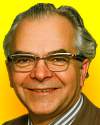
Peter Dennis Mitchell
(29 Sep 1920 - 10 Apr 1992)
English chemist who won the 1978 Nobel Prize in Chemistry for his 1961 chemiosmotic theory, which explained how cells make ATP, which is then used to power life’s essential jobs, from making molecules to moving muscles.
|
Science Quotes by Peter Dennis Mitchell (9 quotes)
Emile Zola described a work of art as a corner of nature seen through a temperament.
— Peter Dennis Mitchell
From Nobel Banquet Speech (10 Dec 1978). Collected in Wilhelm Odelberg (ed.) Les Prix Nobel, The Nobel Prizes: 1978 (1979).
Faced with a new theory, the members of the scientific establishment are often more vulnerable than the lonely innovator.
— Peter Dennis Mitchell
Nobel Banquet Speech (10 Dec 1978). Collected in Wilhelm Odelberg (ed.) Les Prix Nobel. The Nobel Prizes 1978 (1979). [A correct new theory can cause a painful upheaval for those long committed to the old order. Mitchell points out a sociology-of-science asymmetry. A lone innovator risks being wrong, but the “establishment” has careers, reputations, funding lines, textbooks, and research programs tied to the incumbent view. If the new idea turns out to be right, those prior investments are threatened—so established scientists are “more vulnerable” (professionally and psychologically) to a disruptive theory than the outsider who proposed it. —Webmaster]
Finally, to the theme of the respiratory chain, it is especially noteworthy that David Kellin’s chemically simple view of the respiratory chain appears now to have been right all along—and he deserves great credit for having been so reluctant to become involved when the energy-rich chemical intermediates began to be so fashionable. This reminds me of the aphorism: “The obscure we see eventually, the completely apparent takes longer.”
— Peter Dennis Mitchell
From Nobel Lecture, 'David Kellin’s Respiratory Chain Concept and Its Chemiosmotic Consequences' (8 Dec 1978). In Nobel Lectures: Chemistry 1971-1980 (1993), 325.
In the experimental sciences, the scientific fraternity must test a new theory to destruction, if possible.
— Peter Dennis Mitchell
From Nobel Banquet Speech (10 Dec 1978). Collected in Wilhelm Odelberg (ed.) Les Prix Nobel, The Nobel Prizes: 1978 (1979).
Perhaps the most fruitful (and surprising) outcome of the development of the notion of chemiosmotic reactions is the experimental stimulus and guidance it has provided in work designed to answer the following three elementary questions about respiratory chain systems and analogous photoredox chain systems: What is it? What does it do? How does it do it?
— Peter Dennis Mitchell
From Nobel Lecture, 'David Kellin’s Respiratory Chain Concept and Its Chemiosmotic Consequences' (8 Dec 1978). In Nobel Lectures: Chemistry 1971-1980 (1992), 295.
The creative process in science and art consists of two main activities: an imaginative jumping forward to a new abstraction or simplified representation, followed by a critical looking back to see how nature appears in the light of the new vision.
— Peter Dennis Mitchell
From Nobel Banquet Speech (10 Dec 1978). Collected in Wilhelm Odelberg (ed.) Les Prix Nobel, The Nobel Prizes: 1978 (1979).
The final outcome cannot be known, either to the originator of a new theory, or to his colleagues and critics, who are bent on falsifying it. Thus, the scientific innovator may feel all the more lonely and uncertain.
On the other hand, faced with a new theory, the members of the scientific establishment are often more vulnerable than the lonely innovator. For, if the innovator should happen to be right, the ensuing upheaval of the established order may be very painful and uncongenial to those who have long committed themselves to develop and serve it.
On the other hand, faced with a new theory, the members of the scientific establishment are often more vulnerable than the lonely innovator. For, if the innovator should happen to be right, the ensuing upheaval of the established order may be very painful and uncongenial to those who have long committed themselves to develop and serve it.
— Peter Dennis Mitchell
From Nobel Banquet Speech (10 Dec 1978). Collected in Wilhelm Odelberg (ed.) Les Prix Nobel, The Nobel Prizes: 1978 (1979).
The imaginative leap forward is a hazardous, unreasonable activity. Reason can be used only when looking critically back.
— Peter Dennis Mitchell
From Nobel Banquet Speech (10 Dec 1978). Collected in Wilhelm Odelberg (ed.) Les Prix Nobel, The Nobel Prizes: 1978 (1979).
The originator of a theory may have a very lonely time, especially if his colleagues find his views of nature unfamiliar, and difficult to appreciate.
— Peter Dennis Mitchell
From Nobel Banquet Speech (10 Dec 1978). Collected in Wilhelm Odelberg (ed.) Les Prix Nobel, The Nobel Prizes: 1978 (1979).
See also:
- 29 Sep - short biography, births, deaths and events on date of Mitchell's birth.
 In science it often happens that scientists say, 'You know that's a really good argument; my position is mistaken,' and then they would actually change their minds and you never hear that old view from them again. They really do it. It doesn't happen as often as it should, because scientists are human and change is sometimes painful. But it happens every day. I cannot recall the last time something like that happened in politics or religion.
(1987) --
In science it often happens that scientists say, 'You know that's a really good argument; my position is mistaken,' and then they would actually change their minds and you never hear that old view from them again. They really do it. It doesn't happen as often as it should, because scientists are human and change is sometimes painful. But it happens every day. I cannot recall the last time something like that happened in politics or religion.
(1987) -- 




