 (source)
|
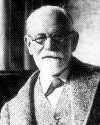
Sigmund Freud
(6 May 1856 - 23 Sep 1939)
Austrian psychiatrist and psychologist known as the father of psychoanalysis. One of his best known works is Interpretation of Dreams (1900).
|
Science Quotes by Sigmund Freud (55 quotes)
>> Click for Sigmund Freud Quotes on | Psychoanalysis | Sexuality |
>> Click for Sigmund Freud Quotes on | Psychoanalysis | Sexuality |
… poets are masters of us ordinary men, in knowledge of the mind, because they drink at streams which we have not yet made accessible to science.
— Sigmund Freud
In A Dictionary of Scientific Quotations by Alan L. Mackay (1991).
![Sigmund Freud quote: [The child] takes his play very seriously and he expends large amounts of emotion on it. The opposite of pl](https://todayinsci.com/F/Freud_Sigmund/FreudSigmund-Play500x250px.jpg)
[The child] takes his play very seriously and he expends large amounts of emotion on it. The opposite of play is not what is serious but what is real.
— Sigmund Freud
Creative Writers and Day-Dreaming (1906), In James Strachey (ed.), The Standard Edition of the Complete Psychcological Works of Sigmund Freud (1959), Vol 9, 144.
A layman will no doubt find it hard to understand how pathological disorders of the body and mind can be eliminated by 'mere' words. He will feel that he is being asked to believe in magic. And he will not be so very wrong, for the words which we use in our everyday speech are nothing other than watered-down magic. But we shall have to follow a roundabout path in order to explain how science sets about restoring to words a part at least of their former magical power.
— Sigmund Freud
Psychical (or Mental) Treatment (1905), In James Strachey (ed.), The Standard Edition of the Complete Psychological Works of Sigmund Freud (1953), Vol. 7, 283.
A man who has been the indisputable favorite of his mother keeps for life the feeling of a conqueror, that confidence of success that often induces real success.
— Sigmund Freud
Quoted in Ernest Jones, The Life and Work of Sigmund Freud (1957), Vol. 1, 5.
An intimate friend and a hated enemy have always been indispensable requirements for my emotional life; I have always been able to create them anew, and not infrequently my childish ideal has been so closely approached that friend and enemy coincided in the same person.
— Sigmund Freud
The Interpretation of Dreams (1913), 385.
Sigmund Freud - 1913

Analogies, it is true, decide nothing but they can make one feel more at home.
— Sigmund Freud
New Introductory Lectures on Psycho-Analysis (1933), in James Strachey (ed.), The Standard Edition of the Complete Psychological Works of Sigmund Freud (1964), Vol. 22, 72.
Being in love with the one parent and hating the other are among the essential constituents of the stock of psychical impulses which is formed at that time and which is of such importance in determining the symptoms of the later neurosis... This discovery is confirmed by a legend that has come down to us from classical antiquity: a legend whose profound and universal power to move can only be understood if the hypothesis I have put forward in regard to the psychology of children has an equally universal validity. What I have in mind is the legend of King Oedipus and Sophocles' drama which bears his name.
— Sigmund Freud
The Interpretation of Dreams (1900), In James Strachey (ed.) The Standard Edition of the Complete Psychological Works of Sigmund Freud (1953), Vol. 4, 260-1.

Every dream will reveal itself as a psychological structure, full of significance.
— Sigmund Freud
First sentence of Chapter 1, 'The Scientific Literature on the Problems of the Dream, The Interpretation of Dreams (1900) as translated by A.A. Brill (1913), 1.
Flowers are restful to look at. They have neither emotions nor conflicts.
— Sigmund Freud
Unverified despite trying. Please contact webmaster if you can identify a primary source.
For I am actually not at all a man of science, not an observer, nor an experimenter, not a thinker. I am by temperament nothing but a conquistador—an adventurer... with all the curiosity, daring, and tenacity characteristic of a man of this sort.
— Sigmund Freud
Letter to Wilhelm Fliess, 1 Feb 1900. In Jeffrey Moussaieff Masson (ed.), The Complete Letters of Sigmund Freud to Wilhelm Fliess (1985), 398.
Humanity, in the course of time, had to endure from the hands of science two great outrages against its naive self-love. The first was when humanity discovered that our earth was not the center of the universe…. The second occurred when biological research robbed man of his apparent superiority under special creation, and rebuked him with his descent from the animal kingdom, and his ineradicable animal nature.
— Sigmund Freud
From a series of 28 lectures for laymen, Part Three, 'General Theory of the Neurons', Lecture 18, 'Traumatic Fixation—the Unconscious' collected in Sigmund Freud and G. Stanley Hall (trans.), A General Introduction to Psychoanalysis (1920), 246-247.
I cannot face with comfort the idea of life without work; work and the free play of the imagination are for me the same thing, I take no pleasure in anything else.
— Sigmund Freud
Letter to Oskar Pfister, 3 Jun 1910. Quoted in H. Meng and E. Freud (eds.), Psycho-Analysis and Faith: The Letters of Sigmund Freud and Oskar Pfister (1963), 146.
I no longer count as one of my merits that I always tell the truth as much as possible; it has become my metier.
— Sigmund Freud
Letter to Albert Einstein, 8 Dec 1932. Quoted in P. Gay, Freud: A Life for Our Time (1988), xvii.

In human beings pure masculinity or femininity is not to be found either in a psychological or biological sense.
— Sigmund Freud
Three Essays on the Theory of Sexuality (1905), In James Strachey (ed.), The Standard Edition of the Complete Psychological Works of Sigmund Freud (1953), Vol. 7, 220, fn 1.
In matters of sexuality we are at present, every one of us, ill or well, nothing but hypocrites.
— Sigmund Freud
Sexuality in the Aetiology of the Neuroses (1898), In James Strachey (ed.), The Standard Edition of the Complete Psychological Works of Sigmund Freud (1952), Vol. 3, 266.
In psychoanalytic treatment nothing happens but an exchange of words between the patient and the physician.
— Sigmund Freud
From a series of 28 lectures for laymen, Part One, 'The Psychology of Errors'. Lecture 1, 'Introduction' collected in Sigmund Freud and G. Stanley Hall (trans.), A General Introduction to Psychoanalysis (1920), 3.
In the course of centuries the naïve self-love of men has had to submit to two major blows at the hands of science. The first was when they learnt that our earth was not the centre of the universe but only a tiny fragment of a cosmic system of scarcely imaginable vastness… the second blow fell when biological research destroyed man’s supposedly privileged place in creation and proved his descent from the animal kingdom and his ineradicable animal nature… But human megalomania will have suffered its third and most wounding blow from the psychological research of the present time which seeks to prove to the ego that it is not even master in its own house, but must content itself with scanty information of what is going on unconsciously in its mind.
— Sigmund Freud
Introductory Lectures on Psychoanalyis (1916), in James Strachey (ed.), The Standard Edition of the Complete Psychological Works of Sigmund Freud (1963), Vol. 16, 284-5.
In this House on July 24, 1895 the Secret of Dreams was revealed to Dr. Sigmund Freud.
Plaque was placed on 6 May 1977 at Bellevue (a house on the slopes of the Wienerwald) where the Freud family spent their summers.
Plaque was placed on 6 May 1977 at Bellevue (a house on the slopes of the Wienerwald) where the Freud family spent their summers.
— Sigmund Freud
From a letter to Wilhelm Fliess, 20 Jun 1900. Quoted in Ernst L. Freud (ed.), Letters of Sigmund Freud 1873-1939 (1961), 250.
In view of the kind of matter we work with, it will never be possible to avoid little laboratory explosions.
— Sigmund Freud
Letter to Carl Jung, 18 Jun 1909. Quoted in William McGuire (ed.), The Freud-Jung Letters: The Correspondence between Sigmund Freud and C. G. Jung (1974), 235.
It is only by the influence of individuals who can set an example, whom the masses recognize as their leaders, that they can be induced to submit to the labors and renunciations on which the existence of culture depends.
— Sigmund Freud
In The Future of an Illusion (1928), 7.
It is unreasonable to expect science to produce a system of ethics—ethics are a kind of highway code for traffic among mankind—and the fact that in physics atoms which were yesterday assumed to be square are now assumed to be round is exploited with unjustified tendentiousness by all who are hungry for faith; so long as physics extends our dominion over nature, these changes ought to be a matter of complete indifference to you.
— Sigmund Freud
Letter to Oskar Pfister, 24 Feb 1928. Quoted in H. Meng and E. Freud (eds.), Psycho-Analysis and Faith: The Letters of Sigmund Freud and Oscar Pfister (1963), 123.
It might be said of psychoanalysis that if you give it your little finger, it will soon have your whole hand.
— Sigmund Freud
…...
It was the movement of the air that provided the image of spirituality, since the spirit borrows its name from the breath of wind...
— Sigmund Freud
Quoted in Kim Lim (ed.), 1,001 Pearls of Spiritual Wisdom: Words to Enrich, Inspire, and Guide Your Life (2014), 6
It would be a mistake to suppose that a science consists entirely of strictly proved theses, and it would be unjust to require this. Only a disposition with a passion for authority will raise such a demand, someone with a craving to replace his religious catechism by another, though it is a scientific one. Science has only a few apodeictic propositions in its catechism: the rest are assertions promoted by it to some particular degree of probability. It is actually a sign of a scientific mode of thought to find satisfaction in these approximations to certainty and to be able to pursue constructive work further in spite of the absence of final confirmation.
— Sigmund Freud
In Introductory Lectures on Psycho-Analysis (1916-17). Also seen translated as: “It is a mistake to believe that a science consists in nothing but conclusively proved propositions, and it is unjust to demand that it should. It is a demand only made by those who feel a craving for authority in some form and a need to replace the religious catechism by something else, even if it be a scientific one.”
Men have brought their powers of subduing the forces of nature to such a pitch that by using them they could now very easily exterminate one another to the last man.
— Sigmund Freud
In Sigmund Freud and Joan Riviere (trans.), Civilization and Its Discontents (1930, 1994), 70.
Neurosis is the result of a conflict between the ego and its id, whereas psychosis is the analogous outcome of a similar disturbance in the relation between the ego and the external world.
— Sigmund Freud
Neurosis and Psychosis (1924), in James Strachey (ed.), The Standard Edition of the Complete Psychological Works of Sigmund Freud (1961), Vol. 19, 149.
Nevertheless, his [Dostoyevsky’s] personality retained sadistic traits in plenty, which show themselves in his irritability, his love of tormenting, and his intolerance even towards people he loved, and which appear also in the way in which, as an author, he treats his readers. Thus in little things he was a sadist towards others, and in bigger things a sadist towards himself, in fact a masochist—that is to say the mildest, kindliest, most helpful person possible.
— Sigmund Freud
In James Strachey (ed.), 'Dostoyevsky and Parricide', The Standard Edition of the Complete Psychological Works of Sigmund Freud (1953-74), Vol. 21, 178-179. Reprinted in Writings on Art and Literature (1997), 236
No one who has seen a baby sinking back satiated from the breast and falling asleep with flushed cheeks and a blissful smile can escape the reflection that this picture persists as a prototype of the expression of sexual satisfaction in later life.
— Sigmund Freud
Three Essays on Sexuality: Infantile Sexuality (1905), In James Strachey (ed.), The Standard Edition of the Complete Psychological Works of Sigmund Freud (1953), Vol 7, 182.
No, our science is no illusion. But an illusion it would be to suppose that what science cannot give us we can get elsewhere.
— Sigmund Freud
The Future of an Illusion (1927), in James Strachey (ed.), The Standard Edition of the Complete Psychological Works of Sigmund Freud (1961), Vol. 21, 56.
Psychiatry is the art of teaching people how to stand on their own feet while reclining on couches.
— Sigmund Freud
In Ashton Applewhite, Tripp Evans, Andrew Frothingham, And I Quote (1992), 232. [Webmaster found no primary print source. Can you help?]
Religion is comparable to a childhood neurosis.
— Sigmund Freud
The Future of an Illusion (1927), 53.
Science is not illusion. But it would be an illusion to suppose that we could get anywhere else what it cannot give us.
— Sigmund Freud
…...
Sexuality is the key to the problem of the psychoneuroses and of the neuroses in general. No one who disdains the key will ever be able to unlock the door.
— Sigmund Freud
Fragment of an Analysis of a Case of Hysteria (1905), In James Strachey (ed.), The Standard Edition of the Complete Psychological Works of Sigmund Freud (1953), Vol. 7, 115.
Smoking is indispensable if one has nothing to kiss.
— Sigmund Freud
Letter to Martha Bernays, 22 Jan 1884. Quoted in P. Gay, Freud: A Life For Our Time (1988), 39.
Sometimes a cigar is just a cigar.
— Sigmund Freud
Attributed.

The ego is not master in its own house.
— Sigmund Freud
From the History of an Infantile Neuroses (1918), in James Strachey (ed.), The Standard Edition of the Complete Psychological Works of Sigmund Freud (1955), Vol. 17, 143.
The excremental is all too intimately and inseparably bound up with the sexual; the position of the genitals—inter urinas et faeces—remains the decisive and unchangeable factor. One might say here, varying a well-known saying of the great Napoleon: 'Anatomy is destiny'.
— Sigmund Freud
On the Universal Tendency to Debasement in the Sphere of Love (Contributions to the Psychology of Love) (1912), In James Strachey (ed.), The Standard Edition of the Complete Psychological Works of Sigmund Freud (1957), Vol 11, 189.
The fateful question for the human species seems to me to be whether and to what extent their cultural development will succeed in mastering the disturbance of their communal life by the human instinct of aggression and self-destruction … One thing only do I know for certain and that is that man's judgements of value follow directly from his wihes for happiness—that, accordingly, they are an attempt to support his illusions with arguments. (1930)
— Sigmund Freud
Civilization and its Discontents (2005), 154.
The great question that has never been answered and which I have not been able to answer, despite my thirty years of research into the feminine soul, is 'What does a woman want?'
Freud once said to Marie Bonaparte.
Freud once said to Marie Bonaparte.
— Sigmund Freud
Quoted in Ernest Jones (ed.), Sigmund Freud: Life and Work (1955), Vol. 2, 468.

The interpretation of dreams is the royal road to a knowledge of the unconscious activities of the mind.
— Sigmund Freud
The Interpretation of Dreams (1900), In James Strachey (ed.), The Standard Edition of the Complete Psychological Works of Sigmund Freud (1953), Vol. 5, 608.
The meaning of the evolution of culture is no longer a riddle to us. It must present to us the struggle between Eros and Death, between the instincts of life and the instincts of destruction, as it works itself out in the human species.
— Sigmund Freud
In Sigmund Freud and Joan Riviere (trans.), Civilization and Its Discontents (1930, 1994), 49.
The price we pay for our advance in civilization is a loss of happiness through the heightening of the sense of guilt.
— Sigmund Freud
Civillzation and Its Discontents (1930), in James Strachey (ed.), The Standard Edition of the Complete Psychological Works of Sigmund Freud (1978), Vol. 21, 134.
The psychoanalysis of individual human beings, however, teaches us with quite special insistence that the god of each of them is formed in the likeness of his father, that his personal relation to God depends on his relation to his father in the flesh and oscillates and changes along with that relation, and that at bottom God is nothing other than an exalted father.
— Sigmund Freud
(Originally published 1913). Totem and Taboo, vol. 13, pt. 4, sct. 6, Complete Works, Standard Edition, eds. James Strachey and Anna Freud (1953).
The reproaches against science for not having yet solved the problems of the universe are exaggerated in an unjust and malicious manner; it has truly not had time enough yet for these great achievements. Science is very young—a human activity which developed late.
— Sigmund Freud
The Question of a Weltanschauung? (1932), in James Strachey (ed.), The Standard Edition of the Complete Psychological Works of Sigmund Freud (1964), Vol. 22, 173.
The symptoms of neurosis, as we have learnt, are essentially substitute gratifications for unfulfilled sexual wishes.
— Sigmund Freud
In Sigmund Freud and Joan Riviere (trans.), Civilization and Its Discontents (1930, 1994), 65.
The unconscious is the true psychical reality; in its innermost nature it is as much unknown to us as the reality of the external world, and it is as incompletely presented by the data of consciousness as is the external world by the communications of our sense organs.
— Sigmund Freud
The Interpretation of Dreams (1900), In James Strachey (ed.), The Standard Edition of the Complete Psychological Works of Sigmund Freud (1953), Vol. 5, 613.
Those who love fairy-tales do not like it when people speak of the innate tendencies in mankind toward aggression, destruction, and, in addition, cruelty.
— Sigmund Freud
In Sigmund Freud and Joan Riviere (trans.), Civilization and Its Discontents (1930, 1994), 47.
We are accustomed to say that every human being displays both male and female instinctual impulses, needs, and attributes, but the characteristics of what is male and female can only be demonstrated in anatomy, and not in psychology.
— Sigmund Freud
In Sigmund Freud and Joan Riviere (trans.), Civilization and Its Discontents (1930, 1994), 35.
We know less about the sexual life of little girls than of boys. But we need not feel ashamed of this distinction; after all, the sexual life of adult women is a 'dark continent' for psychology.
— Sigmund Freud
The Question of Lay Analysis (1926), in James Strachey (ed.), The Standard Edition of the Complete Psychological Works of Sigmund Freud (1959), Vol. 20, 212.
We may lay it down that a happy person never phantasises, only an unsatisfied one... The motive forces of phantasies are unsatisfied wishes, and every single phantasy is the fulfilment of a wish, a correction of unsatisfying reality. These motivating wishes vary according to the sex, character and circumstances of the person who is having the phantasy; but they fall naturally into two main groups. They are either ambitious wishes, which serve to elevate the subject's personality; or they are erotic ones. It was shocking when Nietzsche said this, but today it is commonplace; our historical position—and no end to it is in sight—is that of having to philosophise without 'foundations'.
— Sigmund Freud
Creative Writers and Day-Dreaming (1906), In James Strachey (ed.), The Standard Edition of the Complete Psychcological Works of Sigmund Freud (1959), Vol 9, 146-7.

When someone abuses me I can defend myself, but against praise I am defenceless.
— Sigmund Freud
Attributed.

Where id was, there ego shall be.
— Sigmund Freud
(Originally published 1933). New Introductory Lectures on Psychoanalysis, vol. 22, lecture 31, 'The Dissection of the Psychical Personality,' Complete Works, Standard Edition, eds. James Strachey and Anna Freud (1964).The intention of psychoanalysis, Freu
Wit is the best safety valve modern man has evolved; the more civilization, the more repression, the more the need there is for wit.
— Sigmund Freud
Attributed.
Words were originally magic, and the word retains much of its old magical power even to-day, With words one man can make another blessed, or drive him to despair;… Words call forth effects and are the universal means of influencing human beings. Therefore let us not underestimate the use of words in psychotherapy.
— Sigmund Freud
From a series of 28 lectures for laymen, Part One, 'The Psychology of Errors'. Lecture 1, 'Introduction' collected in Sigmund Freud and G. Stanley Hall (trans.), A General Introduction to Psychoanalysis (1920), 3.
You may take it as an instance of male injustice if I assert that envy and jealousy play an even greater part in the mental life of women than of men. It is not that I think these characteristics are absent in men or that I think they have no other roots in women than envy for the penis; but I am inclined to attribute their greater amount in women to this latter influence.
— Sigmund Freud
New Introductory Lectures on Psycho-Analysis (1933), in James Strachey (ed.), The Standard Edition of the Complete Psychological Works of Sigmund Freud (1964), Vol. 22, 125.
Quotes by others about Sigmund Freud (15)
What was Freud’s Galapagos, what species fluttered what kinds of wings before his searching eyes? It has often been pointed out derisively: his creative laboratory was the neurologist’s office, the dominant species hysterical ladies.
From Lecture, as collected in 'The First Psychoanalyst', Insight and Responsibility (1964, 1993), 23. As given in 'Acknowledgments' of that book, 'The First Psychoanalyst' was originally published in the Yale Review (1956), 46, 40-62, and reprinted in Benjamin Nelson (ed.), Freud and the Twentieth Century (1958).
Freud becomes one of the dramatis personae, in fact, as discoverer of the great and beautiful modern myth of psychoanalysis. By myth, I mean a poetic, dramatic expression of a hidden truth; and in placing this emphasis, I do not intend to put into question the scientific validity of psychoanalysis.
The White Hotel (1981,1993), vii.
[Freud's] great strength, though sometimes also his weakness, was the quite extraordinary respect he had for the singular fact... When he got hold of a simple but significant fact he would feel, and know, that it was an example of something general or universal, and the idea of collecting statistics on the matter was quite alien to him.
The Life and Work of Sigmund Freud (1953), Vol 1, 96-7.
I can still recall vividly how Freud said to me, “My dear Jung, promise me never to abandon the sexual theory. That is the most essential thing of all. You see, we must make a dogma of it, an unshakable bulwark” … In some astonishment I asked him, “A bulwark-against what?” To which he replied, “Against the black tide of mud”—and here he hesitated for a moment, then added—“of occultism.”
Memories, Dreams, Reflections (1963), 147-8.
C’est à vous d'être lacaniens, si vous voulez. Moi, je suis freudien.
You can be Lacanians, if you want. As for me, I’m a Freudian.
You can be Lacanians, if you want. As for me, I’m a Freudian.
'Le séminaire de Caracas' (12 Jul 1980), 30-1. Transcription printed in L’Ane, 1981. Trans. O. Zentner (ed.), Papers of the Freudian School of Melbourne (1981).
Freud expressed the opinion—not quite in earnest, though, it seeemed to me—that philosophy was the most decent form of sublimation of repressed sexuality, nothing more. In response I put the question, 'What then is science, particularly psychoanalytic psychology?' Whereupon he, visibly a bit surprised, answered evasively: 'At least psychology has a social purpose.'
Recollection by Binswanger of conversation during his third visit to Vienna to see Freud (17-18 May 1913), in Gerhard Fichtner (ed.) and Arnold J. Pomerans (trans.), The Sigmund Freud-Ludwig Binswanger Correspondence 1908-1938 (2003), 237.
I believe—and human psychologists, particularly psychoanalysts should test this—that present-day civilized man suffers from insufficient discharge of his aggressive drive. It is more than probable that the evil effects of the human aggressive drives, explained by Sigmund Freud as the results of a special death wish, simply derive from the fact that in prehistoric times intra-specific selection bred into man a measure of aggression drive for which in the social order today he finds no adequate outlet.
On Aggression, trans. M. Latzke (1966), 209.
His mother’s favorite, he [Freud] possessed the self-confidence that told him he would achieve something worth while in life, and the ambition to do so, though for long the direction this would take remained uncertain.
In The Life and Work of Sigmund Freud: The Formative Years and the Great Discoveries, 1856-1900 (1957), 15.
The difficulties connected with my criterion of demarcation (D) are important, but must not be exaggerated. It is vague, since it is a methodological rule, and since the demarcation between science and nonscience is vague. But it is more than sharp enough to make a distinction between many physical theories on the one hand, and metaphysical theories, such as psychoanalysis, or Marxism (in its present form), on the other. This is, of course, one of my main theses; and nobody who has not understood it can be said to have understood my theory.
The situation with Marxism is, incidentally, very different from that with psychoanalysis. Marxism was once a scientific theory: it predicted that capitalism would lead to increasing misery and, through a more or less mild revolution, to socialism; it predicted that this would happen first in the technically highest developed countries; and it predicted that the technical evolution of the 'means of production' would lead to social, political, and ideological developments, rather than the other way round.
But the (so-called) socialist revolution came first in one of the technically backward countries. And instead of the means of production producing a new ideology, it was Lenin's and Stalin's ideology that Russia must push forward with its industrialization ('Socialism is dictatorship of the proletariat plus electrification') which promoted the new development of the means of production.
Thus one might say that Marxism was once a science, but one which was refuted by some of the facts which happened to clash with its predictions (I have here mentioned just a few of these facts).
However, Marxism is no longer a science; for it broke the methodological rule that we must accept falsification, and it immunized itself against the most blatant refutations of its predictions. Ever since then, it can be described only as nonscience—as a metaphysical dream, if you like, married to a cruel reality.
Psychoanalysis is a very different case. It is an interesting psychological metaphysics (and no doubt there is some truth in it, as there is so often in metaphysical ideas), but it never was a science. There may be lots of people who are Freudian or Adlerian cases: Freud himself was clearly a Freudian case, and Adler an Adlerian case. But what prevents their theories from being scientific in the sense here described is, very simply, that they do not exclude any physically possible human behaviour. Whatever anybody may do is, in principle, explicable in Freudian or Adlerian terms. (Adler's break with Freud was more Adlerian than Freudian, but Freud never looked on it as a refutation of his theory.)
The point is very clear. Neither Freud nor Adler excludes any particular person's acting in any particular way, whatever the outward circumstances. Whether a man sacrificed his life to rescue a drowning, child (a case of sublimation) or whether he murdered the child by drowning him (a case of repression) could not possibly be predicted or excluded by Freud's theory; the theory was compatible with everything that could happen—even without any special immunization treatment.
Thus while Marxism became non-scientific by its adoption of an immunizing strategy, psychoanalysis was immune to start with, and remained so. In contrast, most physical theories are pretty free of immunizing tactics and highly falsifiable to start with. As a rule, they exclude an infinity of conceivable possibilities.
The situation with Marxism is, incidentally, very different from that with psychoanalysis. Marxism was once a scientific theory: it predicted that capitalism would lead to increasing misery and, through a more or less mild revolution, to socialism; it predicted that this would happen first in the technically highest developed countries; and it predicted that the technical evolution of the 'means of production' would lead to social, political, and ideological developments, rather than the other way round.
But the (so-called) socialist revolution came first in one of the technically backward countries. And instead of the means of production producing a new ideology, it was Lenin's and Stalin's ideology that Russia must push forward with its industrialization ('Socialism is dictatorship of the proletariat plus electrification') which promoted the new development of the means of production.
Thus one might say that Marxism was once a science, but one which was refuted by some of the facts which happened to clash with its predictions (I have here mentioned just a few of these facts).
However, Marxism is no longer a science; for it broke the methodological rule that we must accept falsification, and it immunized itself against the most blatant refutations of its predictions. Ever since then, it can be described only as nonscience—as a metaphysical dream, if you like, married to a cruel reality.
Psychoanalysis is a very different case. It is an interesting psychological metaphysics (and no doubt there is some truth in it, as there is so often in metaphysical ideas), but it never was a science. There may be lots of people who are Freudian or Adlerian cases: Freud himself was clearly a Freudian case, and Adler an Adlerian case. But what prevents their theories from being scientific in the sense here described is, very simply, that they do not exclude any physically possible human behaviour. Whatever anybody may do is, in principle, explicable in Freudian or Adlerian terms. (Adler's break with Freud was more Adlerian than Freudian, but Freud never looked on it as a refutation of his theory.)
The point is very clear. Neither Freud nor Adler excludes any particular person's acting in any particular way, whatever the outward circumstances. Whether a man sacrificed his life to rescue a drowning, child (a case of sublimation) or whether he murdered the child by drowning him (a case of repression) could not possibly be predicted or excluded by Freud's theory; the theory was compatible with everything that could happen—even without any special immunization treatment.
Thus while Marxism became non-scientific by its adoption of an immunizing strategy, psychoanalysis was immune to start with, and remained so. In contrast, most physical theories are pretty free of immunizing tactics and highly falsifiable to start with. As a rule, they exclude an infinity of conceivable possibilities.
'The Problem of Demarcation' (1974). Collected in David Miller (ed.) Popper Selections (1985), 127-128.
Freudian psychoanalytical theory is a mythology that answers pretty well to Levi-Strauss's descriptions. It brings some kind of order into incoherence; it, too, hangs together, makes sense, leaves no loose ends, and is never (but never) at a loss for explanation. In a state of bewilderment it may therefore bring comfort and relief … give its subject a new and deeper understanding of his own condition and of the nature of his relationship to his fellow men. A mythical structure will be built up around him which makes sense and is believable-in, regardless of whether or not it is true.
From 'Science and Literature', The Hope of Progress: A Scientist Looks at Problems in Philosophy, Literature and Science (1973), 29.
Now Freud may be right or he may be wrong in the place he gives to biology in human fate, but I think we must stop to consider whether this emphasis on biology, whether correct or incorrect, is not so far from being a reactionary idea that it is actually a liberating idea. It proposes to us that culture is not all-powerful. It suggests that there is a residue of human quality beyond the reach of cultural control, and that this residue of human quality, elemental as it may be, serves to bring culture itself under criticism and keeps it from being absolute.
In Freud and the Crisis of our Culture (1955), 48.
It took Freud 38 years to understand it. You have one night. The psych exam is in 12 hours. And your id wants to party. Your ego wants to conk out. But your superego knows you need to stay awake tonight to cram. Fortunately, you've got Vivarin [caffeine tablets]. It helps keep you awake and mentally alert… So all your brainpower can focus on understanding the brain. If Freud had used Vivarin, maybe he could have understood the brain faster, too.
Advertisement by SmithKline Beecham for Vivarin, student newspaper, Columbia Daily Spectator (16 Apr 1990), Vol. 114, No. 113, (16 April 1990), 4.
If Freud is not the Pasteur of mental illness, he is at least its Hippocrates.
In The Intelligent Man's Guide to Science: The Biological Sciences (1960), 723. Also in Isaac Asimov’s Book of Science and Nature Quotations (1988), 220.
Abraham Maslow, felt … [an] instinctive revolt against the “atmosphere” of Freudian psychology, with its emphasis on sickness and neurosis, and decided that he might obtain some equally interesting results if he studied extremely healthy people.
In Introduction to the New Existentialism (1966), 15.
When Hitler arrived in 1933, the tradition of scholarship in Germany was destroyed, almost overnight. … Europe was no longer hospitable to the imagination—and not just the scientific imagination. A whole conception of culture was in retreat…. Silence fell, as after the trial of Galileo. The great men went out into a threatened world. Max Born. Erwin Schrödinger. Albert Einstein. Sigmund Freud. Thomas Mann. Bertolt Brecht. Arturo Toscanini. Bruno Walter. Marc Chagall. Enrico Fermi. Leo Szilard….
In Ch. 11, 'Knowledge or Certainty', The Ascent of Man, (1973), 367.


See also:
- 6 May - short biography, births, deaths and events on date of Freud's birth.
 In science it often happens that scientists say, 'You know that's a really good argument; my position is mistaken,' and then they would actually change their minds and you never hear that old view from them again. They really do it. It doesn't happen as often as it should, because scientists are human and change is sometimes painful. But it happens every day. I cannot recall the last time something like that happened in politics or religion.
(1987) --
In science it often happens that scientists say, 'You know that's a really good argument; my position is mistaken,' and then they would actually change their minds and you never hear that old view from them again. They really do it. It doesn't happen as often as it should, because scientists are human and change is sometimes painful. But it happens every day. I cannot recall the last time something like that happened in politics or religion.
(1987) -- 





