 (source)
|
Henry Fourdrinier
(11 Feb 1766 - 3 Sep 1854)
English inventor of paper-making machinery known by his name, which is still at the core of modern continuous production equipment.
|
Henry Fourdrinier
from Dictionary of National Biography (1889)
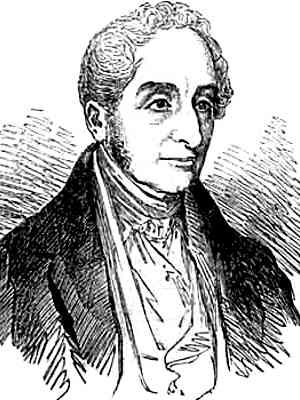
Henry Fourdrinier (1766-1854), inventor, was born 11 Feb. 1766, in Lombard Street, London. His father was a paper-maker and wholesale stationer, and was in all probability grandson of Paul Fourdrinier.
Henry Fourdrinier succeeded his father as a paper manufacturer. In conjunction with his brother Sealy he devoted himself for many years to the invention and improvement of paper-making machinery. Their first patent was taken out in 1801. In 1807 they perfected their machine for making continuous paper. This machine imitated with some improvements the processes used in paper by hand. Its chief advantages were that it produced paper of any size, and with greatly increases rapidity.
The experiments were very costly, and much litigation was required to protect the patent. When the invention was completed they had expended 60,000 pounds, and became bankrupt. Parliament extended the Fourdriniers' letters patent for fourteen years, and the new system of paper-making was widely adopted, but the brothers were greatly hampered by the defective state of the law of patents. In 1814, the Emperor Alexander, while visiting England, was interested in Fourdiniers' machine. An agreement was made that the Fourdriniers should receive 700 pounds annually for the use of two machines for ten years. The machines were erected at Peterhoff under the superintendence of Henry Fourdrinier's son, but no portion of the stipulated sum was ever paid. Henry Fourdrinier repeatedly asserted his claim, and at the age of seventy-two, attended by his daughter, made a journey to St. Petersberg, and placed his petition personally in the hands of Emperor Nicholas. No result followed.
Meanwhile the Fourdriniers had petitioned parliament for compensation on the losses sustained by them. On 25 April 1839 a motion was brought forward in the House of Commons, when the chancellor of the exchequer promised to ;go into the merits of the case. On 8 May 1840, 7,000 pounds was voted to the Fourdriniers. Many persons thought this was inadequate, and a few years later a subscription, raised by firms in the paper trade, enabled annuities to be purchased for Henry Fourdrinier, the then surviving patentee, and his two daughters, insuring a comfortable income during their respective lives.
Henry Fourdrinier died on 3 Sept. 1854, in his eighty-ninth year, at Mavesyn Ridware, near Rugeley, [Staffordshire,] where he spent the last years of his life in humble but cheerful retirement.
His brother, Sealy Fourdrinier, participated in the parliamentary compensation, but died in 1847 before the subscription had been applied.
J. B-y.
- 11 Feb - short biography, births, deaths and events on date of Fourdrinier's birth.
- The Fourdrinier Paper-Making Machine - from Paper Manufacturing in the United States (1916).
- The Fourdrinier Paper-Making Machine - from Paper & Paper Making Ancient and Modern (1863).
- Fourdrinier Patent 2950 (1806) - A machine for cutting paper on a different principle from any hitherto used.
- Fourdrinier Patent 2951 (1806) - Method of making a machine for manufacturing paper of an indefinite length, laid and wove, with separated moulds.
- Fourdrinier Patent 3068 (1807) - Making paper by means of machinery.
- Henry Fourdrinier Obituary from Gentleman's Magazine (1855).
- 24 Jul - events for date of patent on Paper-Making Machine.





