 (source)
|
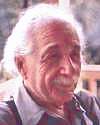
Albert Einstein
(14 Mar 1879 - 18 Apr 1955)
German-American physicist who developed the special and general theories of relativity. He was awarded the 1921 Nobel Prize for Physics for his explanation of the photoelectric effect.
|

Wednesday, February 2, 1921
Even Einstein's Little Universe Is Big Enough
300px.jpg)
Einstein’s Universe, imagined by AI.
Ten Trillion Times as Wide as the Orbit of the Earth, Prof. Eisenhart estimates.
MAY BE NO SPACE OUTSIDE
Light at 186,000 Miles a Second Would Require a Billion Years to Go Round It.
PROF. EINSTEIN ELUCIDATES
(For those who can understand) His Theory That Our Cosmos Has Its Limits
BERLIN, Feb. 1. — Professor Albert Einstein has given to your correspondent the following statement containing his main arguments to prove that the universe may be finite, on which he lectured recently before the Prussian Academy of Science, creating quite a sensation among his learned audience:
“We may arrive at the solution of the question of the finiteness or infiniteness of the universe by extending the conceptions of practical geometry to spaces of the order of the cosmical. Of course, objection might be raised that a construction made of solid rods would deviate from the ideal of rigidity in direct ratio to its growing spatial extension. But it would hardly be permissible to attribute importance to such an objection as a matter of principle.
“For the same reason the question whether the universe is finite in space or not appears to me a perfectly sensible one in the sense of practical geometry. I do not even think it impossible for this question to be answered by astronomical science within a measurable time. Let us consider what is taught in this respect by the general theory of relativity.
“According to the latter, two possibilities are extant.
“First, the universe is infinite in space. This is only possible if the average spatial density of matter concentrated within the stars vanishes in the space of the universe, meaning if the ratio of the total mass of stars to the size of the space through which they are distributed shows unlimited approximation to the value of nought with increasing enlargement of the spaces in question.
“Secondly, the universe is finite in space. This must be the case if there is a medium density of ponderable matter in the space of the universe which is different from nought. The volume of universal space increases in inverse ratio to this medium density.
“I will not omit to mention that the theoretical reason for the hypothesis of the finiteness of the universe may be adduced. The general theory of relativity teaches that the inertia of a certain body increases in proportion to the amount of ponderable matter its neighborhood. Until the general theory of relativity was evolved these two hypotheses were considered only from a geometrical point of view. But the general theory of relativity teaches more. It proves the spatial finiteness of the universe in case there should be a medium density of matter larger than nought.
“Though the existence of such deviation of medium density from nought might be incapable of proof by experience, yet it may well be possible to ascertain the deviation from the Newtonian law of gravitation, as required by the general theory of relativity and as it ought to result from a study of the mechanics of the larger fixed star systems. But our present knowledge of the masses and spatial distribution of the fixed stars is not sufficient for a settlement of this question.”
Einstein explained.
PRINCETON, N.J., Feb. 1. — Mathematicians and physicists in this country have been familiar for some time with Prof. Albert Einstein's theory of the finiteness of the universe, and on the basis of his calculations have found it possible to work out mathematical an approximation of the size of the universe, granting that it is spherical and not on a plane. L. P. Eisenhart, professor of mathematics in Princeton University, said tonight that using Einstein's calculations the radius of the universe might be said to be about one million times ten million times the distance from the earth to the sun, which is inconceivable to the mind but easily demonstrable by means of mathematics. It would take a ray of light from the sun one billion years to go around the universe and back again, and light travels at the rate of 186,000 miles a second.
Another deduction from Einstein's theory is that it would be possible to look at a star in two different directions and see the same star. In other words, one might have a look over one's right shoulder and see a star and see over the other shoulder what is apparently another star, but which, if Einstein's theory of curved light rays is correct, would be the same star.
The recent discoveries of Professor Albert A. Michelson in determining the mass of stars may make possible the proof of the Einstein's theory of the finiteness of the universe, Professor Eisenhart said, and added that it was the original experiments of Professor Michelson which led to the discovery by Einstein of the whole theory of relativity.
The occasion of Professor Eisenhart's discussion of the subject was the despatch from Berlin published above, which was submitted to him by a Times reporter. After reading the dispatch Professor Eisenhart said:
Diffusion of matter.
“This merely means that if you take a brick weighing a pound and enlarge it, supposing it contains the same quantity of matter, the larger you make the brick the less dense it will become,” said Professor Eisenhart. “As the magnitude approaches infinity the density approaches zero. So long as this matter becomes more diffused as you go out into space and approach zero, the assumption must be that the universe is infinite, because diffusion may go on without limit.
“If the phenomena of the world are based on a finite amount of matter, then if this matter is distributed through infinite volume the mean density will have to be zero, whereas if the universe is of finite extent the mean density will be different fromzero. If, no matter how far you go, you find that matter does not become a diffused, but that it is about the same as the matter around here, then the general assumption will be that the universe is finite and has a definite limit. The evident lack of diffusion would show that matter did not approach zero, but came to a point beyond which there was no matter.
“When Professor Einstein mentions the inertia of a body increasing in proportion to the amount of ponderable matter in its neighbourhood he means that the mass of the body is not absolute but depends on other things in its neighbourhood, that mass itself, according to the Einstein theory, varies according to certain rules. The old theory used to be that mass is inert.
Importance of mean density.
“Mean density is an important part of his theory, for, in calculating the ratio of mass to volume, as you increase the volume that ratio becomes smaller and smaller. You can't tell from experience, as he says, for it would be hard to find a out just how much mass there the is in the universe and to find out how far it extends. It might look like zero, but it might not be zero. It might be that it would become more and more rare the further you go, until our part of the universe would be so small it wouldn't count. The time may come, however, when we will be able, through calculating that the mass of the stars, to arrive at some idea of what the mass of the universe is.
“Professor Michelson's work may give them a chance to work out the problems of mass. If it were found by measurements that there isn't a great falling off in density then you would be justified in concluding that the mean density was not zero, end of that the universe is finite. This does not necessarily bring you to the conclusion that outside of the universe there is space. Professor Einstein's deductions are based on the theory that where there is matter there is the universe, and where there is no matter there is no universe.
“His conception of space is a sphere, because the sphere is the most usual form of curved bodies. Space may turn back on itself like a sphere. There is no more reason for believing in something outside our space than there is in believing in the fourth dimension. Some do not believe in that.
“The ancients believed that the world was a plane. They believed that if you few walked long enough you would fall off the edge, and they conceived of space as a limitless plane. We believe in the circular Earth, and similarly we can conceive of space as spherical, in which you could travel indefinitely and come back to where you atarted, although you might believe that you were travelling in a straight line. Columbus was told that he would sail off the edge of the world, but he found that the world was round. We might be told that we could go indefinitely in one direction in space. But according to the Einstein theory we might come back to our starting place.
Curvature of Light.
300x200px.jpg)
“The theory of the curvature of light, which Einstein teaches us, shows that light may be deflected, and that the star which we see in a certain place make really be somewhere else. This would make possible the curious result that, if light were curved and the universe infinite, we could see the same star by looking in different directions.
“Einstein does not say that his theory can be proved, but he does say that he thinks it not impossible that it may be proved by further knowledge of the fixed-star systems. It is only that our present knowledge is not sufficient to prove his theory.
“If Einstein made this statement before the Prussian Academy he must have given a new view of the finiteness of the universe, for his speculations with regard to it have been known for some time in the scientific world, although, so far as I know, they have never been placed before the public. I am curious to know what he really did say, for I cannot believe that he would advance as a new theory something that we have known from his books. He must have made some further announcement in further elucidation of his theory to have excited a scientific audience. I hope you will hear further from him.
“The whole theory of relativity has grown out of experiments made by Professor Michelson in 1887 in an effort to find the velocity of the earth through the ether. His experiments were mathematically correct, but they did not give the desired result, for they were based on the old beliefs in time and space which were then held. They led, however, to be restricted theory of relativity that it was impossible to detect uniform motion relative to the ether, and then Einstein turned his attention to curvilinear motion and gravitation and made the discoveries which have been given his name.
“The experiments of Michelson and Morley were described recently by Professor Henry Norris Russell, Professor of Astronomy in Princeton University, who has just sailed for England to receive a medal for his astronomical work in the last year. These experiments work by means of light rays split into two parts by letting part of it be reflected sideways from a transparent mirror and the rest go through and reuniting the parts after the trip.
Vibration of Light Waves.
“If one had gained on the other by a fraction of the time of a vibration of a single light wave the fact could be detected and the waves which we ordinarily called light vibrate at the rate of about six hundred thousand billion per second. Michelson and Morley tried their experiment, and in place of the easily measurable result which they anticipated, they got nothing. The light waves came back over the two paths in exactly the same interval of time.
“After various minor hypotheses had been tried Einstein started in with the bold assumption that these experiments had unveiled a new law of nature, viz., that the universe was so constructed that it was not possible to detect the existence of absolute, uniform, straight-ahead motion. If this is true, it follows that it is only therelative motions of material bodies in a the universe which we can study at all. Hence the name of the principle of relativity.”
Mathematicians have not been able to work out to any extent the formulas by which Einstein has arrived at his theory of the size of the universe, and today are still labouring over his other theories of relativity. The amount of calculation necessary to find out what he means is extraordinary, Professor Eisenhart said, and it will be some time before his ideas are thoroughly understood by scientists.
There is nothing to indicate, granting the theory of the finiteness of the universe, that our solar system is the centre of it; that can be only be determined by experiments to show what is the mass of the stars are. If it should be found that in one direction there is a diffusion of mass and that in another mass is denser, it might be assumed, Professor Eisenhart said that we were off on the edge of the universe, whereas if it were shown that mass is equal in all directions it would be hard to tell where we are.
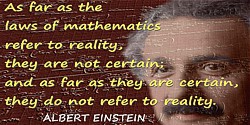
- Science Quotes by Albert Einstein.
- 14 Mar - short biography, births, deaths and events on date of Einstein's birth.
- Albert Einstein - Context of “God … integrates empirically” quote - Medium image (500 x 350 px)
- Albert Einstein - Context of “Laws of mathematics refer to reality” quote
- Albert Einstein - Context of “Laws of mathematics refer to reality” quote - with Large image (800 x 600 px).
- Albert Einstein - Context of “God … integrates empirically” quote - Large image (800 x 600 px)
- Albert Einstein - context of quote Mathematics…a product of human thought - Medium image (500 x 350 px)
- Albert Einstein - context of quote Mathematics…a product of human thought - Large image (800 x 600 px)
- Large color picture of Albert Einstein (850 x 1000 px).
- Albert Einstein - context of quote “Politics is more difficult than physics” - Medium image (500 x 350 px)
- Albert Einstein - context of quote “Politics is more difficult than physics” - Large image (800 x 600 px)
- Albert Einstein - context of quote “Science without religion is lame; religion without science is blind.” - Medium image (500 x 350 px)
- Albert Einstein - context of quote “Science without religion is lame; religion without science is blind.” - Large image (800 x 600 px)
- Albert Einstein - My Theory - The Times (1919).
- Geometry and Experience - Address by Albert Einstein to the Prussian Academy of Sciences (27 Jan 1921).
- Albert Einstein - context of quote The Lord God is subtle - Medium image (500 x 350 px)
- Albert Einstein - context of quote The Lord God is subtle - Large image (800 x 600 px)
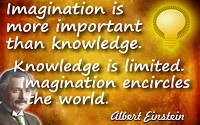
- Albert Einstein - context of quote Imagination is more important than knowledge - Medium image (500 x 350 px)
- Albert Einstein - context of quote Imagination is more important than knowledge - Large image (800 x 600 px)
- Albert Einstein - context of quote A theory can be proved by experiment - Medium image (500 x 350 px)
- Albert Einstein - context of quote A theory can be proved by experiment - Large image (800 x 600 px)
- Albert Einstein - context of quote Falling in love is not at all the most stupid thing - Medium image (500 x 350 px)
- Albert Einstein - context of quote Falling in love is not at all the most stupid thing - Large image (800 x 600 px)
- Albert Einstein - context of quote That is relativity - Medium image (500 x 350 px)
- Albert Einstein - context of quote That is relativity - Large image (800 x 600 px)
- Albert Einstein - context of quote “One thing I have learned in a long life” - Medium image (500 x 350 px)
- Albert Einstein - context of quote One thing I have learned in a long life - Large image (800 x 600 px)
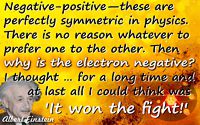
- Albert Einstein - context of quote “Why is the electron negative?” - Medium image (500 x 350 px)
- Albert Einstein - context of quote “Why is the electron negative?” - Large image (800 x 600 px)
- Albert Einstein - context of quote “The formulation of a problem is often far more essential than its solution” - Medium image (500 x 350 px)
- Albert Einstein - context of quote “The formulation of a problem is often far more essential than its solution” - Large image (800 x 600 px)
- Albert Einstein - context of quote “Our exalted technological progress” - Medium image (500 x 350 px)
- Albert Einstein - context of quote “Our exalted technological progress” - Large image (800 x 600 px)
- Albert Einstein - context of quote “There exists a passion for comprehension” - Medium image (500 x 350 px)
- Albert Einstein - context of quote “There exists a passion for comprehension” - Large image (800 x 600 px)
- Albert Einstein - context of quote “An equation is for eternity” - Medium image (500 x 350 px)
- Albert Einstein - context of quote “An equation is for eternity” - Large image (800 x 600 px)
- Subtle Is the Lord: The Science and the Life of Albert Einstein, by Abraham Pais. - book suggestion.
- Booklist for Albert Einstein.






