 (source)
|
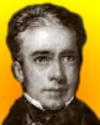
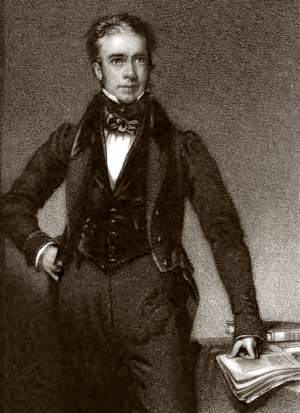
Thomas Drummond
(10 Oct 1797 - 15 Apr 1840)
Scottish civil engineer who invented the Drummond light (similar to limelight) for night surveying, and attempted to adapt it for use in lighthouses.
|
Drummond's Inventions
The Heliostat and the Drummond Light
from Memoir of Thomas Drummond (1867)
[p.64] ...The object of the Legislature, in directing a new survey of Ireland to be made, appears from the Report of the Select Committee appointed in 1824, "to consider the best mode of apportioning more equally the local burthens collected in Ireland." The object was to obtain a survey sufficiently accurate to enable the valuators. acting under the superintendence of a separate department of the Government, to follow the surveyors, and to apportion correctly the proper amount of the local burthens. These burthens had previously been apportioned [p.65] by Grand Jury assessments. The assessments had, in some districts of Ireland, been made by the civil division of plough-lands; in others by the division of town-lands; the divisions, in either case, contributing in proportion to their assumed areas, which bore no defined proportion to their actual contents. The result was great and much-complained-of inequality in levying the assessment, which it was a primary object of the survey to remove by accurately defining the divisions of the country. The Committee reported that it was expedient to give much greater despatch to this work than had occurred in the Trigonometrical Survey of England. They recommended that every facility, in the way of improved instruments, should be given to the Ordnance officers by whom the survey was to be conducted; and concluded with the hope, that the great national work which was projected “will be carried on with energy as well as with skill, and that it will, when completed, be creditable to the nation, and to the scientific acquirements of the age.”
This survey was to task to the full Drummond's powers of invention. When the trial came he was well prepared for it. From the moment when he joined the service he had striven with all his powers to qualify himself for advancing its interests. He, had thrown his heart into it, and eagerly cultivated all those branches of knowledge which bore on its necessities. He betook himself with renewed energy to the study of the higher mathematics. He became devoted to chemistry. For years he used to rise at four or five o'clock in the morning, light his own lamp and fire, and, taking a cup of coffee, study without interruption till eight or nine, when official duties claimed his attention. The days thus early begun were utilised [p.66] throughout. He had a special subject of study for every interval of business, so that no portion of his time passed unimproved.
He had attended the chemistry classes in the University of Edinburgh. In London he resumed the study under Professors Brande and Faraday, whose morning lectures at the Royal Institution he for some time sedulously attended. His friend Dr Prout, an enthusiastic chemist, is supposed to have given him a bias towards this study. Be that as it may, Drummond prosecuted it with zeal, always on the alert in this field, as in every other, to make the knowledge he acquired available to the service.
General Larcom states that the use of lime for the Drummond light had its origin in a suggestion received at the Royal Institution. “The incandescence of lime having been spoken of in one of the lectures,1 the idea struck him that it could be employed with advantage as a substitute for Argand lamps in the reflectors used in the Survey, for rendering visible the distant stations, because, in addition to greater intensity, it afforded the advantage of concentrating the light as nearly as possible into the focal point of the parabolic mirror, by which the whole light would be available for reflection in a pencil of parallel rays, whereas in the Argand lamp only the small portion of rays near the focus was so reflected. On this subject his first chemical experiments were performed. Captain Dawson recollects Drummond mentioning the idea when returning from the lecture, and that on the way he purchased a blow-pipe, charcoal, &c. That evening he set to work with these simple means, and resolved that he would hence-forth devote to his new pursuit the hour or two immediately [p.67] after dinner, when, he said, he could do nothing else, remarking how much Dr Prout had done during the intervals of active professional occupations."
We have Drummond's own more full account in a paper “On the Means of Facilitating the Observation of Distant Objects in Geodetical Operations” published in the “Philosophical Transactions” of 1826. It is prefaced by a brief sketch of the history of the use of lights in survey operations.
“In the beginning of the Survey, General Roy, on several occasions, but especially in carrying his triangles across the Channel to the French coast, made use of Bengal and white lights prepared at the Royal Arsenal; for these, parabolic reflectors, similar to those with which our lighthouses arc suplied, and illuminated by Argand burners, were afterwards substituted as more convenient, but they have been gradually discontinued, the advantages derived from them proving inadequate, from their want of power, to the trouble and expense incident to their employment. In the trigonometrical operations of 1821, carried on by Colonel Colby and Captain Kater, conjointly with MM. Arago and Mathieu, for connecting the meridians of Greenwich and Paris, an apparatus of a very different kind was employed for the first time—a large plano-convex lens, 0.76 metre square, being substituted for a parabolic reflector, and the illuminating body an Argand lamp with four concentric wicks. The lens was composed of a series of concentric rings, reduced in thickness, and cemented together at the edges. This apparatus resulted from an inquiry into the state of the French lighthouses, and was prepared under the direction of MM. Fresnel and Arago. Its construction and advantages are explained in a ‘Memoire sur un Nouveau Systême d'élairage,’ by M. Fresnel. The light which it gave is stated to possess 3¼ times the intensity of that given by the reflector. It was employed, during the operations alluded to, at Fairlight Down and Folkestone Hill, on the English coast; at Cape Bancez and Montlambert, on the French coast; the greatest distance at which it was observed being 48 miles, and [p.68] its appearance, I have understood from Colonel Colby, was very brilliant.
“But valuable as this apparatus may be when employed in a lighthouse, the purpose for which it was indeed invented and constructed, the properties of the simple parabolic reflector appeared to give it a preference for the service of the Trigonometrical Survey, provided a more powerful light could be substituted in its focus instead of the common Argand lamp.
“With this object in view, I at first endeavoured to make use of the more brilliant pyrotechnical preparations; then phosphorus burning in oxygen, with a contrivance to carry off the fumes of phosphoric acid, were tried; but the first attempts with these substances promising but little success, they were abandoned. The flames, besides being difficult and troublesome to regulate, were large and unsteady, little adapted to the nature of a reflecting figure, which should obviously, when used to the utmost advantage, be lighted by a luminous sphere, the size being regulated by the spread required to be given to the light. This form of the focal light, it was manifest, neither could be obtained nor preserved when combustion was the source of light; and it was chiefly this consideration which then led me to attempt applying to the purpose in view the brilliant light emanating from several of the earths when exposed to a high temperature; and at length I had the satisfaction of having an apparatus completed, by which a light so intense was produced, that when placed in the focus of a reflector, the eye could with difficulty support its splendour even at the distance of forty feet, the contour of the reflector being lost in the brilliancy of the radiation.
“To obtain the requisite temperature, I had recourse to the known effect of a stream of oxygen directed through the flame of alcohol2 as a source of heat free from danger, easily procured and regulated, and of great intensity.
“To ascertain the relative intensities of the different incandescent substances that might be employed, they were referred, by the method of shadows, to an Argand lamp of a common standard, the light from the brightest part of the flame being [p.69] transmitted through apertures equal in diameter to the small sphere of the different substances submitted to experiment.
“The result of several trials made at the commencement gave for
| Lime, | ... ... ... ... ... | 37 times, |
| Zirconia, | ... ... ... ... ... | 31 times, |
| Magnesia, | ... ... ... ... ... | 16 times |
“Of these substances, and also of their compounds with one another, lime appearing to possess a decided superiority, my subsequent experiments were confined to it alone; and by a more perfect adjustment of the apparatus, by bringing the maximum heat, which is confined within narrow limits, exactly to the surface of the ball, and by using smaller balls than those employed in the early experiments, a very material increase of light has been obtained. The mean of ten experiments, made lately with every precaution, gives for the light emitted by lime, when exposed to this intense heat, eighty-three times the intensity of the brightest part of the flame of an Argand burner of the best construction and supplied with the finest oil. The lime from chalk, and such as is known at the London wharves by the name of flame lime, appears to be more brilliant than any that has been tried.”
It thus appears that before he had thought of any of the earths as a means of light, he had been experimenting with various pryotechnical preparations and chemical stuffs as lights to be used with the reflector, and had been perplexed by the shape and unsteady character of the flames; in fact, bad his attention particularly fixed on the very difficulty from which the use of an earth offered escape. Experiment, in short, had brought him to the point at which he was fully prepared to picture the lime ball in the focus of the reflector the [p.70] moment he should think of it—or have it suggested to him—as a source of light.
The use of the Argands by Colby and Kater in 1821, may have first directed his attention to this subject. I think it is certain that he was engaged in his experiment in the winter of 1823, and probable that the fact was one of the reasons why Colby selected him to be his right-hand man in his preparations for the Irish survey. The chief was anxious that this survey should he more perfect than any yet executed, and particularly desirous to obtain improved means of over-coming the difficulties of observation which, it was anticipated, would be encountered in Ireland, at once owing to the climate and the size of the triangles. These means Drummond seemed to be likely to furnish; a light he had ready to hand, and was working to fit it for use on the survey; the other thing most wanted was a heliostat—a means of continuously reflecting the sun's rays from one point to another. And this Drummond supplied in the course of 1824 and spring of 1825.
In the paper already cited, he gives a brief sketch of the history of the use of the sun's reflection as an aid in survey operations:—
“The reflection of the sun from a plane mirror, as affording a point of observation that might be seen at remote distances, was suggested and employed by Professor Gauss in 1822, while engaged with a trigonometrical measurement in Hanover; and the result of the first trials made at Inselberg and Hohenhagen rendered it highly probable that it might be applied with much advantage to this purpose.
“The principle was adopted in this country when Colonel Colby and Captain Kater were engaged, in 1822, in verifying General Roy's triangulation connecting the meridians of Paris and Greenwich. At their concluding station on Shooter’s [p.71] Hill seven or eight days had elapsed, during which Hanger Hill Tower, though only ten miles distant, having remained completely obscured by the dense smoke of London, tin plates were attached to the signal post, so as to reflect the sun towards the station at stated times on a certain day.
“At the hours for which they had been calculated these plates became visible, and the observations were in consequence immediately and easily completed. In the subsequent operations of 1823, recourse was again had on two important occasions to the same method, and with equal success. I allude to Leith Hill, near Dorking, in Surrey, and Wrotham Hill, in Kent, stations which it was of the utmost consequence to observe from Berkhampstead Tower, near Hertford. Our efforts to effect these observations having for some time been rendered unavailing by the thick mist so frequently overhanging the bed of the Thames, a series of bright tin plates was put up on both stations: Each set, consisting of six or eight plates, was attached to a smooth flat board. placed vertically by the plumb line, and turning on a pivot; the respective inclinations of the plates with the face of the board being determined, so that they might have the positions required for reflecting in succession the sun's rays towards Berkhampstead Tower, when the surface of the board was turned at right angles to the line of direction. Although this method admitted but of rude execution, it fully answered the purpose for which it was employed; the plates became visible in succession at the appointed hours, the duration of each varying with the inequality of its surface, but being generally from ten to fifteen minutes; they were seen nearly at the same hours for some days before and after that for which they were calculated.
“The distance to Leith Hill is forty-five miles, and the observations were in this way completed without the hill itself having been visible during the whole of our stay, which was nearly three weeks.”
The utility of employing the sun's reflection as a point of observation being established by the result these experiments, the problem to which Drummond [p.72] addressed himself was to invent an instrument, simple in its construction and easy of management, which might be used on all occasions and at any station. Colby's plates were a temporary expedient, suited only for the particular place and time for which the angles of the plates were calculated. The same pole and set of plates answered only for a single station and a short time, owing to the rapid motion of the sun, or rather of the earth in its orbit, quickly throwing the reflections wide of the station of observation.
Drummond's solution of the problem was as simple as it was happy and ingenious. His heliostat consisted of a mirror connected with two telescopes; the one, forming the axis of the instrument, for looking towards the station of observation, the other for looking at the sun. The former telescope being turned on the station, and brought, along with the mirror, to a. position of horizontality by means of screws and spirit-levels, the mirror was so connected with the latter telescope, that, as the telescope was turned to the sun, the mirror, moving with it, went into position to reflect the sun's rays to the station of observation. It was a problem of geometrical construction prettily solved. He had done many as difficult in the class of Professor Leslie; but this one was of his own proposing, and its solution proved of the highest practical importance. He made improvements on the instrument afterwards, which we shall notice in the proper placw. The heliostat and the apparatus for exhibiting the light in survey operations, are fully described in the paper in the “Philosophical Transactions.”
By these two inventions Drummond armed the Survey officers with the most powerful means of overcoming the difficulties of observation by day and night. The [p.73] light was not long till it made a sensation beyond the small circle of the corps; in the scientific world its splendour and utility were at once acknowledged. “It is with a melancholy pleasure,” says Sir John Herschel,3 “that I recall the impression produced by the view of this magnificent spectacle as exhibited (previous to its trial in the field) in the vast armoury in the Tower, an apartment 300 feet long, placed at Mr Drummond's disposal for the occasion. . . . The common Argand burner and parabolic reflector of a British lighthouse were first exhibited, the room being darkened, and with considerable effect. Fresnel's superb lamp was next disclosed, at whose superior effect the other seemed to dwindle, and showed in a manner quite subordinate. But when the gas began to play, the lime being now brought to its full ignition and the screen suddenly removed, a glare shone forth, overpowering, and, as it were, annihilating both its predecessors, which appeared by its side, the one as a feeble gleam, which it required attention to see, the other like a mere plate of heated metal. A shout of triumph and admiration burst from all present. Prisms to analyse the rays, photometric contrivances to measure their intensity, and screens to cast shadows, were speedily in requisition, and the scene was one of extraordinary excitement.” It must have been a proud moment for the inventor when he witnessed this enthusiasm in the elite of London scientific society. But there was a prouder in reserve for him—the triumph of his light and heliostat over obstacles to observation, which for months had impeded the progress of the Survey.
The first step in the Irish Survey was a “general [p.74] reconnaissance” of Ireland made by Colby and Drummond in the autumn of 1824. They traversed the country from north to south, fixed upon the mode of conducting the survey, and selected the stations for the great triangulation, as well as the most fitting place for measuring a base. Enough has been seen of Colby's manner of making a reconnaissance of a country, to enable the reader to judge what exposure and fatigue were suffered in this expedition.
In the autumn of 1825 the triangulation commenced on the Divis mountain, near Belfast. Officers were sent into Cumberland and the Isle of Man to recover and erect marks on the old stations there as points of observation from Divis for the connection of the Irish and English Surveys. While they were on this duty, Drummond, with his heliostat, light apparatus, and a complete observatory of meteorological and other philosophical instruments, was encamped on Divis preparing the station for the great theodolite. On the 23rd of August a conspicuous object was placed on the summit of Slieve Snaght, the highest hill of Innishowen, about 2100 feet above the sea. This was an important point in the triangulation which connects the north of Ireland with the western islands of Scotland, and it was necessary that it should be observed from Divis. The party of observers on Divis were in camp as early as the date of marking Slieve Snaght. They continued there till the 26th October without being able to make the necessary observation. The mountain continued enveloped in a haze so impenetrable as to render unavailing every effort made for the purpose. All this time it seems not to have occurred to put either the heliostat or light in use. But now, late as it was in the Season. Colonel Colby determined that Drummond [p.75] should ascend the mountain, and attempt to overcome the formidable obstacle to the completion of the observations by the aid of his apparatus. He did so, and with what success we may see in the narrative of General Larcom:— “Mr. Drummond took the lamp and a small party of men to Slieve Snaght, find by calculation succeeded so well in directing the axis of the reflector to the instrument on Divis, that the light was seen, and its first appearance will long be remembered by those who witnessed it. The night was dark and cloudless, the mountain and the camp were covered with snow, and a cold wind made the duty of observing no enviable task. The light was to be exhibited at a given hour, and to guide the observer, one of the lamps formerly used, an Argand in a lighthouse reflector, was placed on the tower of Randalstown Church, which happened to be nearly in the line at fifteen miles. The time approached, and passed, and the observer had quitted the telescope, when the sentry cried, ‘The light!’ and the light indeed burst into view, a steady blaze of surpassing splendour, which completely effaced the much nearer guiding beacon. It is needless to add that the observations were satisfactorily completed, the labours of a protracted season closed triumphantly for Drummond, and the Survey remained possessed of a new and useful power.”
This year's operations did grievous mischief to Mr Drummond's health. A residence on the top of Slieve Snaght at such a season of the year might have tried one more robust. He was borne up for the time by the excitement attending the first practical test of his inventions, only to suffer the more severely afterwards. With what joy he hailed the success of his operations on the lonely mountain we fortunately may see from a [p.76] letter written in his hut on the night of November 11, 1825. In the moment of success his first thought was to communicate the pleasure of it to his beloved mother:—
“Friday night, Nov. 11, 1825.
This chapter, composed mainly of quotations, must be concluded by another from the Memoir of General Larcom:—
“The triumphant success which attended the lamp and heliostat at the close of 1825, was purchased at the cost of a severe illness. A mountain camp, at an altitude of two thousand feet in the winter of these climates, is, under any circumstances, a severe trial; but Drummond and his little party were peculiarly exposed. Few in number—being merely detached from the general camp at Divis—they were ill able to buffet with the storms of these wild regions; and the tents were so frequently blown down, that after the first few days they abandoned them, and constructed huts of rough stones, filling the interstices with turf. Such, without the additional luxury of a marquee lining, was the study and laboratory on which depended the success of the new instruments. Here were to be forfeited the delicate manipulations their adjustment required. Here was to be manufactured the oxygen destined for the portable gasometer; and, cowering over the fire, or wrapped in a pilot coat, was Drummond day and night at work. A frame and system attenuated by fatigue and excitement were ill able to bear up against such exposure. He struggled to the last; but no sooner had his efforts been crowned with success than he sank, and a severe illness compelled him to return to Edinburgh, to the care of his family and friends.”
1. Memoir, p.5.
2. Annals of Philosophy, vol. ii. p. 99.
3. Letter to Mrs Drummond.
- 10 Oct - short biography, births, deaths and events on date of Drummond's birth.
- Thomas Drummond - Drummond's Inventions - Drummond Light and Lighthouse Experiments.
- 9 Nov - brief description for first practical use of limelight on 9 Nov 1826.
- Thomas Drummond: Under-secretary in Ireland, 1835-40; Life and Letters, by R. Barry O'Brien. - book suggestion.





