 (source)
|
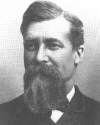
Thomas Chrowder Chamberlin
(25 Sep 1843 - 15 Nov 1928)
American geologist.
|
Science Quotes by Thomas Chrowder Chamberlin (2 quotes)
In scientific study, or, as I prefer to phrase it, in creative scholarship, the truth is the single end sought; all yields to that. The truth is supreme, not only in the vague mystical sense in which that expression has come to be a platitude, but in a special, definite, concrete sense. Facts and the immediate and necessary inductions from facts displace all pre-conceptions, all deductions from general principles, all favourite theories. Previous mental constructions are bowled over as childish play-structures by facts as they come rolling into the mind. The dearest doctrines, the most fascinating hypotheses, the most cherished creations of the reason and of the imagination perish from a mind thoroughly inspired with the scientific spirit in the presence of incompatible facts. Previous intellectual affections are crushed without hesitation and without remorse. Facts are placed before reasonings and before ideals, even though the reasonings and the ideals be more beautiful, be seemingly more lofty, be seemingly better, be seemingly truer. The seemingly absurd and the seemingly impossible are sometimes true. The scientific disposition is to accept facts upon evidence, however absurd they may appear to our pre-conceptions.
— Thomas Chrowder Chamberlin
The Ethical Functions of Scientific Study: An Address Delivered at the Annual Commencement of the University of Michigan, 28 June 1888, 7-8.
The moment one has offered an original explanation for a phenomenon which seems satisfactory, that moment affection for his intellectual child springs into existence, and as the explanation grows into a definite theory his parental affections cluster about his offspring and it grows more and more dear to him. ... There springs up also unwittingly a pressing of the theory to make it fit the facts and a pressing of the facts to make them fit the theory... To avoid this grave danger, the method of multiple working hypotheses is urged. It differs from the simple working hypothesis in that it distributes the effort and divides the affections... In developing the multiple hypotheses, the effort is to bring up into view every rational exploration of the phenomenon in hand and to develop every tenable hypothesis relative to its nature, cause or origin, and to give to all of these as impartially as possible a working form and a due place in the investigation. The investigator thus becomes the parent of a family of hypotheses; and by his parental relations to all is morally forbidden to fasten his affections unduly upon anyone. ... Each hypothesis suggests its own criteria, its own method of proof, its own method of developing the truth, and if a group of hypotheses encompass the subject on all sides, the total outcome of means and of methods is full and rich.
— Thomas Chrowder Chamberlin
'Studies for Students. The Method of Multiple Working Hypotheses', Journal of Geology (1897), 5, 840-6.
See also:
- 25 Sep - short biography, births, deaths and events on date of Chamberlin's birth.
 In science it often happens that scientists say, 'You know that's a really good argument; my position is mistaken,' and then they would actually change their minds and you never hear that old view from them again. They really do it. It doesn't happen as often as it should, because scientists are human and change is sometimes painful. But it happens every day. I cannot recall the last time something like that happened in politics or religion.
(1987) --
In science it often happens that scientists say, 'You know that's a really good argument; my position is mistaken,' and then they would actually change their minds and you never hear that old view from them again. They really do it. It doesn't happen as often as it should, because scientists are human and change is sometimes painful. But it happens every day. I cannot recall the last time something like that happened in politics or religion.
(1987) -- 




