 (source)
|
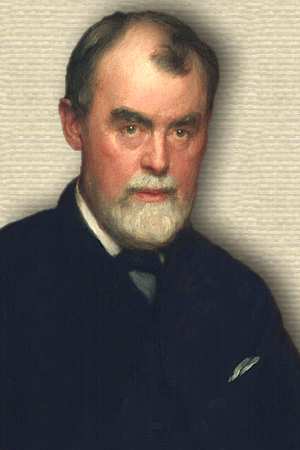
Samuel Butler
(4 Dec 1835 - 18 Jun 1902)
British novelist, essayist and critic , who is best-known for his satire Erewhon (1872). After first reading Darwin’s Origin of Species, he became an enthusiastic admirer, although he later rejected Darwinism because it had not place for God in it. He wrote on Darwinian topics, including Darwin Among the Machines (1863).
|
Science Quotes by Samuel Butler (76 quotes)
… There can be no doubt about faith and not reason being the ultima ratio. Even Euclid, who has laid himself as little open to the charge of credulity as any writer who ever lived, cannot get beyond this. He has no demonstrable first premise. He requires postulates and axioms which transcend demonstration, and without which he can do nothing. His superstructure indeed is demonstration, but his ground his faith. Nor again can he get further than telling a man he is a fool if he persists in differing from him. He says “which is absurd,” and declines to discuss the matter further. Faith and authority, therefore, prove to be as necessary for him as for anyone else.
— Samuel Butler
In The Way of All Flesh (1917), 319-320.
“The Ancient Mariner” — This poem would not have taken so well if it had been called “The Old Sailor,” so that Wardour Street has its uses.
— Samuel Butler
Samuel Butler, Henry Festing Jones (ed.), The Note-Books of Samuel Butler (1917), 229. Note: “Wardour Street prose” implies the use of near-obsolete words for effect, and derives from former times when the street was known for its many antique shops.
A definition is the enclosing a wilderness of idea within a wall of words.
— Samuel Butler
Samuel Butler, Henry Festing Jones (ed.), The Note-Books of Samuel Butler (1917), 221.
A good title should aim at making what follows as far as possible superfluous to those who know anything of the subject.
— Samuel Butler
Samuel Butler, Henry Festing Jones (ed.), The Note-Books of Samuel Butler (1917), 229.
A hen is only an egg's way of making another egg.
— Samuel Butler
Attributed. In fact, Butler wrote in Life and Habit (1878), 134, of an existing saying that 'It has, I believe, been often remarked, that a hen is only an egg's way of making another egg.'
A skilful leech is better far than half a hundred men of war.
— Samuel Butler
…...
After all, the Athanasian Creed is to me light and intelligible reading in comparison with much that now passes for science.
— Samuel Butler
Samuel Bulter, Henry Festing Jones (ed.), The Note-Books of Samuel Butler (1917), 324.
All progress is based upon a universal innate desire of every organism to live beyond its means.
— Samuel Butler
…...
An idea must not be condemned for being a little shy and incoherent; all new ideas are shy when introduced first among our old ones. We should have patience and see whether the incoherency is likely to wear off or to wear on, in which latter case the sooner we get rid of them the better.
— Samuel Butler
In Samuel Butler and Henry Festing Jones (ed.), 'Higgledy-Piggledy', The Note-books of Samuel Butler (1912, 1917), 216-217.
An idea must not be condemned for being a little shy and incoherent; all new ideas are shy when introduced first among our old ones. We should have patience and see whether the incoherency is likely to wear off or to wear on, in which latter case the sooner we get rid of them the better.
— Samuel Butler
Samuel Butler, Henry Festing Jones (ed.), The Note-Books of Samuel Butler (1917), 216-217.
As Love is too young to know what conscience is, so Truth and Genius are too old to know what definition is.
— Samuel Butler
Samuel Butler, Henry Festing Jones (ed.), The Note-Books of Samuel Butler (1917), 221.
As, no matter what cunning system of checks we devise, we must in the end trust some one whom we do not check, but to whom we give unreserved confidence, so there is a point at which the understanding and mental processes must be taken as understood without further question or definition in words. And I should say that this point should be fixed pretty early in the discussion.
— Samuel Butler
Samuel Butler, Henry Festing Jones (ed.), The Note-Books of Samuel Butler (1917), 220-221.
Business should be like religion and science; it should know neither love nor hate.
— Samuel Butler
Geoffrey Keynes and Brian Hill (eds.), Samuel Butler’s Notebooks (1951), 144.
But who can say that the vapour engine has not a kind of consciousness? Where does consciousness begin, and where end? Who can draw the line? Who can draw any line? Is not everything interwoven with everything? Is not machinery linked with animal life in an infinite variety of ways?
— Samuel Butler
Cat-Ideas and Mouse-Ideas. We can never get rid of mouse-ideas completely, they keep turning up again and again, and nibble, nibble—no matter how often we drive them off. The best way to keep them down is to have a few good strong cat-ideas which will embrace them and ensure their not reappearing till they do so in another shape.
— Samuel Butler
Samuel Butler, Henry Festing Jones (ed.), The Note-Books of Samuel Butler (1917), 216.
Definitions are a kind of scratching and generally leave a sore place more sore than it was before.
— Samuel Butler
Samuel Butler, Henry Festing Jones (ed.), The Note-Books of Samuel Butler (1917), 221.
Doctors and Clergymen. A physician’s physiology has much the same relation to his power of healing as a cleric’s divinity has to his power of influencing conduct.
— Samuel Butler
Samuel Butler, Henry Festing Jones (ed.), The Note-Books of Samuel Butler (1917), 216.
Every one should keep a mental waste-paper basket and the older he grows the more things he will consign to it—torn up to irrecoverable tatters.
— Samuel Butler
Samuel Butler, Henry Festing Jones (ed.), The Note-Books of Samuel Butler (1917), 216.
Everything is like a purse—there may be money in it, and we can generally say by the feel of it whether there is or is not. Sometimes, however, we must turn it inside out before we can be quite sure whether there is anything in it or no. When I have turned a proposition inside out, put it to stand on its head, and shaken it, I have often been surprised to find how much came out of it.
— Samuel Butler
Samuel Butler, Henry Festing Jones (ed.), The Note-Books of Samuel Butler (1917), 222.
Examine Venus and the Moon
Who stole a thimble or a spoon.
Who stole a thimble or a spoon.
— Samuel Butler
From poem 'Hudibras' (1684), Line 591. In Hudibras: In Three Parts, Written in the Time of the Late Wars (1806), 119.
Genius … has been defined as a supreme capacity for taking trouble… It more fitly could be described as a supreme capacity for getting its possessors into trouble of all kinds and keeping them there so long as the genius remains.
— Samuel Butler
In Samuel Butler and Henry Festing Jones (ed.), The Note-Books of Samuel Butler (1913), 174-175.
Gold-Mines. Gold is not found in quartz alone; its richest lodes are in the eyes and ears of the public, but these are harder to work and to prospect than any quartz vein.
— Samuel Butler
Samuel Butler, Henry Festing Jones (ed.), The Note-Books of Samuel Butler (1917), 224.
I am the enfant terrible of literature and science. If I cannot, and I know I cannot, get the literary and scientific bigwigs to give me a shilling, I can, and I know I can, heave bricks into the middle of them.
— Samuel Butler
Samuel Butler, Henry Festing Jones (ed.), The Note-Books of Samuel Butler (1917), 183.
I do not know whether my distrust of men of science is congenital or acquired, but I think I should have transmitted it to descendants.
— Samuel Butler
Samuel Butler, edited by Geoffrey Keynes and Brian Hill, Samuel Butler’s Notebooks (1951), 32.
I wish people would more generally bring back the seeds of pleasing foreign plants and introduce them broadcast, sowing them by our waysides and in our fields, or in whatever situation is most likely to suit them. It is true, this would puzzle botanists, but there is no reason why botanists should not be puzzled. A botanist is a person whose aim is to uproot, kill and exterminate every plant that is at all remarkable for rarity or any special virtue, and the rarer it is the more bitterly he will hunt it down.
— Samuel Butler
Samuel Butler, Henry Festing Jones (ed.), The Note-Books of Samuel Butler (1917), 281.
If [science] tends to thicken the crust of ice on which, as it were, we are skating, it is all right. If it tries to find, or professes to have found, the solid ground at the bottom of the water it is all wrong. Our business is with the thickening of this crust by extending our knowledge downward from above, as ice gets thicker while the frost lasts; we should not try to freeze upwards from the bottom.
— Samuel Butler
Samuel Bulter, Henry Festing Jones (ed.), The Note-Books of Samuel Butler (1917), 329.
If it be urged that the action of the potato is chemical and mechanical only, and that it is due to the chemical and mechanical effects of light and heat, the answer would seem to lie in an enquiry whether every sensation is not chemical and mechanical in its operation? Whether those things which we deem most purely spiritual are anything but disturbances of equilibrium in an infinite series of levers, beginning with those that are too small for microscopic detection, and going up to the human arm and the appliances which it makes use of? Whether there be not a molecular action of thought, whence a dynamical theory of the passions shall be deducible?
— Samuel Butler
In Erewhon, Or, Over the Range (1872), 192.
Life is not an exact science; it is an art.
— Samuel Butler
In Samuel Butler and Henry Festing Jones (ed.), 'Reconciliation', The Note-books of Samuel Butler (1912, 1917), 351.
Logic is like the sword—those who appeal to it shall perish by it.
— Samuel Butler
Samuel Butler, Henry Festing Jones (ed.), The Note-Books of Samuel Butler (1917), 330.
Man is but a perambulating tool-box and workshop or office, fashioned for itself by a piece of very clever slime, as the result of long experience. ... Hence we speak of man's body as his “trunk.”
— Samuel Butler
Samuel Butler, Henry Festing Jones (ed.), The Note-Books of Samuel Butler (1917), 18.
Memory is to mind as viscosity is to protoplasm it gives a kind of tenacity to thought—a kind of pied à terre from which it can, and without it could not, advance.
— Samuel Butler
Samuel Butler, Henry Festing Jones (ed.), The Note-Books of Samuel Butler (1917), 58.
Men of Science. If they are worthy of the name they are indeed about God's path and about his bed and spying out all his ways.
— Samuel Butler
Samuel Butler, Henry Festing Jones (ed.), The Note-Books of Samuel Butler (1917), 219.
Money. It has such an inherent power to run itself clear of taint that human ingenuity cannot devise the means of making it work permanent mischief, any more than means can be found of torturing people beyond what they can bear. Even if a man founds a College of Technical Instruction, the chances are ten to one that no one will be taught anything and that it will have been practically left to a number of excellent professors who will know very well what to do with it.
— Samuel Butler
Samuel Butler, Henry Festing Jones (ed.), The Note-Books of Samuel Butler (1917), 221.
Mr. Darwin in the Zoological Gardens. Frank Darwin told me his father was once standing near the hippopotamus cage when a little boy and girl, aged four and five, came up. The hippopotamus shut his eyes for a minute. “That bird’s dead,” said the little girl; “come along.”
— Samuel Butler
Samuel Butler, Henry Festing Jones (ed.), The Note-Books of Samuel Butler (1917), 243. Francis Darwin was a son of Charles Darwin.
My thoughts … are like persons met upon a journey; I think them very agreeable at first but soon find, as a rule, that I am tired of them.
— Samuel Butler
Samuel Butler, Henry Festing Jones (ed.), The Note-Books of Samuel Butler (1917), 216.
Nature. As the word is now commonly used it excludes nature's most interesting productions—the works of man. Nature is usually taken to mean mountains, rivers, clouds and undomesticated animals and plants. I am not indifferent to this half of nature, but it interests me much less than the other half.
— Samuel Butler
Samuel Butler, Henry Festing Jones (ed.), The Note-Books of Samuel Butler (1917), 220.
On Breaking Habits. To begin knocking off the habit in the evening, then the afternoon as well and, finally, the morning too is better than to begin cutting it off in the morning and then go on to the afternoon and evening. I speak from experience as regards smoking and can say that when one comes to within an hour or two of smoke-time one begins to be impatient for it, whereas there will be no impatience after the time for knocking off has been confirmed as a habit.
— Samuel Butler
Samuel Butler, Henry Festing Jones (ed.), The Note-Books of Samuel Butler (1917), 220.
One Form of Failure. From a worldly point of view there is no mistake so great as that of being always right.
— Samuel Butler
Samuel Butler, Henry Festing Jones (ed.), The Note-Books of Samuel Butler (1917), 224.
One object of Life and Habit was to place the distrust of science upon a scientific basis.
— Samuel Butler
In Samuel Butler and Henry Festing Jones (ed.), The Note-Books of Samuel Butler (1920), Vol. 2, 266. About Butler’s own book, Life and Habit.
Our ideas … are for the most part like bad sixpences and we spend our lives in trying to pass them on one another.
— Samuel Butler
Samuel Butler, Henry Festing Jones (ed.), The Note-Books of Samuel Butler (1917), 216.
Oxford and Cambridge. The dons are too busy educating the young men to be able to teach them anything.
— Samuel Butler
Samuel Butler, Henry Festing Jones (ed.), The Note-Books of Samuel Butler (1917), 222.
People looked at glaciers for thousands of years before they found out that ice was a fluid, so it has taken them and will continue to take them not less before they see that the inorganic is not wholly inorganic.
— Samuel Butler
In Samuel Butler and Henry Festing Jones (ed.), 'Mind and Matter', The Note-books of Samuel Butler (1912, 1917), 77.
Perseus and St. George. These dragon-slayers did not take lessons in dragon-slaying, nor do leaders of forlorn hopes generally rehearse their parts beforehand. Small things may be rehearsed, but the greatest are always do-or-die, neck-or-nothing matters.
— Samuel Butler
Samuel Butler, Henry Festing Jones (ed.), The Note-Books of Samuel Butler (1917), 222.
Quoth she: “I’ve heard old cunning stagers
Say fools for arguments use wagers.”
Say fools for arguments use wagers.”
— Samuel Butler
From poem 'Hudibras' (1684), Part 2, Canto 1, Line 297. In Hudibras: In Three Parts, Written in the Time of the Late Wars (1806), 369.
Reputation. The evil that men do lives after them. Yes, and a good deal of the evil that they never did as well.
— Samuel Butler
Samuel Butler, Henry Festing Jones (ed.), The Note-Books of Samuel Butler (1917), 217.
Science and Religion. These are reconciled in amiable and sensible people but nowhere else.
— Samuel Butler
In Samuel Butler and Henry Festing Jones (ed.), 'Elementary Mortality', The Note-books of Samuel Butler (1912, 1917), 36.
Science and Theology. We should endow neither; we should treat them as we treat conservatism and liberalism, encouraging both, so that they may keep watch upon one another, and letting them go in and out of power with the popular vote concerning them
— Samuel Butler
Samuel Butler, Henry Festing Jones (ed.), The Note-Books of Samuel Butler (1917), 340.
Science is being daily more and more personified and anthromorphized into a god. By and by they will say that science took our nature upon him, and sent down his only begotten son, Charles Darwin, or Huxley, into the world so that those who believe in him, &c.; and they will burn people for saying that science, after all, is only an expression for our ignorance of our own ignorance.
— Samuel Butler
Samuel Butler, Henry Festing Jones (ed.), The Note-Books of Samuel Butler (1917), 32.
Scientific Terminology [is] the Scylla's cave which men of science are preparing for themselves to be able to pounce out upon us from it, and into which we cannot penetrate.
— Samuel Butler
Samuel Butler, Henry Festing Jones (ed.), The Note-Books of Samuel Butler (1917), 218.
Scientists and Drapers. Why should the botanist, geologist or other-ist give himself such airs over the draper’s assistant? Is it because he names his plants or specimens with Latin names and divides them into genera and species, whereas the draper does not formulate his classifications, or at any rate only uses his mother tongue when he does? Yet how like the sub-divisions of textile life are to those of the animal and vegetable kingdoms! A few great families—cotton, linen, hempen, woollen, silk, mohair, alpaca—into what an infinite variety of genera and species do not these great families subdivide themselves? And does it take less labour, with less intelligence, to master all these and to acquire familiarity with their various habits, habitats and prices than it does to master the details of any other great branch of science? I do not know. But when I think of Shoolbred’s on the one hand and, say, the ornithological collections of the British Museum upon the other, I feel as though it would take me less trouble to master the second than the first.
— Samuel Butler
Samuel Butler, Henry Festing Jones (ed.), The Note-Books of Samuel Butler (1917), 218.
Silence is not always tact and it is tact that is golden, not silence.
— Samuel Butler
Samuel Butler, Henry Festing Jones (ed.), The Note-Books of Samuel Butler (1917), 222.
The best class of scientific mind is the same as the best class of business mind. The great desideratum in either case is to know how much evidence is enough to warrant action. It is as unbusiness-like to want too much evidence before buying or selling as to be content with too little. The same kind of qualities are wanted in either case. The difference is that if the business man makes a mistake, he commonly has to suffer for it, whereas it is rarely that scientific blundering, so long as it is confined to theory, entails loss on the blunderer. On the contrary it very often brings him fame, money and a pension. Hence the business man, if he is a good one, will take greater care not to overdo or underdo things than the scientific man can reasonably be expected to take.
— Samuel Butler
Samuel Butler, Henry Festing Jones (ed.), The Note-Books of Samuel Butler (1917), 217.
The body [of man] is but a pair of pincers set over a bellows and a stew pan and the whole thing fixed on stilts.
— Samuel Butler
Samuel Butler, Henry Festing Jones (ed.), The Note-Books of Samuel Butler (1917), 18.
The great pleasure of a dog is that you may make a fool of yourself with him and not only will he not scold you, but he will make a fool of himself too.
— Samuel Butler
Samuel Butler, Henry Festing Jones (ed.), The Note-Books of Samuel Butler (1917), 220.
The idea of an indivisible, ultimate atom is inconceivable by the lay mind. If we can conceive of an idea of the atom at all, we can conceive it as capable of being cut in half; indeed, we cannot conceive it at all unless we so conceive it. The only true atom, the only thing which we cannot subdivide and cut in half, is the universe. We cannot cut a bit off the universe and put it somewhere else. Therefore the universe is a true atom and, indeed, is the smallest piece of indivisible matter which our minds can conceive; and they cannot conceive it any more than they can the indivisible, ultimate atom.
— Samuel Butler
Samuel Butler, Henry Festing Jones (ed.), The Note-Books of Samuel Butler (1917), 58.
The Nihilists do not believe in nothing; they only believe in nothing that does not commend itself to themselves; that is, they will not allow that anything may be beyond their comprehension. As their comprehension is not great their creed is, after all, very nearly nihil.
— Samuel Butler
Samuel Butler, Henry Festing Jones (ed.), The Note-Books of Samuel Butler (1917), 216.
The public buys its opinions as it buys its meat, or takes in its milk, on the principle that it is cheaper to do this than to keep a cow. So it is, but the milk is more likely to be watered.
— Samuel Butler
Samuel Butler, Henry Festing Jones (ed.), The Note-Books of Samuel Butler (1917), 261.
The tendency of modern science is to reduce proof to absurdity by continually reducing absurdity to proof, or pretending to do so.
— Samuel Butler
In Further Extracts from the Note-Books of Samuel Butler (1934), 253.
There are two classes [of scientists], those who want to know, and do not care whether others think they know or not, and those who do not much care about knowing, but care very greatly about being reputed as knowing.
— Samuel Butler
Samuel Butler, Henry Festing Jones (ed.), The Note-Books of Samuel Butler (1917), 58.
There is a higher average of good cooking at Oxford and Cambridge than elsewhere. The cooking is better than the curriculum. But there is no Chair of Cookery, it is taught by apprenticeship in the kitchens.
— Samuel Butler
Samuel Butler, Henry Festing Jones (ed.), The Note-Books of Samuel Butler (1917), 222.
There is a kind of plant that eats organic food with its flowers: when a fly settles upon the blossom, the petals close upon it and hold it fast till the plant has absorbed the insect into its system; but they will close on nothing but what is good to eat; of a drop of rain or a piece of stick they will take no notice. Curious! that so unconscious a thing should have such a keen eye to its own interest.
— Samuel Butler
In Erewhon: Or Over the Range (1880), 190.
There is no Professor of Wit at either University. Surely they might as reasonably have a professor of wit as of poetry.
— Samuel Butler
Samuel Butler, Henry Festing Jones (ed.), The Note-Books of Samuel Butler (1917), 221.
There is no such source of error as the pursuit of absolute truth.
— Samuel Butler
Samuel Butler, Henry Festing Jones (ed.), The Note-Books of Samuel Butler (1917), 298.
There is one class of mind that loves to lean on rules and definitions, and another that discards them as far as possible. A faddist will generally ask for a definition of faddism, and one who is not a faddist will be impatient of being asked to give one.
— Samuel Butler
Samuel Butler, Henry Festing Jones (ed.), The Note-Books of Samuel Butler (1917), 221.
There is one class of mind that loves to lean on rules and definitions, and another that discards them as far as possible. A faddist will generally ask for a definition of faddism, and one who is not a faddist will be impatient of being asked to give one.
— Samuel Butler
Samuel Butler, Henry Festing Jones (ed.), The Note-Books of Samuel Butler (1917), 221.
They hold that the function of universities is to make learning repellent and thus to prevent its becoming dangerously common. And they discharge this beneficent function all the more efficiently because they do it unconsciously and automatically. The professors think they are advancing healthy intellectual assimilation and digestion when they are in reality little better than cancer on the stomach.
— Samuel Butler
Samuel Butler, Henry Festing Jones (ed.), The Note-Books of Samuel Butler (1917), 32.
Time is the only true purgatory.
— Samuel Butler
Samuel Butler, Henry Festing Jones (ed.), The Note-Books of Samuel Butler (1917), 219.
We can only think by logic, for what is not in logic is not in thought.
— Samuel Butler
In Samuel Butler and Henry Festing Jones (ed.), 'Reconciliation', The Note-books of Samuel Butler (1912, 1917), 346.
We no more deny the essential value of religion because we hold most religions false, and most professors of religion liars, than we deny that of science because we can see no great difference between men of science and theologians.
— Samuel Butler
Geoffrey Keynes and Brian Hill (eds.), Samuel Butler’s Notebooks (1951), 194.
We shall never get people whose time is money to take much interest in atoms.
— Samuel Butler
In Samuel Butler and Henry Festing Jones (ed.), The Note-Books of Samuel Butler (1920), Vol. 2, 298.
When people talk of atoms obeying fixed laws, they are either ascribing some kind of intelligence and free will to atoms or they are talking nonsense. There is no obedience unless there is at any rate a potentiality of disobeying.
— Samuel Butler
Samuel Butler, Henry Festing Jones (ed.), The Note-Books of Samuel Butler (1917), 72.
When the inclination is not obvious, the mind meanders, or maunders, as a stream in a flat meadow.
— Samuel Butler
Samuel Butler, Henry Festing Jones (ed.), The Note-Books of Samuel Butler (1917), 222.
Whereas, to borrow an illustration from mathematics, life was formerly an equation of, say, 100 unknown quantities, it is now one of 99 only, inasmuch as memory and heredity have been shown to be one and the same thing.
— Samuel Butler
Samuel Butler, Henry Festing Jones (ed.), The Note-Books of Samuel Butler (1917), 57.
Woe to the specialist who is not a pretty fair generalist and woe to the generalist who is not also a bit of a specialist.
— Samuel Butler
Samuel Butler, Henry Festing Jones (ed.), The Note-Books of Samuel Butler (1917), 222.
X-rays. Their moral is this—that a right way of looking at things will see through almost anything.
— Samuel Butler
Samuel Butler, edited by Geoffrey Keynes and Brian Hill, Samuel Butler’s Notebooks (1951), 282.
You cannot have a thing “matter” by itself which shall have no motion in it, nor yet a thing “motion” by itself which shall exist apart from matter; you must have both or neither. You can have matter moving much, or little, and in all conceivable ways; but you cannot have matter without any motion more than you can have motion without any matter that is moving.
— Samuel Butler
Samuel Butler, Henry Festing Jones (ed.), The Note-Books of Samuel Butler (1917), 74.
 In science it often happens that scientists say, 'You know that's a really good argument; my position is mistaken,' and then they would actually change their minds and you never hear that old view from them again. They really do it. It doesn't happen as often as it should, because scientists are human and change is sometimes painful. But it happens every day. I cannot recall the last time something like that happened in politics or religion.
(1987) --
In science it often happens that scientists say, 'You know that's a really good argument; my position is mistaken,' and then they would actually change their minds and you never hear that old view from them again. They really do it. It doesn't happen as often as it should, because scientists are human and change is sometimes painful. But it happens every day. I cannot recall the last time something like that happened in politics or religion.
(1987) -- 





