 (source)
|
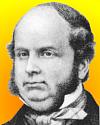
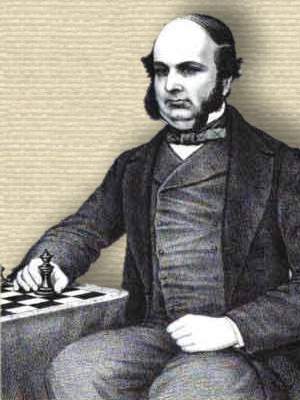
Henry Thomas Buckle
(24 Nov 1821 - 29 May 1862)
British historian who applied methods of natural science to the analysis of history. He wished to discover universal laws of historical development. He believed that climate, soil, food, and the aspects of nature were the primary influences on intellectual progress, whereas religion, literature and government were products but not causes of civilization. Buckle published the first volume of the History of Civilization in England in 1857 and a second in 1861.
|
Science Quotes by Henry Thomas Buckle (9 quotes)
And, notwithstanding a few exceptions, we do undoubtedly find that the most truly eminent men have had not only their affections, but also their intellect, greatly influenced by women. I will go even farther; and I will venture to say that those who have not undergone that influence betray a something incomplete and mutilated. We detect, even in their genius, a certain frigidity of tone; and we look in vain for that burning fire, that gushing and spontaneous nature with which our ideas of genius are indissolubly associated. Therefore, it is, that those who are most anxious that the boundaries of knowledge should be enlarged, ought to be most eager that the influence of women should be increased, in order that every resource of the human mind may be at once and quickly brought into play.
— Henry Thomas Buckle
Lecture (19 Mar 1858) at the Royal Institution, 'The Influence Of Women On The Progress Of Knowledge', collected in The Miscellaneous and Posthumous Works of Henry Thomas Buckle (1872), Vol. 1, 17. Published in Frazier’s Magazine (Apr 1858).
For, the great enemy of knowledge is not error, but inertness. All that we want is discussion, and then we are sure to do well, no matter what our blunders may be. One error conflicts with another; each destroys its opponent, and truth is evolved.
— Henry Thomas Buckle
In History of Civilization in England (1861), Vol. 2, 408.
Our knowledge is composed not of facts, but of the relations which facts and ideas bear to themselves and to each other; and real knowledge consists not in an acquaintance with facts, which only makes a pedant, but in the use of facts, which makes a philosopher.
— Henry Thomas Buckle
Lecture (19 Mar 1858) at the Royal Institution, 'The Influence Of Women On The Progress Of Knowledge', collected in The Miscellaneous and Posthumous Works of Henry Thomas Buckle (1872), Vol. 1, 4. Published in Frazier’s Magazine (Apr 1858).
Suicide is merely the product of the general condition of society, and that the individual felon only carries into effect what is a necessary consequence of preceding circumstances. In a given state of society, a certain number of persons must put an end to their own life. This is the general law; and the special question as to who shall commit the crime depends of course upon special laws; which, however, in their total action, must obey the large social law to which they are all subordinate. And the power of the larger law is so irresistible, that neither the love of life nor the fear of another world can avail any thing towards even checking its operation.
— Henry Thomas Buckle
In History of Civilization in England (1857, 1904), 15-16.
The actions of bad men produce only temporary evil, the actions of good men only temporary good ; and eventually the good and the evil altogether subside, are neutralized by subsequent generations, absorbed by the incessant movements of future ages. But the discoveries of great men never leave us; they are immortal; they contain those eternal truths which survive the shock of empires, outlive the struggles of rival creeds, and witness the decay of successive religions.
— Henry Thomas Buckle
In History of Civilization in England (1858), Vol. 1, 206.
The faculty of art is to change events; the faculty of science is to foresee them. The phenomena with which we deal are controlled by art; they are predicted by science.
— Henry Thomas Buckle
'The Influence of Women on the Progress of Knowledge,', a discourse delivered at the Royal Institution (19 Mar 1858) reprinted from Fraser's Magazine (Apr 1858) in The Miscellaneous and Posthumous Works of Henry Thomas Buckle (1872), Vol. 1, 4. Quoted in James Wood, Dictionary of Quotations from Ancient and Modern, English and Foreign Sources (1893), 426:46.
The immediate object of all art is either pleasure or utility: the immediate object of all science is solely truth.
— Henry Thomas Buckle
Lecture (19 Mar 1858) at the Royal Institution, 'The Influence Of Women On The Progress Of Knowledge', collected in The Miscellaneous and Posthumous Works of Henry Thomas Buckle (1872), Vol. 1, 4. Published in Frazier’s Magazine (Apr 1858).
Unconscious, perhaps, of the remote tendency of his own labours, he [Joseph Black] undermined that doctrine of material heat, which he seemed to support. For, by his advocacy of latent heat, he taught that its movements constantly battle, not only some of our senses, but all of them; and that, while our feelings make us believe that heat is lost, our intellect makes us believe that it is not lost. Here, we have apparent destructability, and real indestructibility. To assert that a body received heat without its temperature rising, was to make the understanding correct the touch, and defy its dictates. It was a bold and beautiful paradox, which required courage as well as insight to broach, and the reception of which marks an epoch in the human mind, because it was an immense step towards idealizing matter into force.
— Henry Thomas Buckle
History of Civilization in England (1861), Vol. 2, 494.
When the interval between the intellectual classes and the practical classes is too great, the former will possess no influence, the latter will reap no benefit.
— Henry Thomas Buckle
In History of Civilization (1857), Vol. 1, 244. As quoted and cited in Blackwood’s Edinburgh Magazine (1858), 84, No. 517, 532.
 In science it often happens that scientists say, 'You know that's a really good argument; my position is mistaken,' and then they would actually change their minds and you never hear that old view from them again. They really do it. It doesn't happen as often as it should, because scientists are human and change is sometimes painful. But it happens every day. I cannot recall the last time something like that happened in politics or religion.
(1987) --
In science it often happens that scientists say, 'You know that's a really good argument; my position is mistaken,' and then they would actually change their minds and you never hear that old view from them again. They really do it. It doesn't happen as often as it should, because scientists are human and change is sometimes painful. But it happens every day. I cannot recall the last time something like that happened in politics or religion.
(1987) -- 




