 (source)
|
Robert Boyle
(25 Jan 1627 - 30 Dec 1691)
Irish-English physicist, chemist and natural philosopher.
|
’Tis evident, that as common Air when reduc’d to half Its wonted extent, obtained near about twice as forcible a Spring as it had before; so this thus- comprest Air being further thrust into half this narrow room, obtained thereby a Spring about as strong again as that It last had, and consequently four times as strong as that of the common Air. And there is no cause to doubt, that If we had been here furnisht with a greater quantity of Quicksilver and a very long Tube, we might by a further compression of the included Air have made It counter-balance “the pressure” of a far taller and heavier Cylinder of Mercury. For no man perhaps yet knows how near to an infinite compression the Air may be capable of, If the compressing force be competently increast.
— Robert Boyle
A Defense of the Doctrine Touching the Spring and Weight of the Air (1662), 62.
Acid Salts have the Power of Destroying the Blewness of the Infusion of our Wood [lignum nephreticum], and those Liquors indiscriminatly that abound with Sulphurous Salts, (under which I comprehend the Urinous and Volatile Salts of Animal Substances, and the Alcalisate or fixed Salts that are made by Incineration) have the virtue of Restoring it.
— Robert Boyle
Experiments and Considerations Touching Colours (1664), 212.
And let me adde, that he that throughly understands the nature of Ferments and Fermentations, shall probably be much better able than he that Ignores them, to give a fair account of divers Phænomena of severall diseases (as well Feavers and others) which will perhaps be never throughly understood, without an insight into the doctrine of Fermentation.
— Robert Boyle
Essay 2, 'Offering some Particulars relating to the Pathologicall Part of Physick', in the Second Part of Some Considerations Touching The Usefulnesse of Naturall Philosophy (1663, 1664), 43.
And when with excellent Microscopes I discern in otherwise invisible Objects the Inimitable Subtlety of Nature’s Curious Workmanship; And when, in a word, by the help of Anatomicall Knives, and the light of Chymicall Furnaces, I study the Book of Nature, and consult the Glosses of Aristotle, Epicurus, Paracelsus, Harvey, Helmont, and other learn'd Expositors of that instructive Volumne; I find my self oftentimes reduc’d to exclaim with the Psalmist, How manifold are thy works, O Lord? In wisdom hast thou made them all.
— Robert Boyle
Some Motives and Incentives to the Love of God (1659), 56-7.
And, to prevent mistakes, I must advertize you, that I now mean by elements, as those chymists that speak plainest do by their principles, certain primitive or simple, or perfectly unmingled bodies; which not being made of any other bodies, or of one another, are the ingredients of which all those called perfectly mixt bodies are immediately compounded, and into which they are ultimately resolved: now whether there be any such body to be constantly met with in all, and each, of those that are said to be elemented bodies, is the thing I now question.
— Robert Boyle
The Sceptical Chemist (2nd ed., 1661), Appendix, 354. As given in Henry M. Leicester and Herbert S. Klickstein, A Source Book in Chemistry 1400-1900 (1952), 42.
But the World being once fram’d, and the course of Nature establish’d, the Naturalist, (except in some few cases, where God, or Incorporeal Agents interpose), has recourse to the first Cause but for its general and ordinary Support and Influence, whereby it preserves Matter and Motion from Annihilation or Desition; and in explicating particular phenomena, considers onely the Size, Shape, Motion, (or want of it) Texture, and the resulting Qualities and Attributes of the small particles of Matter.
— Robert Boyle
The Origine of Formes and Qualities (1666), 194.
Divers of Hermetic Books have such involv’d Obscuritys that they may justly be compar’d to Riddles written in Cyphers. For after a Man has surmounted the difficulty of decyphering the Words & Terms, he finds a new & greater difficulty to discover ye meaning of the seemingly plain Expression.
— Robert Boyle
Fragment In Boyle papers. Cited by Lawrence Principe, 'Boyle's Alchemical Pursuits', In M. Hunter (ed.), Robert Boyle Reconsidered (1994), 95
I am very sorry, Pyrophilus, that to the many (elsewhere enumerated) difficulties which you may meet with, and must therefore surmount, in the serious and effectual prosecution of experimental philosophy I must add one discouragement more, which will perhaps is much surprise as dishearten you; and it is, that besides that you will find (as we elsewhere mention) many of the experiments published by authors, or related to you by the persons you converse with, false and unsuccessful (besides this, I say), you will meet with several observations and experiments which, though communicated for true by candid authors or undistrusted eye-witnesses, or perhaps recommended by your own experience, may, upon further trial, disappoint your expectation, either not at all succeeding constantly, or at least varying much from what you expected.
— Robert Boyle
Opening paragraph of The First Essay Concerning the Unsuccessfulness of Experiments (1673), collected in The Works of the Honourable Robert Boyle in Six Volumes to Which is Prefixed the Life of the Author (1772), Vol. 1, 318-319.
I confess, that after I began … to discern how useful mathematicks may be made to physicks, I have often wished that I had employed about the speculative part of geometry, and the cultivation of the specious Algebra I had been taught very young, a good part of that time and industry, that I had spent about surveying and fortification (of which I remember I once wrote an entire treatise) and other parts of practick mathematicks.
— Robert Boyle
In 'The Usefulness of Mathematiks to Natural Philosophy', Works (1772), Vol. 3, 426.
I consider then, that generally speaking, to render a reason of an effect or Phaenomenon, is to deduce It from something else in Nature more known than it self, and that consequently there may be divers kinds of Degrees of Explication of the same thing. For although such Explications be the most satisfactory to the Understanding, wherein ’tis shewn how the effect is produc’d by the more primitive and Catholick Affection of Matter, namely bulk, shape and motion, yet are not these Explications to be despis’d, wherein particular effects are deduc’d from the more obvious and familiar Qualities or States of Bodies, … For in the search after Natural Causes, every new measure of Discovery does both instinct and gratifie the Understanding.
— Robert Boyle
Physiological Essays (1669), 20.
I look upon a good physician, not so properly as a servant to nature, as one, that is a counsellor and friendly assistant, who, in his patient’s body, furthers those motions and other things, that he judges conducive to the welfare and recovery of it; but as to those, that he perceives likely to be hurtful, either by increasing the disease, or otherwise endangering the patient, he thinks it is his part to oppose or hinder, though nature do manifestly enough seem to endeavour the exercising or carrying on those hurtful motions.
— Robert Boyle
Quoted In Barbara Kaplan (ed.) Divulging of Useful Truths in Physick: The Medical Agenda of Robert Boyle (1993), 125.
I will not now discuss the Controversie betwixt some of the Modern Atomists, and the Cartesians; the former of whom think, that betwixt the Earth and the Stars, and betwixt these themselves there are vast Tracts of Space that are empty, save where the beams of Light do pass through them; and the later of whom tell us, that the Intervals betwixt the Stars and Planets (among which the Earth may perhaps be reckon'd) are perfectly fill'd, but by a Matter far subtiler than our Air, which some call Celestial, and others Æther. I shall not, I say, engage in this controversie, but thus much seems evident, That If there be such a Celestial Matter, it must ' make up far the Greatest part of the Universe known to us. For the Interstellar part of the world (If I may so stile it) bears so very great a proportion to the Globes, and their Atmospheres too, (If other Stars have any as well as the Earth,) that It Is almost incomparably Greater in respect of them, than all our Atmosphere is in respect of the Clouds, not to make the comparison between the Sea and the Fishes that swim in it.
— Robert Boyle
A Continuation of New Experiments Physico-Mechanical, Touching the Spring and Weight of the Air, and their Effects (1669), 127.
If the juices of the body were more chymically examined, especially by a naturalist, that knows the ways of making fixed bodies volatile, and volatile fixed, and knows the power of the open air in promoting the former of those operations; it is not improbable, that both many things relating to the nature of the humours, and to the ways of sweetening, actuating, and otherwise altering them, may be detected, and the importance of such discoveries may be discerned.
— Robert Boyle
Quoted In Barbara Kaplan (ed.) Divulging of Useful Truths in Physick: The Medical Agenda of Robert Boyle (1993), 92.
If the omniscient author of nature knew that the study of his works tends to make men disbelieve his Being or Attributes, he would not have given them so many invitations to study and contemplate Nature.
— Robert Boyle
'Some considerations touching the usefulness of experimental philosophy' (1663). Quoted In Peter Gay, The Enlightenment (1977), 140.
It is my intent to beget a good understanding between the chymists and the mechanical philosophers who have hitherto been too little acquainted with one another's learning.
— Robert Boyle
The Sceptical Chymist (1661).
Nature abhors a vacuum.
— Robert Boyle
The English translation of the long-known maxim, “Natura abhorret vacuum.” The phrase in English appears, for example, in Robert Boyle, A Free Inquiry into the Vulgar Notion of Nature, collected in The Philosophical Works of the Honourable Robert Boyle Esq (1725), Vol. 2, 138. The concept was known long before Boyle. It was expressed, though not as briefly, by Aristotelian philosophers of ancient Greece.
That there is a Spring, or Elastical power in the Air we live in. By which ελατνρ [elater] or Spring of the Air, that which I mean is this: That our Air either consists of, or at least abounds with, parts of such a nature, that in case they be bent or compress'd by the weight of the incumbent part of the Atmosphere, or by any other Body, they do endeavour, as much as in them lies, to free themselves from that pressure, by bearing against the contiguous Bodies that keep them bent.
— Robert Boyle
New Experiments Physico-Mechanical Touching the Spring of the Air (1660), 22.
The generality of men are so accustomed to judge of things by their senses that, because the air is indivisible, they ascribe but little to it, and think it but one remove from nothing.
— Robert Boyle
In Mary Elvira Weeks, The Discovery of the Elements (1934), 29, citing Boyle, 'Memoirs for a General History of the Air', in Shaw's Abridgment of Boyle's works (1725), Vol. 3, 61, and Ramsay, The Gases of the Atmosphere (1915), 10.
The inspired and expired air may be sometimes very useful, by condensing and cooling the blood that passeth through the lungs; I hold that the depuration of the blood in that passage, is not only one of the ordinary, but one of the principal uses of respiration.
— Robert Boyle
New Experiments ... Touching the Spring of Air. In Works, Vol 1, 113. Quoted in Barbara Kaplan (ed.), Divulging of Useful Truths in Physick: The Medical Agenda of Robert Boyle (1993), 85.
The main thing that induces me to question the safeness of the vulgar methodus medendi in many cases is the consideration of the nature of those Helps they usually employ, and some of which are honoured with the title of Generous Remedies. These helps are Bleeding, Vomiting, Purging, Sweating, and Spitting, of which I briefly observe in General, that they are sure to weaken or discompose when they are imployed, but do not certainly cure afterwards.
— Robert Boyle
RSMS 199, Folio 177v. Michael Hunter identfies as passages or a suppressed work, Considerations and Doubts Touching the Vulgar Method of Physick. Quoted In Barbara Kaplan (ed.), Divulging of Useful Truths in Physick: The Medical Agenda of Robert Boyle (1993), 138.
The Requisites of a good Hypothesis are:
That It be Intelligible.
That It neither Assume nor Suppose anything Impossible, unintelligible, or demonstrably False.
That It be consistent with Itself.
That It be lit and sufficient to Explicate the Phaenomena, especially the chief.
That It be, at least, consistent, with the rest of the Phaenomena It particularly relates to, and do not contradict any other known Phaenomena of nature, or manifest Physical Truth.
The Qualities and Conditions of an Excellent Hypothesis are:
That It be not Precarious, but have sufficient Grounds In the nature of the Thing Itself or at least be well recommended by some Auxiliary Proofs.
That It be the Simplest of all the good ones we are able to frame, at least containing nothing that is superfluous or Impertinent.
That It be the only Hypothesis that can Explicate the Phaenomena; or at least, that do’s Explicate them so well.
That it enable a skilful Naturailst to foretell future Phaenomena by the Congruity or Incongruity to it; and especially the event of such Experlm’ts as are aptly devis’d to examine It, as Things that ought, or ought not, to be consequent to It.
That It be Intelligible.
That It neither Assume nor Suppose anything Impossible, unintelligible, or demonstrably False.
That It be consistent with Itself.
That It be lit and sufficient to Explicate the Phaenomena, especially the chief.
That It be, at least, consistent, with the rest of the Phaenomena It particularly relates to, and do not contradict any other known Phaenomena of nature, or manifest Physical Truth.
The Qualities and Conditions of an Excellent Hypothesis are:
That It be not Precarious, but have sufficient Grounds In the nature of the Thing Itself or at least be well recommended by some Auxiliary Proofs.
That It be the Simplest of all the good ones we are able to frame, at least containing nothing that is superfluous or Impertinent.
That It be the only Hypothesis that can Explicate the Phaenomena; or at least, that do’s Explicate them so well.
That it enable a skilful Naturailst to foretell future Phaenomena by the Congruity or Incongruity to it; and especially the event of such Experlm’ts as are aptly devis’d to examine It, as Things that ought, or ought not, to be consequent to It.
— Robert Boyle
Boyle Papers, 37. Quoted In Barbara Kaplan (ed.), Divulging of Useful Truths in Physick:The Medical Agenda of Robert Boyle (1993), 50.
The subsequent course of nature, teaches, that God, indeed, gave motion to matter; but that, in the beginning, he so guided the various motion of the parts of it, as to contrive them into the world he design'd they should compose; and establish'd those rules of motion, and that order amongst things corporeal, which we call the laws of nature. Thus, the universe being once fram'd by God, and the laws of motion settled, and all upheld by his perpetual concourse, and general providence; the same philosophy teaches, that the phenomena of the world, are physically produced by the mechanical properties of the parts of matter; and, that they operate upon one another according to mechanical laws. 'Tis of this kind of corpuscular philosophy, that I speak.
— Robert Boyle
'The Excellence and Grounds of the Mechanical Philosophy', In P. Shaw (ed.), The Philosophical Works of Robert Boyle (1725), Vol. 1, 187.
The veneration, wherewith Men are imbued for what they call Nature, has been a discouraging impediment to the Empire of Man over the inferior Creatures of God. For many have not only look’d upon it, as an impossible thing to compass, but as something impious to attempt.
— Robert Boyle
A Free Enquiry into the Vulgarly Received Notion of Nature Made in an Essay, Address'd to a Friend (1686), 18-9.
Quotes by others about Robert Boyle (5)
He [Robert Boyle] is very tall (about six foot high) and straight, very temperate, and vertuouse, and frugall: a batcheler; keepes a Coach; sojournes with his sister, the Lady Ranulagh. His greatest delight is Chymistrey. He has at his sister’s a noble laboratory, and severall servants (Prentices to him) to look to it. He is charitable to ingeniose men that are in want, and foreigne Chymists have had large proofe of his bountie, for he will not spare for cost to get any rare Secret.
John Aubrey, Brief Lives (1680), edited by Oliver Lawson Dick (1949), 37.
The Commonwealth of Learning is not at this time without Master-Builders, whose mighty Designs, in advancing the Sciences, will leave lasting Monuments to the Admiration of Posterity; But every one must not hope to be a Boyle, or a Sydenham; and in an Age that produces such Masters, as the Great-Huygenius, and the incomparable Mr. Newton, with some other of that Strain; 'tis Ambition enough to be employed as an Under-Labourer in clearing Ground a little, and removing some of the Rubbish, that lies in the way to Knowledge.
An Essay Concerning Human Understanding (1690). Edited by Peter Nidditch (1975), The Epistle to the Reader, 9-10.
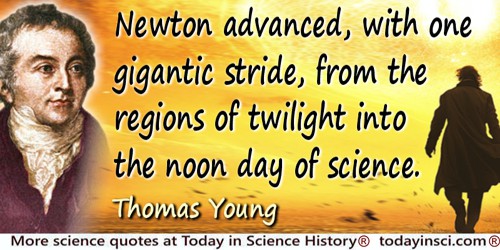
Newton advanced, with one gigantic stride, from the regions of twilight into the noon day of science. A Boyle and a Hooke, who would otherwise have been deservedly the boast of their century, served but as obscure forerunners of Newton's glories.
A Course of Lectures on Natural Philosophy and the Mechanical Arts (1845), 5.
Bodies, projected in our air, suffer no resistance but from the air. Withdraw the air, as is done in Mr. Boyle's vacuum, and the resistance ceases. For in this void a bit of fine down and a piece of solid gold descend with equal velocity.
In 'General Scholium' from The Mathematical Principles of Natural Philosophy (1729), Vol. 2, Book 3, 388.
The pioneering practitioners of the new science [of the seventeenth century] knew that they were producing a new kind of knowledge and so they declared this newness in the titles of their books and articles. Thus we have Galileo’s Two New Sciences, Boyle’s New Experiments, Kepler’s New Astronomy, and Tartaglia’s New Science.
From The Triumph of Numbers: How Counting Shaped Modern Life (2005), 36.
See also:
 In science it often happens that scientists say, 'You know that's a really good argument; my position is mistaken,' and then they would actually change their minds and you never hear that old view from them again. They really do it. It doesn't happen as often as it should, because scientists are human and change is sometimes painful. But it happens every day. I cannot recall the last time something like that happened in politics or religion.
(1987) --
In science it often happens that scientists say, 'You know that's a really good argument; my position is mistaken,' and then they would actually change their minds and you never hear that old view from them again. They really do it. It doesn't happen as often as it should, because scientists are human and change is sometimes painful. But it happens every day. I cannot recall the last time something like that happened in politics or religion.
(1987) -- 





