 (source)
|
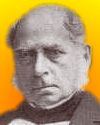
Sir Henry Bessemer
(19 Jan 1813 - 15 Mar 1898)
English industrialist, metallurgist, inventor and engineer who developed the Bessemer converter (1855) used for making steel.
|
An English Opinion of the United States Patent Office Management
Article from: Scientific American (1857)
The London Engineer, in copying an article from the Scientific American, in reference to the question of priority of invention between Kelly and Bessemer, for improvements in the manufacture of iron, (which question, as many of our readers will remember, was decided against Bessemer,) indulges in the following comments: —
"We trust our readers will not for one moment conceive that our admiration of the Patent Office of the Americans extends to their mode of granting patents either to their own countrymen or to foreigners; or that it will be thought that we look upon their mode of charging English inventors about six times as much as native ones with any other feeling than that of disgust. considering it most unjust, and especially so as we make no difference with regard to American inventors and those of our own country. Neither have we failed to notice the late proceedings of the American Patent Office in relation to Mr. Bessemer's patent. We have no hesitation in saying that the annulling of a patent once granted, or the refusal to grant a patent, upon the ground that some person in some remote age made experiments involving the principles contained in the patent granted or applied for, is adopting a most dangerous and unjust principle, and one which cannot fail to be productive of the most baneful consequences. There is one gratifying circumstance attending this annulling of Mr. Bessemer's patent, which is this, that the American press seems ashamed of it, for it has stated its conviction of the necessity for reform in this respect, and that a certain time only should be allowed to elapse after a discovery or invention has been made, during which the discoverer or inventor should obtain a patent or else lose the right of doing so, and that if he eventually gives up the idea of applying for a patent, his experiment being made should be no bar to another person, native or foreigner, obtaining a patent for the same thing, provided it be a bona fide invention. There can be no doubt that this is a just view of this case, and we are very glad to find that if American inventors are ignorant of what is right, they cannot plead ignorance in the future. In another column will be found the remarks of our scientific cotemporary upon this subject, and we trust that they will not be the only ones made in Mr. Bessemer's behalf. We should very much like to know the exact meaning of an original or first inventor, or how it is possible to ascertain whether an inventor is an original one or not; further, we should like to know whether there are any cases on record of an American inventor having obtained a patent, and of his patent having been annulled by the discovery that drawings of his invention were made by somebody else eight years before. We would almost undertake to say that the American Commissioner of Patents could point to no such case. We are not disposed to be too harsh, nor do we wish uncharitably to interpret the decision of the American Commissioner of Patents, inasmuch as it would appear clearly to be American law that one patentee can supersede another, if he can succeed in fishing up a few old drawings, and getting a few persons to swear that what was just patented was nothing more than what their friend did eight years before. It is stated in this case that Mr. Kelly's testimony appears to be reliable in every respect, and for the sake of American inventors we hope it is; but we cannot help condemning, in the strongest terms, the principle upon which Mr. Bessemer's patent has been annulled. We think it would be well for those who have the interest of American inventors in their keeping, to show what precedents there exist of patents being annulled after the lapse of so long a time; otherwise we much fear that, on this side of the Atlantic, many will suspect that the case in point is the first of its kind. For our own part we sincerely hope it is not."
In reply to the above, we desire to say that it has been the uniform practice of the U.S. Patent Office, since its establishment, to grant patents to the original and first inventor; it matters not to what clime or nation he may belong. In pursuing this old practice in the case of Kelly vs. Bessemer, the American patent Office only obeyed the high requirements of the law, without regard to Mr. Bessemer's nationality. Therefore, the Engineer betrays inexcusable ignorance when it says that "if American inventors are ignorant of what is right, they cannot plead ignorance for the future." American inventors are not responsible for the good or bad character of our Patent system. They had no more to do with its framing than Dick Turpin had to do with the preparation of the Westminster Catechism; and to brand them with ignorance of what is right, or to hold them responsible for the defects which are known and severely felt by them to exist in the workings of the American Patent law, is as destitute of justice, as it would be to accuse English inventors of inciting the Sepoys to their recent rebellion. Unfortunately, our Congress is made up of politicians who seemingly care but little for inventors, any way.
The present Patent laws were enacted more than twenty years ago, and, although defective in some respects, they will yet bear comparison with those of any other country. In fact, they are superior to the English Patent law of 1852, or the one which preceded it, inasmuch as our laws recognize the legal and moral rights of the first inventor, and do not hold out the slightest encouragement to outside parties to steal and patent inventions not their own.
Mr. Bessemer has not been defrauded of his invention by any trickery on the part of the American Commissioner of Patents. He carefully weighed the facts elicited in the evidence offered by each party; and if our cotemporary has any curiosity to examine the testimony, copies can be obtained from the records of our Patent Office, just the same as in the case of any other legal proceeding. A question of priority between the applicants is always a question of fact, and is ascertained by testimony to which both parties contribute. The above case is not an uncommon one; we occasionally meet with similar ones in our professional experience; and as law, the Commissioner of Patents has no other alternative but to obey it, until Congress (not American inventors) shall amend the same.
Two years since, when discussing the proposed changes in the American Patent system, we took decided ground against the existing law and practice on the subject of priority of invention, and also against the clause in the law which discriminates in reference to the fees to be paid by citizens and foreigners. On these two points, we entirely agree with our cotemporary, for we are unwilling to encourage the slightest shadow of unfairness in such matters.
- Science Quotes by Sir Henry Bessemer.
- 19 Jan - short biography, births, deaths and events on date of Bessemer's birth.
- Sir Henry Bessemer: An Autobiography, by Henry Bessemer. - book suggestion.





