|
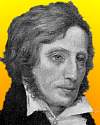
Karl Ernst Baer
(29 Feb 1792 - 28 Nov 1876)
Prussian-Estonian
embryologist
who discovered the mammalian egg (1827) and the notochord.
|
“The
History of Evolution is the real source of light in the investigation
of organic bodies. It is applicable at every step, and all our ideas of
the correlation of organic bodies will be swayed by our knowledge of
the history of evolution. To carry the proof of it into all branches of
research would be an almost endless task.”
— Karl Ernst Baer (1828)
as quoted in
The Evolution of Man,
Vol 1, p.48 (1897)
by Ernst Heinrich Philipp August Haeckel
by Ernst Heinrich Philipp August Haeckel
“The
distinguishing of the strata, or layers, in the embryonic membrane was
a turning-point in the study of the history of evolution, and placed
later researches in their proper light. A division of the (disc-shaped)
embryo into an animal and a plastic part first takes place. In the
lower part (the plastic or vegetative layer) are a serous and a
vascular layer, each of peculiar organization. In the upper part also
(the animal or serous germ-layer) two layers are clearly
distinguishable, a flesh-layer and a skin-layer.”
— Karl Ernst Baer (1828)
as quoted in
The Evolution of Man
, Vol 1, p.185 (1897)
by Ernst Heinrich Philipp August Haeckel
by Ernst Heinrich Philipp August Haeckel
 In science it often happens that scientists say, 'You know that's a really good argument; my position is mistaken,' and then they would actually change their minds and you never hear that old view from them again. They really do it. It doesn't happen as often as it should, because scientists are human and change is sometimes painful. But it happens every day. I cannot recall the last time something like that happened in politics or religion.
(1987) --
In science it often happens that scientists say, 'You know that's a really good argument; my position is mistaken,' and then they would actually change their minds and you never hear that old view from them again. They really do it. It doesn't happen as often as it should, because scientists are human and change is sometimes painful. But it happens every day. I cannot recall the last time something like that happened in politics or religion.
(1987) --