 (source)
|
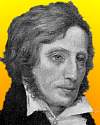
Karl Ernst von Baer
(28 Feb 1792 - 28 Nov 1876)
German-Russian embryologist known for his discovery of the mammalian egg and the notochord.
|
Science Quotes by Karl Ernst von Baer (7 quotes)
That the general characters of the big group to which the embryo belongs appear in development earlier than the special characters. In agreement with this is the fact that the vesicular form is the most general form of all; for what is common in a greater degree to all animals than the opposition of an internal and an external surface?
The less general structural relations are formed after the more general, and so on until the most special appear.
The embryo of any given form, instead of passing through the state of other definite forms, on the contrary separates itself from them.
Fundamentally the embryo of a higher animal form never resembles the adult of another animal form, but only its embryo.
The less general structural relations are formed after the more general, and so on until the most special appear.
The embryo of any given form, instead of passing through the state of other definite forms, on the contrary separates itself from them.
Fundamentally the embryo of a higher animal form never resembles the adult of another animal form, but only its embryo.
— Karl Ernst von Baer
Über Entwicklungsgeschichte der Thiere: Beobachtung und Reflexion (1828), 224. Trans. E. S. Russell, Form and Function: A Contribution to the History of Animal Morphology (1916), 125-6.
Know thyself! This is the source of all wisdom, said the great thinkers of the past, and the sentence was written in golden letters on the temple of the gods. To know himself, Linnæus declared to be the essential indisputable distinction of man above all other creatures. I know, indeed, in study nothing more worthy of free and thoughtful man than the study of himself. For if we look for the purpose of our existence, we cannot possibly find it outside ourselves. We are here for our own sake.
— Karl Ernst von Baer
As translated and quoted in Ernst Haeckel and E. Ray Lankester (trans.) as epigraph for Chap. 9, The History of Creation (1886), Vol. 1, 244.
Let us only imagine that birds had studied their own development and that it was they in turn who investigated the structure of the adult mammal and of man. Wouldn’t their physiological textbooks teach the following? “Those four and two-legged animals bear many resemblances to embryos, for their cranial bones are separated, and they have no beak, just as we do in the first live or six days of incubation; their extremities are all very much alike, as ours are for about the same period; there is not a single true feather on their body, rather only thin feather-shafts, so that we, as fledglings in the nest, are more advanced than they shall ever be … And these mammals that cannot find their own food for such a long time after their birth, that can never rise freely from the earth, want to consider themselves more highly organized than we?”
— Karl Ernst von Baer
Über Entwicklungsgeschichte der Thiere: Beobachtung und Reflexion (1828), 203. Trans. Stephen Jay Gould, Ontogeny and Phylogeny (1977), 54.
The development of the Vertebrate proceeds from an axis upward, in two layers, which coalesce at the edges, and also downward, in two layers, which likewise coalesce at the edges. Thus two main tubes are formed, one above the other. During the formation of these, the embryo separates into strata, so that the two main tubes are composed of subordinate tubes which enclose each other as fundamental organs, and are capable of developing into all the organs.
— Karl Ernst von Baer
As translated and quoted in Ernst Haeckel and E. Ray Lankester (trans.) as epigraph for Chap. 10, The History of Creation (1886), Vol. 1, 244. Alternate translation: “Vertebrate development consists in the formation, in the median plane, of four leaflets two of which are above the axis and two below. During this evolution the germ subdivides in layers, and this has the effect of dividing the primordial tubes into secondary masses. The latter, included in the other masses, are the fundamental organs with the faculty of forming all the other organs.” in François Jacob, The Logic of Life (1993), 121-122.
The distinguishing of the strata, or layers, in the embryonic membrane was a turning-point in the study of the history of evolution, and placed later researches in their proper light. A division of the (disc-shaped) embryo into an animal and a plastic part first takes place. In the lower part (the plastic or vegetative layer) are a serous and a vascular layer, each of peculiar organization. In the upper part also (the animal or serous germ-layer) two layers are clearly distinguishable, a flesh-layer and a skin-layer. (1828)
— Karl Ernst von Baer
Quoted in Ernst Heinrich Philipp August Haeckel, The Evolution of Man (1897), Vol 1, 185.
The embryos of mammals, of birds, lizards, and snakes are, in their earliest states, exceedingly like one another, both as a whole and in the mode of development of their parts, indeed we can often distinguish such embryos only by their size. I have two little embryos in spirit [alcohol] to which I have omitted to attach the names. I am now quite unable to say to what class they belong.
— Karl Ernst von Baer
The History of Evolution is the real source of light in the investigation of organic bodies. It is applicable at every step, and all our ideas of the correlation of organic bodies will be swayed by our knowledge of the history of evolution. To carry the proof of it into all branches of research would be an almost endless task. (1828)
— Karl Ernst von Baer
Quoted as an epigraph to Chap. 3, in Ernst Haeckel, The Evolution of Man, (1886), Vol 1, 48.
See also:
- 28 Feb - short biography, births, deaths and events on date of Baer's birth.
- Autobiography of Dr Karl Ernest Von Baer, by Karl Ernst von Baer. - book suggestion.
 In science it often happens that scientists say, 'You know that's a really good argument; my position is mistaken,' and then they would actually change their minds and you never hear that old view from them again. They really do it. It doesn't happen as often as it should, because scientists are human and change is sometimes painful. But it happens every day. I cannot recall the last time something like that happened in politics or religion.
(1987) --
In science it often happens that scientists say, 'You know that's a really good argument; my position is mistaken,' and then they would actually change their minds and you never hear that old view from them again. They really do it. It doesn't happen as often as it should, because scientists are human and change is sometimes painful. But it happens every day. I cannot recall the last time something like that happened in politics or religion.
(1987) -- 




