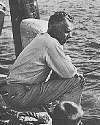
Born 25 Sep 1904; died 5 Jan 1971 at age 66.
Columbus O'Donnell Iselin was an American oceanographer who was director of the Woods Hole Oceanographic Institution in Massachusetts (1940-50; 1956-57). He expanded its facilities 10-fold and made it one of the largest research establishments of its kind in the world. Iselin developed the bathythermograph and other deep-sea instruments responsible for saving ships during WW II. He made major contributions to research on ocean salinity and temperature, acoustics, and the oceanography of the Gulf Stream.
Columbus O'Donnell Iselin was an American oceanographer who was director of the Woods Hole Oceanographic Institution in Massachusetts (1940-50; 1956-57). He expanded its facilities 10-fold and made it one of the largest research establishments of its kind in the world. Iselin developed the bathythermograph and other deep-sea instruments responsible for saving ships during WW II. He made major contributions to research on ocean salinity and temperature, acoustics, and the oceanography of the Gulf Stream.
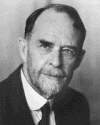
Born 25 Sep 1866; died 4 Dec 1945 at age 79. quotes
American geneticist and zoologist famous for his experimental research with the fruit fly by which he established the chromosome theory of heredity. He discovered that a number of genetic variations were inherited together and that this was because their controlling genes occurred on the same chromosome. At Columbia University (1904-28), he began his revolutionary genetic investigations of the fruit fly Drosophila melanogaster (1908). Initially skeptical of Gregor Mendel'sresearch, Morgan performed rigorous experiments which demonstrated that genes were linked in a series on chromosomes and are responsible for identifiable, hereditary traits. In 1910 he discovered sex-linkage in Drosophila, and postulated a connection between eye color in fruit flies and human color blindness. His study of the characteristics inherited by mutants ultimately enabled him to determine the precise behaviour and exact localization of genes. Morgan and his "fly room" colleagues, mapped the relative positions of genes on Drosophila chromosomes. Morgan published his seminal book, The Mechanisms of Mendelian Heredity in 1915. Though this work was not widely accepted initially, Morgan was awarded a Nobel Prize for physiology or medicine in 1933.
American geneticist and zoologist famous for his experimental research with the fruit fly by which he established the chromosome theory of heredity. He discovered that a number of genetic variations were inherited together and that this was because their controlling genes occurred on the same chromosome. At Columbia University (1904-28), he began his revolutionary genetic investigations of the fruit fly Drosophila melanogaster (1908). Initially skeptical of Gregor Mendel'sresearch, Morgan performed rigorous experiments which demonstrated that genes were linked in a series on chromosomes and are responsible for identifiable, hereditary traits. In 1910 he discovered sex-linkage in Drosophila, and postulated a connection between eye color in fruit flies and human color blindness. His study of the characteristics inherited by mutants ultimately enabled him to determine the precise behaviour and exact localization of genes. Morgan and his "fly room" colleagues, mapped the relative positions of genes on Drosophila chromosomes. Morgan published his seminal book, The Mechanisms of Mendelian Heredity in 1915. Though this work was not widely accepted initially, Morgan was awarded a Nobel Prize for physiology or medicine in 1933.
Thomas Hunt Morgan: The Man and His Science, by Garland E. Allen. - book suggestion.
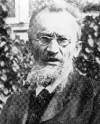
Born 25 Sep 1846; died 22 Jun 1940 at age 93.
Wladimir (Peter) Köppen was a German meteorologist and climatologist best known for his delineation and mapping of the climatic regions of the world. He played a major role in the advancement of climatology and meteorology for more than 70 years. The climate classification system he developed remains popular because it uses easily obtained data (monthly mean temperatures and precipitation) and straightforward, objective criteria. He recognized five principal climate groups: (A) Humid tropical -winterless climates; (B) Dry - evaporation constantly exceed precipitation; (C) humid mid-latitude, mild winters; (D) humid mid-latitude, severe winters; and (E) Polar - summerless climates.
Wladimir (Peter) Köppen was a German meteorologist and climatologist best known for his delineation and mapping of the climatic regions of the world. He played a major role in the advancement of climatology and meteorology for more than 70 years. The climate classification system he developed remains popular because it uses easily obtained data (monthly mean temperatures and precipitation) and straightforward, objective criteria. He recognized five principal climate groups: (A) Humid tropical -winterless climates; (B) Dry - evaporation constantly exceed precipitation; (C) humid mid-latitude, mild winters; (D) humid mid-latitude, severe winters; and (E) Polar - summerless climates.
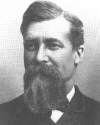
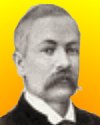
Born 25 Sep 1843; died 15 Nov 1928 at age 85. quotes
American geologist known for his "planetesimal hypothesis". With Forest Ray Moulton in 1904, he proposed that the solar system formed after gas flares were ripped from the sun by the gravitational field of a passing star. The flares then condensed into "planetesimals," arrayed in a spiral extending from the sun, gradually accumulated material and became the planets we know today. From 1876, he was Wisconsin Geological Survey's chief geologist, moving to head the glacier division of the U.S. Geological Survey (1881). He was president of the University of Wisconsin (1887-92), and then for 26 years he was head of its geology department of the University of Chicago. He founded The Journal of Geology.
American geologist known for his "planetesimal hypothesis". With Forest Ray Moulton in 1904, he proposed that the solar system formed after gas flares were ripped from the sun by the gravitational field of a passing star. The flares then condensed into "planetesimals," arrayed in a spiral extending from the sun, gradually accumulated material and became the planets we know today. From 1876, he was Wisconsin Geological Survey's chief geologist, moving to head the glacier division of the U.S. Geological Survey (1881). He was president of the University of Wisconsin (1887-92), and then for 26 years he was head of its geology department of the University of Chicago. He founded The Journal of Geology.
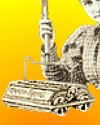
U.S. inventor of the carpet sweeper. Melville Bissell and his wife, Anna, owned a crockery shop in Grand Rapids, Mich. The dust from the packings was affecting Anna's health and, from a desperate need for self-preservation, he invented the carpet sweeper (issued a U.S. patent on 19 Sep 1876). They recognized the sweeper's marketing possibilities and began to assemble them in a room over the store. The inner workings and cases were made by women working in their homes. Tufts of hog bristles were bound with string, dipped in hot pitch, inserted in brush rollers and finally trimmed them with scissors. Anna Bissell gathered the parts together in clothes baskets and brought them back to the store for assembling. She grew the business after Melville's death.
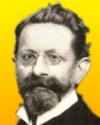
Born 25 Sep 1839; died 5 Jan 1904 at age 64.
(knight) German paleontologist who proved that the Sahara had not been under water during the Pleistocene Ice Age. A distinguished authority on his subjects and their history, he was a pioneer of evolutionary paleontology and was widely recognized as the leading teacher of paleontology in the 19th century. His five-volume Handbuch der Paläonologie (1876-93) was arguably his greatest service to science, and it remains one of the most comprehensive and trustworthy paleontological reference books.
(knight) German paleontologist who proved that the Sahara had not been under water during the Pleistocene Ice Age. A distinguished authority on his subjects and their history, he was a pioneer of evolutionary paleontology and was widely recognized as the leading teacher of paleontology in the 19th century. His five-volume Handbuch der Paläonologie (1876-93) was arguably his greatest service to science, and it remains one of the most comprehensive and trustworthy paleontological reference books.
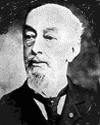

American civil engineer and architect whose technical innovations were of primary importance in the development of the skyscraper. During the Civil War he served as an engineering officer. By 1868 he was a practicing architect who had designed a Swiss Chalet style home with an innovative open floor plan, years before Frank Lloyd Wright worked with the concept. He also made a name for himself as a town planner. However, Jenney's greatest fame came from his large commercial buildings. His Home Insurance Building [above] in Chicago was one of the first buildings to use a metal skeleton for support, which became the standard for American skyscraper design.[Image right: (source]
The Sky's the Limit: A Century of Chicago Skyscrapers, by Pauline A. Saliga (Ed.). - book suggestion.
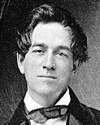
Born 25 Sep 1807; died 18 Jan 1859 at age 51.
American telegraph pioneer and an associate and financial backer of Samuel F.B. Morse in the experimentation that made the telegraph a commercial reality. The final form of the Morse code was perfected by Vail who simplified the whole process by introducing the telegraph key. Vail is responsible for the efficiency of the code, using the principle that the most frequently sent letters should have the shortest code.
American telegraph pioneer and an associate and financial backer of Samuel F.B. Morse in the experimentation that made the telegraph a commercial reality. The final form of the Morse code was perfected by Vail who simplified the whole process by introducing the telegraph key. Vail is responsible for the efficiency of the code, using the principle that the most frequently sent letters should have the shortest code.
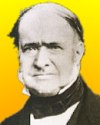
Born 25 Sep 1798; died 21 Sep 1874 at age 75.
Jean-Baptiste-Armand-Louis-Léonce Élie de Beaumont was a French geologist who, with French geologist Ours Pierre Dufrénoy, published the substantial geological map of France, Carte geologique generale de la France (1841). On 5 Jul 1847, he presented the first complete theory of metalliferous veins. He made a detailed study of European folded rocks, and concluded that these showed evidence of distinct mountain building episodes. His geometrically-based hypothesis that the directions of mountain systems were based on a pentagonal grid structure for the earth's crust found little support. However, his theory that the Earth is cooling, and therefore shrinking, was more warmly received.«
Jean-Baptiste-Armand-Louis-Léonce Élie de Beaumont was a French geologist who, with French geologist Ours Pierre Dufrénoy, published the substantial geological map of France, Carte geologique generale de la France (1841). On 5 Jul 1847, he presented the first complete theory of metalliferous veins. He made a detailed study of European folded rocks, and concluded that these showed evidence of distinct mountain building episodes. His geometrically-based hypothesis that the directions of mountain systems were based on a pentagonal grid structure for the earth's crust found little support. However, his theory that the Earth is cooling, and therefore shrinking, was more warmly received.«
Born 25 Sep 1773; died 6 Feb 1856 at age 82. quotes
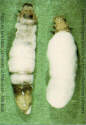
Agostino Marla Bassi de Lodi was an Italian entomologist, botanist and bacteriologist kown as the “Father of Insect Pathology” for his pioneering work investigating the cause of transmission of disease in animals. Ten years before Louis Pasteur found disease-causing microorganisms. Bassi showed (1835-6) that a silk worm disease was contagious and could be transmitted naturally by direct contact or infected food, or experimentally by means of a pin previously sterilized in a flame. The causative agent was later shown to be a fungus that multiplied in and on the body of the insect. This was the first microorganism to be recognized as a contagious agent of animal disease. Thus, the first animal pathogen to be understood was of insects, not humans. In 1844, he believed that “contagion by living organisms” also infected humans with measles, syphilis, and the plague.Image: B.bassiana fungus on soybean loopers. [Day of death from DSB 6 Feb 1856. EB gives died 8 Feb 1856.]
Agostino Marla Bassi de Lodi was an Italian entomologist, botanist and bacteriologist kown as the “Father of Insect Pathology” for his pioneering work investigating the cause of transmission of disease in animals. Ten years before Louis Pasteur found disease-causing microorganisms. Bassi showed (1835-6) that a silk worm disease was contagious and could be transmitted naturally by direct contact or infected food, or experimentally by means of a pin previously sterilized in a flame. The causative agent was later shown to be a fungus that multiplied in and on the body of the insect. This was the first microorganism to be recognized as a contagious agent of animal disease. Thus, the first animal pathogen to be understood was of insects, not humans. In 1844, he believed that “contagion by living organisms” also infected humans with measles, syphilis, and the plague.Image: B.bassiana fungus on soybean loopers. [Day of death from DSB 6 Feb 1856. EB gives died 8 Feb 1856.]
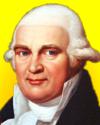
(EB)
Born 25 Sep 1750; died 30 Jun 1817 at age 66. quotes
Abraham Gottlob Werner was a German geologist who founded the Neptunist school, holding that all rocks have aqueous origins. This contrasts with the Plutonists, or Vulcanists, who maintain that granite among other rocks were of igneous origin. Werner also rejected the idea of uniformitarianism whereby geological evolution has been a uniform and continuous process.«
Abraham Gottlob Werner was a German geologist who founded the Neptunist school, holding that all rocks have aqueous origins. This contrasts with the Plutonists, or Vulcanists, who maintain that granite among other rocks were of igneous origin. Werner also rejected the idea of uniformitarianism whereby geological evolution has been a uniform and continuous process.«

French military engineer who invented the world's first fuel-propelled vehicle, a huge, heavy, steam-powered tricycle. In 1769 he developed the first vehicle driven by a steam engine--a gun tractor commissioned by the French government. The following year he produced the first mechanically driven "horseless carriage"; his steam tricycle, driven by a steam engine, carried four passengers and was the forerunner of the modern motor car. It was the difficulty of carrying enough water to generate the steam and the cumbersome nature of a steam engine that gave Otto's internal-combustion engine the edge over steam for this purpose a century later.[Image right: Cugnot's vehicle showing the steam boiler at the front.]
Born 25 Sep 1644; died 23 Sep 1710 at age 65.
Danish astronomer who demonstrated conclusively that light travels at a finite speed. He measured the speed by precisely measuring the length of time between eclipses of Jupiter by one of its moons. This observation produces different results depending on the position of the earth in its orbit around the sun. He reasoned that meant light took longer to travel the greater distance when earth was travelling in its orbit away from Jupiter.
Danish astronomer who demonstrated conclusively that light travels at a finite speed. He measured the speed by precisely measuring the length of time between eclipses of Jupiter by one of its moons. This observation produces different results depending on the position of the earth in its orbit around the sun. He reasoned that meant light took longer to travel the greater distance when earth was travelling in its orbit away from Jupiter.
Born 25 Sep 1644; died 19 Sep 1710 at age 65.
Danish astronomer.
Danish astronomer.
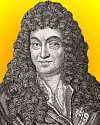
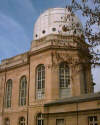
French architect, physician and physicist who was the architect of the oldest building of the Paris Observatory when it was funded in 1667 by King Louis XIV. Its centre line defined the meridian line of Paris (from 1667 to 1884 when France then adopted the international meridian line which passes through Greenwich close to London). Perrault presented a memoir to the Académie concerning a pendulum clock driven by water, some time before 1669 when he wrote to Christiaan Huygens on the subject of a hydraulic pendulum clock.. In 1673, he translated the Ten Books of Architecture by the Roman architect Vitruvius.[Image right: (source)]

Died 25 Sep 1991 at age 91 (born 20 May 1900).
Cuban ethnologist and short-story author noted for her collections of Afro-Cuban folklore. Lydia did extensive work in Matanzas, including the small towns south of the city of Matanzas itself, places such as Perico and Union de Reyes.
Cuban ethnologist and short-story author noted for her collections of Afro-Cuban folklore. Lydia did extensive work in Matanzas, including the small towns south of the city of Matanzas itself, places such as Perico and Union de Reyes.
Died 25 Sep 1986 at age 90 (born 15 Apr 1896).
Russian physical chemist who shared the 1956 Nobel Prize for Chemistry with Sir Cyril Hinshelwood for “their researches into the mechanism of chemical reactions.” He was the first Soviet scientist to receive a Nobel Prize. In 1926, with his coworkers, Semyonov first discovered branched-chain reactions in the oxidation of phosphorus. Whereas his intent for the investigation began as a study of the light output of that reaction, he was surprised to find there is a critical pressure of oxygen gas below which no activity would take place. The theoretical explanations he developed for how a process can initiate by a chain mechanism are also applicable in a wide range of chemical reactions, including oxidation, cracking, halogenation, polymerization and explosions. The chain mechanism creates an avalanche of interactions.«[Name also written as Nikolai Nikolaevic Semenov. Birthdate 3 Apr 1896 by old style calendar.]
Russian physical chemist who shared the 1956 Nobel Prize for Chemistry with Sir Cyril Hinshelwood for “their researches into the mechanism of chemical reactions.” He was the first Soviet scientist to receive a Nobel Prize. In 1926, with his coworkers, Semyonov first discovered branched-chain reactions in the oxidation of phosphorus. Whereas his intent for the investigation began as a study of the light output of that reaction, he was surprised to find there is a critical pressure of oxygen gas below which no activity would take place. The theoretical explanations he developed for how a process can initiate by a chain mechanism are also applicable in a wide range of chemical reactions, including oxidation, cracking, halogenation, polymerization and explosions. The chain mechanism creates an avalanche of interactions.«[Name also written as Nikolai Nikolaevic Semenov. Birthdate 3 Apr 1896 by old style calendar.]
Died 25 Sep 1985 at age 98 (born 4 Apr 1887).
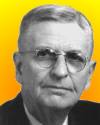
American biochemist who researched the role of amino acids in nutrition determining which were essential, and calculated the minimum daily requirement for each of them. Having found that the milk protein, casein, was essential in a healthy rat's diet, he discovered (1936) the threonine in the casein was an essential amino acid. Over several years he manipulated the rodent diet and finally established the primary importance of nine more amino acids: lysine, tryptophan, histidine, phenylalanine, leucine, isoleucine, methionine, valine, and arginine. In 1942, Rose began a ten-year research project on human diet. By persuading students to restrict their diet in various ways Rose eventually established that 8 of the above are essential amino acids for adults.
American biochemist who researched the role of amino acids in nutrition determining which were essential, and calculated the minimum daily requirement for each of them. Having found that the milk protein, casein, was essential in a healthy rat's diet, he discovered (1936) the threonine in the casein was an essential amino acid. Over several years he manipulated the rodent diet and finally established the primary importance of nine more amino acids: lysine, tryptophan, histidine, phenylalanine, leucine, isoleucine, methionine, valine, and arginine. In 1942, Rose began a ten-year research project on human diet. By persuading students to restrict their diet in various ways Rose eventually established that 8 of the above are essential amino acids for adults.
Died 25 Sep 1969 at age 79 (born 3 Feb 1890).
Swiss physicist whose collaboration with Peter Debye produced a method for X-ray diffraction analysis. The Debye-Scherrer method has the ability to identify materials that are not in the form of large, perfect crystals.«
Swiss physicist whose collaboration with Peter Debye produced a method for X-ray diffraction analysis. The Debye-Scherrer method has the ability to identify materials that are not in the form of large, perfect crystals.«
Died 25 Sep 1958 at age 80 (born 9 Jan 1878). quotes
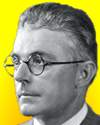
John Broadus Watson was an American psychologist whose ideas initiated behaviorism as a branch of psychology. Inspired by the recent work of Ivan Pavlov, he studied the biology, physiology, and behavior of animals. Watson viewed animals as extremely complex machines that responded to situations according to their “wiring,” or nerve pathways that were conditioned by experience. When he continued with studies of the behavior of children, his conclusion was that humans, while more complicated than animals, operated on the same principles. Watson's behaviourism dominated psychology in the U.S. in the 1920s and '30s.
John Broadus Watson was an American psychologist whose ideas initiated behaviorism as a branch of psychology. Inspired by the recent work of Ivan Pavlov, he studied the biology, physiology, and behavior of animals. Watson viewed animals as extremely complex machines that responded to situations according to their “wiring,” or nerve pathways that were conditioned by experience. When he continued with studies of the behavior of children, his conclusion was that humans, while more complicated than animals, operated on the same principles. Watson's behaviourism dominated psychology in the U.S. in the 1920s and '30s.
Behaviorism, by John B Watson. - book suggestion.
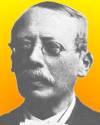
Died 25 Sep 1898 at age 73 (born 21 Nov 1824).
German mineralogist who in 1863 was a co-discoverer of the element indium. He was an expert in metallurgy, essaying and an authority on blowpipe analysis. He was assistant to Ferdinand Reich who suspected a new element was present in the samples of zinc ore he had chemically processed. Reich was colourblind and turned over the job of making a spectroscopic analysis to his assistant. When Richter placed some of the sample in a loop of platinum wire and heated it in the flame of a Bunsen burner, he observed a brilliant indigo line characteristic of this as a new element - called indium after the colour of this line. After separating the hydrated oxide of indium, they reduced it to obtain a sample of the new metal.
German mineralogist who in 1863 was a co-discoverer of the element indium. He was an expert in metallurgy, essaying and an authority on blowpipe analysis. He was assistant to Ferdinand Reich who suspected a new element was present in the samples of zinc ore he had chemically processed. Reich was colourblind and turned over the job of making a spectroscopic analysis to his assistant. When Richter placed some of the sample in a loop of platinum wire and heated it in the flame of a Bunsen burner, he observed a brilliant indigo line characteristic of this as a new element - called indium after the colour of this line. After separating the hydrated oxide of indium, they reduced it to obtain a sample of the new metal.
Died 25 Sep 1898 at age 77 (born 29 Aug 1821).
French anthropologist who was the first to organize man's prehistoric cultural developments into a sequence of epochs. Based on the idea that older specimens of man were more primitive structurally and culturally, he created a ladder-like model of the evolution of man. This model was the basis for the idea of linear evolution of men. This classification system was further detailed in 1882, in Le Prehistorique: antiquite de l'homme (The Prehistoric: Man's Antiquity). His classification system continued to be the basis for anthropological classification into the 1900s. For example, he ordered the Paleolithic (Stone Age) epochs into Chellean, Acheulian, Mousterian, Solutrean, Magdalenian, and so on.
French anthropologist who was the first to organize man's prehistoric cultural developments into a sequence of epochs. Based on the idea that older specimens of man were more primitive structurally and culturally, he created a ladder-like model of the evolution of man. This model was the basis for the idea of linear evolution of men. This classification system was further detailed in 1882, in Le Prehistorique: antiquite de l'homme (The Prehistoric: Man's Antiquity). His classification system continued to be the basis for anthropological classification into the 1900s. For example, he ordered the Paleolithic (Stone Age) epochs into Chellean, Acheulian, Mousterian, Solutrean, Magdalenian, and so on.
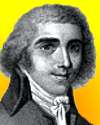
Died 25 Sep 1826 at age 54 (born 18 Feb 1772). quotes
Italian geologist who taught natural history at the gymnasium at Brescia (1802-08), then held the post inspector of mines at Milan until 1814. He used his experience organizing the mining industry in Egypt (1822-26). In 1814, he published his major work, Subapennine Fossil Conchology which gave a detailed description of fossil deposits in Italy. Brocchi drew an original analogy that species have births and deaths like individuals. He saw comparisons in the Subapennine fossils with living fauna, but also found contrasts with the extinct fossils described by Lamarck found in the Paris Basin. Though Brocchi’s line of thought was not fully developed, it later influenced Charles Darwin’s conjectures on evolution.«[Also known as Giambattista Brocchi]
Italian geologist who taught natural history at the gymnasium at Brescia (1802-08), then held the post inspector of mines at Milan until 1814. He used his experience organizing the mining industry in Egypt (1822-26). In 1814, he published his major work, Subapennine Fossil Conchology which gave a detailed description of fossil deposits in Italy. Brocchi drew an original analogy that species have births and deaths like individuals. He saw comparisons in the Subapennine fossils with living fauna, but also found contrasts with the extinct fossils described by Lamarck found in the Paris Basin. Though Brocchi’s line of thought was not fully developed, it later influenced Charles Darwin’s conjectures on evolution.«[Also known as Giambattista Brocchi]
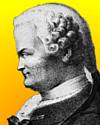
Died 25 Sep 1777 at age 49 (born 26 Aug 1728). quotes
Swiss-German mathematician, astronomer, physicist, and philosopher who provided the first rigorous proof that pi is irrational (cannot be expressed as the quotient of two integers). In 1766, Lambert wrote Theorie der Parallellinien, a study of the parallel postulate. By assuming that the parallel postulate was false, he deduced many non-euclidean results. He noticed that in this new geometry the sum of the angles of a triangle increases as its area decreases. Lambert conjectured that e and p are transcendental, though this was not proved for another century. He is responsible for many innovations in the study of heat and light, devised a method of measuring light intensity, as well as working on the theory of probability.
Swiss-German mathematician, astronomer, physicist, and philosopher who provided the first rigorous proof that pi is irrational (cannot be expressed as the quotient of two integers). In 1766, Lambert wrote Theorie der Parallellinien, a study of the parallel postulate. By assuming that the parallel postulate was false, he deduced many non-euclidean results. He noticed that in this new geometry the sum of the angles of a triangle increases as its area decreases. Lambert conjectured that e and p are transcendental, though this was not proved for another century. He is responsible for many innovations in the study of heat and light, devised a method of measuring light intensity, as well as working on the theory of probability.
In 1974, scientists first reported that freon gases released from aerosol spray cans were destroying the ozone layer.
In 1956, the world's first transatlantic telephone cable system began operating (Clarenville, Newfoundland to Oban, Scotland). Previous cables had been limited to telegraph transmissions.
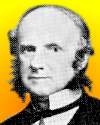
In 1878, warning against the use of tobacco, the senior physician to the Metropolitan Free Hospital wrote in The Times newspaper in Britain. Dr. Charles Drysdale pointed to “the enormous consumption of tobacco in all European states.” He estimated that £15,000,000 was spent annually in Great Britain on tobacco. He concluded “that the use of tobacco is one of the most evident of all the retrograde influences of our time.” Years earlier, in 1864, he had published in Med. Circular results of excessive use, such as cases of jaundice in healthy young men smoking 3/4-oz daily, and a young man who smoked 1/2-oz daily having “most distressing palpitation of the heart.” In 1875, he wrote a booklet, Tobacco and the Diseases It Produces.
more
Tobacco: A Cultural History of How an Exotic Plant Seduced Civilization, by Iain Gately. - book suggestion.
In 1820, Francois Arago announced that a copper wire between the poles of a voltaic cell, could laterally attract iron filings to itself (Ann. de Chim. et de Physique., xv. p.93). His discovery came in the same year that Oersted discovered that an electric current flowing in a wire would deflect a neighbouring compass needle. Arago in the same publication described how he had successfully succeeded in causing permanent magnetism in steel needles laid at right angles to the copper wire. Arago and André-Marie Ampère, discussed and experimented with forming the copper wire into a helix to intensify the magnetizing action. However, it was not until 1825 that the electromagnet in its familiar form was invented by William Sturgeon.«





![(source]](http://www.brynmawr.edu/Acads/Cities/imgb/nextone/med/1104.jpg)