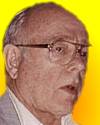
Born 23 Sep 1915; died 21 Mar 2001 at age 85. quotes
Clifford Glenwood Shull was an American physicist who shared the 1994 Nobel Prize for Physics (with Canadian physicist Bertram N. Brockhouse) for “pioneering contributions to the development of neutron scattering techniques for studies of condensed matter.” Shull’s work produced a new tool to investigate the atomic structure of matter using beams of neutrons from a nuclear reactor. All subatomic particles, including neurons, in a quantum mechanical treatment, have a mathematically described wave character. In X-ray crystallography, when neutron radiation passes through a regular atomic structure, measuring the diffraction pattern interprets the structure that created it. In X-ray scattering is from electrons, but neutron scattering is from nuclei.«
Clifford Glenwood Shull was an American physicist who shared the 1994 Nobel Prize for Physics (with Canadian physicist Bertram N. Brockhouse) for “pioneering contributions to the development of neutron scattering techniques for studies of condensed matter.” Shull’s work produced a new tool to investigate the atomic structure of matter using beams of neutrons from a nuclear reactor. All subatomic particles, including neurons, in a quantum mechanical treatment, have a mathematically described wave character. In X-ray crystallography, when neutron radiation passes through a regular atomic structure, measuring the diffraction pattern interprets the structure that created it. In X-ray scattering is from electrons, but neutron scattering is from nuclei.«
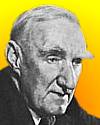
Born 23 Sep 1880; died 25 Jun 1971 at age 90.
Scottish physician, biologist and politician who was an authority on nutrition and winner of the Nobel Prize for Peace in 1949 for his efforts to eliminate world hunger. In 1936, he published a report, Food, Health and Income, a dietary survey by income groups made during 1935. It showed that the cost of a diet fulfilling basic nutritional requirements was beyond the means of half the British population and that 10 percent of the population was undernourished. This and other reports conducted by the Rowett Research Institute formed the basis of the British food-rationing system during WW II. He was director general of the United Nations Food and Agriculture Organization (1945-48).
Scottish physician, biologist and politician who was an authority on nutrition and winner of the Nobel Prize for Peace in 1949 for his efforts to eliminate world hunger. In 1936, he published a report, Food, Health and Income, a dietary survey by income groups made during 1935. It showed that the cost of a diet fulfilling basic nutritional requirements was beyond the means of half the British population and that 10 percent of the population was undernourished. This and other reports conducted by the Rowett Research Institute formed the basis of the British food-rationing system during WW II. He was director general of the United Nations Food and Agriculture Organization (1945-48).
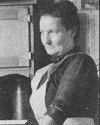
Born 23 Sep 1869; died 11 Nov 1938 at age 69.
American patient who was the quarantined disease carrier, known as Typhoid Mary, the famous typhoid carrier in the New York City area in the early 20th century. Fifty-one original cases of typhoid and three deaths were directly attributed to her (countless more were indirectly attributed), although she herself was immune to the typhoid bacillus (Salmonella typhi). The outbreak of Typhus in Oyster Bay, Long Island, in 1904 puzzled the scientists of the time because they thought they had wiped out the deadly disease. Mallon's case showed that a person could be a carrier without showing any outward signs of being sick, and it led to most of the Health Code laws on the books today. She died not from typhoid but from the effects of a paralytic stroke dating back to 25 Dec 1932.
American patient who was the quarantined disease carrier, known as Typhoid Mary, the famous typhoid carrier in the New York City area in the early 20th century. Fifty-one original cases of typhoid and three deaths were directly attributed to her (countless more were indirectly attributed), although she herself was immune to the typhoid bacillus (Salmonella typhi). The outbreak of Typhus in Oyster Bay, Long Island, in 1904 puzzled the scientists of the time because they thought they had wiped out the deadly disease. Mallon's case showed that a person could be a carrier without showing any outward signs of being sick, and it led to most of the Health Code laws on the books today. She died not from typhoid but from the effects of a paralytic stroke dating back to 25 Dec 1932.
Typhoid Mary, by Judith Walzer Leavitt. - book suggestion.
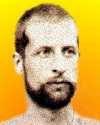
Born 23 Sep 1863; died 1 Mar 1943 at age 79.
Swiss-French bacteriologist who co-discovered the plague bacillus, Pasteurella pestis (also called Yersinia pestis and Bacillus pestis). With Pierre Roux he discovered the diphtheria toxin (1889). Yersin discovered the plague bacillus simultaneously with Shibasaburo Kitasato (1894) in Hong Kong, where he had been sent by the French government. The Japanese bacteriologist Kitasato had arrived days earlier and had secured priority to the limited facilities. Nevertheless, Yersin gained a sample of pus excised from a plague victim, and was able almost immediately isolate the plague bacillus. Yersin then set out to attenuate the bacillus and develop an anti-plague serum. He successfully treated his first plague patient, a Chinese student, in 1896.
Swiss-French bacteriologist who co-discovered the plague bacillus, Pasteurella pestis (also called Yersinia pestis and Bacillus pestis). With Pierre Roux he discovered the diphtheria toxin (1889). Yersin discovered the plague bacillus simultaneously with Shibasaburo Kitasato (1894) in Hong Kong, where he had been sent by the French government. The Japanese bacteriologist Kitasato had arrived days earlier and had secured priority to the limited facilities. Nevertheless, Yersin gained a sample of pus excised from a plague victim, and was able almost immediately isolate the plague bacillus. Yersin then set out to attenuate the bacillus and develop an anti-plague serum. He successfully treated his first plague patient, a Chinese student, in 1896.
Plague: A Story of Rivalry, Science, and the Scourge That Won't Go Away, by Edward Marriott. - book suggestion.
Born 23 Sep 1861; died 9 Mar 1942 at age 80.
German engineer and industrialist who was responsible for the invention of the spark plug and magneto for automobiles and whose firm produced a wide range of precision machines and electrical equipment in plants throughout the world.
German engineer and industrialist who was responsible for the invention of the spark plug and magneto for automobiles and whose firm produced a wide range of precision machines and electrical equipment in plants throughout the world.
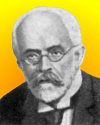
Born 23 Sep 1856; died 12 Dec 1909 at age 53.
German scholar who developed the modern study of Byzantine culture. His writings and seminars were the basis for the specialized training of Byzantine scholars from all parts of the world. His Geschichte der byzantinischen Literatur (1891; "History of Byzantine Literature") went through several revisions. In 1892 he founded the periodical Byzantinische Zeitschrift ("Byzantine Journal"), which became the central international organ for Byzantine studies.
German scholar who developed the modern study of Byzantine culture. His writings and seminars were the basis for the specialized training of Byzantine scholars from all parts of the world. His Geschichte der byzantinischen Literatur (1891; "History of Byzantine Literature") went through several revisions. In 1892 he founded the periodical Byzantinische Zeitschrift ("Byzantine Journal"), which became the central international organ for Byzantine studies.
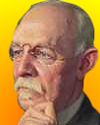
Born 23 Sep 1852; died 7 Sep 1922 at age 69. quotes
American surgeon who established the first U.S. surgical school. In 1884, he was first to describe injection of cocaine into the trunk of a sensory nerve to block pain transmission. From 1886, he joined research at a pathological laboratory newly-formed in Baltimore, Md. where he developed strict aseptic surgical techniques with fine silk sutures in small stitches and careful tissue handling that gave safer, more effective results. In 1890, Halsted began use of rubber gloves, the year he was appointed first surgeon-in-chief at Johns Hopkins Hospital. Halsted created there subspecialty divisions such as orthopedics, otolaryngology and urology. His successful training of surgeons was spread as those he taught took up careers at other institutions.«
American surgeon who established the first U.S. surgical school. In 1884, he was first to describe injection of cocaine into the trunk of a sensory nerve to block pain transmission. From 1886, he joined research at a pathological laboratory newly-formed in Baltimore, Md. where he developed strict aseptic surgical techniques with fine silk sutures in small stitches and careful tissue handling that gave safer, more effective results. In 1890, Halsted began use of rubber gloves, the year he was appointed first surgeon-in-chief at Johns Hopkins Hospital. Halsted created there subspecialty divisions such as orthopedics, otolaryngology and urology. His successful training of surgeons was spread as those he taught took up careers at other institutions.«
Genius on the Edge: The Bizarre Double Life of Dr. William Stewart Halsted, by Gerald Imber. - book suggestion.
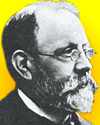
Born 23 Sep 1837; died 27 Jul 1920 at age 82.
Emile Justin Armand Gautier was a French biochemist, the son of physician Louis Gautier. As a youth, he was a chemistry lab assistant at Montpellier. After his medical degree (1862), he studied at Paris, under Adolphe Wurtz. where by 1869 he was on the Faculty of Medicine. From 1872, he directed the first French laboratory of biological chemistry. He wrote 600 papers in various sciences. Gautier discovered carbylamines (1866) and identified ptomaines, a class of cadaveric alkaloids, products of putrefaction (1872). He studied fixation of nitrogen (1888), tobacco smoke and organic arsenic compounds for arsenotherapy. He found iodine as an impurity in the air of towns. In plant physiology, he analyzed the colorant in grapes to detect fraudulant wine coloring.«
Emile Justin Armand Gautier was a French biochemist, the son of physician Louis Gautier. As a youth, he was a chemistry lab assistant at Montpellier. After his medical degree (1862), he studied at Paris, under Adolphe Wurtz. where by 1869 he was on the Faculty of Medicine. From 1872, he directed the first French laboratory of biological chemistry. He wrote 600 papers in various sciences. Gautier discovered carbylamines (1866) and identified ptomaines, a class of cadaveric alkaloids, products of putrefaction (1872). He studied fixation of nitrogen (1888), tobacco smoke and organic arsenic compounds for arsenotherapy. He found iodine as an impurity in the air of towns. In plant physiology, he analyzed the colorant in grapes to detect fraudulant wine coloring.«
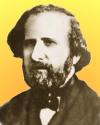
Born 23 Sep 1819; died 18 Sep 1896 at age 76. quotes
French physicist who was the first to measure the speed of light successfully without using astronomical calculations (1849). Fizeau sent a narrow beam of light between gear teeth on the edge of a rotating wheel. The beam then traveled to a mirror 8 km/5 mi away and returned to the wheel where, if the spin were fast enough, a tooth would block the light. Knowing this time from the rotational speed of the wheel, and the mirror's distance, Fizeau directly measured the speed of light. He also found that light travels faster in air than in water, which confirmed the wave theory of light, and that the motion of a star affects the position of the lines in its spectrum. With Jean Foucault, he proved the wave nature of the Sun's heat rays by showing their interference (1847).
French physicist who was the first to measure the speed of light successfully without using astronomical calculations (1849). Fizeau sent a narrow beam of light between gear teeth on the edge of a rotating wheel. The beam then traveled to a mirror 8 km/5 mi away and returned to the wheel where, if the spin were fast enough, a tooth would block the light. Knowing this time from the rotational speed of the wheel, and the mirror's distance, Fizeau directly measured the speed of light. He also found that light travels faster in air than in water, which confirmed the wave theory of light, and that the motion of a star affects the position of the lines in its spectrum. With Jean Foucault, he proved the wave nature of the Sun's heat rays by showing their interference (1847).
Born 23 Sep 1791; died 26 Aug 1865 at age 73.
German astronomer who in 1819 established the period of the comet now known by as Encke's Comet. At at 3.3 years it has the shortest period of any known.
German astronomer who in 1819 established the period of the comet now known by as Encke's Comet. At at 3.3 years it has the shortest period of any known.
Born 23 Sep 1782; died 3 Feb 1867 at age 84.
German naturalist, ethnographer and explorer whose observations on a trip to the American West in the 1830s provide valuable information about the Plains Indians at that time.
German naturalist, ethnographer and explorer whose observations on a trip to the American West in the 1830s provide valuable information about the Plains Indians at that time.

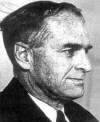
Died 23 Sep 1971 at age 83 (born 19 Sep 1888).
James Waddell Alexander was an American mathematician who founded the branch of mathematics originally known as analysis situs, now called topology. In 1912, he joined the faculty of the mathematics department at Princeton. Soon after, Alexander generalised the Jordan curve theorem and, in 1928, he discovered the Alexander polynomial which is much used in knot theory.
James Waddell Alexander was an American mathematician who founded the branch of mathematics originally known as analysis situs, now called topology. In 1912, he joined the faculty of the mathematics department at Princeton. Soon after, Alexander generalised the Jordan curve theorem and, in 1928, he discovered the Alexander polynomial which is much used in knot theory.
Died 23 Sep 1966 at age 59 (born 4 Mar 1907).
Soviet physicist.
Soviet physicist.
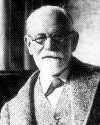
1927
Died 23 Sep 1939 at age 83 (born 6 May 1856). quotes
Austrian father of psychoanalysis, best known for such works as Interpretation of Dreams (1900) and the New Introductory Lectures on Psychoanalysis (1933). In the publication of these, and numerous other works, he revolutionized the field of psychotherapy, so much so that often later workers have failed to recognize forebearers prior to him. Throughout his work he emphasized the role of unconscious and nonrational functioning, going against much of contemporary thought by suggesting that dreams and “mistakes” may also have meaning. Freud battled cancer of the jaw from 1923 until his death in 1939 in London - after 16 operations.
Austrian father of psychoanalysis, best known for such works as Interpretation of Dreams (1900) and the New Introductory Lectures on Psychoanalysis (1933). In the publication of these, and numerous other works, he revolutionized the field of psychotherapy, so much so that often later workers have failed to recognize forebearers prior to him. Throughout his work he emphasized the role of unconscious and nonrational functioning, going against much of contemporary thought by suggesting that dreams and “mistakes” may also have meaning. Freud battled cancer of the jaw from 1923 until his death in 1939 in London - after 16 operations.
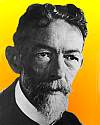
Died 23 Sep 1929 at age 64 (born 1 Apr 1865).
Richard Adolf Zsigmondy was an Austro-German chemist who was awarded who was awarded the Nobel Prize for Chemistry in 1925 for “his demonstration of the heterogenous nature of colloid solutions and for the methods he used, which have since become fundamental in modern colloid chemistry."” Colloids are composed of submicroscopic particles dispersed within another substance. To conduct his research on colloids he invented the ultramicroscope (1903), with which he could view particles with a diameter of one 10-millionth of a millimetre not visible in a conventional microscope. It used an intense beam of light oriented in a position perpendicular to the microscope's optical axis. As particles scattered the incident light, their movements could be seen as flashes against a dark background.«
Richard Adolf Zsigmondy was an Austro-German chemist who was awarded who was awarded the Nobel Prize for Chemistry in 1925 for “his demonstration of the heterogenous nature of colloid solutions and for the methods he used, which have since become fundamental in modern colloid chemistry."” Colloids are composed of submicroscopic particles dispersed within another substance. To conduct his research on colloids he invented the ultramicroscope (1903), with which he could view particles with a diameter of one 10-millionth of a millimetre not visible in a conventional microscope. It used an intense beam of light oriented in a position perpendicular to the microscope's optical axis. As particles scattered the incident light, their movements could be seen as flashes against a dark background.«
Colloids and the ultramicroscope, by Richard Zsigmondy. - book suggestion.
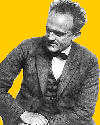
Died 23 Sep 1926 at age 46 (born 17 Aug 1880).
Austrian biologist, he claimed to have produced experimental evidence that acquired traits could be inherited. Almost all of Kammerer's experiments involved forcing various amphibians to breed in environments that were radically different from their native habitat to demonstrate Lamarkian inheritance. (This is the idea that what one acquires during one's lifetime is passed on to that person's offspring. If you play guitar, your children will have nimble fingers. Each generation builds upon the past and continues to improve.) When later accused of faking exceptional results with the midwife toad, during a time of depression, he shot himself.
Austrian biologist, he claimed to have produced experimental evidence that acquired traits could be inherited. Almost all of Kammerer's experiments involved forcing various amphibians to breed in environments that were radically different from their native habitat to demonstrate Lamarkian inheritance. (This is the idea that what one acquires during one's lifetime is passed on to that person's offspring. If you play guitar, your children will have nimble fingers. Each generation builds upon the past and continues to improve.) When later accused of faking exceptional results with the midwife toad, during a time of depression, he shot himself.
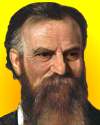
Died 23 Sep 1902 at age 68 (born 24 Mar 1834). quotes
American geologist and ethnologist who published the first classification of American Indian languages and was the first director of the U.S. Bureau of Ethnology (1879-1902). In 1869, despite having lost his right arm in the Civil War, Powell outfitted a small party of men in wooden boats in Wyoming, and descended down into the then unknown Colorado River. Daring that mighty river for a thousand miles of huge, horrifying rapids, unsuspected dangers, and endless hardship, he and his men were the first to challenge the mysterious Grand Canyon.
American geologist and ethnologist who published the first classification of American Indian languages and was the first director of the U.S. Bureau of Ethnology (1879-1902). In 1869, despite having lost his right arm in the Civil War, Powell outfitted a small party of men in wooden boats in Wyoming, and descended down into the then unknown Colorado River. Daring that mighty river for a thousand miles of huge, horrifying rapids, unsuspected dangers, and endless hardship, he and his men were the first to challenge the mysterious Grand Canyon.
Seeing Things Whole: The Essential John Wesley Powell, by John Wesley Powell and William deBuys (ed.). - book suggestion.
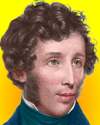
Died 23 Sep 1882 at age 82 (born 31 Jul 1800). quotes
German chemist who co-discovered vanadium. Having studied first medicine, then mineralogy, chemistry became his primary interest. He found a method to produce metallic aluminum (1827), in the form of a grey powder, by heating aluminum chloride with potassium. Similarly, he isolated beryllium (1828), as a black-grey powder; as well as yttrium (1828). Working with Sainte Claire Deville, the crystalline form of silicon was made (1856). He is best-known for the synthesis of urea from ammonium cyanate (1828). Thus an organic compound was created from an inorganic one, a connection between the two formerly distinct areas of chemical study. In 1862, he produced acetylene from calcium carbide.«[Also known as Frederick Woehler.] more
German chemist who co-discovered vanadium. Having studied first medicine, then mineralogy, chemistry became his primary interest. He found a method to produce metallic aluminum (1827), in the form of a grey powder, by heating aluminum chloride with potassium. Similarly, he isolated beryllium (1828), as a black-grey powder; as well as yttrium (1828). Working with Sainte Claire Deville, the crystalline form of silicon was made (1856). He is best-known for the synthesis of urea from ammonium cyanate (1828). Thus an organic compound was created from an inorganic one, a connection between the two formerly distinct areas of chemical study. In 1862, he produced acetylene from calcium carbide.«[Also known as Frederick Woehler.] more
Wöhler’s Outlines Of Organic Chemistry, by Friedrich Wöhler. - book suggestion.
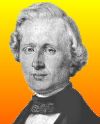
Died 23 Sep 1877 at age 66 (born 11 Mar 1811). quotes
French astronomer who predicted by mathematical means the existence of the planet Neptune. He switched from his first subject of chemistry to to teach astronomy at the Ecole Polytechnique in 1837 and worked at the Paris Observatory for most of his life. His main activity was in celestial mechanics. Independently of Adams, Le Verrier calculated the position of Neptune from irregularities in Uranus's orbit. As Camille Flammarion said, he discovered a planet with the tip of his pen, without any instrument other than the strength of his calculations alone. In 1856, the German astronomer Johan G. Galle discovered Neptune after only an hour of searching, within one degree of the position that had been computed by Le Verrier, who had asked him to look for it there. In this way Le Verrier gave the most striking confirmation of the theory of gravitation propounded by Newton. Le Verrier also initiated the meteorological service for France, especially the weather warnings for seaports. Incorrectly, he predicted a planet, Vulcan, or asteroid belt, within the orbit of Mercury to account for an observed discrepancy (1855) in the motion in the perihelion of Mercury.
French astronomer who predicted by mathematical means the existence of the planet Neptune. He switched from his first subject of chemistry to to teach astronomy at the Ecole Polytechnique in 1837 and worked at the Paris Observatory for most of his life. His main activity was in celestial mechanics. Independently of Adams, Le Verrier calculated the position of Neptune from irregularities in Uranus's orbit. As Camille Flammarion said, he discovered a planet with the tip of his pen, without any instrument other than the strength of his calculations alone. In 1856, the German astronomer Johan G. Galle discovered Neptune after only an hour of searching, within one degree of the position that had been computed by Le Verrier, who had asked him to look for it there. In this way Le Verrier gave the most striking confirmation of the theory of gravitation propounded by Newton. Le Verrier also initiated the meteorological service for France, especially the weather warnings for seaports. Incorrectly, he predicted a planet, Vulcan, or asteroid belt, within the orbit of Mercury to account for an observed discrepancy (1855) in the motion in the perihelion of Mercury.
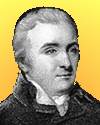
Died 23 Sep 1823 at age 61 (born 27 Oct 1761). quotes
Scottish pathologist whose Morbid Anatomy of Some of the Most Important Parts of the Human Body (1793) was the first publication in English on pathology as a separate subject and the first systematic study of pathology ever made. It established morbid anatomy as an independent science. Baillie gave the first clinical descriptions of gastric ulcer and chronic obstructive pulmonary emphysema and presented one of the clearest descriptions ever written on the pulmonary lesions of tuberculosis. The first American edition was published in Albany in 1795.
Scottish pathologist whose Morbid Anatomy of Some of the Most Important Parts of the Human Body (1793) was the first publication in English on pathology as a separate subject and the first systematic study of pathology ever made. It established morbid anatomy as an independent science. Baillie gave the first clinical descriptions of gastric ulcer and chronic obstructive pulmonary emphysema and presented one of the clearest descriptions ever written on the pulmonary lesions of tuberculosis. The first American edition was published in Albany in 1795.
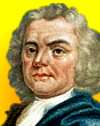
Died 23 Sep 1738 at age 69 (born 31 Dec 1668). quotes
Dutch physician, botanist and chemist, who as professor of medicine taught medical students at the sickbed. He has been called the “founder of clinical teaching” since he founded a hospital where he combined practice with clinical instruction, a method continued in modern medical education. He was the first to describe the sweat glands, and that smallpox is transmitted only by contact. Although his discoveries were few, he collated existing medical knowledge. He wrote medical textbooks popular both during and after his lifetime. In 1718, he became professor of chemistry, and published Elementa Chemiae (Elements of Chemistry, 1724), an intellegible work that eluciated the subject. He also made contributions in the field of botany. Sometimes called the “Dutch Hippocrates,” he was the most eminent physician since Galen.«
Dutch physician, botanist and chemist, who as professor of medicine taught medical students at the sickbed. He has been called the “founder of clinical teaching” since he founded a hospital where he combined practice with clinical instruction, a method continued in modern medical education. He was the first to describe the sweat glands, and that smallpox is transmitted only by contact. Although his discoveries were few, he collated existing medical knowledge. He wrote medical textbooks popular both during and after his lifetime. In 1718, he became professor of chemistry, and published Elementa Chemiae (Elements of Chemistry, 1724), an intellegible work that eluciated the subject. He also made contributions in the field of botany. Sometimes called the “Dutch Hippocrates,” he was the most eminent physician since Galen.«
Died 23 Sep 1710 at age 65 (born 25 Sep 1644).
Danish astronomer who demonstrated conclusively that light travels at a finite speed. He measured the speed by precisely measuring the length of time between eclipses of Jupiter by one of its moons. This observation produces different results depending on the position of the earth in its orbit around the sun. He reasoned that meant light took longer to travel the greater distance when earth was travelling in its orbit away from Jupiter.
Danish astronomer who demonstrated conclusively that light travels at a finite speed. He measured the speed by precisely measuring the length of time between eclipses of Jupiter by one of its moons. This observation produces different results depending on the position of the earth in its orbit around the sun. He reasoned that meant light took longer to travel the greater distance when earth was travelling in its orbit away from Jupiter.
In 1999, the Mars Climate Observer apparently burned up as it was about to go into orbit around the Red Planet.
In 1973, the world's first Ceefax teletext service began on BBC Television.
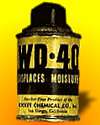
1950s can
In 1953, WD-40 was invented and recorded for the first time in the Rocket Chemical Company's logbook. It was the Water Displacement 40th test, and first successful, formula created by Norm Larsen, for a lubricating penetrating oil intented to displace water for rust prevention. In 1958, it was packaged in cans and sold to the consumer market in San Diego, California, where the company was founded in 1953. It was named WD-40, its original test designation. The name of the company Larsen founded reflects its original purpose to supply materials used in manufacture of nuclear missiles, for which WD-40 was designed to coat structural components and prevent corrosion. After wide success with its versatile, but only product, the company name was changed in 1969 to the WD-40 Company Inc.«


In 1930, Johann Ostermeyer of Athegnenber, Germany, patented his "Improvements in flash lights used for photographic purposes." (UK patent 324,578). The modern photographic safety flash bulb evolved from this design, which used aluminium wire or foil in oxygen. Unfortunately, all too frequently, these versions exploded! The flashbulb was introduced to the American market in 1930 by General Electric. Flash cubes came along in 1966, and the percussively ignitable "Magicube" in 1970.
In 1879, Richard S. Rhodes invented the Audiophone, the first hearing aid.

In 1846, the German astronomer Johann G. Galle discovered Neptune after only an hour of searching, within one degree of the position that had been computed by Urbain-Jean-Joseph Le Verrier. Independently of the English astronomer John C. Adams, Urabain-Jean Le Verrier had calculated the size and position of a previously unknown planet, which he assumed influenced the irregular orbit of Uranus, and he asked Galle to look for it.
In 1624, Galileo wrote a letter and sent it with one of his compound microscopes to another leading scientist of the day, his friend Federico Cesi in Rome. At the time, Galileo was living in Bellosguardo, near Florence, Italy In the letter, Galileo gave some tips on how to use it. Although he did not invent it, he had made improvements to the original design by Zaccharias and Hans Janssen. About his own observations, Galileo wrote in the letter, “I have contemplated a great many animals with infinite admiration…” Cesi worked with Francesco Stelluti and viewed the anatomic structure of bees, described in their text, Apiarium (1625), the first publication on microscopic discoveries.«
The Invisible World: Early Modern Philosophy and the Invention of the Microscope, by Catherine Wilson. - book suggestion.




