Born 22 Sep 1959.
American astrophysicist who shared (with Brian P. Schmidt and Adam G. Riess) the 2011 Nobel Prize in Physics for “the discovery of the accelerating expansion of the Universe through observations of distant supernovae.” For this purpose, he had co-founded (1988) and led the international Supernova Cosmology Project based at the Lawrence Berkeley National Laboratory.
American astrophysicist who shared (with Brian P. Schmidt and Adam G. Riess) the 2011 Nobel Prize in Physics for “the discovery of the accelerating expansion of the Universe through observations of distant supernovae.” For this purpose, he had co-founded (1988) and led the international Supernova Cosmology Project based at the Lawrence Berkeley National Laboratory.
The 4 Percent Universe: Dark Matter, Dark Energy, and the Race to Discover the Rest of Reality, by Richard Panek. - book suggestion.

Born 22 Sep 1922. quotes
Chinese-American theoretical physicist who shared the 1957 Nobel Prize for Physics (with Tsung-Dao Lee) for a ground-breaking theory that the weak force between elementary particles did not conserve parity, thus violating a previously accepted law of physics. (Parity holds that the laws of physics are the same in a right-handed system of coordinates as in a left-handed system.) The theory was subsequently confirmed experimentally by Chien-Shiung Wu in observations of beta decay. Yang is also known for his collaboration with Robert L. Mills. They developed the Yang-Mills fields theory - a mathematical idea for describing interactions among elementary particles and fields.«
Chinese-American theoretical physicist who shared the 1957 Nobel Prize for Physics (with Tsung-Dao Lee) for a ground-breaking theory that the weak force between elementary particles did not conserve parity, thus violating a previously accepted law of physics. (Parity holds that the laws of physics are the same in a right-handed system of coordinates as in a left-handed system.) The theory was subsequently confirmed experimentally by Chien-Shiung Wu in observations of beta decay. Yang is also known for his collaboration with Robert L. Mills. They developed the Yang-Mills fields theory - a mathematical idea for describing interactions among elementary particles and fields.«
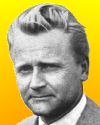
Born 22 Sep 1905; died 10 Feb 1964 at age 58.
German rocket propulsion engineer whose projected "antipodal bomber," with a range far greater than that made possible by its fuel capacity alone, greatly interested the major Western governments and the Soviet Union at the end of WW II. In 1932 he started to establish a test-bed for rocket engines at the University of Technology Vienna, where he worked as an assistant researcher and developed and experimented on different designs of combustion chambers. His famous book Raketenflugtechnik (Rocket Flight Engineering), published in 1933, was the first book on rocketry from an academic professional. The development of long-range missiles and the difficulties of high-altitude precision bombing with the antipodal craft discouraged the building of Sänger's bomber. He first experimented with a small rocket motor burning light fuel oil, and had successful results. This encouraged Sänger to design a stratosphere rocket aircraft (1933). During WW II he experimented with designs for combustion chambers providing a thrust of up to 100 tons and designs of jet propulsion.
German rocket propulsion engineer whose projected "antipodal bomber," with a range far greater than that made possible by its fuel capacity alone, greatly interested the major Western governments and the Soviet Union at the end of WW II. In 1932 he started to establish a test-bed for rocket engines at the University of Technology Vienna, where he worked as an assistant researcher and developed and experimented on different designs of combustion chambers. His famous book Raketenflugtechnik (Rocket Flight Engineering), published in 1933, was the first book on rocketry from an academic professional. The development of long-range missiles and the difficulties of high-altitude precision bombing with the antipodal craft discouraged the building of Sänger's bomber. He first experimented with a small rocket motor burning light fuel oil, and had successful results. This encouraged Sänger to design a stratosphere rocket aircraft (1933). During WW II he experimented with designs for combustion chambers providing a thrust of up to 100 tons and designs of jet propulsion.
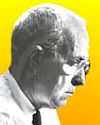
Born 22 Sep 1901; died 12 Jan 1997 at age 95.
Charles Brenton Huggins was a Canadian-born American surgeon and urologist whose investigations demonstrated the relationship between hormones and certain types of cancer. In 1939, Huggins made a very simple inference that led to the development of new forms of cancer therapy. Noting that the prostate gland was under the control of androgens (male sex hormones) he concluded that cancer of the prostate might be treated by preventing the production of androgens. In 1941, he began to inject with female sex hormones to neutralize the effect of androgens produced by the testicles. For his discoveries Huggins received (with Peyton Rous) the Nobel Prize for Physiology or Medicine in 1966.
Charles Brenton Huggins was a Canadian-born American surgeon and urologist whose investigations demonstrated the relationship between hormones and certain types of cancer. In 1939, Huggins made a very simple inference that led to the development of new forms of cancer therapy. Noting that the prostate gland was under the control of androgens (male sex hormones) he concluded that cancer of the prostate might be treated by preventing the production of androgens. In 1941, he began to inject with female sex hormones to neutralize the effect of androgens produced by the testicles. For his discoveries Huggins received (with Peyton Rous) the Nobel Prize for Physiology or Medicine in 1966.
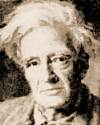
Born 22 Sep 1882; died 16 Sep 1960 at age 77.
British agriculturalist and pioneer who developed grassland science.. The area of Ceredigion, mid-Wales was important for the experimental work in grassland improvement associated with Stapledon (and his successors) while Professor of Agricultural Botany at University College Aberystwyth (19191942). He worked to compensate for the land use changes of the 20th century, after the collapse of rural mining industries of 18th and 19th centuries and resultant depopulation.
British agriculturalist and pioneer who developed grassland science.. The area of Ceredigion, mid-Wales was important for the experimental work in grassland improvement associated with Stapledon (and his successors) while Professor of Agricultural Botany at University College Aberystwyth (19191942). He worked to compensate for the land use changes of the 20th century, after the collapse of rural mining industries of 18th and 19th centuries and resultant depopulation.
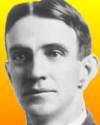
Born 22 Sep 1877; died 27 Dec 1968 at age 91.
American zoologist and the most prominent animal ecologist of his generation who was primarily responsible for introducing animals into studies of climax communities and the successions leading to them. Succession in the Indiana Dunes was one of his early significant studies. He was influential in creating ecology as a distinct scientific discipline, with books such as his Animal Communities in Temperate America (1913). Shelford developed the biome concept in Bio-ecology (1939, with Frederic E. Clements) and contributed to the areas of physiological and population ecology. He was involved in the preservation of natural communities and founded the Ecologist's Union, which later became the Nature Conservancy.«
American zoologist and the most prominent animal ecologist of his generation who was primarily responsible for introducing animals into studies of climax communities and the successions leading to them. Succession in the Indiana Dunes was one of his early significant studies. He was influential in creating ecology as a distinct scientific discipline, with books such as his Animal Communities in Temperate America (1913). Shelford developed the biome concept in Bio-ecology (1939, with Frederic E. Clements) and contributed to the areas of physiological and population ecology. He was involved in the preservation of natural communities and founded the Ecologist's Union, which later became the Nature Conservancy.«
Pioneer Ecologist: The Life and Work of Victor Ernest Shelford, by Robert A. Croker. - book suggestion.
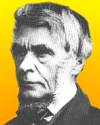
Born 22 Sep 1800; died 10 Sep 1844 at age 43.
British botanist whose classification of seed plants (Spermatophyta), based on an exhaustive study of all known species, served as a foundation for modern systems of vascular plant taxonomy. Sir William Hooker, invited him to establish permanent quarters at Kew gardens, where Bentham participated in the Gardens' definitive survey of floras of the British colonies and possessions, for which he prepared the Flora Hongkongensis (1861) and the Flora Australiensis (7 vol., 1863-78), cataloging and describing more than 7,000 species. Collaborating with Hooker's son Sir Joseph, Bentham spent 27 years in research and examination of specimens for the work Genera Plantarum (3 vol., 1862-83), which covered 200 "orders" of 7,569 genera, and 97,200 species.
British botanist whose classification of seed plants (Spermatophyta), based on an exhaustive study of all known species, served as a foundation for modern systems of vascular plant taxonomy. Sir William Hooker, invited him to establish permanent quarters at Kew gardens, where Bentham participated in the Gardens' definitive survey of floras of the British colonies and possessions, for which he prepared the Flora Hongkongensis (1861) and the Flora Australiensis (7 vol., 1863-78), cataloging and describing more than 7,000 species. Collaborating with Hooker's son Sir Joseph, Bentham spent 27 years in research and examination of specimens for the work Genera Plantarum (3 vol., 1862-83), which covered 200 "orders" of 7,569 genera, and 97,200 species.
George Bentham, by George Bentham, Marion Filipiuk. - book suggestion.
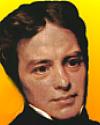
Born 22 Sep 1791; died 25 Aug 1867 at age 75. quotes
English physicist and chemist whose many experiments contributed greatly to the understanding of electromagnetism. Although one of the greatest experimentalists, he was largely self-educated. Appointed by Sir Humphry Davy as his assistant at the Royal Institution, Faraday initially concentrated on analytical chemistry, and discovered benzene in 1825. His most important work was in electromagnetism, in which field he demonstrated electromagnetic rotation and discovered electromagnetic induction (the key to the development of the electric dynamo and motor). He also discovered diamagnetism and the laws of electrolysis. He published pioneering papers that led to the practical use of electricity, and he advocated the use of electric light in lighthouses.« more
English physicist and chemist whose many experiments contributed greatly to the understanding of electromagnetism. Although one of the greatest experimentalists, he was largely self-educated. Appointed by Sir Humphry Davy as his assistant at the Royal Institution, Faraday initially concentrated on analytical chemistry, and discovered benzene in 1825. His most important work was in electromagnetism, in which field he demonstrated electromagnetic rotation and discovered electromagnetic induction (the key to the development of the electric dynamo and motor). He also discovered diamagnetism and the laws of electrolysis. He published pioneering papers that led to the practical use of electricity, and he advocated the use of electric light in lighthouses.« more
The Electric Life Of Michael Faraday, by Alan W. Hirshfeld. - book suggestion.
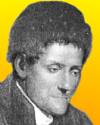
Born 22 Sep 1765; died 10 May 1822 at age 56.
Italian mathematicianand physician who made studies of equations that anticipated the algebraic theory of groups. He is regarded as the first to make a significant attempt to show that there is no algebraic solution of the general quintic equation (an equation with the variable in one term raised to the fifth power). In 1799 Ruffini published a book on the theory of equations with his claim that quintics could not be solved by radicals, General theory of equations in which it is shown that the algebraic solution of the general equation of degree greater than four is impossible. Ruffini used group theory in his work but he had to invent the subject for himself. He also wrote on probability and the application of probability to evidence in court cases.
Italian mathematicianand physician who made studies of equations that anticipated the algebraic theory of groups. He is regarded as the first to make a significant attempt to show that there is no algebraic solution of the general quintic equation (an equation with the variable in one term raised to the fifth power). In 1799 Ruffini published a book on the theory of equations with his claim that quintics could not be solved by radicals, General theory of equations in which it is shown that the algebraic solution of the general equation of degree greater than four is impossible. Ruffini used group theory in his work but he had to invent the subject for himself. He also wrote on probability and the application of probability to evidence in court cases.
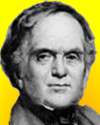
Born 22 Sep 1759; died 11 Feb 1823 at age 63. quotes
Scottish engineer and economist who pioneered the graphical representation of statistics, creating the line graph, bar graph and pie chart, though his name is little known. His inventions and patents included metal-working machines, the mass-production of silver-plated spoons, improvements to agricultural implements, and modification of the bows to ships to imrove speed. He had gained experience as apprentice to Andrew Meikle (inventor of the threshing machine) and working with James Watt and Matthew Boulton (manufacturers of steam engines). Playfair’s book Commercial and Political Atlas (1786), which introduced his graphical display methods, was the first major work to use statistical graphs.«
Scottish engineer and economist who pioneered the graphical representation of statistics, creating the line graph, bar graph and pie chart, though his name is little known. His inventions and patents included metal-working machines, the mass-production of silver-plated spoons, improvements to agricultural implements, and modification of the bows to ships to imrove speed. He had gained experience as apprentice to Andrew Meikle (inventor of the threshing machine) and working with James Watt and Matthew Boulton (manufacturers of steam engines). Playfair’s book Commercial and Political Atlas (1786), which introduced his graphical display methods, was the first major work to use statistical graphs.«
Born 22 Sep 1750; died 7 Apr 1816 at age 65. quotes
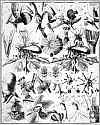
German botanist and teacher whose studies of sex in plants led him to a general theory of fertilization which, basically, is accepted today. Although director of a school at Spandau and tutor in Berlin, he devoted himself chiefly to the study of flowering plants. Sprengel's 1793 treatise [illustration at left] on floral structure examines the ways that flower colors, scents, shapes, and markings work harmoniously to attract insects for pollination. A clergyman and botanist, he spent his life researching the role played by the wind and insects in the fertilization of flowers. Although Sprengel's work was neglected by his contemporaries, Charles Darwin later praised Sprengel's work and brought it brought to public attention.
German botanist and teacher whose studies of sex in plants led him to a general theory of fertilization which, basically, is accepted today. Although director of a school at Spandau and tutor in Berlin, he devoted himself chiefly to the study of flowering plants. Sprengel's 1793 treatise [illustration at left] on floral structure examines the ways that flower colors, scents, shapes, and markings work harmoniously to attract insects for pollination. A clergyman and botanist, he spent his life researching the role played by the wind and insects in the fertilization of flowers. Although Sprengel's work was neglected by his contemporaries, Charles Darwin later praised Sprengel's work and brought it brought to public attention.
Born 22 Sep 1741; died 8 Sep 1811 at age 69.
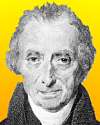
German naturalist who was a pioneer in zoogeography by going beyond merely cataloging specimens with simple descriptions, but included observations of causal relationships between animals and their environment. He looked for hidden regularities in natural phenomena over an extreme range of habitats. His extensive field studies made on expeditions in Russia resulted in records of hundreds of species of animals and plants together with commentary on the interrelationships among them and their environment, and careful notes on the areas of distribution and boundaries. This work was a precursor to theories of evolution. He was first to theorise that mountain formation resulted from volcanic processes causing uplifts and receding seas.«
German naturalist who was a pioneer in zoogeography by going beyond merely cataloging specimens with simple descriptions, but included observations of causal relationships between animals and their environment. He looked for hidden regularities in natural phenomena over an extreme range of habitats. His extensive field studies made on expeditions in Russia resulted in records of hundreds of species of animals and plants together with commentary on the interrelationships among them and their environment, and careful notes on the areas of distribution and boundaries. This work was a precursor to theories of evolution. He was first to theorise that mountain formation resulted from volcanic processes causing uplifts and receding seas.«
Bering's Successors, 1745-1780: Contributions of Peter Simon Pallas..., by Peter Simon Pallas. - book suggestion.
Born 22 Sep 1715; died 6 Jan 1786 at age 70.
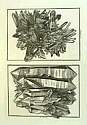
French geologist and mineralogist who produced the first mineralogical map of France (1746), marking the birth of modern geology. He was first to identify several fossil species in the Paris Basin region and studied its exposed strata. Linking geology, botany and chemistry, he linked certain plants with their underlying minerals and rocks, mapping vegetation and geological formations. He described landform erosion by running water, formation of caves by subterranean streams, and the action of waves on coastal cliffs. He studied the volcanic origin of rocks in Central France, charted extinct volcanoes in the Auvergne region, and described how their eruptions had shaped the surrounding landscape. Guettard’s students included famed chemist Antoine-Laurent Lavoisier.«[Image: illustration from Minéralogie du Dauphiné, 1782]
French geologist and mineralogist who produced the first mineralogical map of France (1746), marking the birth of modern geology. He was first to identify several fossil species in the Paris Basin region and studied its exposed strata. Linking geology, botany and chemistry, he linked certain plants with their underlying minerals and rocks, mapping vegetation and geological formations. He described landform erosion by running water, formation of caves by subterranean streams, and the action of waves on coastal cliffs. He studied the volcanic origin of rocks in Central France, charted extinct volcanoes in the Auvergne region, and described how their eruptions had shaped the surrounding landscape. Guettard’s students included famed chemist Antoine-Laurent Lavoisier.«[Image: illustration from Minéralogie du Dauphiné, 1782]
Born 22 Sep 1711; died 25 Feb 1786 at age 74. quotes
English astronomer whose interest in astronomy began as a youth. He taught himself mathematics. Eventually he schooled sailors in navigation. Wright first speculated our Solar System lay in a vast flat disk of stars (the Milky Way). Further away were the vaguely perceived nebulae that he proposed were their own separate, similar, collections of stars. He conflated these ideas with a religious view of a moral order with a divine center, the abode of God and angels. But he did realize the stars must be in rotation about this center to avoid gravitational collapse. His first major book on these ideas was An Original Theory or New Hypothesis of the Universe (1750). Immanuel Kant expanded on the physical ideas.«
English astronomer whose interest in astronomy began as a youth. He taught himself mathematics. Eventually he schooled sailors in navigation. Wright first speculated our Solar System lay in a vast flat disk of stars (the Milky Way). Further away were the vaguely perceived nebulae that he proposed were their own separate, similar, collections of stars. He conflated these ideas with a religious view of a moral order with a divine center, the abode of God and angels. But he did realize the stars must be in rotation about this center to avoid gravitational collapse. His first major book on these ideas was An Original Theory or New Hypothesis of the Universe (1750). Immanuel Kant expanded on the physical ideas.«

Died 22 Sep 2017 at age 92 (born 29 Dec 1924). quotes
American social scientist and pioneer in public opinion research who transformed how social trends and attitudes are studied. He founded the polling firm Daniel Yankelovich, Inc., and co-founded the Public Agenda Foundation with former Secretary of State Cyrus Vance to bridge the gap between experts and the public on policy issues. His work introduced innovative qualitative methods to understand the motives behind survey responses, leading to deeper insights into changing American values, work satisfaction, and trust. Through projects like the New York Times/Yankelovich Poll, he shaped modern social forecasting and influenced how business, government, and academia interpret public opinion.«
American social scientist and pioneer in public opinion research who transformed how social trends and attitudes are studied. He founded the polling firm Daniel Yankelovich, Inc., and co-founded the Public Agenda Foundation with former Secretary of State Cyrus Vance to bridge the gap between experts and the public on policy issues. His work introduced innovative qualitative methods to understand the motives behind survey responses, leading to deeper insights into changing American values, work satisfaction, and trust. Through projects like the New York Times/Yankelovich Poll, he shaped modern social forecasting and influenced how business, government, and academia interpret public opinion.«
Died 22 Sep 2013 at age 87 (born 27 Feb 1926). quotes
Canadian-born American neurobiologist, who was a corecipient (with Torsten Nils Wiesel and Roger Wolcott Sperry) of the 1981 Nobel Prize for Physiology or Medicine for mapping the path of nerve impulses from the eye to various centres of the brain. In 1958, Hubel joined Wiesel at Johns Hopkins University, and the two relocated to Harvard in 1959. Their work was made possible by a number of technical advances. From the early 1950s onward it became possible to use microelectrodes to monitor the activity of a single neuron. Their studies were in the area of visual perception, with particular emphasis on the nerve impulses mediating between the retina and the brain. They observed that various nerve cells were responsible for different types of visual stimuli.
Canadian-born American neurobiologist, who was a corecipient (with Torsten Nils Wiesel and Roger Wolcott Sperry) of the 1981 Nobel Prize for Physiology or Medicine for mapping the path of nerve impulses from the eye to various centres of the brain. In 1958, Hubel joined Wiesel at Johns Hopkins University, and the two relocated to Harvard in 1959. Their work was made possible by a number of technical advances. From the early 1950s onward it became possible to use microelectrodes to monitor the activity of a single neuron. Their studies were in the area of visual perception, with particular emphasis on the nerve impulses mediating between the retina and the brain. They observed that various nerve cells were responsible for different types of visual stimuli.
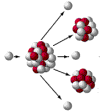
Austrian-British nuclear physicist, born in Vienna, who, with his aunt Lise Meitner, described the division of neutron-bombarded uranium into lighter elements. He named the process fission, borrowing a term from biology (1939). At the time, Meitner was working in Stockholm and Frisch (1934-39) at Copenhagen under Niels Bohr, who brought their observation to the attention of Albert Einstein and others in the United States. He did research with James Chadwick 1940-43, and was head of the Critical Assembly Group on the Los Alamos project 1943-46. After World War II, Frisch became a science writer on atomic physics for the layman.
What Little I Remember, by Otto Robert Frisch. - book suggestion.
(c. 1915-1920)
Died 22 Sep 1970 at age 101 (born 27 Feb 1869). quotes
American pathologist and public health pioneer who diligently studied industrial diseases and actively publicized dangers to workers’ health of industrial toxic substances. She contributed to the passage of workmen’s compensation laws; and to the development of safer working conditions. In 1911, she was appointed as special investigator for the U.S. Bureau of Labor, which led to field investigations of mines, mills, and smelters. Focusing first on the toxicity of lead, widely used by industry, she compiled statistics dramatically showing the high mortality and morbidity rates of workers. Over time, she did the same for aniline dyes, picric acid, arsenic, carbon monoxide, and many other industrial poisons. Hamilton died when 101 yrs old.
American pathologist and public health pioneer who diligently studied industrial diseases and actively publicized dangers to workers’ health of industrial toxic substances. She contributed to the passage of workmen’s compensation laws; and to the development of safer working conditions. In 1911, she was appointed as special investigator for the U.S. Bureau of Labor, which led to field investigations of mines, mills, and smelters. Focusing first on the toxicity of lead, widely used by industry, she compiled statistics dramatically showing the high mortality and morbidity rates of workers. Over time, she did the same for aniline dyes, picric acid, arsenic, carbon monoxide, and many other industrial poisons. Hamilton died when 101 yrs old.
Exploring the Dangerous Trades: The Autobiography of Alice Hamilton, M.D., by Alice Hamilton. - book suggestion.

(EB)
Died 22 Sep 1965 at age 86 (born 26 Mar 1879).
Swiss-American engineer and designer of numerous long suspension bridges as the New York Port Authority's Chief Engineer (1929), including the Verrazano-Narrows Bridge over New York harbour, at its completion (1965) the longest single span in the world. The first of six bridges he would design for the city was the George Washington Bridge, completed (1931) at a cost of $59 million, and opened to traffic on 25 Oct. It crosses the Hudson River between New Jersey and New York, and represents a marvel of construction for its time.
Swiss-American engineer and designer of numerous long suspension bridges as the New York Port Authority's Chief Engineer (1929), including the Verrazano-Narrows Bridge over New York harbour, at its completion (1965) the longest single span in the world. The first of six bridges he would design for the city was the George Washington Bridge, completed (1931) at a cost of $59 million, and opened to traffic on 25 Oct. It crosses the Hudson River between New Jersey and New York, and represents a marvel of construction for its time.
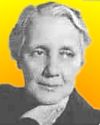
Died 22 Sep 1960 at age 78 (born 30 Mar 1882).
(née Reizes) Austrian-born British psychoanalyst known for her work with young children, in which observations of free play provided insights into the child's unconscious fantasy life, enabling her to psychoanalyze children as young as two or three years of age. After WW I, Klein began to develop methods of play therapy, showing that how children play with toys reveals earlier infantile fantasies and anxieties. In The Psychoanalysis of Children (1932), she showed how these anxieties affected a child's developing ego, superego, and sexuality to bring about emotional disorders. Through her methods she attempted to relieve children of disabling guilt by having them direct toward the therapist the aggressive and Oedipal feelings they could not express to their parents.
(née Reizes) Austrian-born British psychoanalyst known for her work with young children, in which observations of free play provided insights into the child's unconscious fantasy life, enabling her to psychoanalyze children as young as two or three years of age. After WW I, Klein began to develop methods of play therapy, showing that how children play with toys reveals earlier infantile fantasies and anxieties. In The Psychoanalysis of Children (1932), she showed how these anxieties affected a child's developing ego, superego, and sexuality to bring about emotional disorders. Through her methods she attempted to relieve children of disabling guilt by having them direct toward the therapist the aggressive and Oedipal feelings they could not express to their parents.
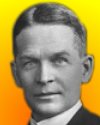
Died 22 Sep 1956 at age 79 (born 2 Sep 1877). quotes
English chemist and physicist who received the Nobel Prize for Chemistry in 1921 for investigating radioactive substances. He suggested that different elements produced in different radioactive transformations were capable of occupying the same place on the Periodic Table, and on 18 Feb 1913 he named such species “isotopes” from Greek words meaning “same place.” He is credited, along with others, with the discovery of the element protactinium in 1917.
English chemist and physicist who received the Nobel Prize for Chemistry in 1921 for investigating radioactive substances. He suggested that different elements produced in different radioactive transformations were capable of occupying the same place on the Periodic Table, and on 18 Feb 1913 he named such species “isotopes” from Greek words meaning “same place.” He is credited, along with others, with the discovery of the element protactinium in 1917.
The World Made New: Frederick Soddy, Science, Politics, and Environment, by Linda Merricks. - book suggestion.
(EB)
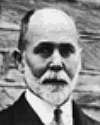
Died 22 Sep 1950 at age 76 (born 5 Oct 1873).
American botanist noted for his comprehensive study of the flora of the northeastern United States. In Feb 1891, Fernald was offered a position at the Gray Herbarium of Harvard University that would allow him to work and study part-time at Harvard. He remained at the Gray Herbarium in one capacity or another for the rest of his life, beginning as an assistant, going on to be a professor, eventually as curator of the Gray Herbarium, 1935-37, and director, 1937-1947. Fernald is known for his work on phytogeography. He combined extensive field work with his herbarium work, concentrating on the flora of eastern North America. He did much exploring in Quebec in his younger years; when older, he worked in Virginia.
American botanist noted for his comprehensive study of the flora of the northeastern United States. In Feb 1891, Fernald was offered a position at the Gray Herbarium of Harvard University that would allow him to work and study part-time at Harvard. He remained at the Gray Herbarium in one capacity or another for the rest of his life, beginning as an assistant, going on to be a professor, eventually as curator of the Gray Herbarium, 1935-37, and director, 1937-1947. Fernald is known for his work on phytogeography. He combined extensive field work with his herbarium work, concentrating on the flora of eastern North America. He did much exploring in Quebec in his younger years; when older, he worked in Virginia.
Died 22 Sep 1948 at age 85 (born 8 Aug 1863).
Florence Augusta Merriam Bailey was an American ornithologist and author of popular field guides. She preceded Ludlow Griscom in calling for the use of binoculars instead of shotguns when birding. By 1885, she began to write articles focusing on protecting birds. She was horrified by the fashion trend which not only used feathers, but entire birds to decorate women's hats. Five million birds a year were killed to supply this fashion craze. At age 26, Bailey collected and developed the series of articles she had written for the Audubon Magazine into her first book, Birds Through an Opera Glass, (1889). Altogether she published about 100 articles, mostly for ornithological magazines, and 10 books. including the Handbook of Birds of the Western United States (1902) and Birds of New Mexico (1928).
Florence Augusta Merriam Bailey was an American ornithologist and author of popular field guides. She preceded Ludlow Griscom in calling for the use of binoculars instead of shotguns when birding. By 1885, she began to write articles focusing on protecting birds. She was horrified by the fashion trend which not only used feathers, but entire birds to decorate women's hats. Five million birds a year were killed to supply this fashion craze. At age 26, Bailey collected and developed the series of articles she had written for the Audubon Magazine into her first book, Birds Through an Opera Glass, (1889). Altogether she published about 100 articles, mostly for ornithological magazines, and 10 books. including the Handbook of Birds of the Western United States (1902) and Birds of New Mexico (1928).
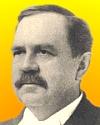
Died 22 Sep 1907 at age 63 (born 3 May 1844). quotes
American agricultural chemist who developed agricultural chemistry. Atwater received his PhD from Yale in 1869 for studies on the chemical composition of corn. At Wesleyan College in Connecticut, USA, he studied the effects of fertilizers in farming and established the first agricultural experimental station in the US at Wesleyan in 1875 (which in 1877 became part of the famous Sheffield Scientific School at Yale University). From 1879 to 1882 Atwater determined the chemical composition and nutritive values of fish and animal tissues. During his life, he completed more than 500 energy-balance experiments. They confirmed that the law of conservation of energy governed transformation of matter in both the human body and inanimate world. more
American agricultural chemist who developed agricultural chemistry. Atwater received his PhD from Yale in 1869 for studies on the chemical composition of corn. At Wesleyan College in Connecticut, USA, he studied the effects of fertilizers in farming and established the first agricultural experimental station in the US at Wesleyan in 1875 (which in 1877 became part of the famous Sheffield Scientific School at Yale University). From 1879 to 1882 Atwater determined the chemical composition and nutritive values of fish and animal tissues. During his life, he completed more than 500 energy-balance experiments. They confirmed that the law of conservation of energy governed transformation of matter in both the human body and inanimate world. more
Died 22 Sep 1878 at age 94 (born 20 Sep 1784).
(1st Baronet) Irish geologist and civil engineer who has sometimes been called the "father of Irish geology." He studied civil engineering in London and Edinburgh, returned to Ireland in 1808, and became mining engineer to the Royal Dublin Society in 1812 and a government inspector of mines. He published a geological map of Ireland in 1835.
(1st Baronet) Irish geologist and civil engineer who has sometimes been called the "father of Irish geology." He studied civil engineering in London and Edinburgh, returned to Ireland in 1808, and became mining engineer to the Royal Dublin Society in 1812 and a government inspector of mines. He published a geological map of Ireland in 1835.
Died 22 Sep 1865 at age 71 (born 24 Jul 1794).
Russian zoologist.
Russian zoologist.
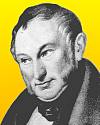
Died 22 Sep 1850 at age 67 (born 24 Jun 1783).
German agriculturalist best known for his work on the relationship of the costs of commodity transportation to the location of production. He used his farm as a source of facts for his theoretical work in agricultural economics. He built a theoretical model which he used to find the important factors that determined the most profitable location of various branches of agriculture in relation to their sources of demand. His theory of rent was similar to that of Ricardo. He set out a theory of distribution based on marginal productivity, using calculus, and he could be considered one of the founders of marginal analysis. Nearing his death, he asked that his famous equation for the marginal product of labor be carved into his tombstone.
German agriculturalist best known for his work on the relationship of the costs of commodity transportation to the location of production. He used his farm as a source of facts for his theoretical work in agricultural economics. He built a theoretical model which he used to find the important factors that determined the most profitable location of various branches of agriculture in relation to their sources of demand. His theory of rent was similar to that of Ricardo. He set out a theory of distribution based on marginal productivity, using calculus, and he could be considered one of the founders of marginal analysis. Nearing his death, he asked that his famous equation for the marginal product of labor be carved into his tombstone.
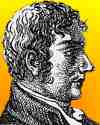
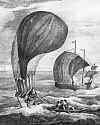
Italian balloonist and navy officer who observed the Montgolfier brothers' first balloon ascent in 1783. By 25 Nov 1783, he made an unmanned balloon experiment in London, the first to ascend in England. He joined (1787) the Russian Imperial Navy, was shipwrecked and imprisoned by the Turks for two years. When freed, he continued his ballooning efforts in his hometown, Bologna, Italy, and made several ascents. He published a five-volume work on ballooning and aeronatics (1803). On 7 Oct 1804, accompanied by Gaetano Grasetti and Pasquale Andreoli, his flight took him over the Adriatic Sea, into which waters the craft fell (as had happened also in 1803). They were rescued the next day. He died in 1812, fatally burned and injured from the fall after his balloon hit a tree.«[Image left: profile as depicted on a c.1895 collecting card. Right: Etching of 1803 rescue from crash into the Adriatic Sea.] more
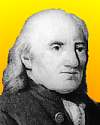
Died 22 Sep 1777 at age 78 (born 23 Mar 1699).
American explorer and botanist who is also regarded as the father of American botany, a subject he self-taught from the age of ten. He made a systematic study of healing plants. In 1728, Bartram bought land beside the Schuylkill River at Kingsessing, outside Philadelphia, created Bartram's Garden, and began likely the first experiments in hybridizing in America. (His Garden now forms part of Philadelphia's small park system - the oldest living botanical garden in the U.S. - where many giant trees may still be seen that he planted.) He travelled widely to gather ripe seeds, roots and bulbs in proper condition for transplanting. Shipping many species to introduce in Europe developed into a business. His son William Bartram followed him as a naturalist.«
American explorer and botanist who is also regarded as the father of American botany, a subject he self-taught from the age of ten. He made a systematic study of healing plants. In 1728, Bartram bought land beside the Schuylkill River at Kingsessing, outside Philadelphia, created Bartram's Garden, and began likely the first experiments in hybridizing in America. (His Garden now forms part of Philadelphia's small park system - the oldest living botanical garden in the U.S. - where many giant trees may still be seen that he planted.) He travelled widely to gather ripe seeds, roots and bulbs in proper condition for transplanting. Shipping many species to introduce in Europe developed into a business. His son William Bartram followed him as a naturalist.«
The Life and Travels of John Bartram, by Edmund Berkeley. - book suggestion.
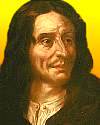
Died 22 Sep 1703 at age 81 (born 5 Apr 1622).
Italian mathematician and geometer who was a leader in his field and founded the Accademia del Cimento. As one of the first important scientific societies, this organization came before England's Royal Society. In 1639, at age 17, he became the student, secretary and assistant of Galileo (now blind) in Arcetri, until Galileo died in 1642. During his long career, Viviani published a number of books on mathematical and scientific subjects. He edited the first edition of Galileo's collected works (1655-1656), and worked tirelessly to have his master's memory rehabilitated. In 1660, together with Borelli, he measured the velocity of sound by timing the difference between the flash and the sound of a cannon. They obtained the value of 350 metres per second.
Italian mathematician and geometer who was a leader in his field and founded the Accademia del Cimento. As one of the first important scientific societies, this organization came before England's Royal Society. In 1639, at age 17, he became the student, secretary and assistant of Galileo (now blind) in Arcetri, until Galileo died in 1642. During his long career, Viviani published a number of books on mathematical and scientific subjects. He edited the first edition of Galileo's collected works (1655-1656), and worked tirelessly to have his master's memory rehabilitated. In 1660, together with Borelli, he measured the velocity of sound by timing the difference between the flash and the sound of a cannon. They obtained the value of 350 metres per second.
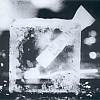

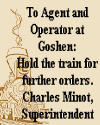
In 1851, the first time train dispatching by telegraph in the U.S. took place when superintendent Charles Minot, of the Erie Railroad telegraphed 14 miles to Goshen, N.Y., to delay a train so that his train would not have to wait. Within weeks, all Erie trains were controlled by the telegraphed orders of a train dispatcher. Until that time the timetable was the sole authority for moving trains on the line. The “time interval rule” was cumbersome: a train had to wait one hour for an opposing train. If the train still didn't arrive, the brakeman on the waiting train must walk for 20 minutes ahead of his train with a red flag to stop the late train. The engineer of the waiting train would then operate to catch up to the brakeman. The routine was repeated as necessary.
In 1792, this day was adopted as day 1, year 1 of a new French Republican calendar, marking the start of the new French Republic. The French Revolution created a new government keen to break from the aristocracy, the Catholic Church and their institutions, including the pope's Gregorian calendar. The new starting date was set retrospectively, as a committee worked until Sep 1793 to develop the calendar. So, in fact, the Gregorian calendar continued to be used until the Republican calendar was implemented on 24 Nov 1793. The new calendar had 12 months of 30 days each, divided into 10-day decades instead of 7-day weeks. Five supplementary days ended the year (6 in a leap year). A day had 10 hours of 100 minutes each. Napoleon abolished this “Calendar of Reason” on 31 Dec 1805.«




